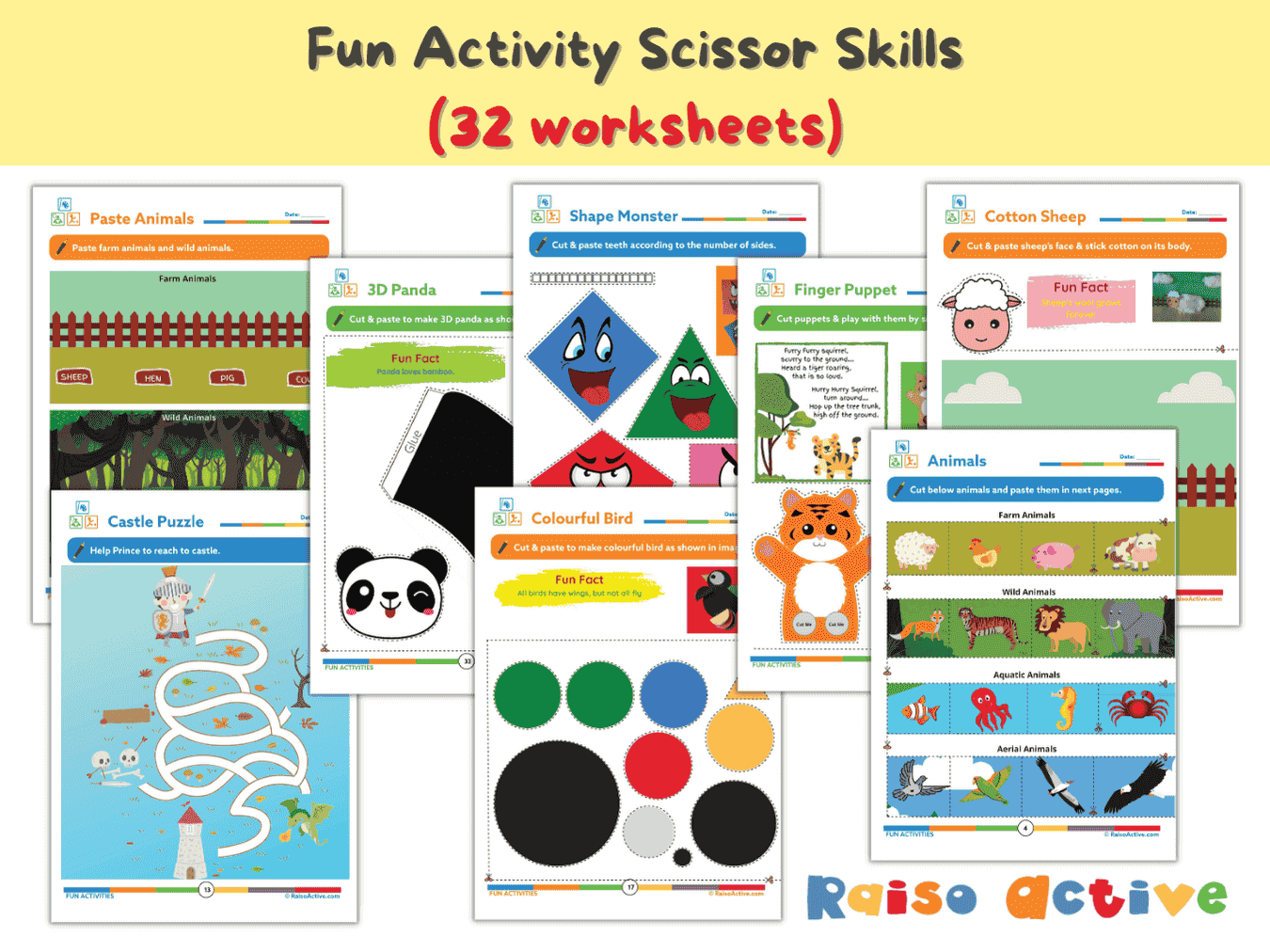
Castle Maze Worksheet: Help the Prince Reach the Castle!
This 'Castle Maze' worksheet helps children ages 3-5 develop crucial fine motor control and hand-eye coordination as they trace a path for the Prince. Navigating the maze also builds early critical thinking and problem-solving skills, requiring them to visually scan and plan a route, which is foundational for spatial reasoning.
Part of the pack
Preschool Scissor Skills Activity Book: Fine Motor & Craft Fun for Ages 3-6
This is page 13 of the pack. Ages 3-6 · Preschool–KindergartenAges 3-6 · Nursery–Year 1Ages 3-6 · Nursery–UKGAges 3-6
Curriculum
- Cognitive - Problem Solving > Mazes
How to use this worksheet
Begin by pointing out the Prince at the start of the maze and the magnificent Castle at the end. Ask your child to use their finger to 'walk' the Prince through the maze, exploring different paths and avoiding dead ends, until they find the way to the Castle. Once a successful route is identified, hand them a pencil or crayon and encourage them to carefully trace a line along their chosen path, staying between the maze walls until the Prince reaches his royal destination.
Materials needed
- Pencil
- Crayons
Extension activities
- 1Draw a simple maze on paper with two lines, then have your child use different colored crayons to trace two distinct paths.
- 2Build a 'castle' using blocks or household items and create a winding path with string or tape for a small toy to follow.
- 3Read a story about a prince or princess going on a journey, and discuss the 'paths' or choices they made.
- 4Create a physical 'maze' outside with chalk or indoors with pillows, and have your child navigate through it.
- 5Ask your child to describe the path they took through the maze using words like 'left,' 'right,' 'up,' and 'down'.

Written by
Hemsweta Jain · Teacher Cheena
MBA and Early Childhood Educator, teaching since 2014 · Founder of RaisoActive, Mumbai
Every RaisoActive worksheet is designed and checked by the founder before publishing.
Published · Last reviewed
More from Preschool Scissor Skills Activity Book: Fine Motor & Craft Fun for Ages 3-6

Finger Puppet Fun: Make & Play with the Three Little Pigs!
Ages 3-5 · Preschool–Pre-KAges 3-5 · Nursery–ReceptionAges 3-5 · Nursery–LKGAges 3-5
Cutting out the pig and fox puppets gives 3-5 year olds focused scissor practice on small, curved shapes, while fitting the finished puppets onto their fingers and using them to sing the accompanying rhyme builds oral language, sequencing, and the confidence to perform in front of others. Acting out a familiar story also helps children practice retelling events in order, a skill that supports later reading comprehension.

Paste the Animals: Aerial and Aquatic Animals Worksheet
Ages 3-5 · Preschool–Pre-KAges 3-5 · Nursery–ReceptionAges 3-5 · Nursery–LKGAges 3-5
Sorting animals into 'aerial' and 'aquatic' groups introduces slightly more advanced classification vocabulary than a simple farm-versus-wild sort, asking children to think about how an animal moves and where it lives — in the air or in water — rather than just what it looks like. This kind of habitat-based categorization at ages 3-5 builds early science thinking alongside the scissor and gluing practice.

Ladybug Cut and Paste Worksheet for Preschoolers
Ages 3-5 · Preschool–Pre-KAges 3-5 · Nursery–ReceptionAges 3-5 · Nursery–LKGAges 3-5
Cutting out and assembling separate ladybug pieces into one recognizable insect builds scissor control on small, rounded shapes and reinforces the idea of constructing a whole picture from parts, similar to other animal-assembly crafts. The ladybug theme also gives a simple, concrete opening to talk about insect features like spots and wings.
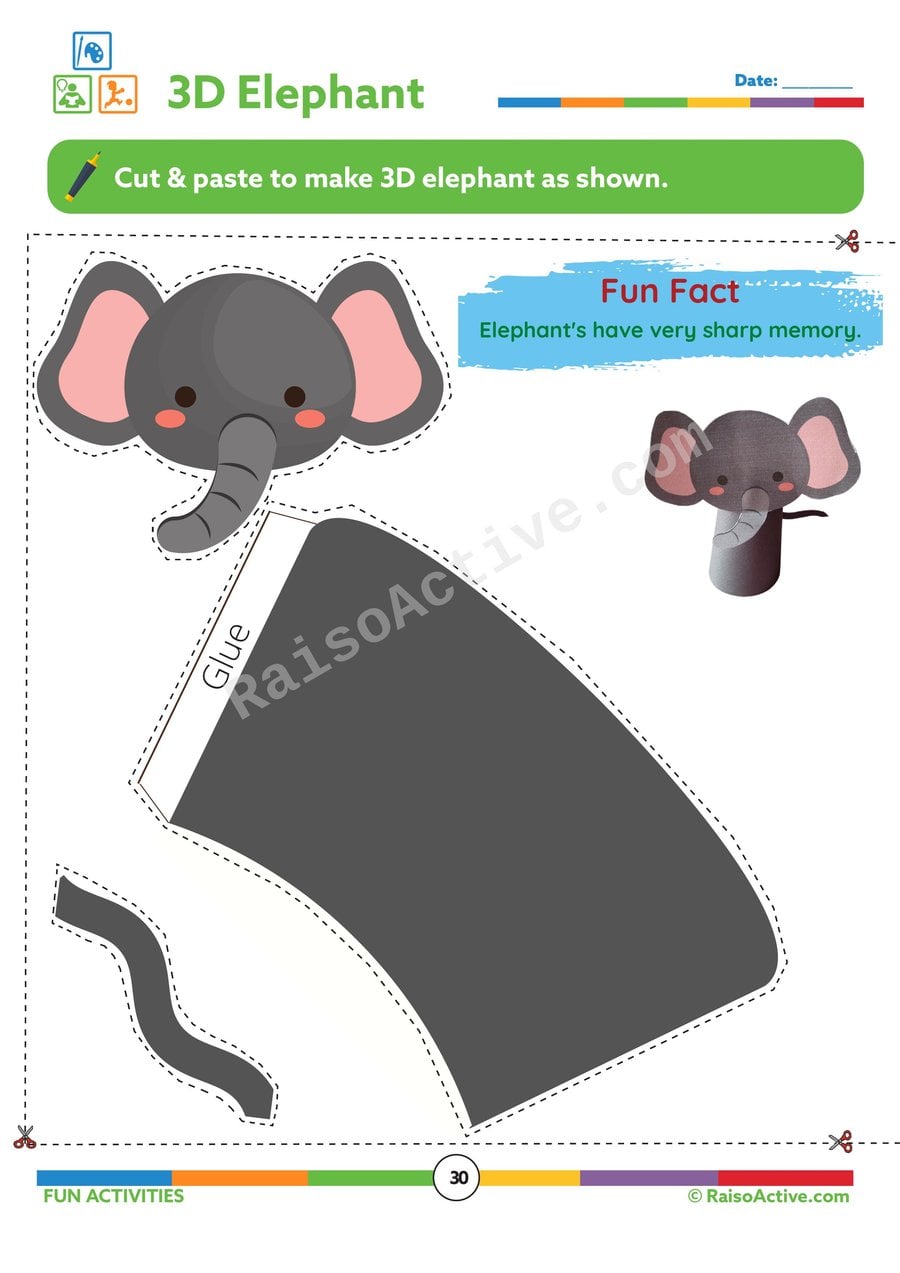
3D Elephant Craft Worksheet for Preschoolers
Ages 3-5 · Preschool–Pre-KAges 3-5 · Nursery–ReceptionAges 3-5 · Nursery–LKGAges 3-5
Folding and gluing flat pieces into a standing 3D elephant builds on simpler flat cut-and-paste crafts by adding a spatial, structural challenge — the pieces need to hold their shape once assembled, not just lie flat on a page. This kind of construction at ages 3-5 introduces the concept that paper can become a solid object, while the elephant theme opens the door to a memorable animal fact about memory.
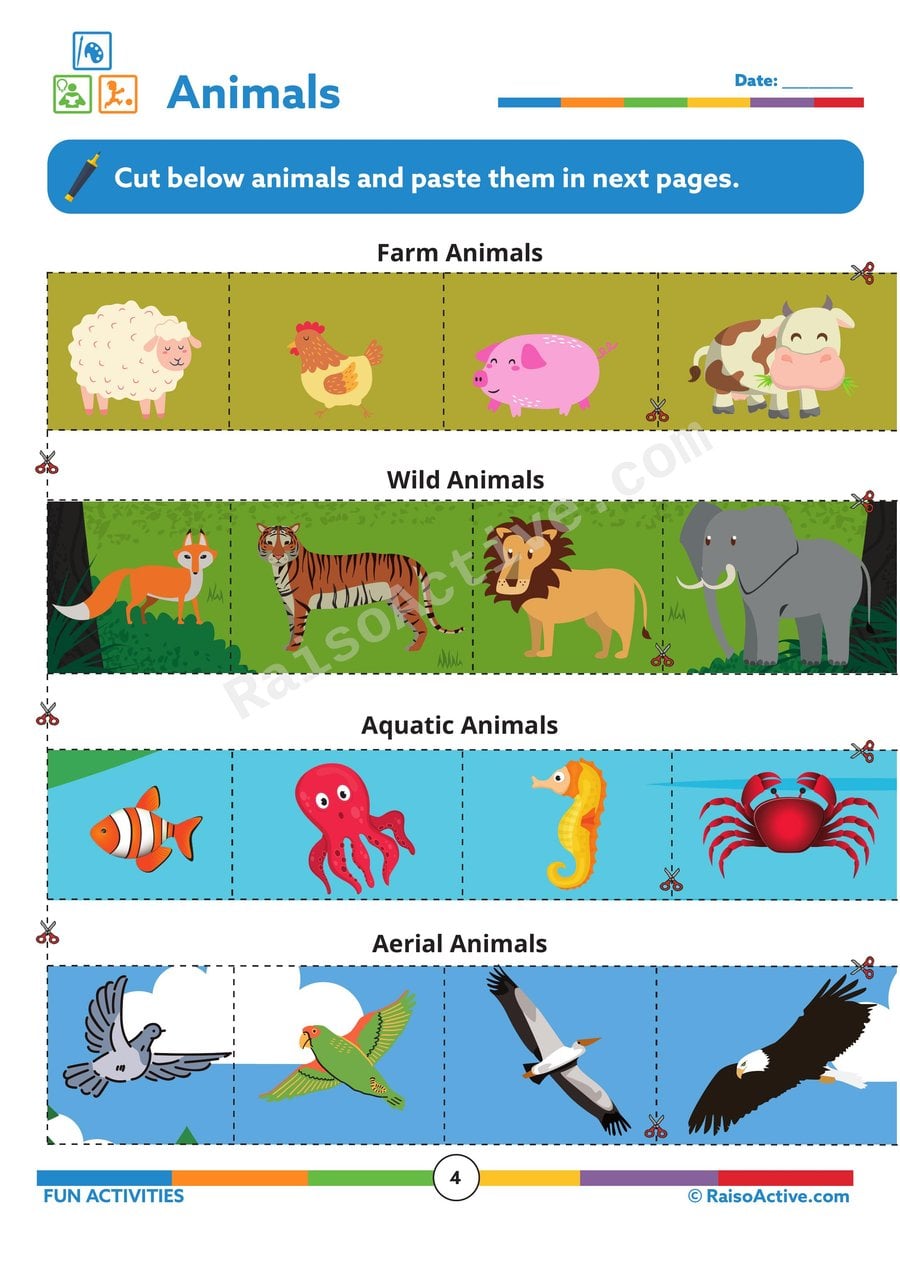
Animal Cut and Paste Worksheet for Preschoolers
Ages 3-5 · Preschool–Pre-KAges 3-5 · Nursery–ReceptionAges 3-5 · Nursery–LKGAges 3-5
Cutting out animal shapes or parts and gluing them into place builds scissor control and gluing precision in children ages 3-5, while sorting or placing animals correctly, such as onto a matching habitat or body outline, reinforces basic animal knowledge and classification. This combination of a physical craft skill and a simple thinking task makes the activity more than just cutting practice alone.

Castle Puzzle: Cut and Assemble the Castle Worksheet for Kids
Ages 3-5 · Preschool–Pre-KAges 3-5 · Nursery–ReceptionAges 3-5 · Nursery–LKGAges 3-5
Cutting a picture into puzzle pieces and reassembling them asks 3-5 year olds to hold a mental image of the whole picture while working with fragments of it — an early visual-spatial reasoning skill that supports later map-reading and geometry. The castle theme also gives a natural jumping-off point for imaginative play and vocabulary about towers, drawbridges, and moats.

Finger Paint Fun: Create a Colorful Tree Worksheet for Kids
Ages 3-5 · Preschool–Pre-KAges 3-5 · Nursery–ReceptionAges 3-5 · Nursery–LKGAges 3-5
Dabbing paint with a fingertip to create leaves gives children ages 3-5 controlled practice in applying just the right amount of pressure — too light and nothing shows, too hard and the print smears — which builds the same pressure control needed later for writing. Sticking cotton balls onto the cloud shapes adds a second, different fine motor challenge (pinching and placing) and introduces a simple seasonal or weather theme to talk about.
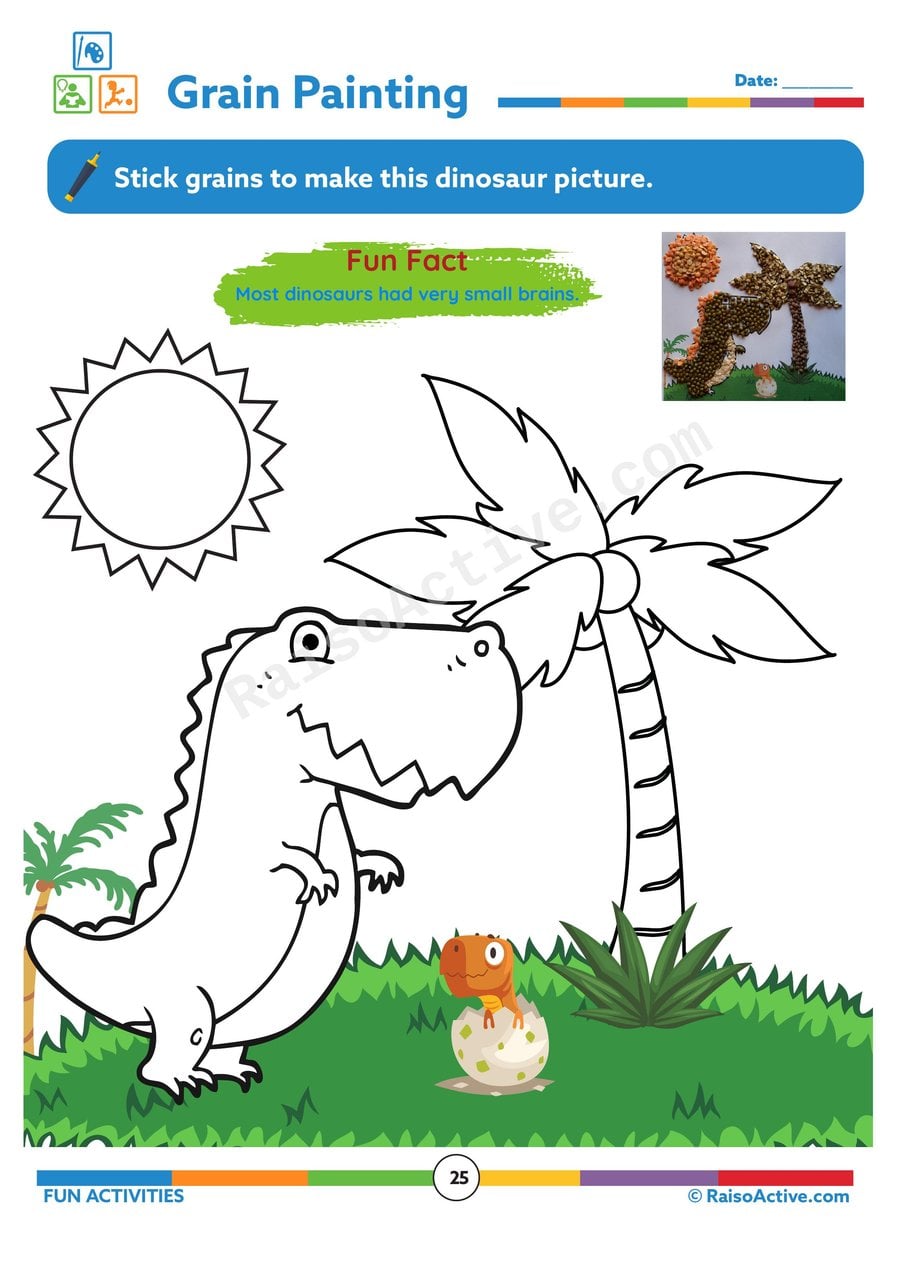
Dinosaur Grain Painting Worksheet for Kids
Ages 3-5 · Preschool–Pre-KAges 3-5 · Nursery–ReceptionAges 3-5 · Nursery–LKGAges 3-5
Sticking individual grains like rice or lentils onto a dinosaur outline is a sensory-rich fine motor task that asks for a precise pinch-and-place motion very different from painting or crayon coloring, building the same small-muscle control used later for holding scissors and a pencil. The tactile variety of different grains also gives young children valuable sensory input that supports attention and focus.
Related worksheets

Help the Girl Find Her Way in the Rainy Weather Maze Worksheet
Ages 3-5 · Preschool–Pre-KAges 3-5 · Nursery–ReceptionAges 3-5 · Nursery–LKGAges 3-5
This maze worksheet builds fine motor control and visual planning in children ages 3-5 as they trace a path for a girl through a rainy-weather scene, collecting items she needs along the way. Because the maze is themed around gathering specific rain gear, it adds a light problem-solving layer on top of standard maze navigation, encouraging children to think about which path leads to the items that actually make sense for the weather.

Help the Kid Reach the Doctor! A Fun Maze Worksheet
Ages 3-5 · Preschool–Pre-KAges 3-5 · Nursery–ReceptionAges 3-5 · Nursery–LKGAges 3-5
This maze worksheet builds fine motor control and pencil precision as children trace a winding path from a sick child to the doctor, while scanning for the correct route develops early planning and visual-spatial problem-solving. For ages 3-5, mazes are also a gentle way to introduce the idea that some situations, like feeling unwell, call for finding help from a trusted adult.

Special Delivery Maze: Help the Postman Find the Houses!
Ages 3-5 · Preschool–Pre-KAges 3-5 · Nursery–ReceptionAges 3-5 · Nursery–LKGAges 3-5
This postman-themed maze strengthens fine motor control through pencil tracing while building visual tracking skills as children follow a winding path to the correct houses. Because the activity also involves reading numbers on a delivery note and matching them to numbered houses, it reinforces number recognition alongside the spatial problem-solving that mazes provide.
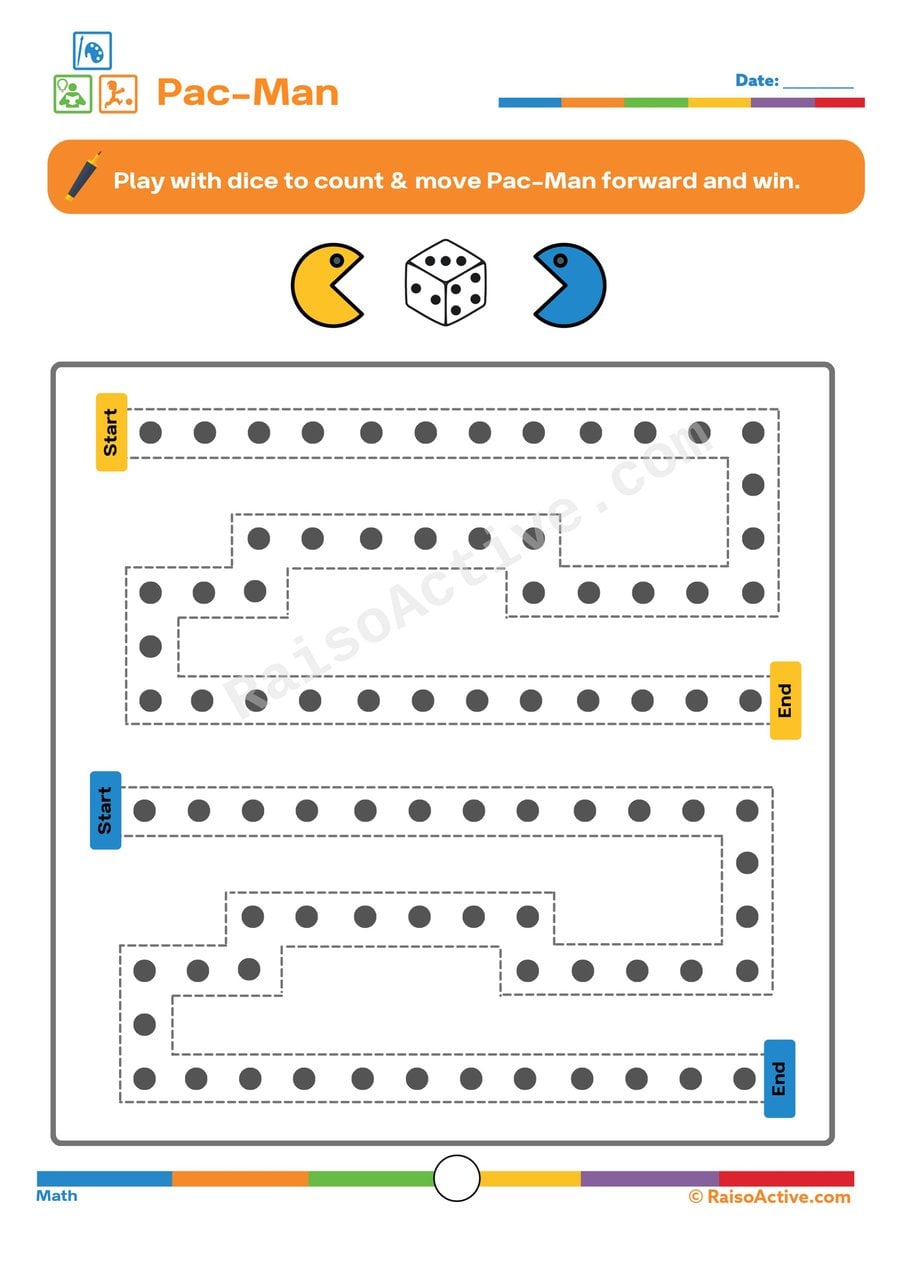
Pac-Man Maze Worksheet: Count and Move!
Ages 3-5 · Preschool–Pre-KAges 3-5 · Nursery–ReceptionAges 3-5 · Nursery–LKGAges 3-5
This dice-counting maze gives children ages 3-5 repeated practice matching a rolled number to the correct number of moves, reinforcing accurate counting under a bit of playful pressure. Tracking Pac-Man's current position after each roll also builds short-term spatial memory, since children must remember where they left off before moving again.

Spring Sudoku Worksheet: Cut and Paste Puzzle for Kids
Ages 4-6 · Pre-K–KindergartenAges 4-6 · Reception–Year 1Ages 4-6 · LKG–UKGAges 4-6
Placing cut-out pictures into a sudoku-style grid so that no image repeats in any row, column, or box teaches children ages 4-6 early logical reasoning and systematic thinking, since they must check multiple directions before deciding where each piece belongs. Cutting out the small picture squares beforehand also builds scissor control and hand-eye coordination. Together, this combines a pre-math logic puzzle with fine motor practice in a single spring-themed activity.

Gingerbread Man Coloring Worksheet for Preschoolers
Ages 3-5 · Preschool–Pre-KAges 3-5 · Nursery–ReceptionAges 3-5 · Nursery–LKGAges 3-5
This gingerbread man worksheet gives children ages 3-5 practice coloring within a simple, familiar outline while also adding their own decorative details like buttons and a bow, encouraging creative choices within a structured shape. Deciding where to place each decoration also builds early spatial awareness, since buttons and a bow need to be positioned in specific spots on the body.

Decorate the Christmas Tree! Cut and Paste Worksheet
Ages 3-5 · Preschool–Pre-KAges 3-5 · Nursery–ReceptionAges 3-5 · Nursery–LKGAges 3-5
This cut-and-paste activity builds scissor control and hand strength in children ages 3-5 as they snip out ornaments, stars, and lights to decorate their own Christmas tree. Deciding where each decoration goes also develops spatial planning and following a visual guide, since children compare their tree to the sample image while placing pieces.
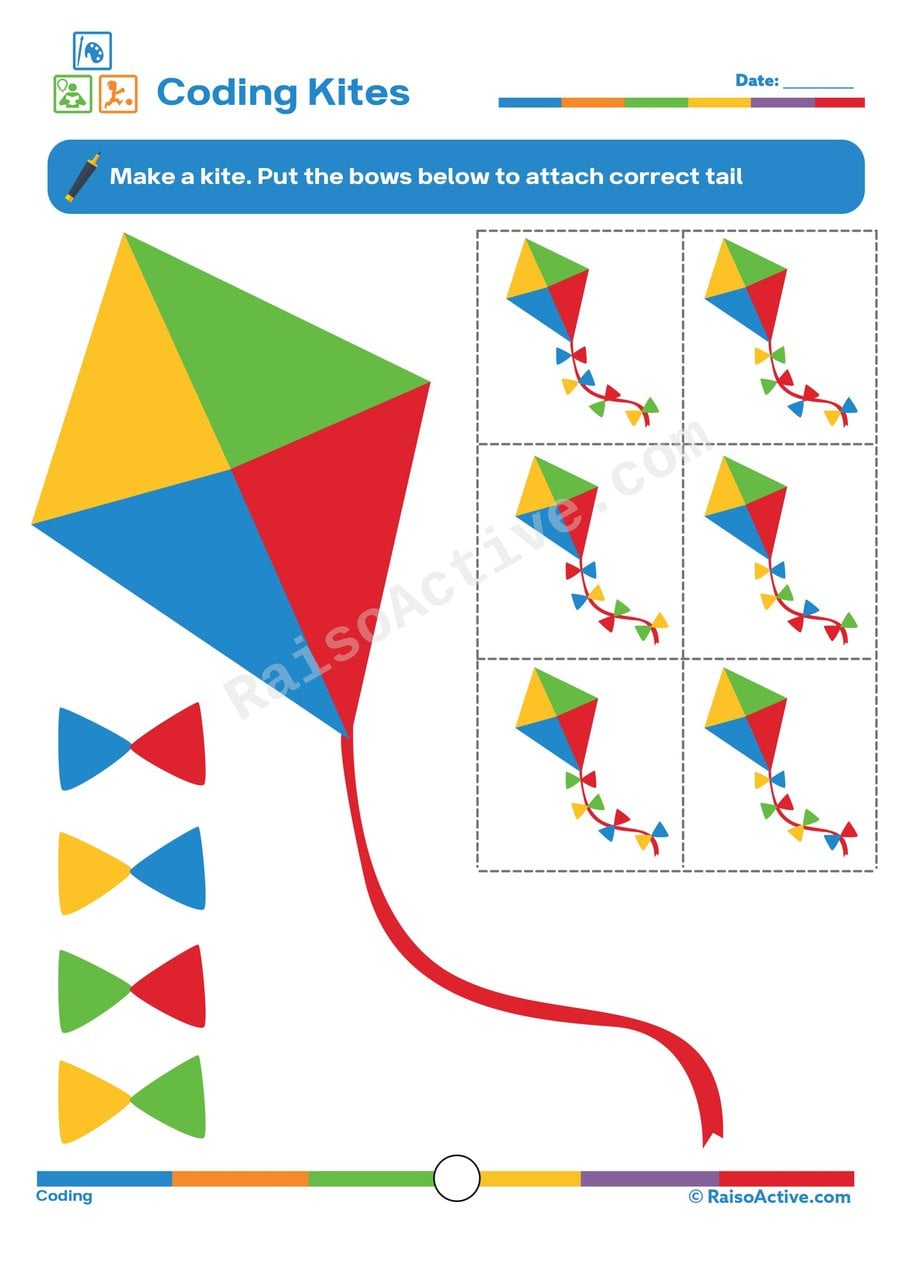
Coding Kites Worksheet: Match the Bows!
Ages 3-5 · Preschool–Pre-KAges 3-5 · Nursery–ReceptionAges 3-5 · Nursery–LKGAges 3-5
By matching each colorful bow to the kite sharing its color pattern, children ages 3-5 practice visual pattern recognition — an early form of the same logical sequencing used in beginner coding concepts. Cutting, matching, and gluing the correct bow also reinforces color-word vocabulary and precise hand-eye coordination.
Guides for this topic

Pre-Writing Strokes in Order: From Standing Lines to Loops (With Printable Patterns)
The developmental order of pre-writing strokes, from vertical lines to loops, and why practicing them in sequence makes letter formation much easier to learn.

Age-Appropriate Problem-Solving Activities: Building Critical Thinkers from the Ground Up
Discover fun, age-appropriate problem-solving activities for children ages 1-8. Build critical thinking, logic, and reasoning skills through play-based learning.
Critical Thinking Activities That Actually Work for Young Children: Building Tomorrow's Thinkers Today
Discover proven critical thinking activities for young children. Age-wise logic games, questioning techniques, and hands-on ideas to build thinking skills at home.
Reviews
Every worksheet for ages 3–5, no watermark
Members download the full library of 1,000+ worksheets and every activity pack without watermarks or daily limits. One year costs ₹999 in India or $20 elsewhere.
See membership plansOr download any worksheet free with a watermark (5 a day).