
Chicken Cut and Paste Worksheet for Preschoolers
Cutting and assembling a chicken from paper pieces gives children ages 3-5 practice cutting a mix of shapes, like an oval body, triangular beak, and small feather or wing shapes, while reinforcing the idea that a whole picture is built from several smaller parts. Talking about the chicken while building it also introduces simple farm animal vocabulary and sounds.
Curriculum
How to use this worksheet
Cut out the chicken's body, wings, beak, and any other pieces with your child, working through the shapes one at a time. Lay all the pieces near the blank outline so your child can see everything before gluing. Ask them to place each piece where they think it belongs, checking that the beak faces the right direction and wings are on the sides of the body. Glue each piece down and let your child add finishing color or details.
Materials needed
- Scissors
- Glue
- Pencil
Extension activities
- •Make an egg carton chick craft using cut sections of an egg carton, cotton balls, or pom-poms.
- •Practice making farm animal sounds and see if your child can guess which animal makes which sound.
- •Watch a short video or look at picture books about how chicks hatch from eggs.
- •Visit a farm or petting zoo, if possible, to see real chickens up close.
- •Talk through the simple life cycle of a chicken, from egg to chick to hen, using pictures if helpful.
Tips for parents and teachers
Small pieces like a beak or wing can be frustrating to cut precisely, so it's fine to pre-cut the tiniest pieces while letting your child cut the larger body shape independently. If pieces end up placed in unexpected spots, like wings glued to the front instead of the sides, gently ask your child to check the picture again rather than fixing it for them. This craft pairs naturally with a short conversation about where eggs, and eventually chickens, come from.

Written by
Hemsweta Jain · Teacher Cheena
MBA and Early Childhood Educator, teaching since 2014 · Founder of RaisoActive, Mumbai
Every RaisoActive worksheet is designed and checked by the founder before publishing.
Published · Last reviewed
Related worksheets

Trace the Numbers 1-9 Worksheet for Preschoolers
Tracing the numerals 1 through 9 gives children ages 3-5 repeated, guided practice with the specific pencil strokes each number requires, building the fine motor control and muscle memory needed for independent number writing. Because tracing follows a fixed, correct path, it also reinforces accurate numeral recognition, helping children tell visually similar digits apart.
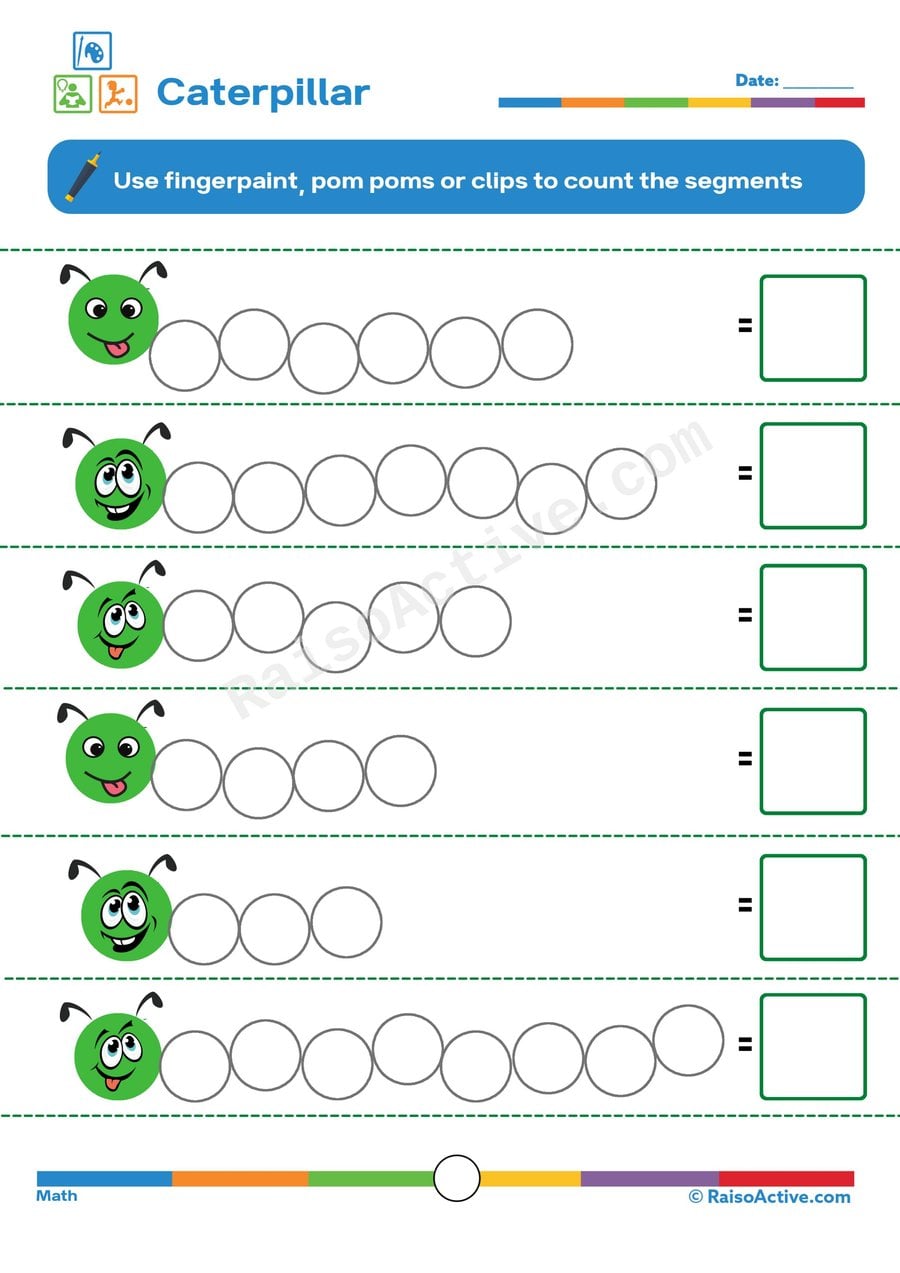
Caterpillar Counting Worksheet for Preschoolers
Counting the segments of each caterpillar teaches children ages 3-5 one-to-one correspondence — touching or marking each segment exactly once while saying a number — which is the core skill underlying accurate counting. Writing the final total in a box also connects the physical act of counting to its written numeral, reinforcing early number-writing practice.
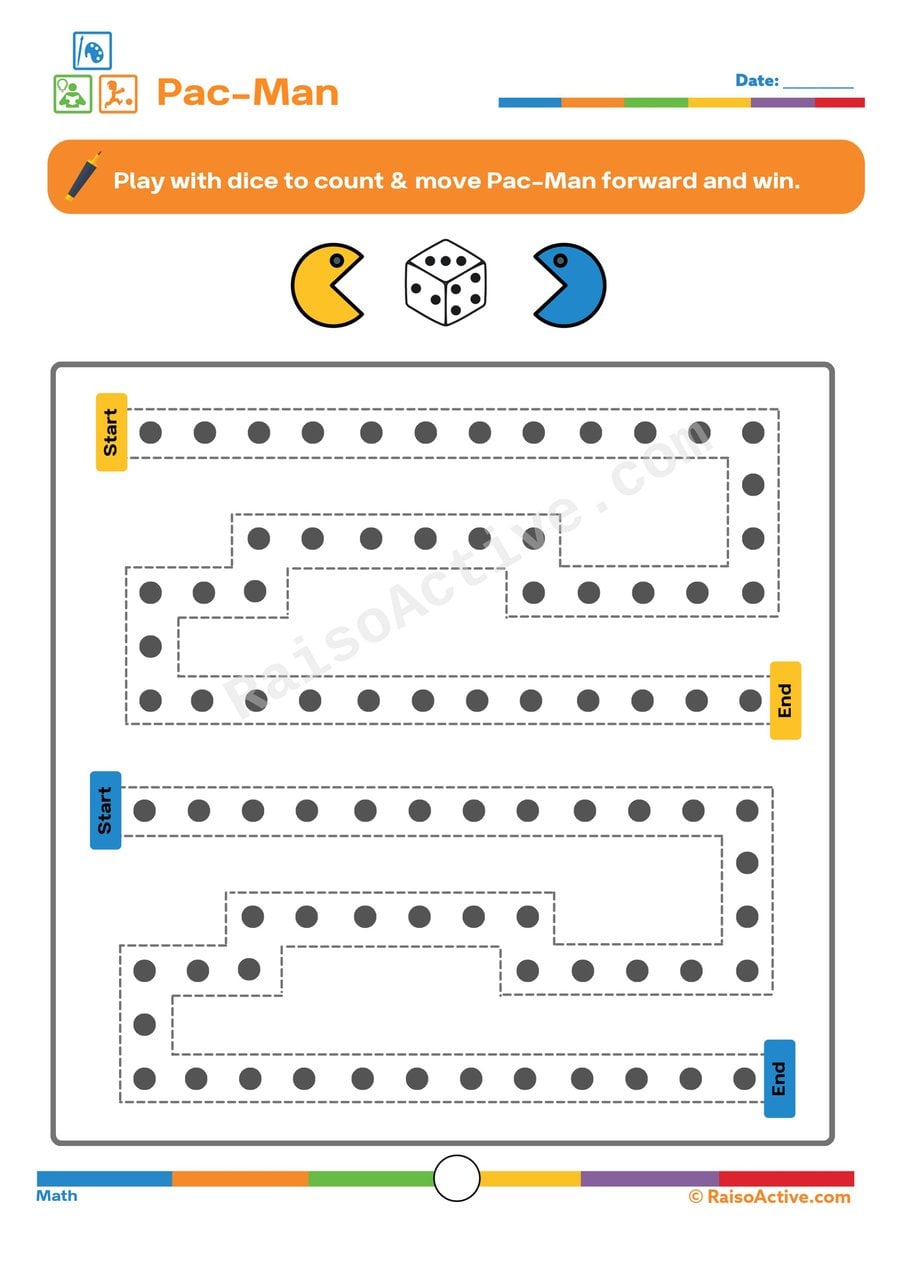
Pac-Man Maze Worksheet: Count and Move!
This dice-counting maze gives children ages 3-5 repeated practice matching a rolled number to the correct number of moves, reinforcing accurate counting under a bit of playful pressure. Tracking Pac-Man's current position after each roll also builds short-term spatial memory, since children must remember where they left off before moving again.

Stick Man Emotions Worksheet: Happy, Sad, Angry, and Surprised!
Children ages 4-6 practice reading facial expressions on this worksheet, matching stick-figure faces to their correct emotion labels by noticing details like mouth shape and eyebrow position. This strengthens emotional literacy — the ability to name and recognize feelings in others — which supports empathy and smoother social interactions as children move into more group play and classroom settings.
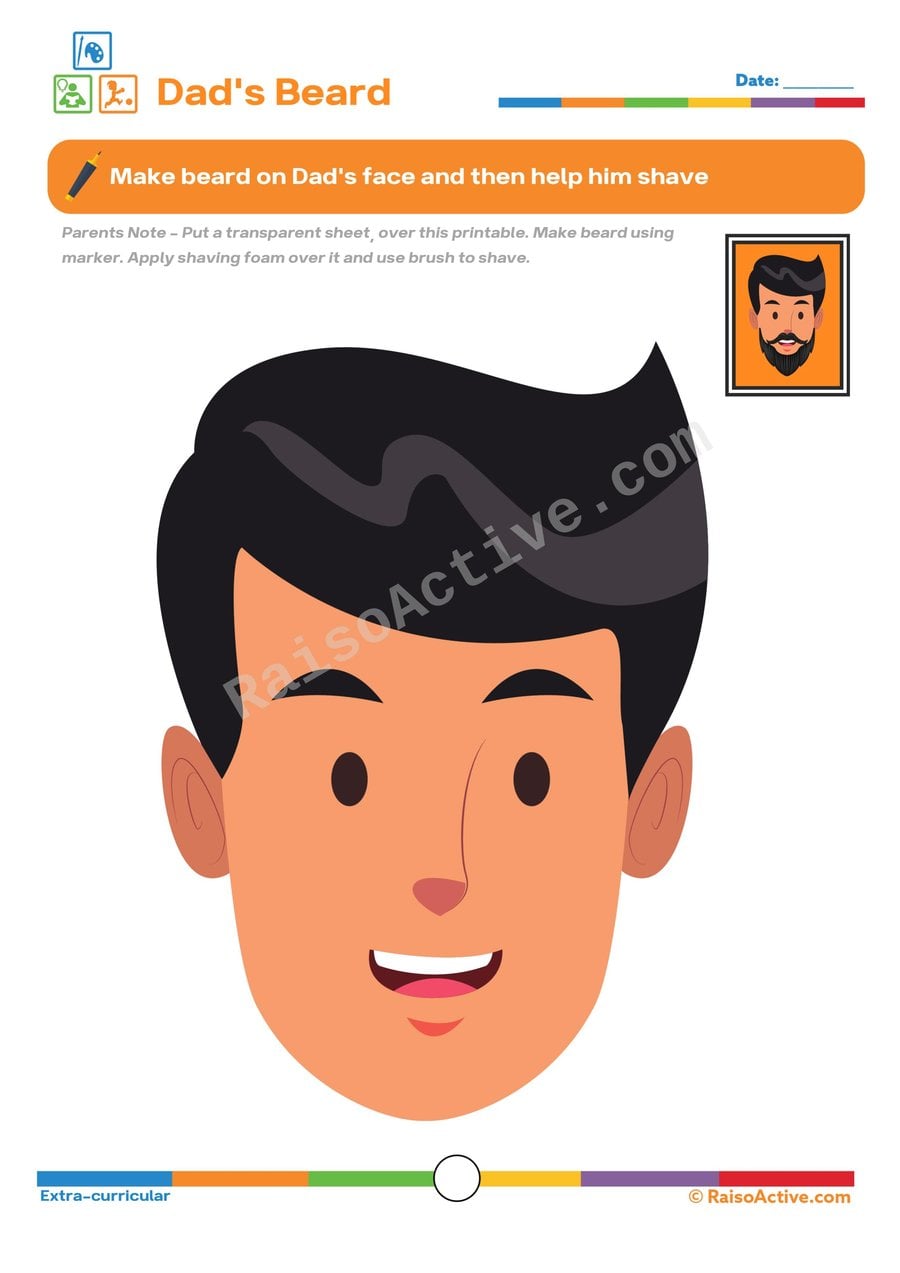
Dad's Beard: A Fun Shaving Activity for Kids!
This playful pretend-shaving activity builds fine motor control and bilateral coordination in children ages 3-5, as they draw a beard with a marker and then 'shave' it away using foam and a brush in careful, controlled strokes. It also introduces a simple science idea — that shaving foam can be applied and removed in layers — while giving children a hands-on, sensory way to imitate an everyday grown-up routine.
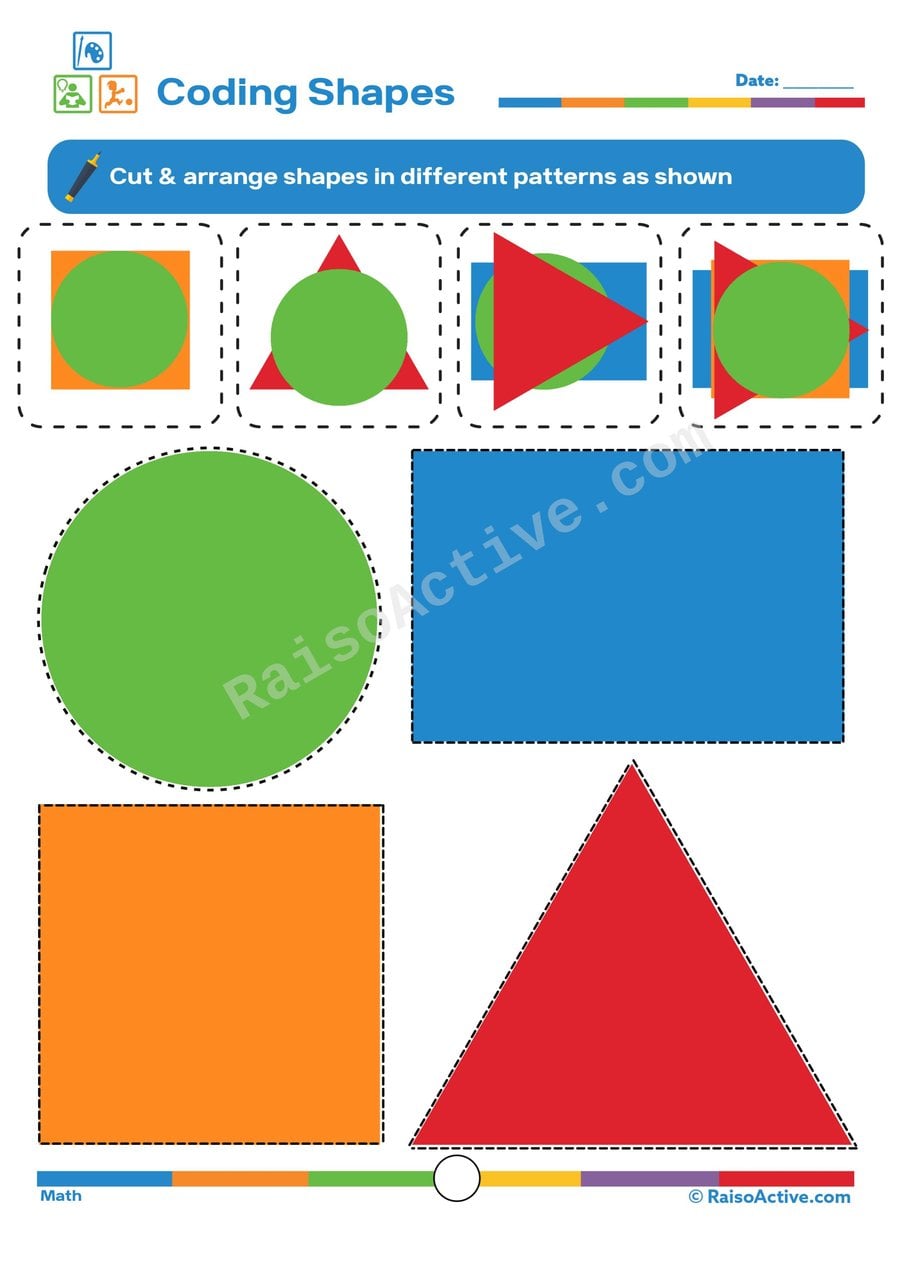
Coding Shapes Worksheet: Cut and Arrange Shapes!
This cut-and-paste worksheet has children ages 3-5 recreate example shape sequences by cutting out individual pieces and arranging them to match, combining shape recognition with the ordered, step-by-step thinking used in early coding and pattern logic. The physical act of cutting and precisely placing each piece also strengthens fine motor control and spatial planning.
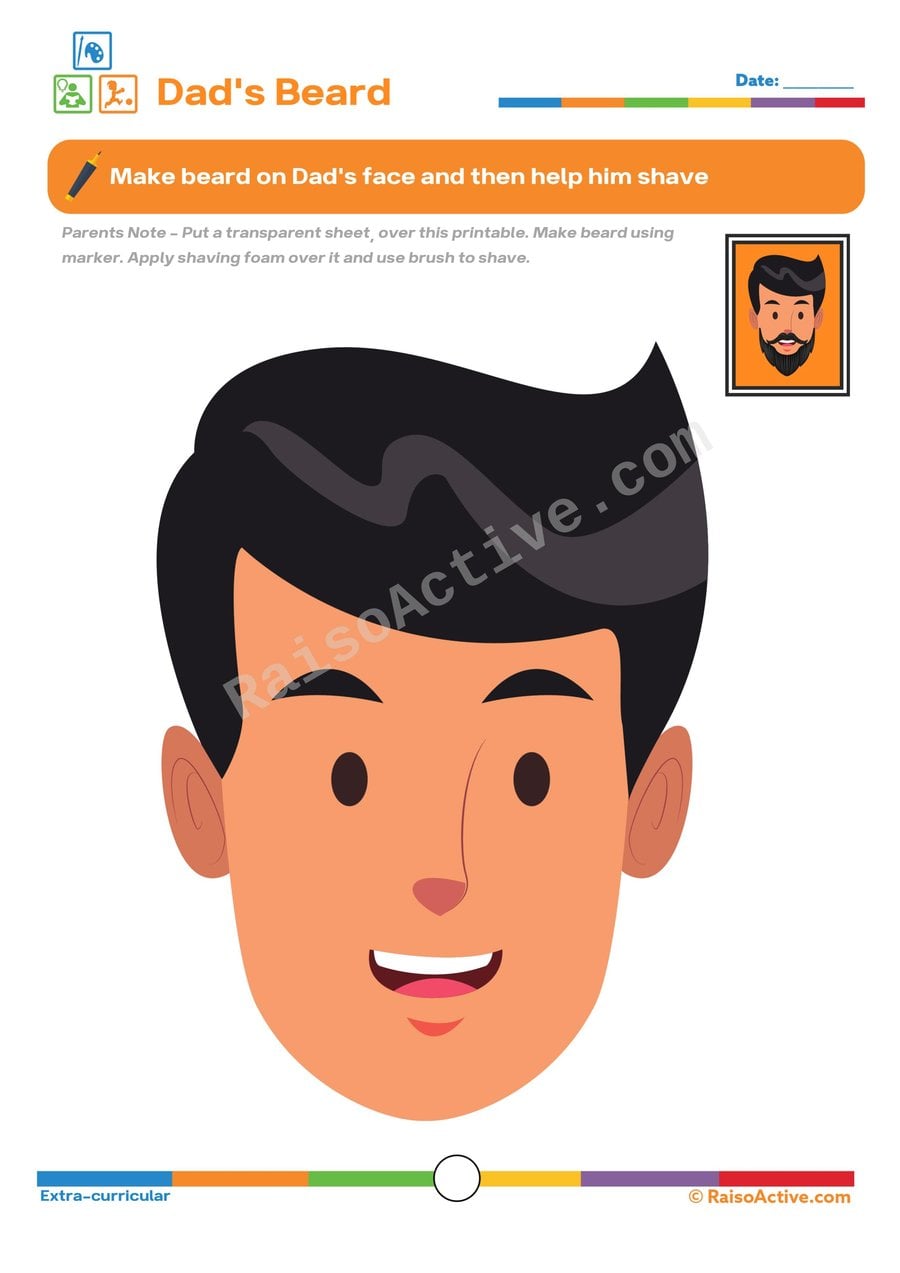
Dad's Beard: A Fun Shaving Activity for Kids!
This sensory pretend-shaving activity builds fine motor precision and hand control in children ages 3-5, as they draw a beard with a marker and then carefully brush away shaving foam in controlled strokes. Beyond motor skills, it gives children a playful, low-stakes way to imitate a grown-up grooming routine they've likely observed at home.

Coding Shapes Worksheet for Preschoolers: Cut and Paste Patterns
This cut-and-paste activity has children ages 3-5 recreate shape sequences shown in sample boxes, combining shape recognition with the same ordered, step-by-step thinking used in beginner coding concepts. Cutting out individual shapes and arranging them in the correct sequence also builds fine motor precision and spatial planning.
Guides for this topic
How to Teach Cutting Skills to Your Preschooler: A Complete Guide for Parents and Teachers
Help your child master scissor skills safely. Expert guide covering readiness signs, scissor types, progression steps, pre-cutting exercises, and fun practice ideas for ages 2-6.
Christmas and Winter Activities That Combine Fun and Learning: Creating Magical Educational Experiences
Discover Christmas and winter activities that combine festive fun with real learning. Crafts, counting, literacy, and printable worksheets for ages 2 to 8 — perfect for home and school.
Age-Appropriate Halloween Learning Activities: Balancing Spooks and Skills for Young Learners
Discover fun, age-appropriate Halloween learning activities for young children. Spooky crafts, counting games, literacy ideas, and printable worksheets for ages 2 to 8.
Reviews
Every worksheet for ages 3–5, no watermark
Members download the full library of 1,000+ worksheets and every activity pack without watermarks or daily limits. One year costs ₹1,000 in India or $20 elsewhere.
See membership plansOr download any worksheet free with a watermark (5 a day).