
Cut and Paste a Mouse Face Worksheet for Valentine's Day
Cutting and assembling a mouse face teaches children ages 3-5 to snip along both straight and curved lines, since ears are typically rounder than the face outline, while also building spatial awareness as they figure out where each facial feature belongs. Placing ears, eyes, and a nose in the correct spots on a face template is an early lesson in facial anatomy and proportion that carries over into their own drawing later on.
Curriculum
How to use this worksheet
Help your child cut out the mouse's ears, eyes, nose, and any whiskers along the dotted lines, holding the paper steady as they work. Lay the pieces next to the blank face outline so your child can see all the parts before placing any of them. Ask your child to arrange the pieces where they think each one belongs before gluing, checking in on placement if something looks off. Glue each piece down with a small dab, pressing firmly to secure it.
Materials needed
- Scissors
- Glue Stick
- Pencil
Extension activities
- •Make simple mouse ears from paper or felt and wear them as a headband for pretend play.
- •Play a hide-and-seek 'cheese hunt' game using paper cheese cutouts hidden around the room.
- •Read a picture book featuring a mouse character and talk about its features.
- •Practice cutting circles from a play mat or scrap paper to build scissor confidence before the next craft.
- •Turn the finished mouse into a valentine by adding a small paper heart to its paws.
Tips for parents and teachers
If cutting curved ear shapes is too difficult, pre-cut those pieces and let your child focus on cutting the straighter lines and doing all of the gluing and placement. Watch for pieces glued upside down or in the wrong spot, and gently ask your child to check rather than fixing it yourself, since noticing the mistake is part of the learning. Scissor stamina is limited at this age, so it's fine to split cutting and assembling across two short sessions.

Written by
Hemsweta Jain · Teacher Cheena
MBA and Early Childhood Educator, teaching since 2014 · Founder of RaisoActive, Mumbai
Every RaisoActive worksheet is designed and checked by the founder before publishing.
Published · Last reviewed
Related worksheets
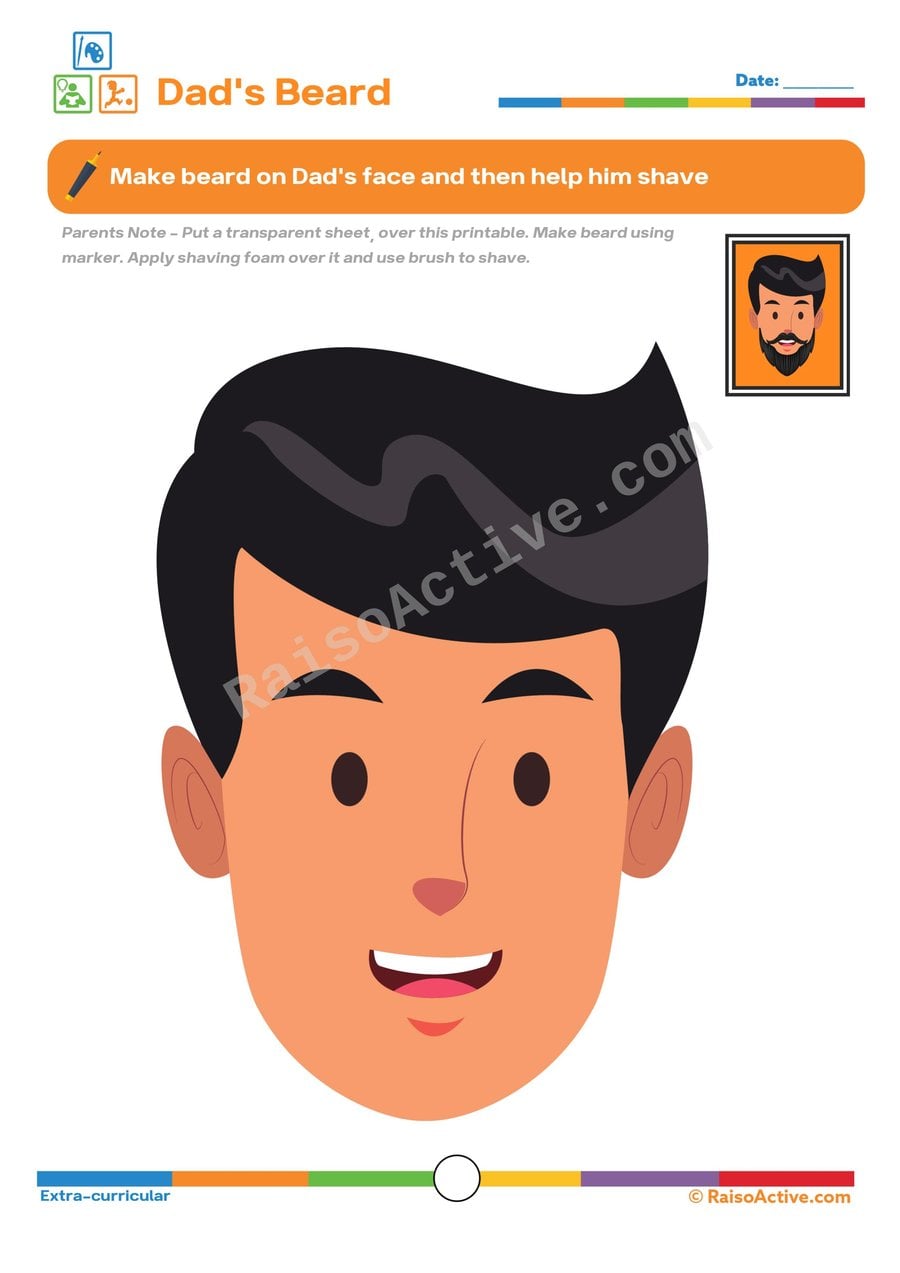
Dad's Beard: A Fun Shaving Activity for Kids!
This playful pretend-shaving activity builds fine motor control and bilateral coordination in children ages 3-5, as they draw a beard with a marker and then 'shave' it away using foam and a brush in careful, controlled strokes. It also introduces a simple science idea — that shaving foam can be applied and removed in layers — while giving children a hands-on, sensory way to imitate an everyday grown-up routine.
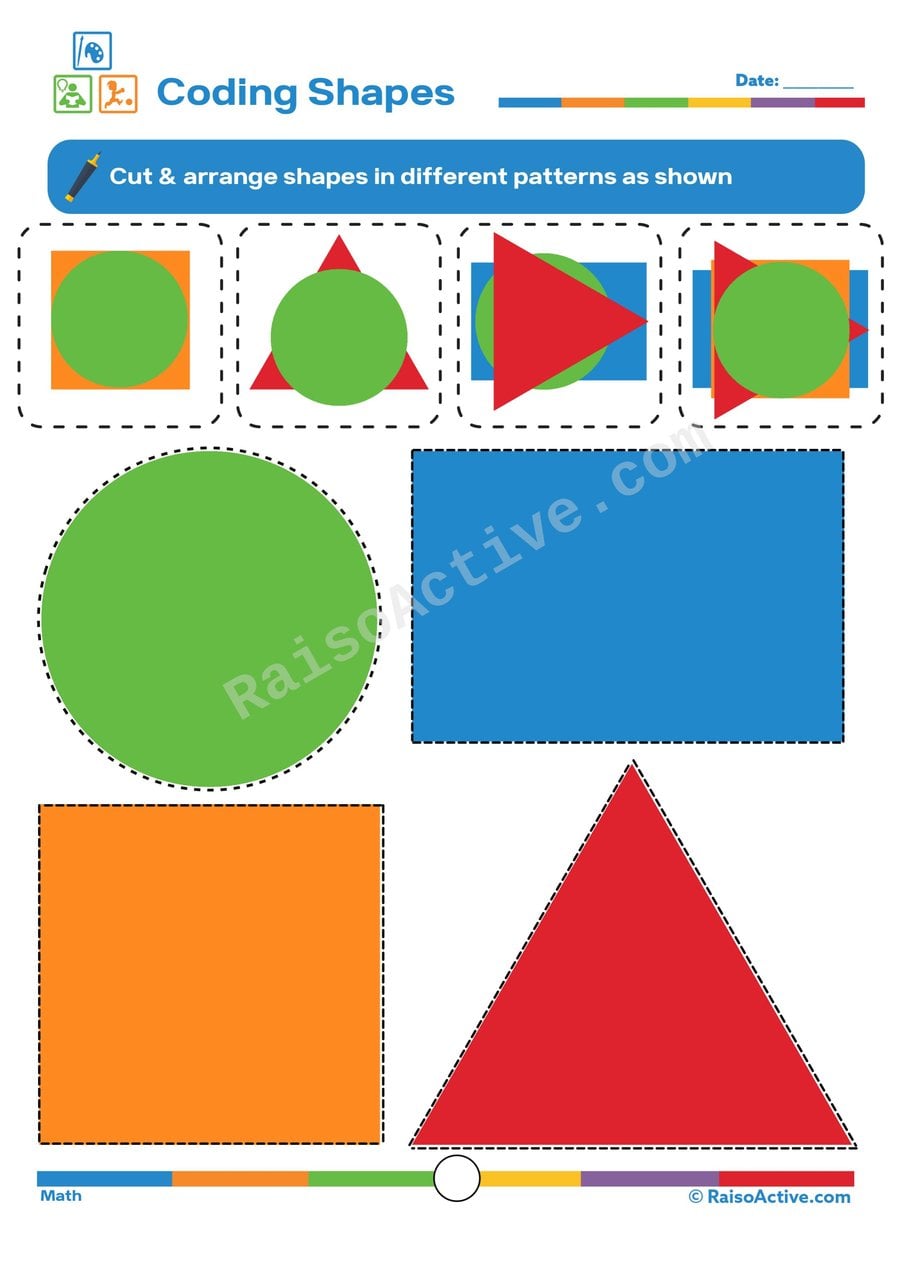
Coding Shapes Worksheet: Cut and Arrange Shapes!
This cut-and-paste worksheet has children ages 3-5 recreate example shape sequences by cutting out individual pieces and arranging them to match, combining shape recognition with the ordered, step-by-step thinking used in early coding and pattern logic. The physical act of cutting and precisely placing each piece also strengthens fine motor control and spatial planning.
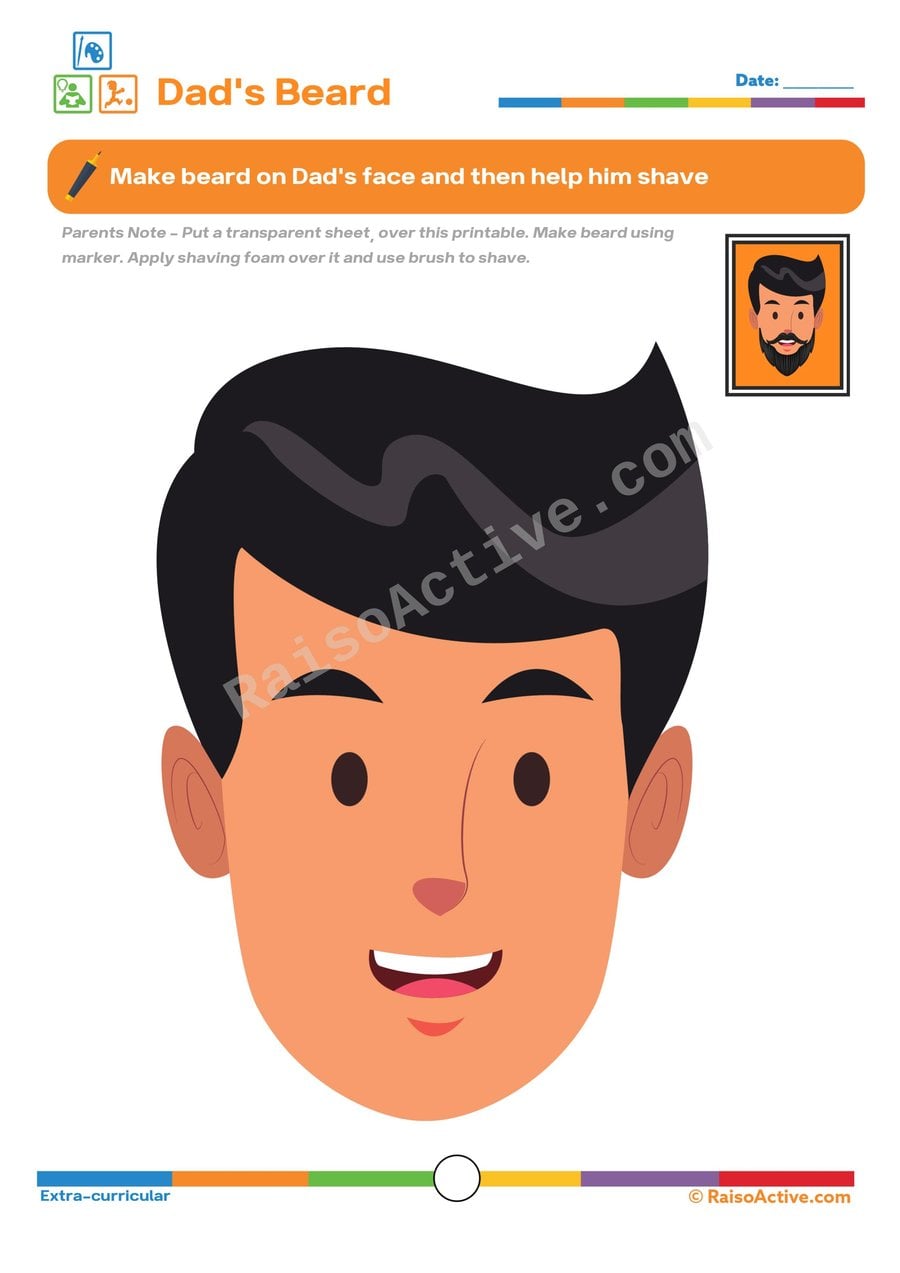
Dad's Beard: A Fun Shaving Activity for Kids!
This sensory pretend-shaving activity builds fine motor precision and hand control in children ages 3-5, as they draw a beard with a marker and then carefully brush away shaving foam in controlled strokes. Beyond motor skills, it gives children a playful, low-stakes way to imitate a grown-up grooming routine they've likely observed at home.

Coding Shapes Worksheet for Preschoolers: Cut and Paste Patterns
This cut-and-paste activity has children ages 3-5 recreate shape sequences shown in sample boxes, combining shape recognition with the same ordered, step-by-step thinking used in beginner coding concepts. Cutting out individual shapes and arranging them in the correct sequence also builds fine motor precision and spatial planning.

Christmas Cut and Paste Worksheet for Preschoolers
Cutting out a moon, snowman, gifts, and trees and arranging them inside a circle builds scissor precision and compositional thinking in children ages 3-5. Because there's no single 'correct' layout, children also practice early creative decision-making — choosing where each element belongs within a bordered space, which supports spatial awareness.

Rocking Santa Card Craft Worksheet for Preschoolers
This rocking Santa card craft has children ages 3-5 cut out individual shape pieces and assemble them onto a folded card base, combining scissor control with an early understanding of how folding creates movement, since the 'rocking' effect comes from the card's fold. Following the assembly steps in order also reinforces sequencing and attention to visual instructions.
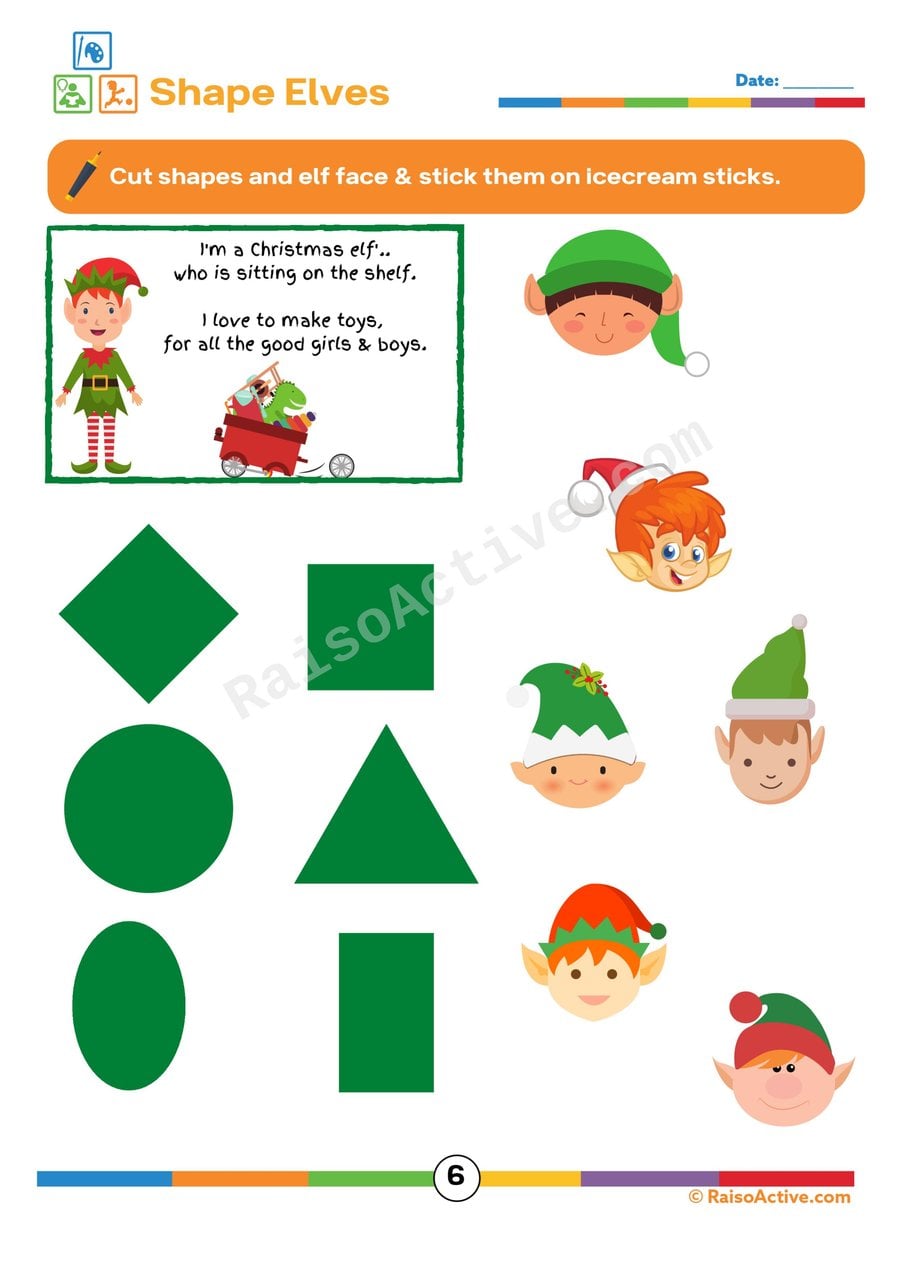
Shape Elves Worksheet: Cut, Paste, and Create!
Cutting out circles, triangles, and rectangles to assemble an elf face teaches children ages 3-5 to recognize and name basic 2D shapes while practicing scissor control along both straight and curved lines. Because each shape has to go in a specific spot to form a recognizable face, children also build spatial reasoning as they figure out which shape works as eyes, a nose, or a hat. Turning geometry into a craft project makes an abstract math concept feel like creative play.

Decorate the Christmas Tree! Cut and Paste Worksheet
This cut-and-paste activity builds scissor control and hand strength in children ages 3-5 as they snip out ornaments, stars, and lights to decorate their own Christmas tree. Deciding where each decoration goes also develops spatial planning and following a visual guide, since children compare their tree to the sample image while placing pieces.
Guides for this topic
How to Teach Cutting Skills to Your Preschooler: A Complete Guide for Parents and Teachers
Help your child master scissor skills safely. Expert guide covering readiness signs, scissor types, progression steps, pre-cutting exercises, and fun practice ideas for ages 2-6.
Christmas and Winter Activities That Combine Fun and Learning: Creating Magical Educational Experiences
Discover Christmas and winter activities that combine festive fun with real learning. Crafts, counting, literacy, and printable worksheets for ages 2 to 8 — perfect for home and school.
Age-Appropriate Halloween Learning Activities: Balancing Spooks and Skills for Young Learners
Discover fun, age-appropriate Halloween learning activities for young children. Spooky crafts, counting games, literacy ideas, and printable worksheets for ages 2 to 8.
Reviews
Every worksheet for ages 3–5, no watermark
Members download the full library of 1,000+ worksheets and every activity pack without watermarks or daily limits. One year costs ₹1,000 in India or $20 elsewhere.
See membership plansOr download any worksheet free with a watermark (5 a day).