Free printable worksheets · United Kingdom
EYFS CVC Words Worksheets (Ages 3–5)
EYFS cvc words worksheets are practice sheets for children aged 3–5 in Early Years Foundation Stage in the UK. CVC words are three-letter consonant-vowel-consonant words, such as cat or sun, practiced as the first words decoded by blending sounds. The sheets on this page cover blending three sounds into a word, short vowel sounds, segmenting a word for spelling and reading simple sentences built from CVC words.
The Early Years Foundation Stage spans Nursery and Reception and treats a worksheet as a small supplement to play rather than the main event. Mark making, matching and sorting dominate the Nursery year; Reception adds letter formation, sound matching and counting to ten as phonics teaching begins in earnest. A four-year-old who knows a dozen letter sounds can begin to blend, and that is the task at this age: look at c-a-t, say each sound, push them together, point to the picture. Worksheets should use one short vowel at a time, usually "a" first, offer a picture beside every word, and keep to a few words per page. Do not expect the child to write the words, or to read them without saying the sounds aloud first.
681+ worksheets · free PDF download · print on A4 or Letter
EYFS CVC Words Worksheets to print
Browse all worksheets for ages 3–5
Clothing Pattern Match Worksheet for Preschoolers
This worksheet has children ages 3-5 study repeating patterns on clothing items — stripes, polka dots, or checks — and match each item to its identical twin, building visual discrimination and early pattern-sequencing skills. Distinguishing between similar-looking patterns also sharpens attention to detail, a skill that later supports letter and word recognition.
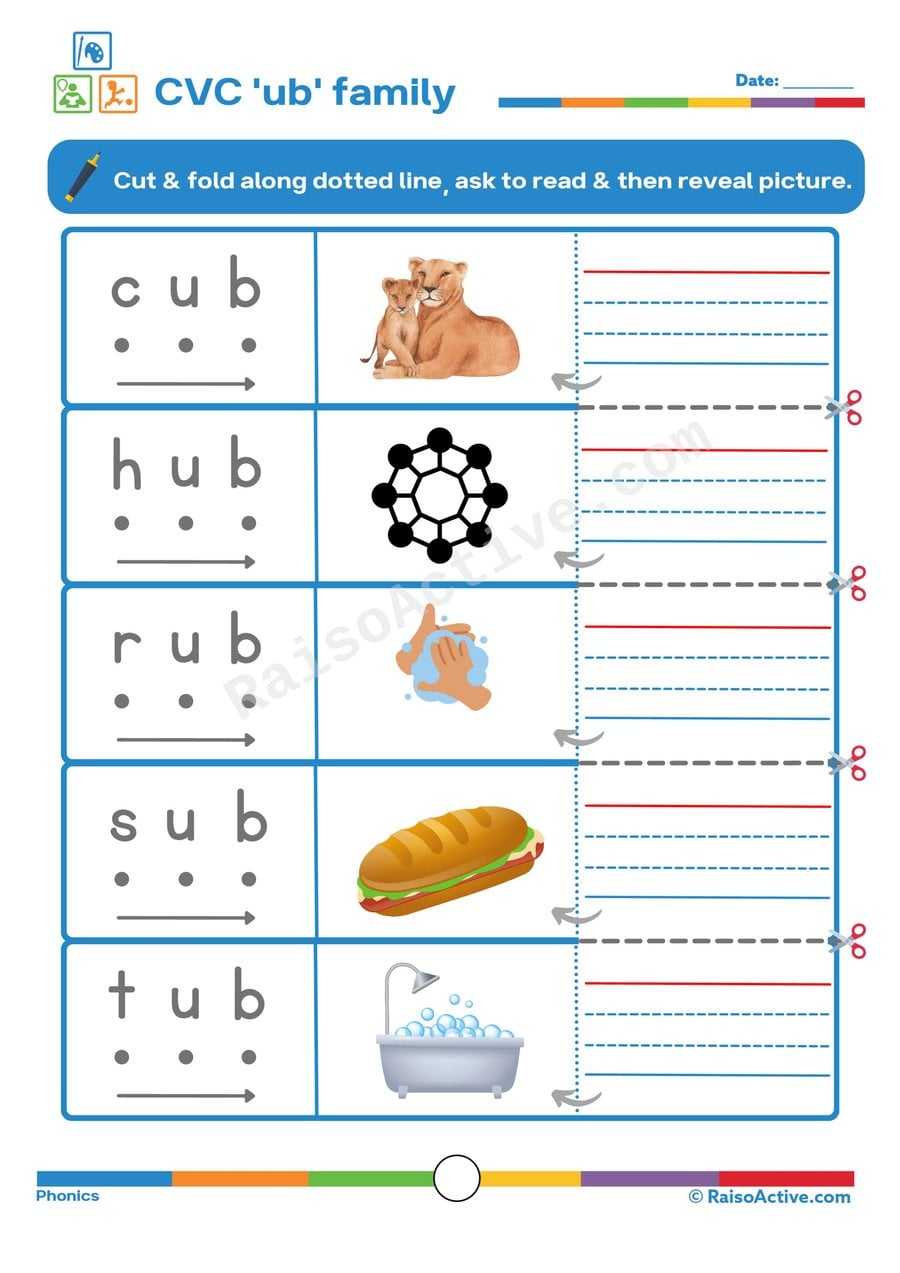
CVC 'ub' Family Worksheet: Read, Match, and Reveal!
This worksheet continues word-family practice with the 'ub' ending (like 'cub,' 'rub,' 'tub') for children ages 3-5, using the same cut-and-fold reveal format that turns reading into a short guessing game. Reading the word before flipping the flap to see its picture forces genuine sound-based decoding, encouraging children to trust their phonics skills rather than relying on picture cues to guess the word. This repeated exposure to the reveal format across different word families also builds independence, since children become increasingly confident predicting the picture before they even fold back the flap.

Summer Shadows Matching Worksheet for Preschoolers
This worksheet has children ages 3-5 match pictures of summer activities, like swimming or building a sandcastle, to their correct shadow silhouettes, building visual discrimination through shape recognition rather than color or detail. Because these shadows represent action scenes rather than single objects, children must recognize more complex outlines, including body positions and poses, which is a step up from matching simpler object shadows. This adds a layer of visual reasoning about how shapes and motion relate.

Weather Worksheet: Circle the Correct Weather Word!
This worksheet strengthens children's early reading skills by having them match weather pictures — like sun, rain, or wind — to the correct written word, building sight recognition of common weather vocabulary for ages 3-5. Circling the matching word rather than just naming the picture aloud pushes children to connect spoken language with printed text, an essential pre-reading skill. Because weather words appear frequently in books and daily conversation, this practice has immediate real-world payoff.

Weather Worksheet: Match the Weather to the Number!
This matching activity asks children ages 3-5 to connect weather pictures — sun, rain, clouds, snow — to numbered labels, combining early reading of weather vocabulary with number-symbol association. Recognizing that a picture, a word, and a number can all represent the same idea builds the kind of flexible symbolic thinking children will later use in reading and math alike. Weather is also a topic children experience daily, which makes the vocabulary immediately meaningful rather than abstract.

Butterfly Life Cycle Matching Worksheet for Preschoolers
This matching worksheet introduces children ages 3-5 to the four stages of metamorphosis — egg, caterpillar, chrysalis, and butterfly — while building visual matching skills essential for early science literacy. Pairing each picture to its correct stage strengthens observation and categorization, skills children will later apply across all science topics.

Easter Pattern Match Worksheet: Bunny, Basket, and Egg Fun!
This worksheet has children ages 3-5 study a repeating pattern shown across a set of bunny, basket, and egg images, then identify which item on the right continues or matches that same pattern. Recognizing a pattern by its color or design sequence builds early algebraic thinking, since spotting what comes next is a skill children will rely on throughout math.
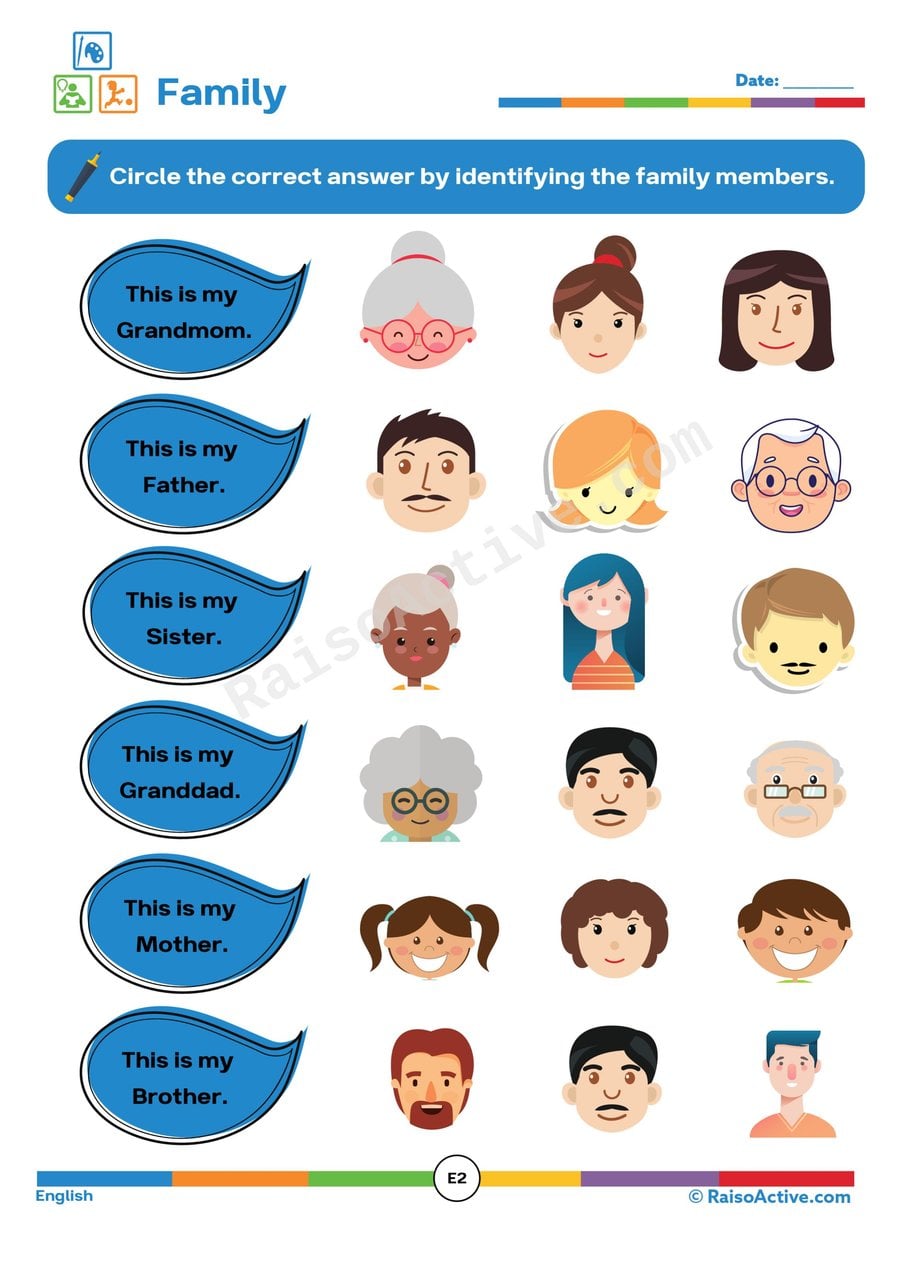
Family Members Worksheet: Identify and Circle!
Reading a sentence describing a family member and circling the matching picture teaches children ages 3-5 to connect written description to a specific person, combining early reading comprehension with family vocabulary. This task also builds the habit of checking text carefully rather than guessing from the picture alone.
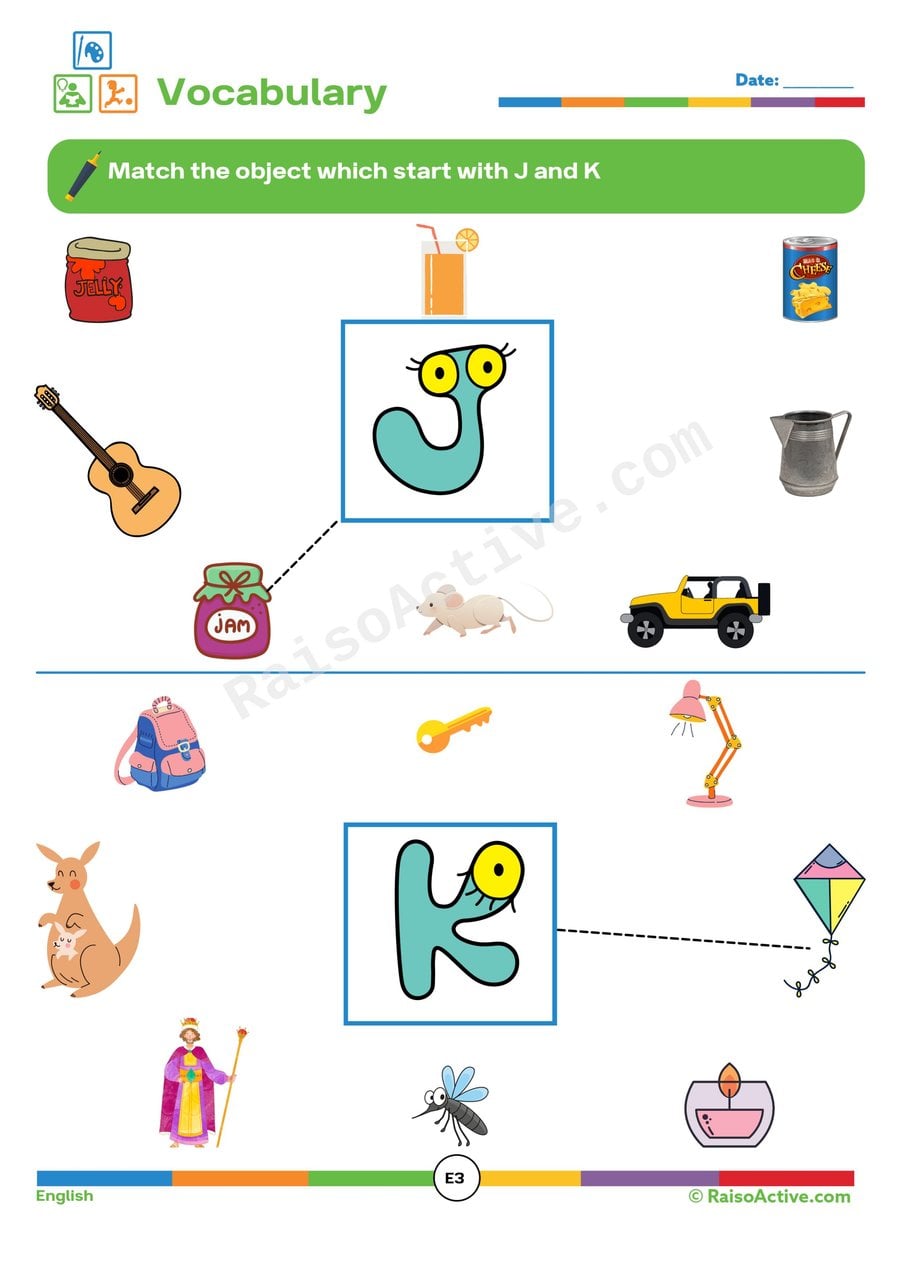
J and K Vocabulary Worksheet: Match the Objects!
This worksheet gives children ages 3-5 focused practice with the letters J and K, two consonants that don't come up as often in early vocabulary as letters like S or B, so dedicated practice like this helps round out full alphabet familiarity. Matching pictures to their correct beginning letter reinforces the sound-symbol connection while also building vocabulary for objects that start with these less common letters, like jars, jellyfish, kites, or kangaroos. This kind of targeted practice on less-frequent letters helps prevent gaps in alphabet knowledge that can otherwise show up later during reading.

Days of the Week Sequencing Worksheet for Preschoolers
This worksheet builds sequencing skills for children ages 3-5 as they work with the days of the week in order, first filling in a missing day and then cutting and gluing days into the correct sequence. Understanding that days follow a fixed, repeating order is an early step toward time concepts like yesterday, today, and tomorrow, and this hands-on repetition helps cement a sequence that isn't visually obvious the way counting objects is.

Full and Empty Worksheet: Matching Activity for Preschoolers
This matching worksheet has children ages 3-5 draw lines connecting pictures to the labels 'Full' or 'Empty,' building comparative vocabulary around volume and quantity that goes beyond counting into descriptive reasoning about how much of something is present. Understanding full and empty as opposites is an early step toward later concepts like more, less, and measurement.
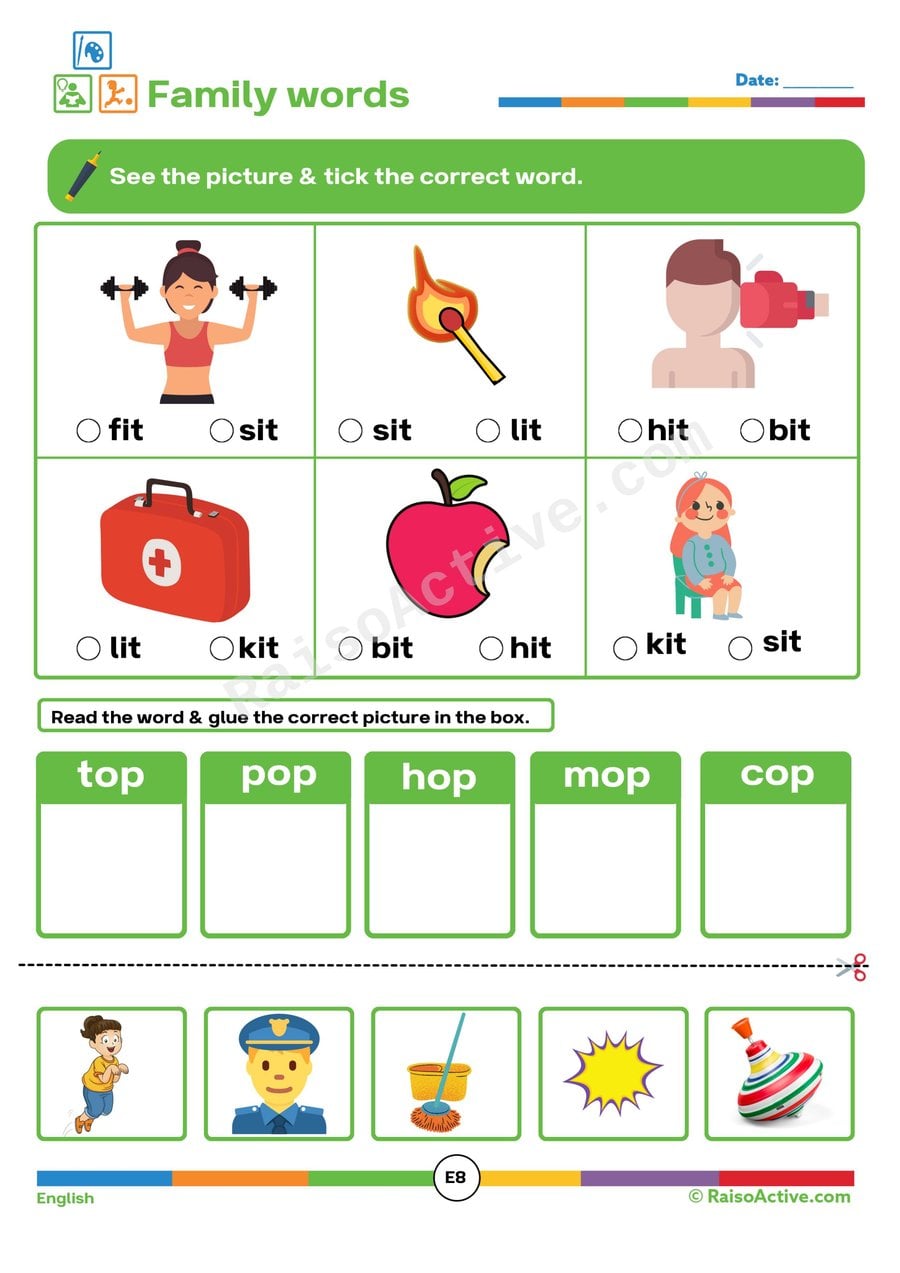
Family Words Worksheet: See, Tick, and Glue!
Children ages 3-5 practice recognizing family-member words and connecting them to pictures through a tick-and-glue format that combines quick visual checking with a hands-on cutting task. Doing the same type of match twice in different formats — once by ticking, once by pasting — gives extra repetition of the same small set of words, which is exactly what builds recognition at this age.

Long Vowel 'O' Matching Worksheet for Preschoolers
This worksheet asks children ages 3-5 to match pictures of objects with words that share the long 'o' sound, such as 'nose' or 'rope,' strengthening their ability to connect a spoken sound to its written word. Matching pictures to words at this age also builds early print awareness, helping children understand that written words represent real things and sounds they already know.

Roll and Cover Shapes Worksheet for Preschoolers
This dice game helps children ages 3-5 practice shape recognition under a bit of playful chance, since they must roll a die, interpret which shape it points to, and then find and cover the matching shape on the worksheet. Reacting to a randomly rolled shape rather than working through a fixed sequence keeps children actively scanning the whole page, which builds visual search skills alongside basic geometry recognition.

First Letter Fun: Identify and Write! A Worksheet for Young Learners
Ages 3-5 are the prime window for phonemic awareness, and this worksheet targets one specific piece of it: isolating the very first sound in a spoken word and mapping it onto a written letter. Each picture forces your child to say the word, listen for the opening sound, and commit a symbol to paper, which is the exact skill that later becomes spelling. It also builds pencil control on single letters rather than whole words, which keeps the writing demand light while the listening demand stays high.
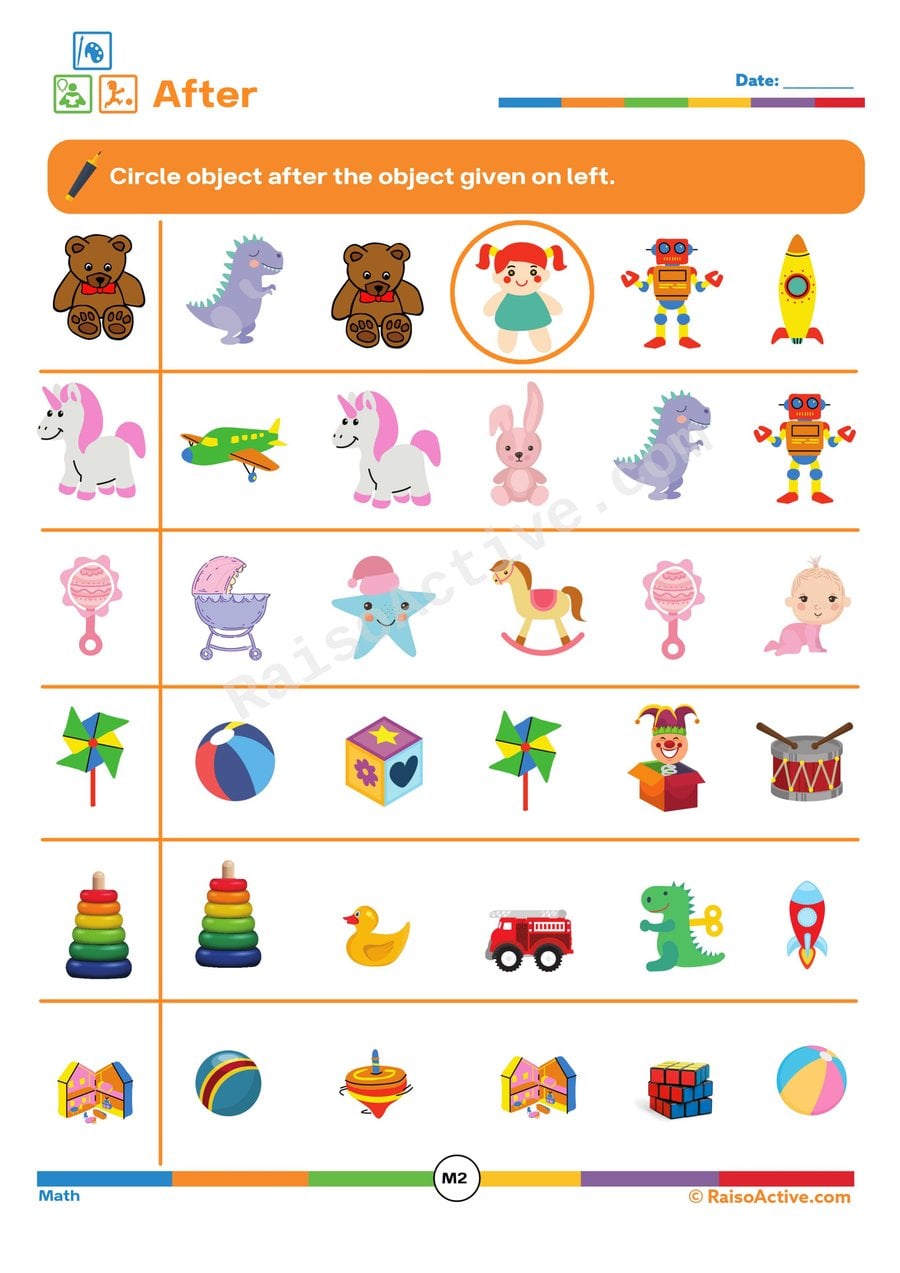
Object Sequencing Worksheet: What Comes After?
Preschoolers ages 3-5 build sequencing and pattern-recognition skills by identifying what object logically comes next after a given item. Predicting what comes next requires observing a pattern or relationship and applying that logic forward, an early form of the reasoning used in later math and science. Circling the correct answer among several options also sharpens careful visual comparison and decision-making.

Match the Word to the Picture: A Fun Phonics Worksheet for Kids!
This worksheet introduces children ages 3-5 to consonant blends — two letters like 'bl' or 'cr' that combine their sounds at the start of a word — through matching words to pictures and identifying the blend that opens each word. Blending sounds together smoothly is a more advanced phonics skill than single letter sounds, since children must hold two sounds in mind and merge them without a pause. This worksheet gives early exposure to that skill in a low-pressure, picture-supported way.

Find the Matching Objects! A Fun Sorting Worksheet for Kids
Spotting which objects in a set are truly identical, rather than just similar, sharpens the visual discrimination skills that ages 3-5 need before they can tell apart similarly shaped letters like 'b' and 'd' later on. This sorting worksheet also builds early critical thinking, since children must compare size, color, and shape details across several objects instead of relying on a first glance. Circling only the matching pair(s) in each row teaches them to look carefully before deciding.

Sunlight Worksheet: Learn About the Sun and Seasons!
This worksheet introduces children ages 3-5 to the idea that the sun's warmth and position change across the year, giving rise to the four seasons. By matching descriptions to pictures and completing sentences about the sun's daily movement, children build early scientific observation skills and the vocabulary needed to describe weather and time of day.

Emotions Worksheet: Match the Emoji to the Feeling!
This worksheet helps children ages 3-5 identify and understand different emotions by comparing a child's facial expression in a picture to a set of emoji faces and choosing the one that matches. Learning to read facial cues and name feelings is a foundational social-emotional skill that helps children both recognize their own emotions and empathize with others.

Fun with Sounds: Matching 'f' and 'h' Sounds Worksheet
This worksheet builds early listening skills in children ages 3-5 by having them match pictures to the beginning sounds 'f' and 'h'. Practicing these two clearly distinct consonant sounds side by side gives less confident listeners an easier win than harder pairs, building confidence in the matching-sounds-to-letters process that underlies all future phonics work.
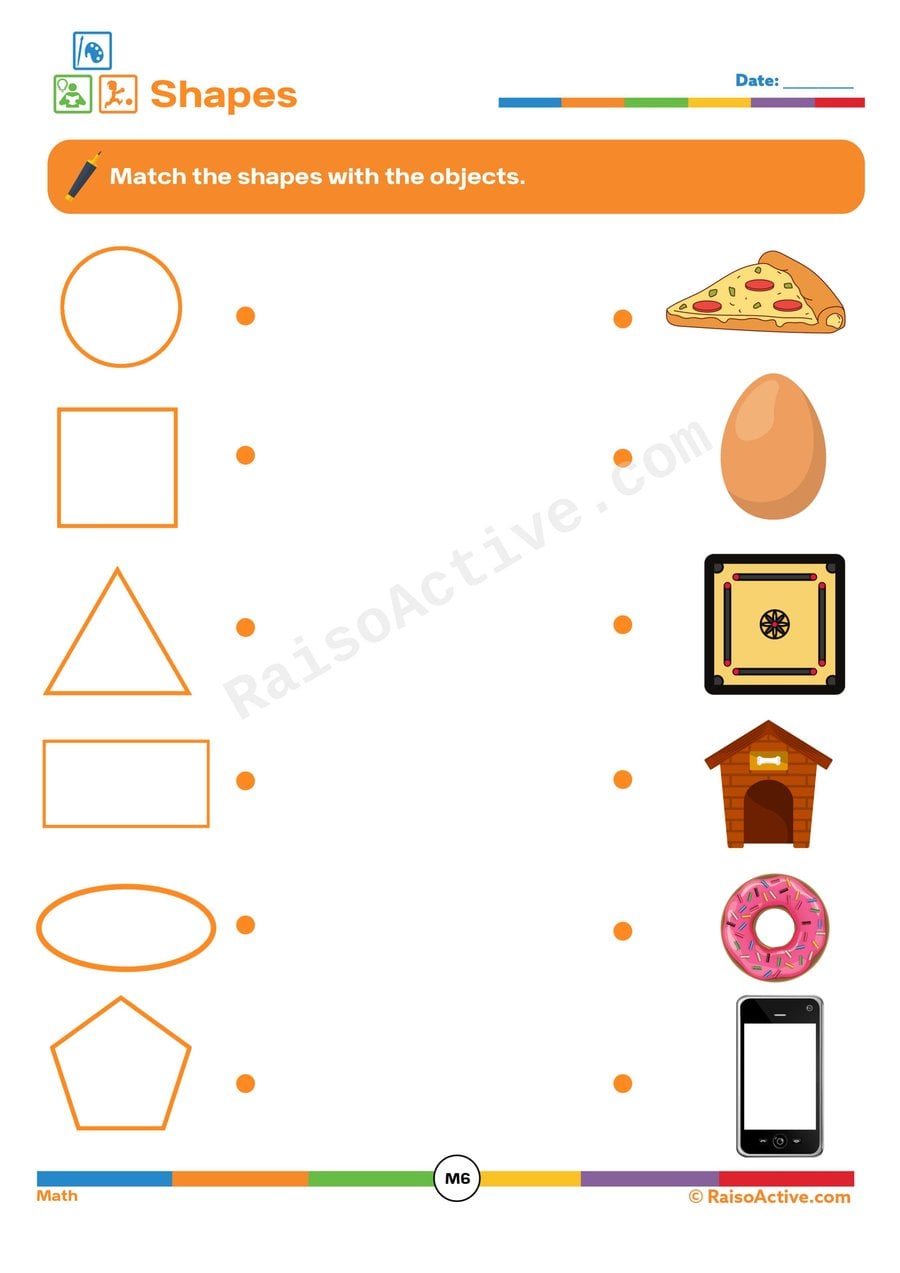
Shape Matching Worksheet for Preschoolers
This worksheet strengthens shape recognition for children ages 3-5 by asking them to connect abstract shape outlines to the real-world objects that share that same shape. Recognizing that a shape like a circle or rectangle can apply to very different objects, such as a clock and a door, helps children generalize shape concepts beyond a single example. Drawing the connecting line between matched pairs also reinforces visual tracking and pencil control.

Capital and Small Letter Matching Worksheet for Preschoolers
Children ages 3-5 build letter recognition fluency by matching each uppercase letter to its corresponding lowercase form, a skill essential for reading since text uses both cases interchangeably. Recognizing that 'B' and 'b' represent the same letter sound despite looking different is a genuinely tricky early literacy milestone. Circling words that begin with a capital letter adds an extra layer of practice noticing capitalization in real context.

Rainy Day Fun: Circle the Rainy Season Items Worksheet
This worksheet helps children ages 3-5 identify items commonly used during the rainy season, like umbrellas, boots, and raincoats, by looking at a mixed set of pictures and circling only the ones that belong to rainy weather. Sorting relevant from irrelevant items this way builds early categorization and observation skills.
What EYFS cvc words worksheets cover
A four-year-old who knows a dozen letter sounds can begin to blend, and that is the task at this age: look at c-a-t, say each sound, push them together, point to the picture. Worksheets should use one short vowel at a time, usually "a" first, offer a picture beside every word, and keep to a few words per page. Do not expect the child to write the words, or to read them without saying the sounds aloud first.
- Say the three sounds in "cat" and blend them into the word
- Match "pig", "dog" and "sun" to the right picture
- Read four -at family words with a picture beside each
- Tap out the sounds in a spoken word before seeing it written
How to use these worksheets at home or in class
Five to ten minutes at a table, with an adult alongside to talk through the sheet, is enough at any point in this stage. Use a worksheet to echo something already met through play that week rather than to introduce a brand new idea.
Start with the sheet that matches what your child can already do, then move one step up. Keep finished sheets in a folder: EYFS teachers often ask for evidence of practice, and children like seeing their own progress.
Is your child ready for EYFS cvc words work?
Look for a child who can make deliberate marks with a crayon, sit briefly at a table, follow a one-step spoken instruction and show curiosity about letters or numbers seen around the house or classroom.
Frequently asked questions
How do I know my four-year-old is ready for CVC words?
Two checks. First, does the child give the sound, not the name, for at least ten to fifteen letters, including a, i and o? Second, when you say "m-a-p" slowly with gaps, can the child tell you the word? Oral blending like that has to work before blending from print does. If either check fails, more letter-sound and listening games are the better use of the time, and the sheets can wait a few months.
What should a EYFS child be able to do in cvc words?
A four-year-old who knows a dozen letter sounds can begin to blend, and that is the task at this age: look at c-a-t, say each sound, push them together, point to the picture. Worksheets should use one short vowel at a time, usually "a" first, offer a picture beside every word, and keep to a few words per page. Do not expect the child to write the words, or to read them without saying the sounds aloud first. Look for a child who can make deliberate marks with a crayon, sit briefly at a table, follow a one-step spoken instruction and show curiosity about letters or numbers seen around the house or classroom.
Do these worksheets follow the EYFS curriculum?
The sheets cover blending three sounds into a word, short vowel sounds, segmenting a word for spelling and reading simple sentences built from CVC words, which sit inside the EYFS Early Learning Goals (Statutory Framework) outcomes for EYFS. Preschool and Pre-K (US), Nursery and LKG (India) use the same skills at this age, so the sheets also fit families following those programmes.
Are these EYFS cvc words worksheets free?
Yes. Each worksheet downloads free as a watermarked PDF once you create an account, with a limit of five a day. An annual membership ($20) removes the watermark and the limit for the whole library of over 1,000 worksheets and every printable pack.

Written by
Hemsweta Jain · Teacher Cheena
MBA and Early Childhood Educator, teaching since 2014 · Founder of RaisoActive, Mumbai
Written and reviewed by Hemsweta Jain (Teacher Cheena), who designs every RaisoActive worksheet.
Last reviewed
Printable packs for ages 3–5
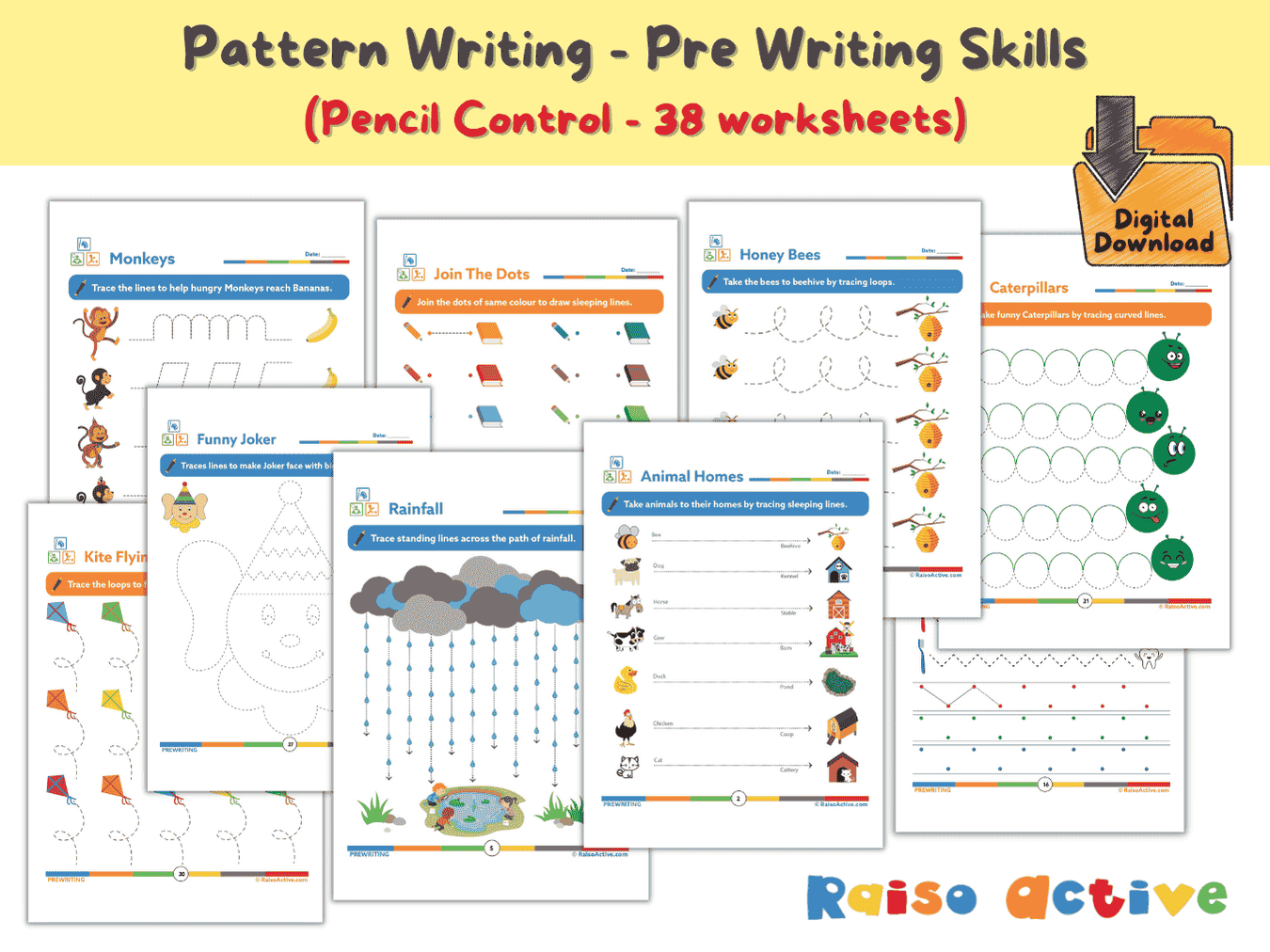
Pattern Writing Pre-writing Skills Activity Book for 3-4 Year Olds
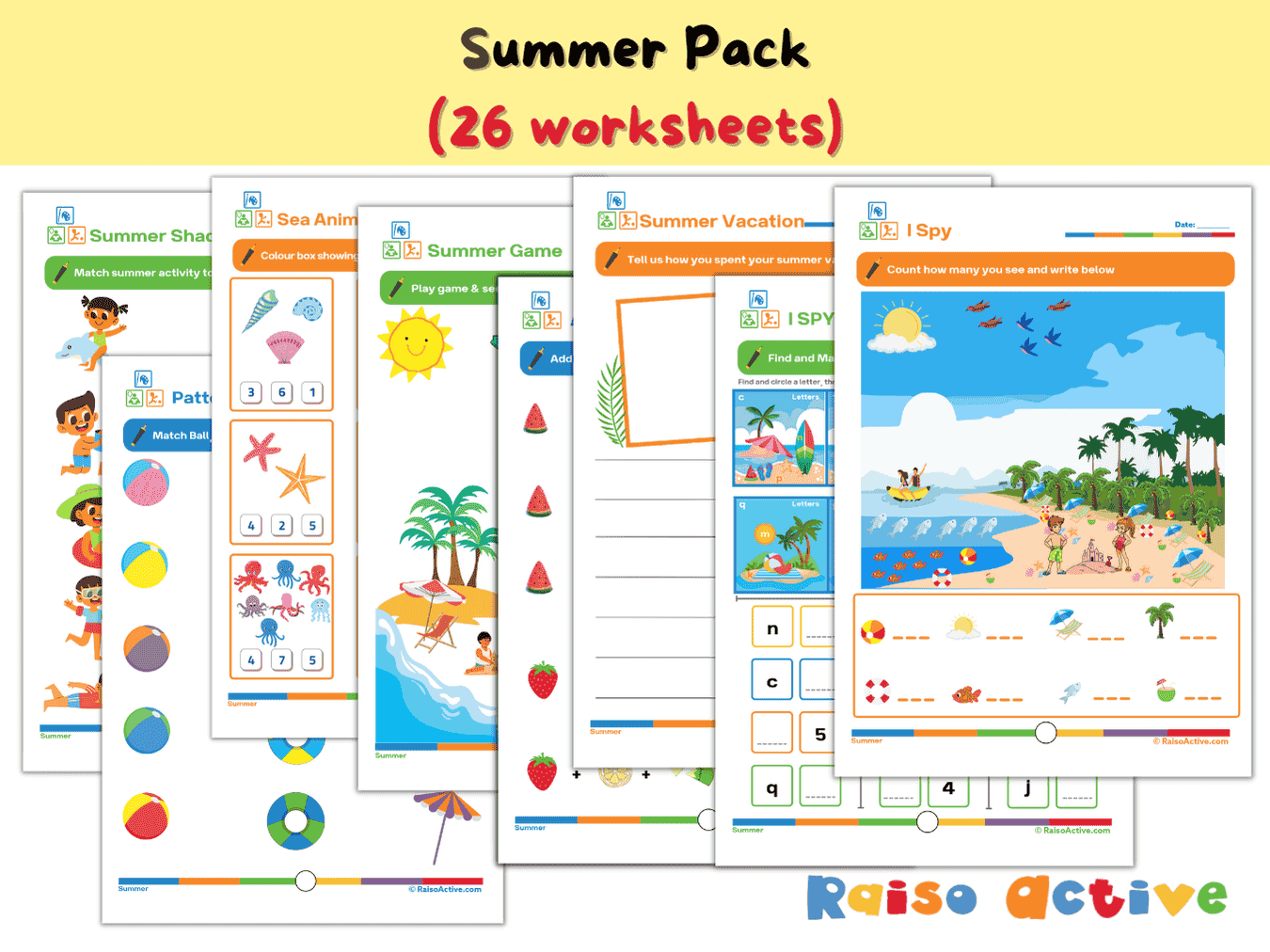
Summer Activity Pack: Math, Literacy, Puzzles & More for Preschool & Kindergarten
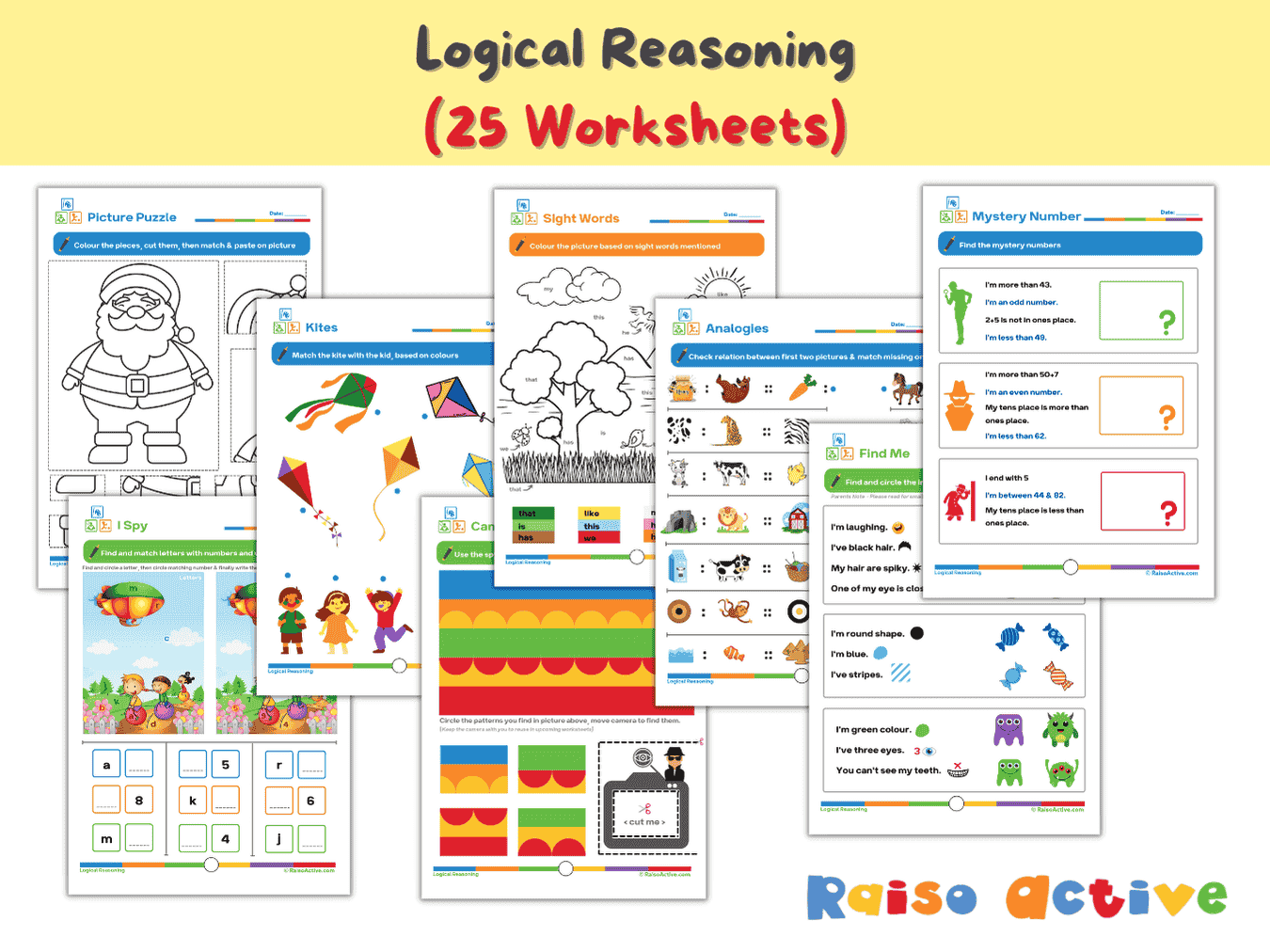
Logical Reasoning Activity Book for Preschool & Kindergarten | Patterns, Puzzles & Analogies
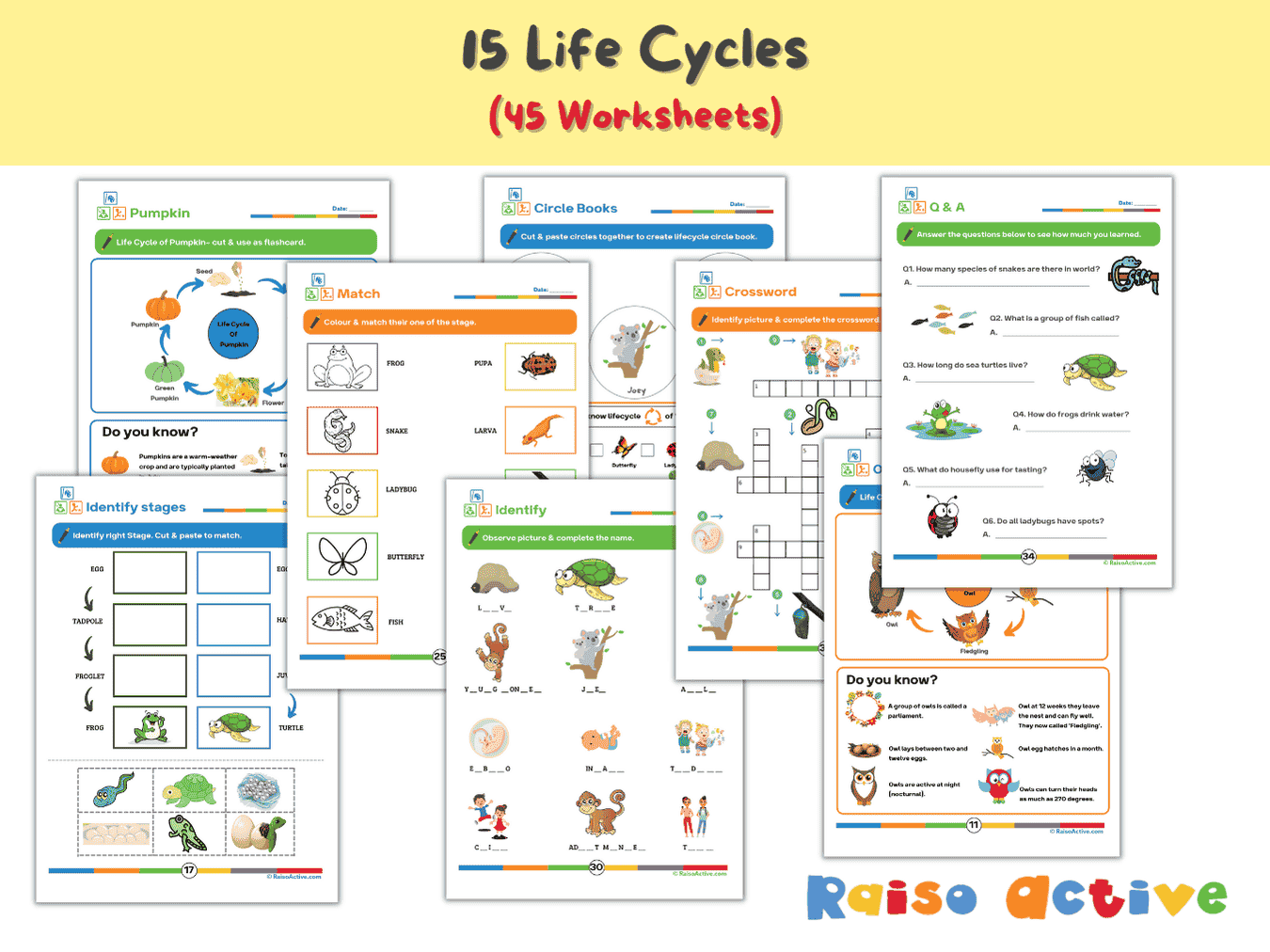
Lifecycles Activity Book & Flashcards for Preschool & Early Elementary
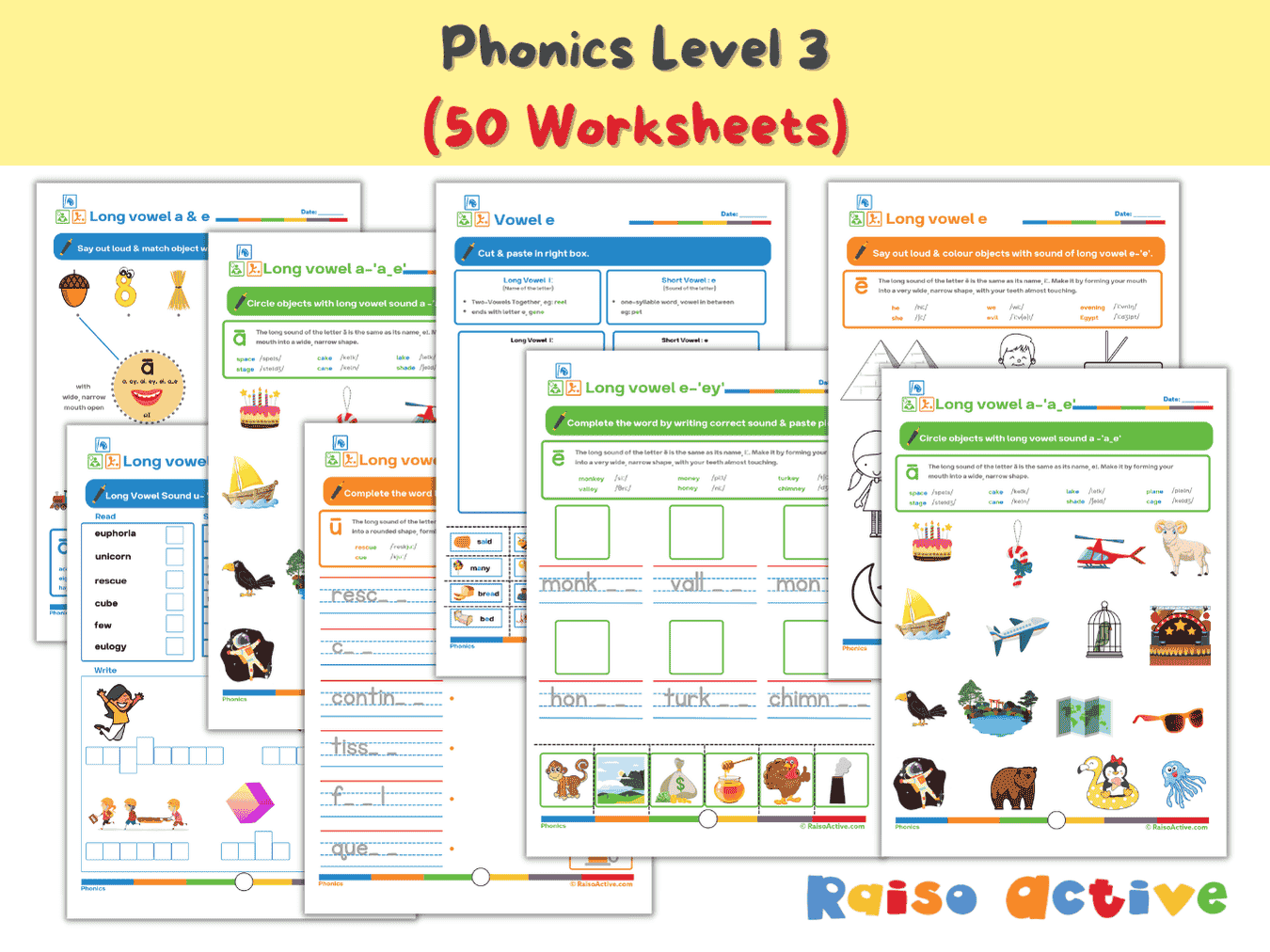
Phonics Level 3 Long Vowels Activity Book for Kindergarten & 1st Grade
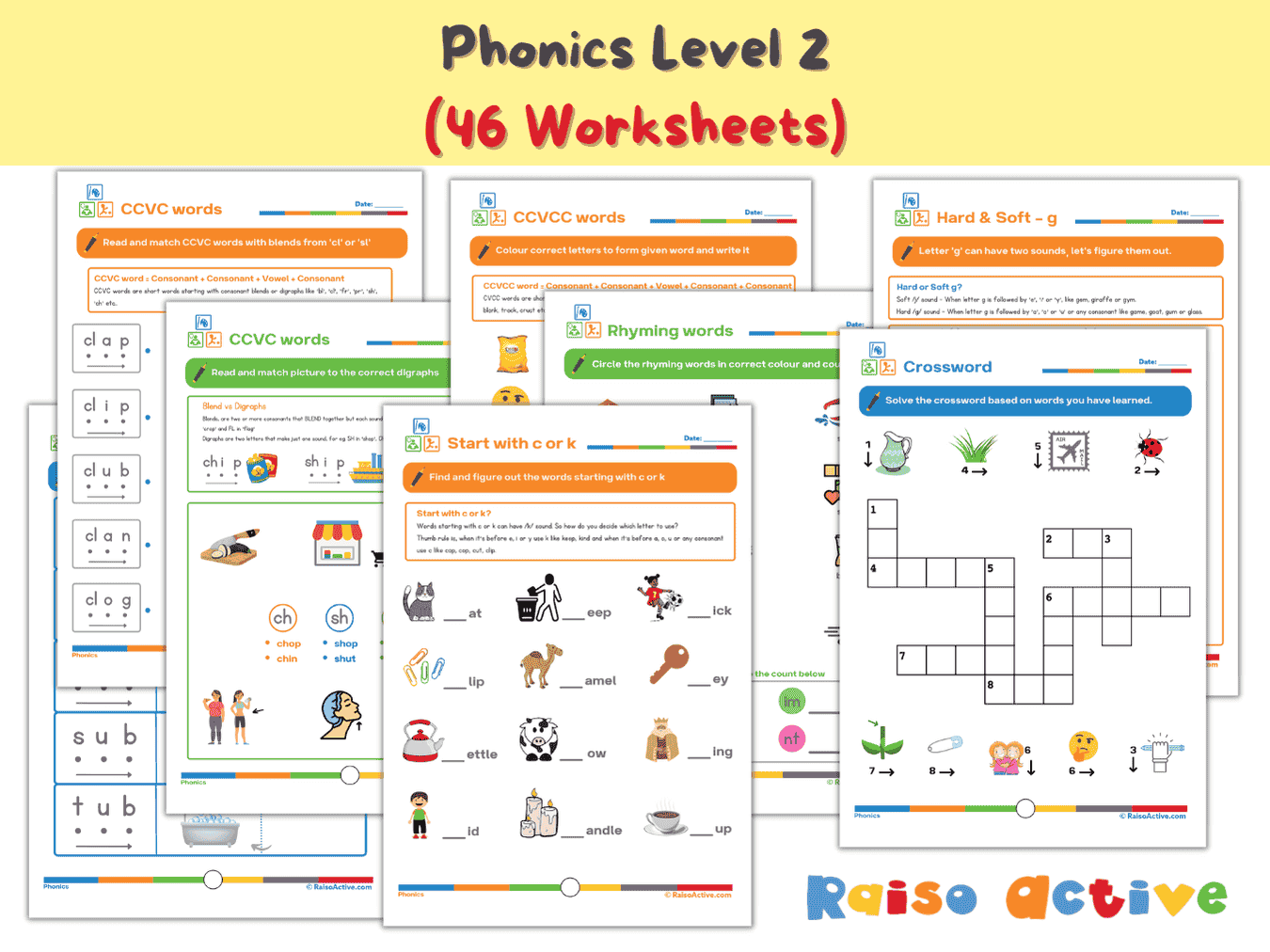
Phonics Level 2 Worksheets: CVC, CCVC, CVCC Word Families & Blends for Early Readers (Ages 4-7)
Guides for parents and teachers
See all guides →Sight Words by Age: The First 50 Words and How to Teach Them Without Flashcard Fatigue
Which sight words to teach first and why, the heart-word method, a read-trace-write-find routine, games, and a by-age table of typical sight-word progress.
How to Teach CVC Blending: A Step-by-Step Method That Works in Two Weeks
A step-by-step method for teaching CVC blending, covering continuous sounds, word families, common errors, and a 14-day plan that most children finish reading CVC words.
Phase 2 Phonics at Home: Sound Order, Blending Games, Worksheets
Phase 2 phonics at home: the five sound sets in order, oral blending, tricky words, a two-week routine, common mistakes, and free worksheets.
Reception Year Explained: EYFS Learning and How to Help at Home
A teacher's plain-English guide to the Reception Year: the seven areas of learning, Early Learning Goals, Phase 2/3 phonics, the RBA and home routines.
UKG Syllabus Explained: English, Maths and EVS Month by Month
What UKG classes typically cover in English, maths and EVS, month by month, aligned to NEP 2020, with ways to support at home and signs your child is behind.
Bridging Two Worlds: A Complete Guide to Teaching Heritage Languages Alongside English
A practical guide to raising bilingual children who speak both their heritage language and English with confidence. Research-backed strategies, activities, and tips for Indian families.
Canonical: https://raisoactive.com/worksheets/eyfs-cvc-words