Free printable worksheets · United Kingdom
EYFS Phonics Worksheets (Ages 3–5)
EYFS phonics worksheets are practice sheets for children aged 3–5 in Early Years Foundation Stage in the UK. Phonics is the practice of connecting letters to the sounds they represent, then blending those sounds together to decode and read words. The sheets on this page cover letter-sound correspondence, blending sounds into words, segmenting words into sounds and digraphs and consonant blends.
The Early Years Foundation Stage spans Nursery and Reception and treats a worksheet as a small supplement to play rather than the main event. Mark making, matching and sorting dominate the Nursery year; Reception adds letter formation, sound matching and counting to ten as phonics teaching begins in earnest. Phonics at three is almost entirely listening: hearing that "sun" and "fun" rhyme, clapping the syllables in a name, noticing that "mom" and "milk" start the same way. A worksheet should ask the child to circle the picture that rhymes with another, or find two pictures that start the same, with an adult saying the words aloud since the child is not yet reading them. A handful of letter sounds may be introduced, but blending is not attempted yet.
980+ worksheets · free PDF download · print on A4 or Letter
EYFS Phonics Worksheets to print
Browse all worksheets for ages 3–5
Clothing Pattern Match Worksheet for Preschoolers
This worksheet has children ages 3-5 study repeating patterns on clothing items — stripes, polka dots, or checks — and match each item to its identical twin, building visual discrimination and early pattern-sequencing skills. Distinguishing between similar-looking patterns also sharpens attention to detail, a skill that later supports letter and word recognition.

Consonant Sounds: Matching Objects to 'p' and 'n' Sounds Worksheet
This worksheet gives children ages 3-5 practice identifying the beginning sounds 'p' and 'n' and matching them to the correct pictures, an early step in connecting spoken sounds to written letters. At this age, distinguishing between consonant sounds that use different parts of the mouth (lips for 'p', tongue and nose for 'n') helps children build a mental map of how sounds are produced, which supports both listening and eventual spelling. Matching objects to sounds also reinforces vocabulary alongside phonics.

Healthy Eating Worksheet: Fruit Salad and Vegetable Soup!
This matching worksheet helps children ages 3-5 build food vocabulary by identifying pictures of fruits and vegetables and sorting them into the correct category — fruit salad ingredients or vegetable soup ingredients. Learning to classify foods by type, not just by whether they're healthy, supports early categorization skills that apply across many other subjects, from animals to shapes. The cooking-themed framing also connects the sorting task to a familiar, everyday context children may have experienced at home.

C or K? Beginning Sounds Worksheet for Preschoolers
This worksheet teaches children ages 3-5 an important early spelling rule: the /k/ sound at the beginning of a word can be spelled with either 'c' or 'k', and knowing which to use is one of the first spelling patterns young readers encounter. Children practice listening for the /k/ sound in each picture's name and then applying the rule to choose the correct letter. This bridges phonics awareness into functional spelling, since children are producing print, not just recognizing sounds.
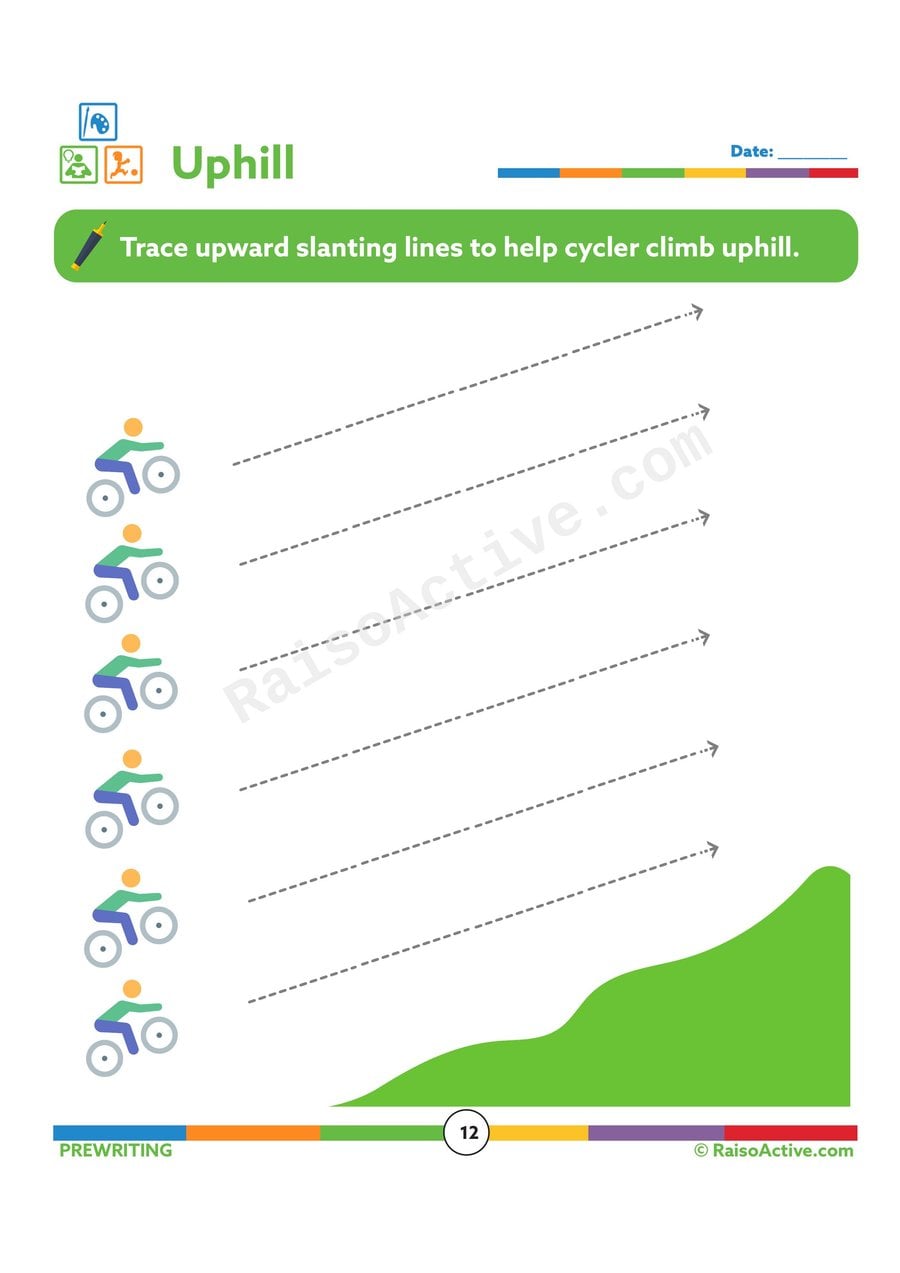
Uphill Tracing Worksheet: Help the Cyclist!
Tracing an uphill diagonal line to help a cyclist reach the top gives children ages 3-5 focused practice with slanting strokes that angle upward, a motion that requires more deliberate wrist control than a downward slant. This worksheet builds on general diagonal-line practice by tying the direction of the line to a concrete idea, going uphill, which helps children understand why the line slants the way it does rather than tracing an abstract shape.

Match the Life Cycle Stages Worksheet for Preschoolers
Children ages 3-5 practice matching animals and plants to their correct life cycle stage, reinforcing the broader science concept that all living things grow and change over time. Working across multiple types of living things — not just one animal — helps children recognize life cycles as a general pattern in nature rather than a fact specific to a single creature.

Trace and Write the Letter S Worksheet for Preschoolers
Focusing only on the uppercase S lets children give undivided attention to its single continuous curve, without also managing the nearly identical but smaller lowercase form on the same page. At ages 3-5, this kind of concentrated single-case practice helps the smooth, flowing hand motion S requires become more automatic before it's tested with a second letter form.
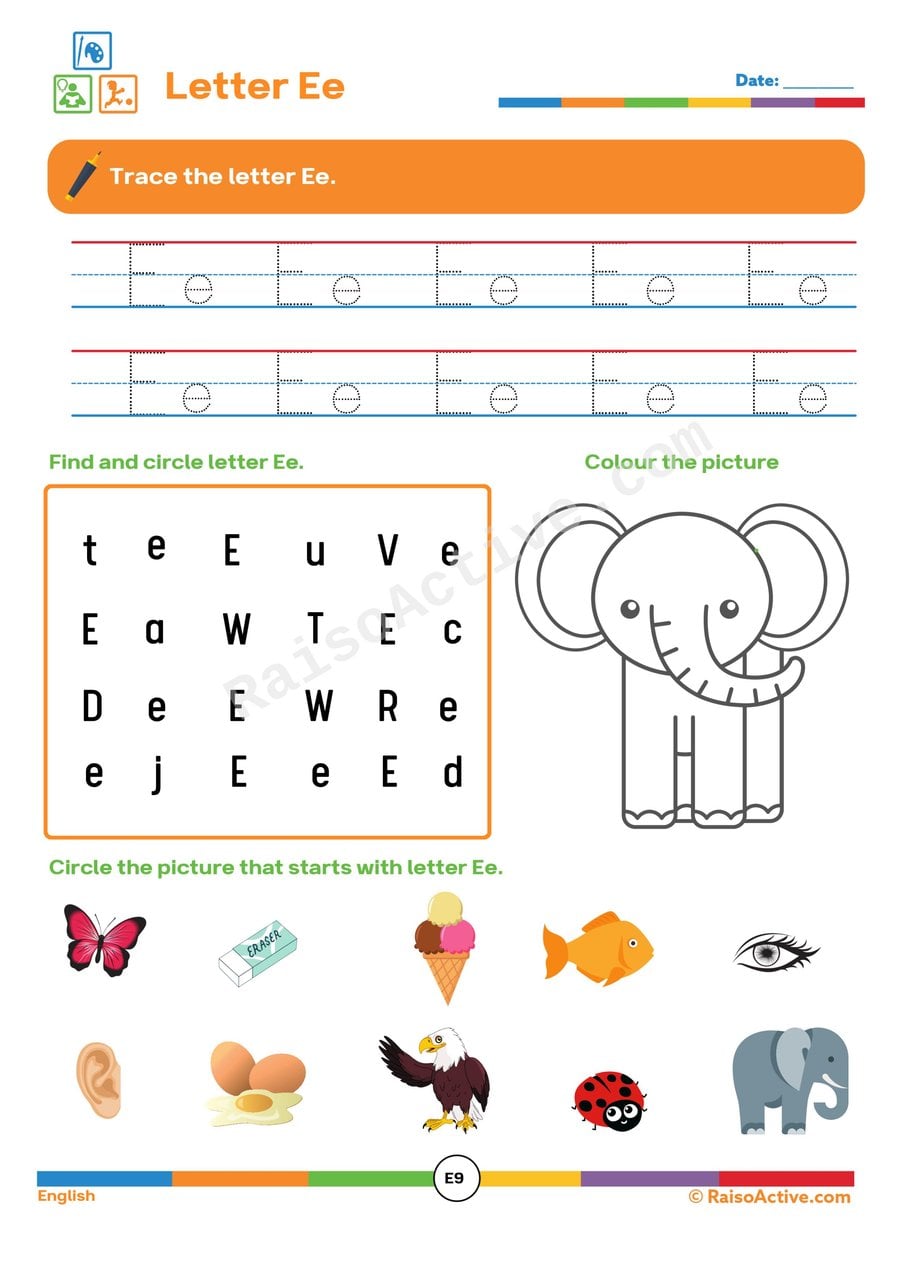
Letter Ee Worksheet: Trace, Find, and Color!
This worksheet gives children ages 3-5 layered practice with the letter Ee — tracing it, finding it inside a word search grid, and identifying an elephant along with other pictures that start with the same sound. Repeating the letter across a tracing task, a visual search, and a picture-matching task in one sitting builds stronger, faster recognition than any single activity could alone.

Number Tracing Worksheet 1-20: Practice Writing Numbers!
This worksheet gives children ages 3-5 a second full pass at tracing every number from 1 to 20, repeating the entire sequence to build the muscle memory that comes only from writing each numeral more than once. Revisiting the complete range reinforces both the shape of each number and their order in the counting sequence, helping children internalize the pattern rather than relying on the worksheet as a one-time reference. This repetition matters especially for the trickier two-digit numbers in the teens, which often need more practice than single digits.
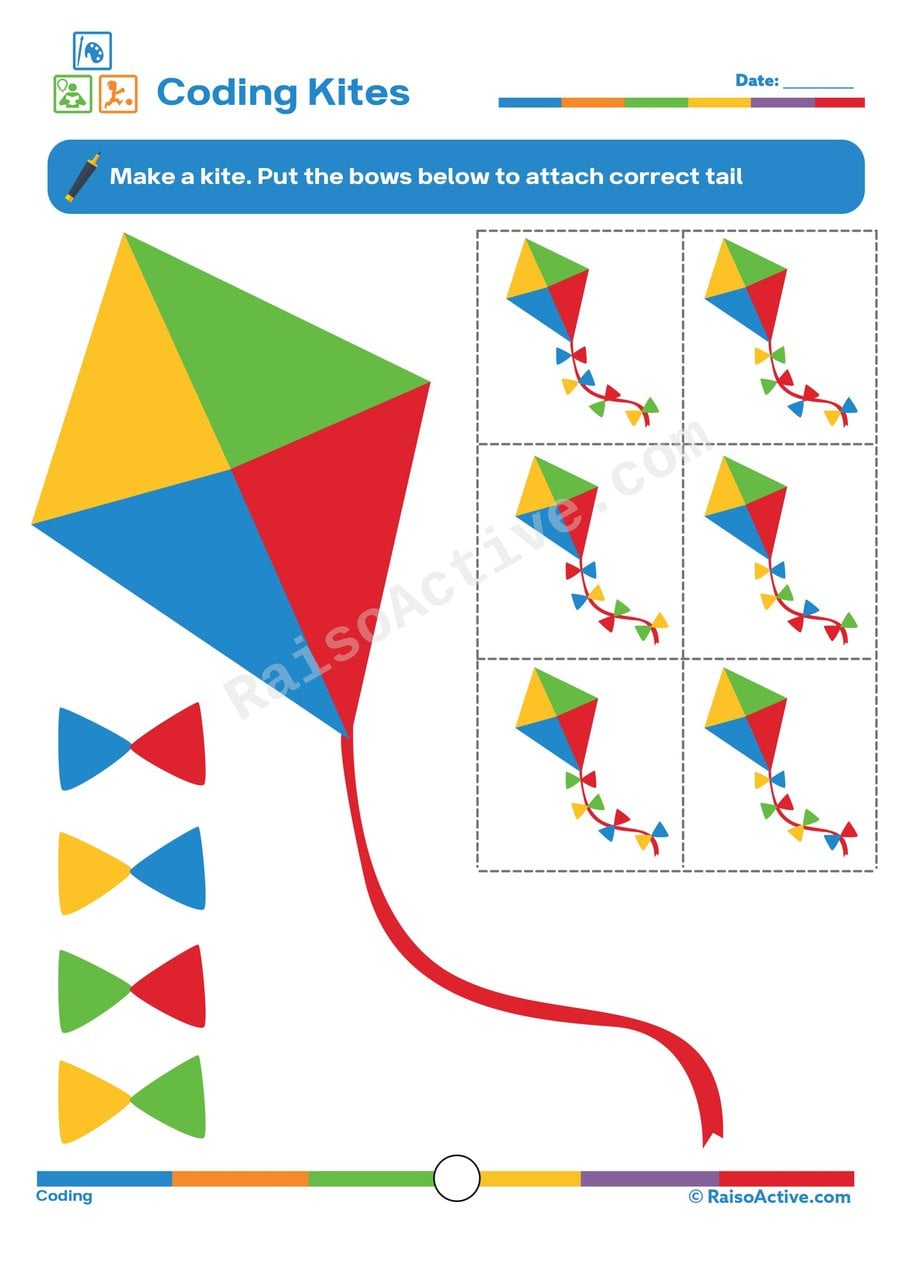
Coding Kites Worksheet: Match the Bows!
By matching each colorful bow to the kite sharing its color pattern, children ages 3-5 practice visual pattern recognition — an early form of the same logical sequencing used in beginner coding concepts. Cutting, matching, and gluing the correct bow also reinforces color-word vocabulary and precise hand-eye coordination.

Trace and Color the Letter S Worksheet for Preschoolers
Tracing and writing the letter S gives children ages 3-5 practice with a continuous, flowing curved stroke that changes direction partway through, making it one of the more demanding letters to control smoothly compared to straight-line letters. Because the S shape doesn't lift the pencil mid-stroke, this worksheet specifically builds sustained curve control in a single motion.

Capital and Small Letter Matching Worksheet for Preschoolers
Children ages 3-5 build letter recognition fluency by matching each uppercase letter to its corresponding lowercase form, a skill essential for reading since text uses both cases interchangeably. Recognizing that 'B' and 'b' represent the same letter sound despite looking different is a genuinely tricky early literacy milestone. Circling words that begin with a capital letter adds an extra layer of practice noticing capitalization in real context.
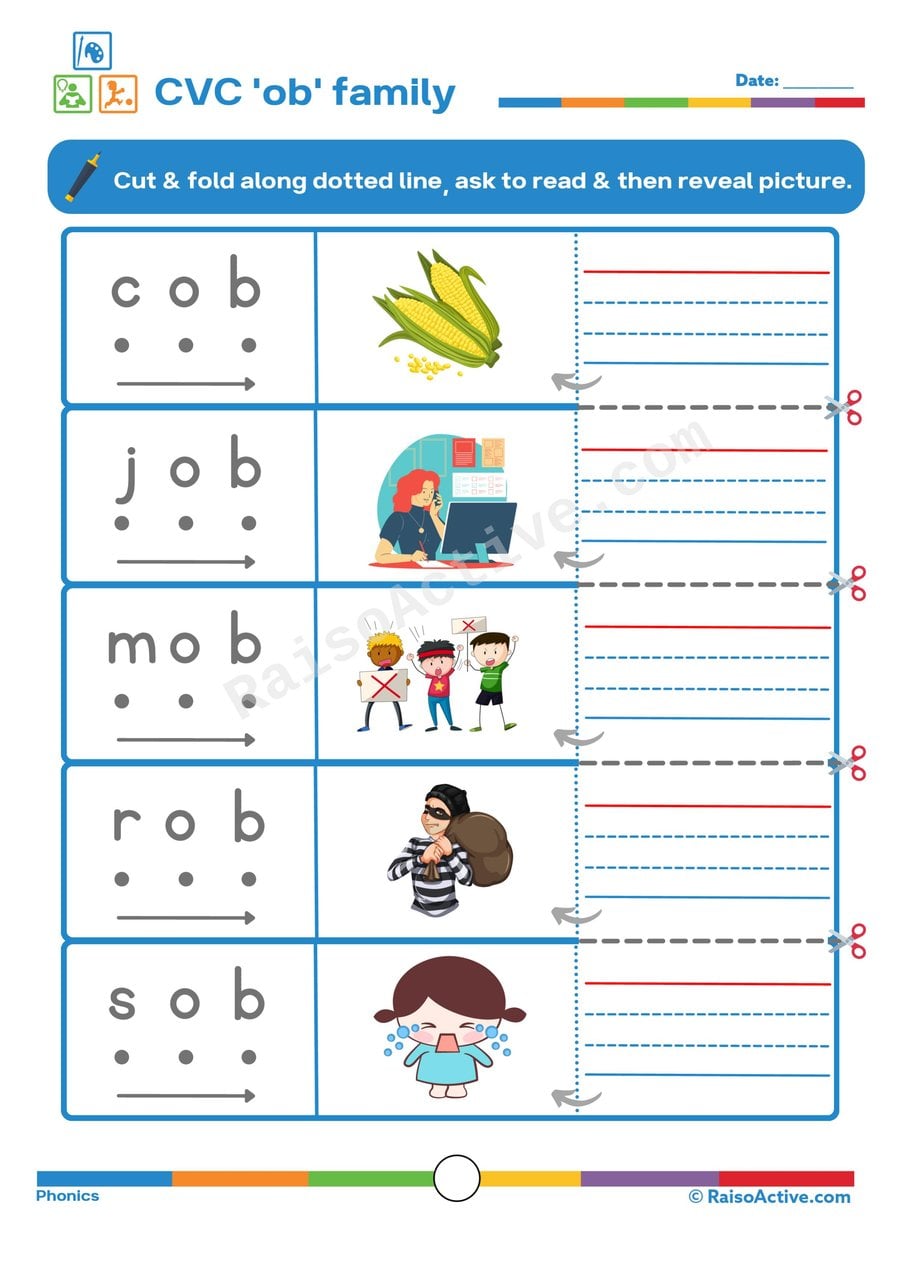
CVC Word Family 'ob' Worksheet: Read, Cut, and Match!
This worksheet has children ages 3-5 practice reading and recognizing CVC words from the 'ob' family, like 'job', 'mob', and 'cob', while also strengthening fine motor skills through cutting and matching. Because 'ob' words share a consistent ending pattern, repeated practice helps children move from sounding out each letter individually toward recognizing the whole chunk at a glance.

Letter T Tracing and Coloring Worksheet for Preschoolers
This worksheet helps children ages 3-5 build the fine motor control and directional awareness needed to form the letter T correctly, tracing both its uppercase and lowercase forms along guided dotted lines. Repeated tracing builds the muscle memory in small hand muscles that eventually allows children to write letters independently without a guide. Coloring pictures that begin with T and hunting for the letter in a grid also reinforce letter-sound and letter-shape recognition side by side.

Personal Pronouns Worksheet for Kids: Matching and Writing
Children ages 3-5 practice choosing and writing the correct personal pronoun — I, you, she, it, we, or they — for a picture or phrase, building an early grammar skill that makes their spoken and written sentences sound natural. Matching a pronoun to who or what it refers to also strengthens reading comprehension, since pronouns require tracking who is being talked about.
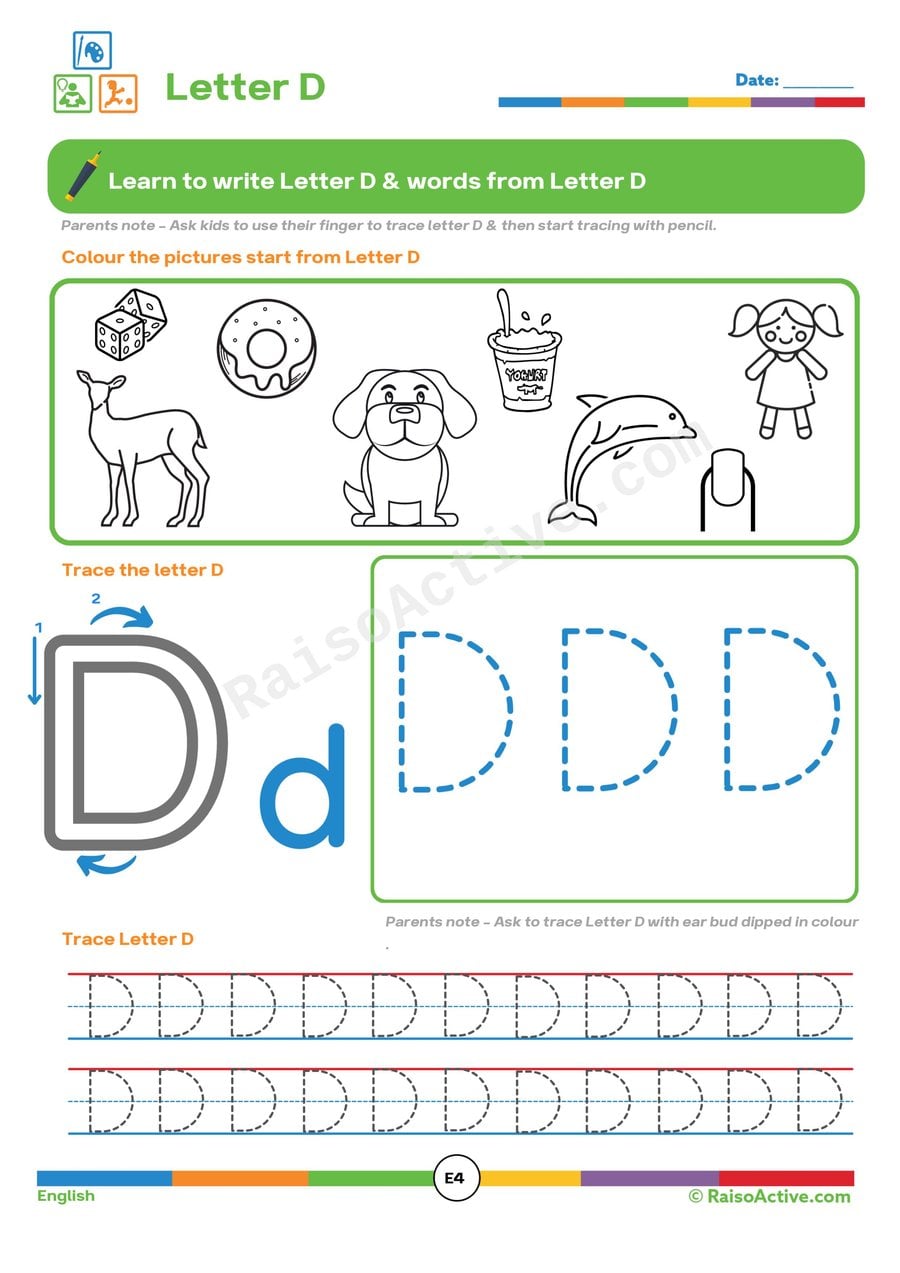
Letter D Tracing Worksheet: Learn to Write & Color!
Tracing both uppercase and lowercase D repeatedly builds the fine motor muscle memory needed for correct letter formation, while the accompanying picture coloring reinforces the 'D' sound by asking children to identify objects that start with it. For ages three to five, combining tracing with picture-based sound practice teaches the letter as both a shape and a sound at the same time, rather than as an isolated symbol.
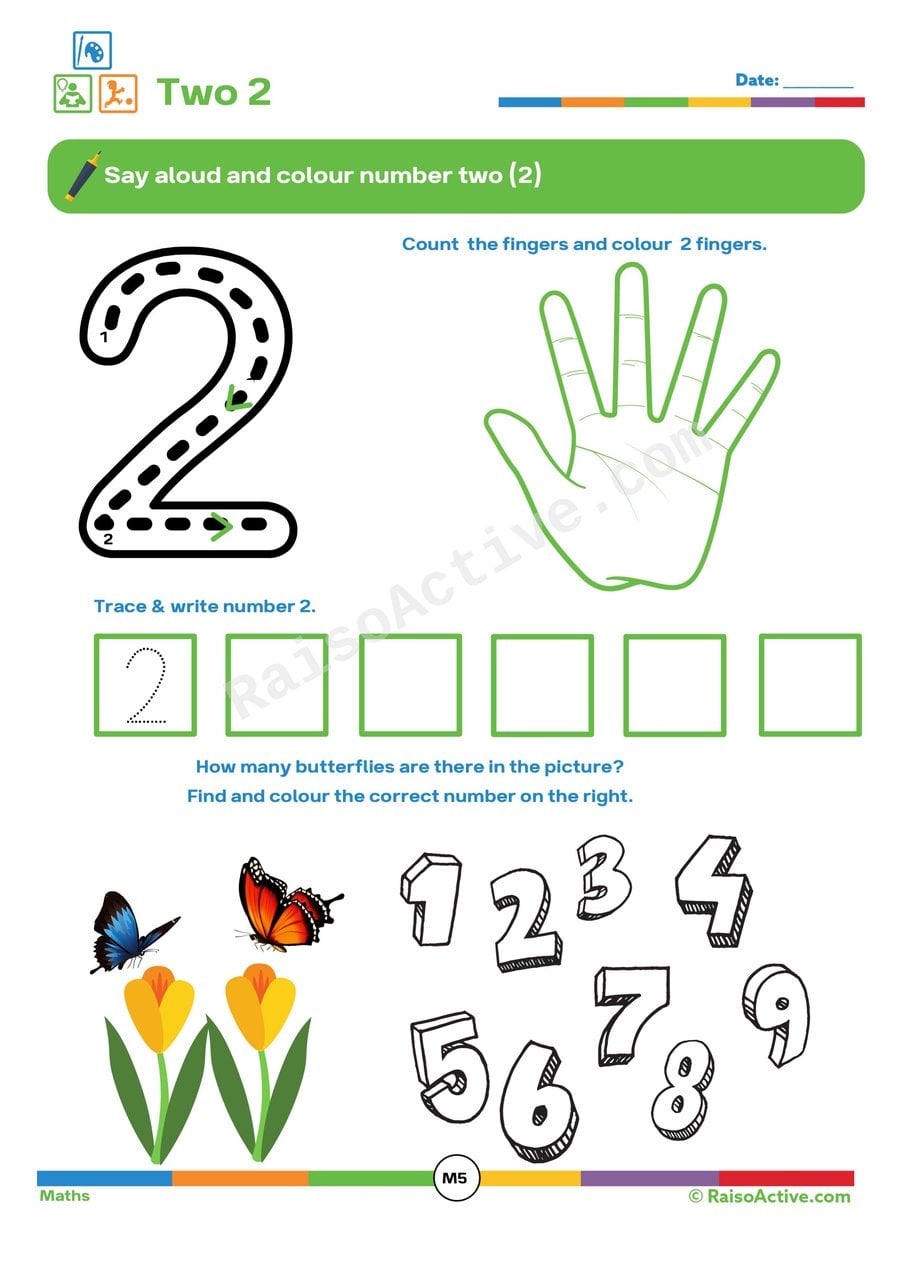
Number Two Worksheet: Trace, Count, and Color!
This worksheet helps children ages 3-5 learn to recognize and write the number two, count to two, and follow multi-step instructions across tracing, coloring, and counting sections. Practicing such a small number thoroughly, across several activities, builds the routine and confidence children need before moving on to larger numbers.

Learn the Sight Word 'My' - Tracing, Coloring, and More!
This worksheet builds sight-word recognition for the possessive word 'my,' one of the earliest words children use to talk about their own belongings and experiences, through tracing, coloring, a word search, and sentence reading. Because possessive words like 'my' appear in nearly every sentence a young child speaks, mastering it in print helps bridge their spoken vocabulary directly into early reading.

This, That, These, and Those Worksheet: Practice with Demonstrative Pronouns
This worksheet introduces children ages 3-5 to demonstrative pronouns — 'this,' 'that,' 'these,' and 'those' — words used to point out objects based on their distance and number. Filling in the correct pronoun for each picture builds early grammar awareness and helps children notice the subtle rules of singular versus plural and near versus far that govern everyday speech.

Day and Night Worksheet for Preschoolers: Observe and Learn!
Children ages 3-5 build foundational science observation skills as they compare what's visible in the sky and what activities happen during day versus night. Completing fill-in-the-blank sentences and true-or-false questions also strengthens early reading comprehension, since children must connect a picture's details to written language rather than just naming what they see.

Learn to Read and Write the Sight Word 'Like' - Fun Worksheet for Kids!
Children ages 3-5 build sight-word fluency with the word 'like,' a common word used to express preference, through tracing, coloring, a word search, and sentence reading. Because 'like' doesn't follow simple phonics rules and appears constantly in early books and everyday speech, repeated multi-format exposure like this worksheet provides is exactly how young readers commit it to memory.
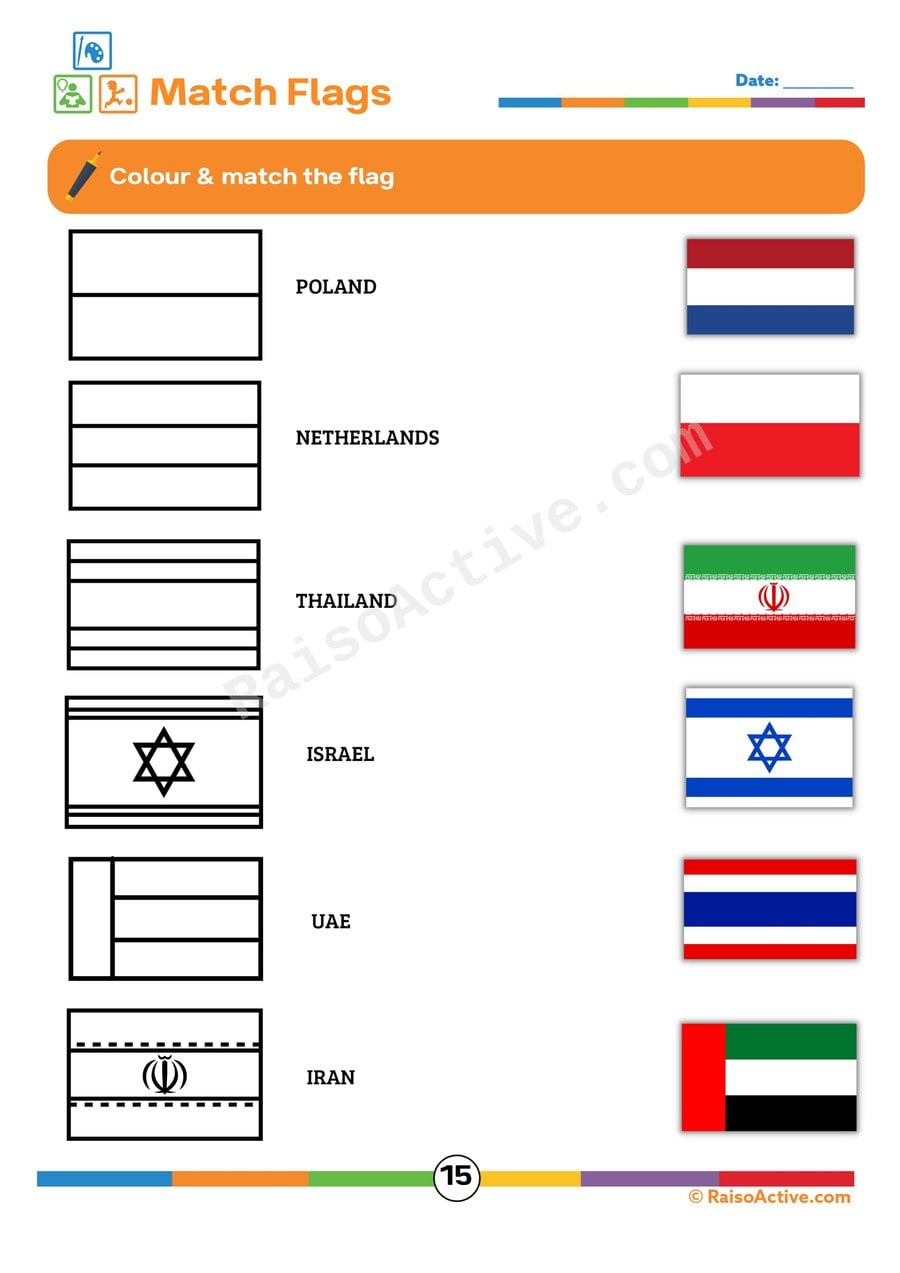
Match the Flags Worksheet: Color and Learn!
This worksheet asks children ages 3-5 to color a set of country flags and then match each one to its printed name, combining fine motor coloring practice with early visual-word association. Matching a colored flag to text also builds pre-reading skills, since children learn to recognize whole words as symbols tied to a picture even before they can sound them out.
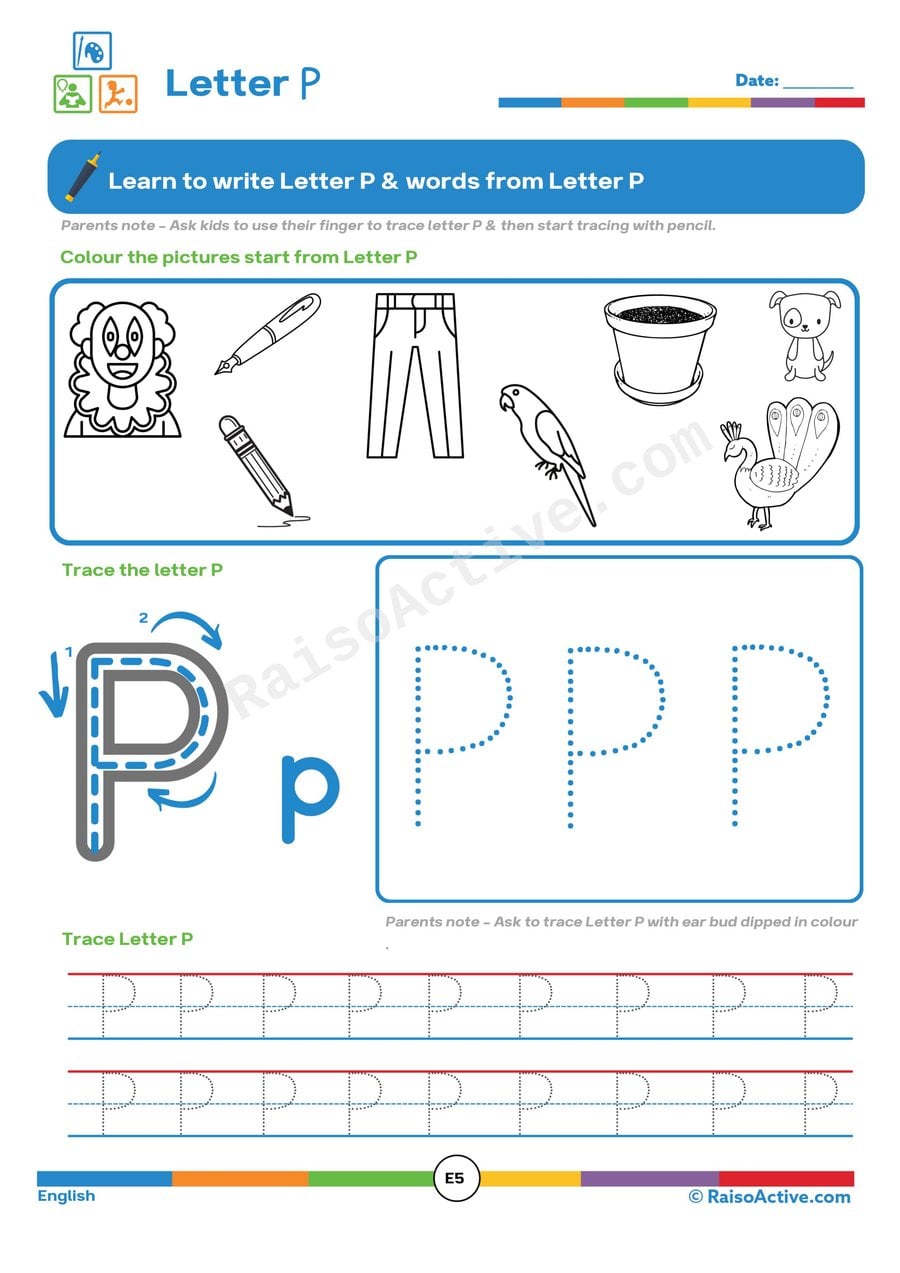
Letter P Tracing Worksheet for Preschoolers
Preschoolers ages 3-5 build the pencil control and muscle memory needed for handwriting by tracing both the uppercase and lowercase letter P along guided dotted lines. Repeated tracing strengthens the fine motor pathways used in future writing while also reinforcing left-to-right, top-to-bottom stroke direction. Naming pictures that start with P connects the letter shape to its sound, laying groundwork for phonics.
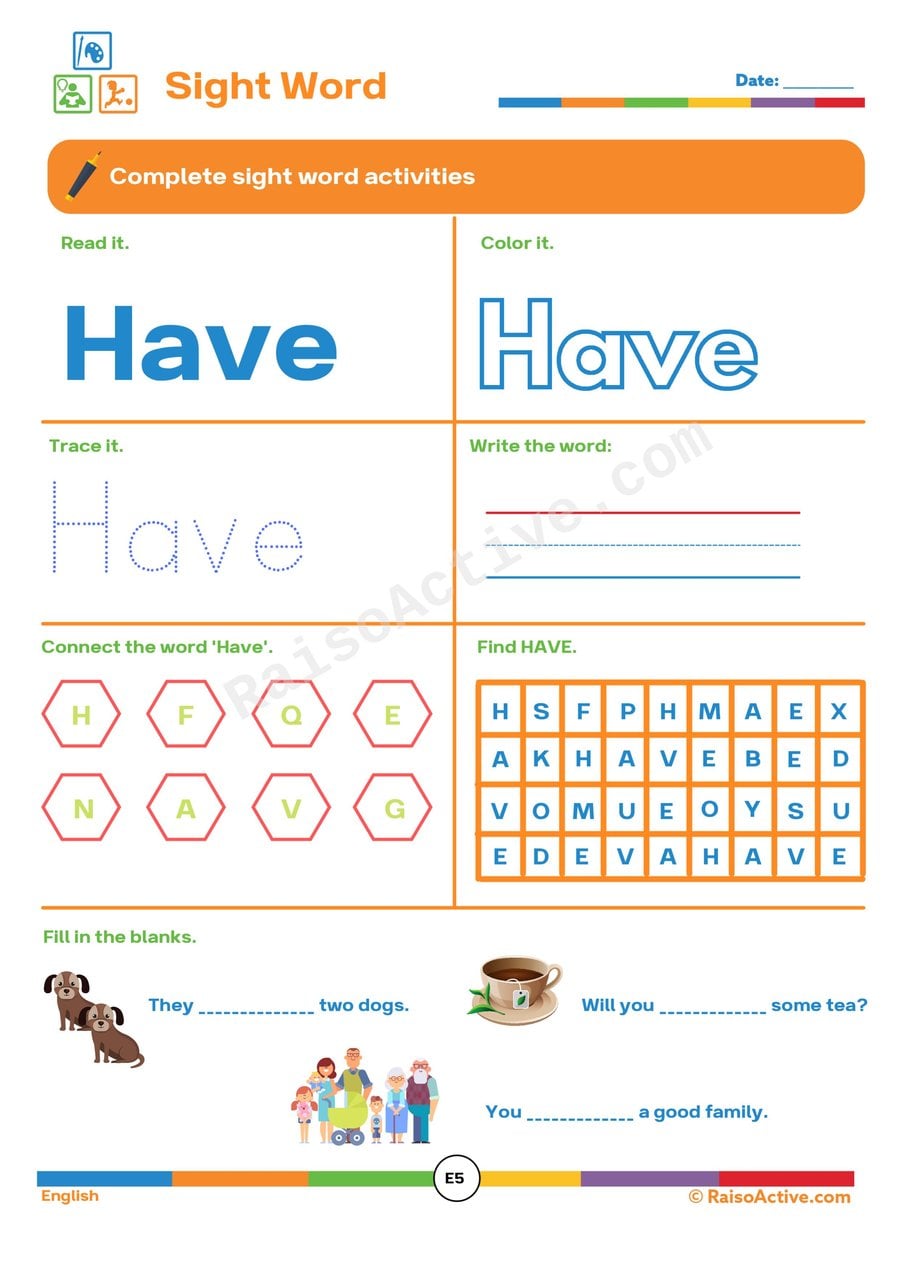
Sight Word 'Have' Worksheet for Preschoolers
This multi-step worksheet builds deep familiarity with the sight word 'have' for children ages 3-5 by having them read, color, trace, write, and search for the word in several different formats. Repeating the same word across varied tasks — rather than practicing it once — is exactly how high-frequency sight words become instantly recognizable to early readers.
What EYFS phonics worksheets cover
Phonics at three is almost entirely listening: hearing that "sun" and "fun" rhyme, clapping the syllables in a name, noticing that "mom" and "milk" start the same way. A worksheet should ask the child to circle the picture that rhymes with another, or find two pictures that start the same, with an adult saying the words aloud since the child is not yet reading them. A handful of letter sounds may be introduced, but blending is not attempted yet.
- Circle the picture that rhymes with a spoken word
- Clap out the syllables in a familiar name or word
- Find two pictures whose names start with the same sound
- Say the sound for a few letters, such as m, s and a
How to use these worksheets at home or in class
Five to ten minutes at a table, with an adult alongside to talk through the sheet, is enough at any point in this stage. Use a worksheet to echo something already met through play that week rather than to introduce a brand new idea.
Start with the sheet that matches what your child can already do, then move one step up. Keep finished sheets in a folder: EYFS teachers often ask for evidence of practice, and children like seeing their own progress.
Is your child ready for EYFS phonics work?
Look for a child who can make deliberate marks with a crayon, sit briefly at a table, follow a one-step spoken instruction and show curiosity about letters or numbers seen around the house or classroom.
- Say the sound, not just the name, of a shown letter
- Match a letter to a picture starting with its sound
- Blend three sounds said slowly aloud into a spoken word
Frequently asked questions
Does a three-year-old need to know letter names before letter sounds?
Not necessarily both at once, and some programs teach sounds first because sounds are what reading actually uses. What matters more at three is listening skill: hearing rhyme, hearing the first sound in a spoken word, telling two similar-sounding words apart. Letter names and a handful of sounds can be introduced alongside that listening work, but a heavy focus on letter-sound drilling before the ear is ready tends to produce recitation rather than understanding.
What should a EYFS child be able to do in phonics?
Phonics at three is almost entirely listening: hearing that "sun" and "fun" rhyme, clapping the syllables in a name, noticing that "mom" and "milk" start the same way. A worksheet should ask the child to circle the picture that rhymes with another, or find two pictures that start the same, with an adult saying the words aloud since the child is not yet reading them. A handful of letter sounds may be introduced, but blending is not attempted yet. Look for a child who can make deliberate marks with a crayon, sit briefly at a table, follow a one-step spoken instruction and show curiosity about letters or numbers seen around the house or classroom.
Do these worksheets follow the EYFS curriculum?
The sheets cover letter-sound correspondence, blending sounds into words, segmenting words into sounds and digraphs and consonant blends, which sit inside the EYFS Early Learning Goals (Statutory Framework) outcomes for EYFS. Preschool and Pre-K (US), Nursery and LKG (India) use the same skills at this age, so the sheets also fit families following those programmes.
Are these EYFS phonics worksheets free?
Yes. Each worksheet downloads free as a watermarked PDF once you create an account, with a limit of five a day. An annual membership ($20) removes the watermark and the limit for the whole library of over 1,000 worksheets and every printable pack.

Written by
Hemsweta Jain · Teacher Cheena
MBA and Early Childhood Educator, teaching since 2014 · Founder of RaisoActive, Mumbai
Written and reviewed by Hemsweta Jain (Teacher Cheena), who designs every RaisoActive worksheet.
Last reviewed
Printable packs for ages 3–5
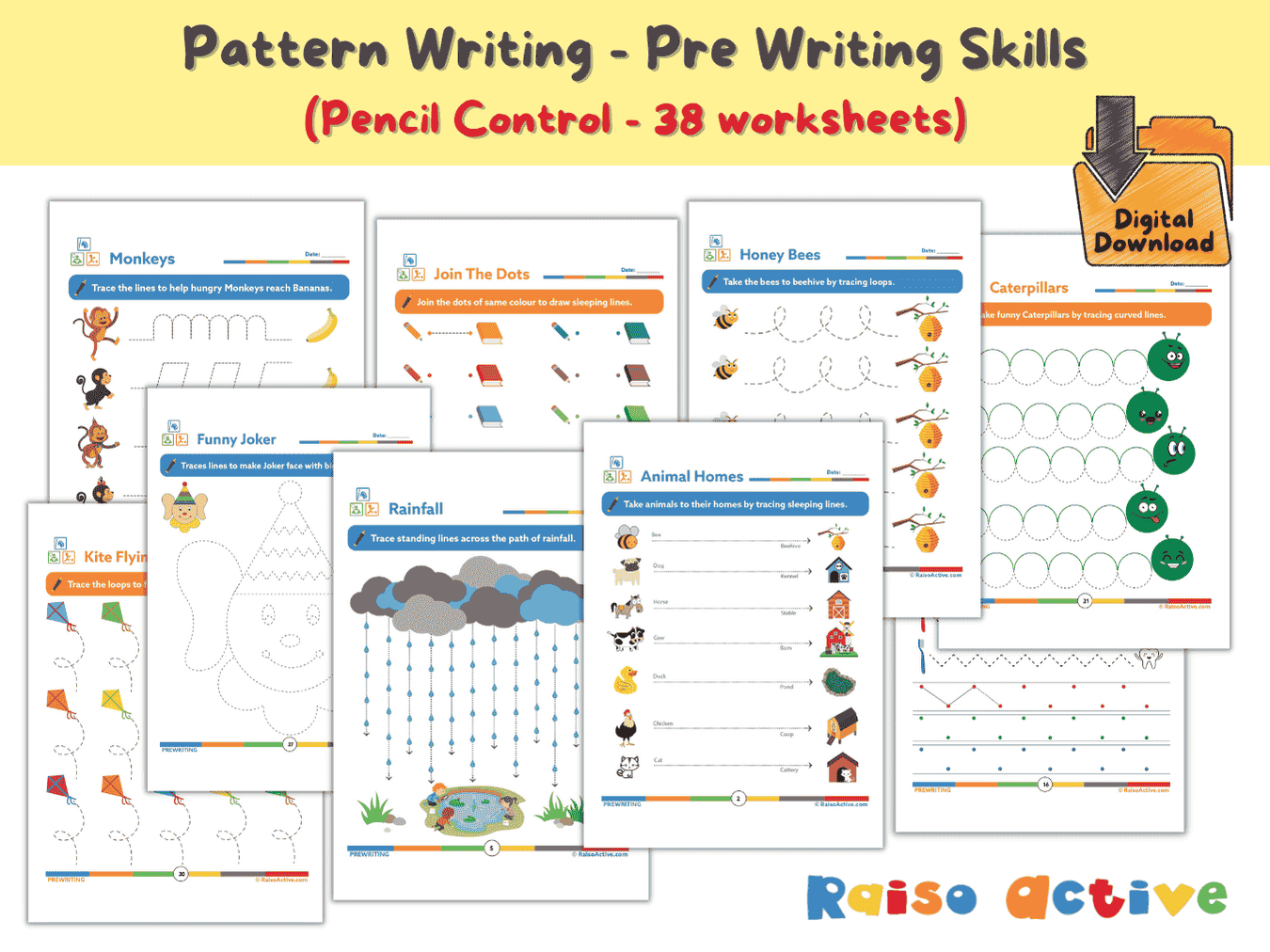
Pattern Writing Pre-writing Skills Activity Book for 3-4 Year Olds
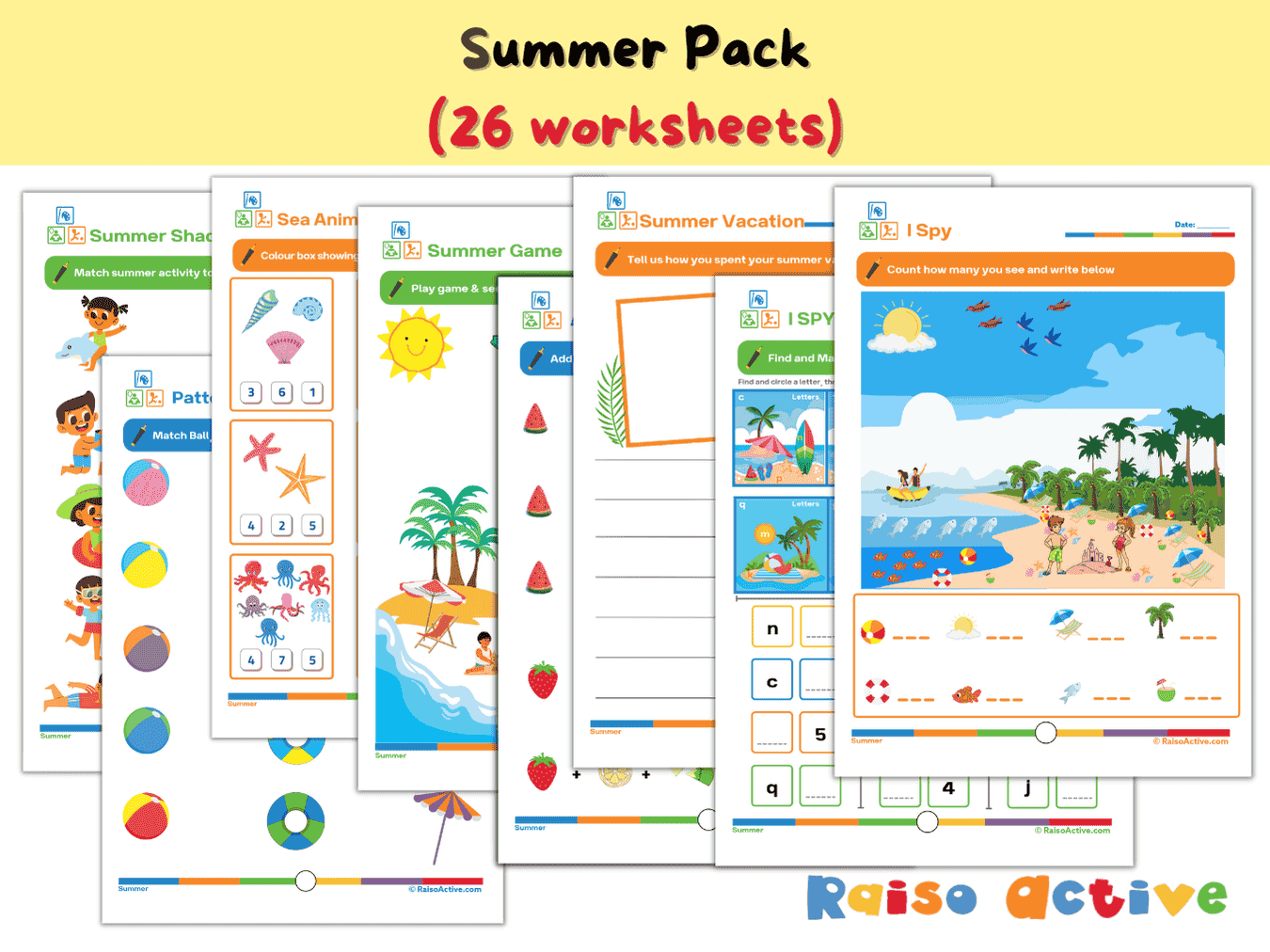
Summer Activity Pack: Math, Literacy, Puzzles & More for Preschool & Kindergarten
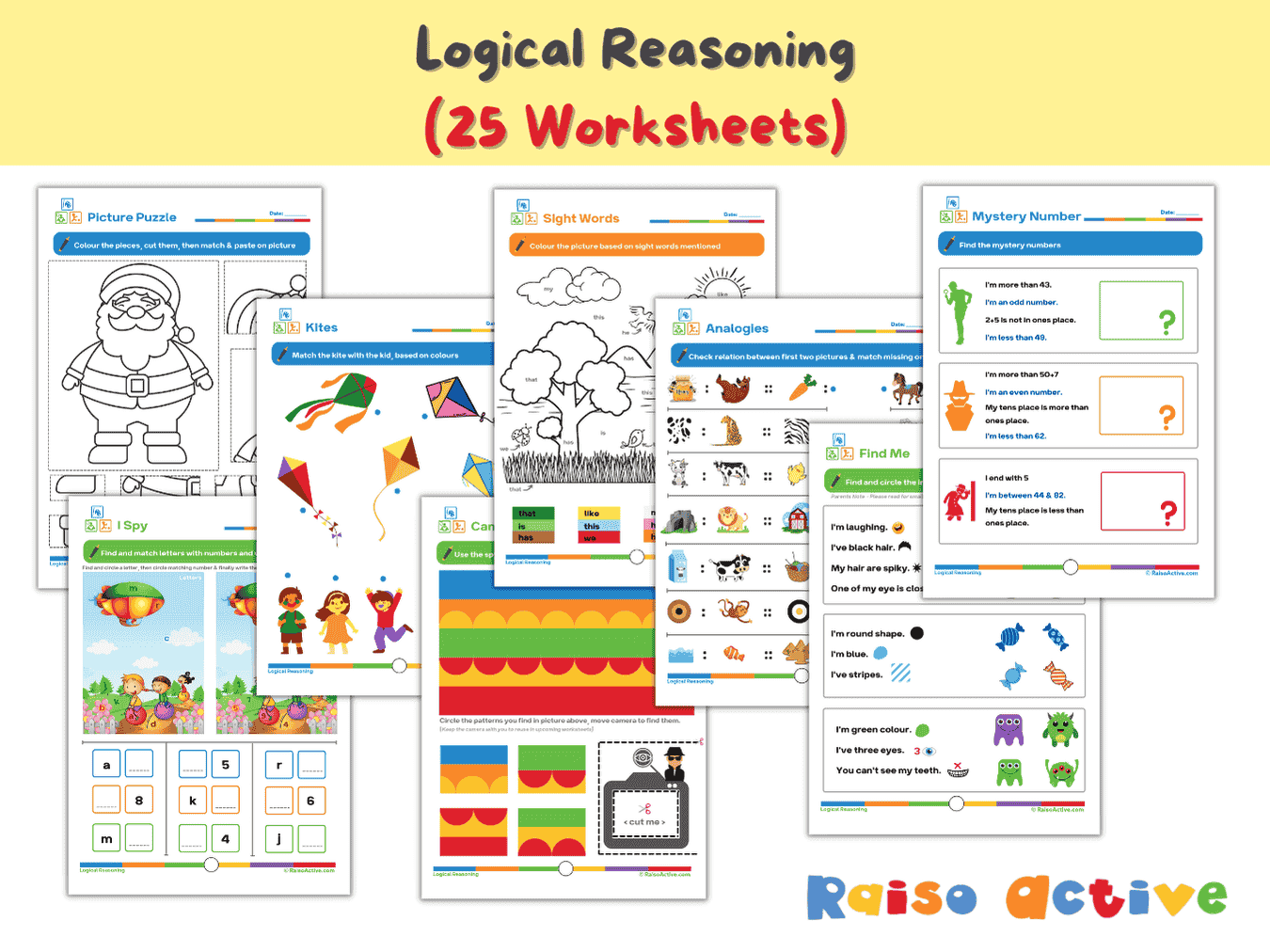
Logical Reasoning Activity Book for Preschool & Kindergarten | Patterns, Puzzles & Analogies
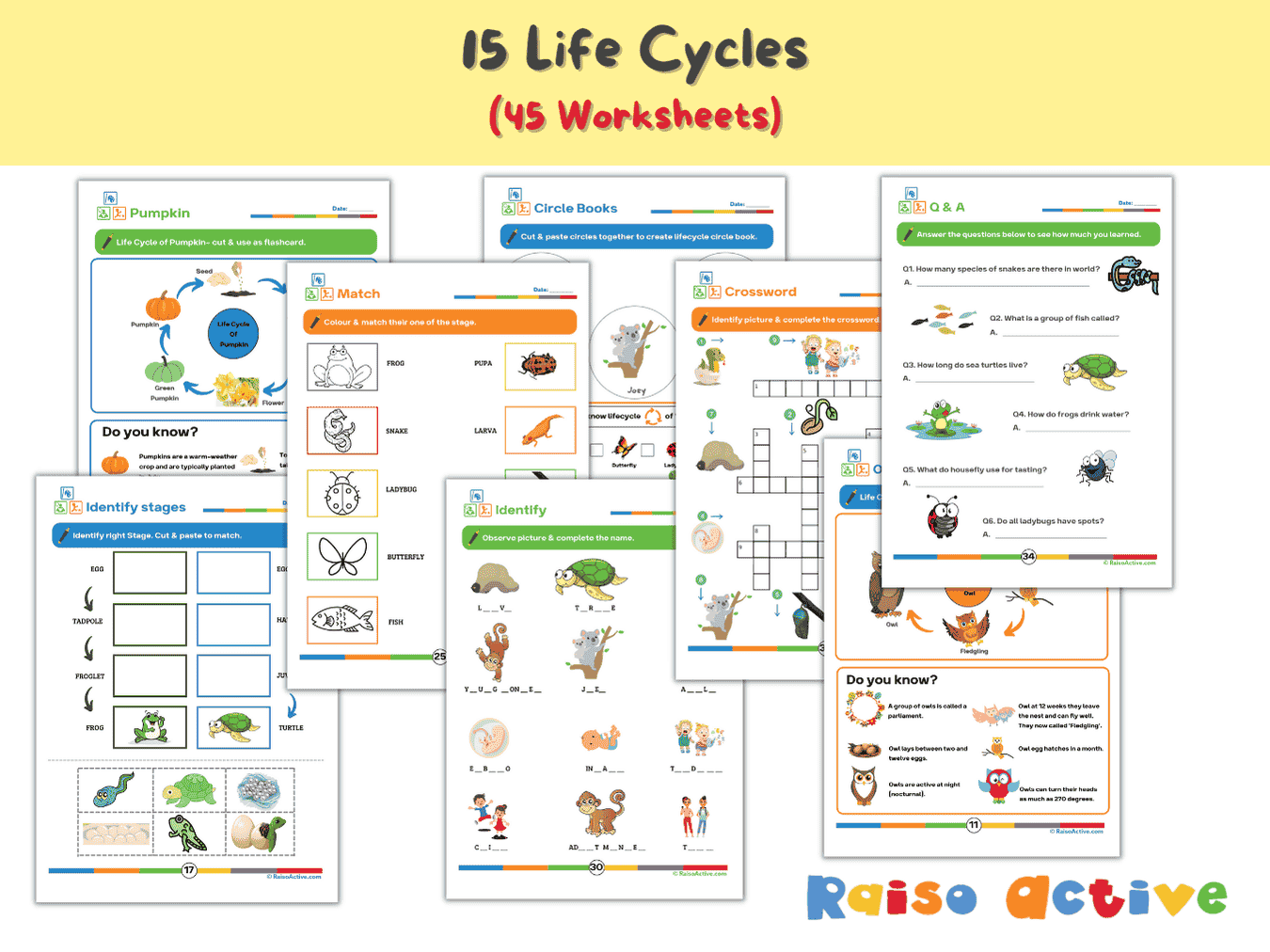
Lifecycles Activity Book & Flashcards for Preschool & Early Elementary
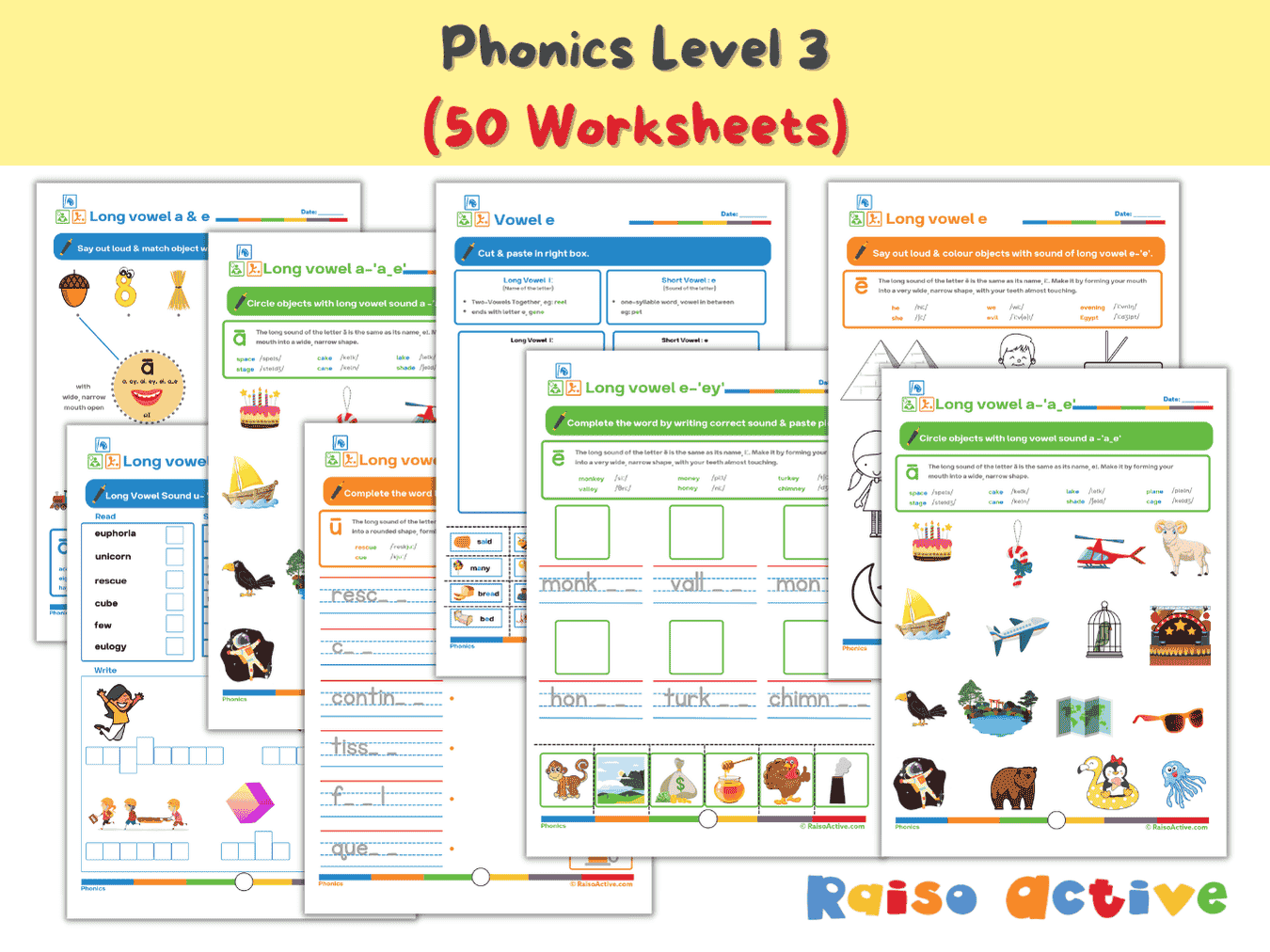
Phonics Level 3 Long Vowels Activity Book for Kindergarten & 1st Grade
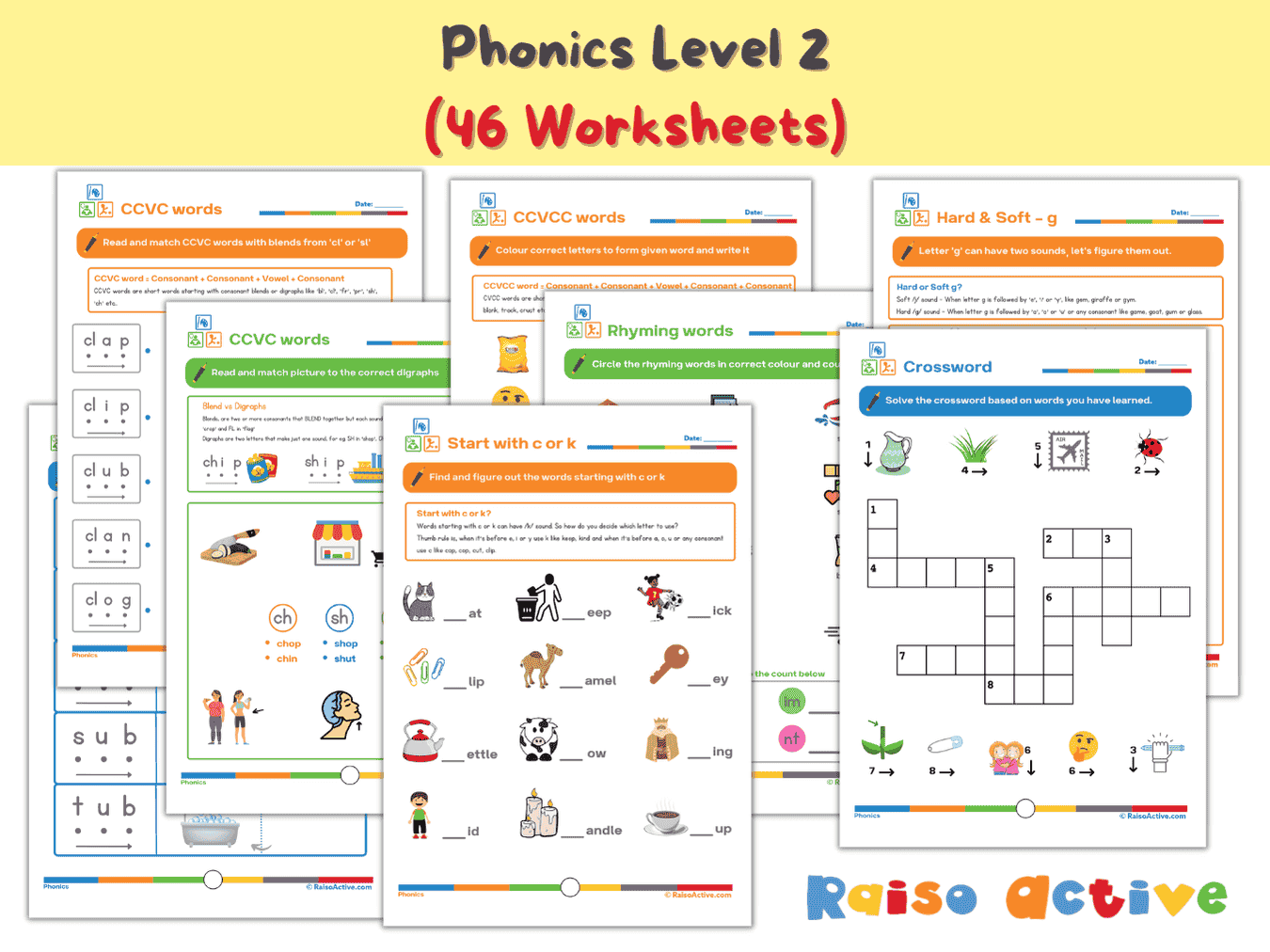
Phonics Level 2 Worksheets: CVC, CCVC, CVCC Word Families & Blends for Early Readers (Ages 4-7)
Guides for parents and teachers
See all guides →Sight Words by Age: The First 50 Words and How to Teach Them Without Flashcard Fatigue
Which sight words to teach first and why, the heart-word method, a read-trace-write-find routine, games, and a by-age table of typical sight-word progress.
How to Teach CVC Blending: A Step-by-Step Method That Works in Two Weeks
A step-by-step method for teaching CVC blending, covering continuous sounds, word families, common errors, and a 14-day plan that most children finish reading CVC words.
Phase 2 Phonics at Home: Sound Order, Blending Games, Worksheets
Phase 2 phonics at home: the five sound sets in order, oral blending, tricky words, a two-week routine, common mistakes, and free worksheets.
Reception Year Explained: EYFS Learning and How to Help at Home
A teacher's plain-English guide to the Reception Year: the seven areas of learning, Early Learning Goals, Phase 2/3 phonics, the RBA and home routines.
UKG Syllabus Explained: English, Maths and EVS Month by Month
What UKG classes typically cover in English, maths and EVS, month by month, aligned to NEP 2020, with ways to support at home and signs your child is behind.
Bridging Two Worlds: A Complete Guide to Teaching Heritage Languages Alongside English
A practical guide to raising bilingual children who speak both their heritage language and English with confidence. Research-backed strategies, activities, and tips for Indian families.