Free printable worksheets · India
LKG Phonics Worksheets (Ages 4–5)
LKG phonics worksheets are practice sheets for children aged 4–5 in Lower Kindergarten (Junior KG) in India. Phonics is the practice of connecting letters to the sounds they represent, then blending those sounds together to decode and read words. The sheets on this page cover letter-sound correspondence, blending sounds into words, segmenting words into sounds and digraphs and consonant blends.
Lower Kindergarten turns a scribbling hand into a writing one: capital letters A to Z and numbers up to twenty become the daily target, alongside pattern practice that keeps curves and loops steady. Reversed letters and numerals are still common at this stage and settle with repetition rather than correction. At four to five, a child learns the sound of most letters, not just the name, and starts blending sounds heard aloud into a word without seeing print. A worksheet should ask for the sound of a shown letter, matching a letter to a picture that starts with it, and oral blending tasks like "what word is m-a-p?" said slowly with gaps. Reading a printed word by sounding it out independently is the next stage, not this one.
- 437 worksheets
- Free PDF download
- Print on A4 or Letter
Made for your child
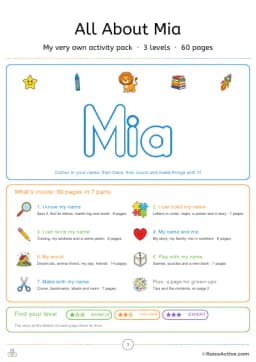
A whole activity pack made with their name
60 pages to spot, build, trace and write their own name, plus pages about their favourites, feelings and family. See a free preview with their name.
Make an All About Me packFree preview · free for members
Or start free: a name tracing sheet with their nameLKG Phonics Worksheets to print
Browse all worksheets for ages 4–5
Short Vowel a and i Say and Match Worksheet
Ages 3-6 · Preschool–KindergartenAges 3-6 · Nursery–Year 1Ages 3-6 · Nursery–UKGAges 3-6
Children hear and say the a and i sounds, see the mouth shape for each one and match pictures to the right sound. a: apple, bat, cat, ant, bag and sack. i: pin, sit, pig, igloo, sip and bin.
Fun 'at' Word Worksheet for Preschoolers
Ages 4-5 · Pre-KAges 4-5 · ReceptionAges 4-5 · LKGAges 4-5
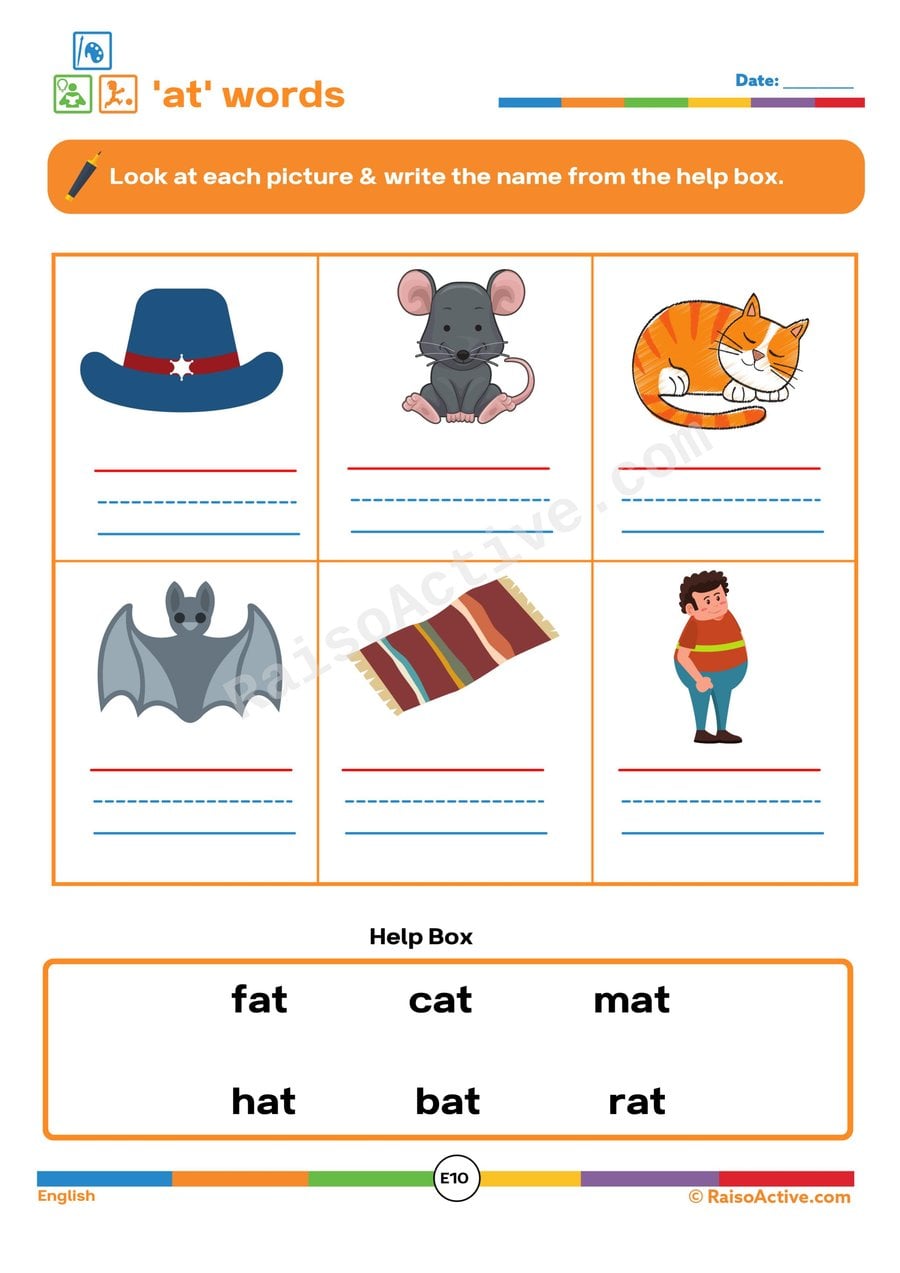
The 'at' word family (cat, hat, bat) is often one of the very first CVC patterns children ages 4-5 encounter, and this worksheet asks them to go a step further than simple reading by identifying and writing the correct word to match each picture themselves. Choosing the right word from a word bank and writing it out, rather than just reading a word that's already printed, requires children to actively recall spelling rather than passively recognize it. This active recall step is an important bridge between reading CVC words and eventually spelling them independently from memory.

Phonics Fun: Match the Letter to the Object Worksheet
Ages 4-5 · Pre-KAges 4-5 · ReceptionAges 4-5 · LKGAges 4-5
This worksheet asks children to connect a printed letter to a picture whose name starts with that letter's sound, then reinforces the connection a second time through color-coded circles, a repetition that research on phonics instruction shows helps move sound-letter pairs from short-term recognition into lasting memory. For four and five year olds, this dual task also builds sustained attention across a slightly longer worksheet than a single matching exercise.

CVC 'ap' Word Family Read and Reveal Worksheet
Ages 3-6 · Preschool–KindergartenAges 3-6 · Nursery–Year 1Ages 3-6 · Nursery–UKGAges 3-6
Children read five 'ap' family words sound by sound, map, cap, lap, nap and tap, and see that changing the first sound makes a new word.

Alphabet Adventures: 'A' and 'B' Picture Sorting Worksheet
Ages 4-5 · Pre-KAges 4-5 · ReceptionAges 4-5 · LKGAges 4-5
This worksheet strengthens phonemic awareness in children ages 4-5 by having them listen for and identify pictures whose names begin with the letters 'A' or 'B,' then sort them accordingly. Focusing on just two letters at a time, rather than the whole alphabet, gives children a manageable, focused way to practice isolating beginning sounds before tackling more letters.

Letter Sounds y and z Say and Match Worksheet
Ages 3-6 · Preschool–KindergartenAges 3-6 · Nursery–Year 1Ages 3-6 · Nursery–UKGAges 3-6
Children hear and say the y and z sounds, see the mouth shape for each one and match pictures to the right sound. y: yam, yak, yell, yolk, yacht and yo-yo. z: zip, zebra, zero, zoo, zigzag and scissors.

Match the 'et' Family Words Worksheet for Preschoolers
Ages 4-5 · Pre-KAges 4-5 · ReceptionAges 4-5 · LKGAges 4-5
Matching 'et' family words like bet, net, and pet to their pictures helps children ages 4-5 recognize a common phonics pattern, learning to read new words by swapping the beginning sound while keeping the familiar 'et' ending. This rime-based approach is a powerful early reading strategy that makes decoding faster once a pattern is learned.

Phonics Fun: Matching Letters and Words Worksheet for Preschoolers
Ages 4-5 · Pre-KAges 4-5 · ReceptionAges 4-5 · LKGAges 4-5
Identifying the beginning sound of a pictured word and writing the matching letter teaches children ages 4-5 phonemic awareness, the ability to isolate individual sounds within spoken words, which is one of the strongest predictors of future reading success. Saying each word aloud after writing the letter reinforces the connection between the printed letter and its spoken sound, closing the loop between listening, writing, and speaking. This worksheet moves children from simply recognizing letters to actively applying letter-sound knowledge, a more advanced early literacy skill.
Secret Words: Spell 'it' Family Words from First Sounds
Ages 3-6 · Preschool–KindergartenAges 3-6 · Nursery–Year 1Ages 3-6 · Nursery–UKGAges 3-6
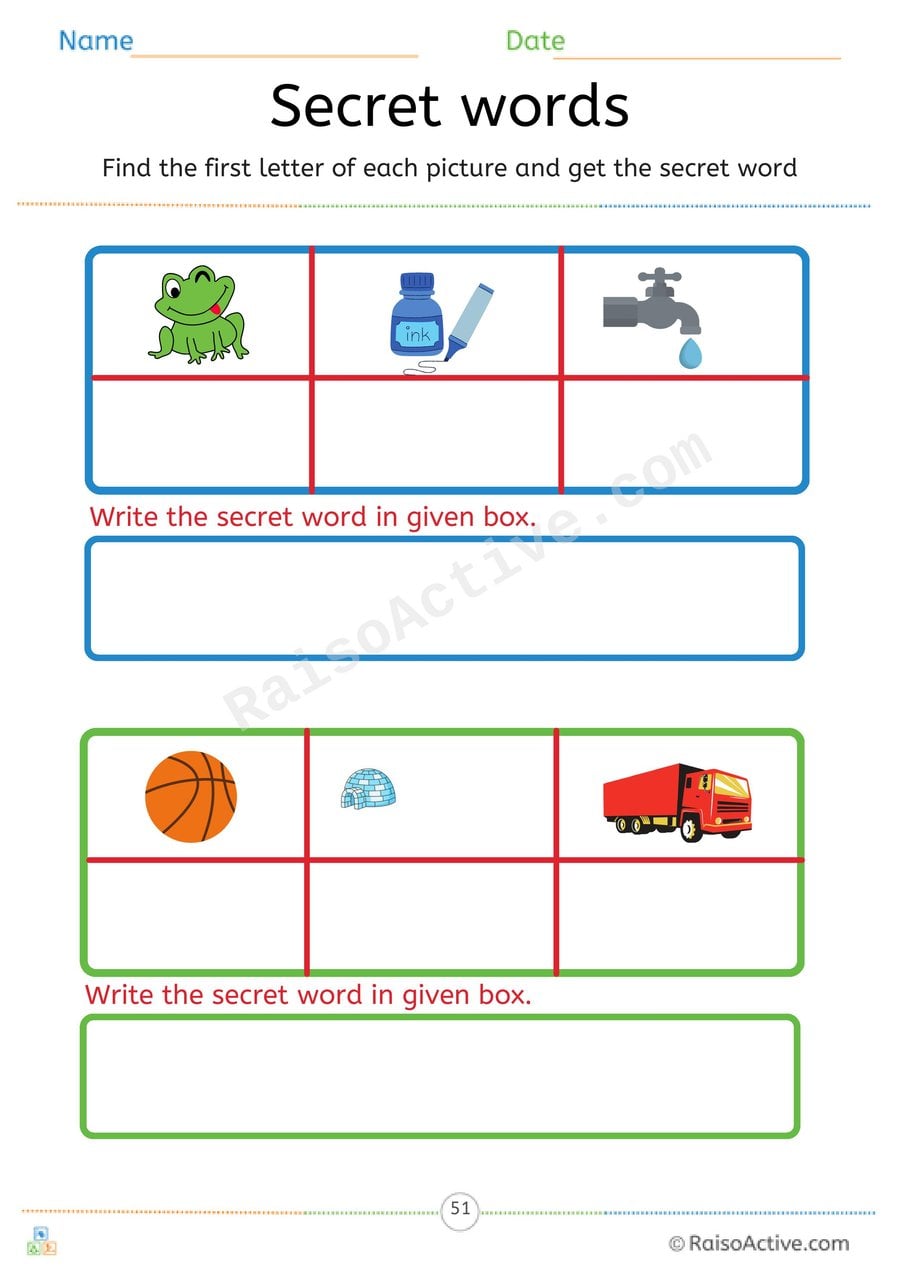
Children hear the first sound of each picture (for example frog, ink, tap), write that letter and blend the three letters to read a hidden 'it' family word.

Letter Sounds s and t Say and Match Worksheet
Ages 3-6 · Preschool–KindergartenAges 3-6 · Nursery–Year 1Ages 3-6 · Nursery–UKGAges 3-6
Children hear and say the s and t sounds, see the mouth shape for each one and match pictures to the right sound. s: snake, sun, sleep, mouse, soup and sock. t: tiger, table, tooth, top, letter and cat.

Letter Sounds f and h Say and Match Worksheet
Ages 3-6 · Preschool–KindergartenAges 3-6 · Nursery–Year 1Ages 3-6 · Nursery–UKGAges 3-6
Children hear and say the f and h sounds, see the mouth shape for each one and match pictures to the right sound. f: fish, fig, fan, phone, photo and cough. h: hut, hop, hat, hen, horse and heart.

Letter Sounds j and k Say and Match Worksheet
Ages 3-6 · Preschool–KindergartenAges 3-6 · Nursery–Year 1Ages 3-6 · Nursery–UKGAges 3-6
Children hear and say the j and k sounds, see the mouth shape for each one and match pictures to the right sound. j: jam, juice, jar, giraffe, sledge and gem. k: kite, key, kettle, car, crow and crab.

Family Words Worksheet: Matching and Picture Association
Ages 4-5 · Pre-KAges 4-5 · ReceptionAges 4-5 · LKGAges 4-5
Children ages 4-5 build vocabulary and reading recognition around family-member words — like mom, dad, sister, or brother — by first identifying the correct word for a picture, then matching printed words to pictures through cutting and pasting. Because family vocabulary is deeply familiar and emotionally meaningful, it's an especially effective category for anchoring new sight words in a child's memory.
Rhyming Words Worksheet: Fun with Sounds!
Ages 4-5 · Pre-KAges 4-5 · ReceptionAges 4-5 · LKGAges 4-5
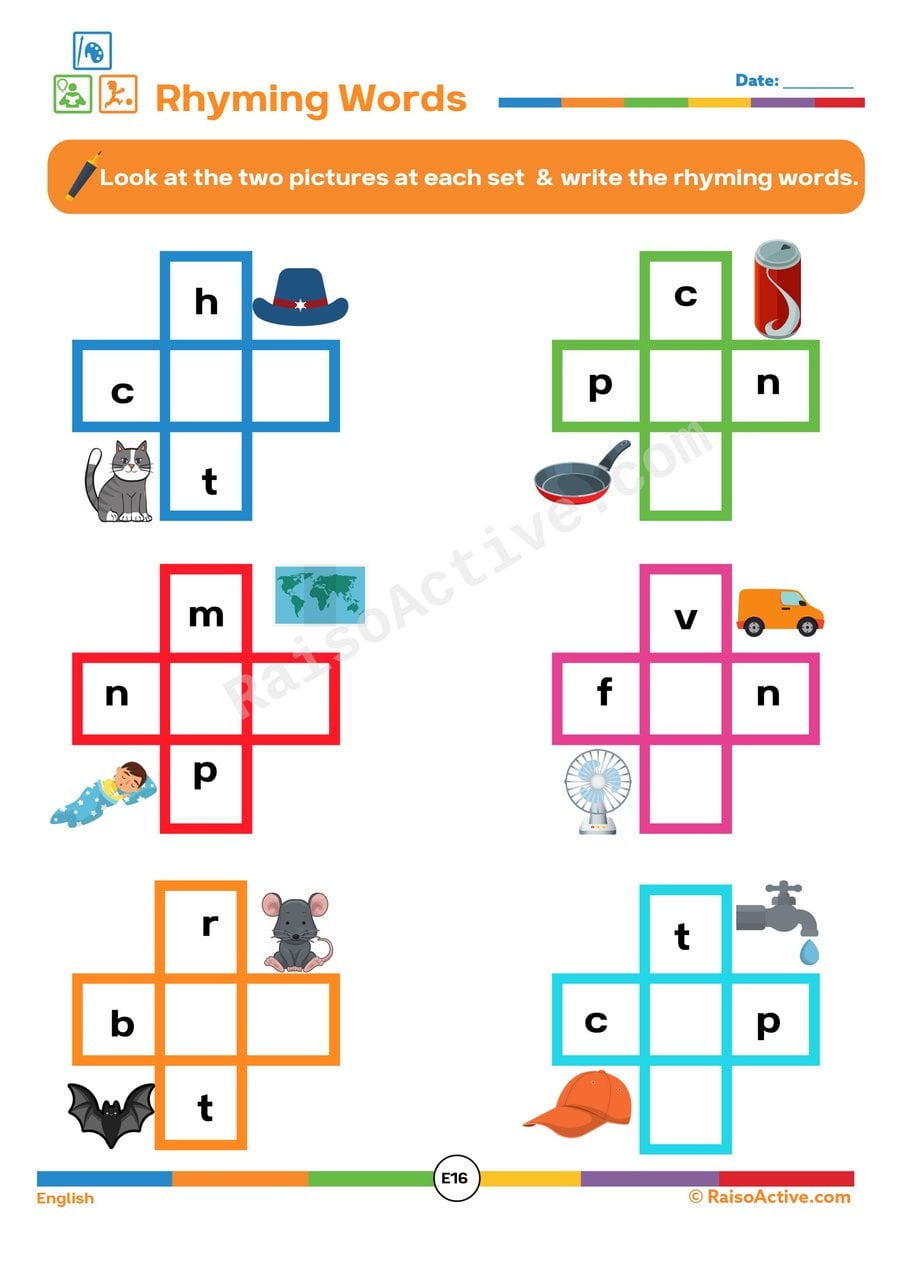
This worksheet has children ages 4-5 look at paired pictures, say the words aloud, and write the word that rhymes with its partner, building phonological awareness by focusing on matching ending sounds rather than beginning ones. Recognizing rhymes is one of the strongest early predictors of later reading success, since it trains children's ears to notice and manipulate the sounds within words.
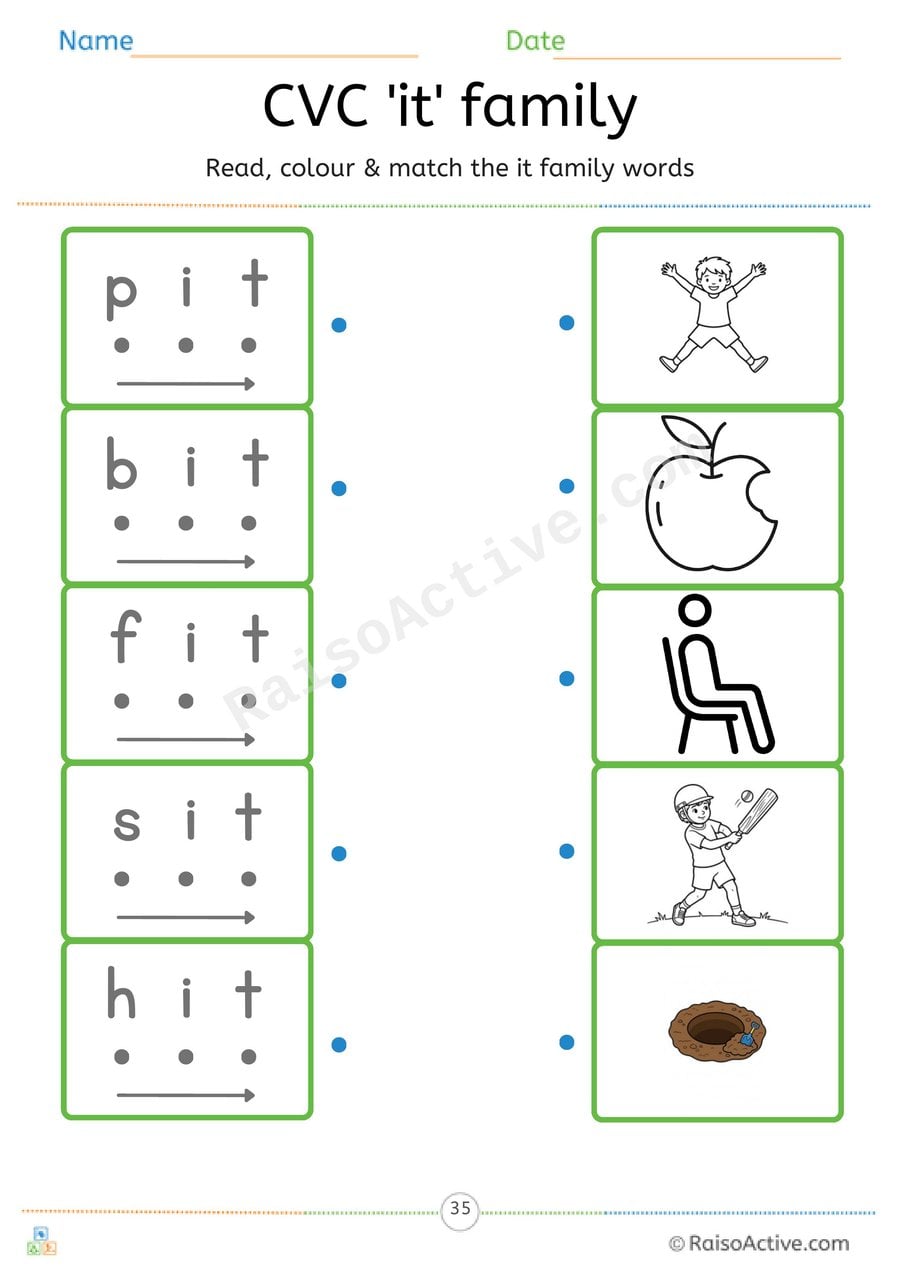
CVC 'it' Word Family Read, Colour and Match Worksheet
Ages 3-6 · Preschool–KindergartenAges 3-6 · Nursery–Year 1Ages 3-6 · Nursery–UKGAges 3-6
Children read the 'it' words pit, bit, fit, sit and hit on their own and match each word to its picture, checking that they understood what they read.
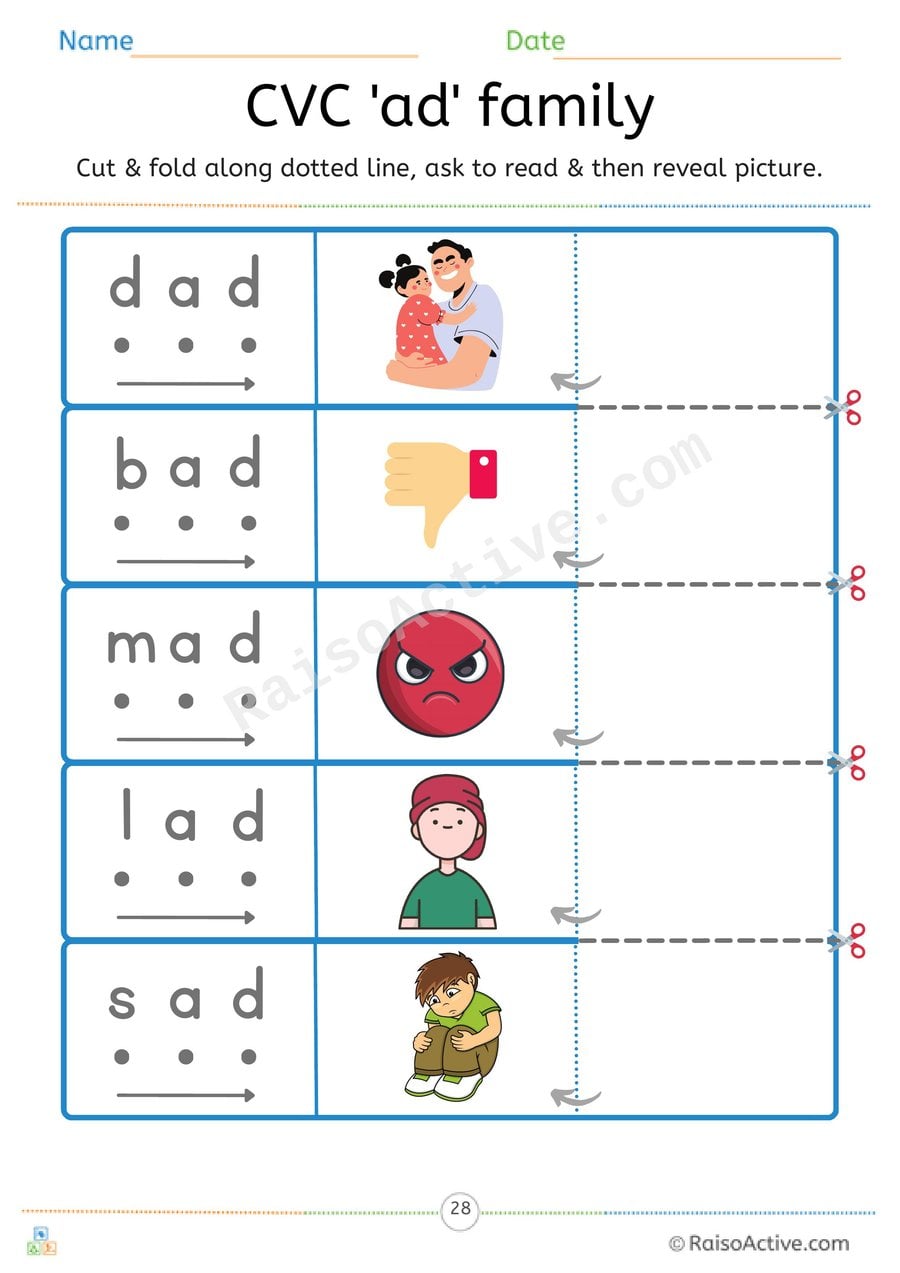
CVC 'ad' Word Family Read and Reveal Worksheet
Ages 3-6 · Preschool–KindergartenAges 3-6 · Nursery–Year 1Ages 3-6 · Nursery–UKGAges 3-6
Children read five 'ad' family words sound by sound, dad, bad, mad, lad and sad, and see that changing the first sound makes a new word.
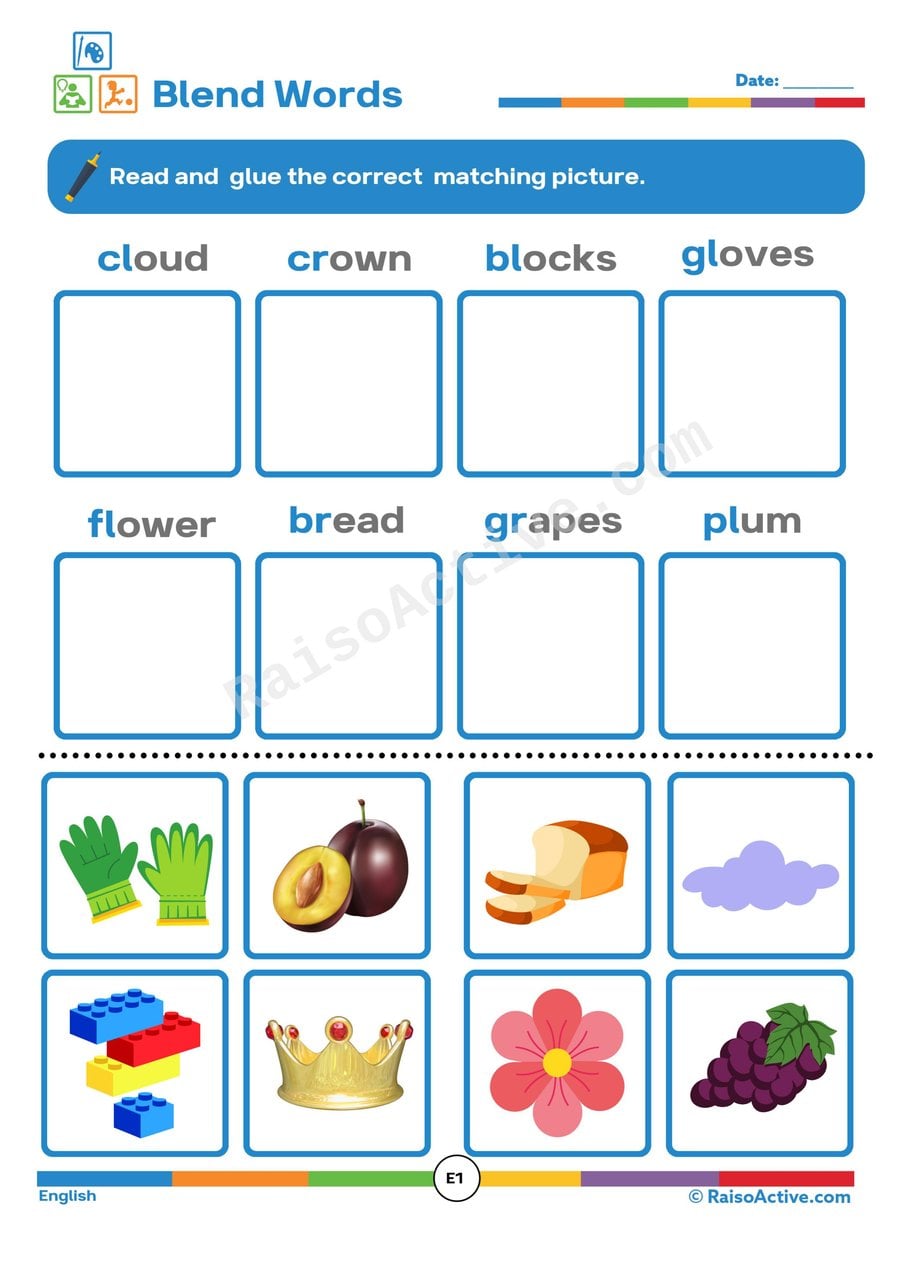
Blend Words Matching Worksheet for Preschoolers
Ages 4-5 · Pre-KAges 4-5 · ReceptionAges 4-5 · LKGAges 4-5
Children ages 4-5 practice reading consonant blend words — words that start with two consonant sounds blended together, like 'bl' or 'st' — and connecting them to the correct picture through a cut-and-paste matching activity. Blends are a step up in difficulty from single beginning sounds, since children must hear and produce two consonant sounds smoothly together, an important milestone on the way to more advanced phonics.

Alphabet Adventures: Write the First Letter - A to T Worksheet
Ages 4-5 · Pre-KAges 4-5 · ReceptionAges 4-5 · LKGAges 4-5
This worksheet builds early phonemic awareness in children ages 4-5 by asking them to identify a pictured object, say its name aloud, and isolate the very first sound to write as a letter. Practicing this across a wide range of letters, A through T, gives children repeated exposure to the letter-sound connection that underlies all future reading and spelling. It also strengthens letter formation as children physically write each capital letter.

Phonic Sounds Worksheet: Circle the Picture That Starts with the Alphabet Sound!
Ages 4-5 · Pre-KAges 4-5 · ReceptionAges 4-5 · LKGAges 4-5
This worksheet reinforces beginning-sound recognition for children ages 4-5 by presenting a letter at the start of each row and asking them to find the one picture among several that begins with that same sound. Because each row contains multiple pictures, children must test several beginning sounds against the target letter before settling on the correct one, which builds more precise listening skills than simpler one-picture matching tasks. This process also strengthens the letter-sound mapping that underlies early decoding.
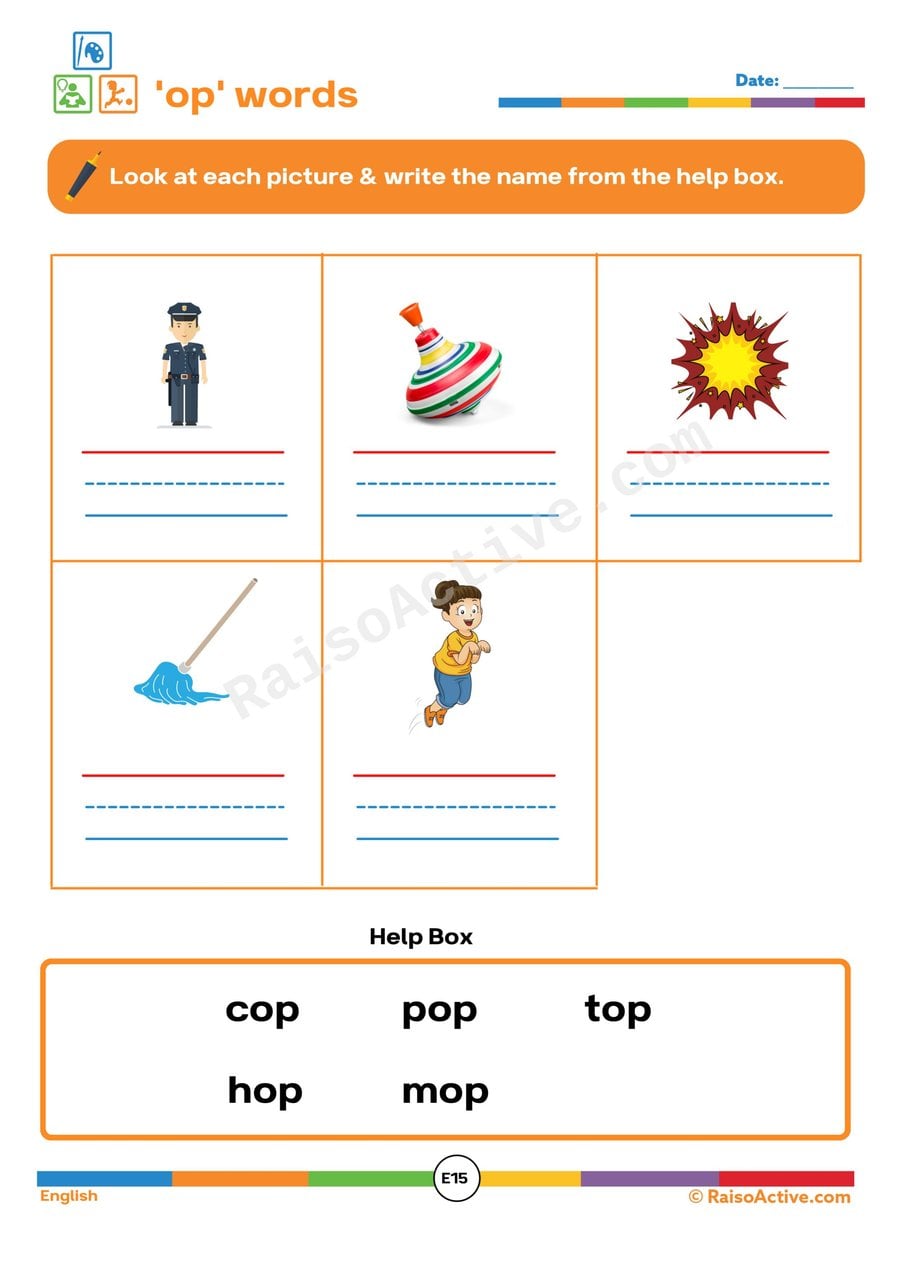
Op Word Worksheet: Read and Write 'op' Words!
Ages 4-5 · Pre-KAges 4-5 · ReceptionAges 4-5 · LKGAges 4-5
This worksheet gives children ages 4-5 focused practice reading and writing CVC words in the 'op' family, like 'top', 'hop', and 'mop'. Recognizing the consistent '-op' ending across multiple words builds the pattern-recognition skill that lets early readers decode unfamiliar words more quickly. Writing each word after finding it in the help box also reinforces correct spelling and letter formation.

Short Vowel o and u Say and Match Worksheet
Ages 3-6 · Preschool–KindergartenAges 3-6 · Nursery–Year 1Ages 3-6 · Nursery–UKGAges 3-6
Children hear and say the o and u sounds, see the mouth shape for each one and match pictures to the right sound. o: pot, dog, mop, fox, stop and box. u: cup, sun, bus, monkey, bun and nut.

Letter Sounds l and r Say and Match Worksheet
Ages 3-6 · Preschool–KindergartenAges 3-6 · Nursery–Year 1Ages 3-6 · Nursery–UKGAges 3-6
Children hear and say the l and r sounds, see the mouth shape for each one and match pictures to the right sound. l: lamp, lion, lemon, bell, well and leaf. r: run, rabbit, rose, carrot, rainbow and ring.
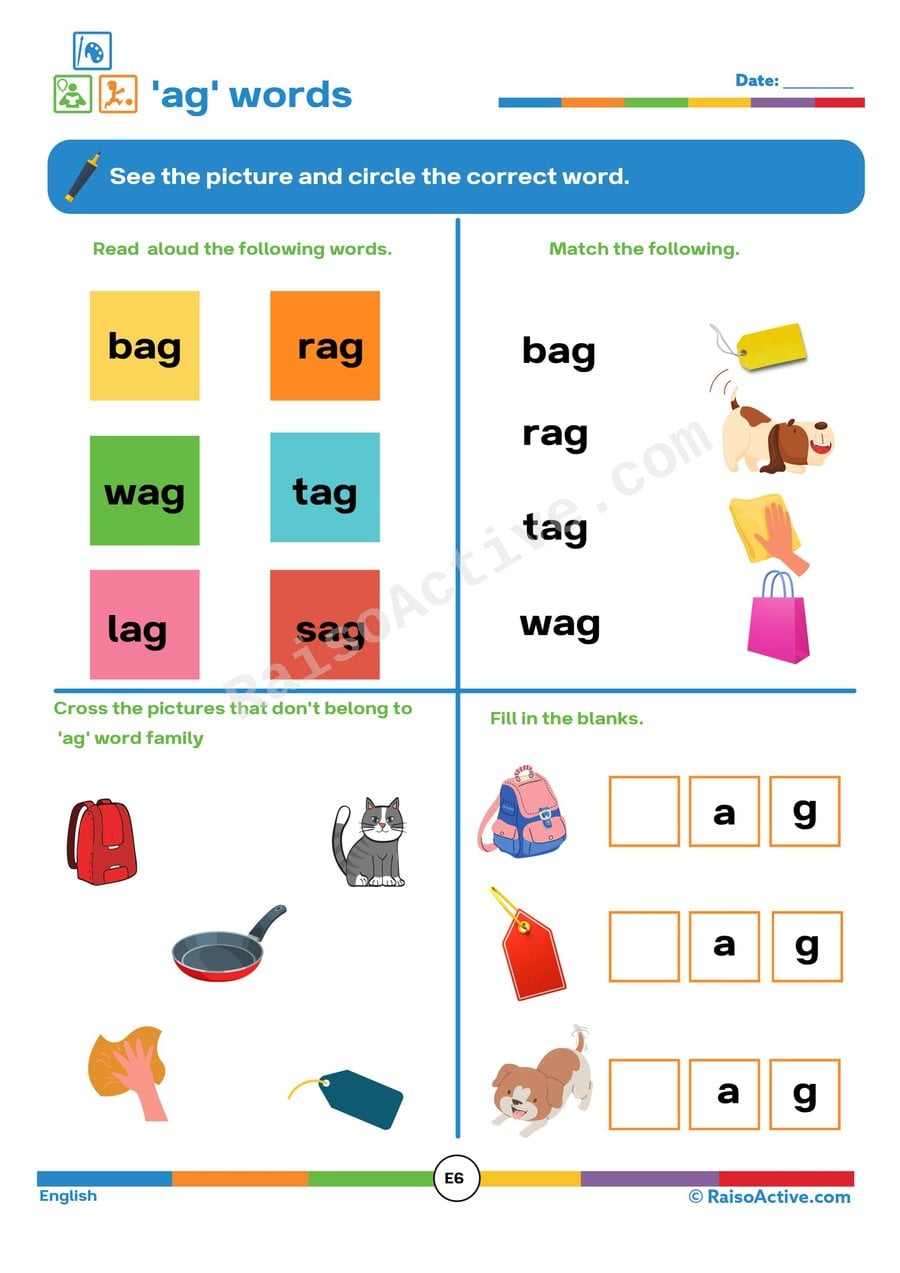
Fun 'ag' Words Worksheet for Early Readers!
Ages 4-5 · Pre-KAges 4-5 · ReceptionAges 4-5 · LKGAges 4-5
This worksheet helps children ages 4-5 learn and recognize words from the 'ag' word family, like bag, tag, and rag, teaching them that changing just the first letter of a familiar word pattern creates a whole new word. Building fluency with word families like this is one of the most efficient ways young readers expand their reading vocabulary quickly.
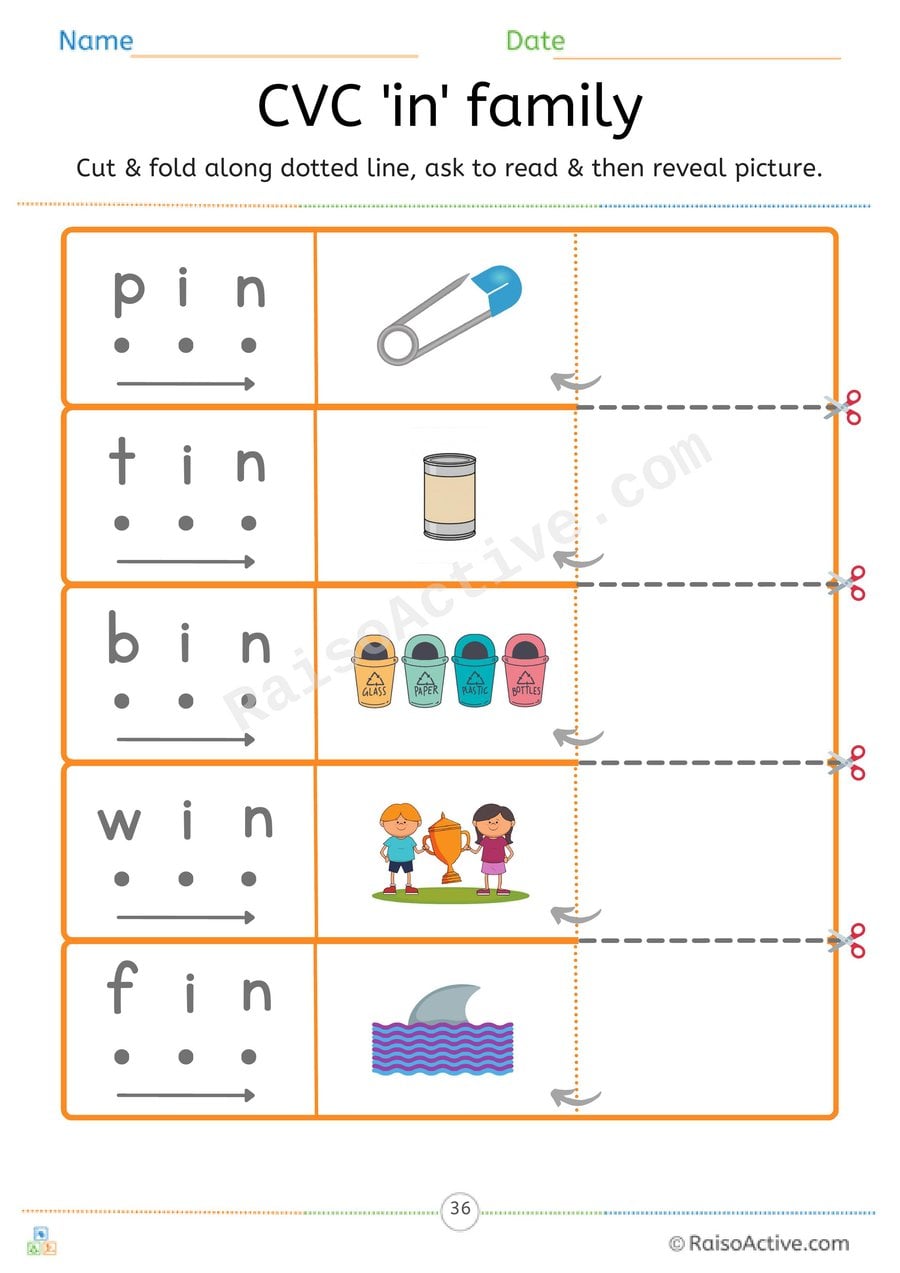
CVC 'in' Word Family Read and Reveal Worksheet
Ages 3-6 · Preschool–KindergartenAges 3-6 · Nursery–Year 1Ages 3-6 · Nursery–UKGAges 3-6
Children read five 'in' family words sound by sound, pin, tin, bin, win and fin, and see that changing the first sound makes a new word.
What LKG phonics worksheets cover
At four to five, a child learns the sound of most letters, not just the name, and starts blending sounds heard aloud into a word without seeing print. A worksheet should ask for the sound of a shown letter, matching a letter to a picture that starts with it, and oral blending tasks like "what word is m-a-p?" said slowly with gaps. Reading a printed word by sounding it out independently is the next stage, not this one.
- Say the sound, not just the name, of a shown letter
- Match a letter to a picture starting with its sound
- Blend three sounds said slowly aloud into a spoken word
- Segment a short spoken word into its separate sounds
How to use these worksheets at home or in class
Ten to fifteen minutes with one warm-up pattern sheet followed by a single letter or number page fits a four-year-old's attention span. Read each instruction aloud before your child begins, and show a correct starting point once rather than repeatedly erasing an attempt.
Start with the sheet that matches what your child can already do, then move one step up. Keep finished sheets in a folder: LKG teachers often ask for evidence of practice, and children like seeing their own progress.
Is your child ready for LKG phonics work?
A child entering this stage should already trace straight and curved lines confidently, hold a pencil with three fingers rather than a fist, sit for ten minutes without wandering off, and recognise a handful of capital letters from their own name.
Frequently asked questions
How can I tell if my four-year-old is ready to start blending sounds into words?
Say a short word slowly with a gap between each sound, such as "s...u...n", and ask what word it makes. A child who is ready will usually get this right most of the time once the idea is explained. If the gaps confuse rather than help, spend more time on hearing the first sound in words and on rhyming, since oral blending like this needs to work before blending from printed letters can.
What should a LKG child be able to do in phonics?
At four to five, a child learns the sound of most letters, not just the name, and starts blending sounds heard aloud into a word without seeing print. A worksheet should ask for the sound of a shown letter, matching a letter to a picture that starts with it, and oral blending tasks like "what word is m-a-p?" said slowly with gaps. Reading a printed word by sounding it out independently is the next stage, not this one. A child entering this stage should already trace straight and curved lines confidently, hold a pencil with three fingers rather than a fist, sit for ten minutes without wandering off, and recognise a handful of capital letters from their own name.
Do these worksheets follow the LKG curriculum?
The sheets cover letter-sound correspondence, blending sounds into words, segmenting words into sounds and digraphs and consonant blends, which sit inside the NEP 2020 Foundational Stage (NCF-FS 2022) outcomes for LKG. Pre-K (US), Reception (UK) use the same skills at this age, so the sheets also fit families following those programmes.
Are the LKG phonics worksheets free to download?
Yes. Every sheet on this page can be downloaded free as a watermarked PDF after creating an account, up to five downloads a day. The annual membership (₹1000) removes the watermark and the daily limit across the full library of more than 1,000 worksheets and all activity packs.

Written by
Hemsweta Jain · Teacher Cheena
MBA and Early Childhood Educator, teaching since 2014 · Founder of RaisoActive, Mumbai
Written and reviewed by Hemsweta Jain (Teacher Cheena), who designs every RaisoActive worksheet.
Last reviewed
Printable packs for ages 4–5
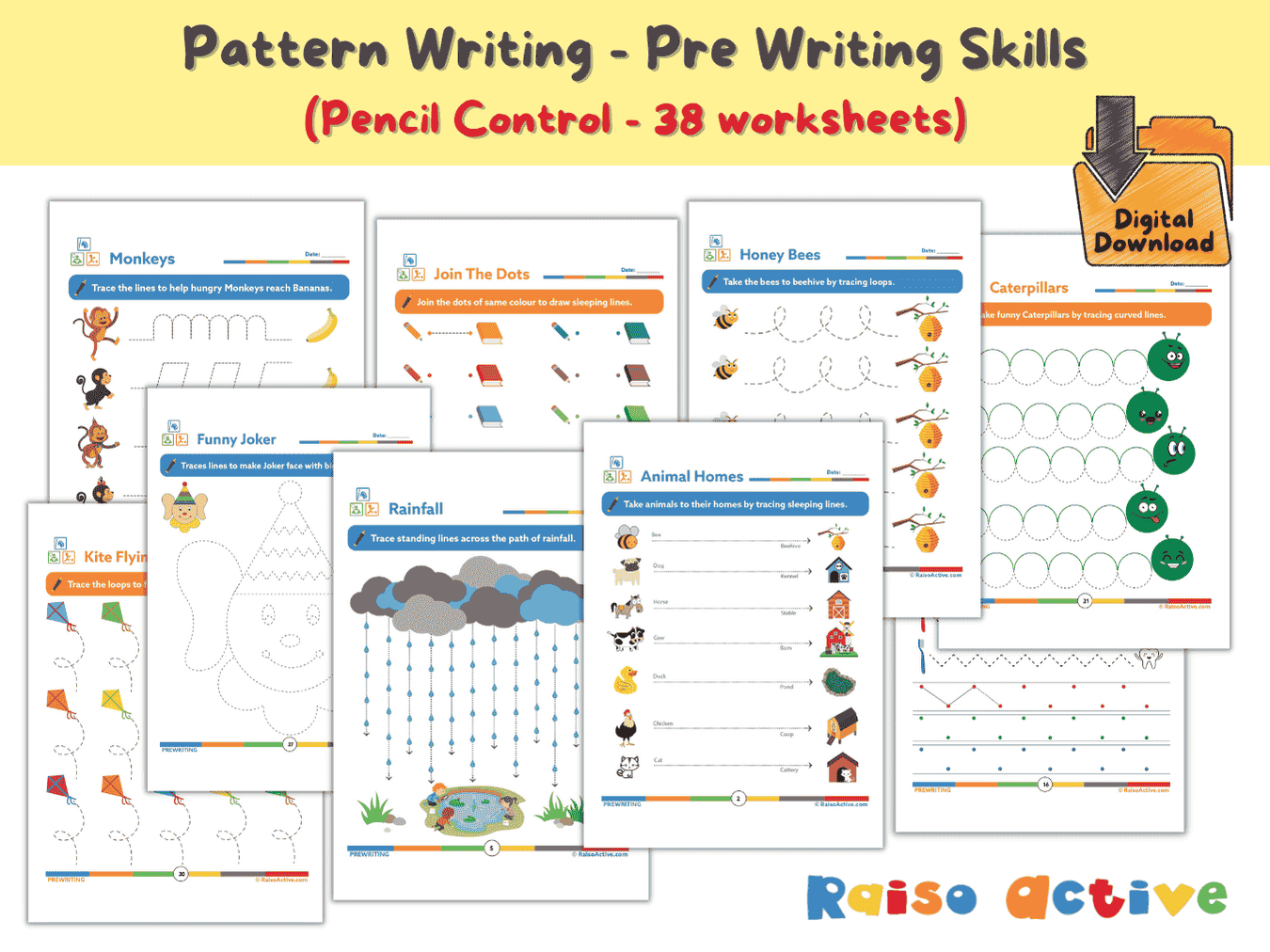

Pattern Writing Pre-writing Skills Activity Book for 3-4 Year Olds
Ages 3-4 · PreschoolAges 3-4 · NurseryAges 3-4 · 44 pages
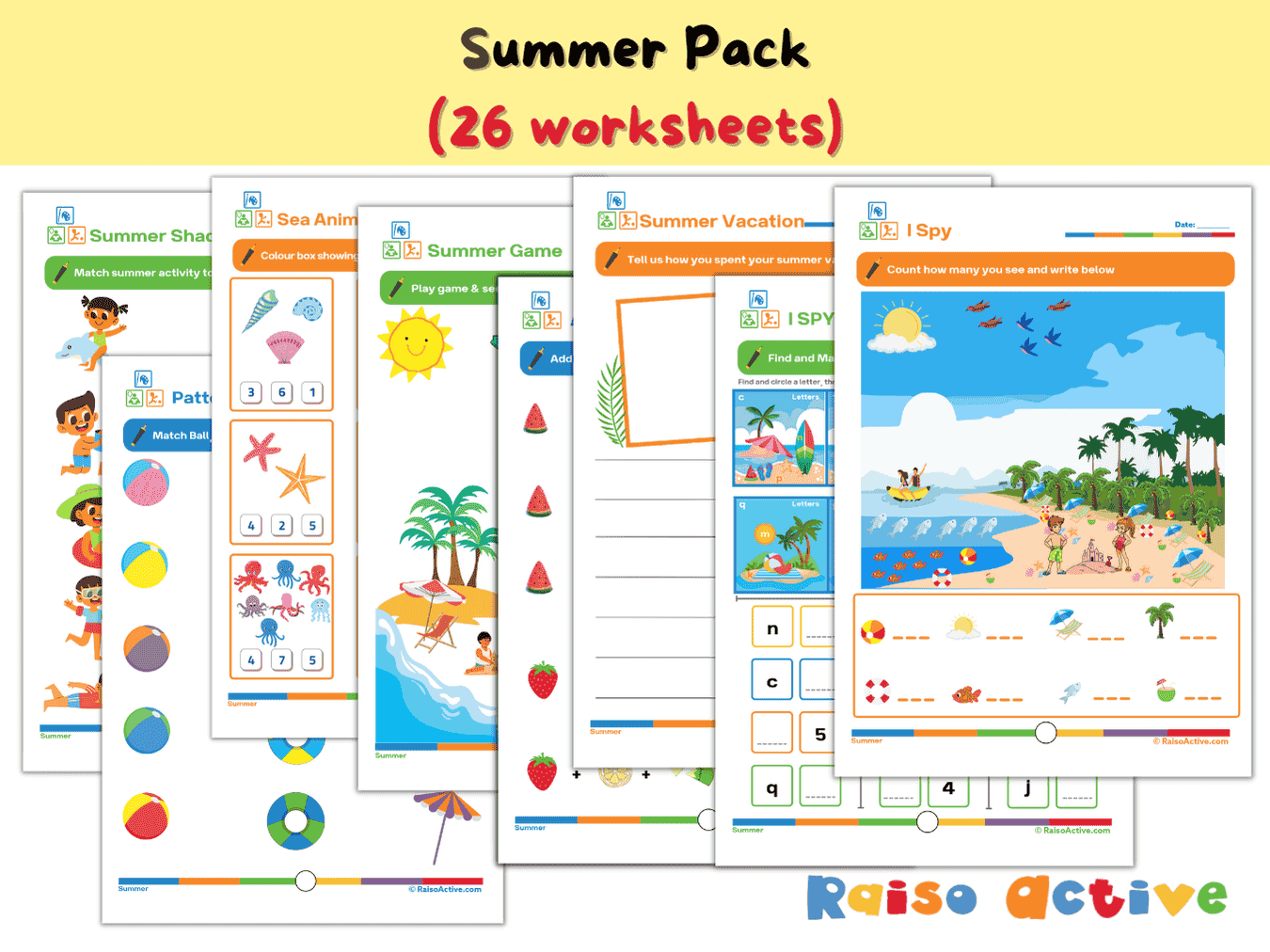

Summer Activity Pack: Math, Literacy, Puzzles & More for Preschool & Kindergarten
Ages 3-7 · Preschool–Grade 1Ages 3-7 · Nursery–Year 2Ages 3-7 · Nursery–Class 1Ages 3-7 · 26 pages
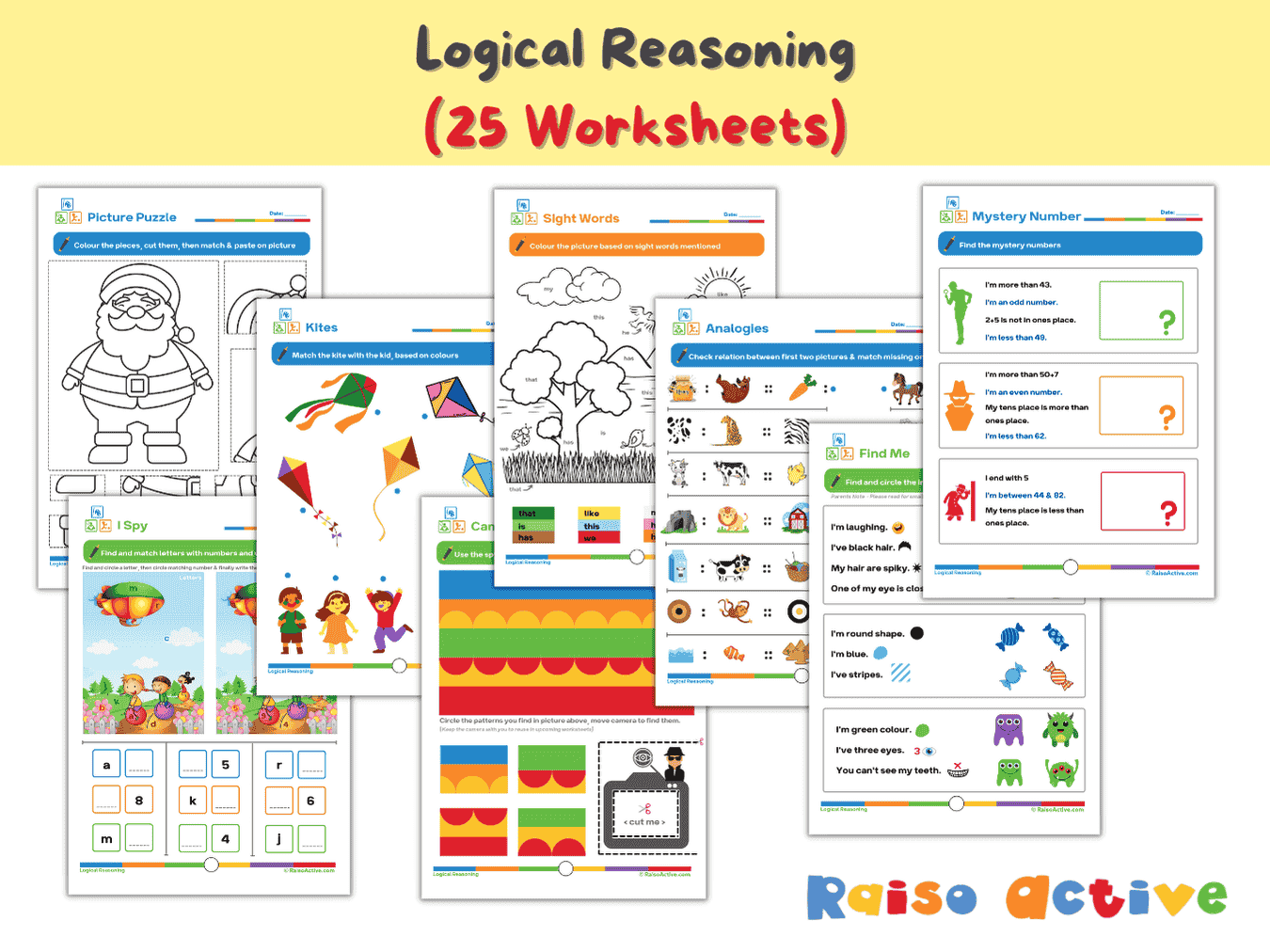

Logical Reasoning Activity Book for Preschool & Kindergarten | Patterns, Sudoku, Mazes & Coding
Ages 4-7 · Pre-K–Grade 1Ages 4-7 · Reception–Year 2Ages 4-7 · LKG–Class 1Ages 4-7 · 34 pages
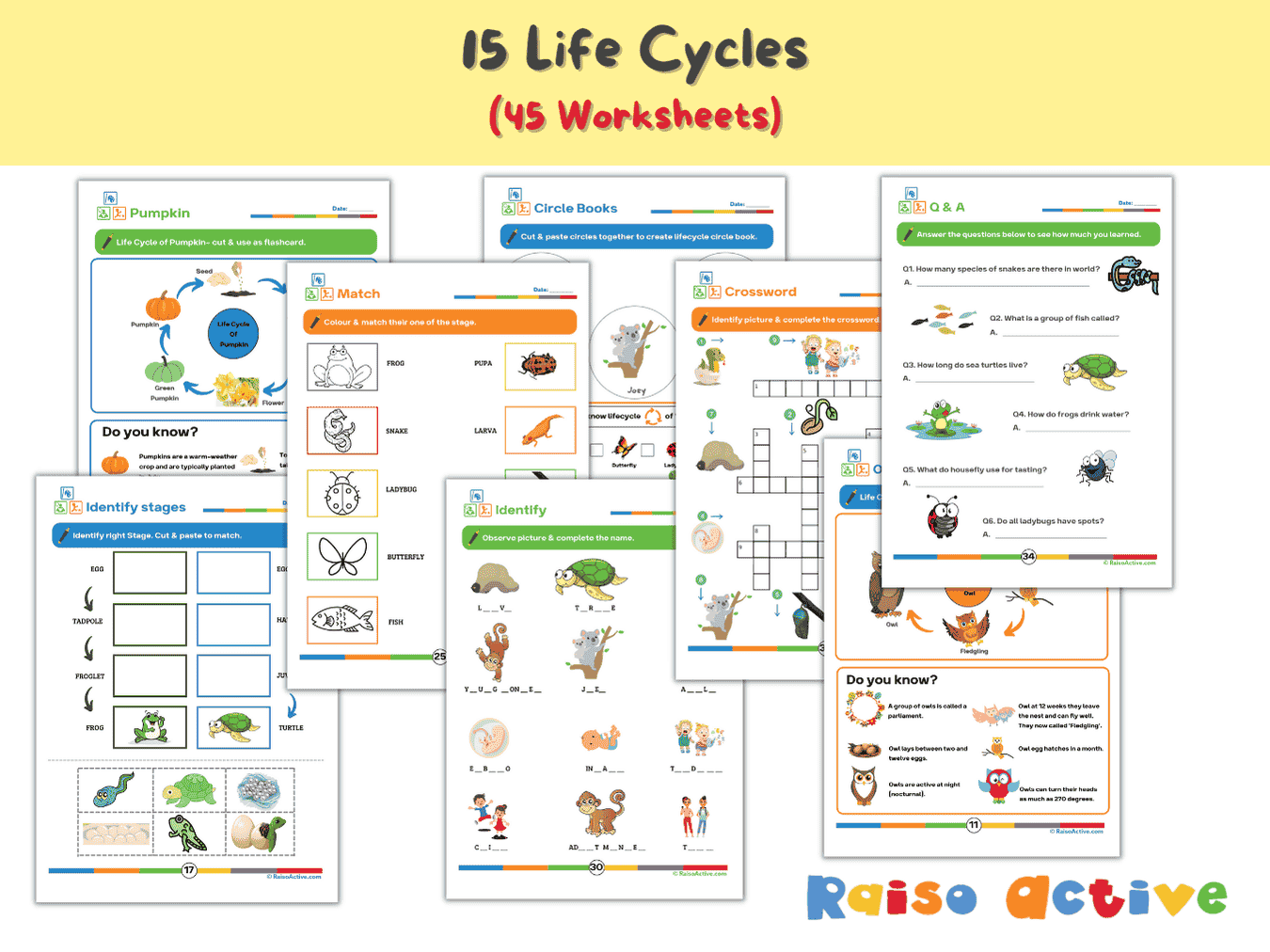

Lifecycles Activity Book & Flashcards for Preschool & Early Elementary
Ages 3-8 · Preschool–Grade 2Ages 3-8 · Nursery–Year 3Ages 3-8 · Nursery–Class 2Ages 3-8 · 46 pages
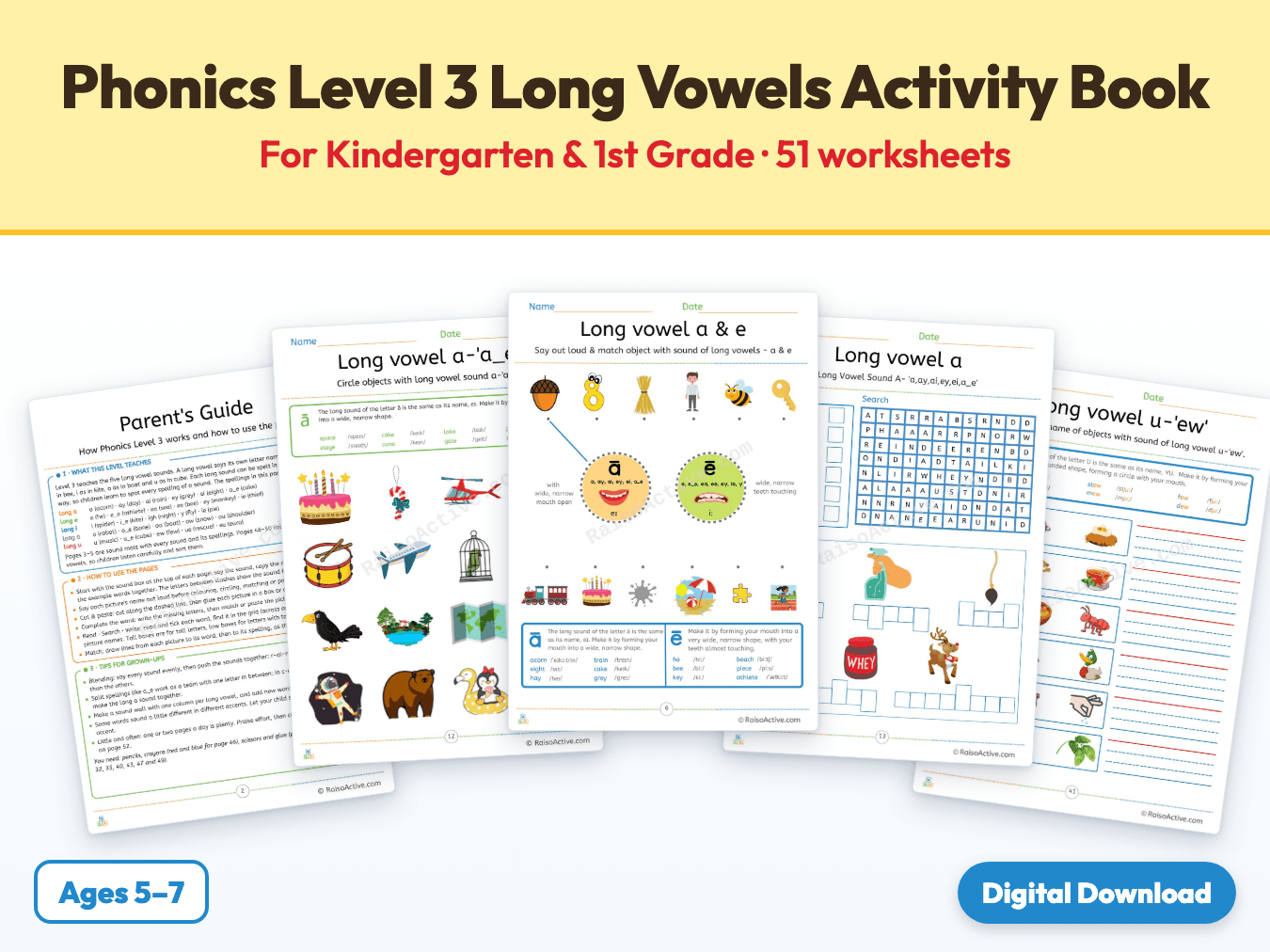

Phonics Level 3 Long Vowels Activity Book for Kindergarten & 1st Grade
Ages 5-7 · Kindergarten–Grade 1Ages 5-7 · Year 1–Year 2Ages 5-7 · UKG–Class 1Ages 5-7 · 52 pages
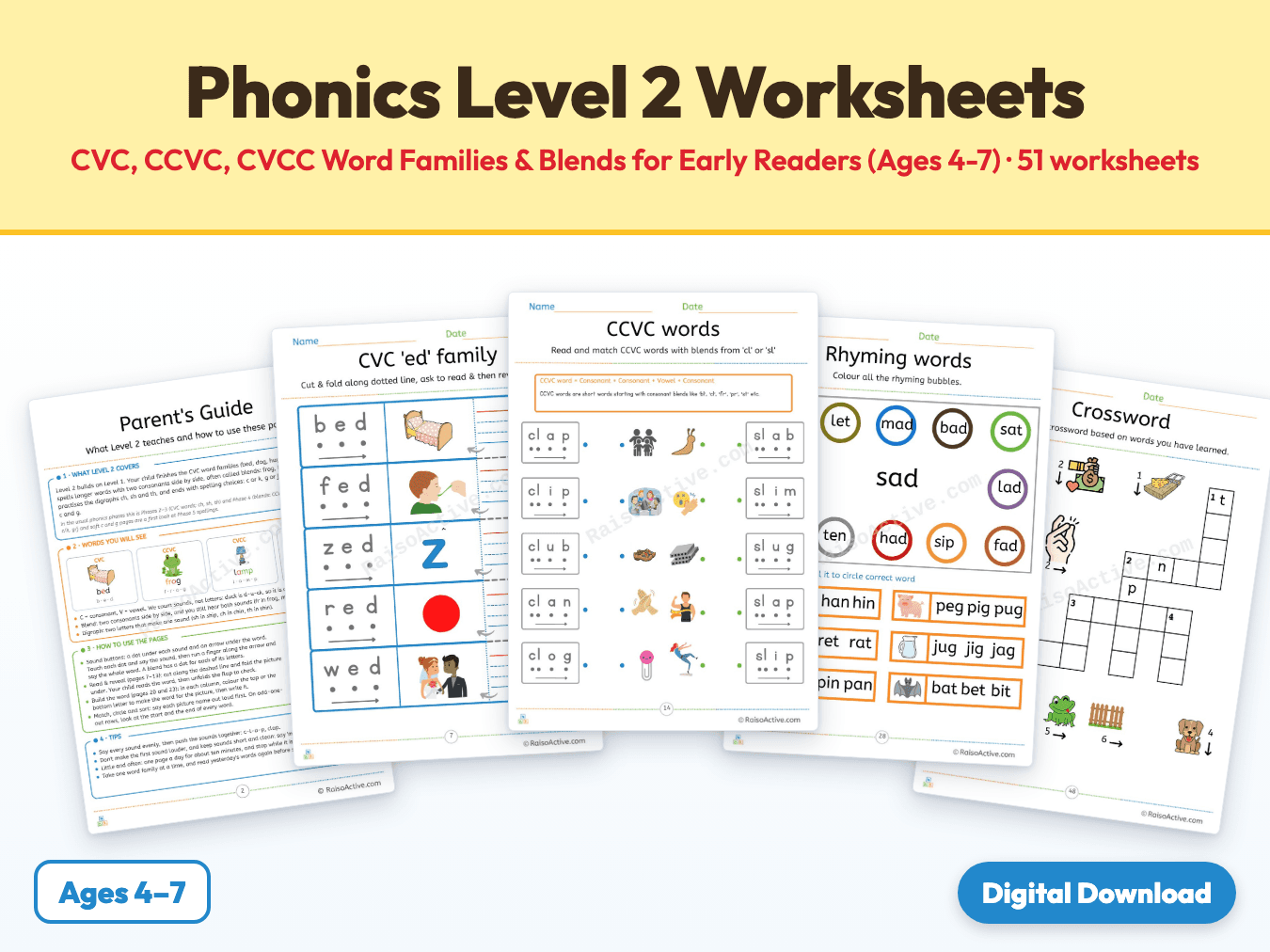
Phonics Level 2 Worksheets: CVC, CCVC, CVCC Word Families & Blends for Early Readers (Ages 4-7)
Ages 4-7 · Pre-K–Grade 1Ages 4-7 · Reception–Year 2Ages 4-7 · LKG–Class 1Ages 4-7 · 52 pages
Guides for parents and teachers
See all guides
Sight Words by Age: The First 50 Words and How to Teach Them Without Flashcard Fatigue
Which sight words to teach first and why, the heart-word method, a read-trace-write-find routine, games, and a by-age table of typical sight-word progress.
How to Teach CVC Blending: A Step-by-Step Method That Works in Two Weeks
A step-by-step method for teaching CVC blending, covering continuous sounds, word families, common errors, and a 14-day plan that most children finish reading CVC words.
Phase 2 Phonics at Home: Sound Order, Blending Games, Worksheets
Phase 2 phonics at home: the five sound sets in order, oral blending, tricky words, a two-week routine, common mistakes, and free worksheets.

Reception Year Explained: EYFS Learning and How to Help at Home
A teacher's plain-English guide to the Reception Year: the seven areas of learning, Early Learning Goals, Phase 2/3 phonics, the RBA and home routines.
UKG Syllabus Explained: English, Maths and EVS Month by Month
What UKG classes typically cover in English, maths and EVS, month by month, aligned to NEP 2020, with ways to support at home and signs your child is behind.
Bridging Two Worlds: A Complete Guide to Teaching Heritage Languages Alongside English
A practical guide to raising bilingual children who speak both their heritage language and English with confidence. Research-backed strategies, activities, and tips for Indian families.