Free printable worksheets · India
LKG Cutting Practice Worksheets (Ages 4–5)
LKG cutting practice worksheets are practice sheets for children aged 4–5 in Lower Kindergarten (Junior KG) in India. Cutting practice is using child scissors to cut along a printed line, straight or curved, to build hand strength and bilateral coordination. The sheets on this page cover scissor grip and control, cutting along a straight line, cutting along a curved line and cutting out a shape in one piece.
Lower Kindergarten turns a scribbling hand into a writing one: capital letters A to Z and numbers up to twenty become the daily target, alongside pattern practice that keeps curves and loops steady. Reversed letters and numerals are still common at this stage and settle with repetition rather than correction. Between four and five the helper hand joins in, feeding and turning the paper while the scissor hand keeps cutting. Straight lines can now run the full width of a page, wide curves and gentle waves are within reach, and a simple zigzag with three or four turns is a good stretch. Cutting out a large square or triangle on thick lines closes the year. Tight curves, small pieces and thin copy paper still cause frustration.
342+ worksheets · free PDF download · print on A4 or Letter
LKG Cutting Practice Worksheets to print
Browse all worksheets for ages 4–5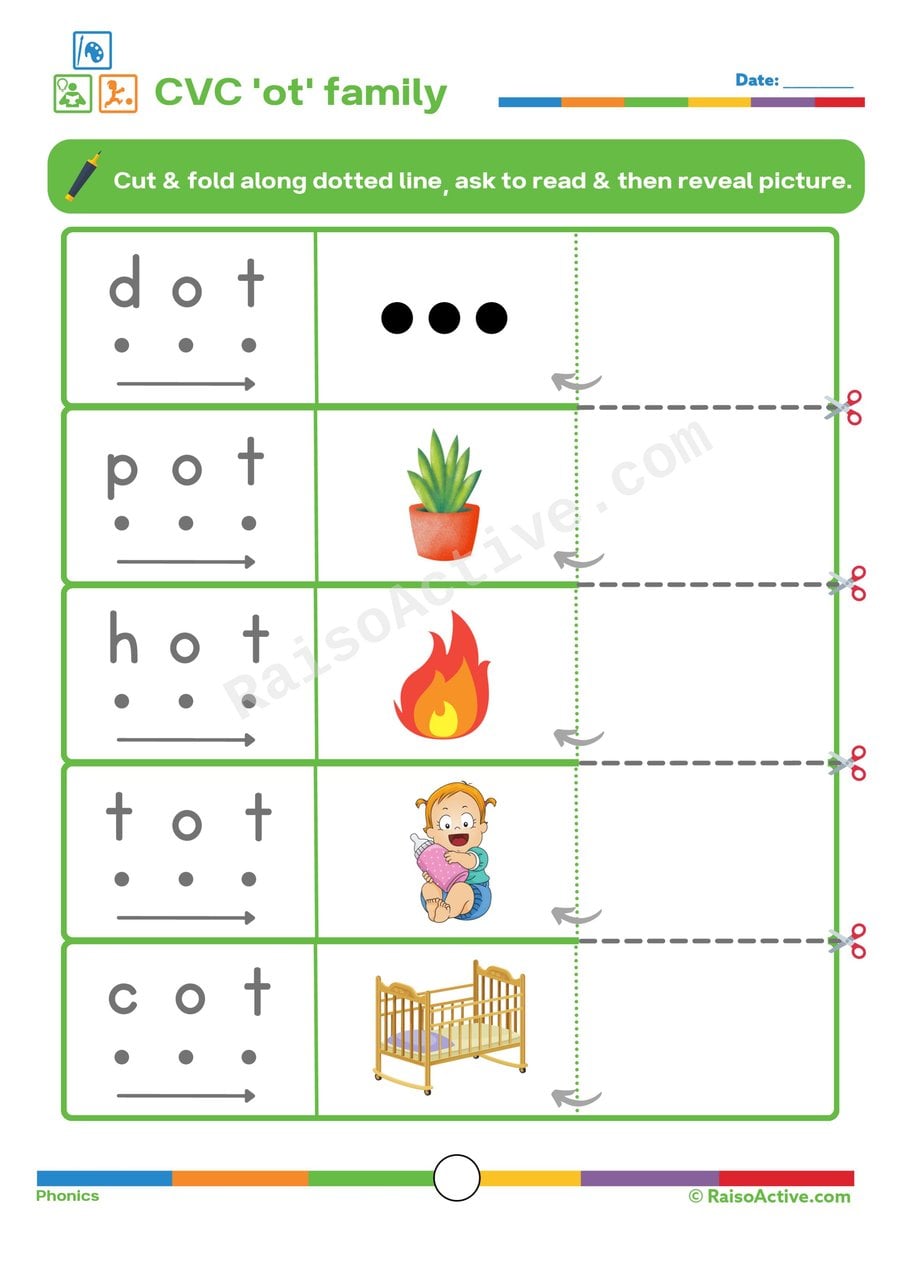
CVC Word Family 'ot' Worksheet: Read, Cut, and Match!
This worksheet has children ages 4-5 read CVC words from the 'ot' family — like 'dot', 'hot', and 'pot' — then practice fine motor skills by cutting and folding the flaps to match words with pictures. Combining reading practice with a cut-and-reveal format keeps early readers motivated, since correctly decoding a word is immediately rewarded with a picture check.
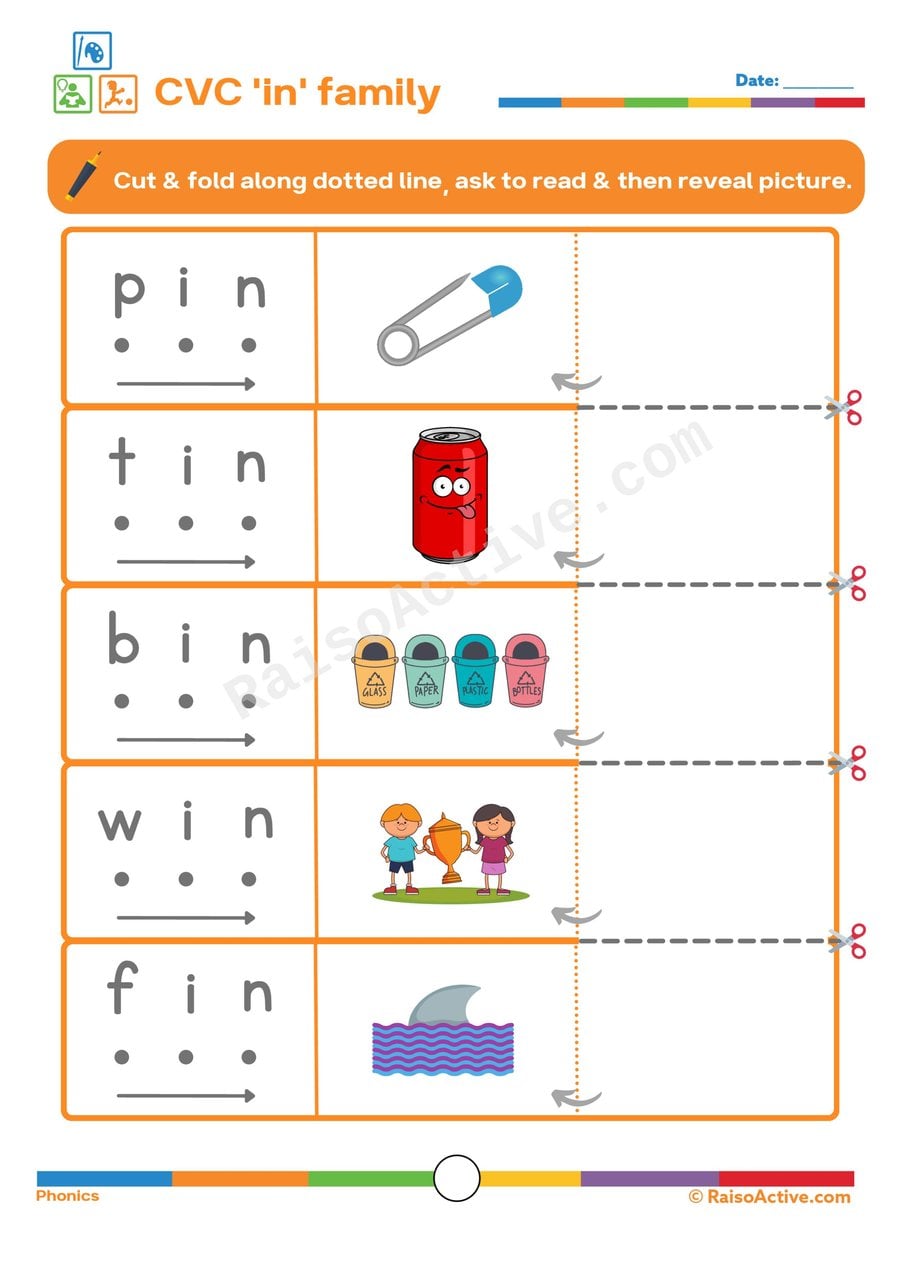
CVC 'in' Family Worksheet: Read, Cut, and Match!
This 'in' word family worksheet (pin, win, fin) gives children ages 4-5 hands-on cutting and pasting practice layered onto phonics decoding, which strengthens fine motor control at the same time as reading skills. Recognizing that 'in' stays fixed while only the first letter changes helps children build the pattern-based reading strategy that eventually replaces slow, letter-by-letter sounding out. Associating each word with its picture also reinforces vocabulary and comprehension, not just decoding.

Cut and Paste Number Sequence Worksheet for Preschoolers
This cut-and-paste worksheet helps children ages 4-5 practice number sequencing from 26 to 40 by cutting out number squares and gluing them in the correct order to complete a picture, combining counting skills with fine motor control. Sequencing numbers in this higher range requires children to recognize two-digit numerals and understand their increasing order, a more demanding task than sequencing single-digit numbers. The reward of a completed picture at the end gives children a visual, motivating payoff for careful, accurate ordering.

Ganesha Puzzle Worksheet for Kids: Cut and Paste Fun!
This Ganesha cut-and-paste puzzle helps children ages 3-6 build scissor control and spatial reasoning as they cut apart puzzle pieces and figure out how they fit back together to recreate the image. It also introduces Ganesha, a central figure in the Ganesh Chaturthi festival, giving children a visual, hands-on way to engage with cultural learning rather than just being told a fact.

Summer Puzzle Worksheet: Cut and Arrange Numbers 11-20!
This worksheet extends number sequencing practice into the teens and twenties by having children cut out numbered puzzle pieces and arrange them from 11 to 20 to reveal a hidden summer picture. For four- and five-year-olds, the puzzle format adds motivation to get the sequence right, since an incorrect order means the picture won't come together properly, giving children immediate, visual feedback on their own work.

Cut and Paste Initial Sounds Worksheet for Preschoolers
This worksheet asks children to identify the very first sound of a picture's name and then physically select and paste the matching letter, combining phoneme isolation with a hands-on confirmation step that a simple matching line doesn't provide. For ages four to five, the cutting and choosing process slows the task down just enough to make sure the sound-letter connection is deliberate rather than a quick guess.
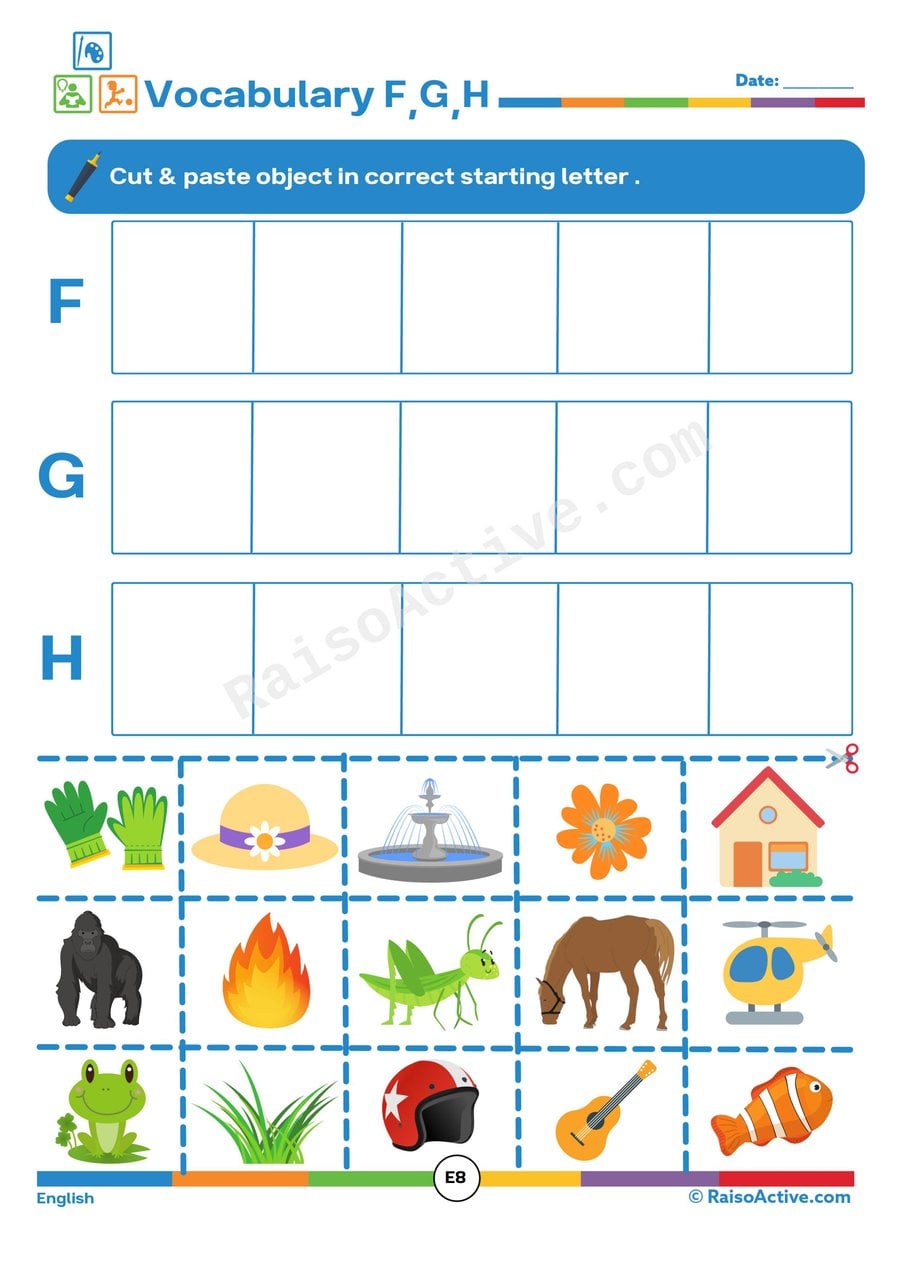
F, G, H Letter Sounds Cut and Paste Worksheet
This worksheet builds phonemic awareness in children ages 4-5 by asking them to isolate the beginning sound of each picture and sort it under the correct letter — F, G, or H. Sorting across three letters at once, rather than just one, requires children to hold multiple sound-letter associations in mind and choose between them, which is a step up in difficulty from single-letter worksheets. This kind of comparative sound-sorting strengthens the phonics foundation needed for early reading.

Cut and Paste Reading Worksheet: Matching Sentences with Pictures
This worksheet gives children ages 4-5 practice reading short simple sentences and connecting the meaning of the words to a matching picture, an essential bridge between decoding words and comprehending what they say. Cutting and pasting the correct picture next to its sentence, rather than just answering verbally, requires children to hold the sentence's meaning in mind while searching for a visual match. This strengthens both reading comprehension and vocabulary at once.

My Plate: Cut and Paste Food Groups Worksheet for Kids
Children ages 3-6 learn about balanced nutrition by cutting out pictures of different foods and pasting each one onto the correct section of a plate diagram representing food groups like fruits, vegetables, grains, and proteins. This hands-on sorting activity introduces the idea that a healthy meal includes a variety of food types, an early building block for lifelong healthy eating habits.
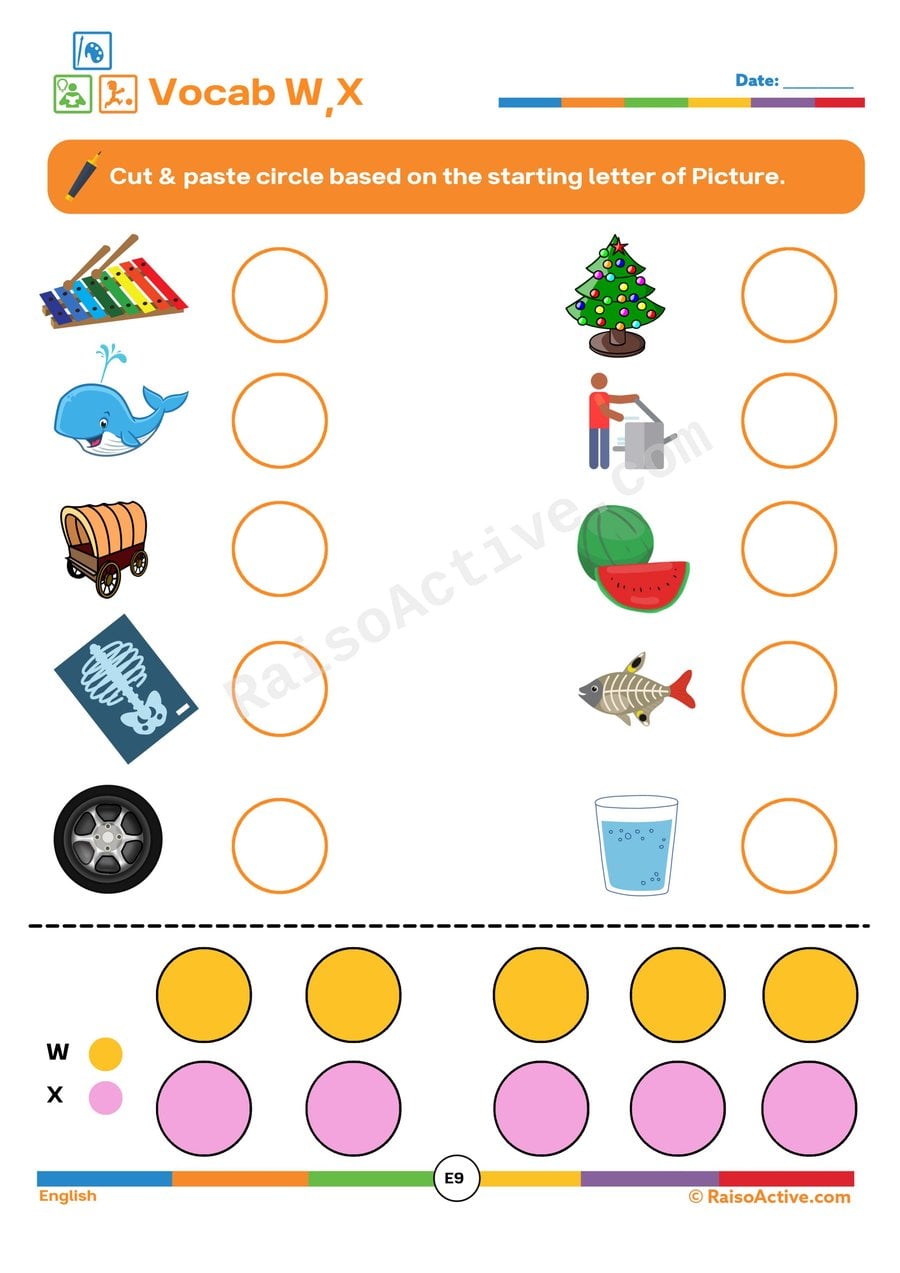
W and X Words Worksheet: Cut and Paste Fun!
Identifying words that start with W and the much rarer letter X gives children practice distinguishing beginning sounds across a wider range of vocabulary, since X-words are less common and require extra attention to hear correctly. For ages four to five, the cut-and-paste format adds a deliberate pause before each answer, helping avoid the rushed guessing that can happen with a quicker matching task.
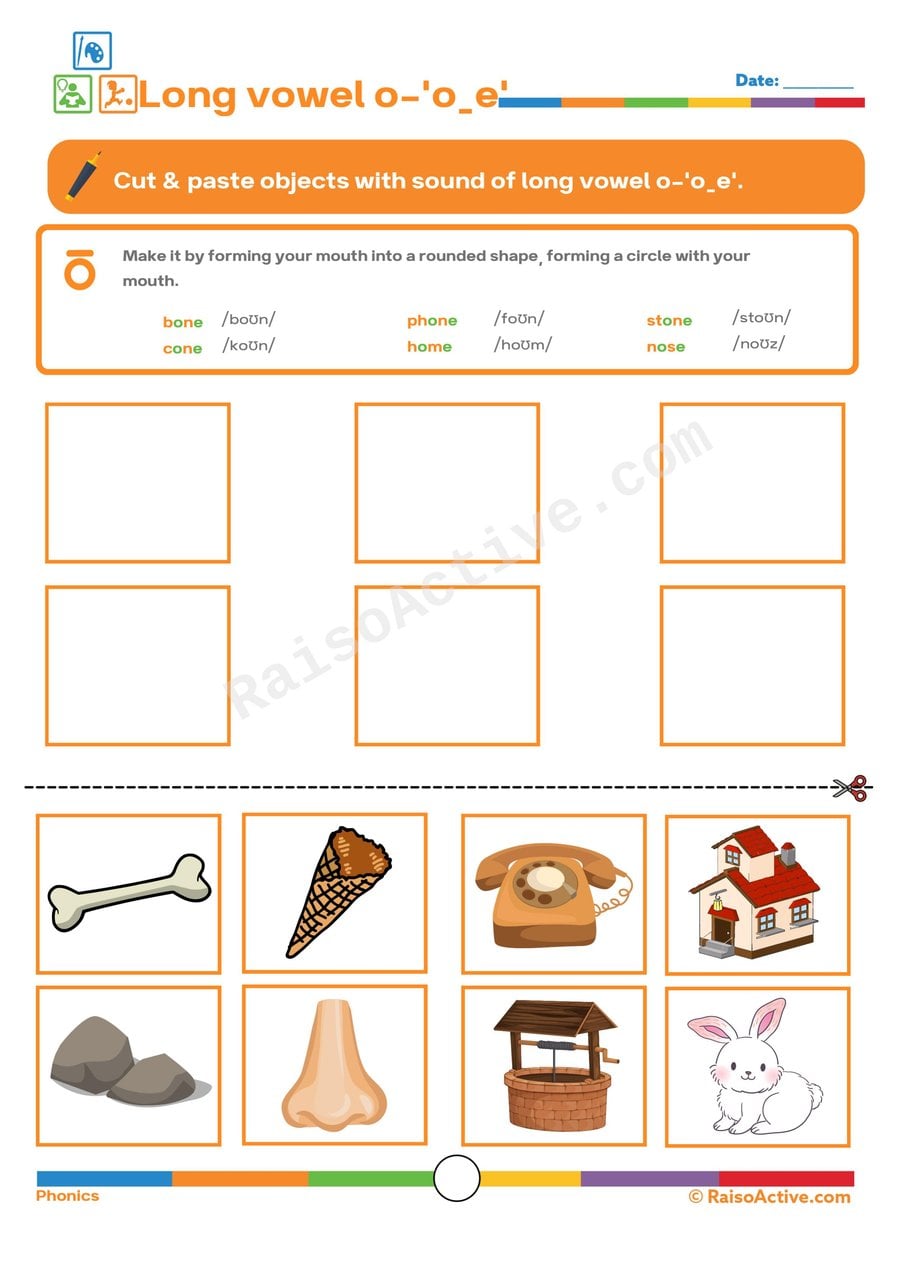
Long Vowel 'o' Cut and Paste Worksheet for Kids
This cut-and-paste worksheet has children ages 4-5 identify which pictured objects contain the long 'o' sound, as in 'boat' or 'rose,' and sort them by cutting and gluing only the matching pictures into the correct box. Categorizing by sound rather than by written spelling keeps the focus on listening skills, an important step before children are expected to connect that sound to its various written forms.

Long Vowel U Sound Cut and Paste Worksheet for Preschoolers
This worksheet has children ages 4-5 cut out pictures and paste each one into the box matching its long 'u' sound within a word. Combining sound identification with a hands-on cut-and-paste format keeps this phonics practice tactile and engaging, while the fine motor cutting work builds skills that support later handwriting.

Read and Paste: Matching Sentences with Pictures Worksheet
Reading a sentence and then finding its matching picture builds comprehension for children ages 4-5, teaching them to process the full meaning of connected words rather than recognizing them in isolation. The cutting and pasting component also strengthens the fine motor precision needed to place text accurately next to its correct visual match.

Cut and Paste the First Letter: Fun Phonics Worksheet for Preschoolers
Children ages 4-5 practice identifying the beginning sound of a word and matching it to the correct letter, a core early phonics skill, while also building fine motor control through cutting and pasting. Connecting a picture's name to its first letter sound is one of the clearest building blocks toward independent reading.

Long Vowel i-i_e' Cut and Paste Worksheet for Preschoolers
This cut-and-paste worksheet introduces children ages 4-5 to the silent-e spelling pattern for the long 'i' sound (as in 'bike' or 'kite'), one of the most common ways English represents this vowel sound. Listening for the long 'i' sound in a spoken word and then matching it to the correctly spelled picture builds the auditory-to-visual connection needed before a child can spell silent-e words independently. The cutting and pasting also reinforces fine motor precision alongside this specific phonics pattern.

Sentence Building Fun: Cut and Paste Worksheet for Early Readers
Children ages 4-5 practice sentence construction by cutting out individual words and arranging them in the correct order to build complete, meaningful sentences. This task requires understanding basic English word order, like subject before verb, which is essential for both reading comprehension and future independent writing. The cutting and pasting also reinforces fine motor precision while making an abstract grammar concept into a hands-on, puzzle-like activity.

Cut and Paste 'At' Family Worksheet: Practice Beginning Sounds!
Working through the 'at' word family — cat, hat, bat, mat, rat — sharpens the specific phonics skill of blending a beginning consonant with a familiar rime to build a real word. For four- and five-year-olds, this rime-based approach is one of the fastest routes into independent reading, since recognizing the 'at' chunk lets them decode dozens of words without sounding out every letter individually.
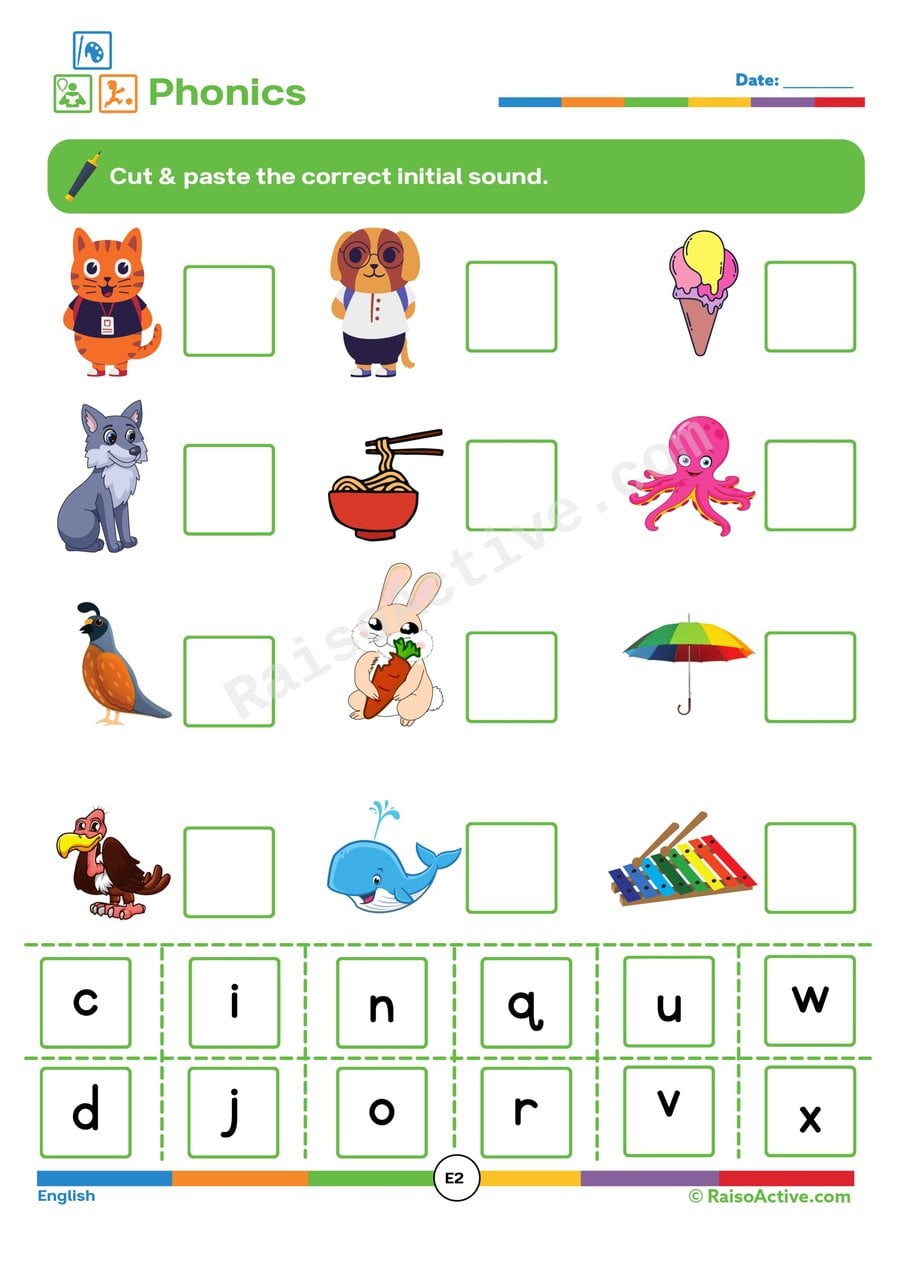
Initial Sound Match: Cut and Paste Worksheet
Children ages 4-5 develop phonemic awareness by identifying the beginning sound of each pictured object and matching it to the correct letter, a critical pre-reading skill for connecting sounds to symbols. This cut-and-paste format adds fine motor practice with scissors and glue alongside the phonics work. Recognizing initial sounds is one of the strongest early predictors of later reading success.
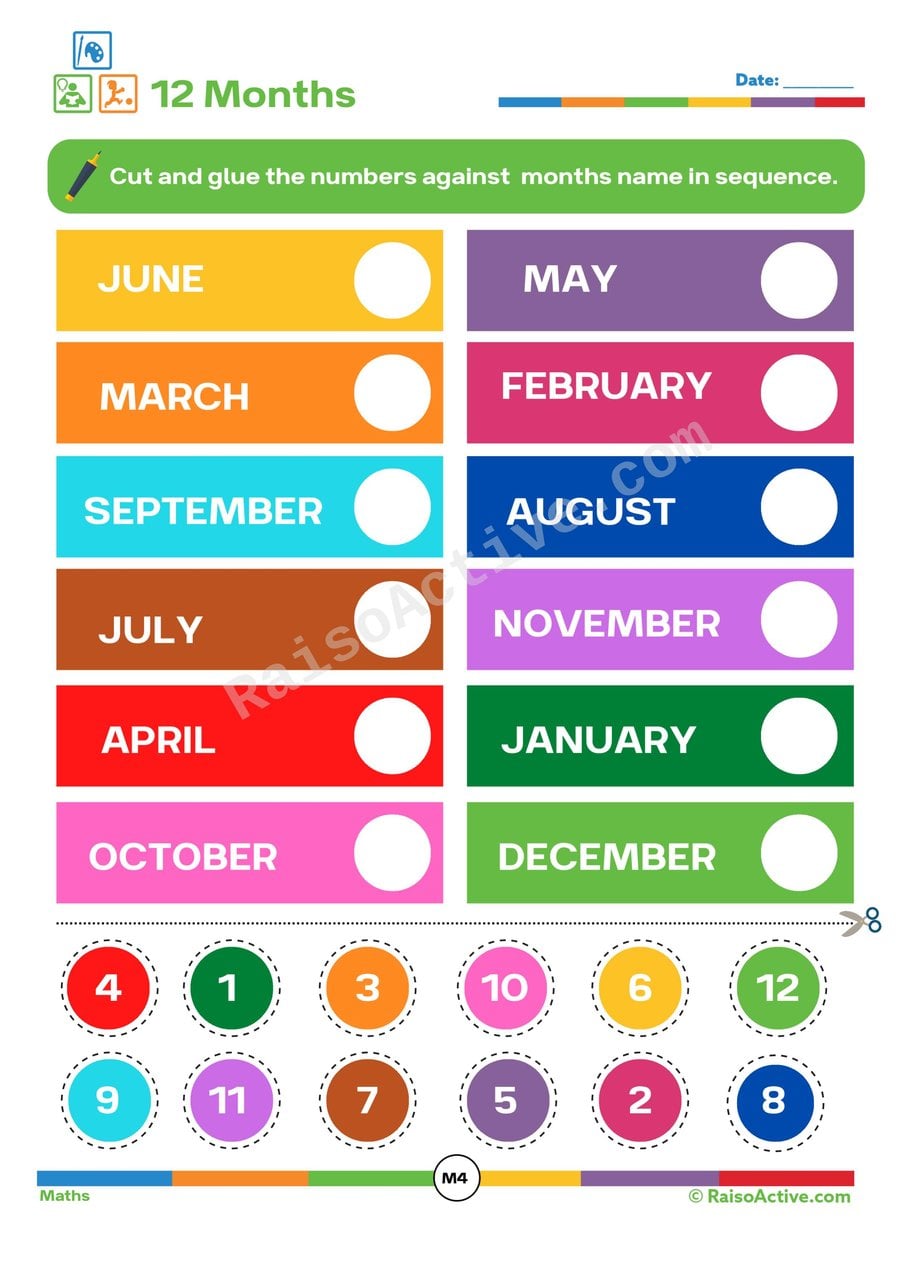
Months of the Year Matching Worksheet for Kids
Matching numbers to month names introduces children ages 4-5 to the idea that the calendar has a fixed, meaningful order, which supports early time-concept development alongside their growing number recognition. This cut-and-paste format adds a fine motor and sequencing challenge, since children must locate the correct number piece among several options before gluing it into place. Learning the months by their order also lays groundwork for talking about birthdays, holidays, and seasons throughout the year.

Shapes Worksheet: Cut and Paste, Complete the Sequence!
This worksheet combines shape identification with pattern completion, asking children ages 4-5 to cut out and paste shapes into matching boxes and then draw the missing shape needed to finish a simple sequence. Together these tasks build geometric vocabulary, precise cutting and gluing control, and the logical reasoning needed to predict what comes next in a repeating pattern.
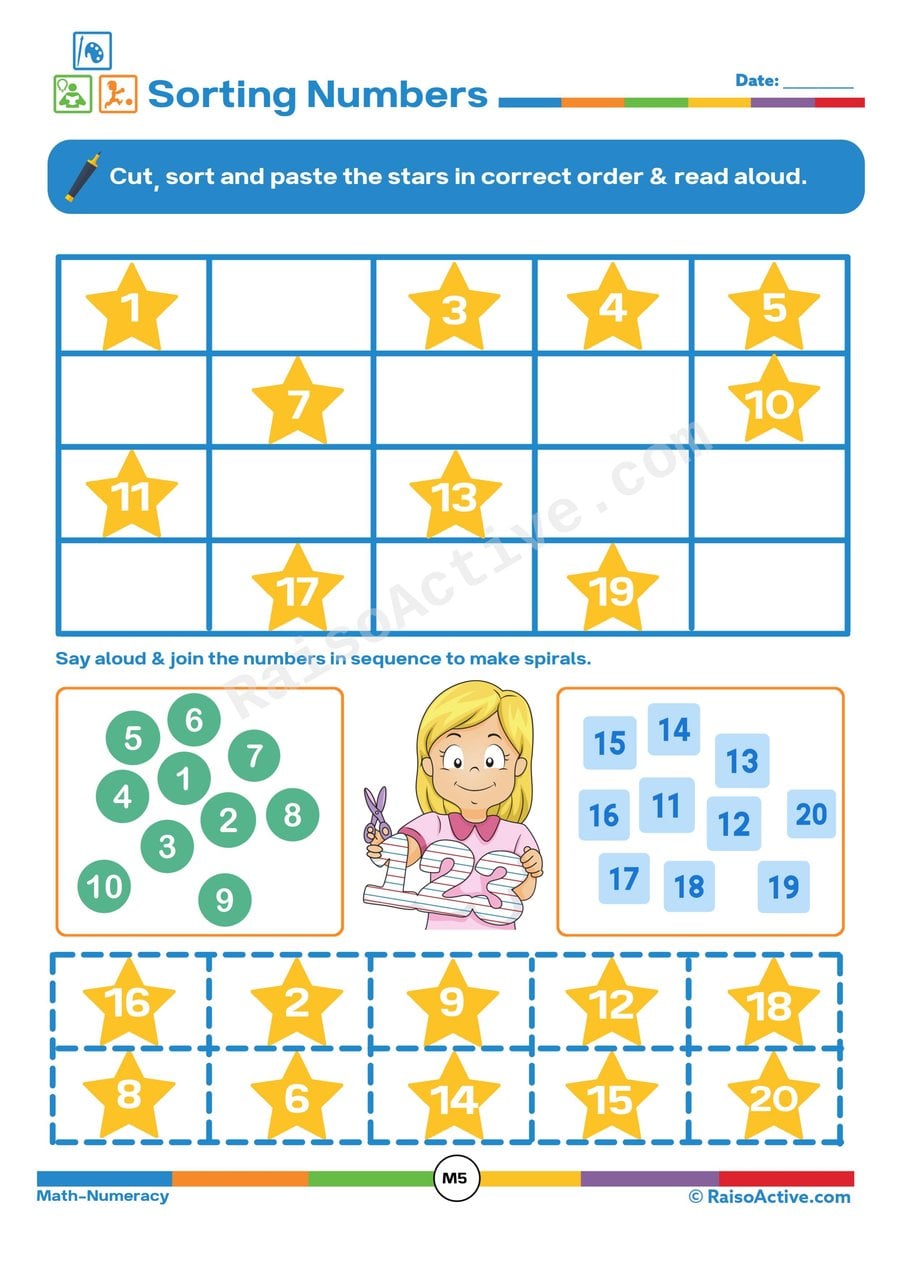
Sorting Numbers Worksheet: Cut, Paste, and Order!
This worksheet reinforces number recognition and ascending-order sequencing by having children cut out star-shaped number pieces and paste them into a grid in the correct counting order. For four- and five-year-olds, physically manipulating loose number pieces — rather than just writing numbers in place — makes the abstract idea of 'order' something they can touch, rearrange, and correct before committing to a final answer.

Cut and Paste the Word: Fun Reading Worksheet for Kids!
This cut-and-paste decoding activity has children ages 4-5 sound out simple CVC (consonant-vowel-consonant) words like 'cat' or 'sun' and match the missing picture to complete each word, directly practicing the phonics blending skills that underpin early reading fluency. Because the word is partly built from letters already on the page, children must connect individual letter sounds to a whole word rather than just recognizing a picture in isolation. This bridges the gap between knowing individual letter sounds and reading complete three-letter words independently.

Mickey Mouse Number Sequence Worksheet: Paste the Missing Numbers!
This cut-and-paste worksheet uses a Mickey Mouse theme to give children ages 4-5 practice recognizing and completing number sequences by identifying missing numbers within numbered frames and pasting them into place. Because the missing numbers appear in the middle of a sequence rather than only at the end, children must think about both the number before and after a gap, a more demanding skill than simple 'what comes next' counting. The familiar character theme adds motivation to a task that is fundamentally about numerical reasoning.

Cut and Paste 'An' Family Worksheet for Preschoolers
This cut-and-paste worksheet has children ages 4-5 build simple 'an' family words, like 'can,' 'man,' and 'pan,' by gluing the correct beginning letter in front of the shared 'an' ending. Practicing a word family this way teaches children that changing just one letter creates a whole new word — a foundational pattern-recognition skill in early reading known as rhyming or word-family instruction.
What LKG cutting practice worksheets cover
Between four and five the helper hand joins in, feeding and turning the paper while the scissor hand keeps cutting. Straight lines can now run the full width of a page, wide curves and gentle waves are within reach, and a simple zigzag with three or four turns is a good stretch. Cutting out a large square or triangle on thick lines closes the year. Tight curves, small pieces and thin copy paper still cause frustration.
- Cut a straight line across a full page, staying near it
- Turn the paper with the helper hand to follow wide curves
- Cut a zigzag with three or four changes of direction
- Cut out a large square or triangle drawn with thick lines
- Glue the cut pieces onto a base sheet to finish
How to use these worksheets at home or in class
Ten to fifteen minutes with one warm-up pattern sheet followed by a single letter or number page fits a four-year-old's attention span. Read each instruction aloud before your child begins, and show a correct starting point once rather than repeatedly erasing an attempt.
Start with the sheet that matches what your child can already do, then move one step up. Keep finished sheets in a folder: LKG teachers often ask for evidence of practice, and children like seeing their own progress.
Is your child ready for LKG cutting practice work?
A child entering this stage should already trace straight and curved lines confidently, hold a pencil with three fingers rather than a fist, sit for ten minutes without wandering off, and recognise a handful of capital letters from their own name.
Frequently asked questions
How accurately should a four-year-old cut along a line?
Staying within about a finger's width of the line is the usual expectation at this age, with straight lines steadier than curves. Wandering much wider than that usually points to scissors that are too large or too dull, or to a wrist that has rotated so the thumb faces down. Check the grip, switch to card rather than thin paper, and shorten the line before asking for more precision.
What should a LKG child be able to do in cutting practice?
Between four and five the helper hand joins in, feeding and turning the paper while the scissor hand keeps cutting. Straight lines can now run the full width of a page, wide curves and gentle waves are within reach, and a simple zigzag with three or four turns is a good stretch. Cutting out a large square or triangle on thick lines closes the year. Tight curves, small pieces and thin copy paper still cause frustration. A child entering this stage should already trace straight and curved lines confidently, hold a pencil with three fingers rather than a fist, sit for ten minutes without wandering off, and recognise a handful of capital letters from their own name.
Do these worksheets follow the LKG curriculum?
The sheets cover scissor grip and control, cutting along a straight line, cutting along a curved line and cutting out a shape in one piece, which sit inside the NEP 2020 Foundational Stage (NCF-FS 2022) outcomes for LKG. Pre-K (US), Reception (UK) use the same skills at this age, so the sheets also fit families following those programmes.
Are the LKG cutting practice worksheets free to download?
Yes. Every sheet on this page can be downloaded free as a watermarked PDF after creating an account, up to five downloads a day. The annual membership (₹1000) removes the watermark and the daily limit across the full library of more than 1,000 worksheets and all activity packs.

Written by
Hemsweta Jain · Teacher Cheena
MBA and Early Childhood Educator, teaching since 2014 · Founder of RaisoActive, Mumbai
Written and reviewed by Hemsweta Jain (Teacher Cheena), who designs every RaisoActive worksheet.
Last reviewed
Printable packs for ages 4–5
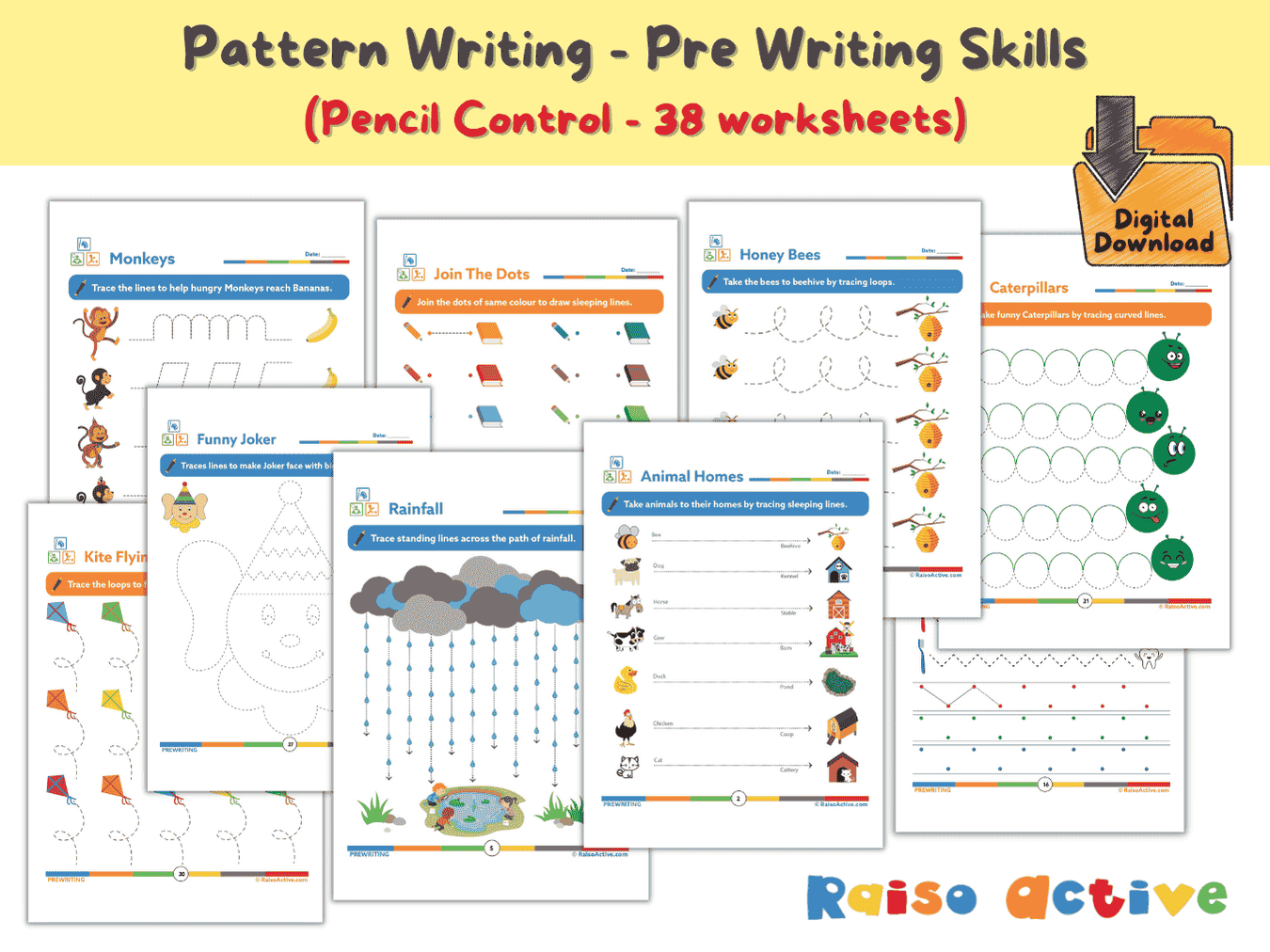
Pattern Writing Pre-writing Skills Activity Book for 3-4 Year Olds
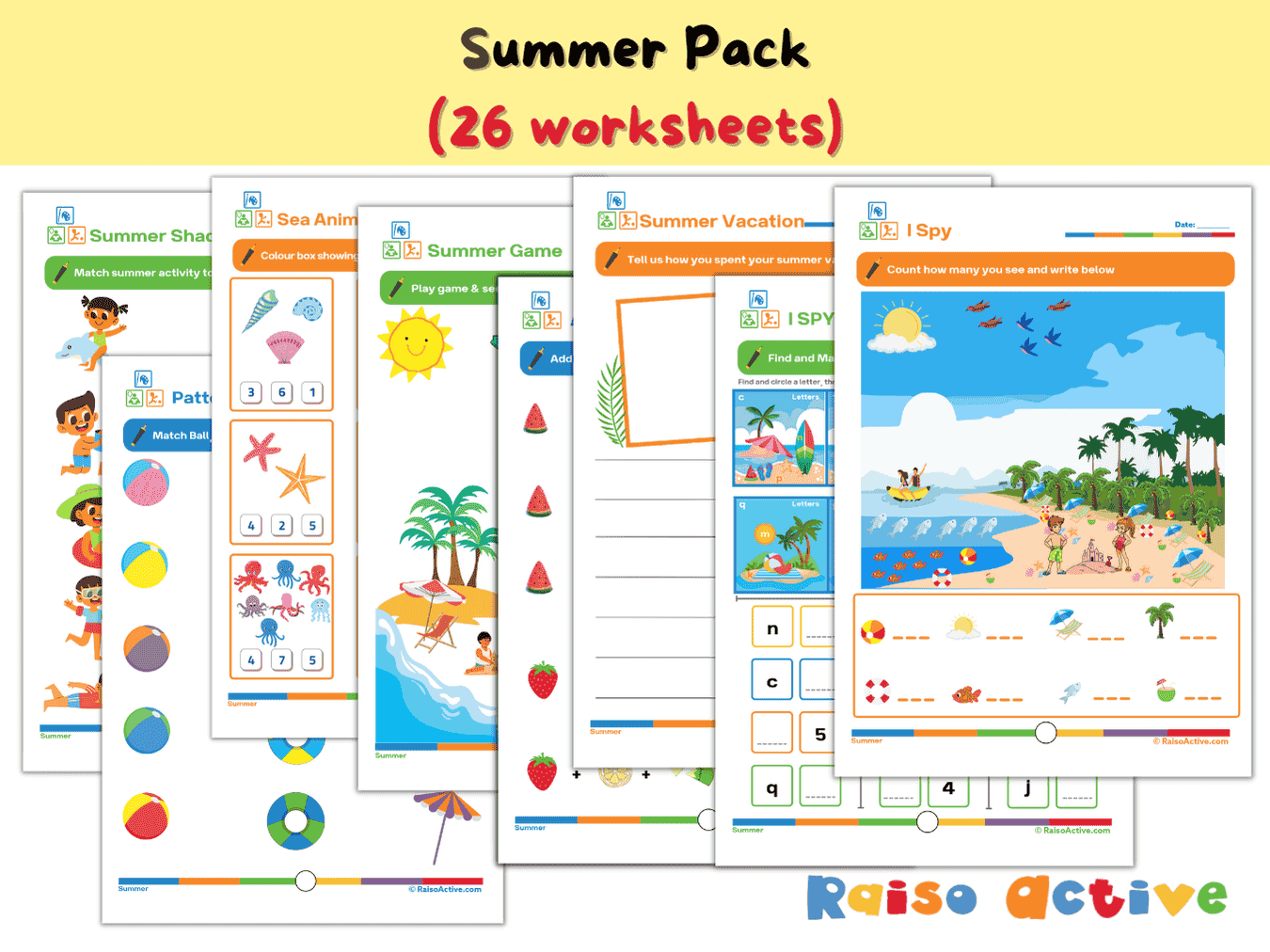
Summer Activity Pack: Math, Literacy, Puzzles & More for Preschool & Kindergarten
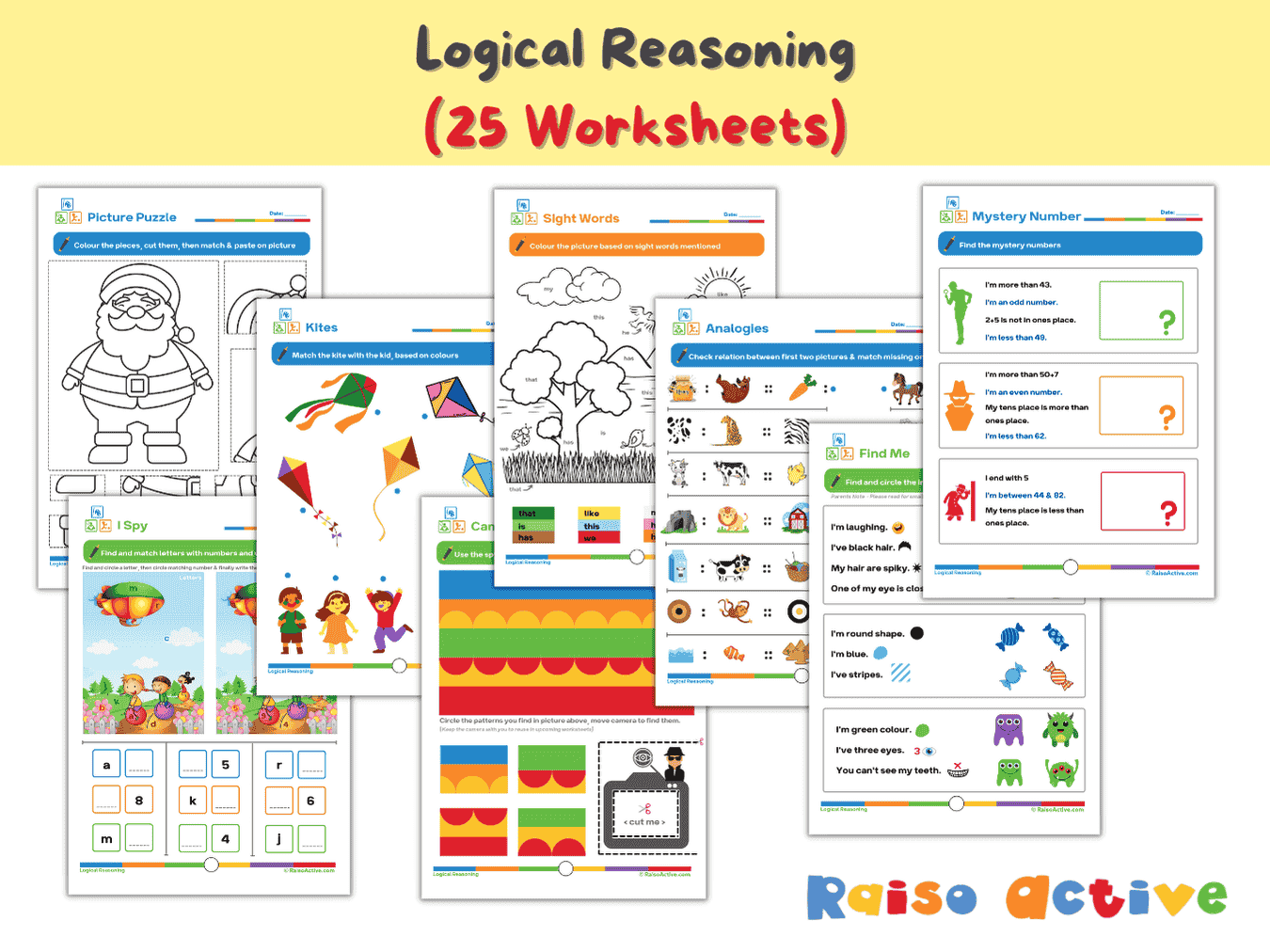
Logical Reasoning Activity Book for Preschool & Kindergarten | Patterns, Puzzles & Analogies
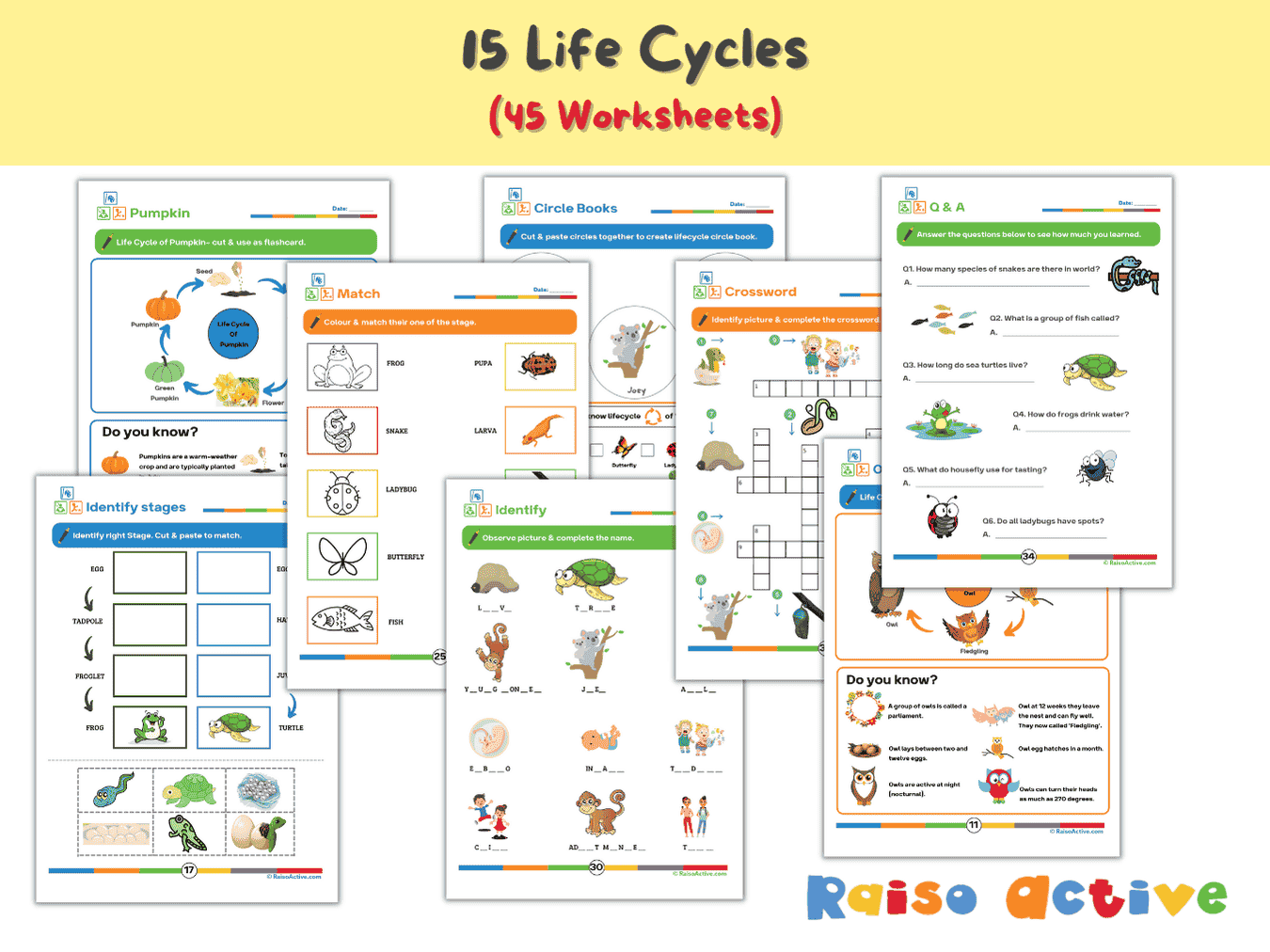
Lifecycles Activity Book & Flashcards for Preschool & Early Elementary
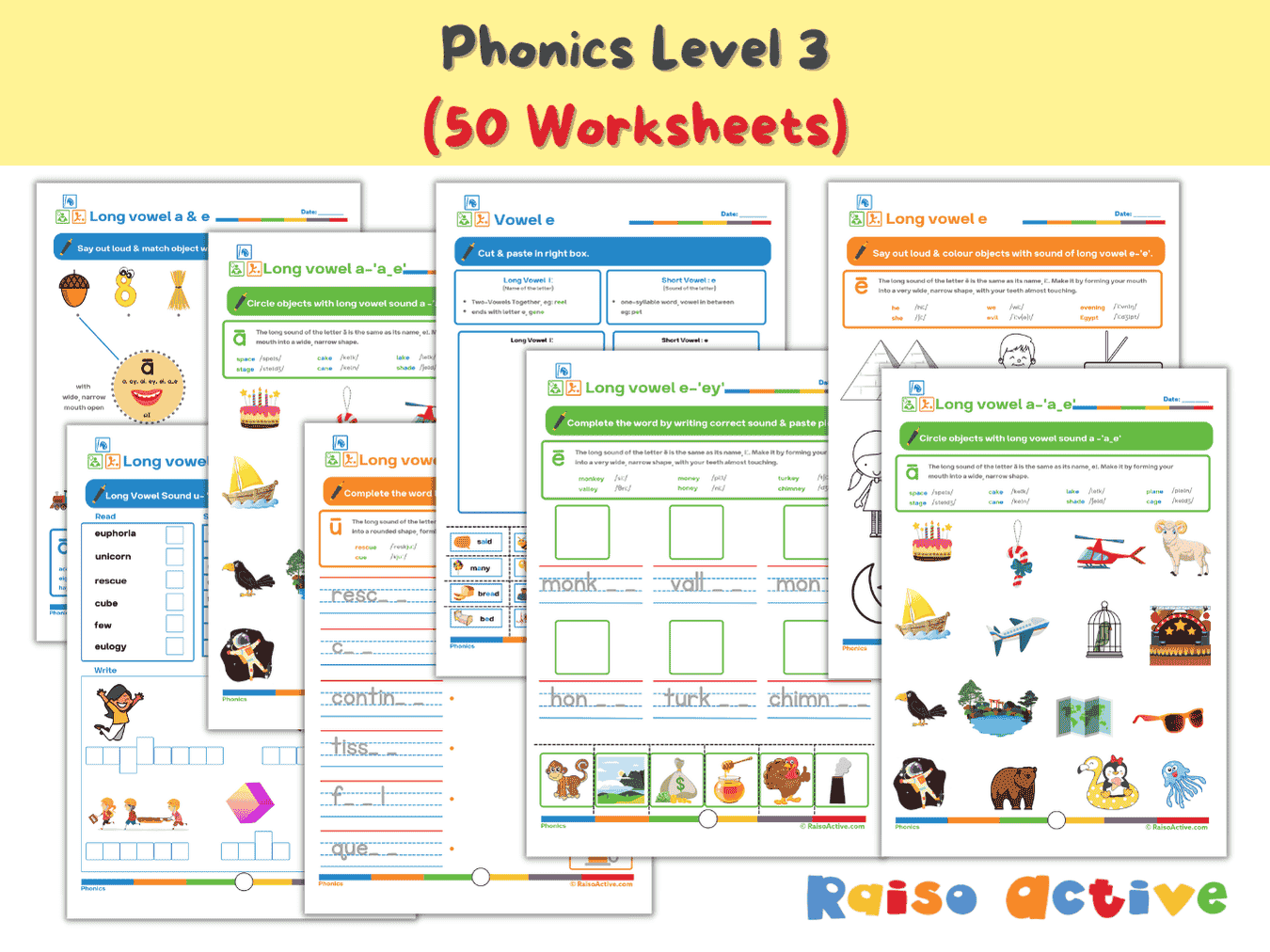
Phonics Level 3 Long Vowels Activity Book for Kindergarten & 1st Grade
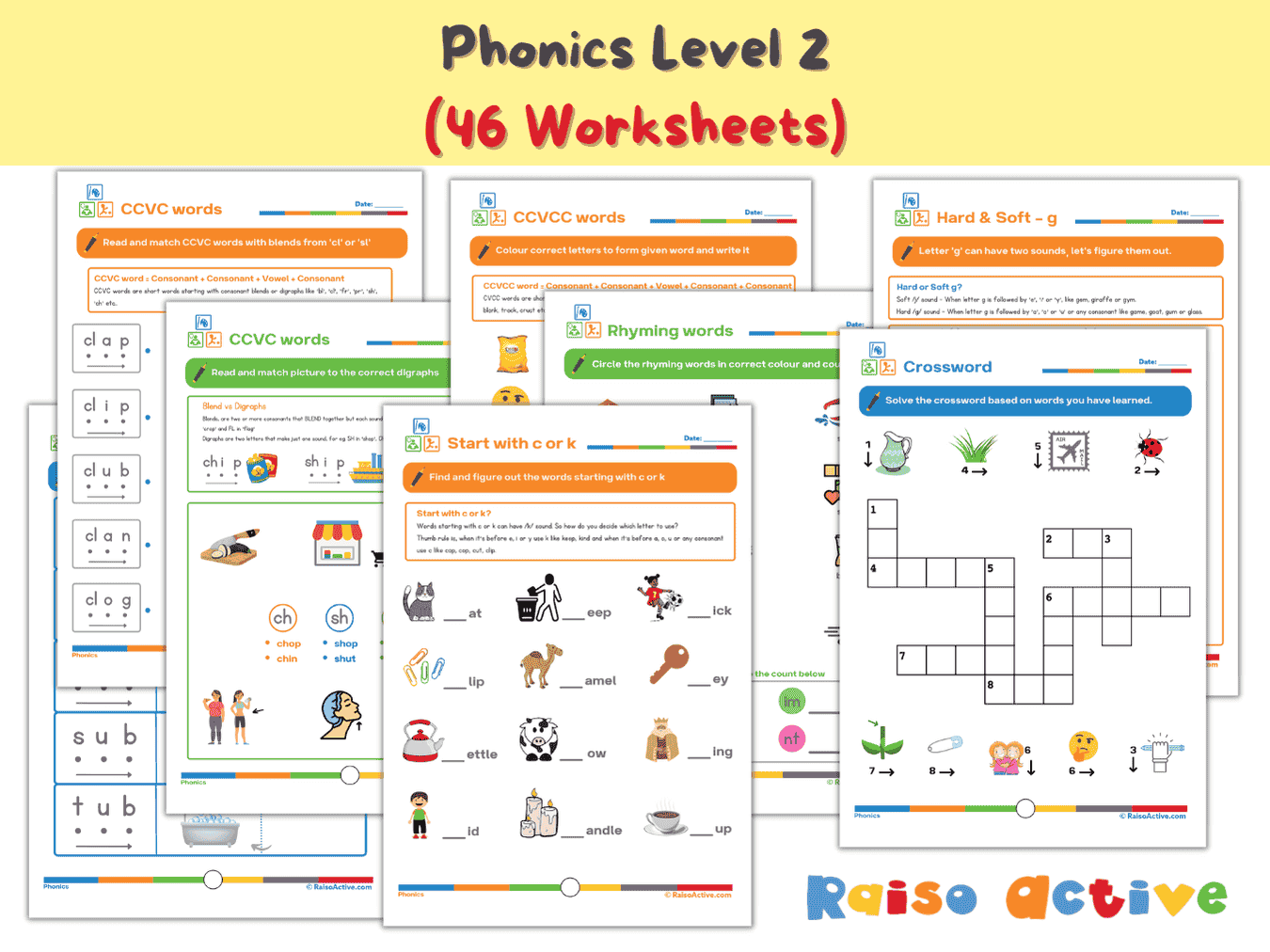
Phonics Level 2 Worksheets: CVC, CCVC, CVCC Word Families & Blends for Early Readers (Ages 4-7)
Guides for parents and teachers
See all guides →Number Formation Rhymes 0–9 and How to Fix Reversals
Original number formation rhymes for 0–9, the correct stroke order for each digit, why 3, 5 and 7 get reversed most often, and multisensory fixes that work.
Pre-Writing Strokes in Order: From Standing Lines to Loops (With Printable Patterns)
The developmental order of pre-writing strokes, from vertical lines to loops, and why practicing them in sequence makes letter formation much easier to learn.
Kindergarten Readiness Checklist: 25 Skills to Practice Before the First Day
A kindergarten readiness checklist of 25 literacy, math, motor, self-regulation and self-help skills, with an 8-week summer plan and notes on when not to worry.
Best Worksheets for 3-Year-Olds: What Works and What to Avoid
What works on worksheets for 3-year-olds: short sessions, crayons, tracing lines, matching, cutting, a free weekly plan, and signs one is too advanced.
What Should a 4-Year-Old Know Before LKG? A Readiness Checklist
A calm, teacher-written LKG readiness checklist for 4-year-olds: language, pattern writing, numbers to 10, self-help and social skills, plus a 6-week plan.
Resources for Children with Multiple Disabilities: A Comprehensive Guide for Families
Discover essential resources for children with multiple disabilities. Therapies, inclusive learning, assistive technology, and printable activities for ages 1-8.
Canonical: https://raisoactive.com/worksheets/lkg-cutting-practice