Free printable worksheets · India
LKG Counting Worksheets (Ages 4–5)
LKG counting worksheets are practice sheets for children aged 4–5 in Lower Kindergarten (Junior KG) in India. Counting is matching a spoken number word to each object in a group, one at a time, to find out how many there are in total. The sheets on this page cover one-to-one correspondence, counting a set of objects accurately, matching a numeral to a quantity and comparing more and less.
Lower Kindergarten turns a scribbling hand into a writing one: capital letters A to Z and numbers up to twenty become the daily target, alongside pattern practice that keeps curves and loops steady. Reversed letters and numerals are still common at this stage and settle with repetition rather than correction. At four to five, counting reaches twenty and gains a new skill: taking a requested number of objects from a larger pile and stopping at exactly the right point. Worksheets should ask the child to count out seven counters from a bowl of fifteen, count a group of up to twenty pictures, and compare two groups to say how many more one has than the other. Skip counting and counting past twenty are next.
698+ worksheets · free PDF download · print on A4 or Letter
LKG Counting Worksheets to print
Browse all worksheets for ages 4–5
Unscramble and Match: Vowel 'u' Worksheet for Preschoolers
This two-step worksheet challenges children ages 4-5 to unscramble jumbled letters into real words, then decide whether each word carries a long or short 'u' sound. Unscrambling builds letter-sequencing and spelling awareness, while the follow-up sound sort reinforces the vowel discrimination skills children need before they can decode new words independently.

Skip Counting by 10 Worksheet: Fill in the Blanks!
This worksheet builds skip counting fluency by 10s, a foundational skill that helps children recognize number patterns and prepares them for place value concepts and faster counting strategies later on. For ages 4-5, seeing numbers grouped in tens on signs reinforces both sequencing and the visual structure of our base-ten number system.

Lowercase Letter Matching Worksheet for Preschoolers
This worksheet gives children ages 4-5 practice connecting uppercase letters to their lowercase form by circling the correct match from a set of answer choices, a skill that's essential since most of the reading material children encounter is printed in lowercase. Many lowercase letters look quite different from their uppercase counterpart, so this matching task genuinely tests whether the connection has been learned rather than guessed.

Circle the Correct Letter: Fun Phonics Worksheet for Kids
This phonics worksheet helps children ages 4-5 connect a picture's beginning sound to its matching letter, a key decoding skill on the path to independent reading. Circling the correct letter from a small set of choices also builds visual discrimination, since children must tell similar-looking letters apart under a bit of time pressure.
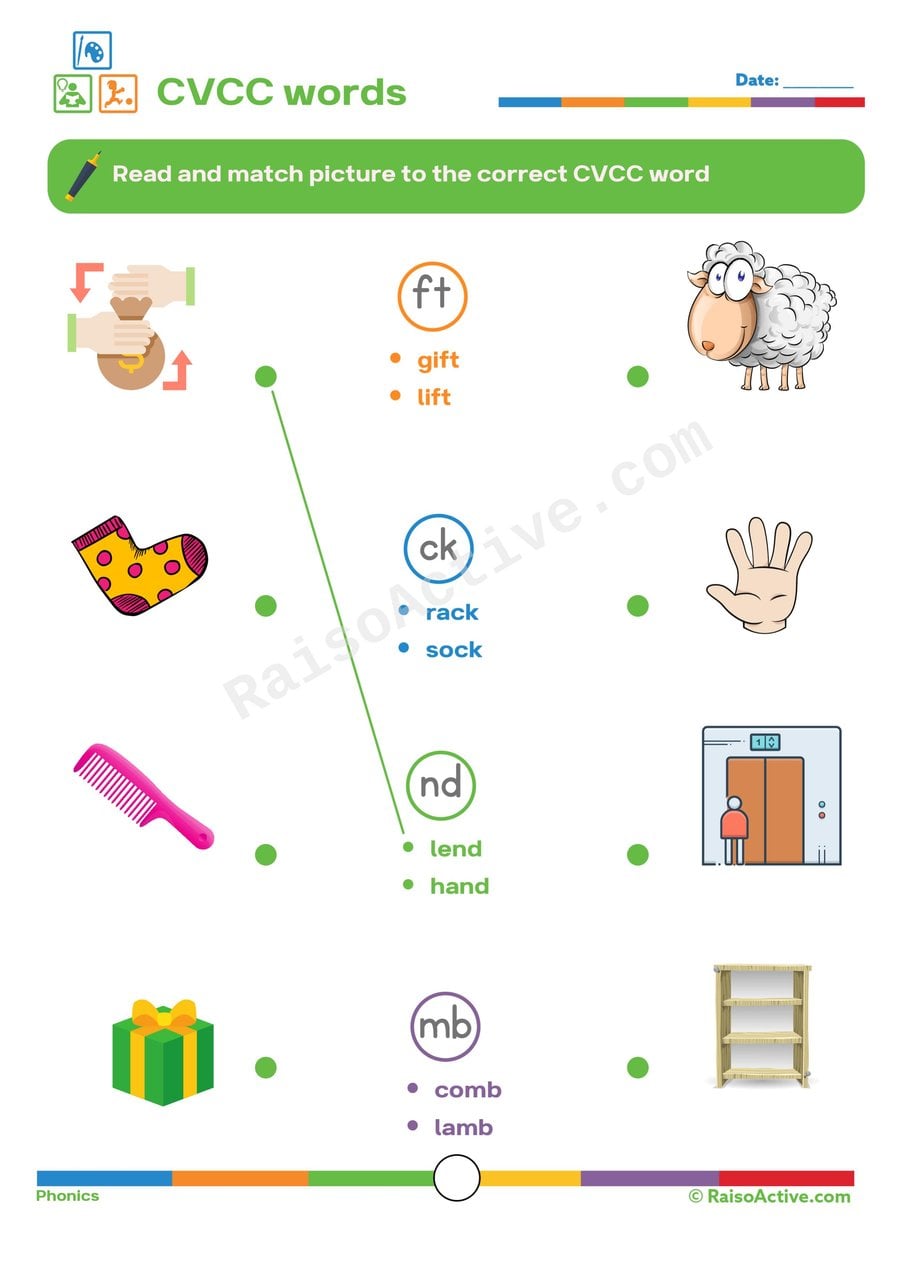
CVCC Word Matching Worksheet: Read and Match!
This worksheet gives children ages 4-5 practice reading CVCC words — words like 'lamp' or 'nest' that end in two consonants — and matching them to the correct picture. Ending blends are often harder than beginning blends because young readers tend to rush through the last sounds of a word, so this worksheet specifically trains them to listen all the way to the end. Matching to a picture provides an immediate, concrete check of whether the decoding was accurate.

Comparing Objects: A Fun Counting Worksheet for Preschoolers!
This worksheet has 4-5 year olds count two groups of objects and then compare the totals using the greater-than, less-than, and equal-to symbols — an early but genuine step into formal math notation that goes beyond simple counting into representing a comparison symbolically. Because your child has to count accurately before comparing, this worksheet also reinforces that math symbols stand for real relationships between quantities, not arbitrary marks to memorize.
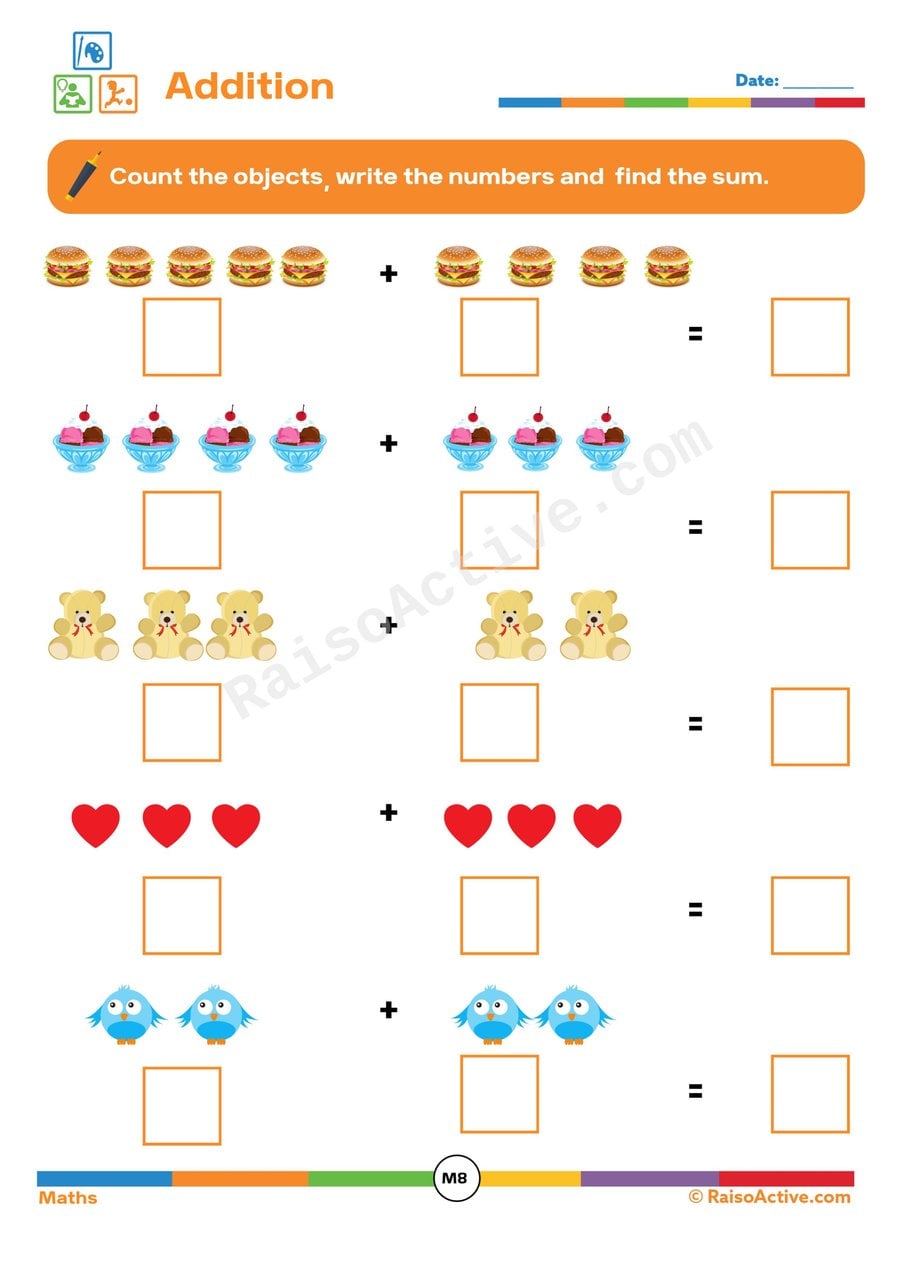
Addition Worksheet: Count and Add!
Counting two separate groups of objects and writing the sum teaches children ages 4-5 the basic concept of addition as combining quantities, an essential foundation for all later arithmetic. Writing the number for each group before adding also reinforces accurate one-to-one counting, since an error there would carry through to the final sum.
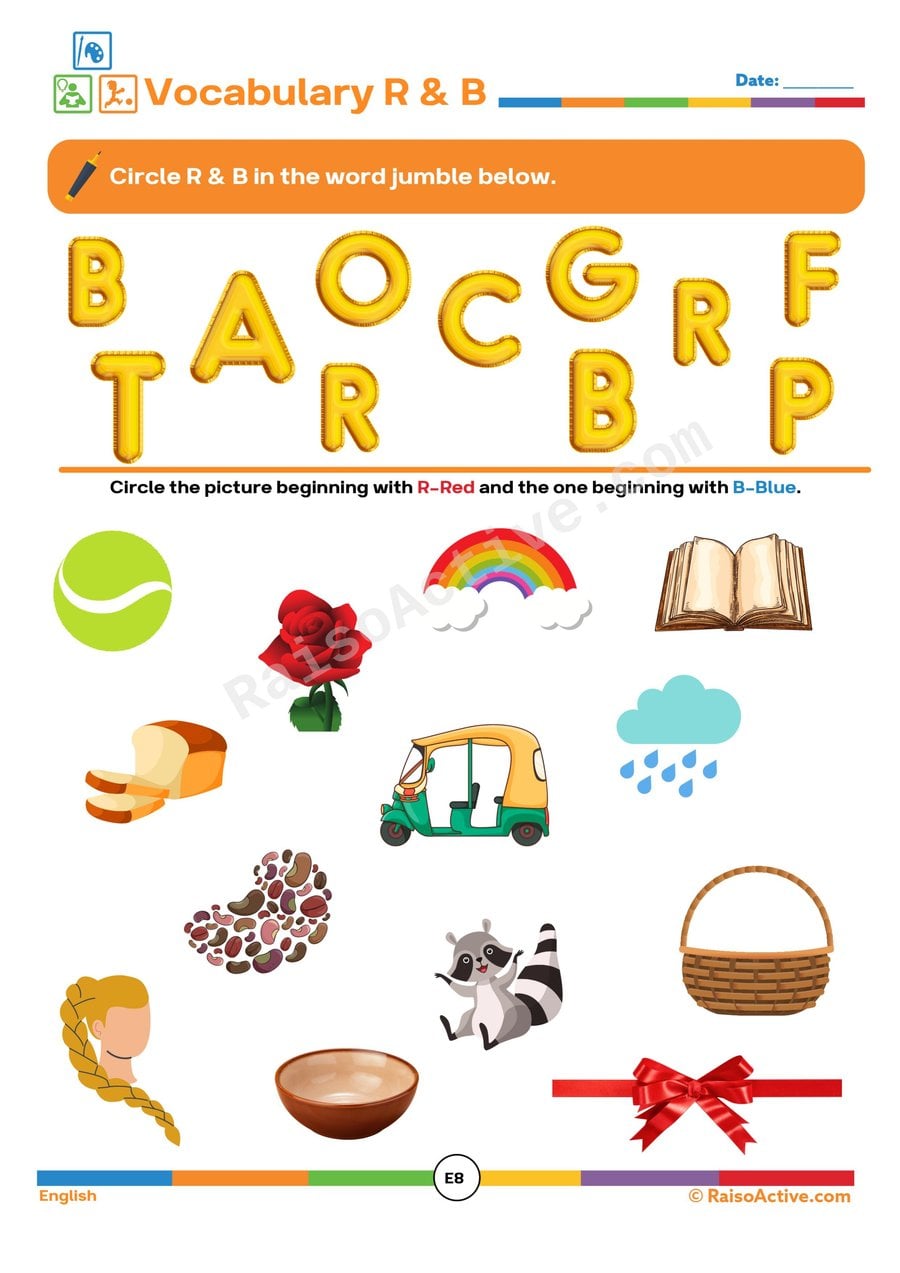
R & B Word Jumble Worksheet for Preschoolers
Circling the letters R and B within a jumbled group of letters sharpens visual discrimination for children ages 4-5, training their eyes to spot a specific letter shape among similar-looking distractions. Pairing this with picture identification for words that start with R and B reinforces beginning-sound recognition, connecting the visual letter search to actual spoken sounds.
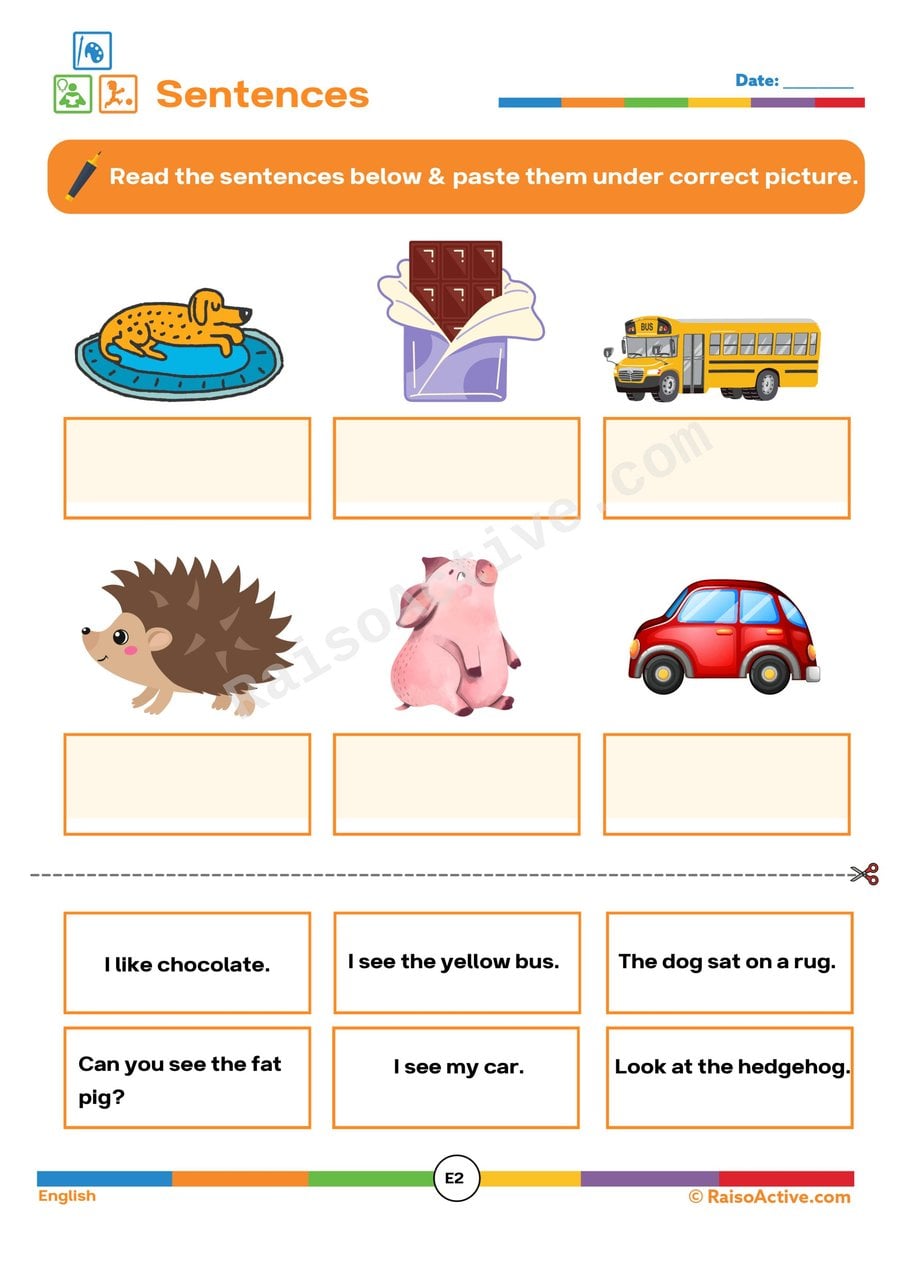
Sentence Matching Worksheet for Early Readers
Matching a written sentence to the picture it describes asks children ages 4-5 to read for meaning rather than just decode individual words, an important step up from single-word reading toward true reading comprehension. This worksheet also builds fine motor and organizational skills through cutting and placing the sentence in the correct spot. Successfully pairing text with image confirms that a child understands what they're reading, not just that they can sound out letters.

Superhero Grouping in Tens: A Fun Counting Worksheet for Preschoolers!
Using a superhero theme, this worksheet helps children ages 4-5 practice counting objects accurately and matching a counted group to its written number, an early step toward understanding place value through grouping in tens. Circling objects according to a given number afterward reinforces the connection between a numeral and the actual quantity it represents, rather than just reciting numbers in order.

Long Vowel 'A' Worksheet: Complete the Words and Match!
This worksheet has children ages 4-5 complete long 'a' words by filling in missing letters and then matching each finished word to its picture. Combining spelling and matching in one activity reinforces the long 'a' sound from two directions at once — producing the correct letters and recognizing the completed word — which builds a more durable understanding than either skill alone.

Long Vowel U Matching Worksheet for Preschoolers
This worksheet has children ages 4-5 identify the long 'u' sound in a set of words and match each one to its correct picture, combining listening skills with visual matching. Because children must both recognize the sound in a written word and connect it to the right image, this task bridges early reading and vocabulary in a way that's more demanding than sound-sorting alone. Matching written words to pictures also reinforces that printed letters represent real, meaningful things rather than abstract shapes.
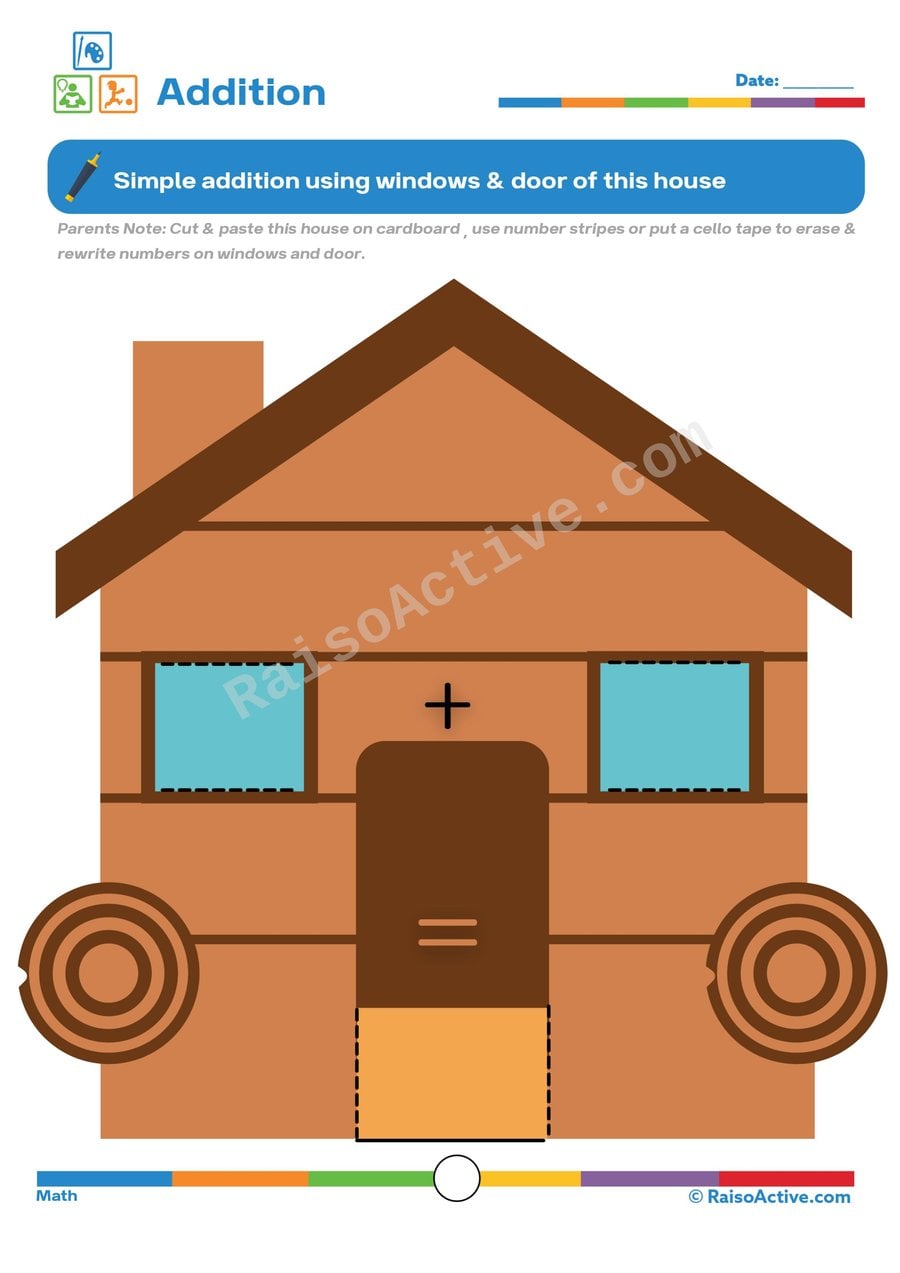
Addition House Worksheet for Preschoolers
This hands-on craft turns simple addition into a reusable game, as children ages 4-5 build a paper house with numbered windows and a door that can be changed with tape or number stripes. Physically swapping numbers to create new addition problems (like 2 windows + 1 door) helps children grasp that addition means combining separate groups into one total, rather than just memorizing facts.
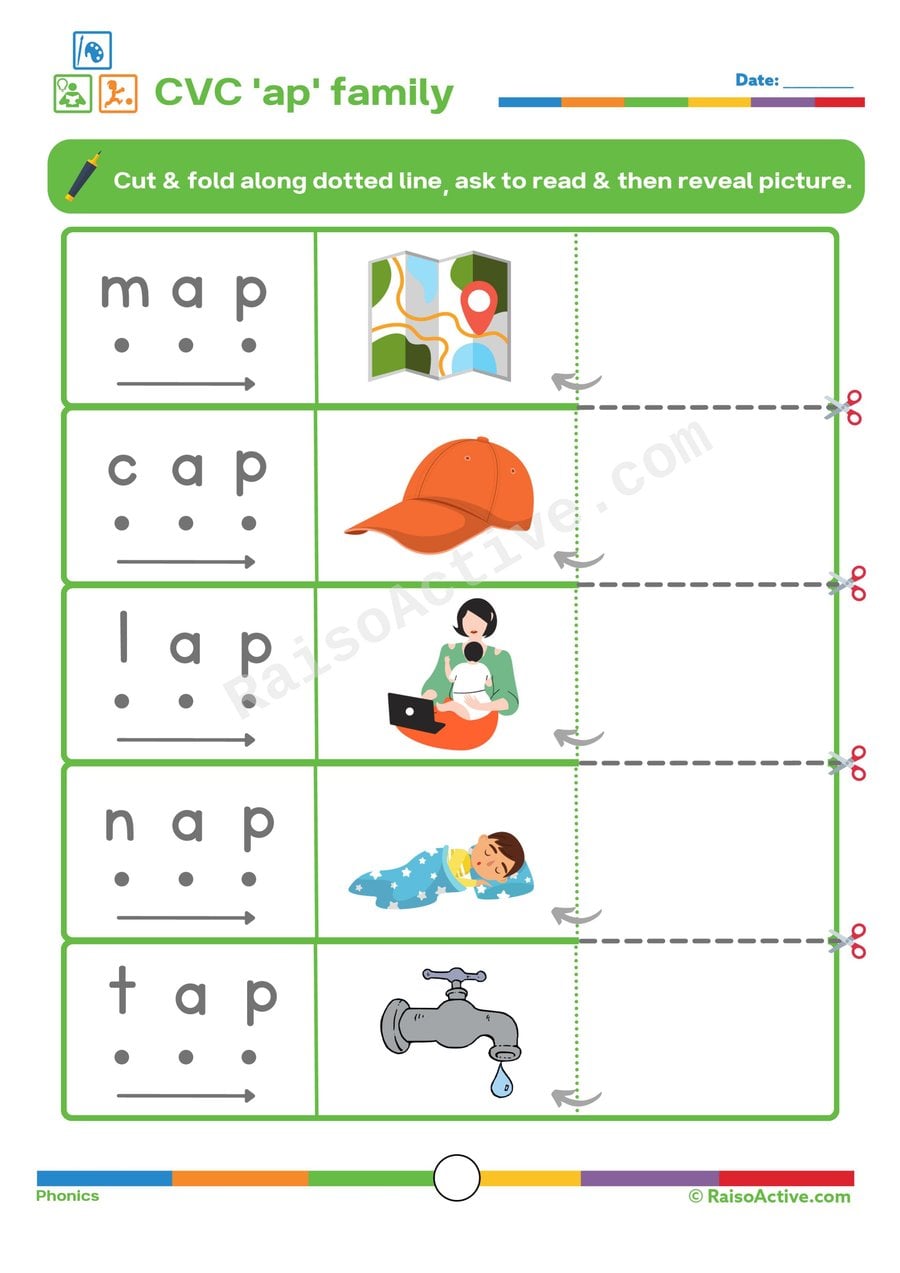
CVC Word Family 'ap' Worksheet: Read, Cut, and Match!
Working through the 'ap' word family (cap, map, nap) helps children ages 4-5 practice both decoding and matching in one activity, reinforcing that a small set of letter patterns can unlock many different words. Cutting apart the word and picture cards adds a fine motor and organizational challenge, requiring children to keep track of pieces while still focusing on reading accuracy. This combination of literacy and hands-on manipulation suits the shorter attention spans typical of this age group.
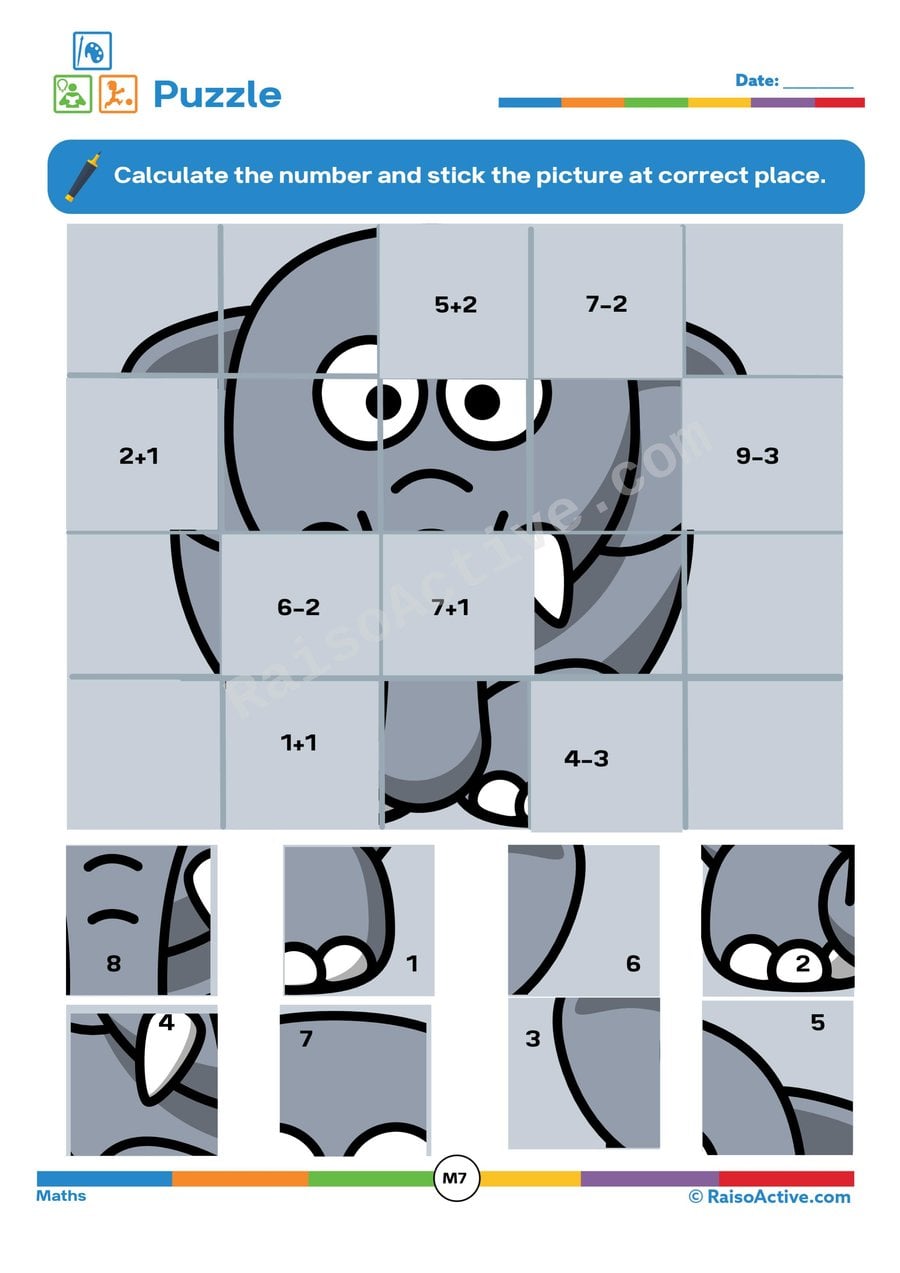
Elephant Puzzle: Math Worksheet for Preschoolers
Children ages 4-5 practice solving simple addition problems and then use those answers to solve a picture puzzle, matching each answer to the correct puzzle piece to complete an elephant. This turns basic addition fact practice into a satisfying hands-on challenge with a visual reward at the end.

Diwali Addition Worksheet for Kids: Counting and Adding Objects!
Children ages 4-5 practice addition by counting two separate sets of Diwali-themed objects, then combining the totals and writing the sum. Seeing objects grouped together concretely helps children understand what 'adding' actually means before relying on memorized number facts. This festive theme also connects the math skill to a real cultural celebration, giving the abstract addition work a meaningful, relatable context.
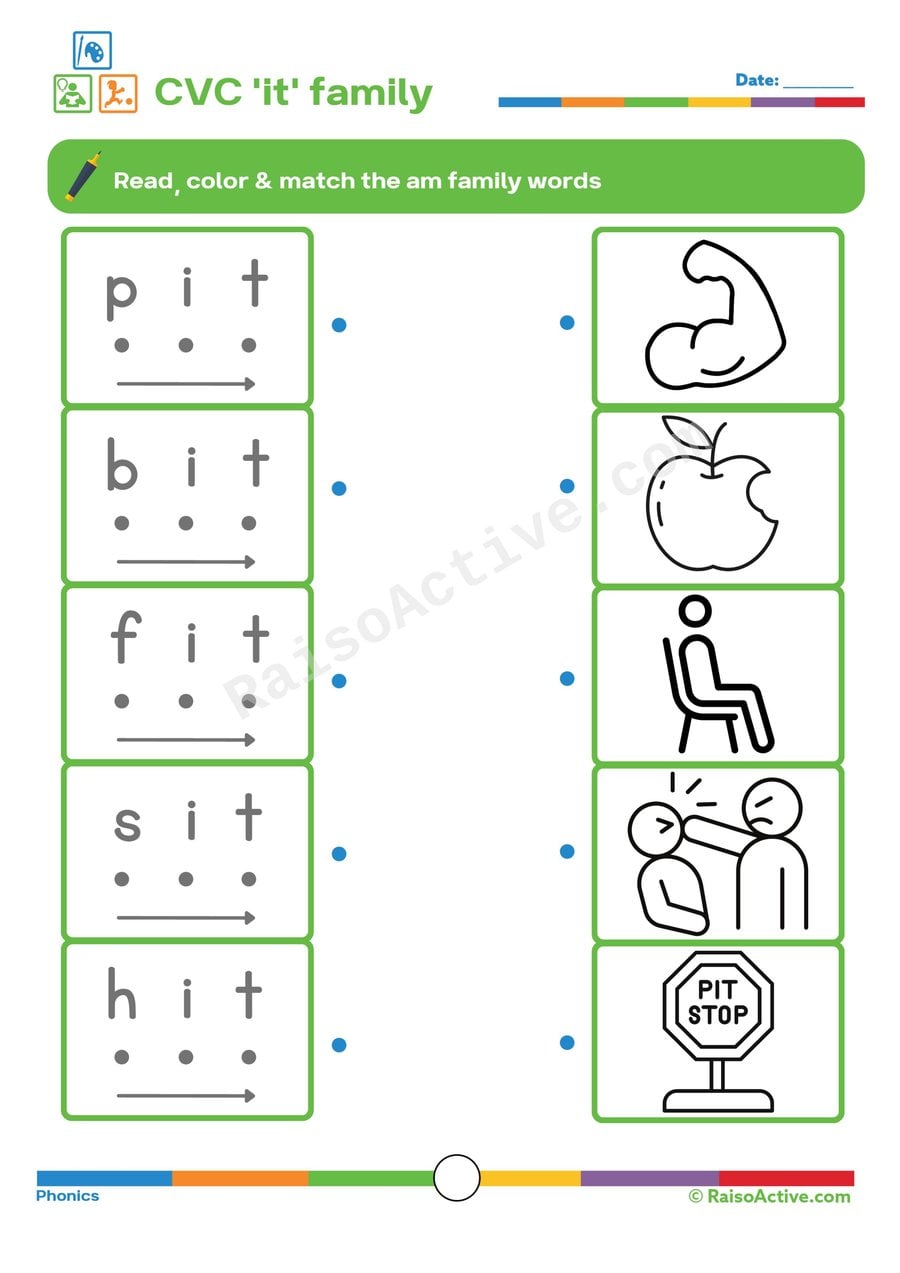
CVC 'it' Family Worksheet: Read, Color & Match!
Working through the 'it' word family (pit, bit, fit, sit, hit) gives children ages 4-5 hands-on practice with one of the most common short-vowel patterns in early reading, since so many beginner books rely on these simple rhyming words. Reading the word, coloring it, and then matching it to a picture asks a child to process the same word visually, orally, and semantically in one activity, which builds a much stronger memory trace than reading alone. This repetition-through-variety approach is especially effective for children who are just starting to decode independently.

CCVC Digraphs Worksheet: Read and Match the Pictures!
This worksheet teaches children ages 4-5 to recognize consonant digraphs — two letters like 'ch', 'sh', and 'th' that combine to make one new sound — within CCVC-style words, then match each word to its picture. Digraphs are a common stumbling block because children must learn that these letter pairs don't sound like their individual letters, an important exception to the blending rules they've just learned. Matching to pictures checks that the sound-out leads to real understanding of the word.

CVC 'ad' Family Matching Worksheet for Preschoolers
The 'ad' word family (bad, dad, mad, sad) lets children ages 4-5 practice reading by recognizing a shared spelling pattern rather than sounding out every letter from scratch, which is a major shortcut toward fluent reading. Once a child locks in the 'ad' ending, they can swap just the first letter to read a whole new word almost instantly — a strategy called analogy-based decoding that professional reading programs rely on heavily. This worksheet builds that pattern recognition through reading, matching, and coloring the 'ad' family words.
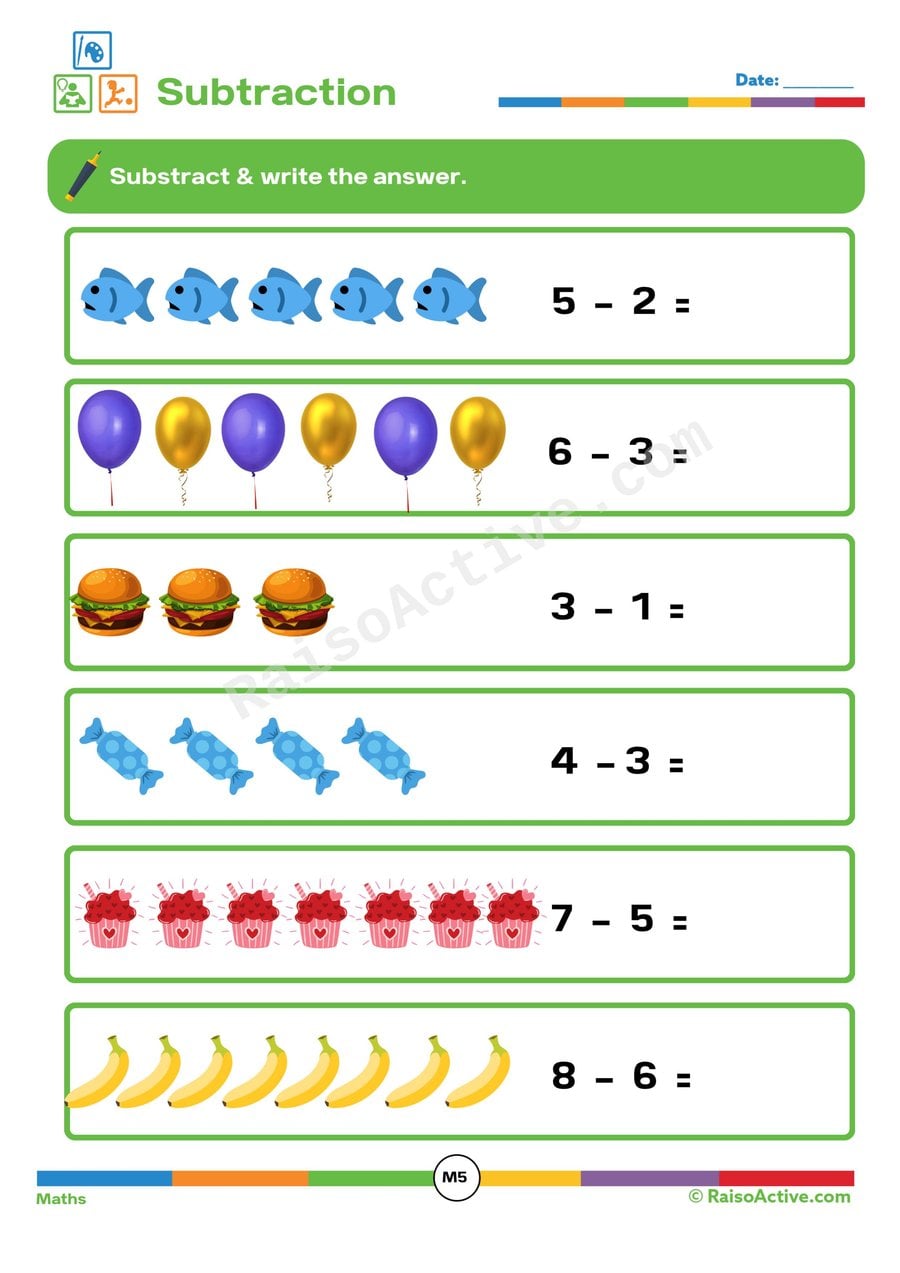
Subtraction Worksheet: Count and Subtract!
This worksheet gives children ages 4-5 hands-on practice with subtraction as 'taking away' from a visible group, helping them understand that a number decreases when items are removed rather than treating subtraction as an abstract symbol on paper. Counting the starting group and then physically crossing out or covering objects before writing the difference builds the concrete number sense that later supports mental subtraction.

Before, After, and Between Numbers Worksheet for Preschoolers
This worksheet extends basic number sequencing for children ages 4-5 by adding the concept of 'between,' which requires holding two numbers in mind at once and figuring out what falls in the middle — a more demanding mental task than simple before-and-after questions. Along with number fill-ins, the worksheet includes a picture identification task and a simple drawing exercise, giving children practice applying ordinal thinking ('comes after') beyond pure numerals. Together these tasks build the flexible number sense children need before tackling addition and subtraction.

Phonic Sounds Worksheet: Circle the Picture That Starts with the Alphabet Sound!
This worksheet reinforces beginning-sound recognition for children ages 4-5 by presenting a letter at the start of each row and asking them to find the one picture among several that begins with that same sound. Because each row contains multiple pictures, children must test several beginning sounds against the target letter before settling on the correct one, which builds more precise listening skills than simpler one-picture matching tasks. This process also strengthens the letter-sound mapping that underlies early decoding.

Match and Write: Beginning Sounds Worksheet for Preschoolers
Preschoolers ages 4-5 build the foundation of phonics by connecting a spoken sound to its written letter, and this worksheet has them do exactly that by matching beginning sounds to specific pictures before writing the full word. This two-step process — first identifying the sound, then producing the letters that spell it — bridges listening skills into early writing, a jump that's often the hardest part of learning to read. Practicing beginning sounds repeatedly also builds the mental habit of decoding words letter by letter instead of guessing from pictures alone.

Phonics Fun: Match the Letter to the Object Worksheet
This worksheet asks children to connect a printed letter to a picture whose name starts with that letter's sound, then reinforces the connection a second time through color-coded circles, a repetition that research on phonics instruction shows helps move sound-letter pairs from short-term recognition into lasting memory. For four and five year olds, this dual task also builds sustained attention across a slightly longer worksheet than a single matching exercise.
What LKG counting worksheets cover
At four to five, counting reaches twenty and gains a new skill: taking a requested number of objects from a larger pile and stopping at exactly the right point. Worksheets should ask the child to count out seven counters from a bowl of fifteen, count a group of up to twenty pictures, and compare two groups to say how many more one has than the other. Skip counting and counting past twenty are next.
- Count out a requested number of objects from a larger pile
- Count a group of up to twenty scattered pictures
- Say how many more one group has than another
- Count on by one or two from a small starting number
How to use these worksheets at home or in class
Ten to fifteen minutes with one warm-up pattern sheet followed by a single letter or number page fits a four-year-old's attention span. Read each instruction aloud before your child begins, and show a correct starting point once rather than repeatedly erasing an attempt.
Start with the sheet that matches what your child can already do, then move one step up. Keep finished sheets in a folder: LKG teachers often ask for evidence of practice, and children like seeing their own progress.
Is your child ready for LKG counting work?
A child entering this stage should already trace straight and curved lines confidently, hold a pencil with three fingers rather than a fist, sit for ten minutes without wandering off, and recognise a handful of capital letters from their own name.
Frequently asked questions
Why does my four-year-old struggle to count out exactly seven objects from a big pile?
Counting out a specific number means stopping counting on purpose, which is harder than counting everything in front of you and needs the child to hold the target number in mind the whole time. Have the child move each object to a second pile while counting, which makes stopping obvious once the target number is reached. This skill usually lags a little behind simply counting a fixed group and catches up with a few weeks of practice.
What should a LKG child be able to do in counting?
At four to five, counting reaches twenty and gains a new skill: taking a requested number of objects from a larger pile and stopping at exactly the right point. Worksheets should ask the child to count out seven counters from a bowl of fifteen, count a group of up to twenty pictures, and compare two groups to say how many more one has than the other. Skip counting and counting past twenty are next. A child entering this stage should already trace straight and curved lines confidently, hold a pencil with three fingers rather than a fist, sit for ten minutes without wandering off, and recognise a handful of capital letters from their own name.
Do these worksheets follow the LKG curriculum?
The sheets cover one-to-one correspondence, counting a set of objects accurately, matching a numeral to a quantity and comparing more and less, which sit inside the NEP 2020 Foundational Stage (NCF-FS 2022) outcomes for LKG. Pre-K (US), Reception (UK) use the same skills at this age, so the sheets also fit families following those programmes.
Are the LKG counting worksheets free to download?
Yes. Every sheet on this page can be downloaded free as a watermarked PDF after creating an account, up to five downloads a day. The annual membership (₹1000) removes the watermark and the daily limit across the full library of more than 1,000 worksheets and all activity packs.

Written by
Hemsweta Jain · Teacher Cheena
MBA and Early Childhood Educator, teaching since 2014 · Founder of RaisoActive, Mumbai
Written and reviewed by Hemsweta Jain (Teacher Cheena), who designs every RaisoActive worksheet.
Last reviewed
Printable packs for ages 4–5
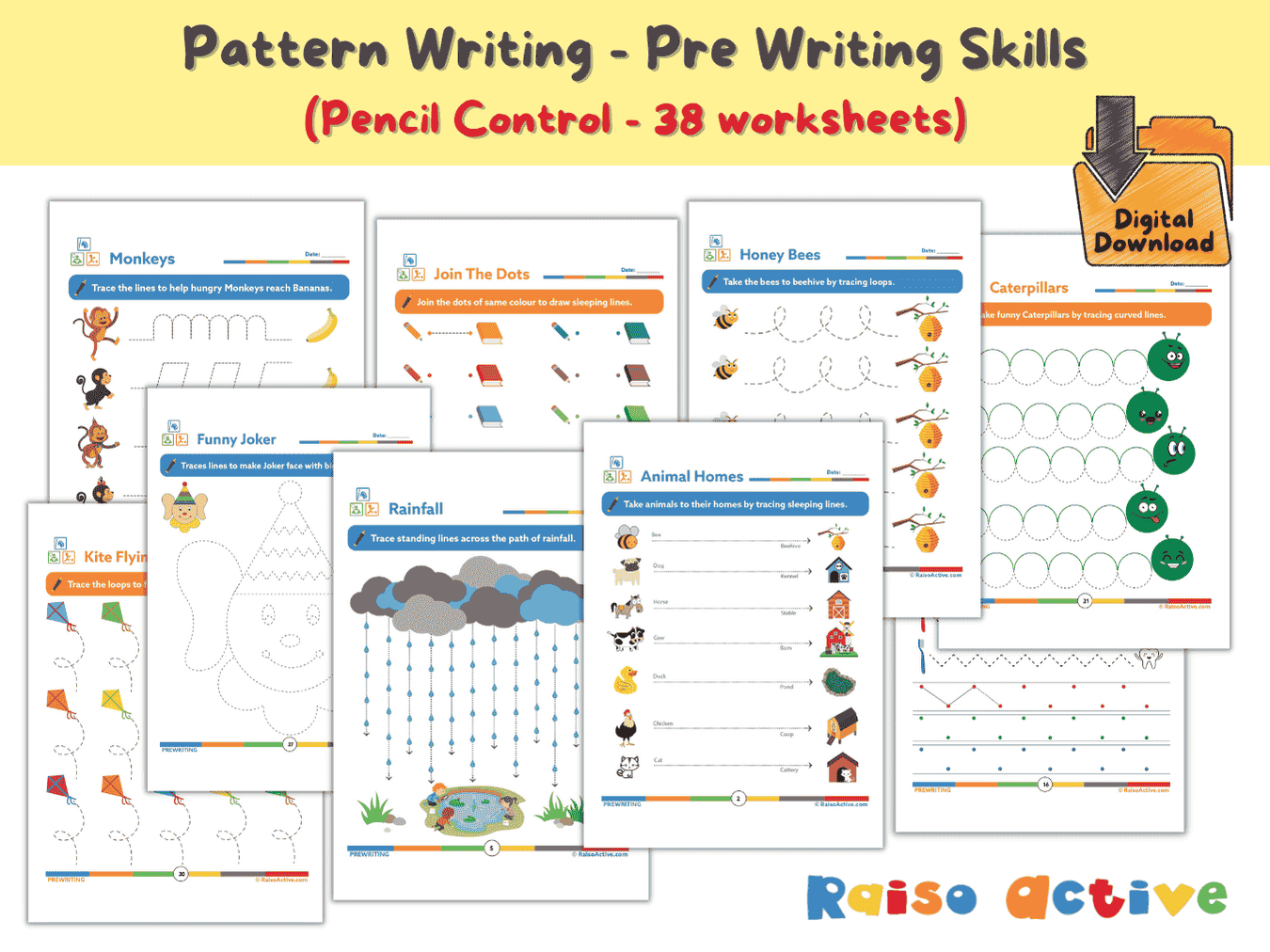
Pattern Writing Pre-writing Skills Activity Book for 3-4 Year Olds
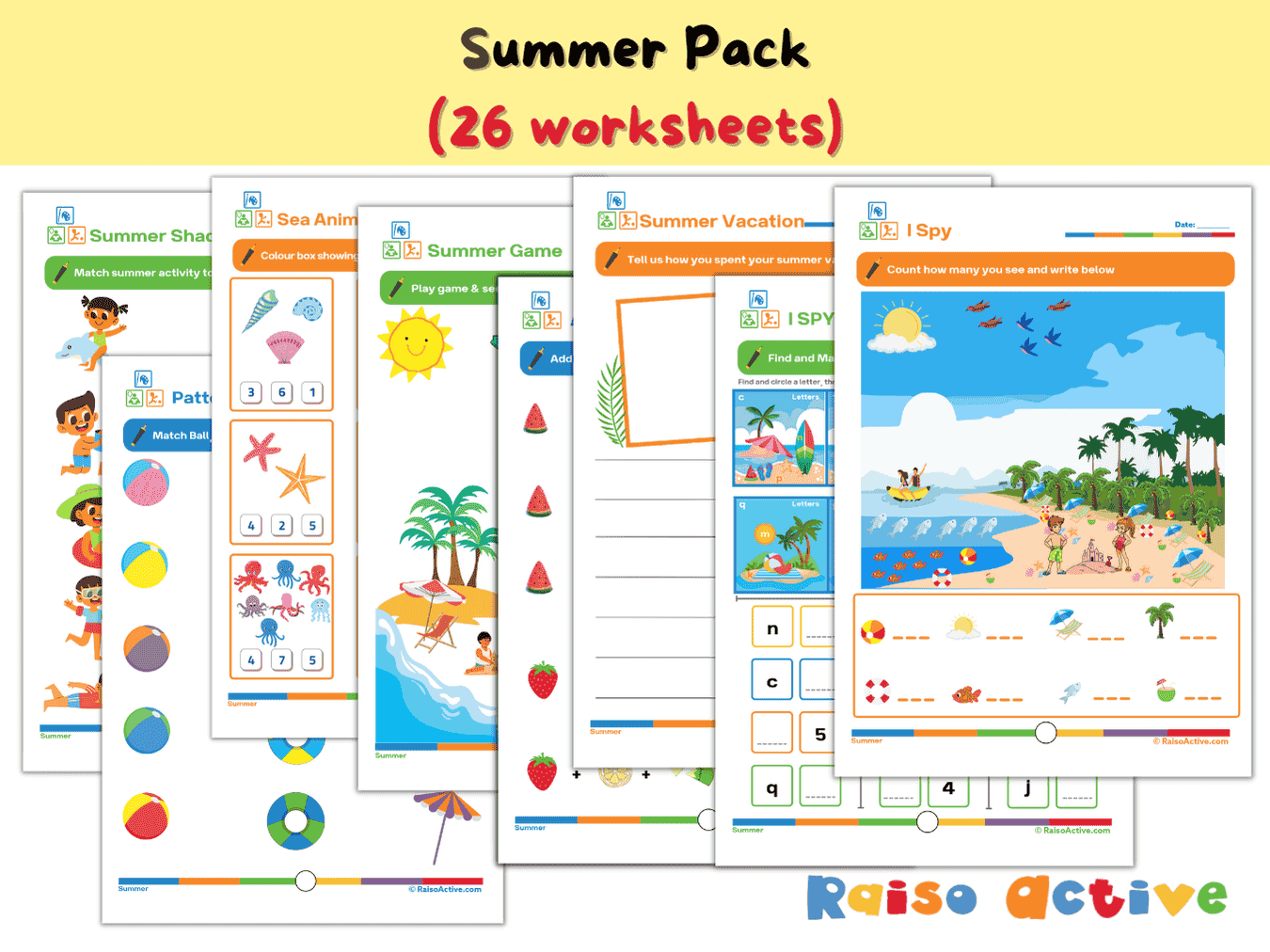
Summer Activity Pack: Math, Literacy, Puzzles & More for Preschool & Kindergarten
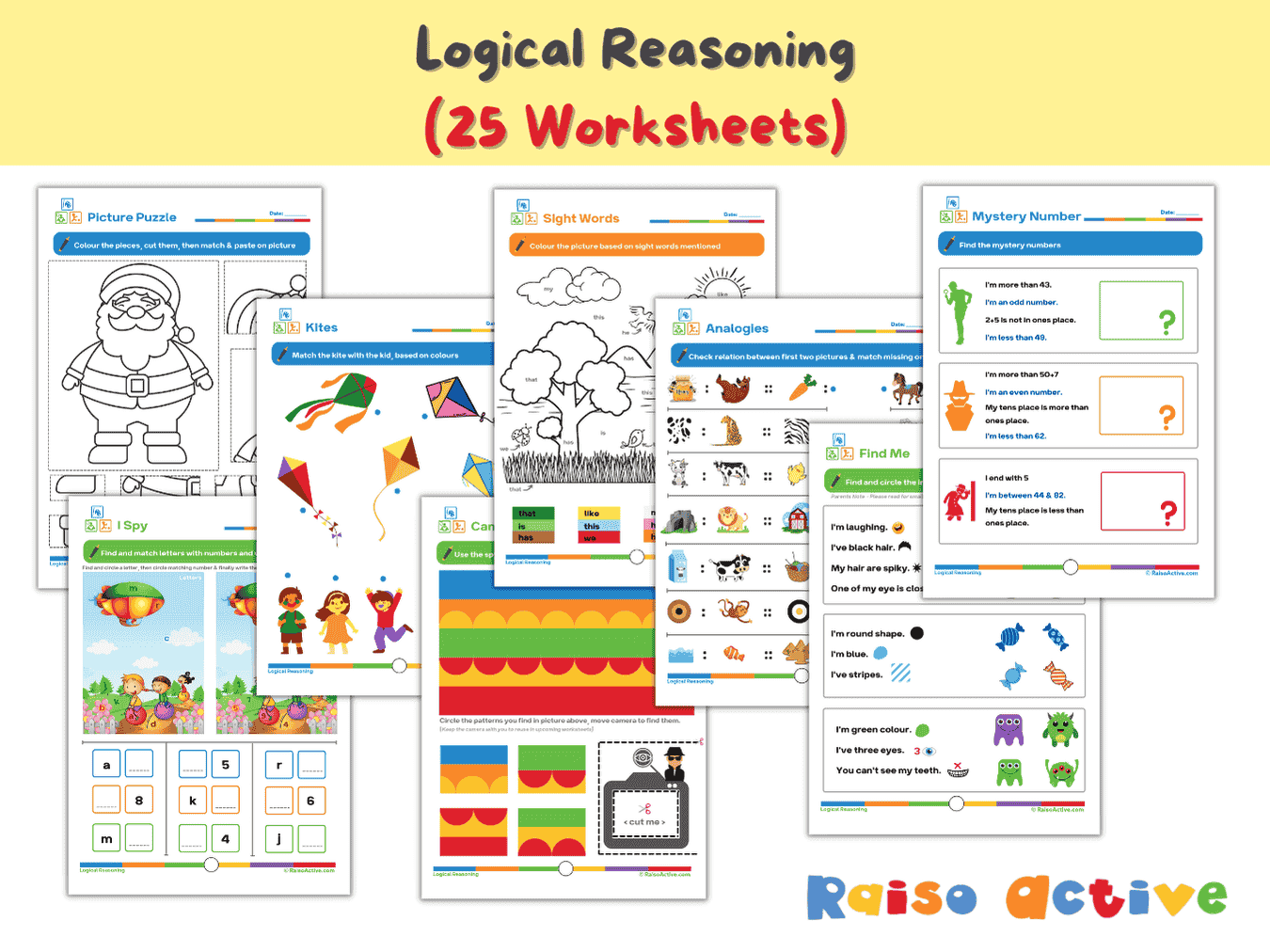
Logical Reasoning Activity Book for Preschool & Kindergarten | Patterns, Puzzles & Analogies
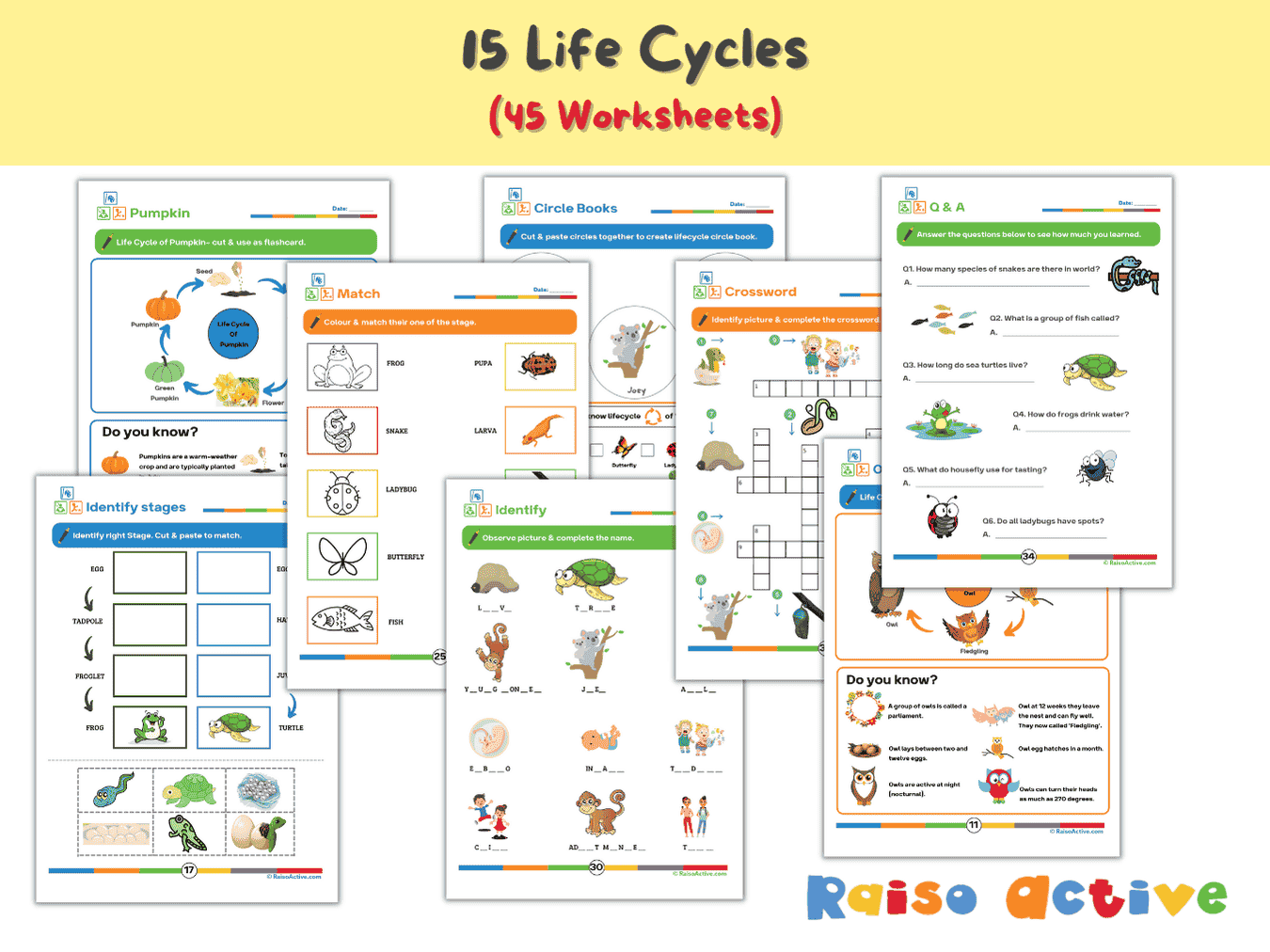
Lifecycles Activity Book & Flashcards for Preschool & Early Elementary
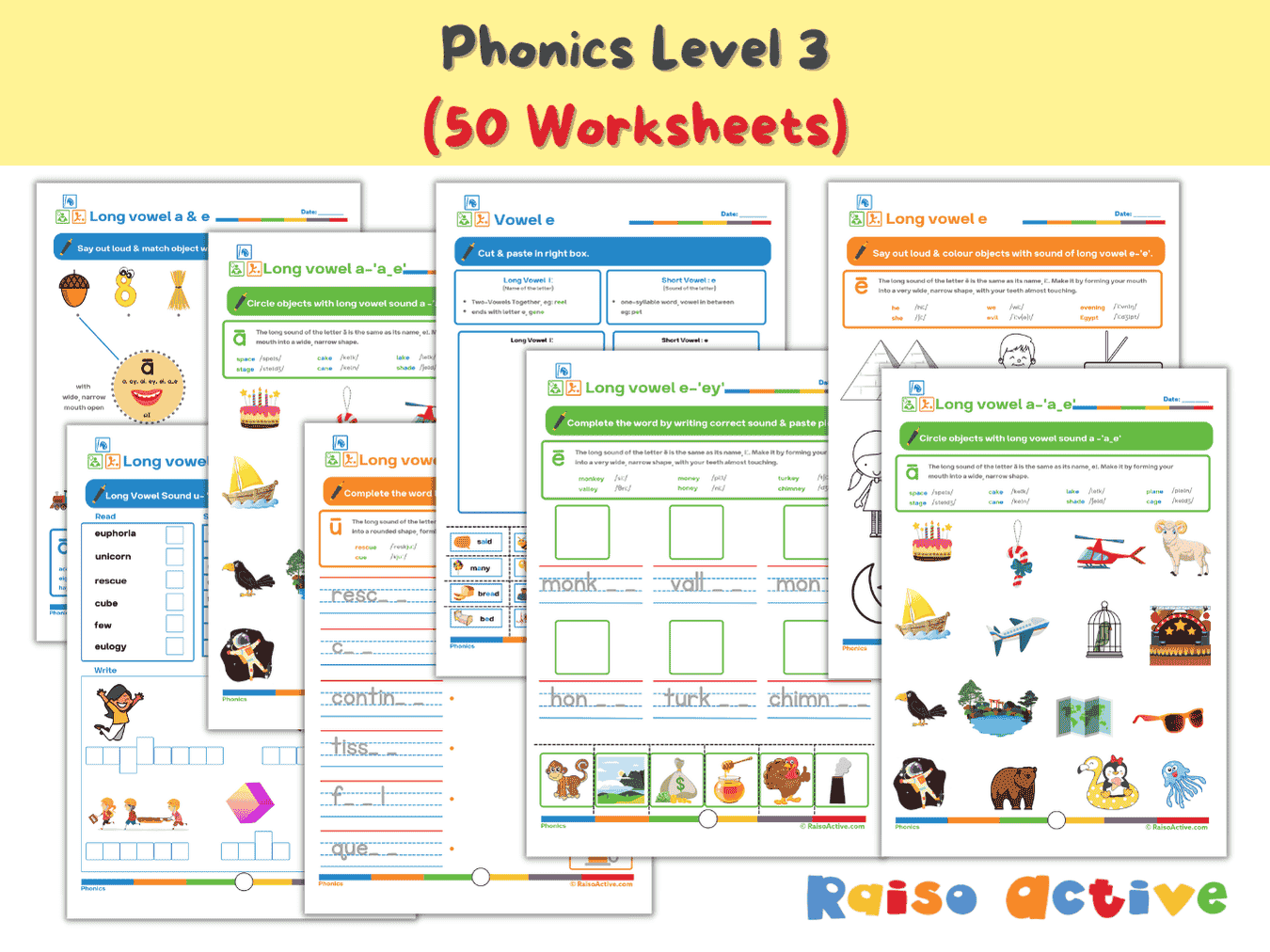
Phonics Level 3 Long Vowels Activity Book for Kindergarten & 1st Grade
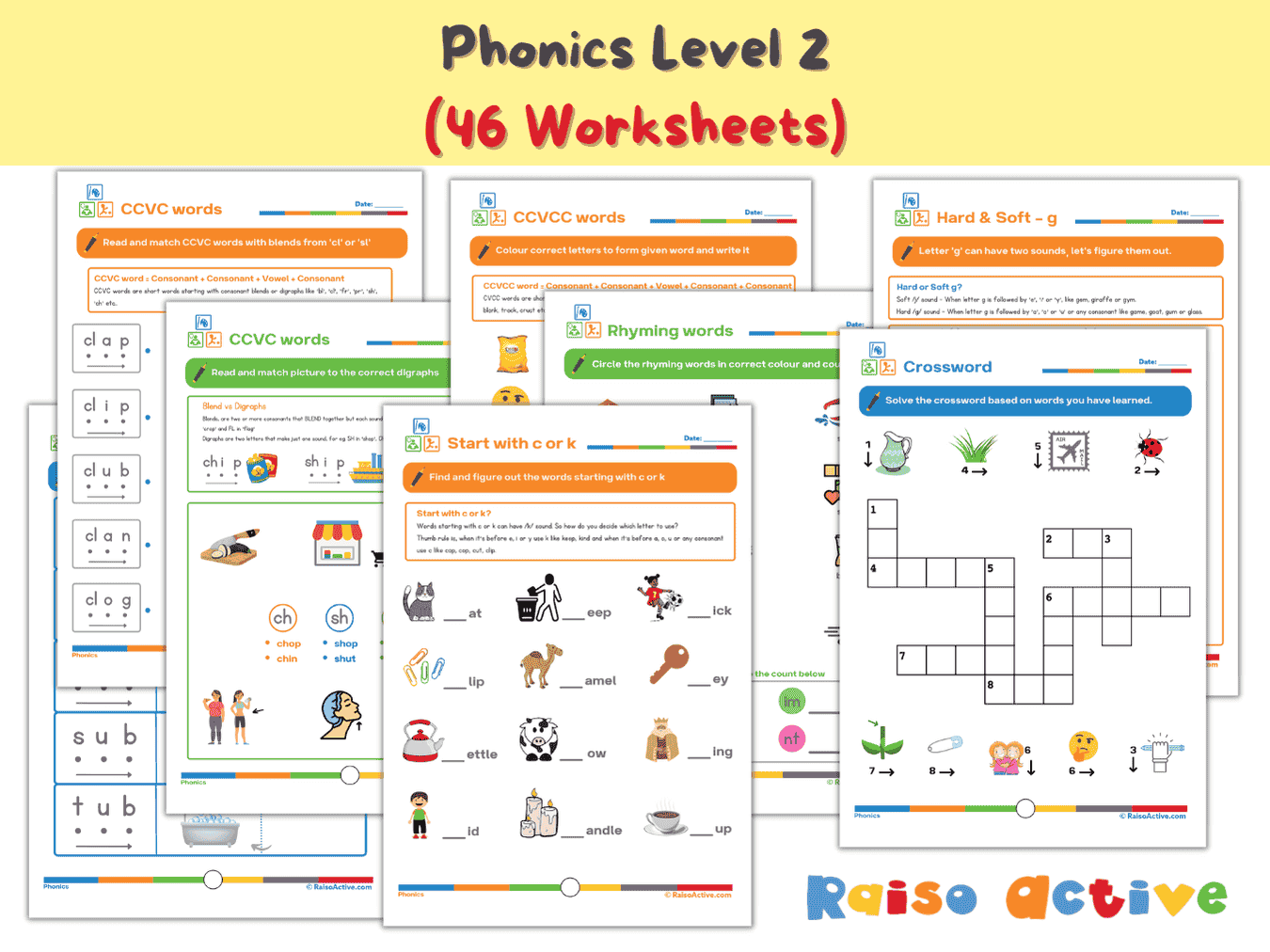
Phonics Level 2 Worksheets: CVC, CCVC, CVCC Word Families & Blends for Early Readers (Ages 4-7)
Guides for parents and teachers
See all guides →Number Formation Rhymes 0–9 and How to Fix Reversals
Original number formation rhymes for 0–9, the correct stroke order for each digit, why 3, 5 and 7 get reversed most often, and multisensory fixes that work.
Christmas and Winter Activities That Combine Fun and Learning: Creating Magical Educational Experiences
Discover Christmas and winter activities that combine festive fun with real learning. Crafts, counting, literacy, and printable worksheets for ages 2 to 8 — perfect for home and school.
Age-Appropriate Halloween Learning Activities: Balancing Spooks and Skills for Young Learners
Discover fun, age-appropriate Halloween learning activities for young children. Spooky crafts, counting games, literacy ideas, and printable worksheets for ages 2 to 8.
The Power of Music: How Musical Activities Accelerate Learning Development in Young Children
Discover how musical activities accelerate brain development, phonics, maths, and emotional regulation in children ages 1–8. Practical tips for Indian homes and classrooms.
What's the Best Alternative to ABCmouse? A Complete Parent's Guide to Free and Affordable Educational Apps
ABCmouse runs ~Rs 4,000-5,000/year with US spellings and curriculum. Compare free & affordable Indian-friendly apps like Khan Academy Kids and DIKSHA.
Is Khan Academy Kids Really Free? A Parent's Complete Guide to Costs, Features, and Hidden Fees
Confirmed: Khan Academy Kids has zero subscription fees, ads, or paywalls. See what's included, age-by-age tips, and offline use for Indian families.