Free printable worksheets · India
Nursery Counting Worksheets (Ages 3–4)
Nursery counting worksheets are practice sheets for children aged 3–4 in Nursery in India. Counting is matching a spoken number word to each object in a group, one at a time, to find out how many there are in total. The sheets on this page cover one-to-one correspondence, counting a set of objects accurately, matching a numeral to a quantity and comparing more and less.
Nursery marks the first year an Indian child sits at a table with a pencil rather than only playing with one. Grip is still developing, so schools expect pre-writing strokes, colouring within a bold outline, matching identical pictures and counting small groups rather than any letter writing. Attention rarely holds past a few minutes at a stretch. Three-year-olds recite numbers to ten and touch-count up to five objects reliably, though counting six or more objects often breaks down or repeats a number. A worksheet should ask the child to count a small group and circle how many there are, count out loud while pointing to a row of pictures, and compare two small groups to say which has more. Counting a scattered, unordered group, and going beyond ten, are still shaky at this age.
695+ worksheets · free PDF download · print on A4 or Letter
Nursery Counting Worksheets to print
Browse all worksheets for ages 3–4
Clothing Pattern Match Worksheet for Preschoolers
This worksheet has children ages 3-5 study repeating patterns on clothing items — stripes, polka dots, or checks — and match each item to its identical twin, building visual discrimination and early pattern-sequencing skills. Distinguishing between similar-looking patterns also sharpens attention to detail, a skill that later supports letter and word recognition.

Thick and Thin Worksheet: Identifying Object Thickness
This worksheet asks children ages 3-5 to compare objects and identify which is thickest and which is thinnest in each set, building early comparative reasoning and size-based vocabulary. Comparing objects along a specific dimension like thickness — rather than just overall size — sharpens observational skills and introduces the kind of precise descriptive language children will need for later measurement concepts.
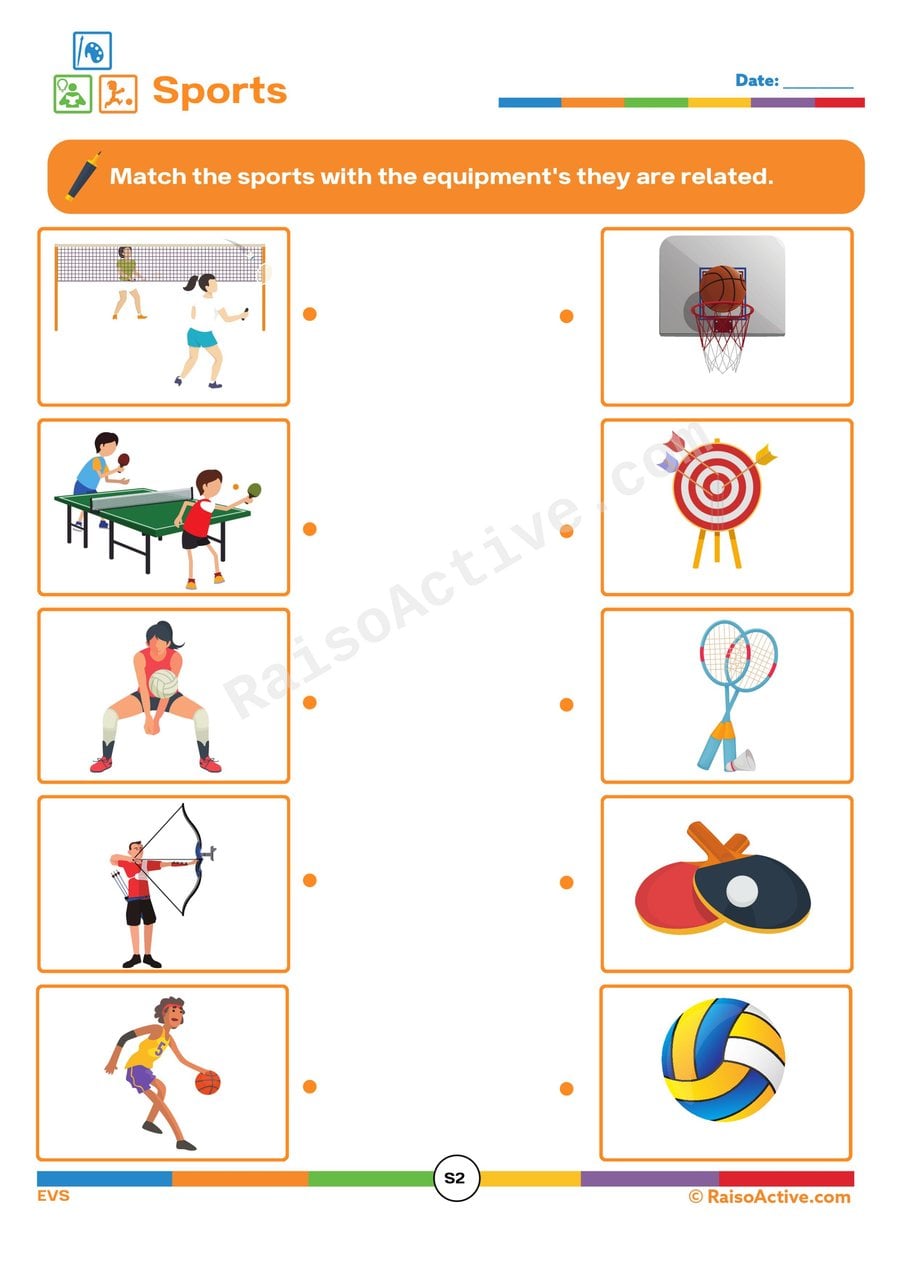
Sports Equipment Match: A Fun Worksheet for Kids!
Matching a sport to its equipment, a bat to baseball or a racket to tennis, asks children to build a mental association between an activity and the tools it requires, strengthening categorization skills and real-world vocabulary. For ages three to five, this kind of practical pairing also supports gross motor development indirectly, since naming and recognizing sports equipment often leads to more engaged physical play.

Match the Parts of a Crab Worksheet for Preschoolers
Learning to label the parts of a crab, claws, shell, legs, eyes, introduces preschoolers to basic animal anatomy vocabulary and the idea that living things are made of distinct, named parts, an early step toward more formal science observation later on. Matching labels to a diagram also strengthens visual scanning, since children must locate the correct part on the picture before connecting it to its name.

Consonant Sounds: Matching m & b Sounds Worksheet for Kids
This worksheet gives children ages 3-5 focused practice distinguishing the beginning sounds of 'm' and 'b' — two consonants that can sound similar to young ears — by matching pictures to the correct sound. Learning to tell apart consonants that are formed in a similar way in the mouth builds the fine auditory discrimination children need before they can reliably sound out and spell words.

Easter Pattern Match Worksheet: Bunny, Basket, and Egg Fun!
This worksheet has children ages 3-5 study a repeating pattern shown across a set of bunny, basket, and egg images, then identify which item on the right continues or matches that same pattern. Recognizing a pattern by its color or design sequence builds early algebraic thinking, since spotting what comes next is a skill children will rely on throughout math.

Read and Match: Fun Reading Worksheet for Preschoolers
Reading a simple sentence and matching it to its corresponding picture builds early reading comprehension for children ages 3-5, teaching them that written words carry meaning that connects to real images and ideas.

Up and Down Worksheet: Counting and Writing Practice for Preschoolers
Children ages 3-5 combine spatial reasoning with counting practice by counting steps or elements going up and down, then writing the totals. Understanding 'up' and 'down' as directional concepts supports later skills like reading graphs, climbing stairs safely, and following spatial instructions. Writing the counted numbers afterward reinforces number formation alongside the counting itself.

Cleanliness Worksheet: Match Body Parts to Cleaning Tools!
This matching worksheet builds hygiene awareness by asking 3-5 year olds to connect specific body parts — teeth, hands, hair — to the correct cleaning tool for each one, like a toothbrush, soap, or shampoo. That pairing goes beyond simply naming hygiene items; it requires your child to reason about which tool actually does the job for which body part, which is the beginning of understanding personal care routines rather than just memorizing object names.
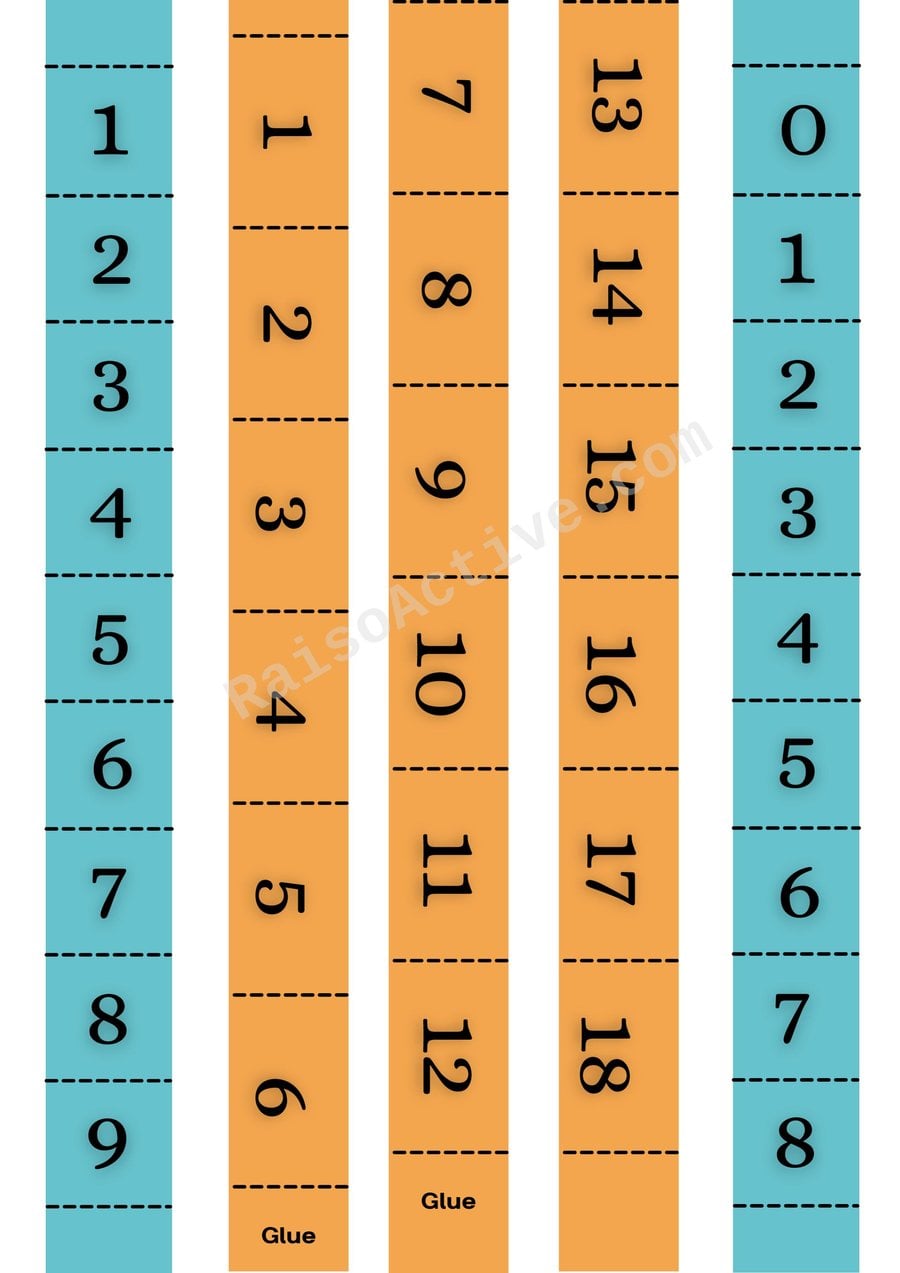
Number Matching Worksheet: 0-18
This activity strengthens numeral recognition for children ages 3-5 by having them find and pair matching numbers from 0 to 18 printed on separate strips. Because the numbers are scattered rather than in order, children must recognize each digit shape on its own rather than relying on counting sequence, which builds true number recognition instead of rote list-reciting.

Subtraction Fun: Counting and Subtracting Worksheet for Kids
This worksheet gives 3-5 year olds direct practice subtracting the smaller number from the larger one, using accompanying pictures to make each subtraction problem visible and countable rather than purely abstract. Working through picture-supported subtraction repeatedly at this age builds the number sense needed before children can subtract using numerals alone, without a picture to lean on.

Family Relations Worksheet: Learn About Family Members!
Writing the correct family member name next to each person on a family tree helps children ages 3-5 understand family relationships and structure, connecting a written word to a specific role like mother, father, or sibling. This early exposure to family trees also introduces the idea of organizing information visually, a skill used across many later school subjects.
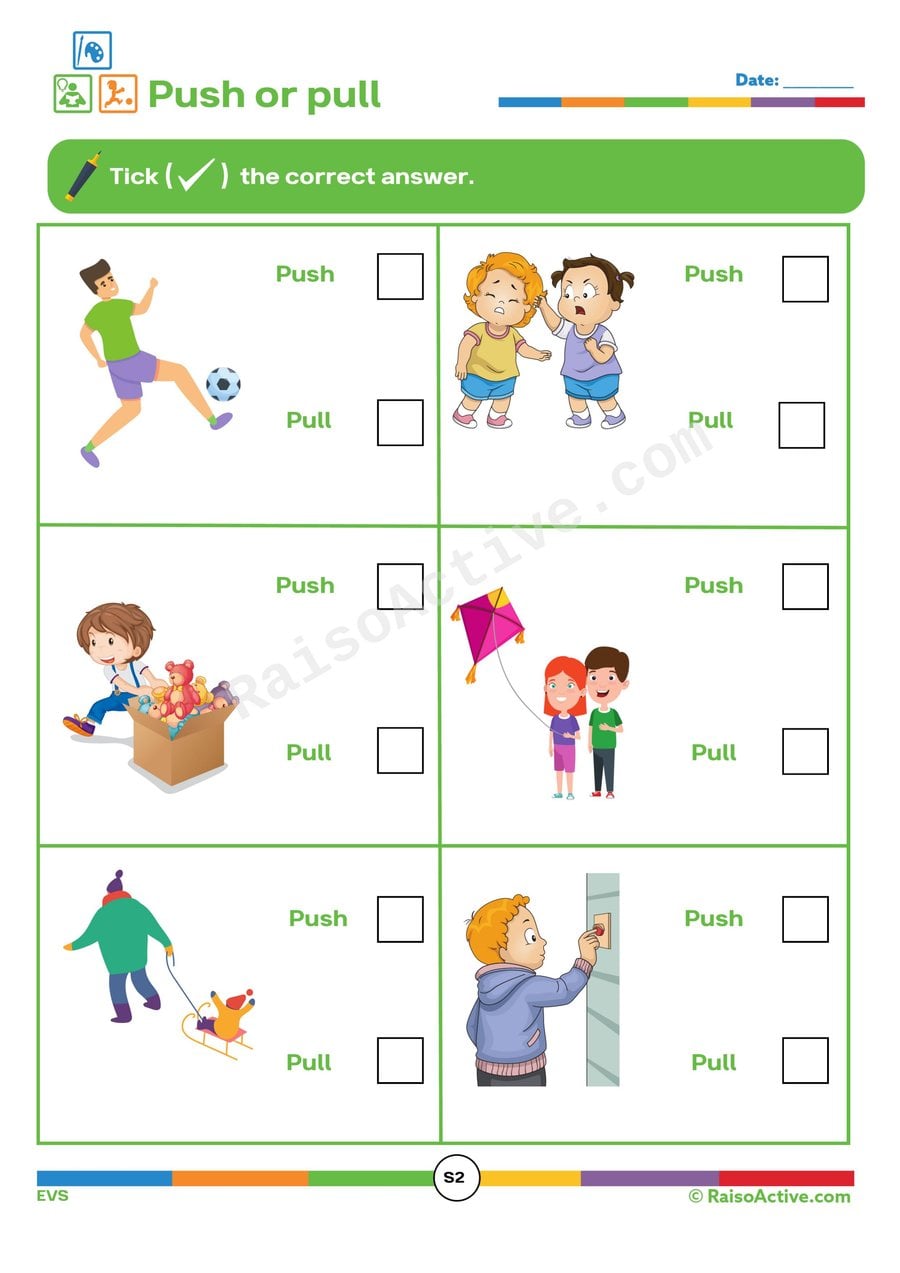
Push or Pull Worksheet: Identify Actions!
Deciding whether an action shown in a picture is a push or a pull introduces children ages 3-5 to a basic physics concept, force and motion, by having them classify everyday actions like opening a door or pulling a wagon. This early science reasoning requires children to picture the direction an object is moving relative to the person acting on it, which builds spatial thinking alongside scientific vocabulary. Learning to categorize actions this way is a first step toward understanding cause and effect in the physical world.

Sunlight Worksheet: Learn About the Sun and Seasons!
This worksheet introduces children ages 3-5 to the idea that the sun's warmth and position change across the year, giving rise to the four seasons. By matching descriptions to pictures and completing sentences about the sun's daily movement, children build early scientific observation skills and the vocabulary needed to describe weather and time of day.
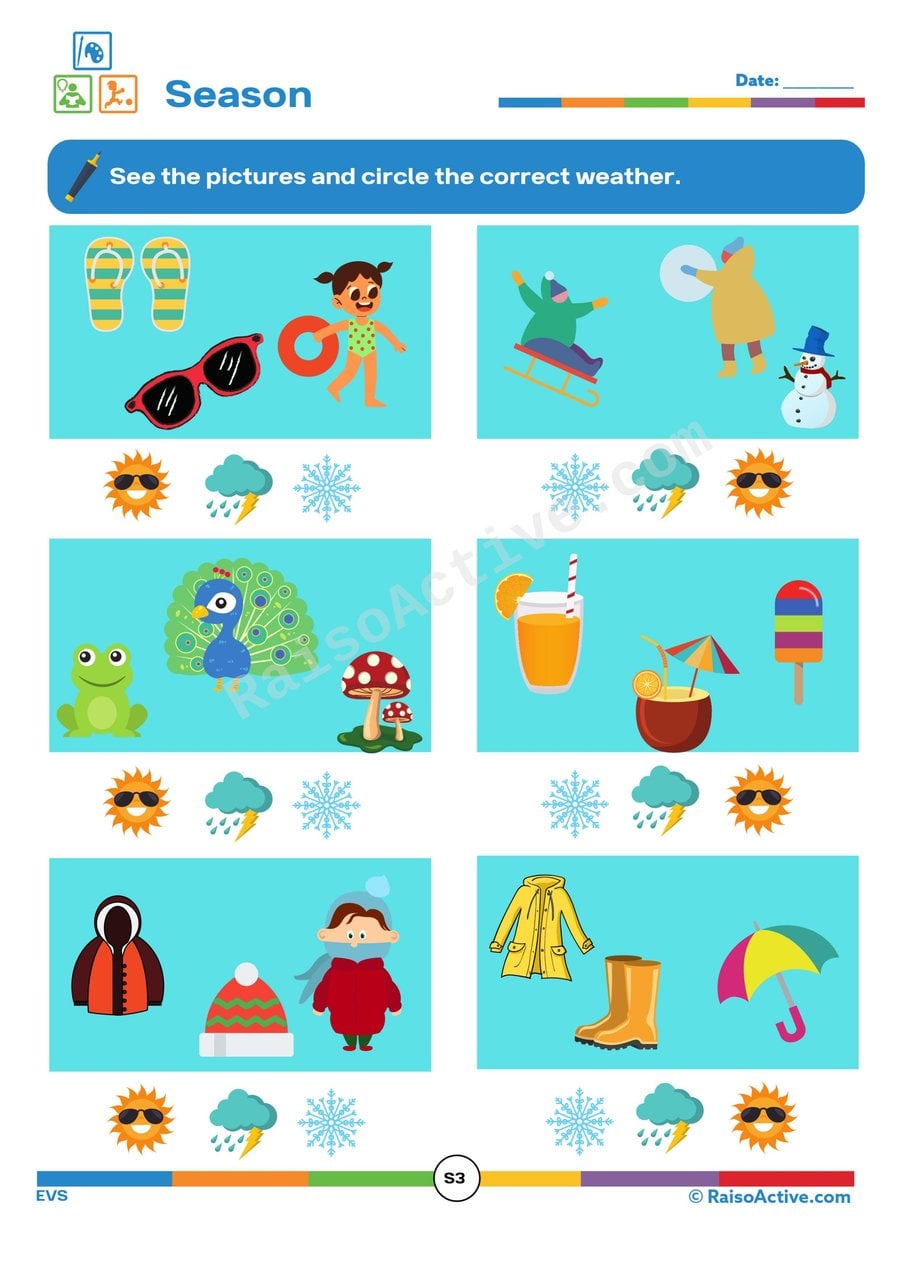
Seasons Worksheet: Circle the Correct Weather!
This worksheet asks children ages 3-5 to look at a seasonal scene and circle the weather that correctly matches it, building an early understanding of how seasons connect to specific weather patterns like snow, rain, or sunshine. Making this connection between a season and its typical weather is an early science concept that also supports vocabulary growth around weather and clothing.

Clothing Pattern Matching Worksheet for Preschoolers
By comparing clothing items and connecting each one to its pattern match, children ages 3-5 build visual discrimination skills, learning to notice fine differences in stripes, dots, or repeated shapes. This close-looking practice supports the same attention-to-detail children will later need to tell similar-looking letters and numbers apart.

Summer Count: A Fun Counting Worksheet for Preschoolers!
Counting groups of summer-themed objects like sunglasses, beach balls, or ice creams builds one-to-one correspondence for children ages 3-5, and recording the total in writing gives them foundational practice before moving into simple addition.

Count and Match! Number Recognition Worksheet for Preschoolers
This worksheet has preschoolers ages 3-5 practice one-to-one correspondence — touching or pointing to each object exactly once while counting — before writing the total and matching it to the correct numeral in a circle. Counting accurately requires more coordination than it looks like at this age, since children must track which objects they've already counted while saying numbers in the right order. Adding the final matching step reinforces that a written numeral represents a specific, countable quantity rather than just a symbol to memorize.

Counting Fun: Match the Numbers Worksheet for Preschoolers!
This worksheet layers three related counting skills, counting a group of objects, matching that group to its printed numeral, and matching the numeral to a set of fingers, so children see the same quantity represented three different ways. Seeing one number expressed as objects, digits, and fingers helps cement true number sense rather than just memorized counting words.

Doctor's Tools: Circle the Items! - Worksheet for Kids
This worksheet builds visual discrimination and category knowledge by asking children to identify which pictured items belong to a doctor's toolkit, like a stethoscope or thermometer, versus items that don't. For ages 3-5, sorting objects by their real-world function is an early classification skill, and the community-helper theme also builds vocabulary around health and care.
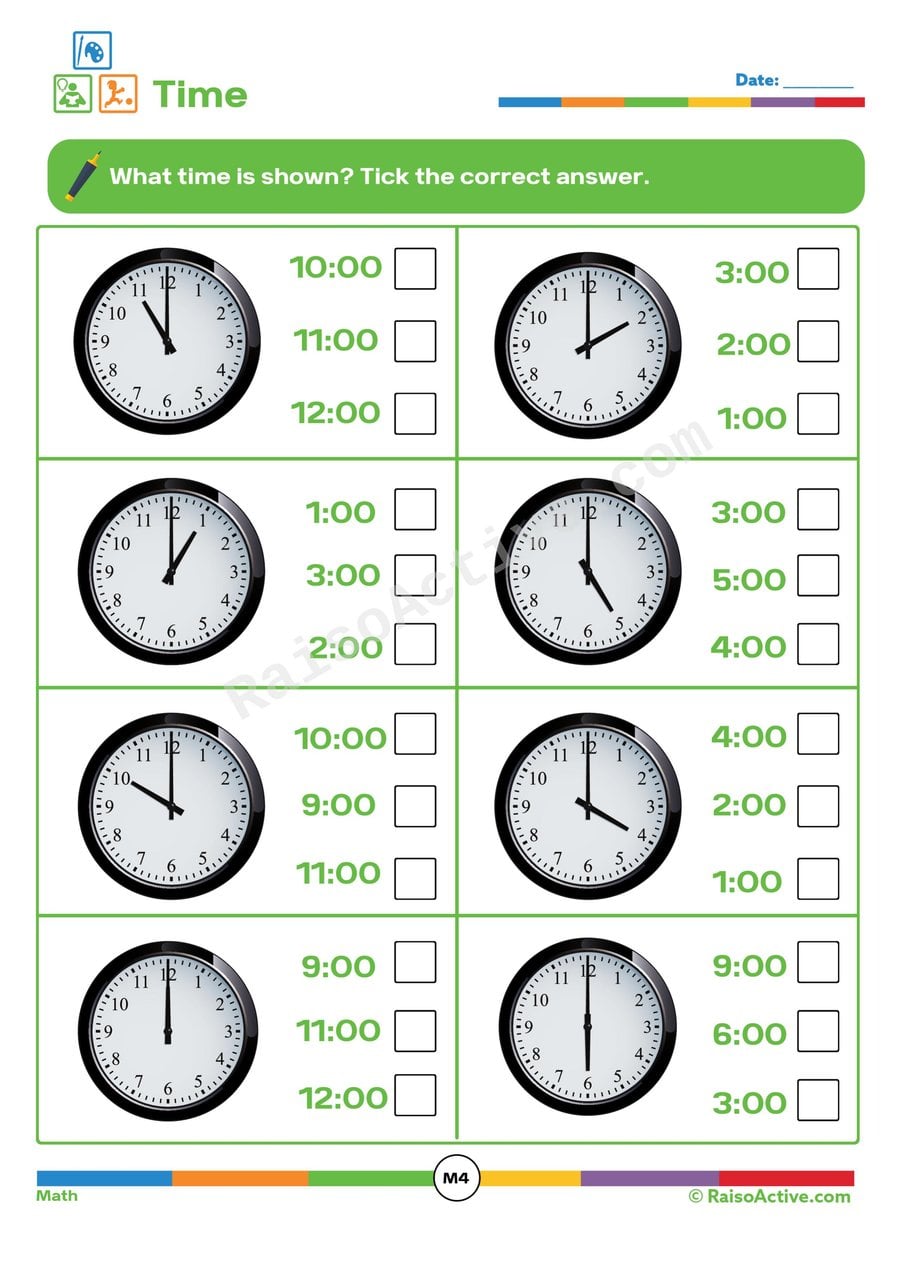
Time Telling Worksheet: What Time Is It? (3-5)
This worksheet introduces children ages 3-5 to analog clock reading at its simplest level, asking them to look at a clock face and choose the correct time from a set of answer options rather than writing it independently. Multiple-choice format lowers the barrier for this genuinely difficult skill, letting younger children build early clock familiarity before they're expected to read time unaided.
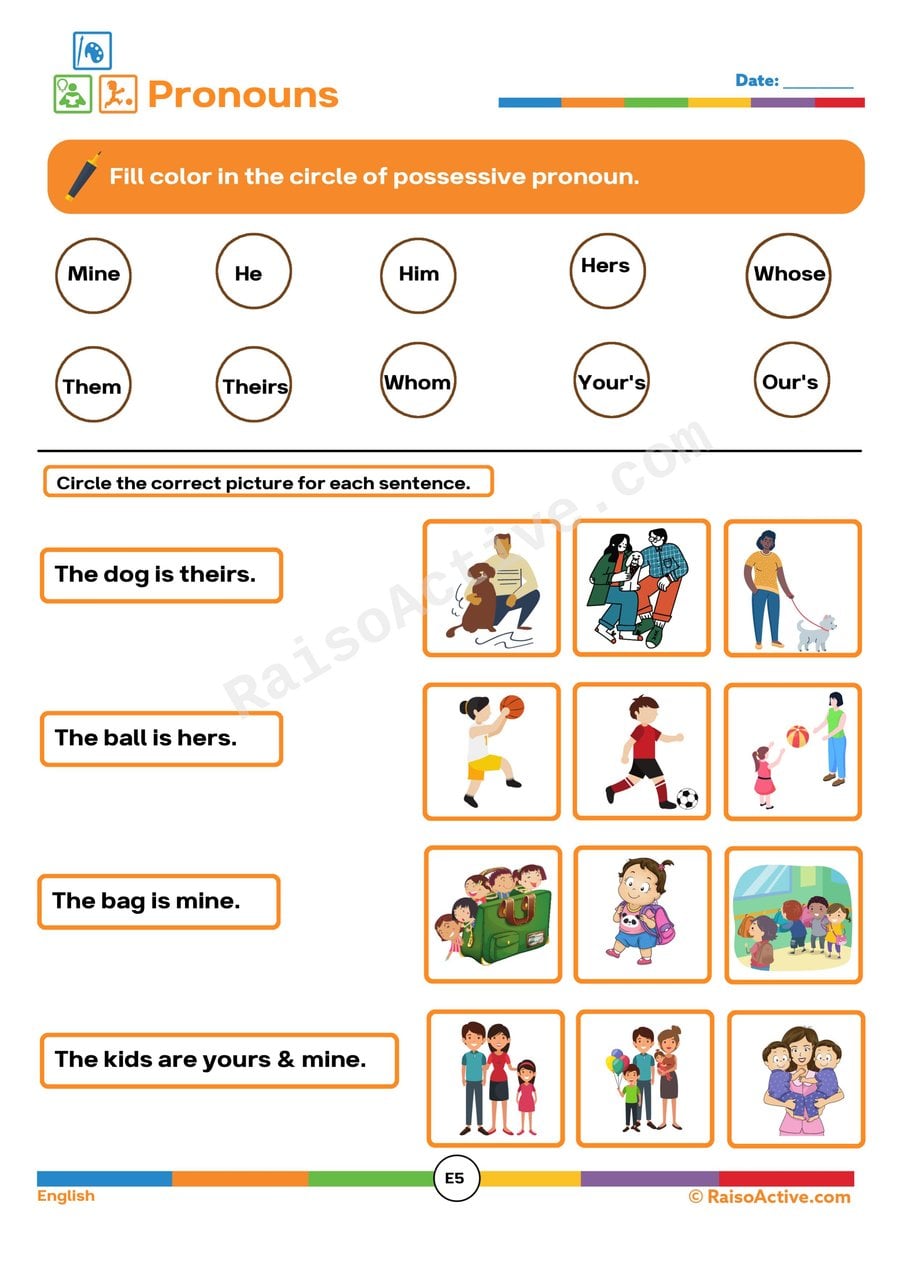
Possessive Pronouns Worksheet: Circle and Match!
Possessive pronouns like 'mine,' 'hers,' and 'theirs' are an abstract grammar concept for children ages 3-5, since they require understanding that a single word can stand in for a whole phrase about ownership — 'that ball is hers' instead of 'that ball belongs to her.' This worksheet builds early grammar awareness by having children match possessive pronouns to sentences and pictures, giving them concrete visual context for what could otherwise be a confusing abstract idea. Early, low-pressure exposure to pronouns like this supports both oral language development and the sentence-building skills needed for writing later on.

My Body Parts Matching Worksheet for Preschoolers
Matching body part pictures to their names or functions helps children ages 3-5 build body awareness vocabulary, connecting a word like 'elbow' or 'knee' to the correct part of their own body. This kind of labeling activity also supports early self-care and safety skills, since children who can name body parts accurately can better communicate if something hurts or needs attention.

Read and Match: Sentence Reading Worksheet for Preschoolers
Reading a sentence aloud and then circling its matching picture strengthens reading comprehension for children ages 3-5, requiring them to hold the meaning of several words in mind at once rather than recognizing them individually. This early comprehension practice builds toward the ability to read a full passage and understand what actually happened, not just decode isolated words.
What Nursery counting worksheets cover
Three-year-olds recite numbers to ten and touch-count up to five objects reliably, though counting six or more objects often breaks down or repeats a number. A worksheet should ask the child to count a small group and circle how many there are, count out loud while pointing to a row of pictures, and compare two small groups to say which has more. Counting a scattered, unordered group, and going beyond ten, are still shaky at this age.
- Touch-count up to five objects, saying one number per object
- Recite numbers to ten from memory, in order
- Circle the number that matches a small counted group
- Say which of two small groups has more
How to use these worksheets at home or in class
A single sheet a day, five to ten minutes, suits a three-year-old best. Sit alongside your child rather than opposite, demonstrate one stroke, then let them attempt it themselves, praising the try rather than the neatness of the line.
Start with the sheet that matches what your child can already do, then move one step up. Keep finished sheets in a folder: Nursery teachers often ask for evidence of practice, and children like seeing their own progress.
Is your child ready for Nursery counting work?
Readiness shows up as a proper crayon grip with fingers instead of a fist, purposeful scribbling, sitting through a short task and following one spoken instruction such as pointing to a colour. Without these, stick to sticker play and large colouring pages for now.
Frequently asked questions
My three-year-old can count to ten but loses track counting five toys. Why?
Because reciting numbers in order and touch-counting objects use different parts of counting, and the second is harder: it needs the child to keep track of which objects are already counted, especially if they can be moved. Practice sliding each object aside as it is counted, or lining objects up in a row rather than leaving them scattered, which removes the tracking problem. Reciting to ten usually comes before reliable counting of five loose objects.
What should a Nursery child be able to do in counting?
Three-year-olds recite numbers to ten and touch-count up to five objects reliably, though counting six or more objects often breaks down or repeats a number. A worksheet should ask the child to count a small group and circle how many there are, count out loud while pointing to a row of pictures, and compare two small groups to say which has more. Counting a scattered, unordered group, and going beyond ten, are still shaky at this age. Readiness shows up as a proper crayon grip with fingers instead of a fist, purposeful scribbling, sitting through a short task and following one spoken instruction such as pointing to a colour. Without these, stick to sticker play and large colouring pages for now.
Do these worksheets follow the Nursery curriculum?
The sheets cover one-to-one correspondence, counting a set of objects accurately, matching a numeral to a quantity and comparing more and less, which sit inside the NEP 2020 Foundational Stage (NCF-FS 2022) outcomes for Nursery. Preschool (US), Nursery (UK) use the same skills at this age, so the sheets also fit families following those programmes.
Are the Nursery counting worksheets free to download?
Yes. Every sheet on this page can be downloaded free as a watermarked PDF after creating an account, up to five downloads a day. The annual membership (₹1000) removes the watermark and the daily limit across the full library of more than 1,000 worksheets and all activity packs.

Written by
Hemsweta Jain · Teacher Cheena
MBA and Early Childhood Educator, teaching since 2014 · Founder of RaisoActive, Mumbai
Written and reviewed by Hemsweta Jain (Teacher Cheena), who designs every RaisoActive worksheet.
Last reviewed
Printable packs for ages 3–4
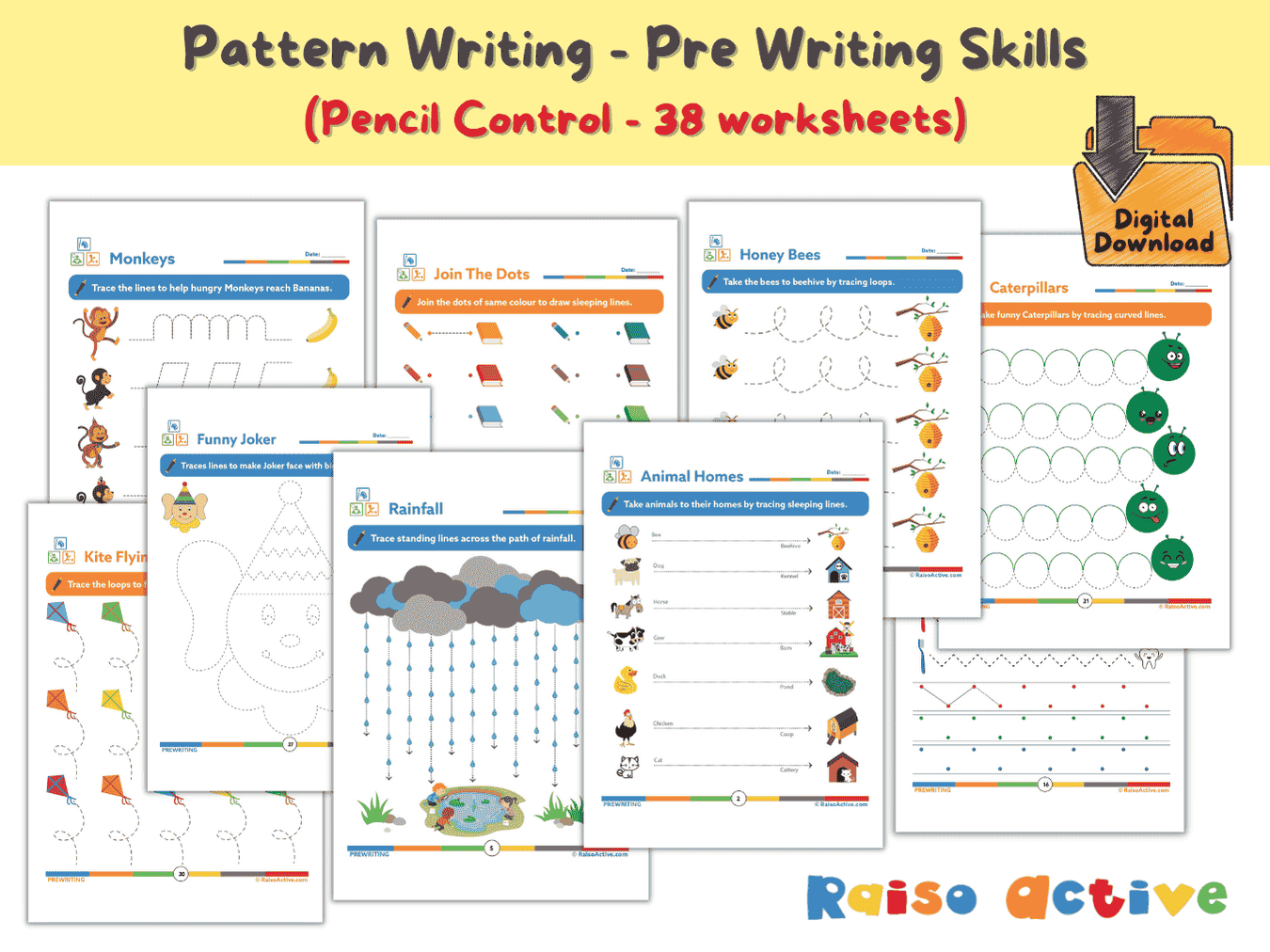
Pattern Writing Pre-writing Skills Activity Book for 3-4 Year Olds
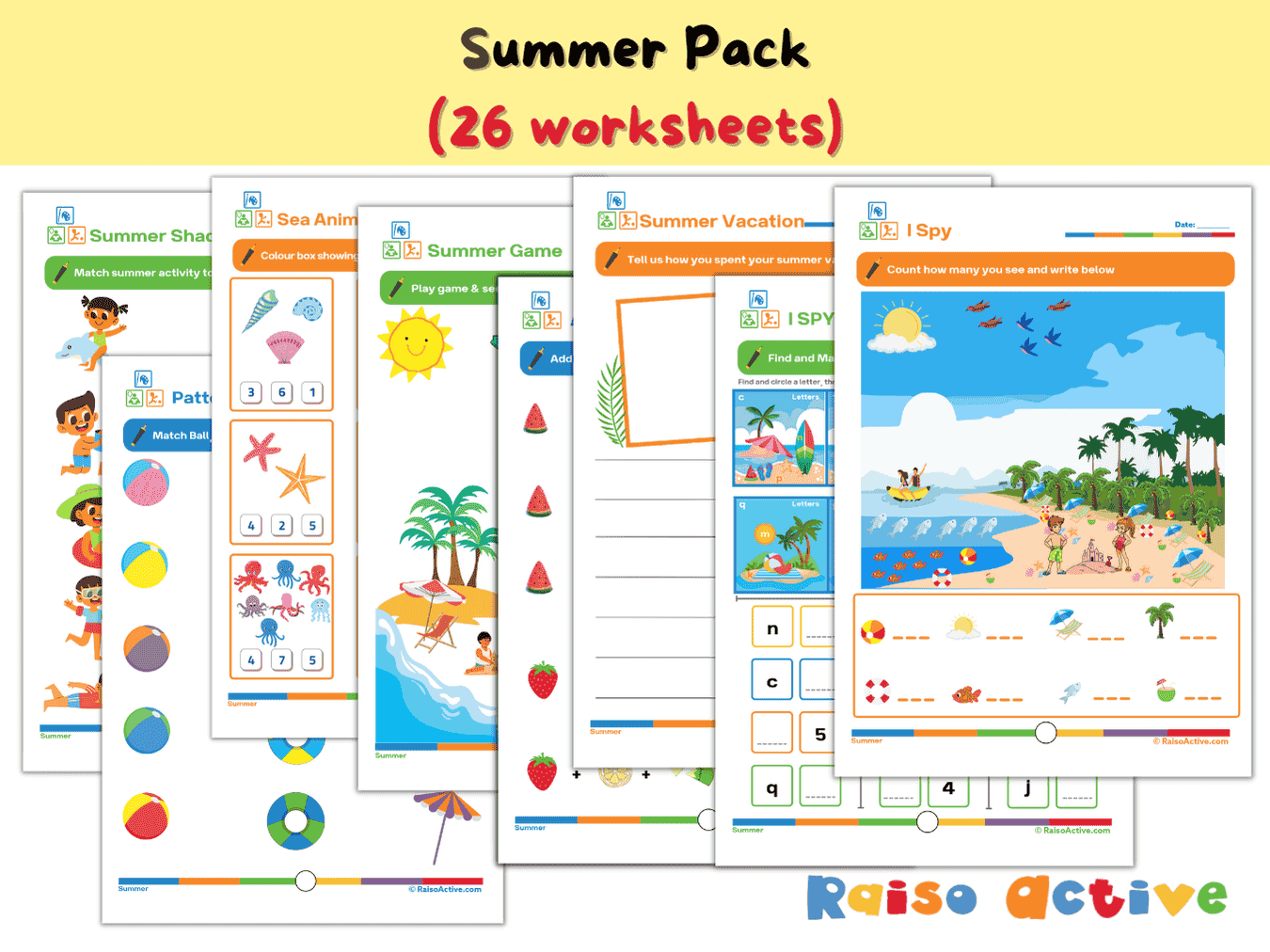
Summer Activity Pack: Math, Literacy, Puzzles & More for Preschool & Kindergarten
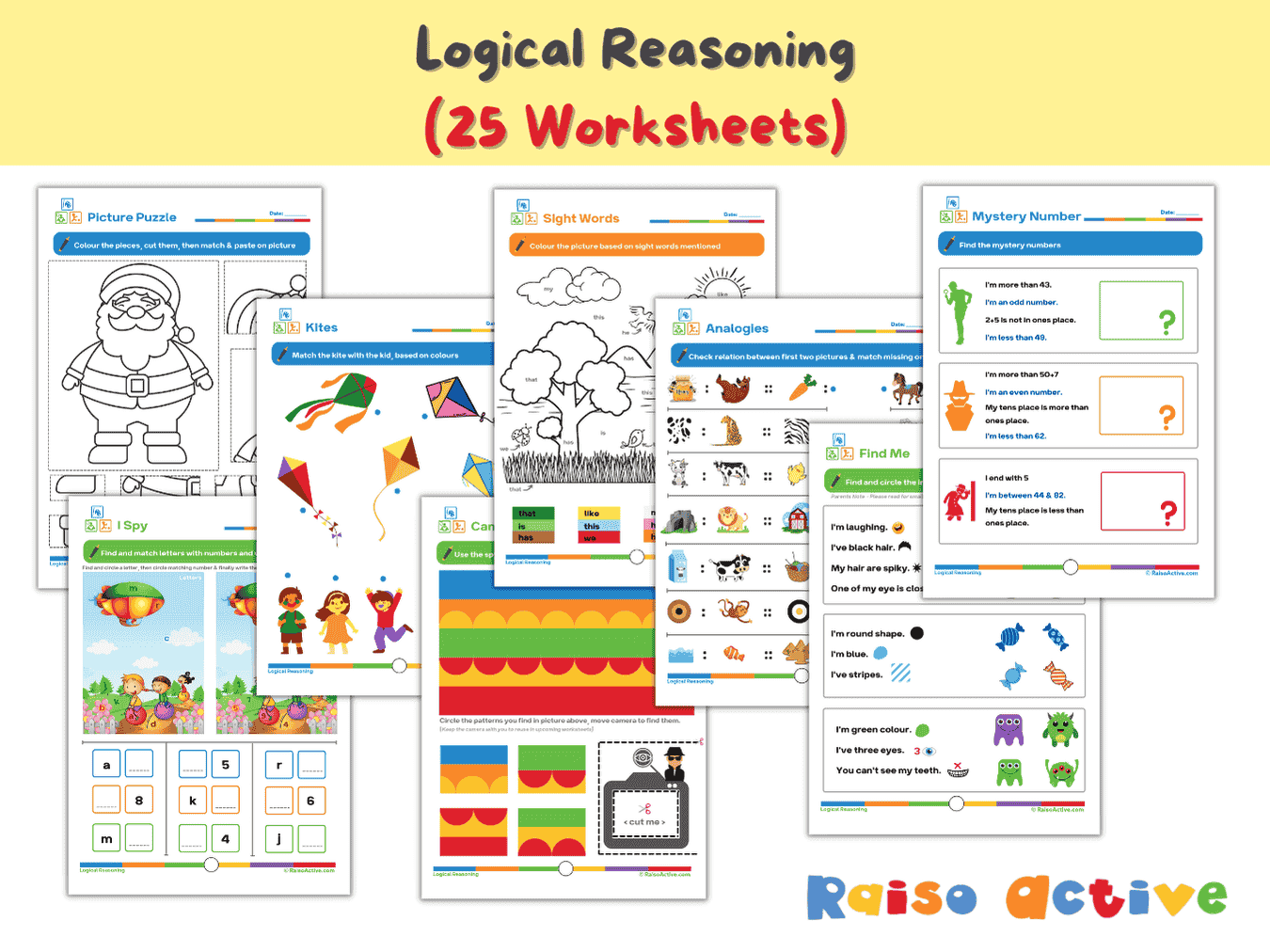
Logical Reasoning Activity Book for Preschool & Kindergarten | Patterns, Puzzles & Analogies
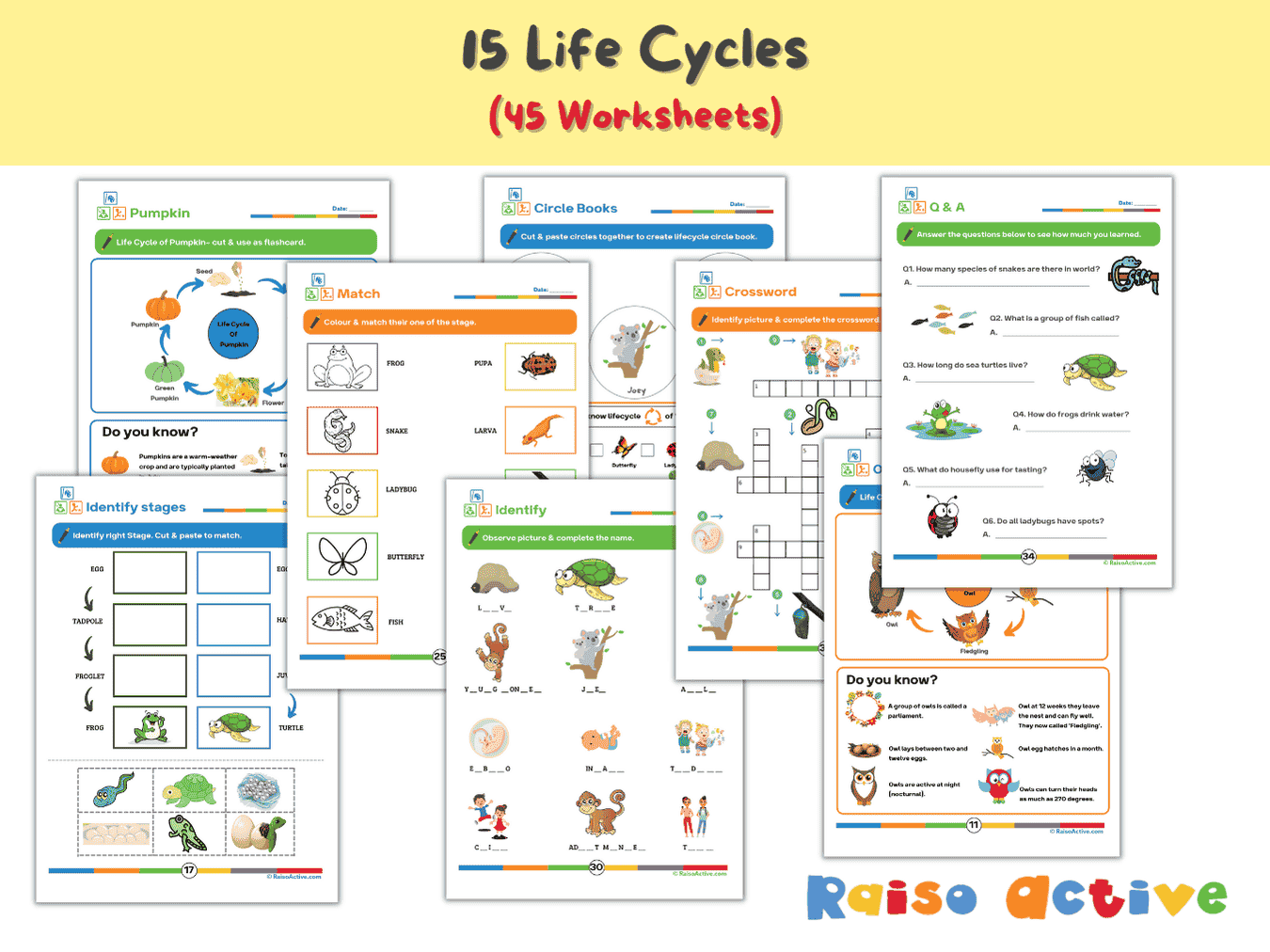
Lifecycles Activity Book & Flashcards for Preschool & Early Elementary
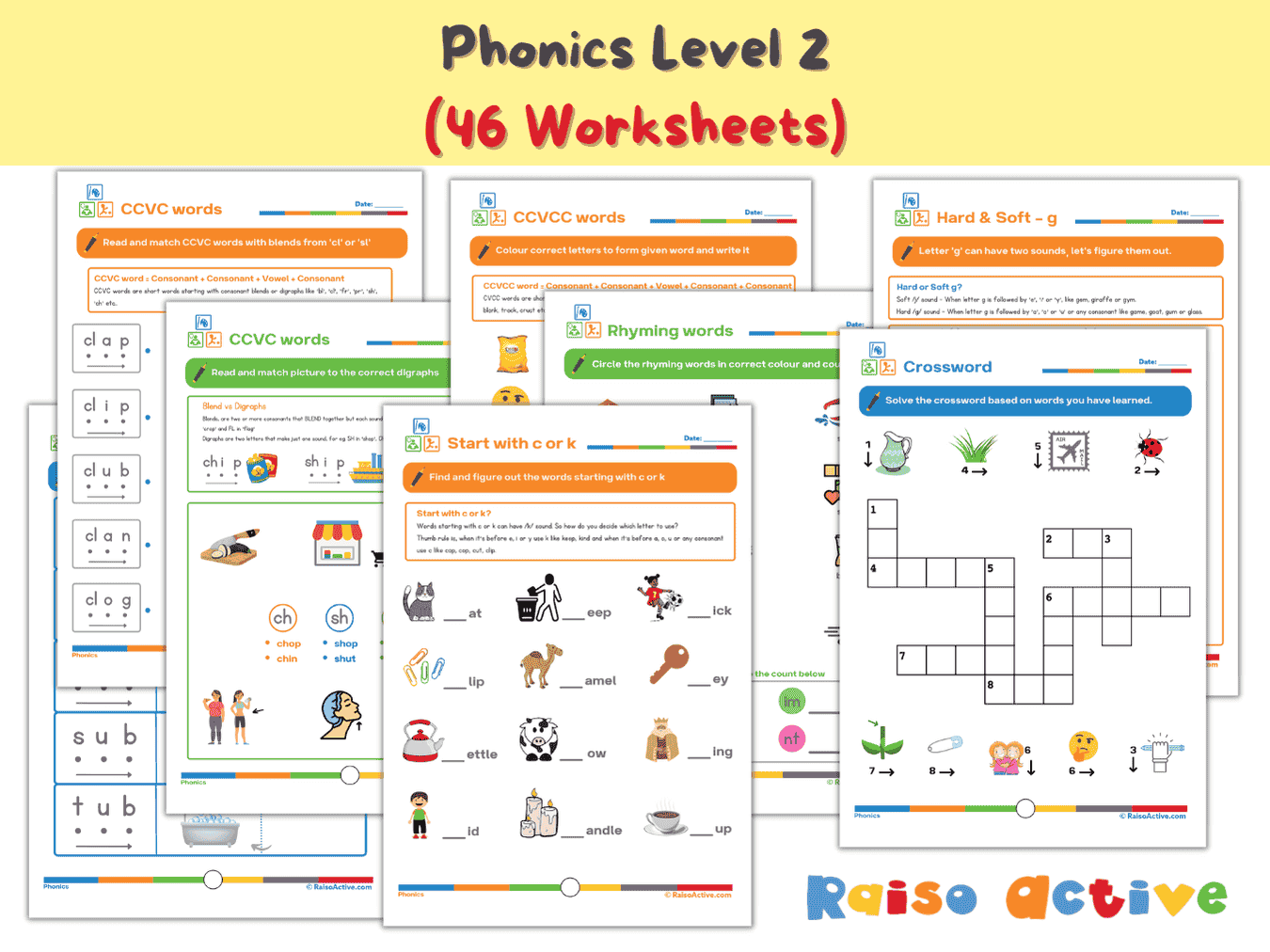
Phonics Level 2 Worksheets: CVC, CCVC, CVCC Word Families & Blends for Early Readers (Ages 4-7)
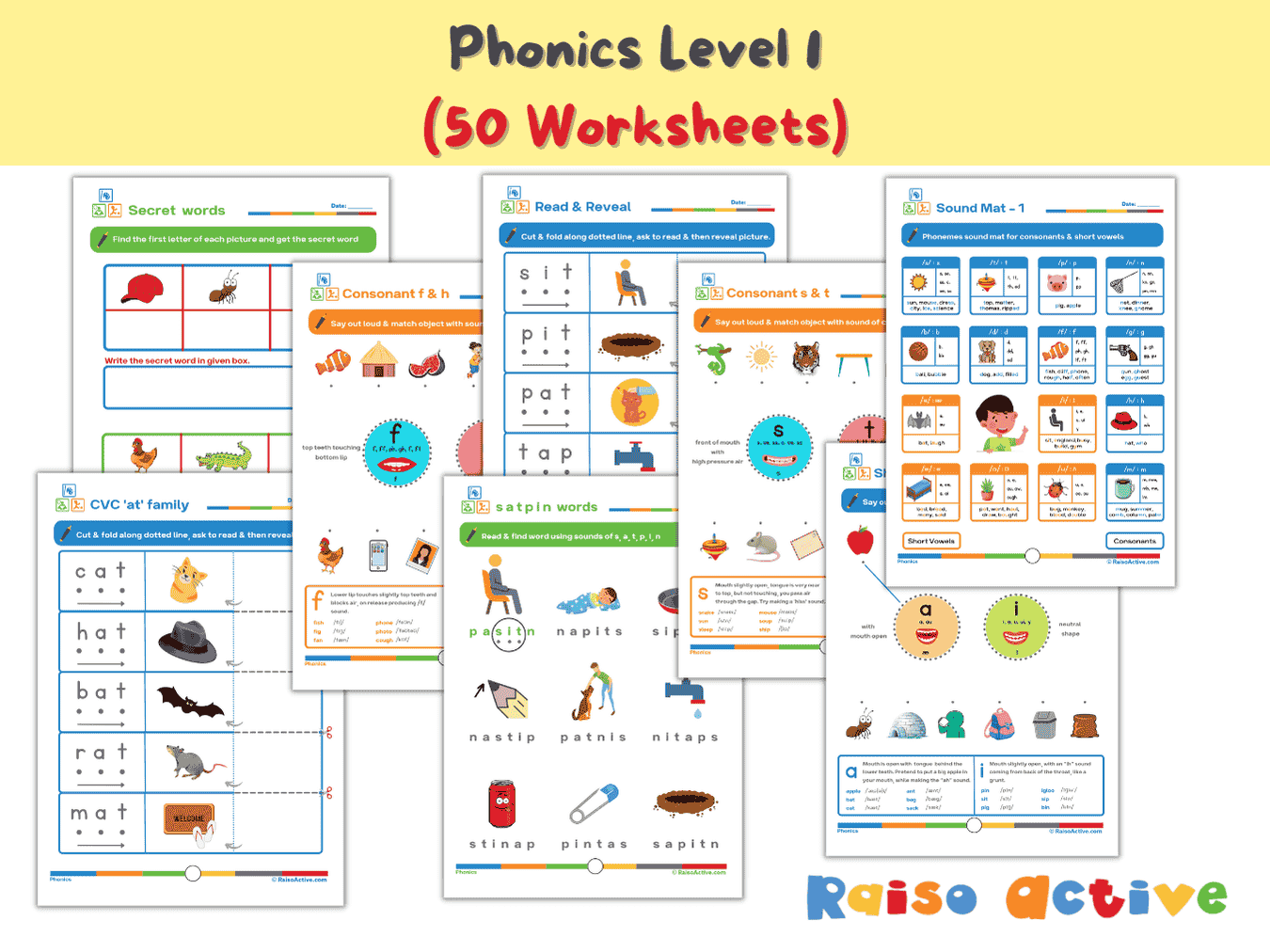
Phonics Level 1 Activity Book: Letter Sounds, Blending & CVC Words for Preschool & Kindergarten
Guides for parents and teachers
See all guides →Number Formation Rhymes 0–9 and How to Fix Reversals
Original number formation rhymes for 0–9, the correct stroke order for each digit, why 3, 5 and 7 get reversed most often, and multisensory fixes that work.
Christmas and Winter Activities That Combine Fun and Learning: Creating Magical Educational Experiences
Discover Christmas and winter activities that combine festive fun with real learning. Crafts, counting, literacy, and printable worksheets for ages 2 to 8 — perfect for home and school.
Age-Appropriate Halloween Learning Activities: Balancing Spooks and Skills for Young Learners
Discover fun, age-appropriate Halloween learning activities for young children. Spooky crafts, counting games, literacy ideas, and printable worksheets for ages 2 to 8.
The Power of Music: How Musical Activities Accelerate Learning Development in Young Children
Discover how musical activities accelerate brain development, phonics, maths, and emotional regulation in children ages 1–8. Practical tips for Indian homes and classrooms.
What's the Best Alternative to ABCmouse? A Complete Parent's Guide to Free and Affordable Educational Apps
ABCmouse runs ~Rs 4,000-5,000/year with US spellings and curriculum. Compare free & affordable Indian-friendly apps like Khan Academy Kids and DIKSHA.
Is Khan Academy Kids Really Free? A Parent's Complete Guide to Costs, Features, and Hidden Fees
Confirmed: Khan Academy Kids has zero subscription fees, ads, or paywalls. See what's included, age-by-age tips, and offline use for Indian families.
Canonical: https://raisoactive.com/worksheets/nursery-counting