
Guess the Word: Cut and Paste Worksheet for Early Learners
This cut-and-paste activity asks children ages 3-5 to look at picture clues, say the words aloud, and paste the correct picture to complete a combined word, giving them early practice in visual word-building and vocabulary expansion. Working with picture combinations helps children understand that some words are made by joining two smaller ideas together, a concept that supports later compound word recognition in reading. Saying each word out loud before pasting also builds the habit of connecting spoken language to printed or pictured words.
Part of the pack
Month 10: Learning & Development | Ages 6-7Curriculum
How to use this worksheet
Look at the partial word or picture prompt at the top of each section and say what you see out loud together. Cut out the picture options at the bottom of the page, naming each one as you go. Decide which cut-out picture correctly completes the word or pairing shown, then paste it into the matching space. Repeat for each item on the page, reading the completed word combinations aloud once finished.
Materials needed
- Scissors
- Glue
- Pencil
Extension activities
- •Create your own picture combination words using magazine cutouts or drawings.
- •Draw pictures to represent new words your child comes up with.
- •Play an oral guessing game where you say two small words and your child guesses the combined word.
- •Look for compound words in a favorite picture book and point them out together.
- •Make flashcards of the completed words for extra reading practice.
Tips for parents and teachers
Encourage your child to sound out the words and to explain their answers, since verbalizing their thinking reveals whether they truly understand the word or are just guessing. If a combination feels tricky, break it into its two separate picture parts and talk through each one before putting them back together. Keep the pace relaxed, since matching pictures to words at this age benefits more from conversation than speed.

Written by
Hemsweta Jain · Teacher Cheena
MBA and Early Childhood Educator, teaching since 2014 · Founder of RaisoActive, Mumbai
Every RaisoActive worksheet is designed and checked by the founder before publishing.
Published · Last reviewed
Related worksheets

Trace the Numbers 1-9 Worksheet for Preschoolers
Tracing the numerals 1 through 9 gives children ages 3-5 repeated, guided practice with the specific pencil strokes each number requires, building the fine motor control and muscle memory needed for independent number writing. Because tracing follows a fixed, correct path, it also reinforces accurate numeral recognition, helping children tell visually similar digits apart.
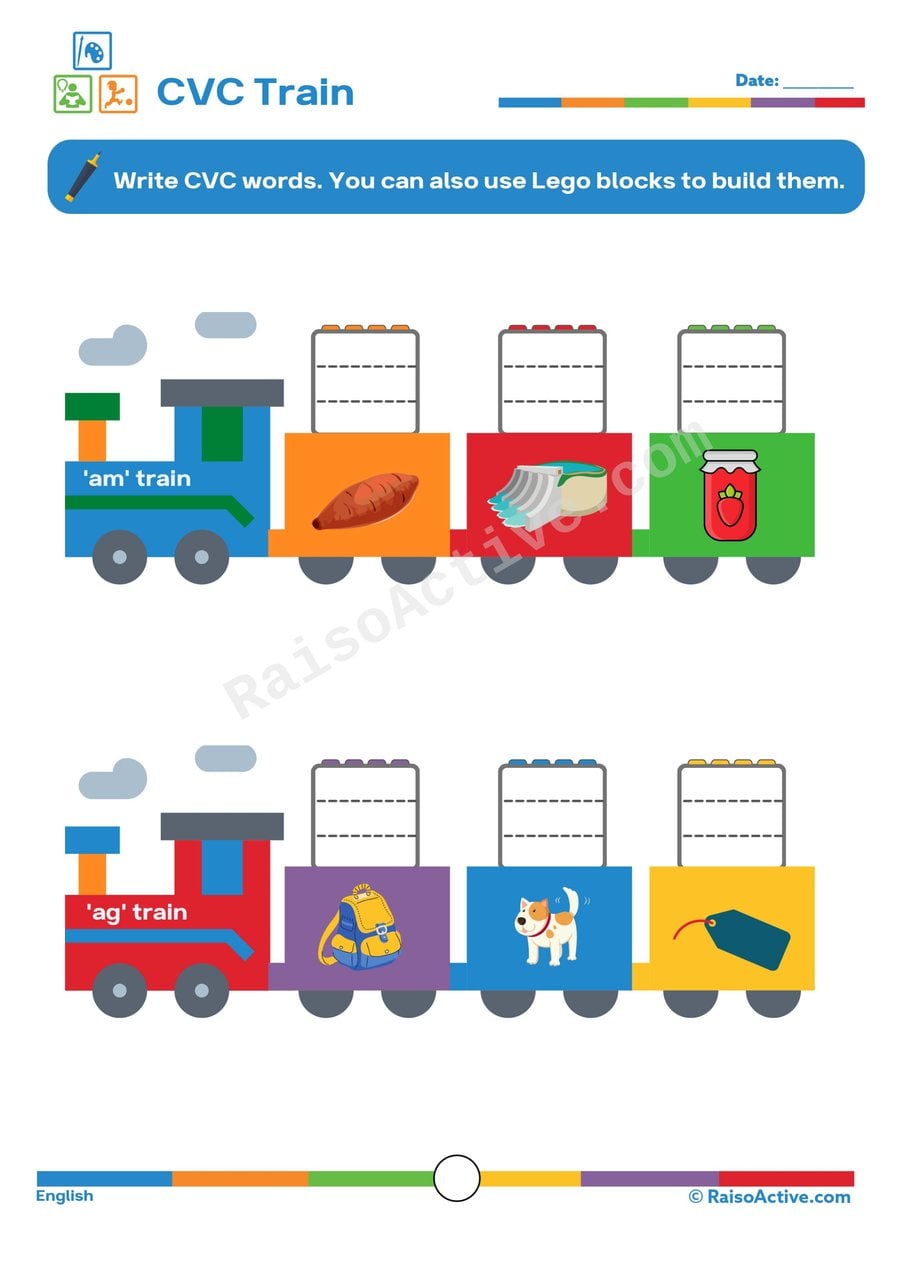
CVC Train Worksheet: Write and Build CVC Words!
This worksheet gives children ages 4-6 focused practice blending letter sounds into consonant-vowel-consonant words, using train-car pictures as clues for words like 'dog,' 'hen,' or 'cup.' Because children both write the word and can optionally build it with Lego blocks, this worksheet reinforces the same phonics skill through two different physical actions — handwriting and hands-on construction — which helps the spelling patterns stick.

Plant Parts Worksheet: Identify and Label the Parts of a Plant!
This worksheet teaches children ages 4-6 to identify and independently label the flower, stem, leaf, and roots of a plant, moving a step beyond simple matching toward recalling vocabulary from memory. Optionally adding pulses or grains to the diagram introduces a tactile, sensory layer that helps reinforce which part is which through touch as well as sight.
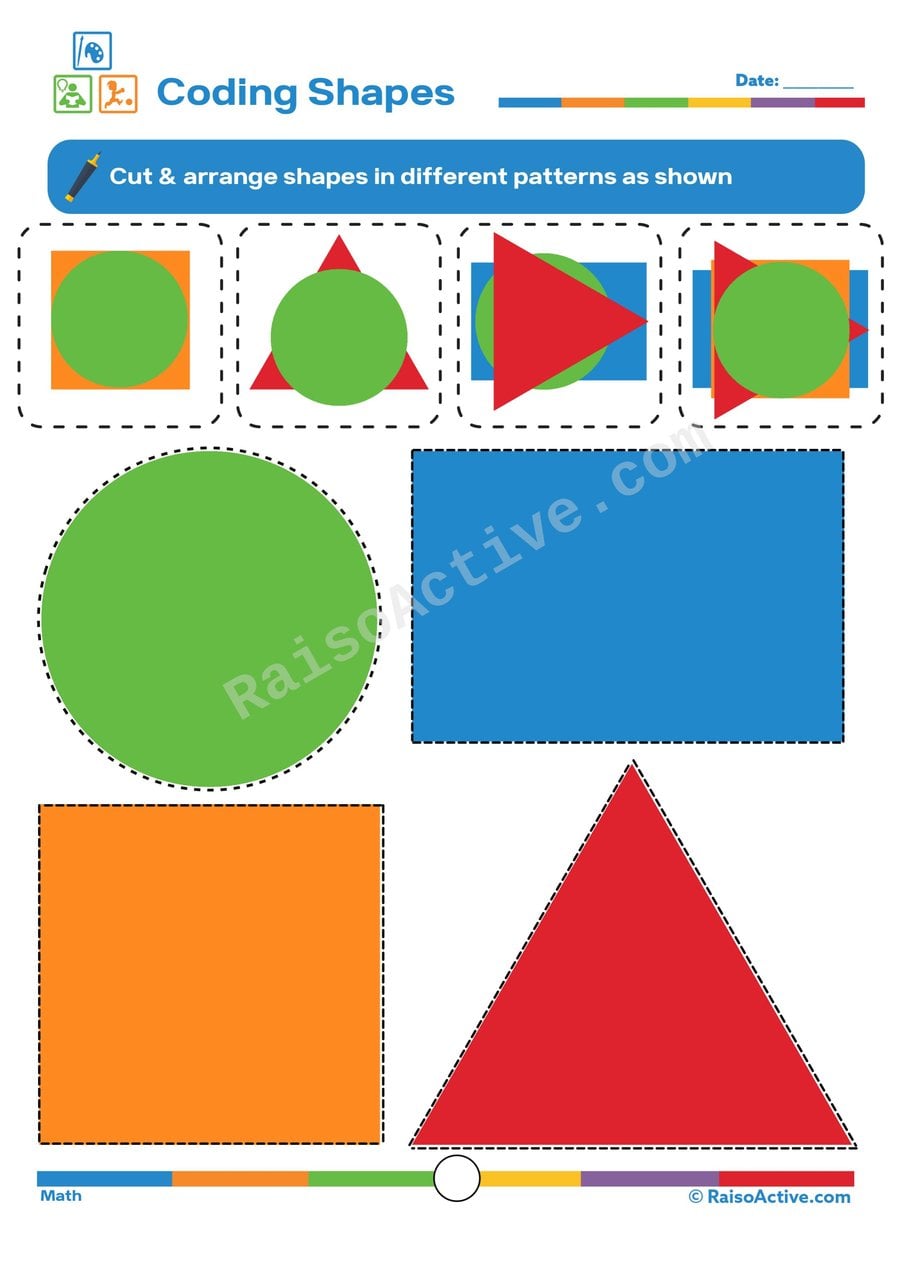
Coding Shapes Worksheet: Cut and Arrange Shapes!
This cut-and-paste worksheet has children ages 3-5 recreate example shape sequences by cutting out individual pieces and arranging them to match, combining shape recognition with the ordered, step-by-step thinking used in early coding and pattern logic. The physical act of cutting and precisely placing each piece also strengthens fine motor control and spatial planning.
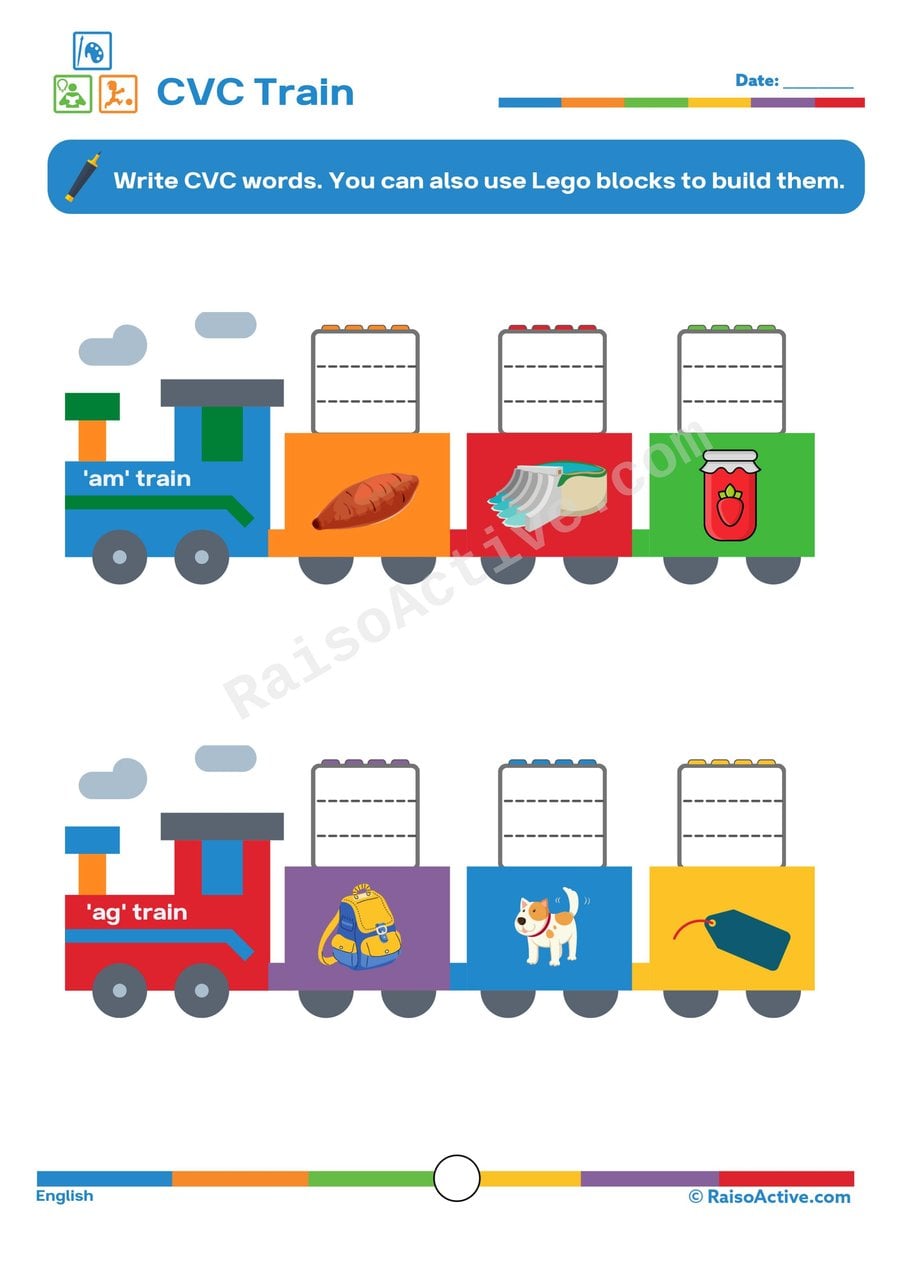
CVC Train Worksheet: Write CVC Words!
Writing consonant-vowel-consonant words like 'cat,' 'sun,' or 'pig' under matching pictures gives children ages 4-6 direct practice with letter-sound blending, a core phonics skill that underpins independent reading. Because each train car pairs a picture clue with a blank space, children also practice translating a spoken word they can sound out into its correctly spelled written form.
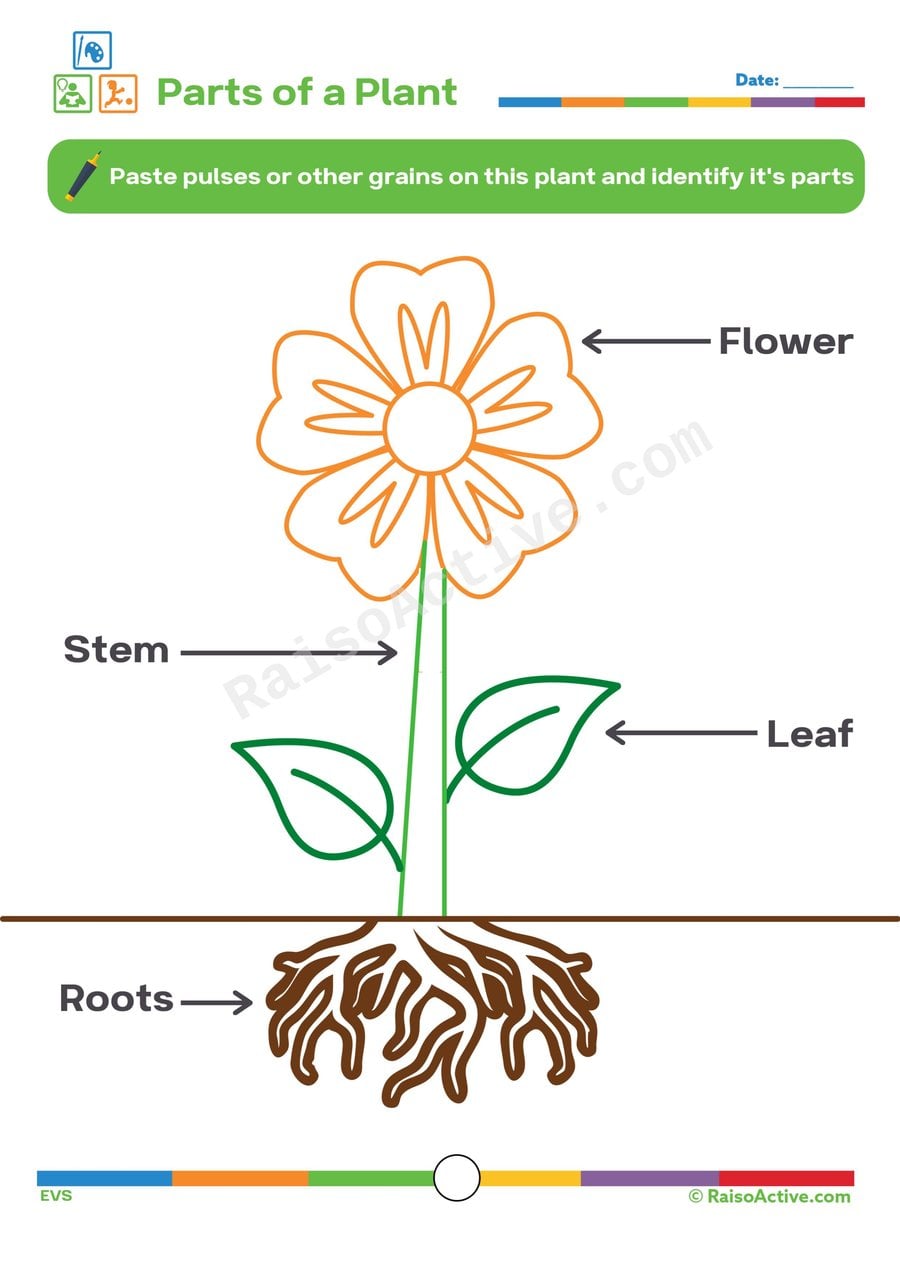
Parts of a Plant Worksheet: Identify and Label!
This activity teaches children ages 3-5 the basic parts of a plant — flower, stem, leaf, and roots — by having them label a diagram and add texture using real pulses or grains glued onto the plant shape. Combining a tactile material with each labeled part helps young children retain the vocabulary better than labeling alone, since touch and sight reinforce the same information.

Coding Shapes Worksheet for Preschoolers: Cut and Paste Patterns
This cut-and-paste activity has children ages 3-5 recreate shape sequences shown in sample boxes, combining shape recognition with the same ordered, step-by-step thinking used in beginner coding concepts. Cutting out individual shapes and arranging them in the correct sequence also builds fine motor precision and spatial planning.

My Address Worksheet: Color the State and Fill in Your Details!
This worksheet introduces children ages 3-5 to their personal address as a piece of core safety knowledge, while the map-coloring task builds early geography skills by having them physically locate and color their home state within India. Practicing house number, street, city, and PIN code also gives meaningful, motivated handwriting practice since the words are personally relevant.
Guides for this topic
How to Teach CVC Blending: A Step-by-Step Method That Works in Two Weeks
A step-by-step method for teaching CVC blending, covering continuous sounds, word families, common errors, and a 14-day plan that most children finish reading CVC words.
Phase 2 Phonics at Home: Sound Order, Blending Games, Worksheets
Phase 2 phonics at home: the five sound sets in order, oral blending, tricky words, a two-week routine, common mistakes, and free worksheets.
Reception Year Explained: EYFS Learning and How to Help at Home
A teacher's plain-English guide to the Reception Year: the seven areas of learning, Early Learning Goals, Phase 2/3 phonics, the RBA and home routines.
Reviews
Every worksheet for ages 3–5, no watermark
Members download the full library of 1,000+ worksheets and every activity pack without watermarks or daily limits. One year costs ₹1,000 in India or $20 elsewhere.
See membership plansOr download any worksheet free with a watermark (5 a day).