Navratri Festival Quest Certificate of Achievement
Ages 7-11 · Grade 2–Grade 3Ages 7-11 · Year 3–Year 4Ages 7-11 · Class 2–Class 3Ages 7-11
Children celebrate finishing the Navratri Festival Quest pack and record which levels they completed.
Free printable worksheets
Download free educational worksheets for children ages 2–8. Perfect for preschool, kindergarten, and early elementary learning activities.
Subscribe to get unlimited access to all worksheets without watermarks
View Subscription Plans289 topics match
26 worksheetsof 1,994
Ages 7-11 · Grade 2–Grade 3Ages 7-11 · Year 3–Year 4Ages 7-11 · Class 2–Class 3Ages 7-11
Children celebrate finishing the Navratri Festival Quest pack and record which levels they completed.
Ages 4-6 · Pre-K–KindergartenAges 4-6 · Reception–Year 1Ages 4-6 · LKG–UKGAges 4-6
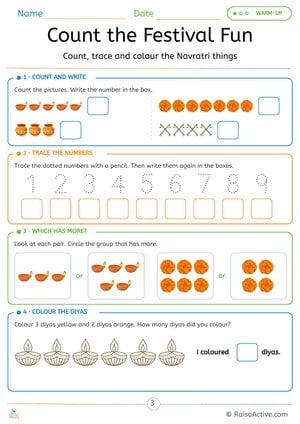
Children count small groups of festival pictures and write the number, trace and write the numbers 1 to 9, compare two groups to find the one with more, and colour a set number of diyas.
Ages 4-6 · Pre-K–KindergartenAges 4-6 · Reception–Year 1Ages 4-6 · LKG–UKGAges 4-6
Children celebrate finishing the Navratri Fun Time pages and see which levels they completed.
Ages 3-5 · Preschool–Pre-KAges 3-5 · Nursery–ReceptionAges 3-5 · Nursery–LKGAges 3-5
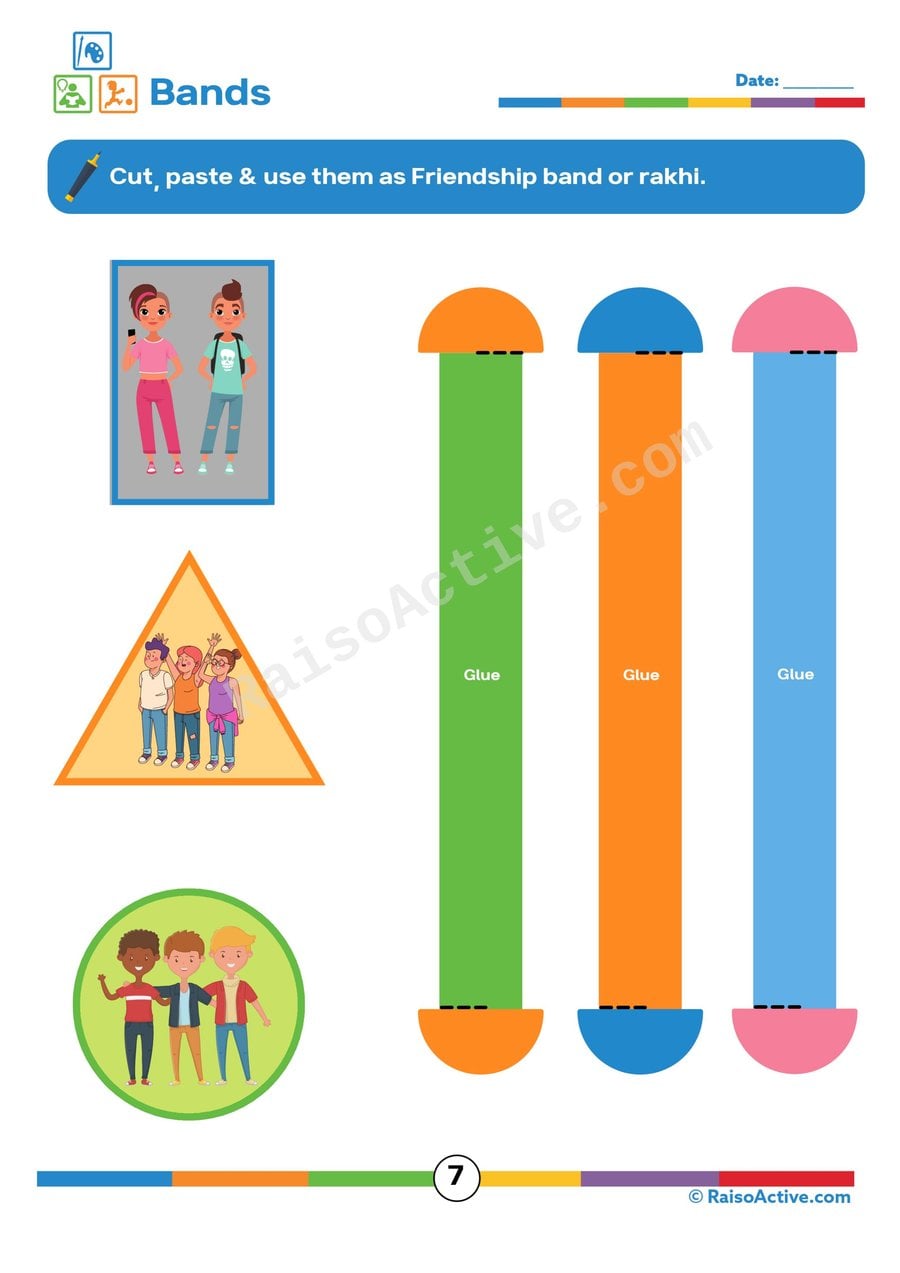
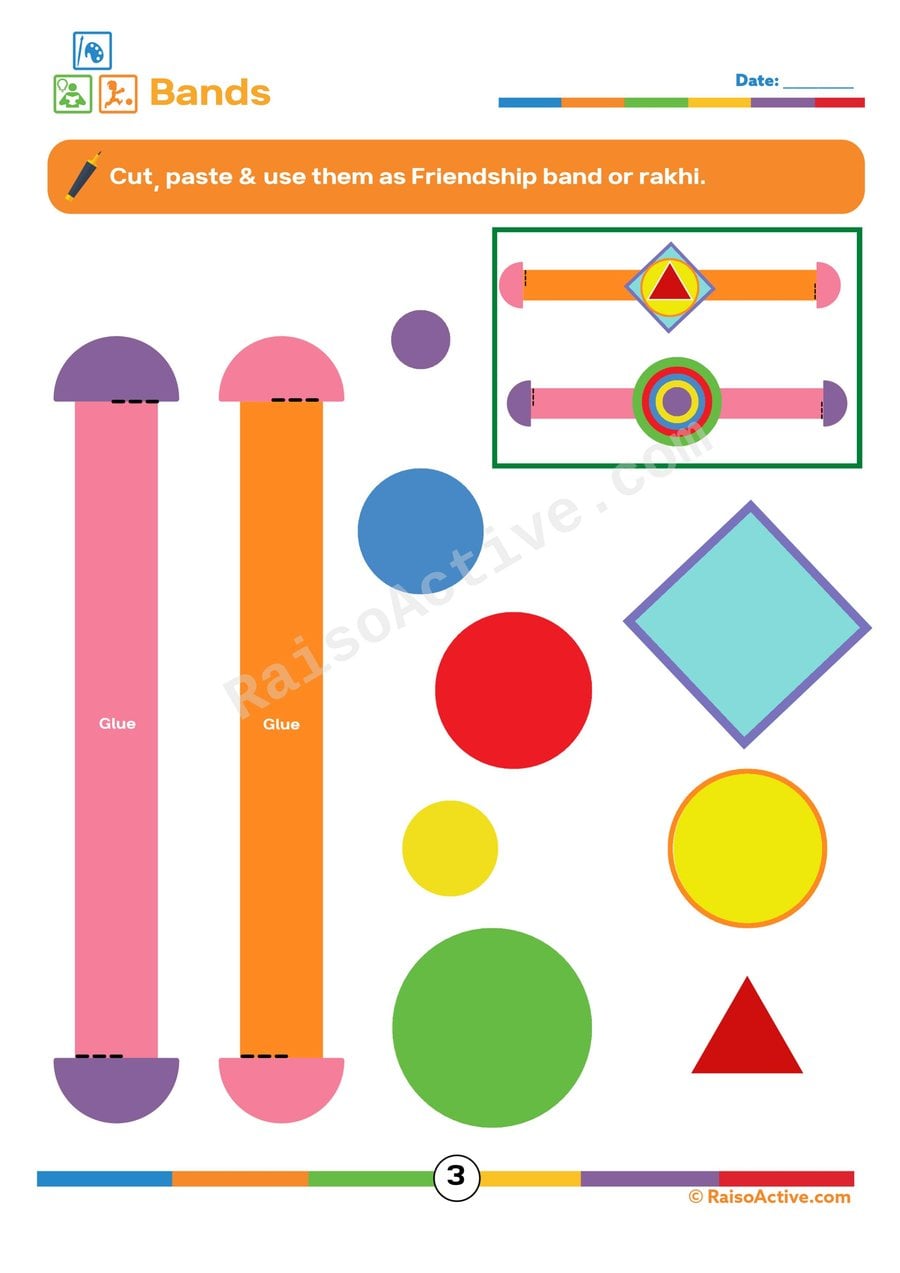
This worksheet builds fine motor precision and creativity in children ages 3-5 as they cut out superhero shapes and glue them onto band strips to design their own themed friendship bands or rakhis. Adding a superhero theme gives children a chance to personalize a familiar craft around characters they already find exciting and motivating.
Ages 3-5 · Preschool–Pre-KAges 3-5 · Nursery–ReceptionAges 3-5 · Nursery–LKGAges 3-5
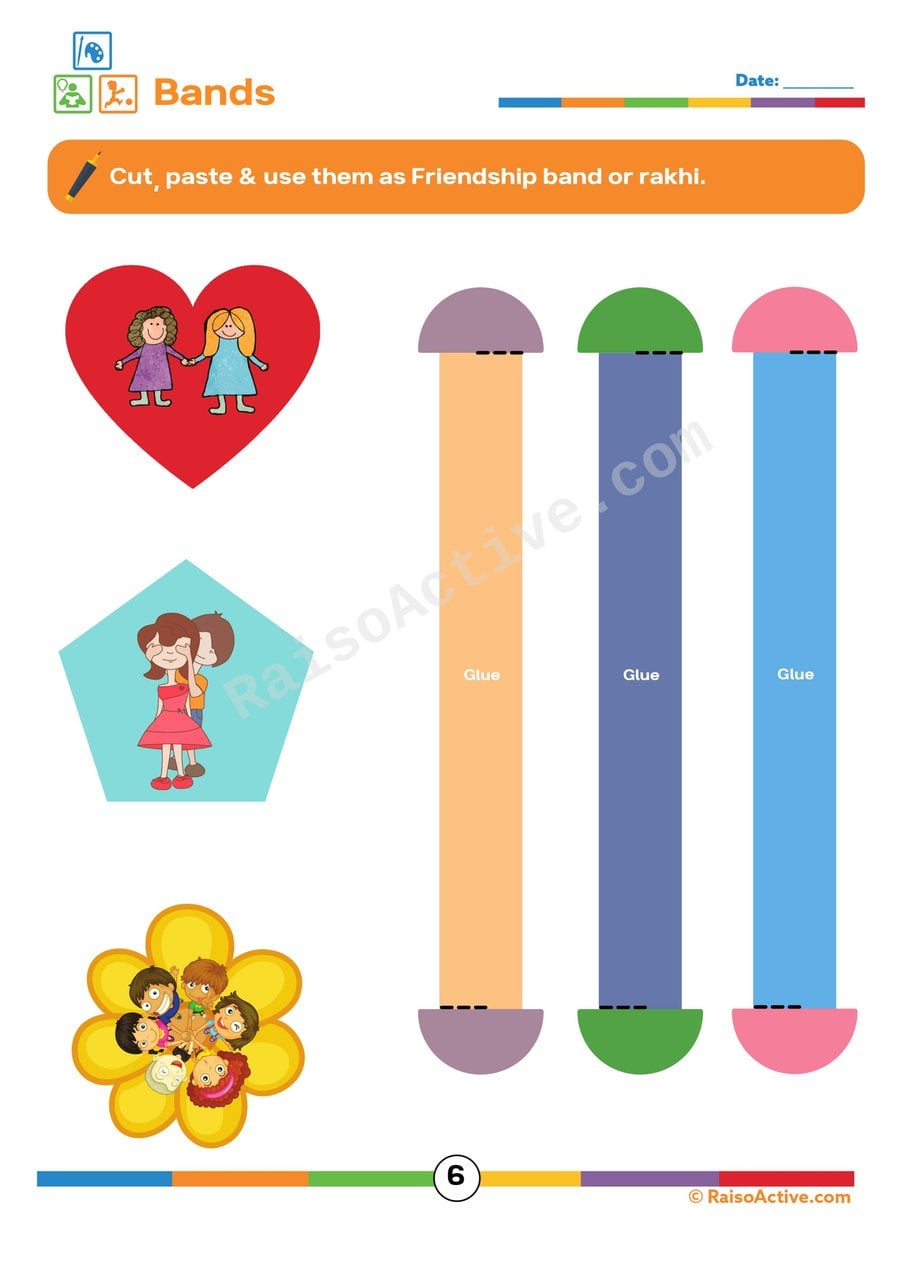
Children ages 3-5 continue building scissor and gluing precision through this friendship band or rakhi craft, practicing the multi-step process of cutting a shape, forming a loop, and decorating the finished piece. Completing each construction step in the correct order reinforces sequencing skills alongside fine motor development.
Ages 3-5 · Preschool–Pre-KAges 3-5 · Nursery–ReceptionAges 3-5 · Nursery–LKGAges 3-5
This worksheet gives children ages 3-5 additional practice with scissor control and sequential assembly as they cut, join, and decorate their own friendship band or rakhi. Repeating a craft with a new set of shapes reinforces the multi-step process of cutting, arranging, and gluing until it becomes a comfortable, repeatable routine.
Ages 3-5 · Preschool–Pre-KAges 3-5 · Nursery–ReceptionAges 3-5 · Nursery–LKGAges 3-5
Children ages 3-5 practice precise scissor cuts and glue control as they assemble their own wearable friendship band from printed templates. Forming the loop and securing the ends also builds an early understanding of shape and structure, turning a flat strip into a wearable circle, while decorating the band encourages open-ended creative choices.
Ages 3-5 · Preschool–Pre-KAges 3-5 · Nursery–ReceptionAges 3-5 · Nursery–LKGAges 3-5
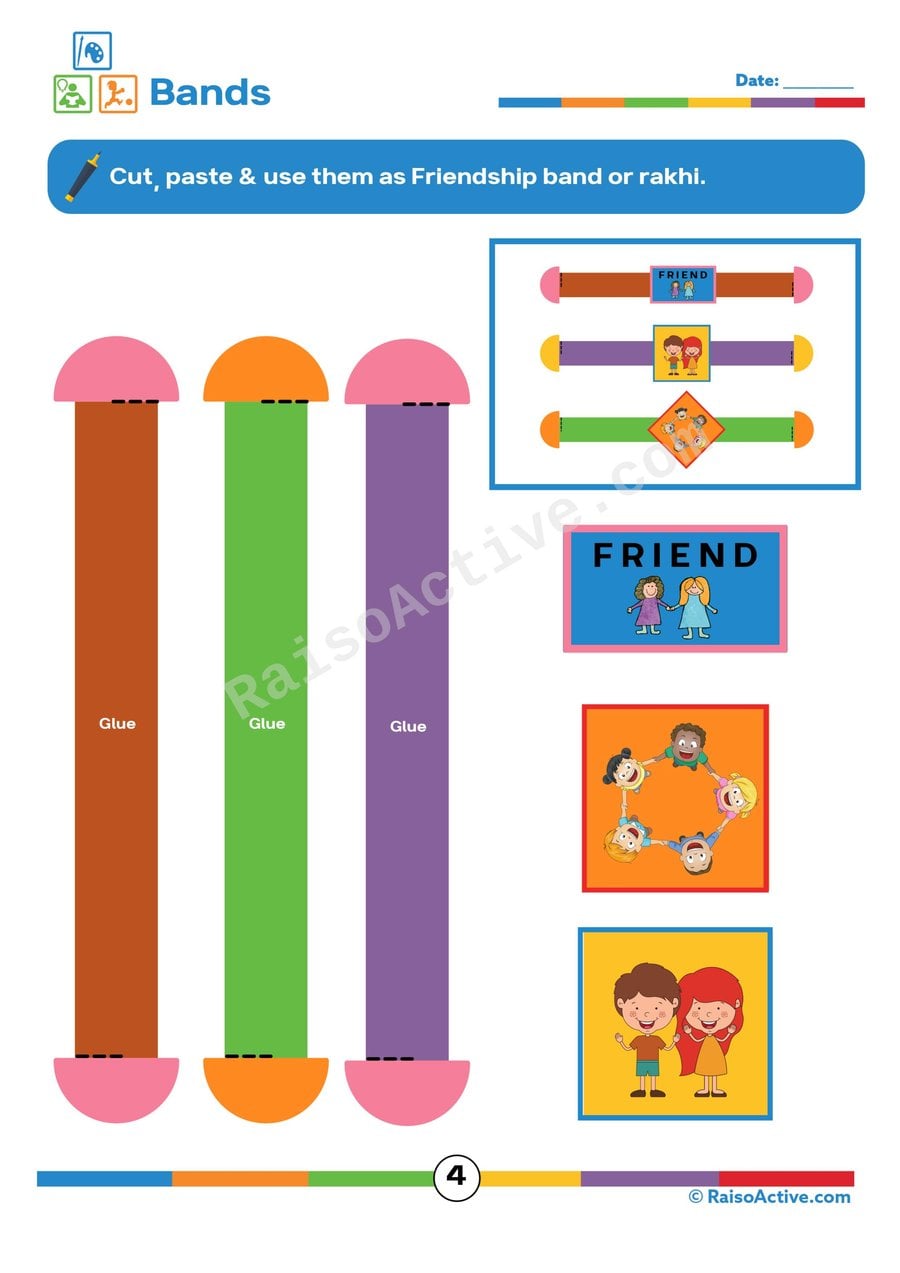
Children ages 3-5 build fine motor control and creative decision-making as they cut out band shapes, decorate them, and paste on decorative elements to design their own friendship band or rakhi. Choosing and arranging decorations independently also introduces early design thinking — planning how individual pieces come together into a finished object.
Ages 4-6 · Pre-K–KindergartenAges 4-6 · Reception–Year 1Ages 4-6 · LKG–UKGAges 4-6
Children ages 4-6 learn to compare two numbers and choose the correct symbol — greater than, less than, or equal to — building an essential foundation for later work with inequalities and algebra. Comparing quantities and representing the relationship symbolically is a more abstract skill than simple counting, so this worksheet stretches children just past straightforward number recognition into true numerical reasoning.
Ages 4-6 · Pre-K–KindergartenAges 4-6 · Reception–Year 1Ages 4-6 · LKG–UKGAges 4-6
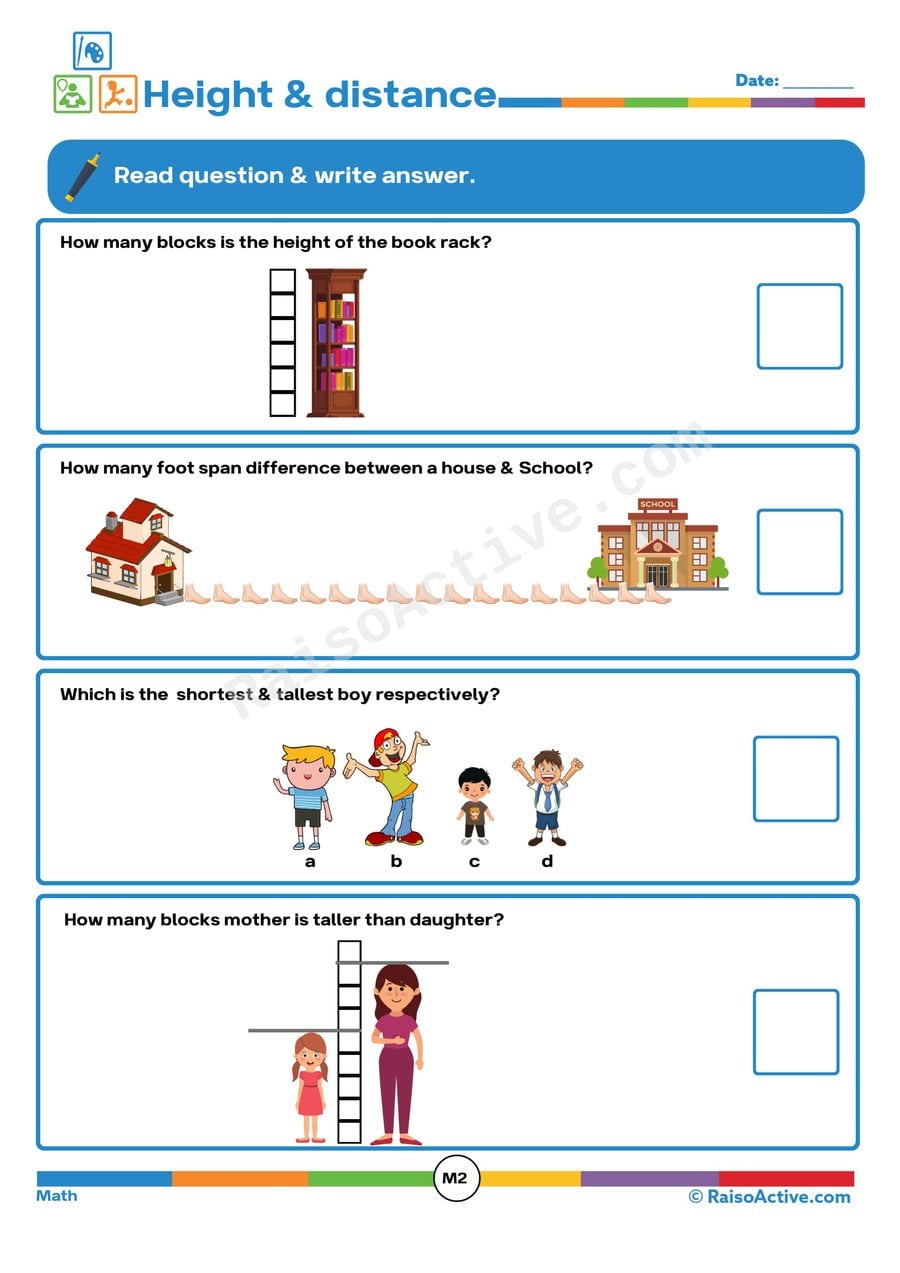
Children ages 4-6 practice comparing height and distance using visual examples, building early measurement and comparison skills that form the basis for later lessons in math involving length and size. Learning to compare 'taller,' 'shorter,' 'closer,' and 'farther' helps children describe the physical world with more precise language.
Ages 4-6 · Pre-K–KindergartenAges 4-6 · Reception–Year 1Ages 4-6 · LKG–UKGAges 4-6
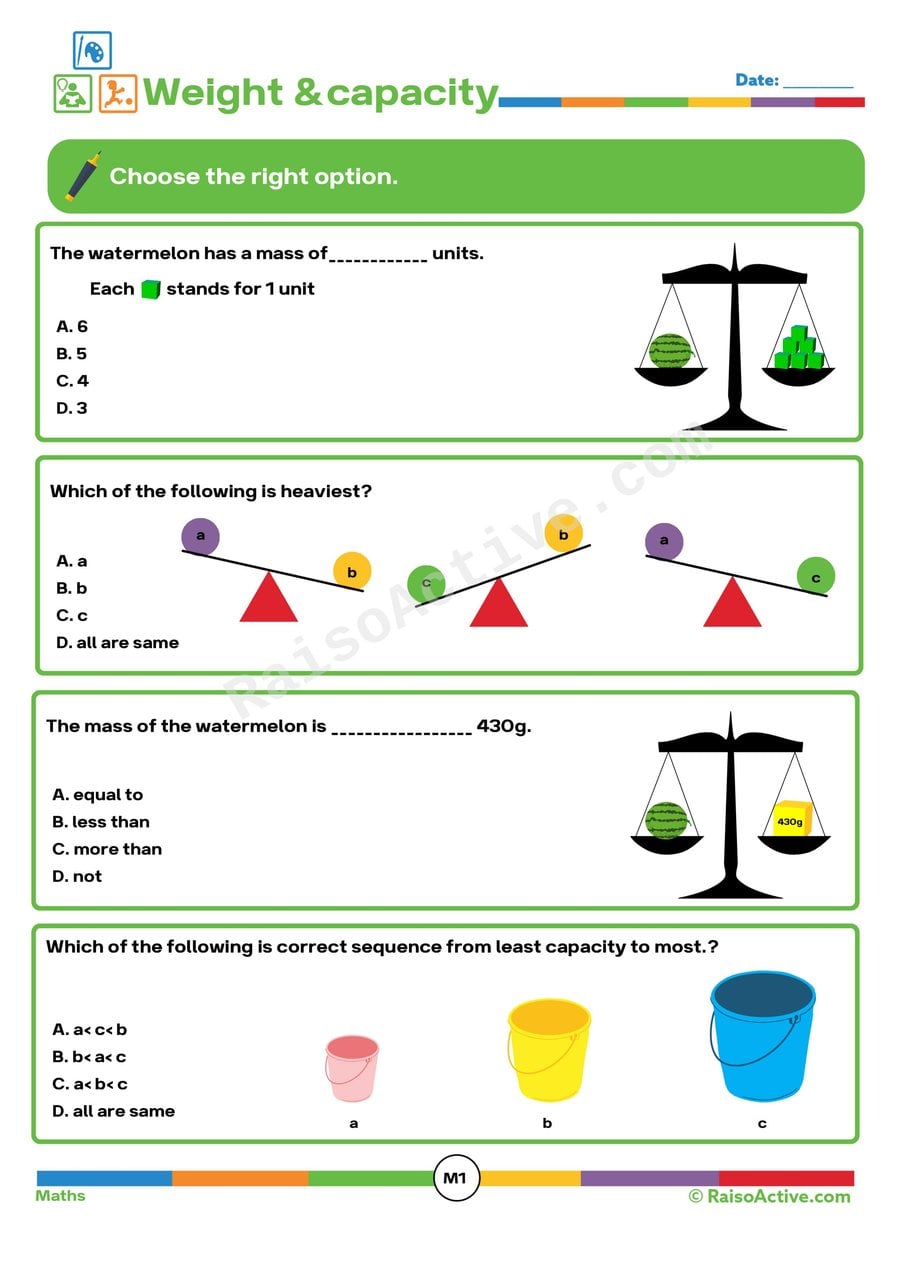
Comparing objects visually to judge which is heavier or holds more introduces children ages 4-6 to early measurement concepts, building the comparative reasoning that underlies later formal measurement with scales and measuring cups.
Ages 3-5 · Preschool–Pre-KAges 3-5 · Nursery–ReceptionAges 3-5 · Nursery–LKGAges 3-5
This worksheet builds early measurement vocabulary for children ages 3-5 as they compare the heights of pictured objects and people, circling the taller or shorter one as instructed. Beyond simple height comparison, the final section asks your child to identify both the tallest and smallest in a group, requiring them to compare more than two items at once, a step up in reasoning from simple pairwise comparison.