Looking for a structured learning path?
Explore our age-wise monthly curriculum with 4 subjects per month
Free Printable Worksheets
Browse Worksheets
Download free educational worksheets for children ages 1-8. Perfect for preschool, kindergarten, and early elementary learning activities.
Filters
Age Range
Curriculum
Tags
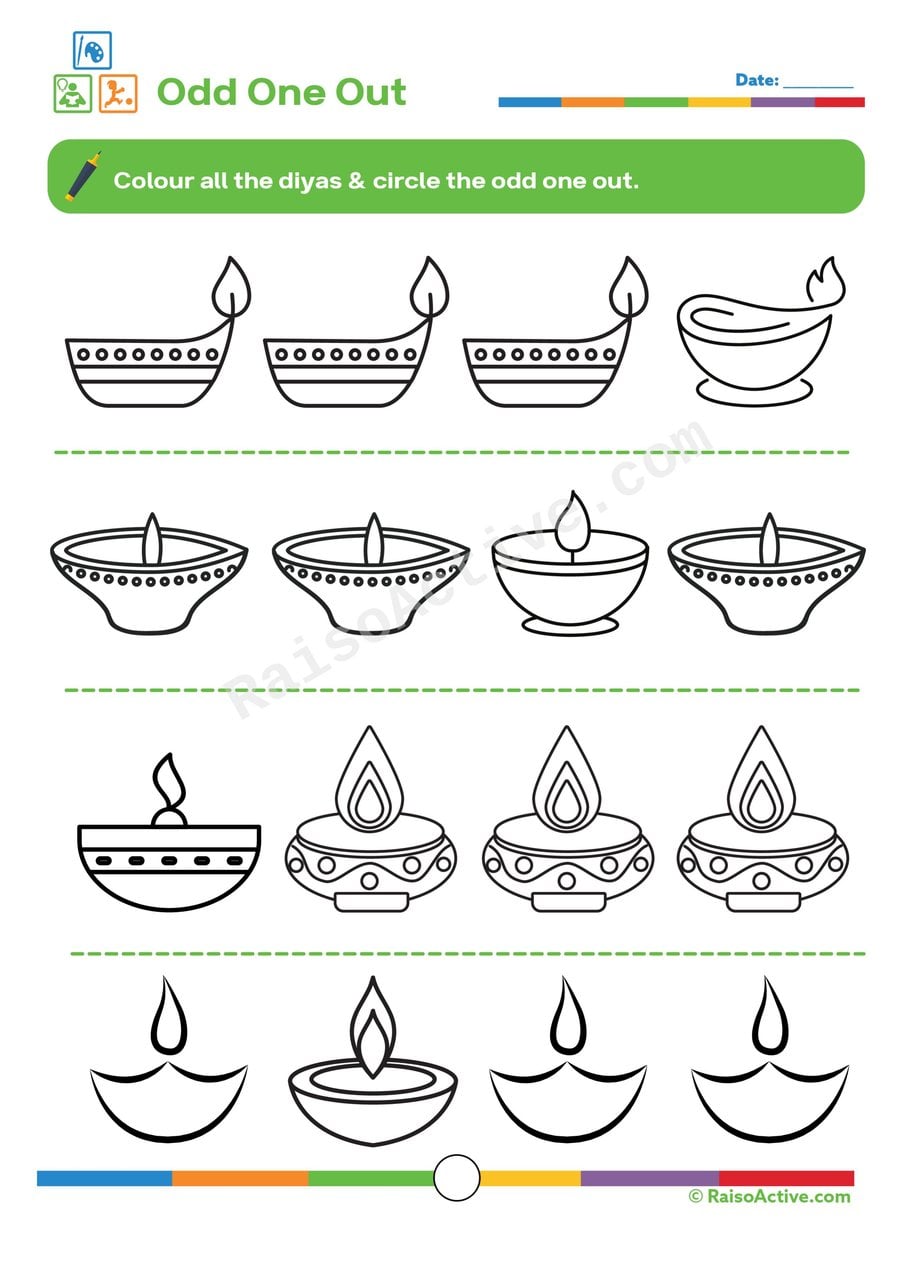
Diya Odd One Out Worksheet for Kids
This worksheet builds visual discrimination skills in children ages 3-5 as they compare a row of diyas and identify the one that differs from the rest. Spotting subtle differences in shape, color, or design is an early critical-thinking skill that lays groundwork for later pattern recognition and attention-to-detail tasks in reading and math.
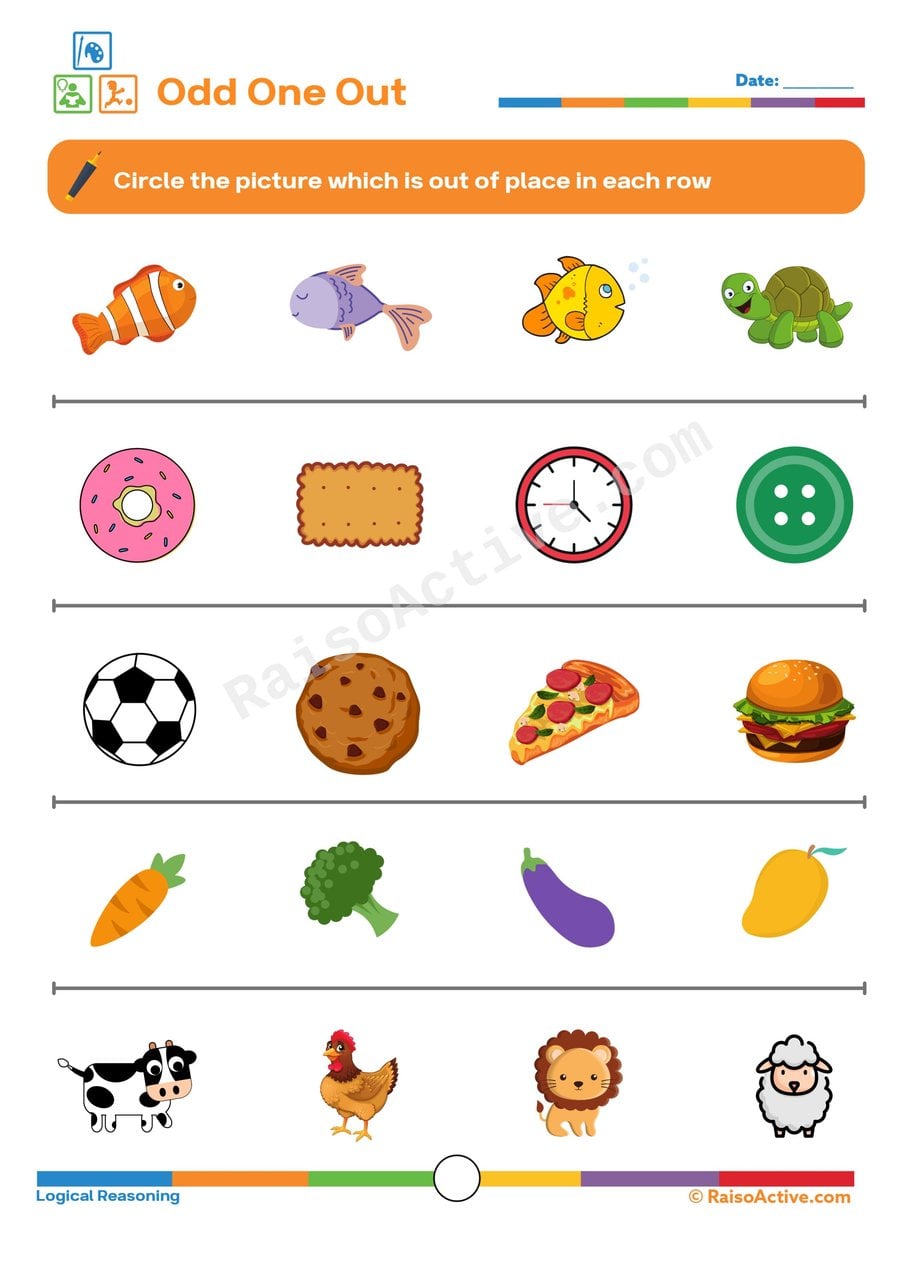
Odd One Out Worksheet: Spot the Differences!
Identifying which picture in a row is different from the others builds visual discrimination and logical reasoning in children ages 4-6, requiring them to compare multiple objects at once and notice a distinguishing feature rather than just spotting an obvious mismatch. This skill directly supports later academic tasks like sorting, categorizing, and comparing, since children must articulate what makes an item different, not just recognize that it is. Explaining their reasoning out loud after choosing also builds early verbal reasoning and communication skills.

Odd One Out Worksheet: Find the Different Animal or Object!
Children ages 3-5 sharpen visual discrimination and categorical reasoning as they scan each row of pictures and decide which single image doesn't share a feature with the rest. This kind of comparison task builds the same 'same versus different' thinking that underlies early science observation and later logical reasoning. It also trains sustained visual attention, since children must examine every image in a row before deciding.
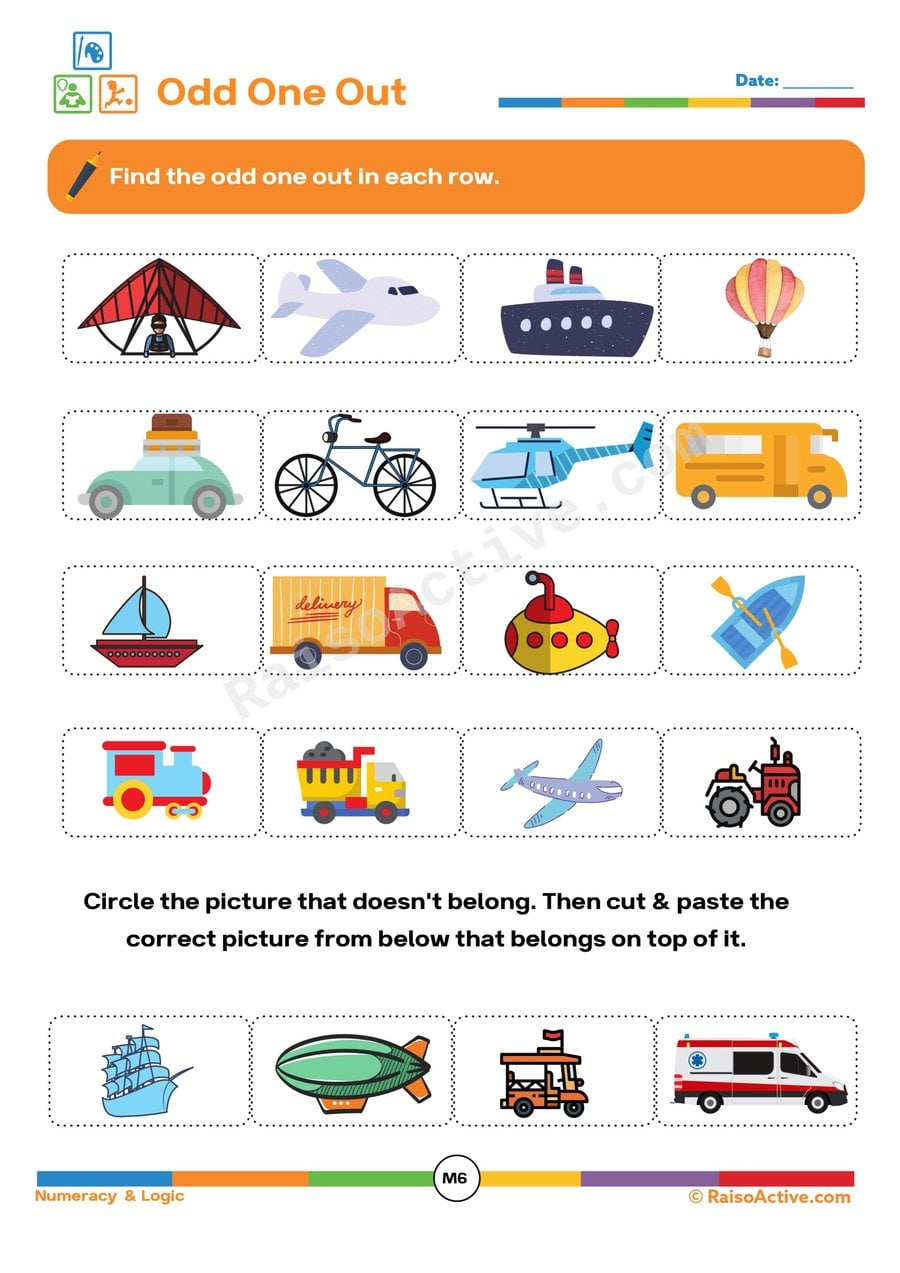
Odd One Out: Transportation Worksheet for Kids
This worksheet sharpens visual discrimination and categorization skills as children ages 3-5 study a row of transportation pictures and identify the one that doesn't belong with the others, then replace it with a correct match cut from the bottom of the page. Explaining why an item is the 'odd one out' builds early critical-thinking and reasoning skills that go beyond simple picture recognition.

Odd One Out Worksheet: Find the Object That Doesn't Belong!
Spotting 'the odd one out' in a row of objects trains visual discrimination — the ability to notice small differences in shape, color, size, or category that make one item not belong with the rest. For 3-5 year olds, this is genuine critical thinking practice: they have to compare every item against every other item before deciding which one breaks the pattern, rather than just naming what they see. It's also an early step toward categorization skills that later support sorting, grouping, and basic reasoning tasks in school.

Does Not Match: Circle the Odd Word Out Worksheet
This worksheet builds critical thinking alongside phonics for children ages 4-5 by having them examine a group of words and identify the one that doesn't belong based on its initial sound. Spotting the 'odd one out' requires more than just reading each word individually — your child has to compare all the words in a group simultaneously and reason about which shared feature the majority have in common. This kind of comparative reasoning strengthens both phonemic awareness and early logical thinking, since it's not enough to read correctly; your child also has to analyze and categorize.
Want Unlimited Downloads?
Subscribe to get unlimited access to all worksheets without watermarks
View Subscription Plans