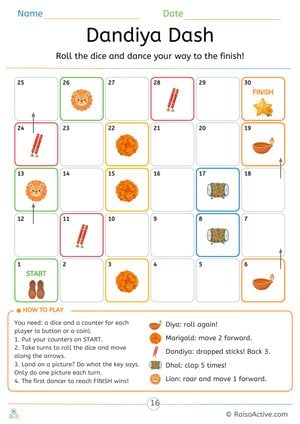
Dandiya Dash: Navratri Board Game for Kids
Ages 4-6 · Pre-K–KindergartenAges 4-6 · Reception–Year 1Ages 4-6 · LKG–UKGAges 4-6
Children count dots on a dice, count on along a number track to 30, take turns and follow simple game rules.
Free printable worksheets
Download free educational worksheets for children ages 2–8. Perfect for preschool, kindergarten, and early elementary learning activities.
Subscribe to get unlimited access to all worksheets without watermarks
View Subscription Plans289 topics match
6 worksheetsof 1,994
Ages 4-6 · Pre-K–KindergartenAges 4-6 · Reception–Year 1Ages 4-6 · LKG–UKGAges 4-6
Children count dots on a dice, count on along a number track to 30, take turns and follow simple game rules.
Ages 3-5 · Preschool–Pre-KAges 3-5 · Nursery–ReceptionAges 3-5 · Nursery–LKGAges 3-5
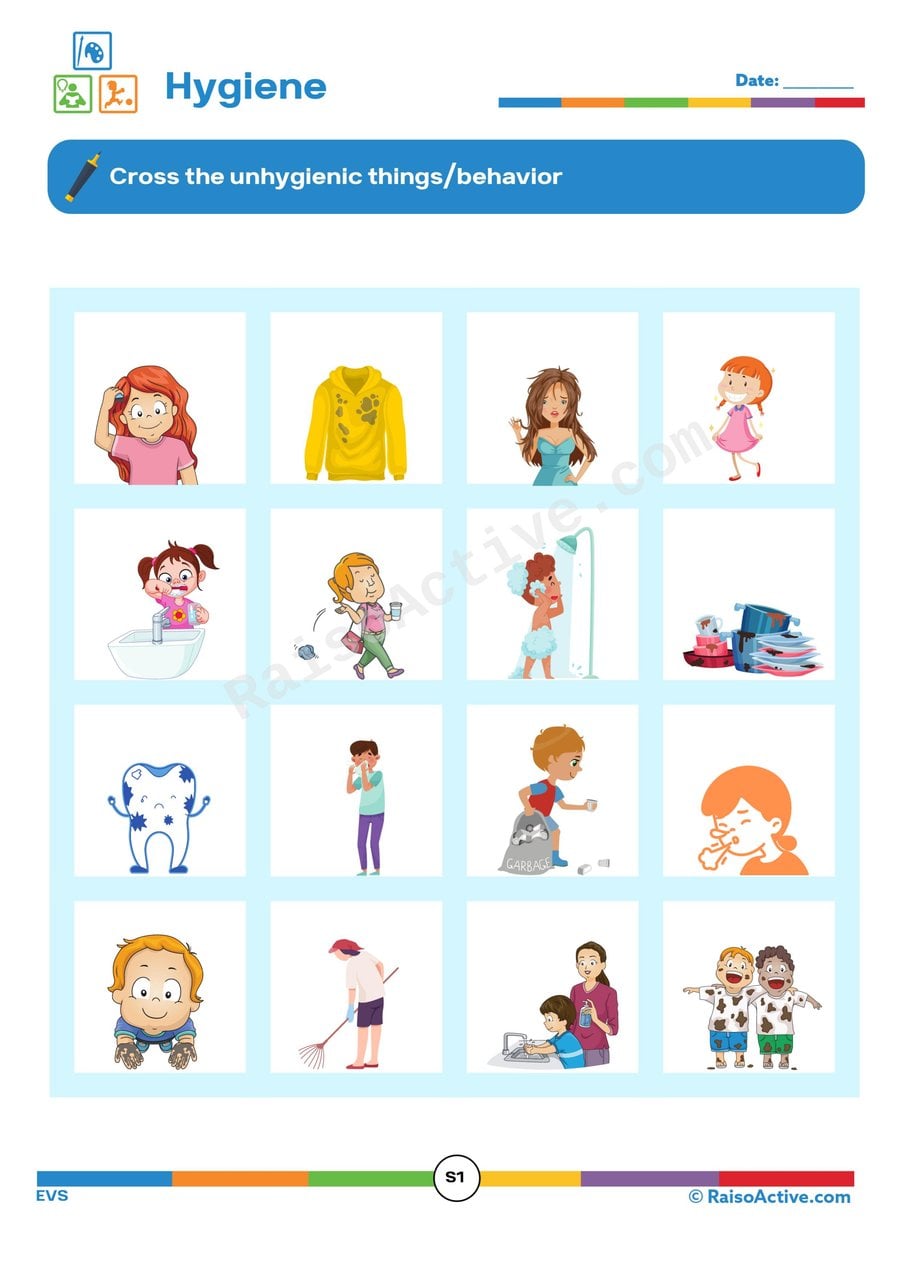
This worksheet asks children ages 3-5 to look at pictures of everyday scenes and cross out the behaviors that are unhygienic, building their ability to recognize the difference between healthy and unhealthy habits in a visual, concrete way. Identifying what's wrong in a picture, rather than just being told a rule, encourages children to reason about hygiene rather than simply memorize it.
Ages 4-6 · Pre-K–KindergartenAges 4-6 · Reception–Year 1Ages 4-6 · LKG–UKGAges 4-6
This worksheet teaches children ages 4-6 the science behind why handwashing matters through a simple, visual experiment demonstrating how germs (represented by something like glitter or oil) transfer between hands and spread easily, then how washing removes them. Seeing germs 'in action' makes an invisible concept concrete, helping children understand the real reason behind a daily hygiene habit rather than just following a rule.
Ages 3-5 · Preschool–Pre-KAges 3-5 · Nursery–ReceptionAges 3-5 · Nursery–LKGAges 3-5
Sorting pictures into clean and dirty categories teaches children ages 3-5 to make observational judgments and apply reasoning about hygiene, rather than simply naming what they see. Drawing a happy or sad face for each choice also adds an element of emotional expression to what is otherwise a straightforward sorting task.
Ages 3-5 · Preschool–Pre-KAges 3-5 · Nursery–ReceptionAges 3-5 · Nursery–LKGAges 3-5
Ticking the items used to clean our bodies helps children ages 3-5 build hygiene vocabulary and practice classification, deciding which objects belong to a category based on their purpose rather than just their appearance. This early sorting skill also supports independence in self-care routines like washing and brushing.
Ages 3-5 · Preschool–Pre-KAges 3-5 · Nursery–ReceptionAges 3-5 · Nursery–LKGAges 3-5
This matching worksheet builds hygiene awareness by asking 3-5 year olds to connect specific body parts — teeth, hands, hair — to the correct cleaning tool for each one, like a toothbrush, soap, or shampoo. That pairing goes beyond simply naming hygiene items; it requires your child to reason about which tool actually does the job for which body part, which is the beginning of understanding personal care routines rather than just memorizing object names.