 Art & Creativity
Bandhani Craft for Kids: Fold-and-Dye Paper Towels
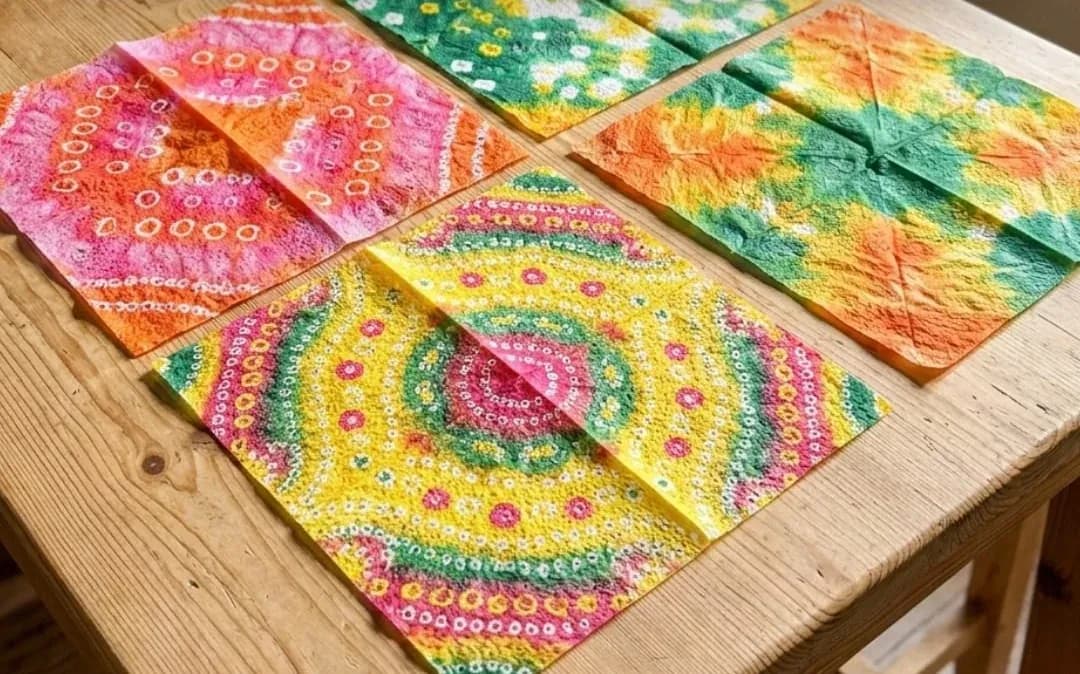
Make bandhani-style dotted patterns by folding paper towels and dipping the corners in food colouring. A simple Navratri craft with no knots and no cloth.
- Craft
- Ages 4-8 · Pre-K–Grade 2Ages 4-8 · Reception–Year 3Ages 4-8 · LKG–Class 2Ages 4-8
- 5 things to gather
- 4 steps
What Your Child Will Learn
- Folding skills, from halves to a triangle
- Fine motor control from dipping and dropping colour
- An early feel for symmetry, as the pattern repeats along every fold
- Colour mixing and watching how liquid spreads through paper
How to make fold-and-dye bandhani paper
4 stepsBefore you start
Bandhani is a tie-dye tradition from Gujarat and Rajasthan. Cloth is tied in tiny knots before dyeing, which leaves the little dots seen on chaniya cholis and dupattas during Navratri.
This paper version needs no knots. Children fold a paper towel, dip the corners in colour and open it up to find a repeating pattern. It takes about 20 minutes plus drying time.
Step 1: Gather your supplies: Set out paper towels, three small bowls of water with a few drops of food colouring in each, and a dropper. Lay a tray or newspaper underneath.
Step 2: Fold it small: Fold a paper towel in half, in half again, then corner to corner into a triangle.
Step 3: Dip the corners: Dip each corner of the triangle in a different colour, or drop the colour on with the dropper. Watch it spread towards the middle.
Step 4: Open it slowly: Unfold the towel gently and let it dry flat. The same pattern repeats along every fold.
More ideas to extend
- Idea 1
Little ones: skip the triangle fold and just drop colour onto a flat towel with the dropper.
- Idea 2
Older kids: try different folds, such as a square or a long strip, and compare the patterns.
- Idea 3
Older kids: add the dots of real bandhani by pressing a pencil tip or a cotton bud dipped in colour onto the dried towel.
- Idea 4
Use the dry sheets as wrapping paper or fold them into cards.
- Idea 5
Make a set in the day's Navratri colour and hang them as a garland.
More pictures
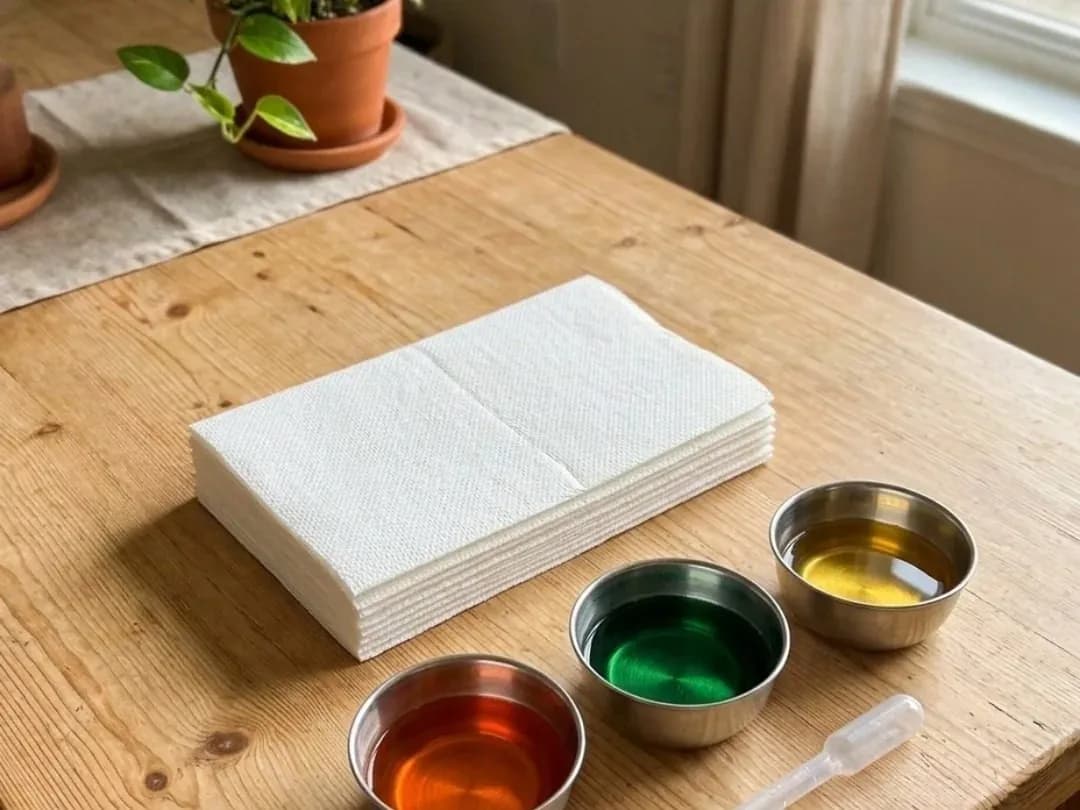
Gather your supplies
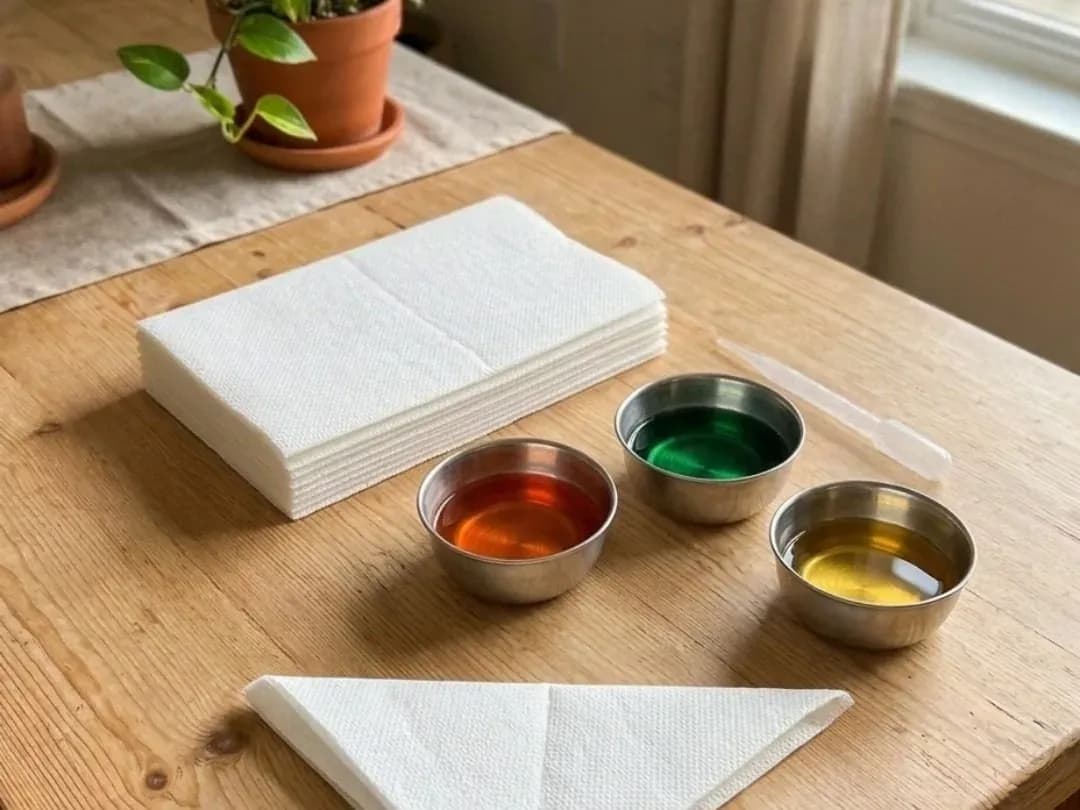
Fold it small
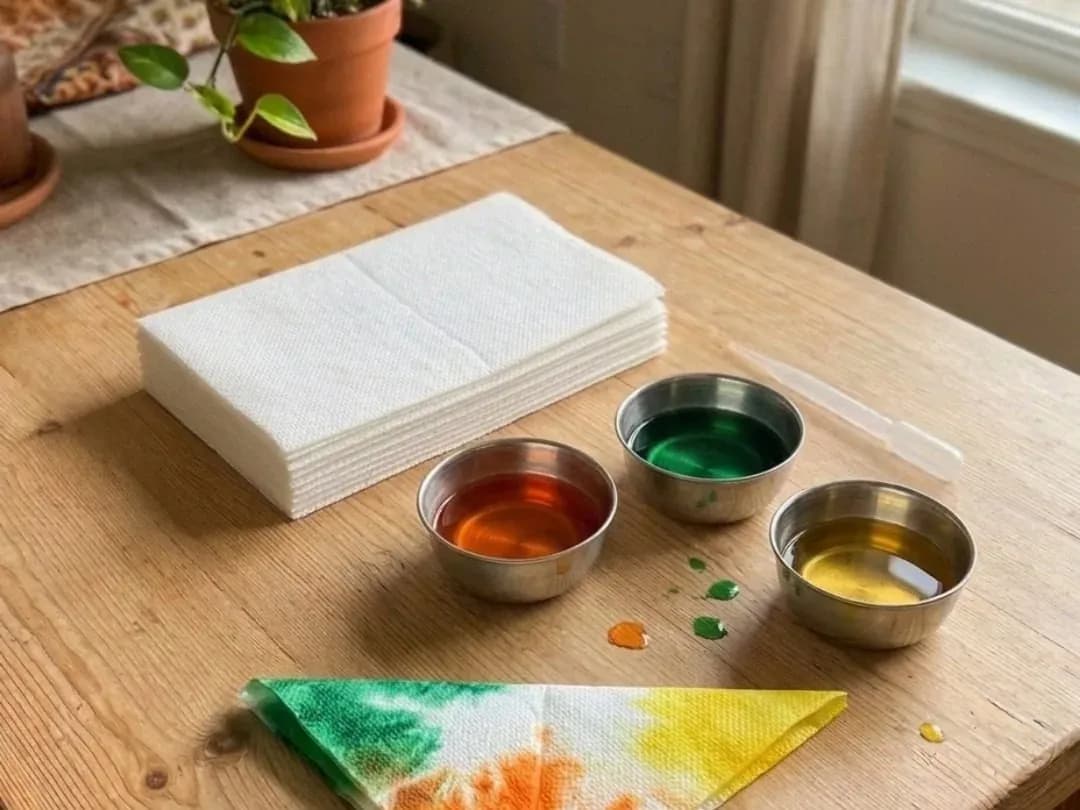
Dip the corners
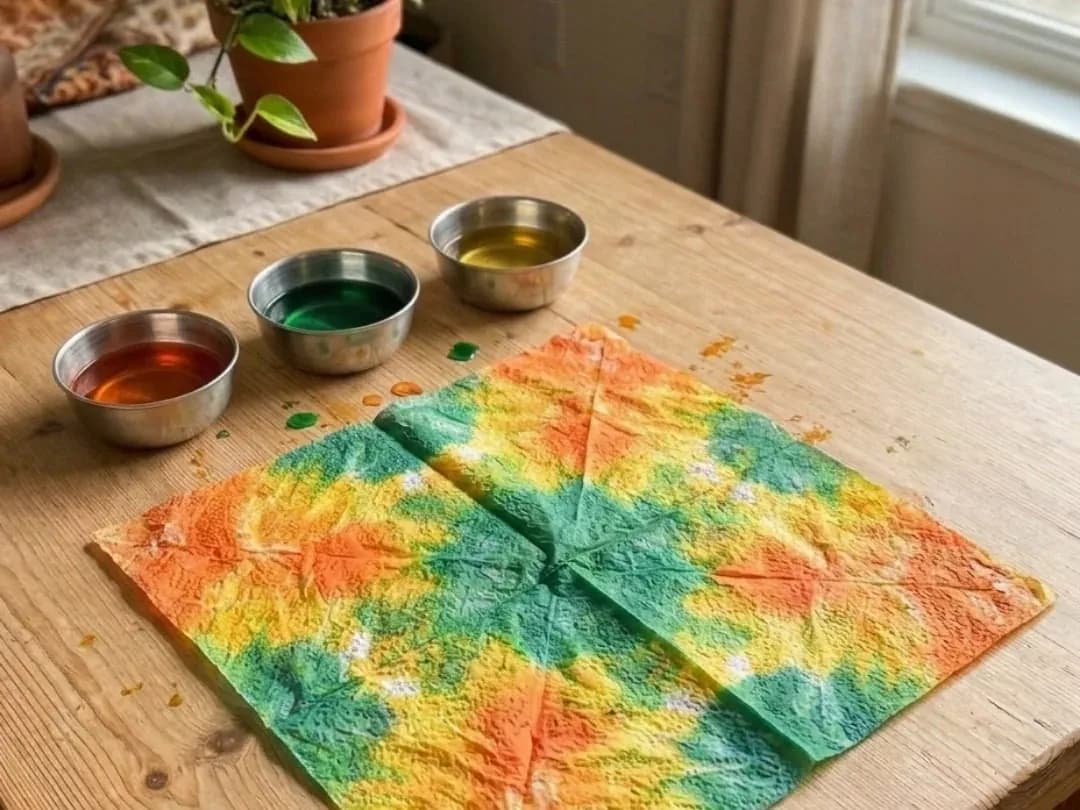
Open it slowly
Related printable packs
View all packs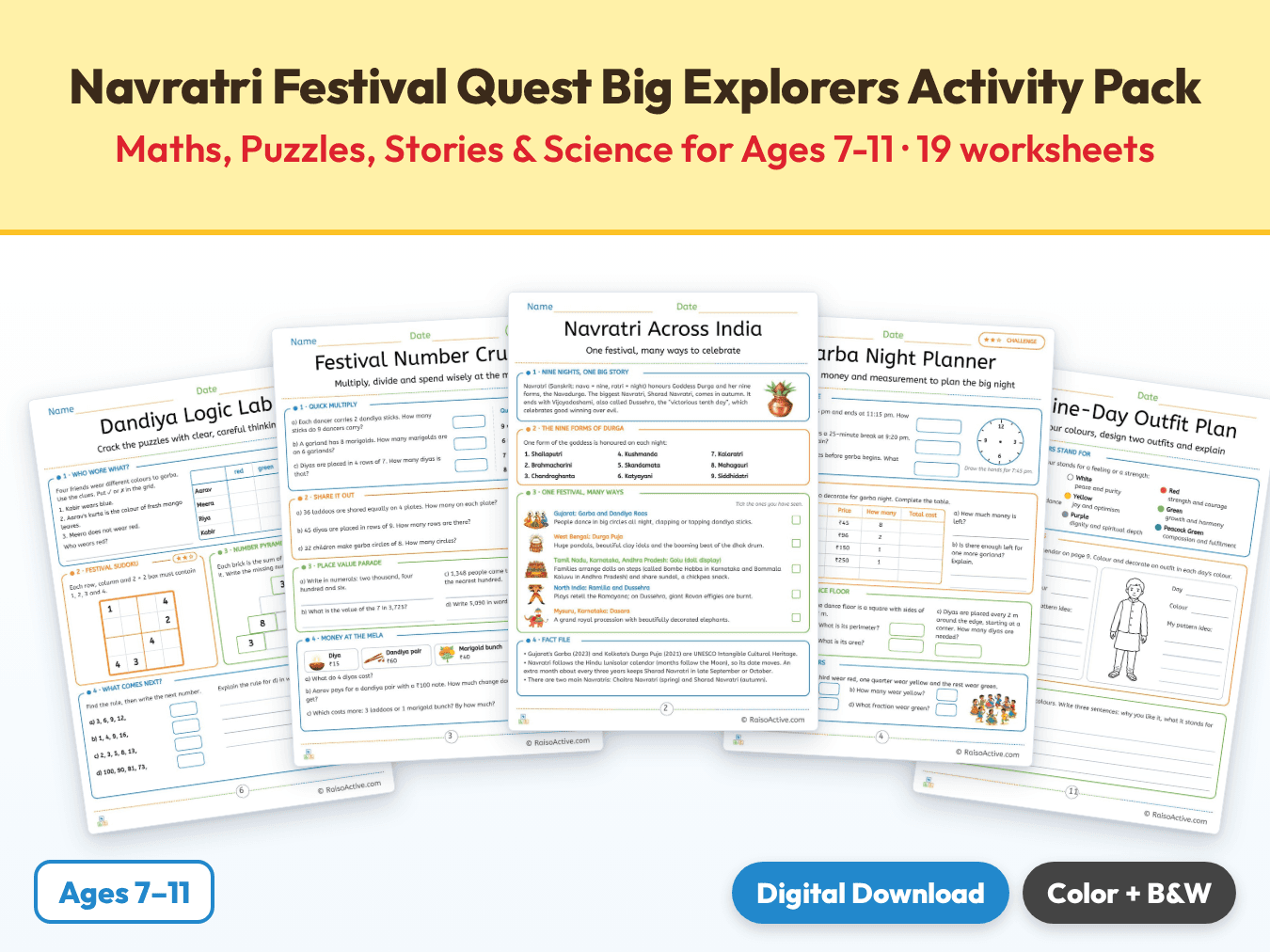

Navratri Festival Quest Big Explorers Activity Pack: Maths, Puzzles, Stories & Science for Ages 7-11
Ages 7-11 · Grade 2–Grade 3Ages 7-11 · Year 3–Year 4Ages 7-11 · Class 2–Class 3Ages 7-11 · 20 pages
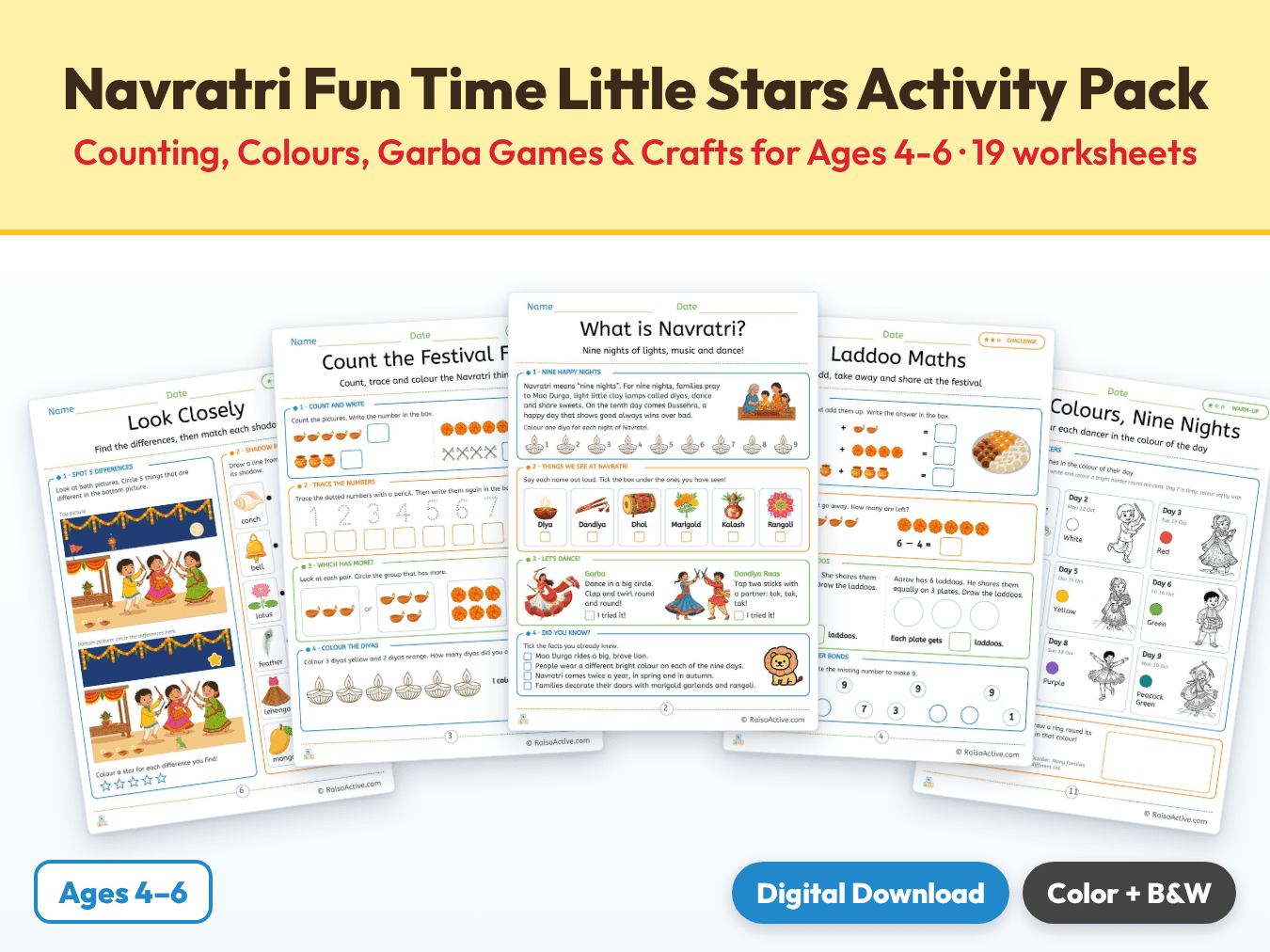
Navratri Fun Time Little Stars Activity Pack: Counting, Colours, Garba Games & Crafts for Ages 4-6
Ages 4-6 · Pre-K–KindergartenAges 4-6 · Reception–Year 1Ages 4-6 · LKG–UKGAges 4-6 · 20 pages
More activities like this
All activities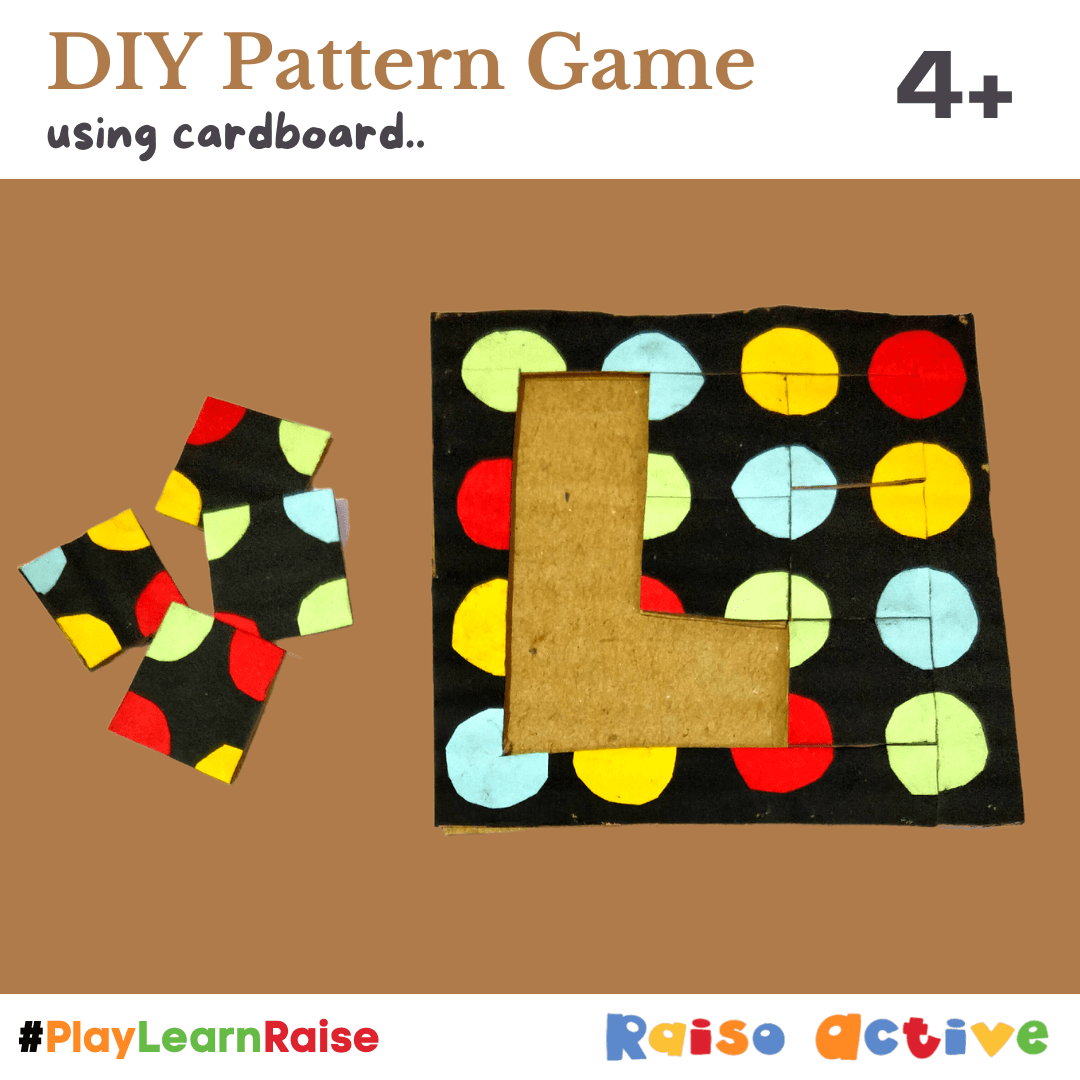 Has a video
DIY Cardboard Pattern Matching Puzzle Game for Kids
Children will create and play a homemade pattern matching puzzle using cardboard. This engaging activity enhances visual discrimination, fine motor skills, and pattern recognition, perfect for early learners.
What they'll learn:
Develop visual discrimination skills by matching patterns and colors. +4 more
 Has a video
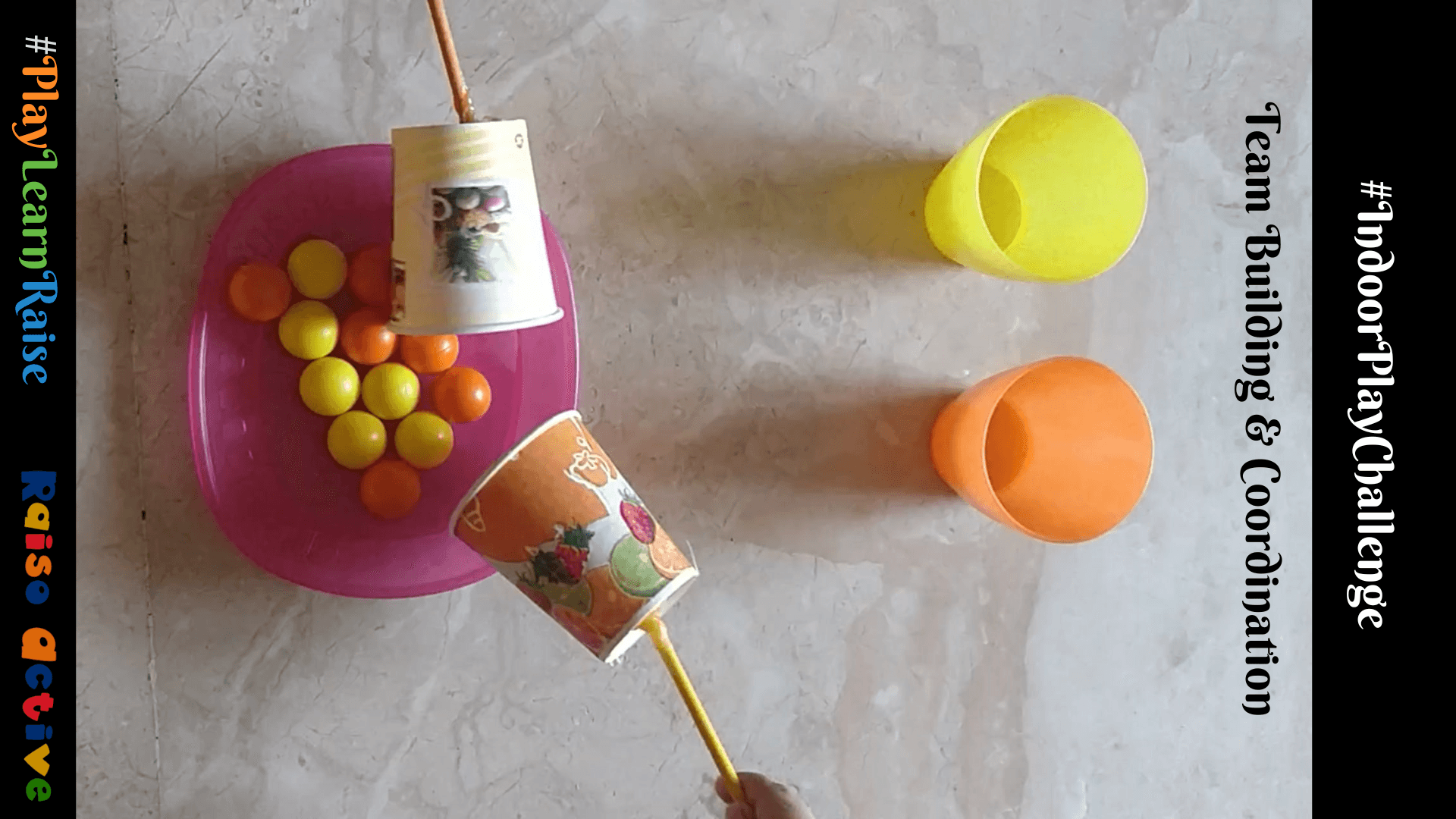
Indoor Ball Transfer Game: Team Building & Coordination Challenge
Engage children in a fun indoor ball transfer game designed to boost teamwork and coordination. Kids will use cups and sticks to move balls, developing fine motor skills and strategic thinking.
What they'll learn:
Enhance hand-eye coordination and fine motor skills. +4 more
 Has a video
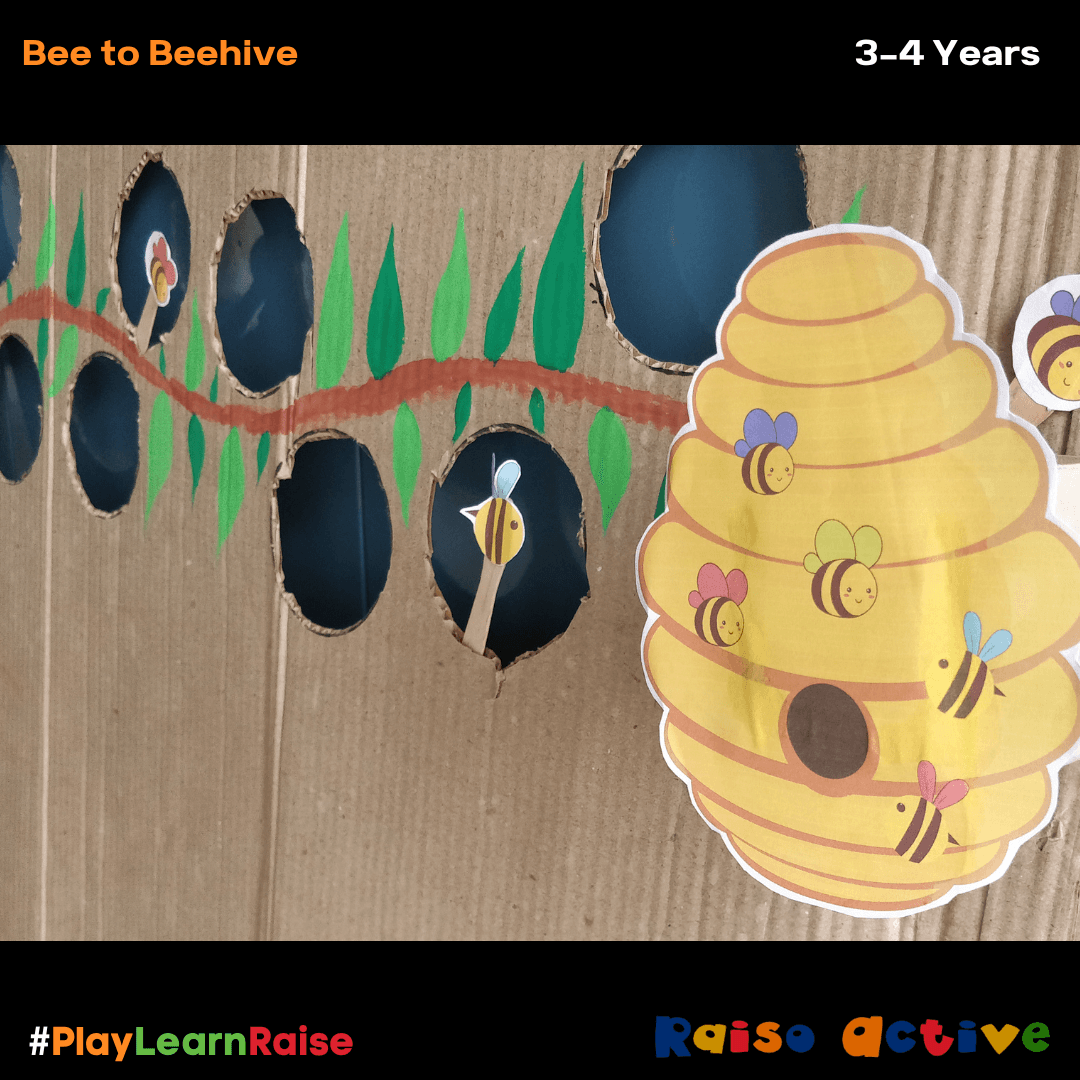
Bee to Beehive Eye-Hand Coordination Game for Preschoolers
Children will cut out bee and beehive printables, paste them onto cardboard, and then navigate the bees through holes to reach their beehive. This engaging DIY game enhances eye-hand coordination, fine motor skills, and problem-solving for young learners.
What they'll learn:
Develop eye-hand coordination and dexterity. +4 more
 Has a video
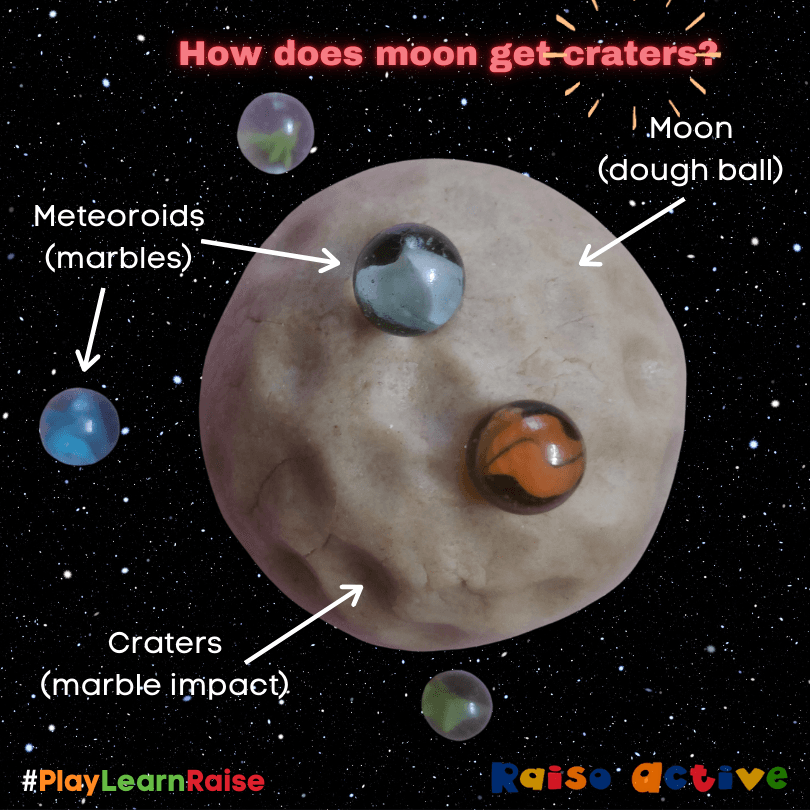
Moon Craters STEM Activity: Hands-On Science for Kids
Discover how the moon gets its craters with this engaging STEM activity! Children will use dough and marbles to simulate meteoroid impacts, creating their own lunar landscape and understanding a key astronomical phenomenon.
What they'll learn:
Understand how craters form on celestial bodies like the moon. +3 more