 Physical Development
Move Spinner for Kids: A Printable Spin-and-Play Game
Make a printable spinner game for kids, spin it and do the move it lands on: jump, wave, stretch, clap, bow or point. Then take turns copying each other.
- Physical activity
- Ages 3-7 · Preschool–Grade 1Ages 3-7 · Nursery–Year 2Ages 3-7 · Nursery–Class 1Ages 3-7
- 5 things to gather
- 7 steps
What Your Child Will Learn
- Balance and coordination from jumping, stretching and bowing
- Listening and copying a move, then taking turns
- Following three short steps in order
- Making up a move of their own
How to make and play the spinner
7 stepsBefore you start
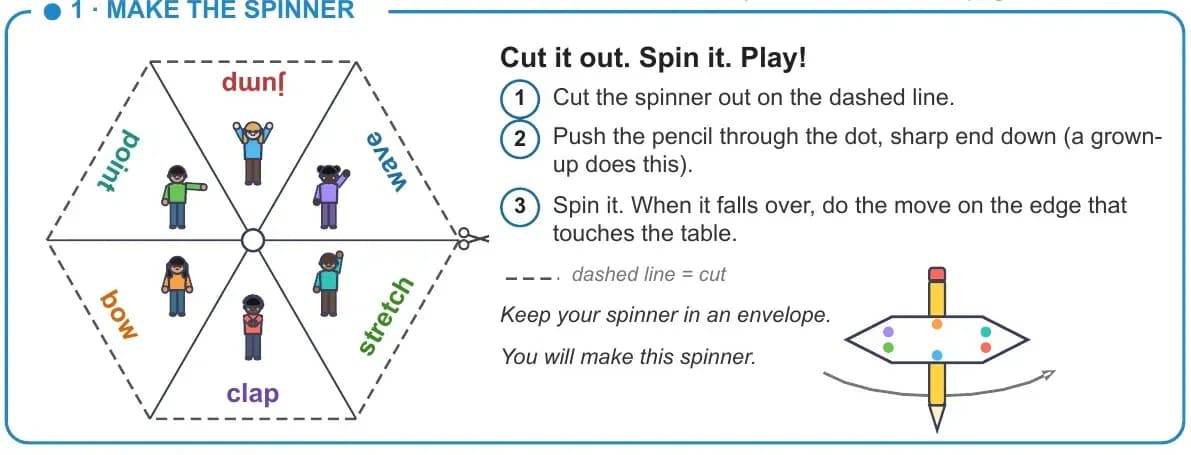
A spinner game for kids turns a piece of card into a reason to move. You cut out a hexagon, push a pencil through the middle, spin it and do the move on the edge that touches the table. It takes about ten minutes to make and can be played again and again.
It comes from the Play Spinner stall in our Children's Day Fair pack. World Children's Day is on 20 November, and the UN Convention on the Rights of the Child says every child has the right to rest and play, so a few minutes of play together is a nice way to mark it.
Step 1: Print on thin card: Print the Play Spinner page single-sided on thin card or a cereal box, so the spinner is stiff enough to spin.
Step 2: Cut out the hexagon: Cut along the dashed line to free the six-sided spinner. A grown-up can help with the corners.
Step 3: Add the pencil: A grown-up pushes a short pencil through the dot in the middle, sharp end down, so the spinner can turn on its point.
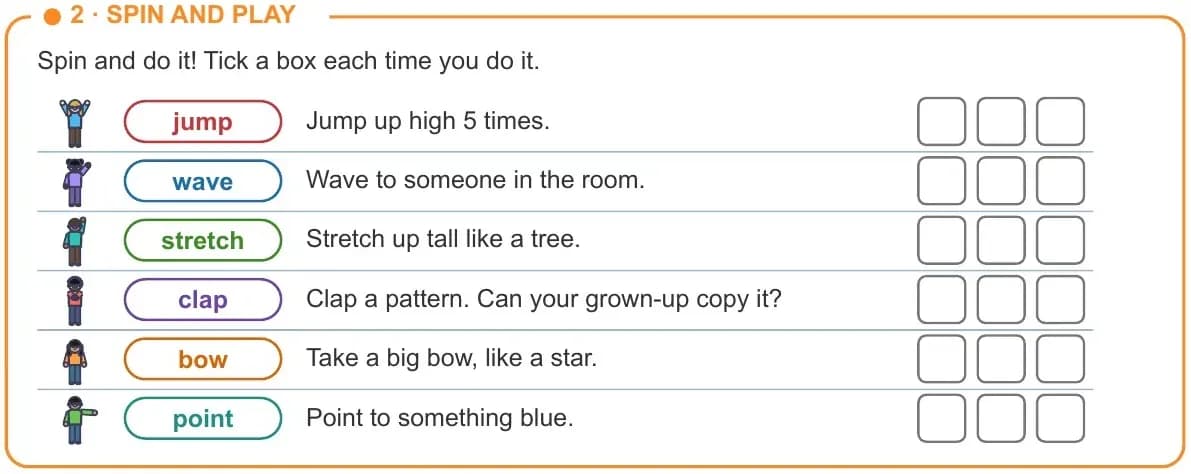
Step 4: Spin it and do the move: Spin the spinner. When it falls over, do the move on the edge that touches the table: jump, wave, stretch, clap, bow or point.
Step 5: Tick a box each time: Tick one of the three boxes beside each move every time you do it. See if you can fill them all in a week.
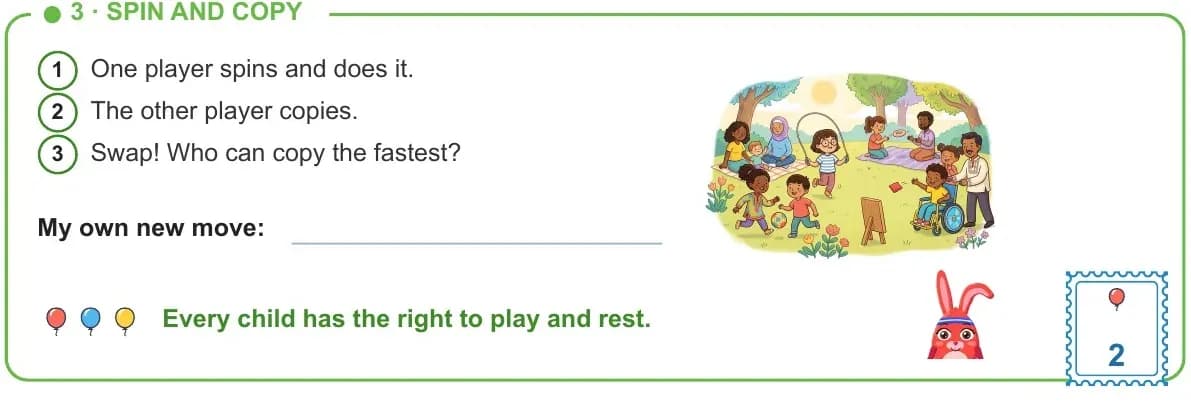
Step 6: Spin and copy: One player spins and does the move, and the other copies it. Swap over, and see who can copy the fastest.
Step 7: Invent your own move: Write a new move on the line at the bottom of the page, such as hop on one foot, and add it to the game.
Ways to extend
- Idea 1
Add your own six moves on a blank spinner
- Idea 2
Play with the whole family and give everyone a turn to spin
- Idea 3
Ask your child to teach the moves to a toy
- Idea 4
Spin before dinner each day for a week and keep a tally
More pictures
Six moves to tick
Spin and copy
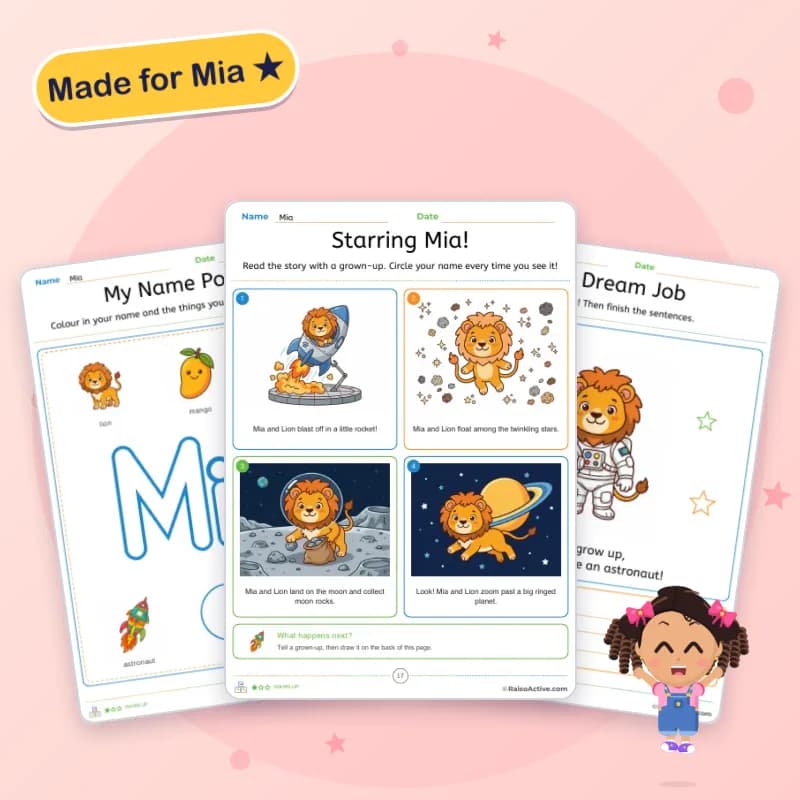
Made for your child
A whole activity pack made with their name
60 pages to spot, build, trace and write their own name, plus pages about their favourites, feelings and family. See a free preview with their name.
Make an All About Me packFree preview · free for members
Or start free: a name tracing sheet with their nameSee all 7 personalised packsRelated printable packs
View all packs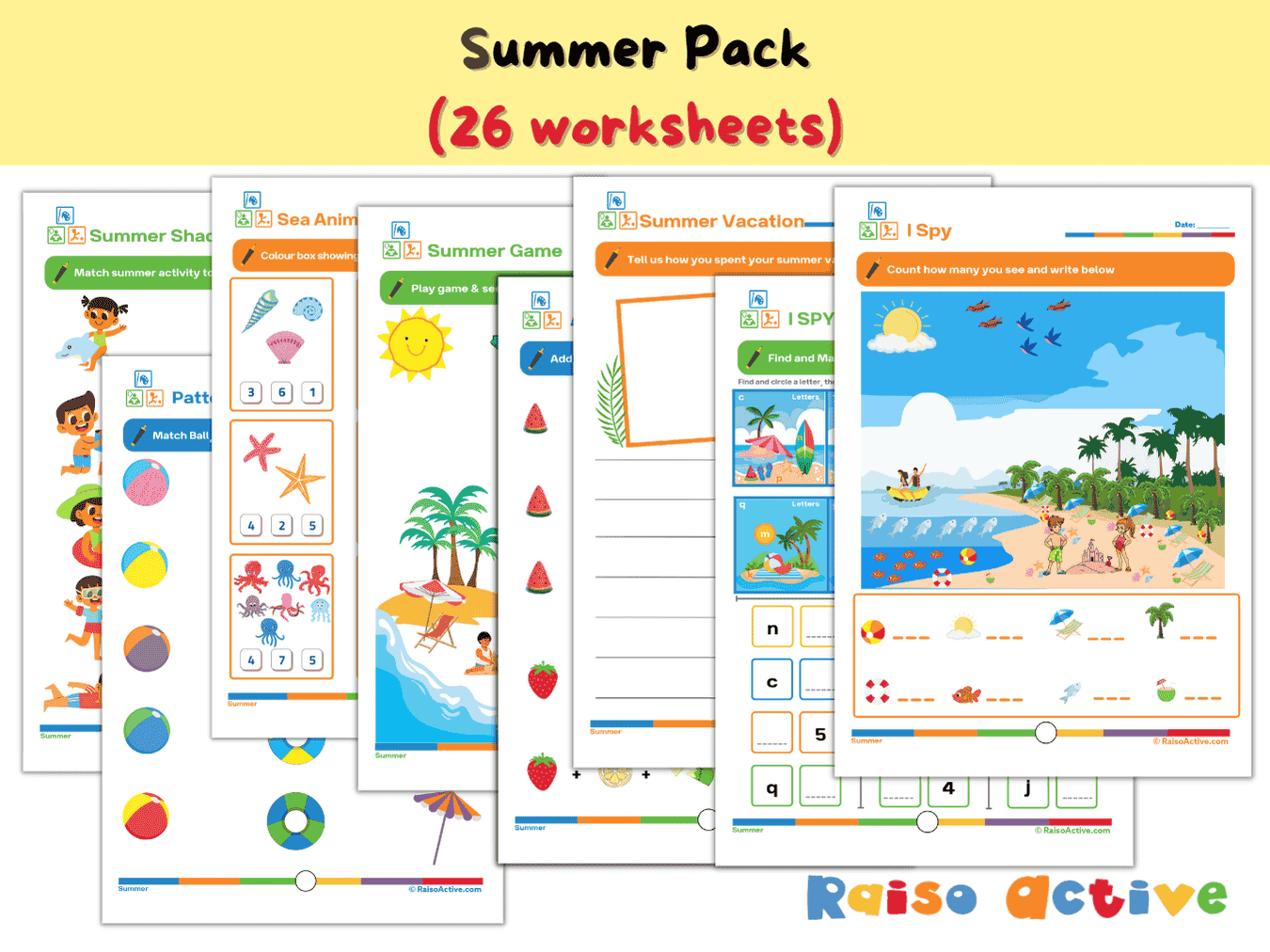
Summer Activity Pack: Math, Literacy, Puzzles & More for Preschool & Kindergarten
Ages 3-7 · Preschool–Grade 1Ages 3-7 · Nursery–Year 2Ages 3-7 · Nursery–Class 1Ages 3-7 · 26 pages
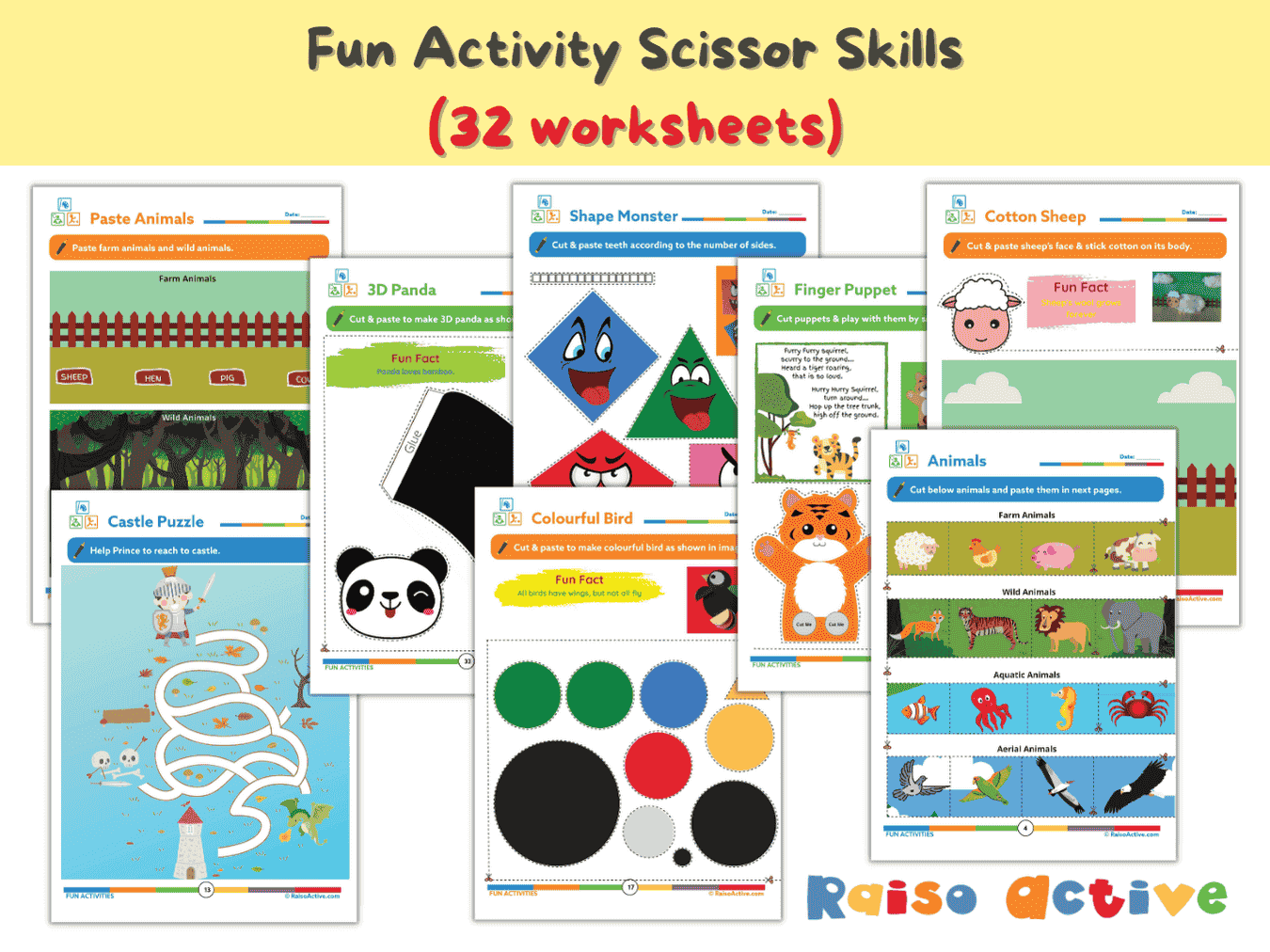
Preschool Scissor Skills Activity Book: Fine Motor & Craft Fun for Ages 3-6
Ages 3-6 · Preschool–KindergartenAges 3-6 · Nursery–Year 1Ages 3-6 · Nursery–UKGAges 3-6 · 35 pages

Month 9: Holistic Preschool Play Learning | Ages Up to 4
Ages 3-4 · PreschoolAges 3-4 · NurseryAges 3-4 · 30 pages
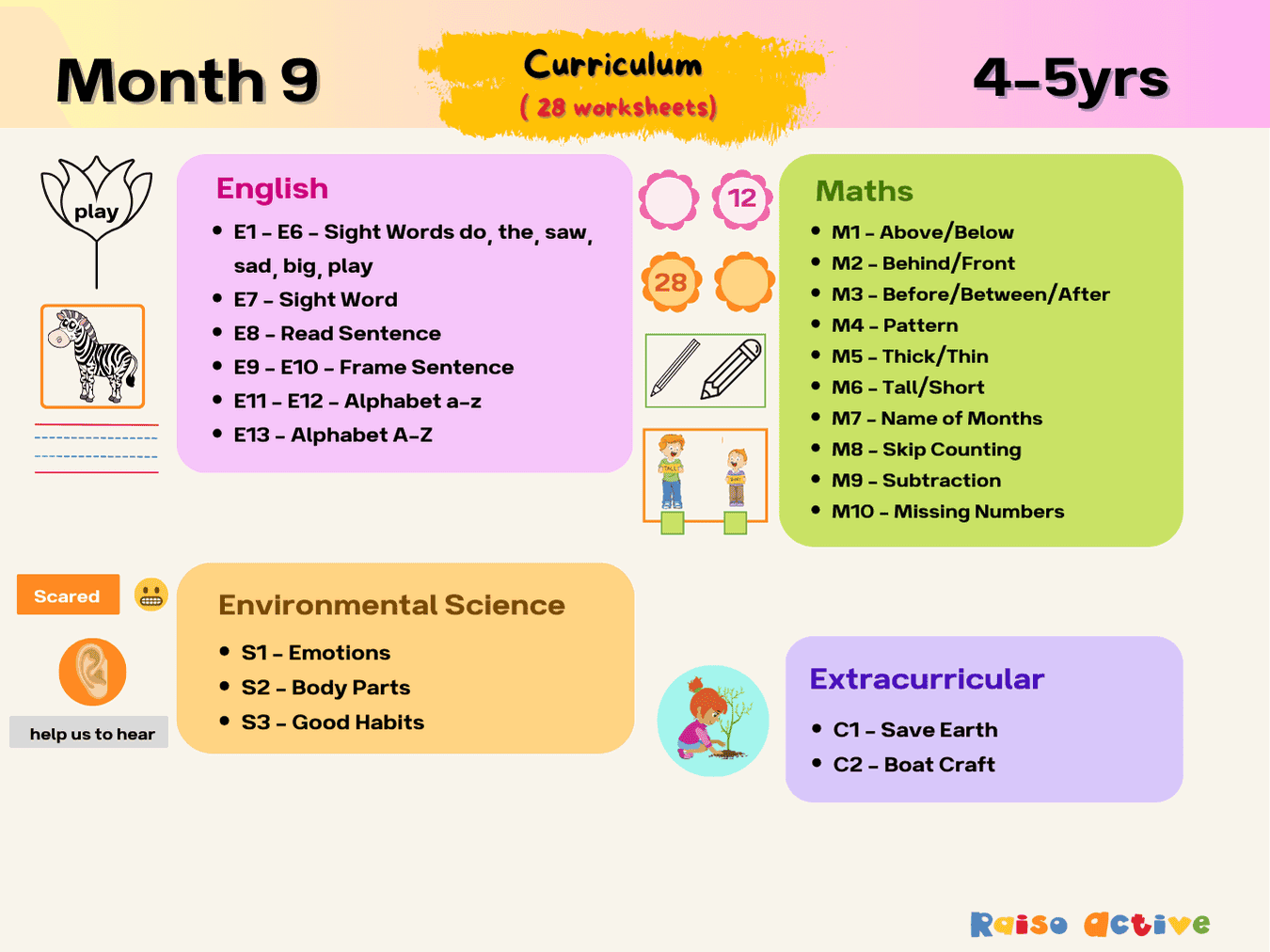
Month 9: Play-Based Preschool Foundational Skills | Ages 4-5
Ages 4-5 · Pre-KAges 4-5 · ReceptionAges 4-5 · LKGAges 4-5 · 31 pages
Related guides
View all on Indoor Game
Resources for Children with Multiple Disabilities: A Comprehensive Guide for Families
Discover essential resources for children with multiple disabilities. Therapies, inclusive learning, assistive technology, and printable activities for ages 1-8.
Understanding Standardized Testing in Early Childhood: A Parent's Guide to Assessment Balance
Learn how standardised tests work in early childhood, when they help, when they harm, and how to balance formal assessment with observation-based learning.
Portfolio Assessment with Young Children: A Comprehensive Guide to Meaningful Documentation
Learn how portfolio assessment captures your child's growth through meaningful documentation. Practical tips, templates, and age-appropriate strategies for ages 1-8.
More activities like this
All activities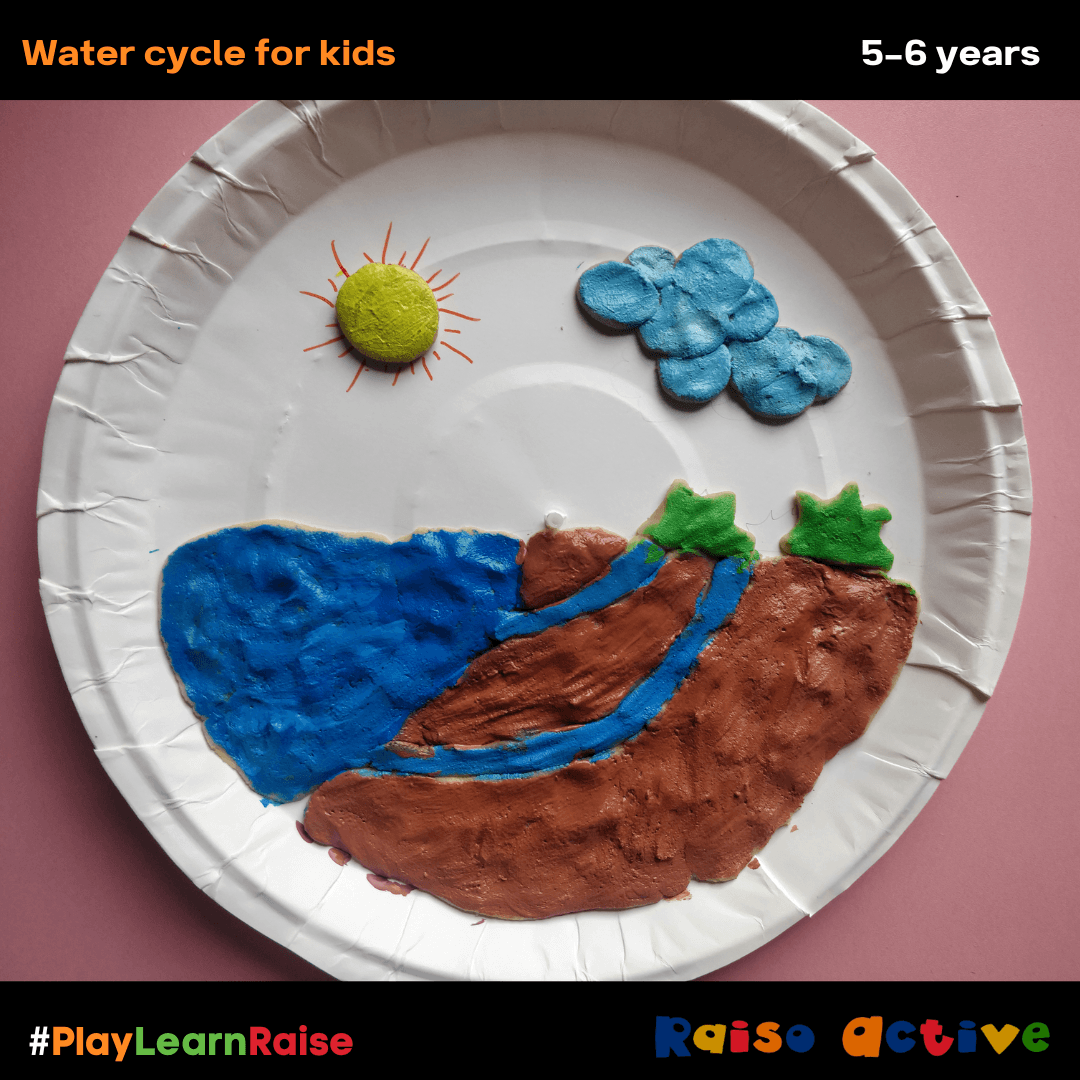 Has a video
Water Cycle Craft for Kids: Learn About Rain & Evaporation
Children will create a hands-on model of the water cycle using clay or play-doh on a paper plate. This engaging craft helps kids visualize and understand how water moves through evaporation, condensation, and precipitation.
What they'll learn:
Introduce the basic stages of the water cycle (evaporation, condensation, precipitation). +4 more
 Has a video
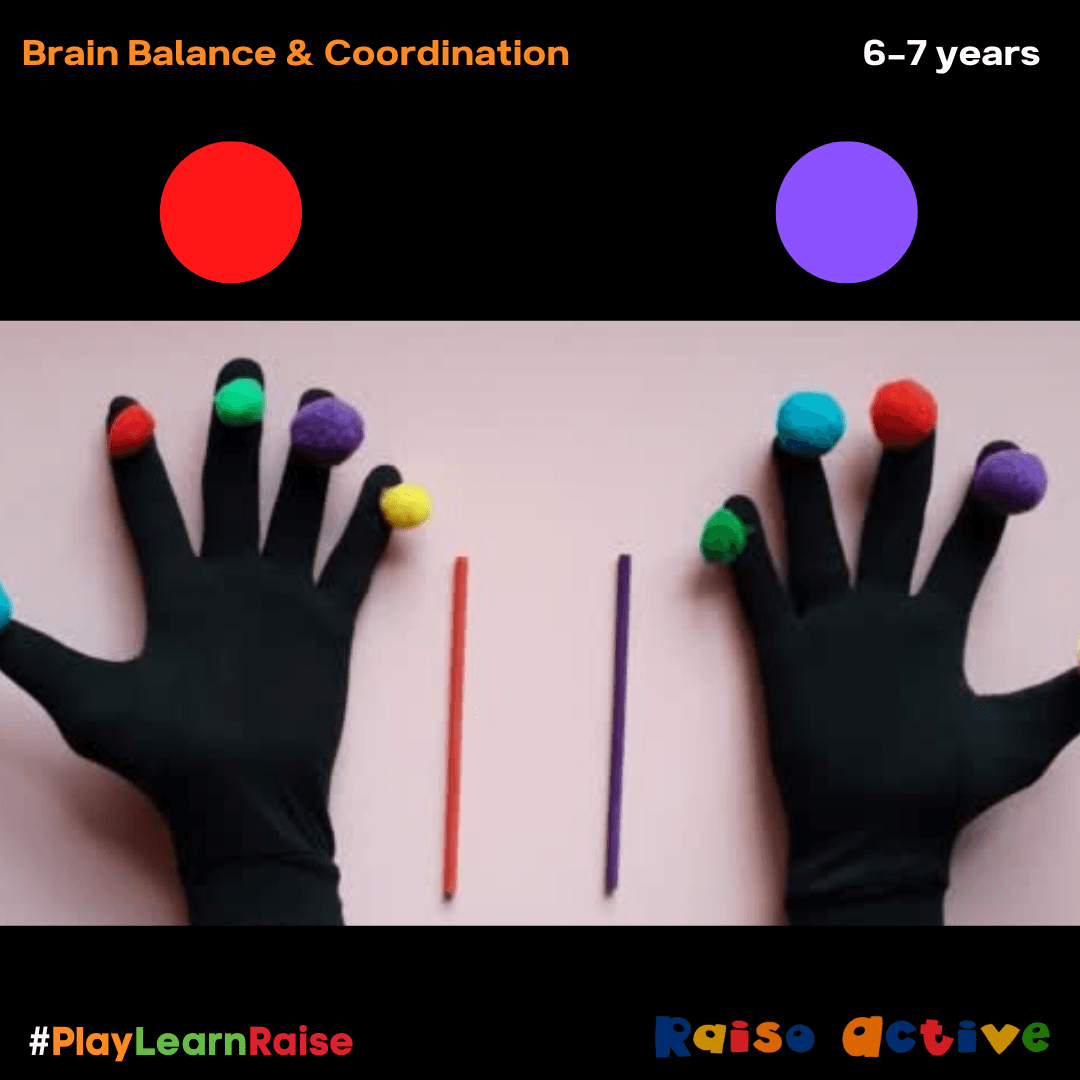
Brain Balance & Coordination Finger Game for Kids (Ages 6-7)
Engage your child in a fun brain-boosting activity designed to enhance balance and coordination. This engaging finger game helps children improve fine motor skills, focus, and bilateral coordination through playful movements.
What they'll learn:
Improve fine motor skills and finger dexterity. +4 more
 Has a video
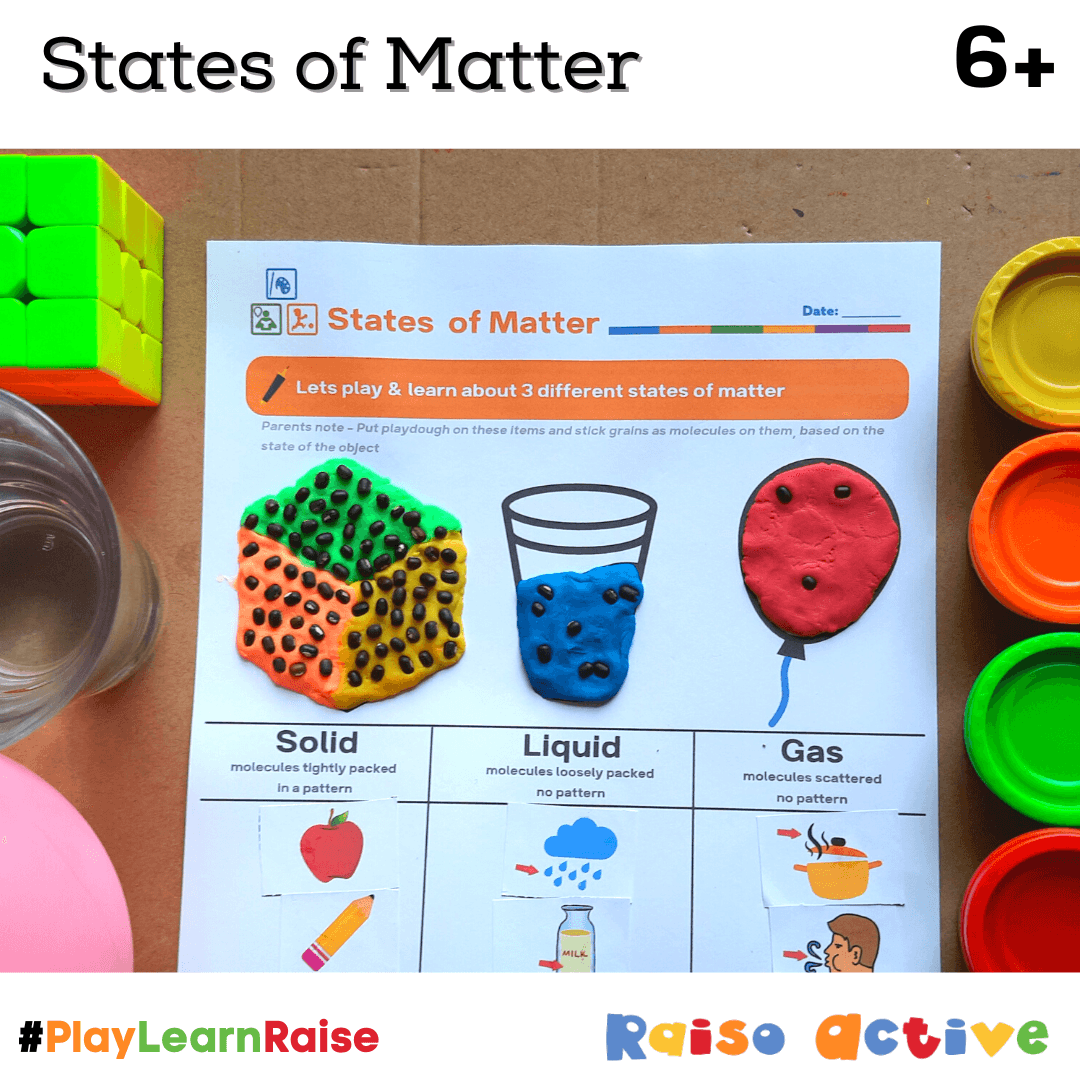
States of Matter STEM Activity: Solid, Liquid, Gas Exploration
Engage children with this hands-on STEM activity where they will use playdough and small grains to model and understand the molecular structures of solids, liquids, and gases. Kids will also classify everyday objects based on their state of matter.
What they'll learn:
Identify and differentiate between the three main states of matter: solid, liquid, and gas. +4 more
 Has a video
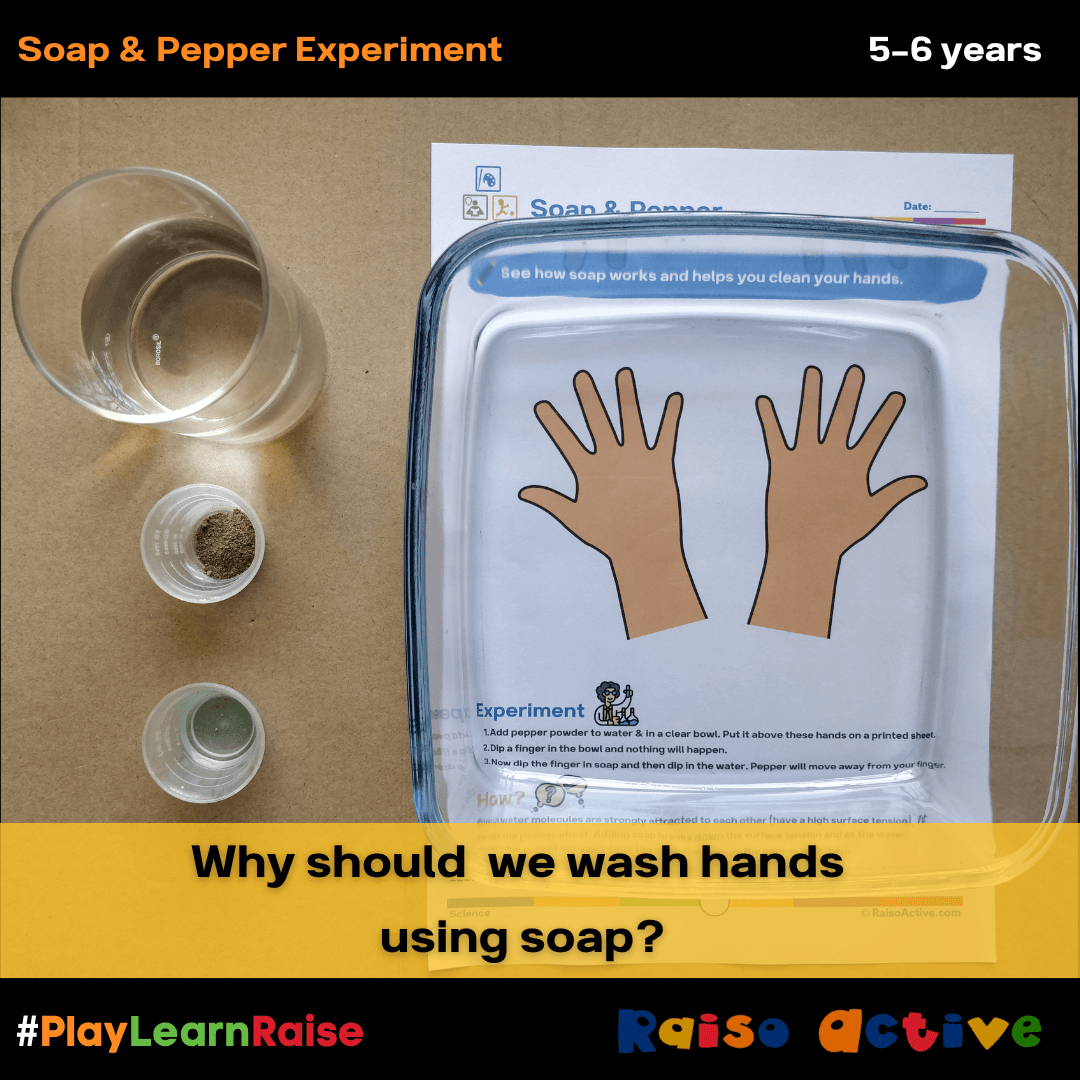
Soap & Pepper Experiment: Understanding Handwashing for Kids
Children will conduct a simple Soap & Pepper experiment to visually understand how soap breaks surface tension and helps clean hands. This engaging activity teaches the importance of hand hygiene through a fascinating scientific observation.
What they'll learn:
Understand the basic concept of surface tension. +4 more