 Social Skills
Pinwheel Breathing for Kids: Make a Calm-Breath Buddy
Pinwheel breathing for kids: print, colour and fold a paper pinwheel, then spin it with slow, gentle breaths. A quiet way to practise calm on an easy day.
- Craft
- Ages 4-7 · Pre-K–Grade 1Ages 4-7 · Reception–Year 2Ages 4-7 · LKG–Class 1Ages 4-7
- 6 things to gather
- 8 steps
What Your Child Will Learn
- Slow, gentle breathing, which the pinwheel shows by spinning smoothly
- Noticing how the body feels after a few calm breaths
- Naming a feeling, from a calm, happy or worried face
- Fine motor skills from colouring, bending and folding paper
How to make and spin the pinwheel
8 stepsBefore you start
Pinwheel breathing for kids turns a slow breath into something you can see. A paper pinwheel spins gently when your child breathes out slowly and hardly moves when the breath is fast and puffy, so they learn what a calm breath feels like by watching it work.
It is a good game for a quiet, easy day, before any big feelings arrive. A grown-up does the cutting and pinning, and your child does the colouring, the bending and the breathing.
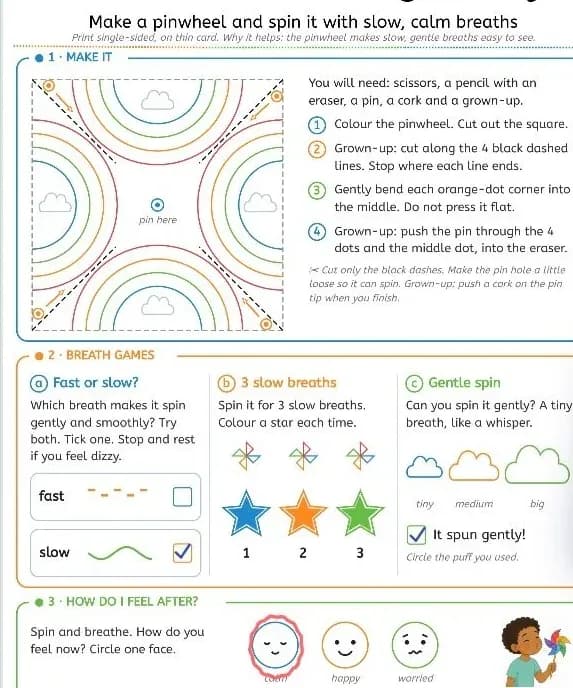
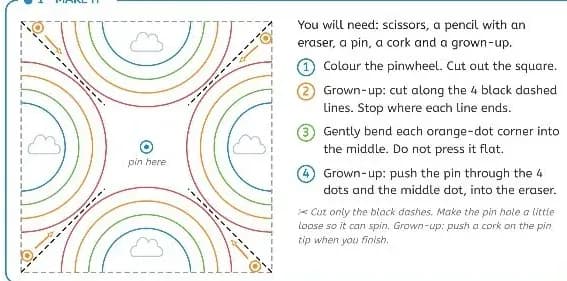
Step 1: Colour the pinwheel: Print the page on thin card. Let your child colour the rainbow arcs on the square, then cut the square out.
Step 2: Cut along the lines: Grown-up job: cut along the four black dashed lines from each corner towards the middle. Stop where each line ends.
Step 3: Bend the corners in: Gently bend each orange-dot corner into the middle. Do not press it flat, because the curve is what catches the breath.
Step 4: Pin it to the pencil: Grown-up job: push the pin through the four dots and the middle dot, into the eraser of the pencil. Make the hole a little loose so the pinwheel can spin, then push a small cork onto the pin tip so nobody is scratched.
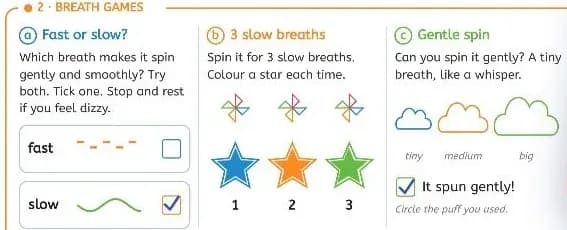
Step 5: Try a fast breath and a slow one: Ask which breath makes it spin gently and smoothly: fast or slow? Try both, then tick the answer on the page. Stop and rest if anyone feels dizzy.
Step 6: Spin it for three slow breaths: Breathe in slowly through the nose, then blow out gently so the pinwheel turns. Do it three times and colour one star on the page each time.
Step 7: Spin it gently like a whisper: Can your child make it spin with a tiny breath, as quiet as a whisper? Circle the puff you used: tiny, medium or big.
Step 8: Check how you feel now: Ask how it feels after the breaths, and circle one face on the page: calm, happy or worried. Any answer is fine, and talking about it is part of the game.
Ways to extend the game
- Idea 1
Hold the pinwheel on the sofa and take three slow breaths together before a story.
- Idea 2
Let your child be the teacher and show a younger child how to spin it gently.
- Idea 3
Make a second pinwheel and take turns, so everyone gets a calm breath.
- Idea 4
Try the pinwheel before homework, a visit or bedtime, so a slow breath becomes a familiar habit.
- Idea 5
Play the feelings wheel game from the same pack, then finish with the pinwheel breaths.
More pictures
Print and cut
Try a fast breath and a slow one
Related printable packs
View all packs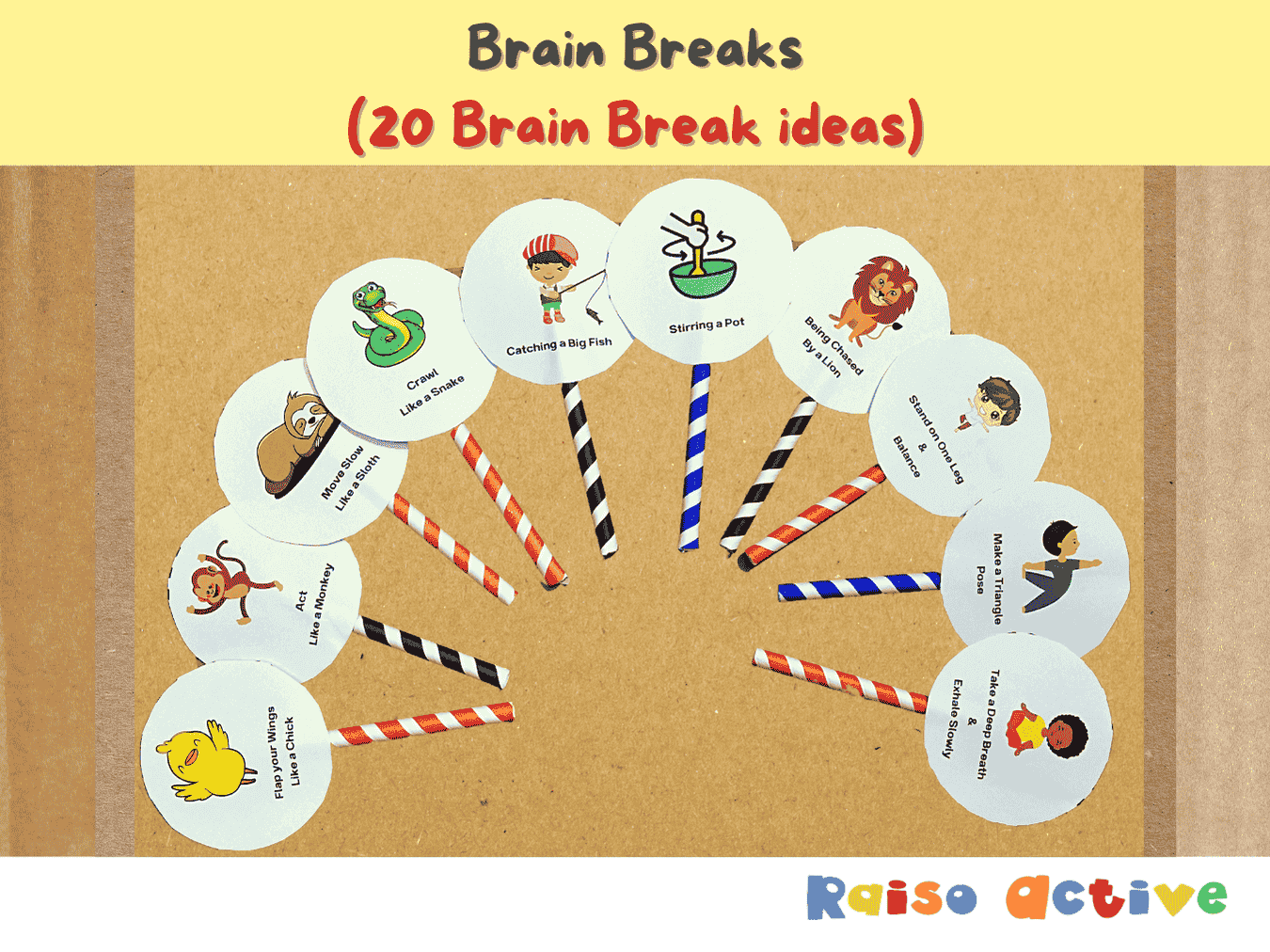
Gross Motor Movement & Imaginative Play Flashcards for Toddlers & Preschoolers
Ages 2-5 · Preschool–Pre-KAges 2-5 · Nursery–ReceptionAges 2-5 · Nursery–LKGAges 2-5 · 5 pages
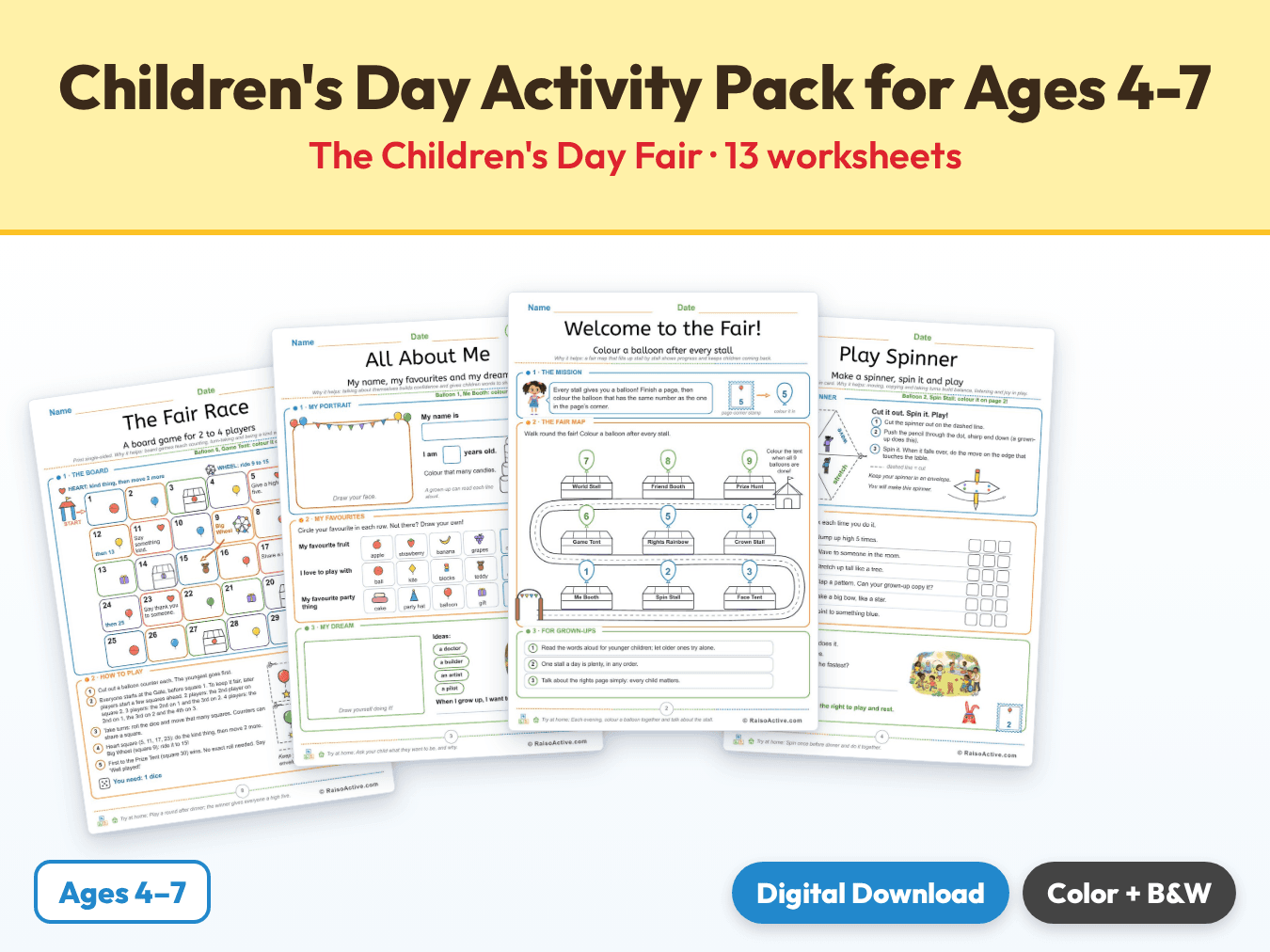
Children's Day Activity Pack for Ages 4-7: The Children's Day Fair
Ages 4-7 · Pre-K–Grade 1Ages 4-7 · Reception–Year 2Ages 4-7 · LKG–Class 1Ages 4-7 · 14 pages
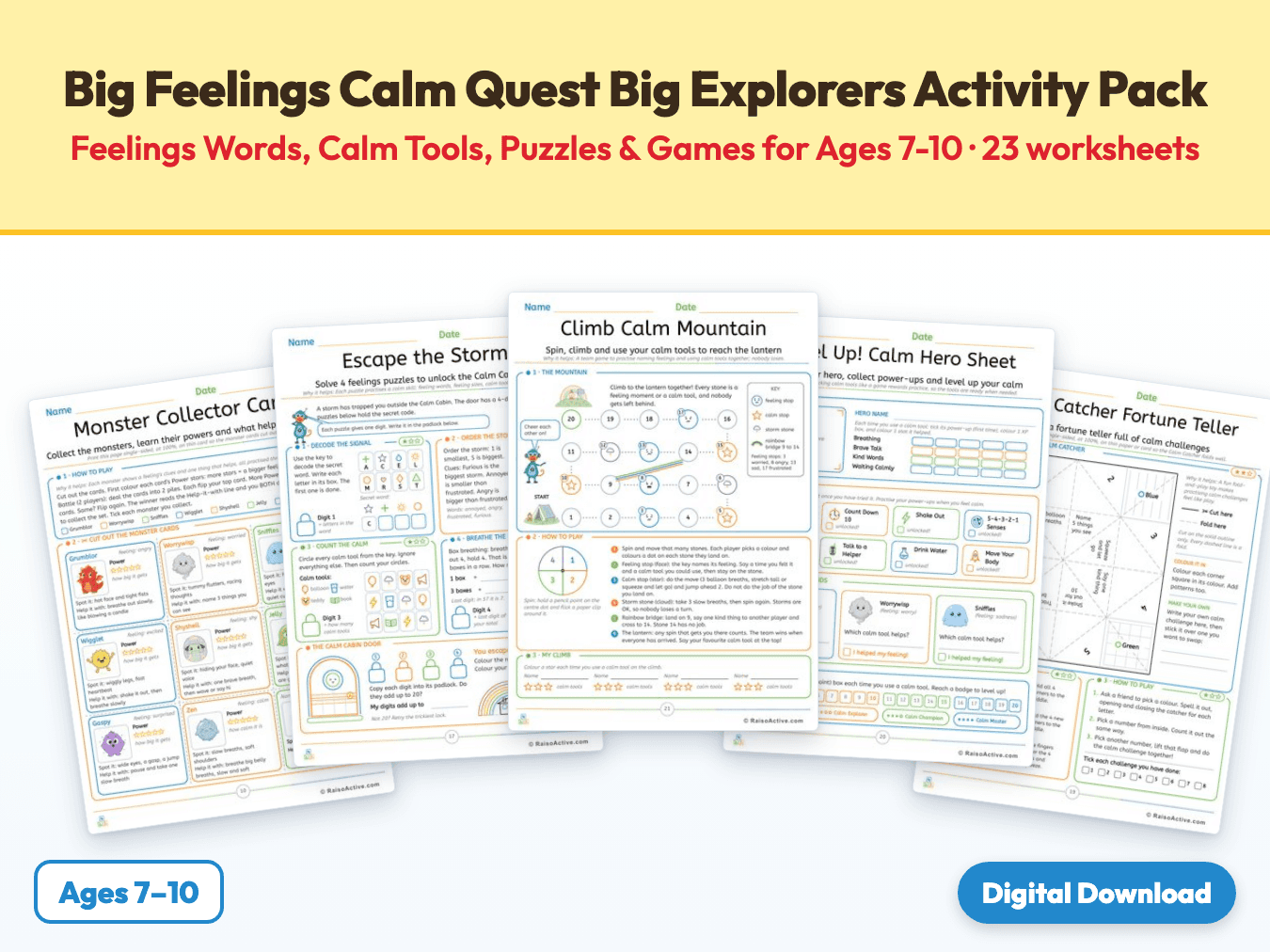
Big Feelings Calm Quest Big Explorers Activity Pack: Feelings Words, Calm Tools, Puzzles & Games for Ages 7-10
Ages 7-10 · Grade 2–Grade 3Ages 7-10 · Year 3–Year 4Ages 7-10 · Class 2–Class 3Ages 7-10 · 24 pages
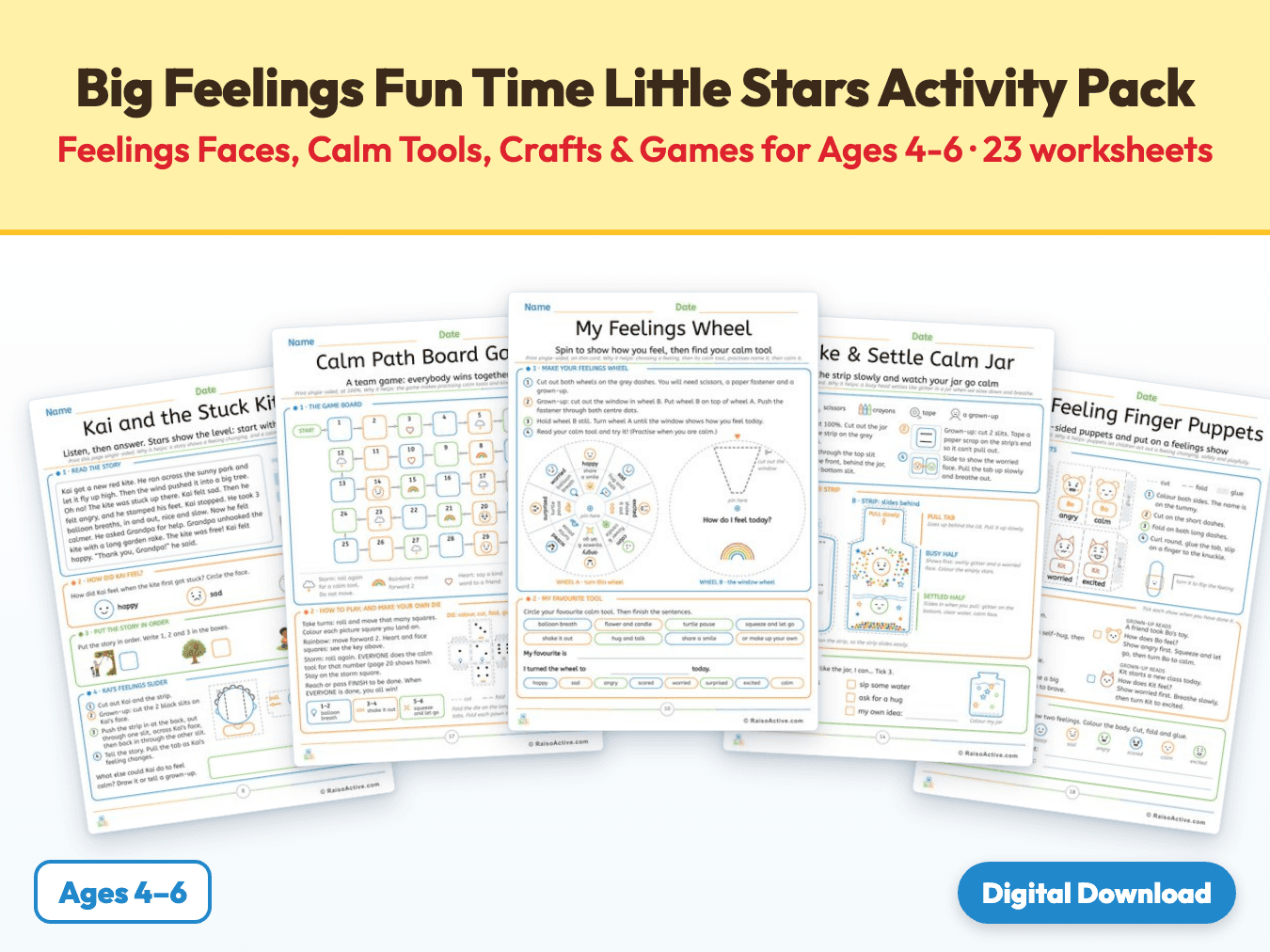
Big Feelings Fun Time Little Stars Activity Pack: Feelings Faces, Calm Tools, Crafts & Games for Ages 4-6
Ages 4-6 · Pre-K–KindergartenAges 4-6 · Reception–Year 1Ages 4-6 · LKG–UKGAges 4-6 · 24 pages
Related guides
View all on Calm
Addressing Mental Health with Young Children: A Compassionate Guide for Families
Learn how to support your young child's mental health with compassionate strategies. Recognise signs, build emotional resilience, and know when to seek professional help.
Social-Emotional Learning Activities for Preschoolers: Nurturing Hearts and Minds
Discover practical social-emotional learning activities for preschoolers. Build emotional intelligence, empathy, and cooperation skills with fun, age-appropriate SEL activities.
Motivating the Reluctant Learner: Strategies to Rekindle Your Child's Love of Learning
Is your child refusing to learn or losing interest? Discover why reluctant learners disengage and proven strategies to rekindle their love of learning at home.