What to Say Instead of "Good Drawing": 5 Better Phrases

Look what I made! Now, what could you say back that isn't just "good"?
- A minute, any time
- A drawing and a crayon
- Talking, noticing
- The kitchen table
What to say instead of good drawing? Say what you can see, or ask one real question: "Tell me about it", "I see you used a lot of blue", "Which part took the longest?", "What happens next in this picture?" or "Where should we put it?". "Good" ends the chat, while a real question keeps it going and shows your child you looked closely.
Nobody is doing anything wrong when they say "good drawing". It is kind and quick, and it is what most of us heard as children. But when a child runs over with a picture, the aim is usually a little conversation, not a grade. Here are five replies to keep in your pocket, with a way to try them on a real drawing page.
Why does "good drawing" end the conversation?
"Good" is a verdict. It closes the moment with a small full stop, and the child has nothing to answer. In the classroom it is easy to see the difference: a child who hears "lovely" often hurries off with the next picture, while a child who is asked "which part was the trickiest?" will stand there and tell you the whole story, including the bit that went wrong.
Describing what you see and asking a real question does two jobs. It shows your child you looked properly, and it lets them be the expert on their own picture. There is no need to guess what a scribble is supposed to be: that is what the first phrase is for.
What can I say instead of good drawing?
Five things to say, one at a time
Pick just one for tomorrow rather than trying all five at once. Tick each one off when you have used it with your child.
0 of 5 done
An open invitation. Your child chooses what to share, and you get to listen. It works especially well on a busy, many-legged creature or a scribble where you honestly cannot tell what you are looking at.

Say what you can see: a colour, a shape, a line, a pattern. It shows you really looked, it is easy to say, and it is always true. Your child may tell you why they chose it.

This celebrates effort rather than talent, and children love telling you about the tricky bit. It also quietly tells them that taking a long time on something is a good thing.

Let the story carry on past the edge of the page. A boat on the sea can sail to an island, and the drawing becomes the start of a tale you can tell together at bedtime.

Let your child choose where the picture hangs: the fridge, the wall or Grandma's house. It tells them their work is worth displaying, and it gives them a decision to make.

You earned a sticker!
All five tried. Which one did your child answer most?
How can I use these phrases on a real drawing page?
Phrases are easiest to remember when you have something in front of you. A page like Half N Half gives your child a picture to finish, and you a ready-made reason to ask questions. It is a drawing page with four boxes, each showing half of a picture: a car, a sun, a light bulb and a cupcake. Your child draws the missing half and colours it in.
Try it with a drawing page
Print the page, put out crayons and sit next to your child rather than across from them.
0 of 4 done
Print the [Half N Half page](/worksheets/half-and-half-coloring-worksheet-for-preschoolers) and put a tray of crayons in the middle of the table. Sit alongside your child.

Let your child draw the missing half of each picture. Do not correct the lines: a wobbly sun is a finished sun.
While they work, try "Which part took the longest?" or "I see you used a lot of red". Choose one phrase and wait for the answer.
When the page is done, ask "What happens next?" The car may drive off, the sun may set. Then ask where the page should hang.
You earned a sticker!
Four halves finished, and a few good questions asked.
- Try a single phrase for a week until it feels natural. Five new sentences at once will feel like a script.
- Count to five in your head after you ask. Children often need a moment to decide what to tell you.
- If you are unsure what the picture shows, ask "Tell me about it" instead of "Is it a dog?". It saves your child the sting of a wrong guess.
- If a picture really is lovely, say so. The point is to add something real as well, not to ban a kind word.
Describe what you see, then ask one real question
"Good" is a full stop. A detail you noticed plus a question shows your child you looked closely, and they get to be the expert on their own picture.
Make it fit your child
Little ones
- Stick to "Tell me about it" and "I see you used a lot of...". Both need very little thinking from the child.
- Name one colour or shape you can see, and let them add the rest.
- Let them choose where to stick the picture, then stand and look at it together.
Older kids
- Ask "Which part took the longest?" and "What would you change next time?" to talk about effort and choices.
- Have them start a series, such as one picture a week, and put them up in order.
- Ask them to write a caption for the picture, as if it were in a gallery.
If your child likes feelings as much as pictures, our feelings activities use the same "name it and talk about it" idea, and our guide to creative art activities that build pre-writing skills has more things to draw and make. For more colouring and drawing pages to print, visit the colouring worksheets hub.
Questions parents ask about praising drawings
Is it wrong to say "good drawing"?
What if I cannot tell what the picture is?
What if my child only wants to hear that it is good?
Does it matter how I say it?
What should I do with all the drawings?
Made for your child
Printables with your child's name on every page
7 packs for ages 2 to 14: pen control, phonics, spelling, maths, mazes and detective puzzles, each made from their name and the things they love.
See the personalised packsFree preview · free for members

Written by
Hemsweta Jain · Teacher Cheena
MBA and Early Childhood Educator, teaching since 2014 · Founder of RaisoActive, Mumbai
Published · Last reviewed
Related posts
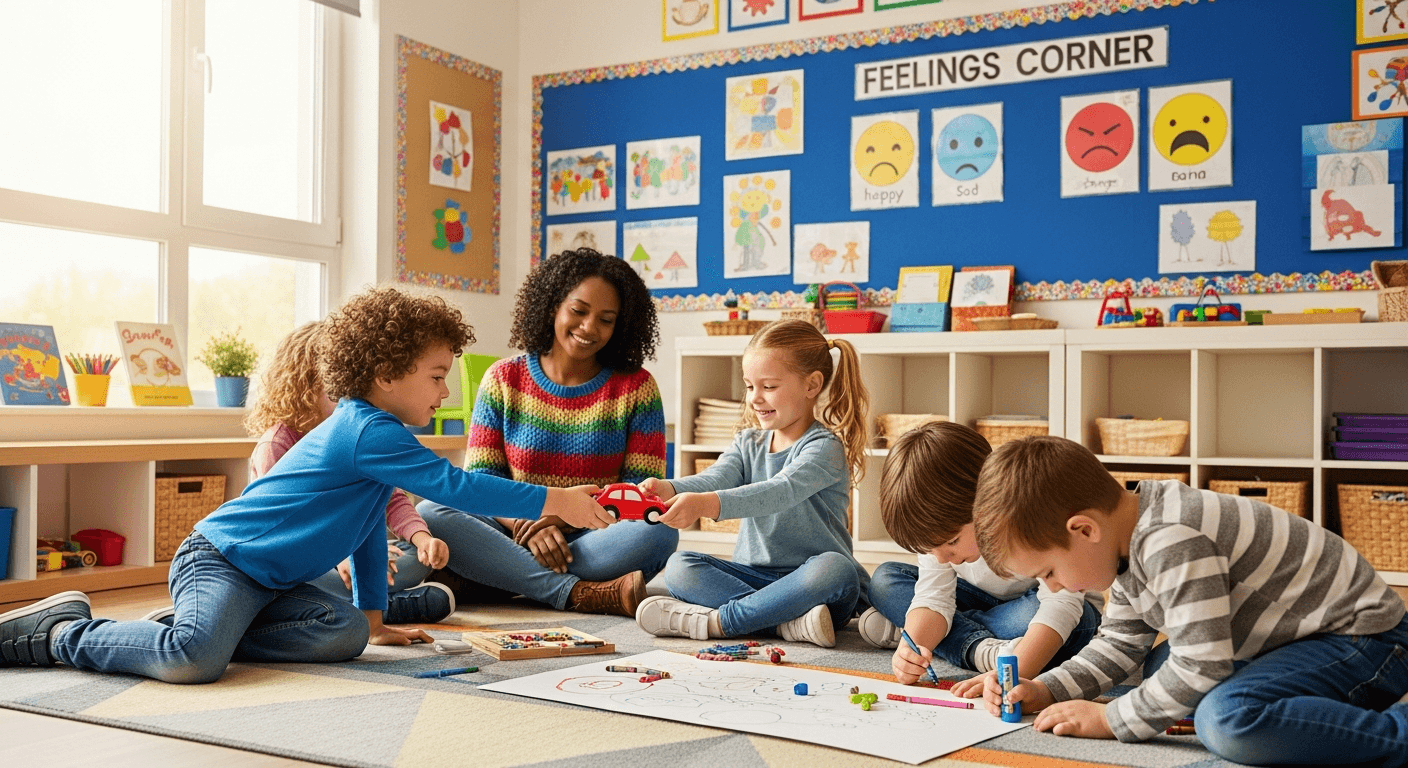
Social-Emotional Learning Activities for Preschoolers: Nurturing Hearts and Minds
Discover practical social-emotional learning activities for preschoolers. Build emotional intelligence, empathy, and cooperation skills with fun, age-appropriate SEL activities.
Navratri Colours 2026: Who Decides Each Day's Colour?
All nine Navratri colours for 2026, day by day, and the simple answer to who decides them. Plus a myth-or-fact game and a calendar puzzle for kids.
5 Independent Play Ideas That Buy You 5 Quiet Minutes
Need five minutes for yourself? Five quick setups from things at home that keep little hands busy and quietly build fine motor skills, focus and patience.