Fish Life Cycle Worksheet for Kids: Learn and Color!
Children ages 3-5 build early science vocabulary and sequencing skills as they learn the four stages of a fish's life — egg, hatchling, fry, and adult fish. Working with flashcards strengthens visual memory and the ability to place events in the correct order, a skill that supports later reading comprehension and storytelling.
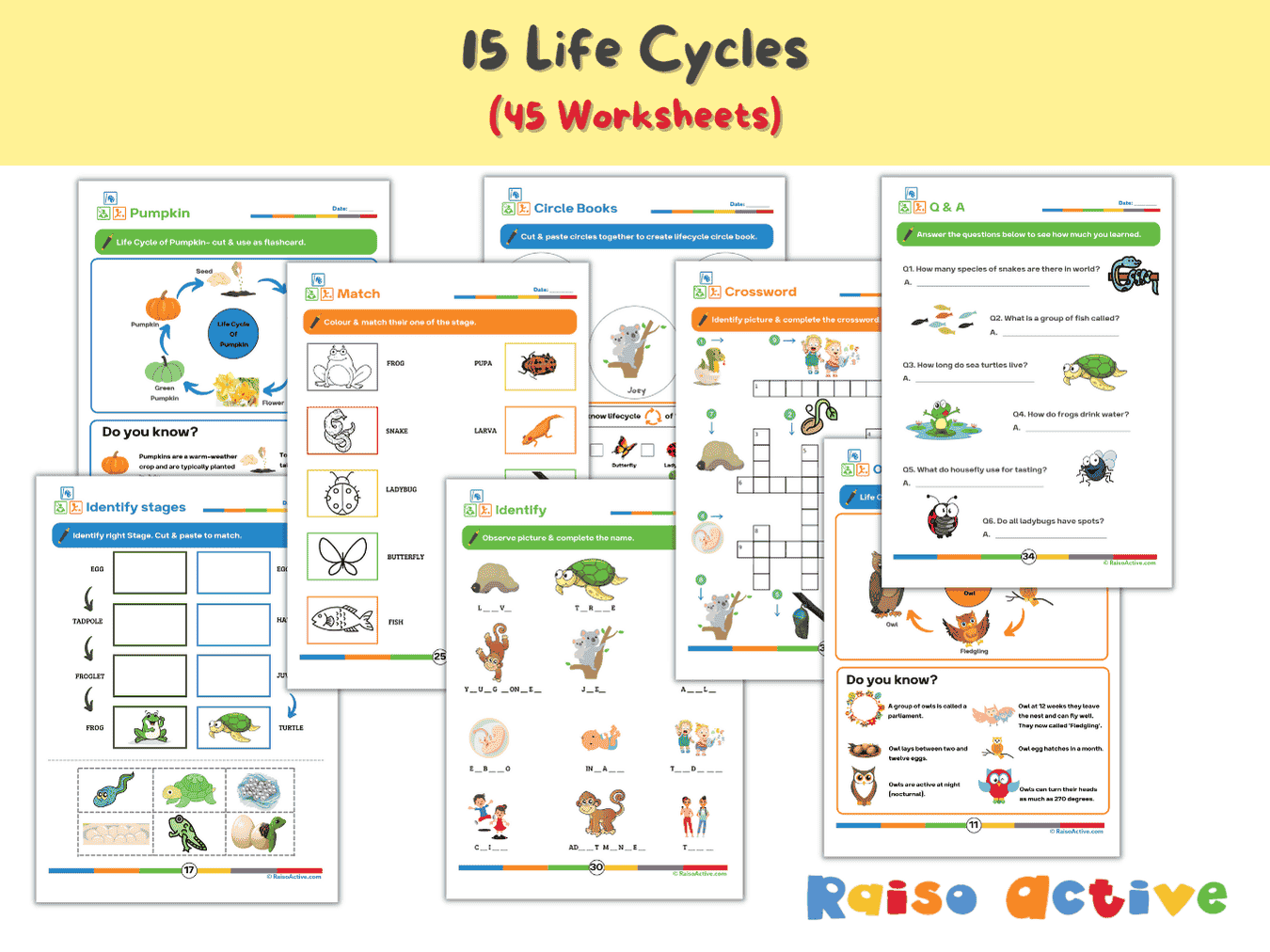
Part of the pack
Lifecycles Activity Book & Flashcards for Preschool & Early Elementary
This is page 9 of the pack. Ages 3-8 · Preschool–Grade 2Ages 3-8 · Nursery–Year 3Ages 3-8 · Nursery–Class 2Ages 3-8
Made for your child
A whole activity pack made with their name
60 pages to spot, build, trace and write their own name, plus pages about their favourites, feelings and family. See a free preview with their name.
Make an All About Me packFree preview · free for members
Or start free: a name tracing sheet with their nameCurriculum
- Living Things - Animals > Animal Life Cycles
How to use this worksheet
Start by cutting apart the flashcards along the dotted lines with your child. Lay the cards face up and ask your child to find the egg card first, then help them line up the remaining cards in the order a fish actually grows. Say each stage name aloud together — egg, hatchling, fry, adult — then let your child color each card while you talk about what's changing in the picture. Shuffle the cards afterward and see if they can re-sequence them from memory.
Materials needed
- Scissors
- Crayons
- Pencil
Extension activities
- 1Visit a pet store or aquarium and count how many different life stages of fish you can spot in the tanks.
- 2Use blue playdough or paper to make a 'pond' and place the flashcards in order along its edge.
- 3Watch a short video of fish eggs hatching and talk about what surprised your child.
- 4Compare the fish life cycle to a life cycle your child already knows, like a butterfly or frog.
- 5Make up a short story starring the baby fish (fry) as it grows into an adult.

Written by
Hemsweta Jain · Teacher Cheena
MBA and Early Childhood Educator, teaching since 2014 · Founder of RaisoActive, Mumbai
Every RaisoActive worksheet is designed and checked by the founder before publishing.
Published · Last reviewed
More from Lifecycles Activity Book & Flashcards for Preschool & Early Elementary
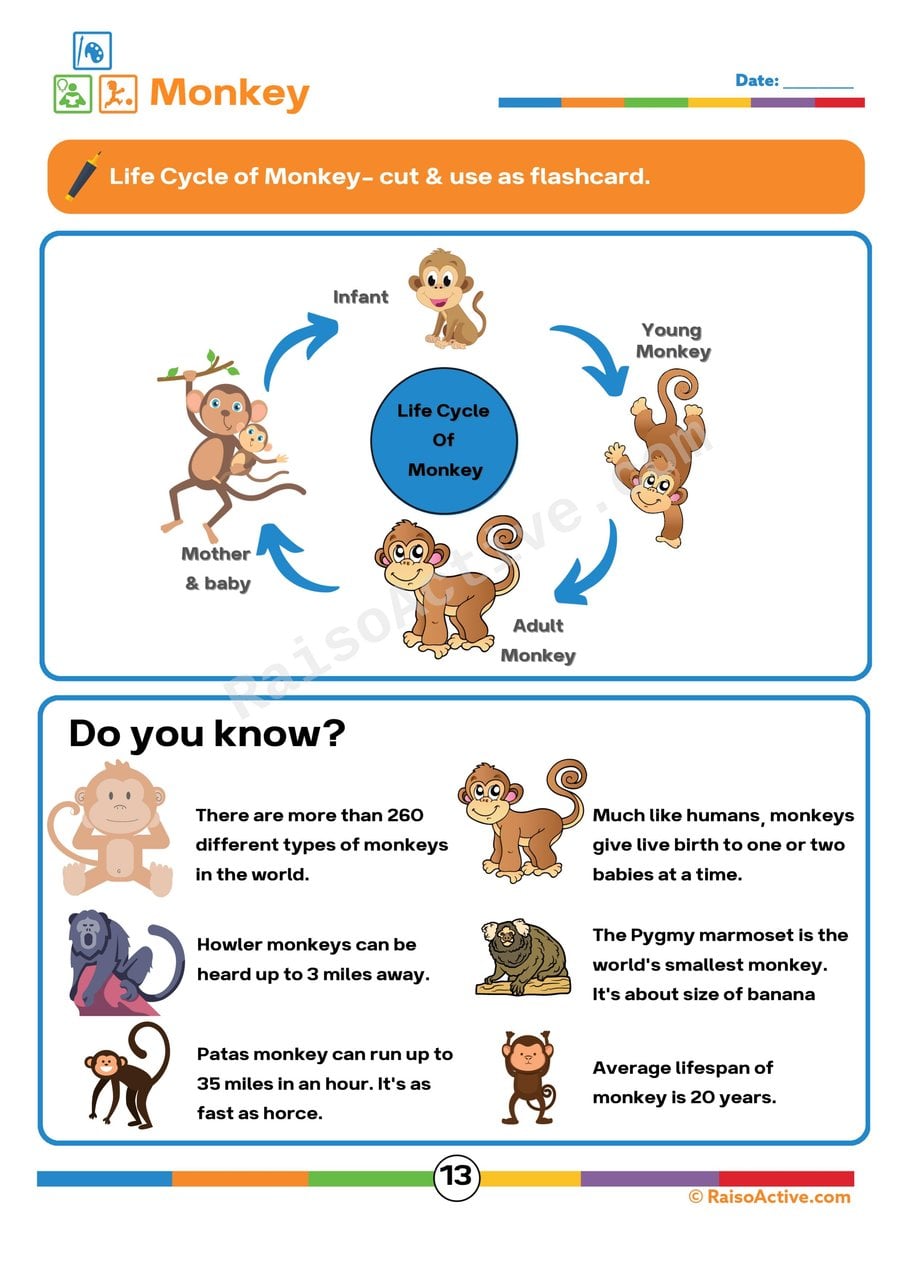
Monkey Life Cycle Worksheet for Preschoolers
Ages 3-5 · Preschool–Pre-KAges 3-5 · Nursery–ReceptionAges 3-5 · Nursery–LKGAges 3-5
This flashcard worksheet introduces children ages 3-5 to the stages of a monkey's life cycle, from infant to juvenile to adult, building early science vocabulary and sequencing skills. Learning that animals other than insects and birds also go through distinct growth stages helps children generalize the concept of a 'life cycle' across the animal kingdom.

Sunflower Life Cycle Flashcard Worksheet for Kids
Ages 3-5 · Preschool–Pre-KAges 3-5 · Nursery–ReceptionAges 3-5 · Nursery–LKGAges 3-5
Seeing a sunflower's life cycle laid out as stages — seed, sprout, growing stem, full bloom — introduces a 3-5 year old to the idea of sequence and change over time, a concept that shows up again in stories, science, and even daily routines. It's also many children's first encounter with the idea that a plant is alive and changing, not just a static thing.
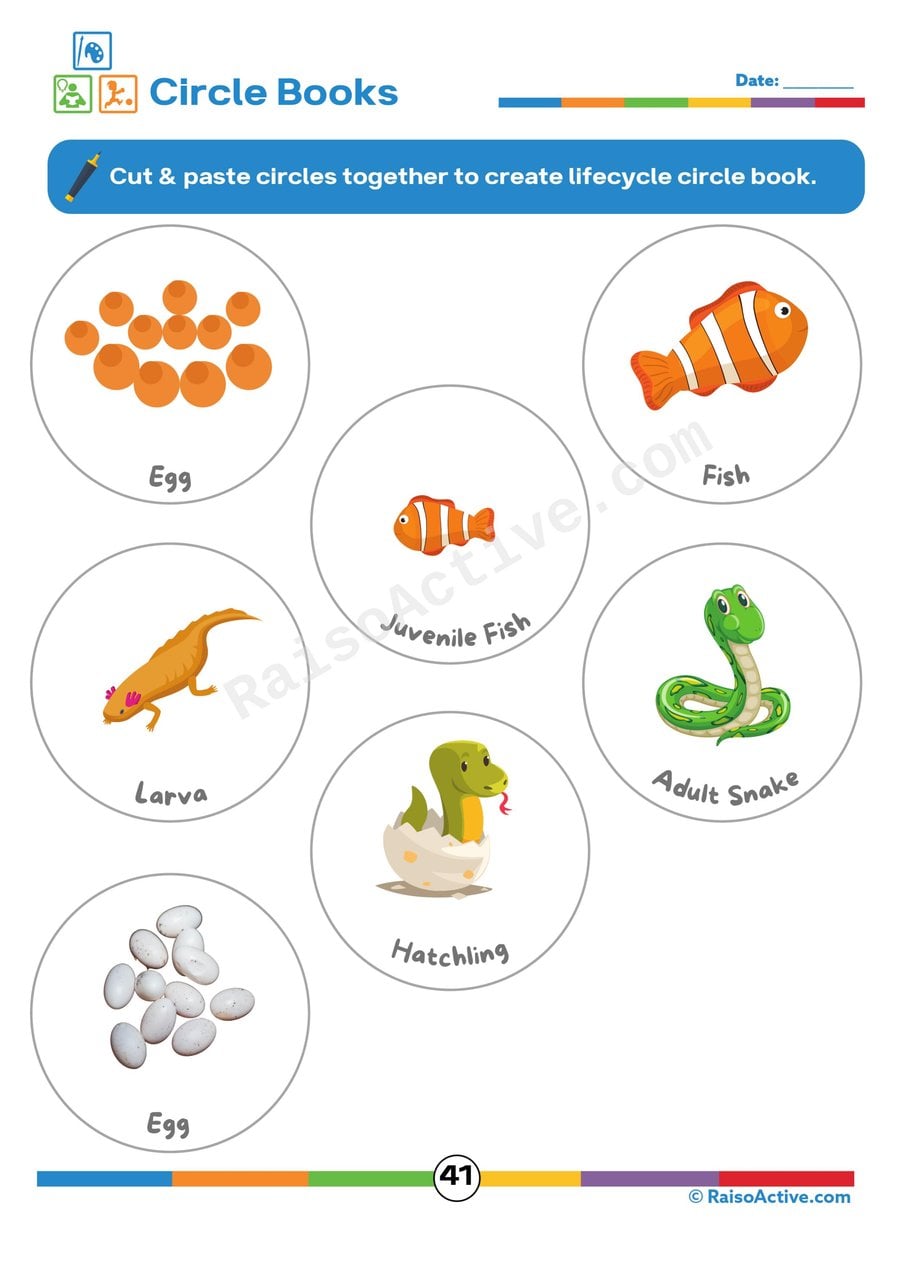
Lifecycle Circle Book: Cut and Paste Worksheet
Ages 3-5 · Preschool–Pre-KAges 3-5 · Nursery–ReceptionAges 3-5 · Nursery–LKGAges 3-5
This worksheet gives children ages 3-5 practice matching pictures to the correct stage of an animal's life cycle while assembling a hands-on circular book. Beyond sequencing, the rotating format helps children internalize that growth is a continuous, repeating process rather than a fixed line from start to finish.

Lifecycle Circle Book: Cut & Paste Activity for Young Learners
Ages 3-5 · Preschool–Pre-KAges 3-5 · Nursery–ReceptionAges 3-5 · Nursery–LKGAges 3-5
This activity has children ages 3-5 cut out circular pages and assemble them into a small 'circle book' that flips through different animals' life cycles, combining fine motor cutting and gluing with the concept that a book can hold information in sequence. Matching each animal to its correct life stage across several circles also reinforces the idea that different animals go through different growth patterns.

Butterfly Life Cycle Cut and Paste Worksheet for Preschoolers
Ages 4-6 · Pre-K–KindergartenAges 4-6 · Reception–Year 1Ages 4-6 · LKG–UKGAges 4-6
Children ages 4-6 build on earlier metamorphosis learning by assembling a butterfly life cycle circle book, practicing sequencing and fine motor precision as they cut and glue circular pieces. The rotating circle book format reinforces that metamorphosis is a repeating cycle, helping children move beyond a simple straight-line understanding of egg to butterfly.

Koala Life Cycle Worksheet: Cut and Paste Matching Activity
Ages 3-5 · Preschool–Pre-KAges 3-5 · Nursery–ReceptionAges 3-5 · Nursery–LKGAges 3-5
This worksheet introduces children ages 3-5 to the life cycle of a koala, from a tiny newborn called a joey that lives in its mother's pouch to a fully grown adult, while practicing scissor and gluing skills. Learning that koala joeys start out riding on their mother's back adds a memorable, specific detail that makes the science concept stick.

Complete the Words: A Fun Worksheet for Early Readers!
Ages 3-5 · Preschool–Pre-KAges 3-5 · Nursery–ReceptionAges 3-5 · Nursery–LKGAges 3-5
This worksheet helps children ages 3-5 practice early letter recognition and phonics as they look at a picture and fill in the missing letters to complete an animal-themed word. Saying the finished word aloud after writing it connects the written letters to their spoken sounds, reinforcing the link between reading and speaking that underlies early literacy.
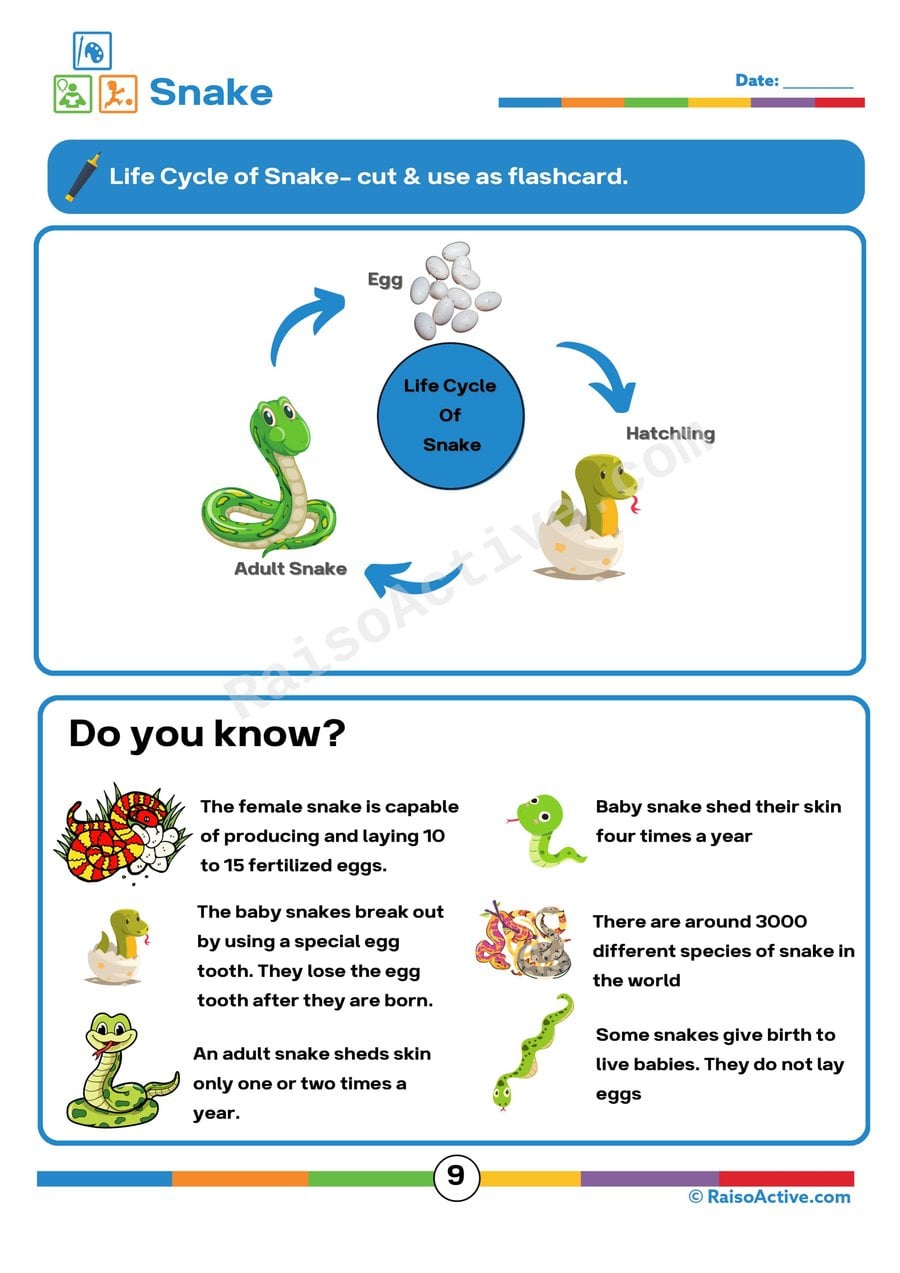
Snake Life Cycle Flashcard Worksheet for Kids
Ages 3-5 · Preschool–Pre-KAges 3-5 · Nursery–ReceptionAges 3-5 · Nursery–LKGAges 3-5
Using flashcards that show each stage of a snake's life, from egg to hatchling to adult, teaches children ages 3-5 the concept of a life cycle, the idea that living things grow and change through a predictable sequence of stages. Cutting out and handling the individual cards also builds fine motor skills, while sequencing them in order afterward reinforces early science reasoning about growth and change over time. Learning about a less commonly studied animal like a snake adds novelty that can spark extra curiosity compared to more familiar life cycle topics.
Related worksheets
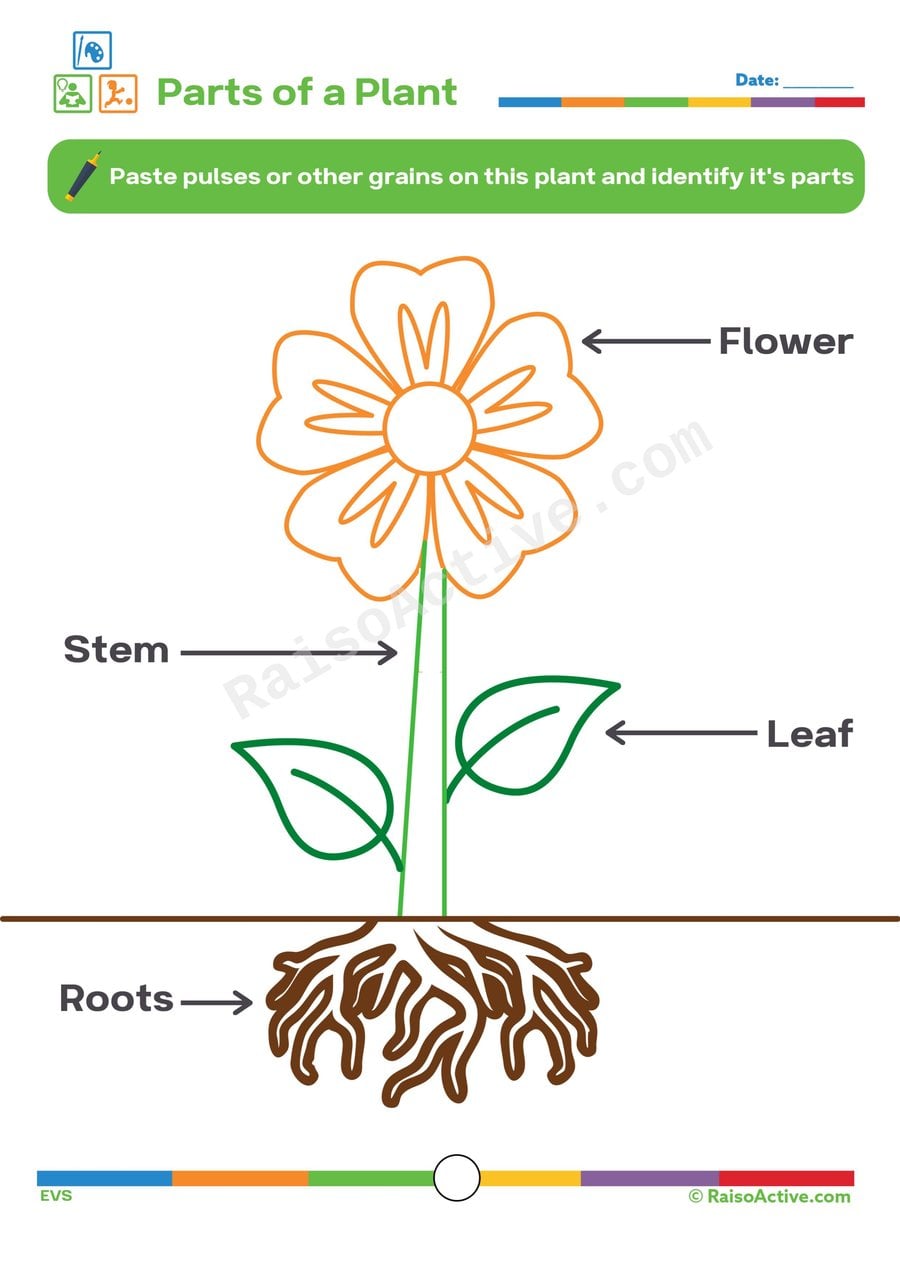
Parts of a Plant Worksheet: Identify and Label!
Ages 3-5 · Preschool–Pre-KAges 3-5 · Nursery–ReceptionAges 3-5 · Nursery–LKGAges 3-5
This activity teaches children ages 3-5 the basic parts of a plant — flower, stem, leaf, and roots — by having them label a diagram and add texture using real pulses or grains glued onto the plant shape. Combining a tactile material with each labeled part helps young children retain the vocabulary better than labeling alone, since touch and sight reinforce the same information.

Animal Needs Worksheet for Kids: Matching and Identifying
Ages 3-5 · Preschool–Pre-KAges 3-5 · Nursery–ReceptionAges 3-5 · Nursery–LKGAges 3-5
This worksheet helps children ages 3-5 understand and articulate the basic survival needs of animals — food, water, air, shelter — by completing sentences with the correct need word and then circling matching pictures. Requiring both a writing and a circling response means children practice the vocabulary in two different formats, reinforcing recall from multiple angles. This groundwork in animal needs also supports later, more complex science concepts about habitats and ecosystems.

Taste Bud Sorting Worksheet: Identify and Sort Foods by Taste!
Ages 4-6 · Pre-K–KindergartenAges 4-6 · Reception–Year 1Ages 4-6 · LKG–UKGAges 4-6
This worksheet introduces children ages 4-6 to four basic taste categories — salty, sour, bitter, and sweet — by having them sort pictured foods into the correct group. Beyond taste vocabulary, sorting foods by an invisible property like flavor (rather than an obvious one like color or shape) pushes children to draw on memory and prior experience, building more advanced classification skills.

Parts of a Leaf Worksheet for Preschoolers: Learn and Play!
Ages 3-5 · Preschool–Pre-KAges 3-5 · Nursery–ReceptionAges 3-5 · Nursery–LKGAges 3-5
This hands-on activity teaches children ages 3-5 the parts of a leaf — tip, blade, veins, midrib, petiole, and stem — by having them shape a leaf from playdough while comparing it to a real leaf. Building a physical model alongside a real specimen helps children connect abstract vocabulary to tangible features they can see and touch, which is especially effective for this age group.

Animal Identification Worksheet for Preschoolers: Color the Correct Animal!
Ages 3-5 · Preschool–Pre-KAges 3-5 · Nursery–ReceptionAges 3-5 · Nursery–LKGAges 3-5
Reading or listening to a simple question and then coloring the animal that answers it correctly builds listening comprehension and animal knowledge in children ages 3-5, requiring them to match a spoken clue to the right picture rather than just naming animals they already recognize. This task strengthens the ability to process a question, consider several possible answers, and select the correct one, an early form of reasoning that supports later reading comprehension. The coloring step at the end also adds a satisfying creative reward for correctly identifying each animal.

Plant Parts Worksheet: Identify and Label the Parts of a Plant!
Ages 4-6 · Pre-K–KindergartenAges 4-6 · Reception–Year 1Ages 4-6 · LKG–UKGAges 4-6
This worksheet teaches children ages 4-6 to identify and independently label the flower, stem, leaf, and roots of a plant, moving a step beyond simple matching toward recalling vocabulary from memory. Optionally adding pulses or grains to the diagram introduces a tactile, sensory layer that helps reinforce which part is which through touch as well as sight.
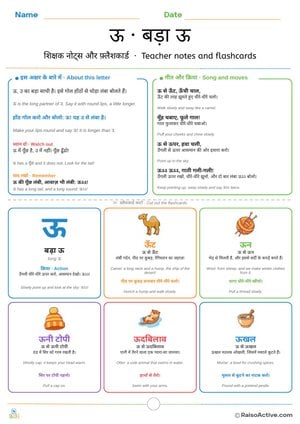
Hindi Letter ऊ (oo) Teacher Notes and Flashcards | ऊ · बड़ा ऊ
Ages 3-7 · Preschool–Grade 1Ages 3-7 · Nursery–Year 2Ages 3-7 · Nursery–Class 1Ages 3-7
Children meet the long vowel ऊ with a short note for adults, a song with actions and cut-out flashcards for ऊँट (camel), ऊन (wool), ऊनी टोपी (woolly cap), ऊदबिलाव (otter), ऊखल (mortar). They hear the sound at the start of real words and link it to a hand action.
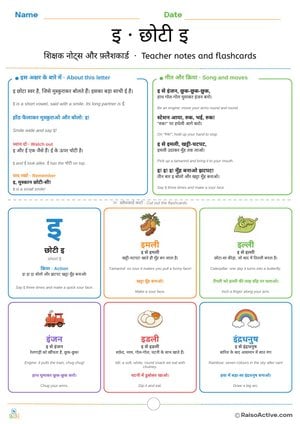
Hindi Letter इ (i) Teacher Notes and Flashcards | इ · छोटी इ
Ages 3-7 · Preschool–Grade 1Ages 3-7 · Nursery–Year 2Ages 3-7 · Nursery–Class 1Ages 3-7
Children meet the short vowel इ with a short note for adults, a song with actions and cut-out flashcards for इमली (tamarind), इल्ली (caterpillar), इंजन (engine), इडली (idli), इंद्रधनुष (rainbow). They hear the sound at the start of real words and link it to a hand action.
Guides for this topic

Discovering Wonder: Nature-Based Learning Activities That Captivate Young Children
Explore nature-based learning activities for children ages 2–7 — leaf rubbings, bug hunts, nature journals, and seasonal Indian outdoor ideas that spark wonder.

Creating Engaging Themed Learning Units for Young Children: A Complete Guide to Integrated Learning
Discover how to create engaging themed learning units for young children that integrate literacy, maths, science, and art — with practical examples and free worksheets.
Hands-On Science Fun: Age-Appropriate Science Activities That Spark Curiosity in Preschoolers
Discover 10+ easy science experiments for preschoolers using Indian household items. Spark curiosity in children ages 2-6 with safe, play-based STEM activities.
Reviews
Every worksheet for ages 3–5, no watermark
Members download the full library of 1,000+ worksheets and every activity pack without watermarks or daily limits. One year costs ₹999 in India or $20 elsewhere.
See membership plansOr download any worksheet free with a watermark (5 a day).