
Butterfly Life Cycle Cut and Paste Worksheet for Preschoolers
Children ages 4-6 build on earlier metamorphosis learning by assembling a butterfly life cycle circle book, practicing sequencing and fine motor precision as they cut and glue circular pieces. The rotating circle book format reinforces that metamorphosis is a repeating cycle, helping children move beyond a simple straight-line understanding of egg to butterfly.
Curriculum
How to use this worksheet
Look at each stage pictured — egg, caterpillar, chrysalis, and butterfly — and name them together before cutting. Have your child cut out the circles carefully, since curved cuts require more control than straight lines. Guide them to glue the circles together in the correct rotating order, checking that the sequence makes sense as they go. Once assembled, let your child spin the finished book while retelling the butterfly's life story.
Materials needed
- Scissors
- Glue
- Pencil or Marker
Extension activities
- •Draw your own butterfly life cycle on a separate sheet, labeling each stage.
- •Research different types of butterflies and compare their colors and patterns.
- •Create a butterfly habitat using mesh netting and plants, if you have access to caterpillars.
- •Read a book about butterflies and match its illustrations to the worksheet's stages.
- •Make a butterfly craft using coffee filters and watercolor paint to represent the adult stage.
Tips for parents and teachers
Encourage children to discuss each stage of the life cycle and what they observe, rather than just naming the pictures quickly. Help them with cutting and pasting if needed, especially around the curved circle edges. Spinning the finished book repeatedly helps reinforce that the cycle continues rather than ending at the butterfly stage.

Written by
Hemsweta Jain · Teacher Cheena
MBA and Early Childhood Educator, teaching since 2014 · Founder of RaisoActive, Mumbai
Every RaisoActive worksheet is designed and checked by the founder before publishing.
Published · Last reviewed
Related worksheets

Taste Bud Sorting Worksheet: Identify and Sort Foods by Taste!
This worksheet introduces children ages 4-6 to four basic taste categories — salty, sour, bitter, and sweet — by having them sort pictured foods into the correct group. Beyond taste vocabulary, sorting foods by an invisible property like flavor (rather than an obvious one like color or shape) pushes children to draw on memory and prior experience, building more advanced classification skills.

Plant Parts Worksheet: Identify and Label the Parts of a Plant!
This worksheet teaches children ages 4-6 to identify and independently label the flower, stem, leaf, and roots of a plant, moving a step beyond simple matching toward recalling vocabulary from memory. Optionally adding pulses or grains to the diagram introduces a tactile, sensory layer that helps reinforce which part is which through touch as well as sight.
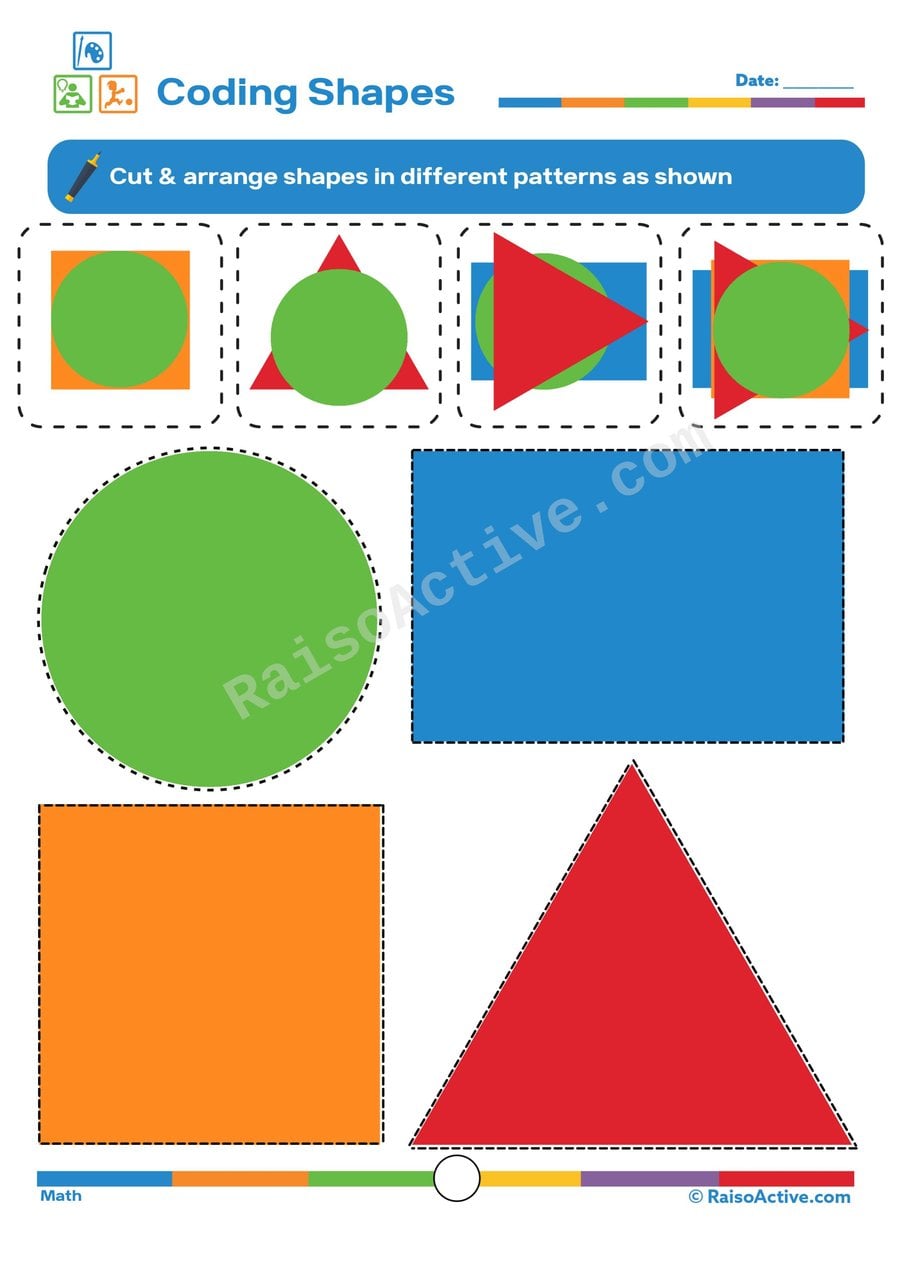
Coding Shapes Worksheet: Cut and Arrange Shapes!
This cut-and-paste worksheet has children ages 3-5 recreate example shape sequences by cutting out individual pieces and arranging them to match, combining shape recognition with the ordered, step-by-step thinking used in early coding and pattern logic. The physical act of cutting and precisely placing each piece also strengthens fine motor control and spatial planning.

Soap & Pepper Science Experiment Worksheet for Preschoolers
This simple experiment introduces children ages 3-5 to the basic science of surface tension and how soap breaks it, using pepper flakes sprinkled on water as a visual demonstration. Watching the pepper scatter away the instant soap touches the water gives children a concrete, memorable example of cause and effect, an early building block for scientific thinking.

States of Matter Worksheet: Exploring Solids, Liquids, and Gases!
This worksheet introduces children ages 4-6 to the three states of matter — solid, liquid, and gas — by having them examine images and sort each one into its correct category. Learning to classify familiar objects (like ice, water, and steam) by their physical state builds early scientific reasoning, since children must look past an object's identity and focus on its underlying properties.

Parts of a Leaf Worksheet for Preschoolers: Learn and Play!
This hands-on activity teaches children ages 3-5 the parts of a leaf — tip, blade, veins, midrib, petiole, and stem — by having them shape a leaf from playdough while comparing it to a real leaf. Building a physical model alongside a real specimen helps children connect abstract vocabulary to tangible features they can see and touch, which is especially effective for this age group.

Soap & Pepper Science Experiment Worksheet for Preschoolers
This hands-on demonstration shows children ages 3-5 how soap disrupts water's surface tension, using floating pepper as a simple, visible indicator of the change. Because the reaction happens instantly and dramatically, it gives young children a strong, memorable first experience with predicting an outcome and then observing whether their prediction was right.
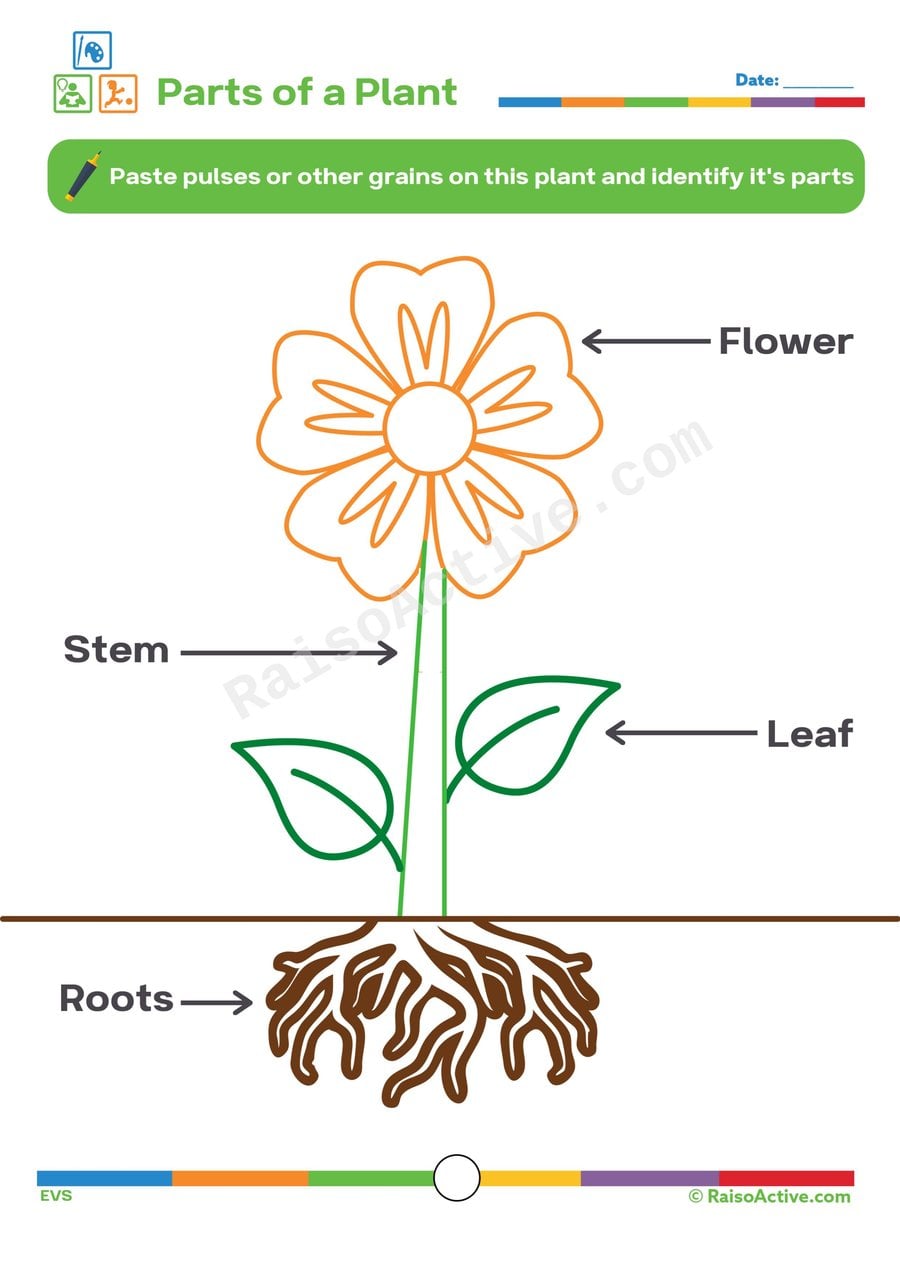
Parts of a Plant Worksheet: Identify and Label!
This activity teaches children ages 3-5 the basic parts of a plant — flower, stem, leaf, and roots — by having them label a diagram and add texture using real pulses or grains glued onto the plant shape. Combining a tactile material with each labeled part helps young children retain the vocabulary better than labeling alone, since touch and sight reinforce the same information.
Guides for this topic
Coding Activities for Preschoolers: Building Tomorrow's Thinkers Today
Discover 15+ unplugged and screen-based coding activities for preschoolers that build sequencing, logic, and problem-solving skills through play. NEP 2020 aligned.
Discovering Wonder: Nature-Based Learning Activities That Captivate Young Children
Explore nature-based learning activities for children ages 2–7 — leaf rubbings, bug hunts, nature journals, and seasonal Indian outdoor ideas that spark wonder.
Christmas and Winter Activities That Combine Fun and Learning: Creating Magical Educational Experiences
Discover Christmas and winter activities that combine festive fun with real learning. Crafts, counting, literacy, and printable worksheets for ages 2 to 8 — perfect for home and school.
Reviews
Every worksheet for ages 4–6, no watermark
Members download the full library of 1,000+ worksheets and every activity pack without watermarks or daily limits. One year costs ₹1,000 in India or $20 elsewhere.
See membership plansOr download any worksheet free with a watermark (5 a day).