Dog Life Cycle Flashcards Worksheet for Preschoolers
This flashcard worksheet introduces children ages 3-5 to the stages of a dog's life, from newborn puppy to grown adult dog, using an animal that many children already know and love from home or from pets in their community. Comparing puppy and adult features, like size and behavior, builds early observational and comparative thinking skills.
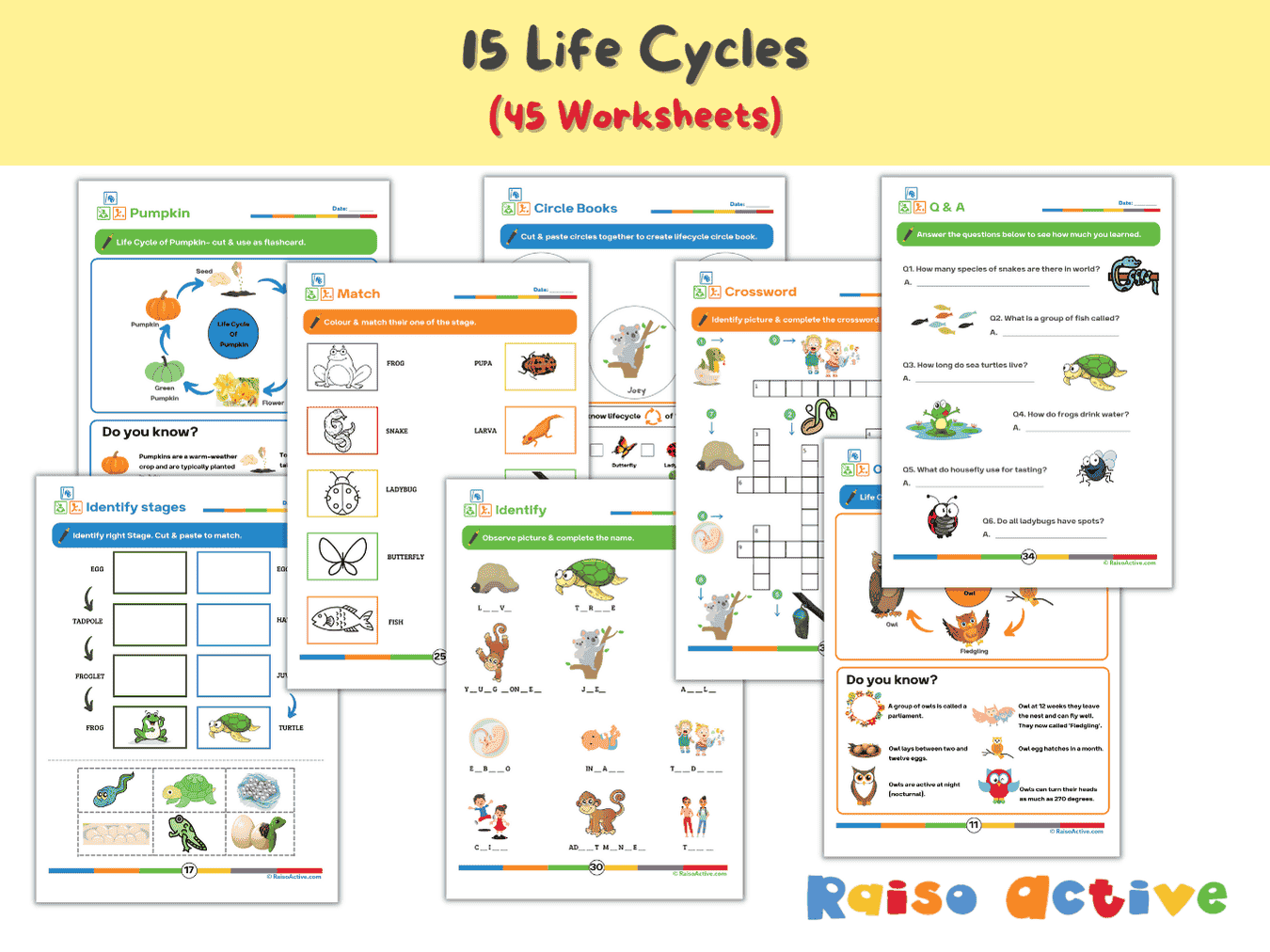
Part of the pack
Lifecycles Activity Book & Flashcards for Preschool & Early Elementary
This is page 13 of the pack. Ages 3-8 · Preschool–Grade 2Ages 3-8 · Nursery–Year 3Ages 3-8 · Nursery–Class 2Ages 3-8

Made for your child
A whole activity pack made with their name
60 pages to spot, build, trace and write their own name, plus pages about their favourites, feelings and family. See a free preview with their name.
Make an All About Me packFree preview · free for members
Or start free: a name tracing sheet with their nameCurriculum
- Living Things - Animals > Animal Life Cycles
How to use this worksheet
Look at the image together as a flashcard, naming the stage shown: newborn puppy, growing puppy, or adult dog. Ask your child what differences they notice between a puppy and an adult dog, such as size or how much they sleep. If you have access to a real dog or puppy pictures at home, compare them to the flashcard image. Talk through how a dog changes over its lifetime, from small and dependent to grown and independent.
Materials needed
- None
Extension activities
- 1Discuss different dog breeds and their characteristics.
- 2Draw a picture of your favorite dog at different ages.
- 3Visit a friend's puppy or a shelter, with permission, to observe a young dog.
- 4Compare a dog's life cycle to a cat's or another familiar pet.
- 5Make a chart showing how old your child would be in 'dog years' at each stage.

Written by
Hemsweta Jain · Teacher Cheena
MBA and Early Childhood Educator, teaching since 2014 · Founder of RaisoActive, Mumbai
Every RaisoActive worksheet is designed and checked by the founder before publishing.
Published · Last reviewed
More from Lifecycles Activity Book & Flashcards for Preschool & Early Elementary

Koala Life Cycle Worksheet: Cut and Paste Matching Activity
Ages 3-5 · Preschool–Pre-KAges 3-5 · Nursery–ReceptionAges 3-5 · Nursery–LKGAges 3-5
This worksheet introduces children ages 3-5 to the life cycle of a koala, from a tiny newborn called a joey that lives in its mother's pouch to a fully grown adult, while practicing scissor and gluing skills. Learning that koala joeys start out riding on their mother's back adds a memorable, specific detail that makes the science concept stick.
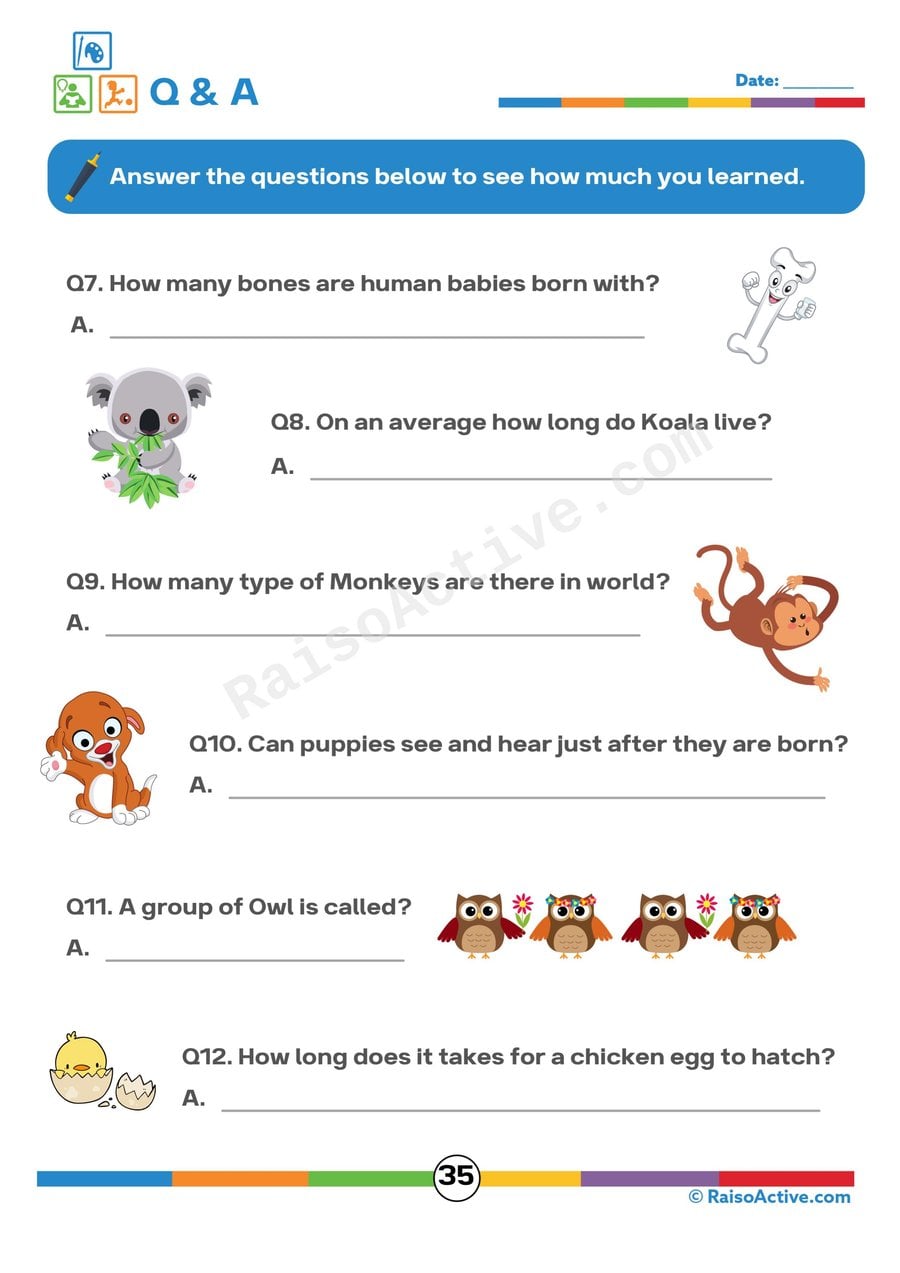
Animal Facts Worksheet for Kids: Fun Q&A!
Ages 3-5 · Preschool–Pre-KAges 3-5 · Nursery–ReceptionAges 3-5 · Nursery–LKGAges 3-5
Children ages 3-5 practice early reading comprehension and recall as they answer simple questions about animal characteristics using picture clues. This worksheet builds the foundational skill of connecting a written question to a visual answer, a key step before children can read fact-based text independently.

Frog Life Cycle Cut and Paste Worksheet for Preschoolers
Ages 3-5 · Preschool–Pre-KAges 3-5 · Nursery–ReceptionAges 3-5 · Nursery–LKGAges 3-5
Children ages 3-5 learn the four stages of a frog's life cycle — egg, tadpole, froglet, and adult frog — while practicing sequencing and precise pasting skills. This worksheet is especially useful for illustrating dramatic physical change, since a tadpole looks almost nothing like an adult frog, which helps children grasp that growth can transform an animal significantly.
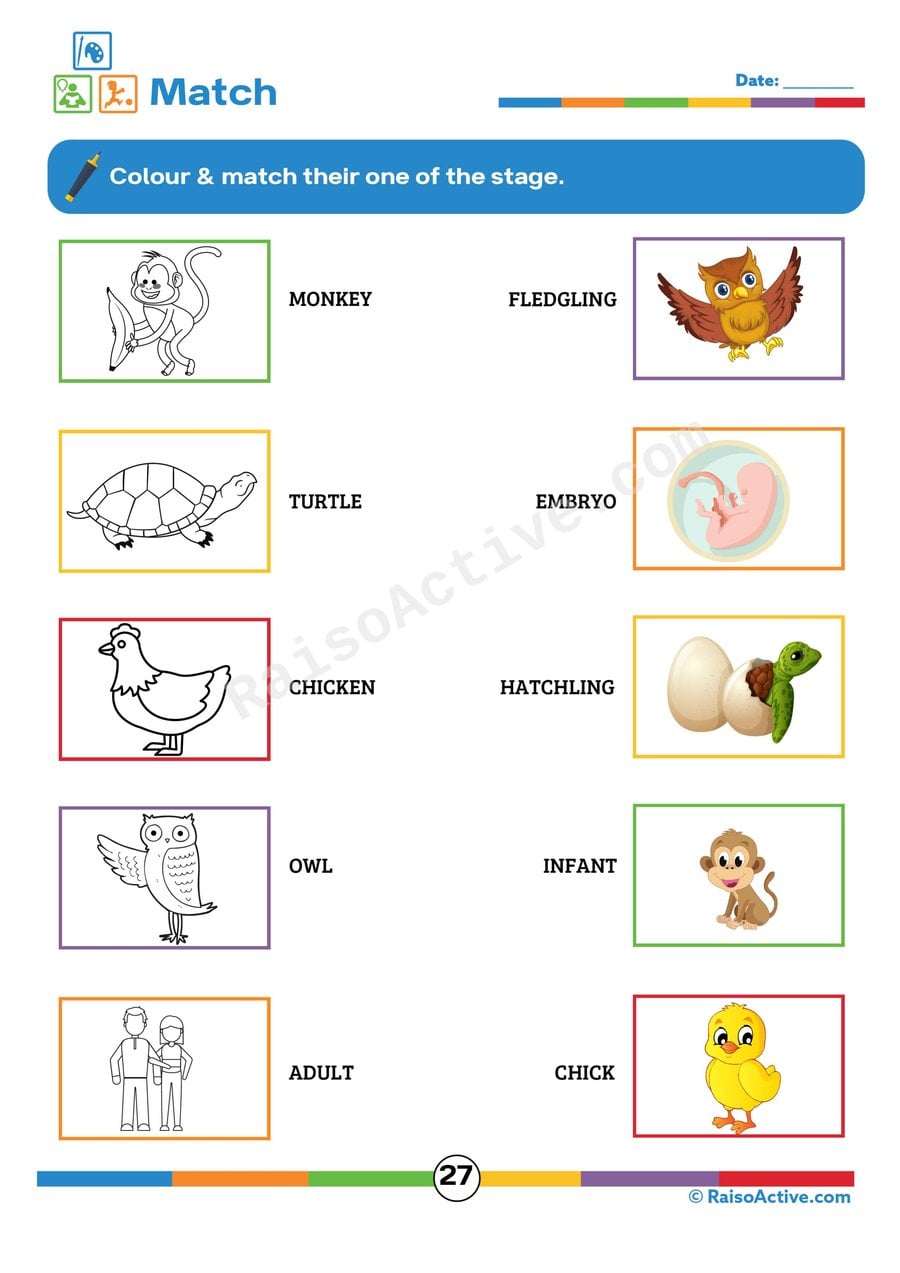
Match the Life Stages: A Fun Worksheet for Kids!
Ages 3-5 · Preschool–Pre-KAges 3-5 · Nursery–ReceptionAges 3-5 · Nursery–LKGAges 3-5
This worksheet has children ages 3-5 match a picture of an animal to the correct life stage shown on the opposite side of the page, reinforcing that living things look different depending on how old they are. Coloring the pictures after matching adds a fine motor component and gives children a reason to look closely at each image a second time.
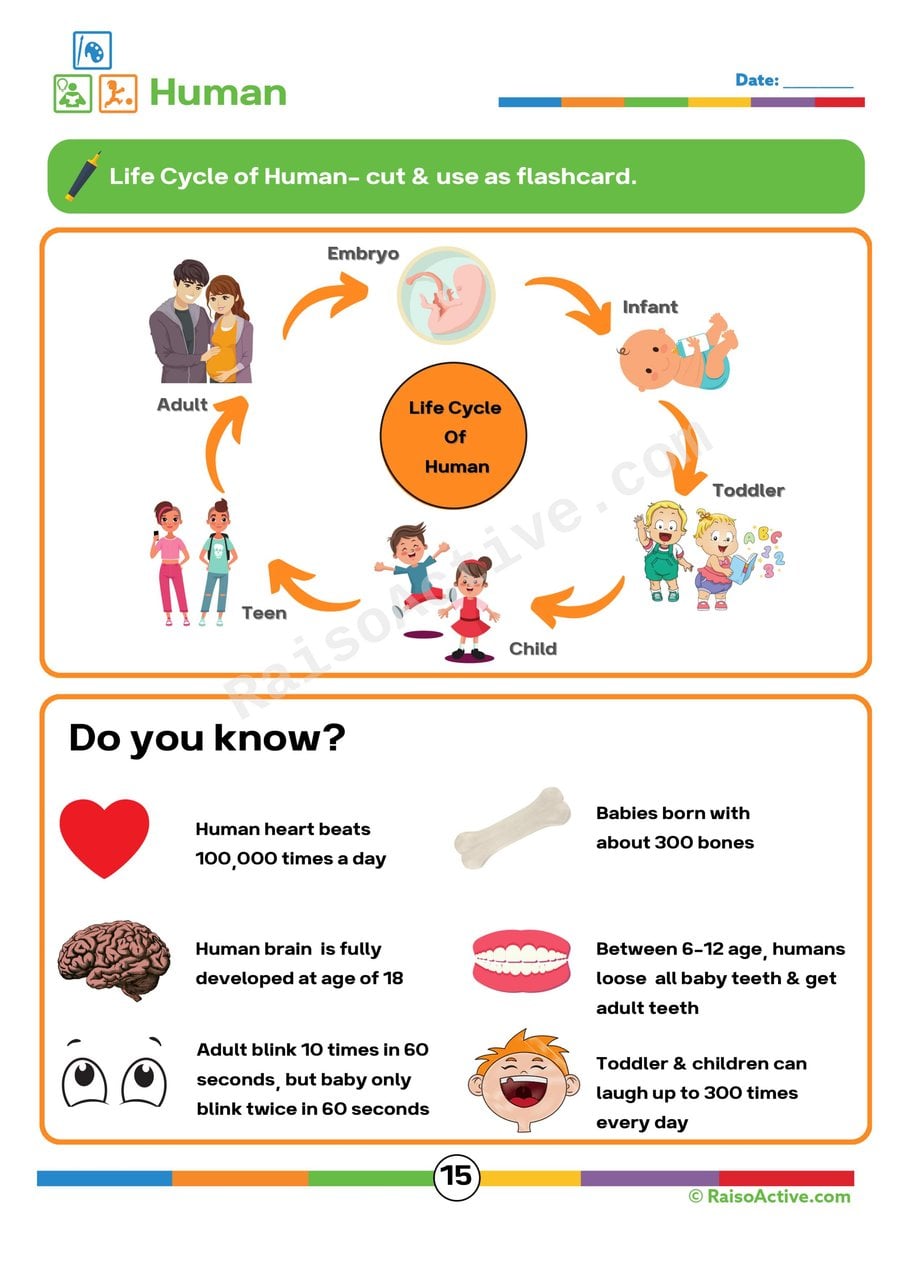
Human Life Cycle Flashcards for Kids
Ages 3-6 · Preschool–KindergartenAges 3-6 · Nursery–Year 1Ages 3-6 · Nursery–UKGAges 3-6
Children ages 3-6 explore the stages of human development — from embryo to infant, child, and adult — using flashcards that build both sequencing skills and personal understanding of growth. Because this topic relates directly to the child's own life, it offers a uniquely relatable entry point into the broader science concept of life cycles.

Complete the Words: A Fun Worksheet for Early Readers!
Ages 3-5 · Preschool–Pre-KAges 3-5 · Nursery–ReceptionAges 3-5 · Nursery–LKGAges 3-5
This worksheet helps children ages 3-5 practice early letter recognition and phonics as they look at a picture and fill in the missing letters to complete an animal-themed word. Saying the finished word aloud after writing it connects the written letters to their spoken sounds, reinforcing the link between reading and speaking that underlies early literacy.

Chicken Life Cycle Flashcards: Learn About Chickens!
Ages 3-5 · Preschool–Pre-KAges 3-5 · Nursery–ReceptionAges 3-5 · Nursery–LKGAges 3-5
Working with flashcards that show a chicken's life stages, from egg to chick to adult chicken, teaches children ages 3-5 the concept of a life cycle using an animal that's familiar and easy to relate to through farms, storybooks, and everyday life. Cutting out and physically arranging the cards in order builds fine motor skills alongside sequencing and early scientific reasoning about growth and change. Because chickens are a common early-learning animal, this worksheet also reinforces vocabulary your child may already be building through other farm or animal-themed lessons.

My Favorite Animal: Lifecycle Writing Worksheet for Kids
Ages 4-6 · Pre-K–KindergartenAges 4-6 · Reception–Year 1Ages 4-6 · LKG–UKGAges 4-6
This writing worksheet asks children ages 4-6 to describe their favorite animal's life cycle using sequencing words like 'first,' 'then,' 'next,' and 'last,' essential building blocks for narrative and informational writing. Choosing their own animal makes the task personally engaging while still requiring them to organize factual information in a logical order. This combination of choice and structure helps children practice both content knowledge and the mechanics of sequential writing.
Related worksheets
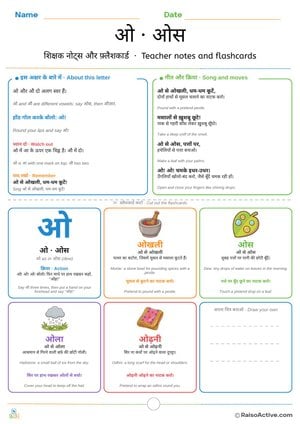
Hindi Letter ओ (o) Teacher Notes and Flashcards | ओ शिक्षक नोट्स और फ़्लैशकार्ड
Ages 3-7 · Preschool–Grade 1Ages 3-7 · Nursery–Year 2Ages 3-7 · Nursery–Class 1Ages 3-7
Teacher notes and six cut-out flashcards for ओ (o) with the words ओखली, ओस, ओला, ओढ़नी and ओजस. Each card has a sentence and a small action, and the page ends with a short song to sing and move to.
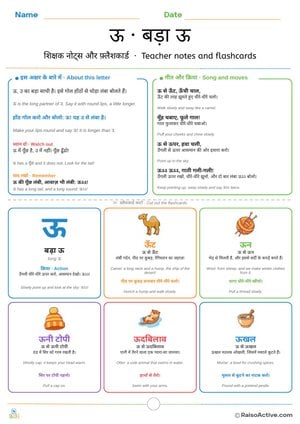
Hindi Letter ऊ (oo) Teacher Notes and Flashcards | ऊ · बड़ा ऊ
Ages 3-7 · Preschool–Grade 1Ages 3-7 · Nursery–Year 2Ages 3-7 · Nursery–Class 1Ages 3-7
Children meet the long vowel ऊ with a short note for adults, a song with actions and cut-out flashcards for ऊँट (camel), ऊन (wool), ऊनी टोपी (woolly cap), ऊदबिलाव (otter), ऊखल (mortar). They hear the sound at the start of real words and link it to a hand action.
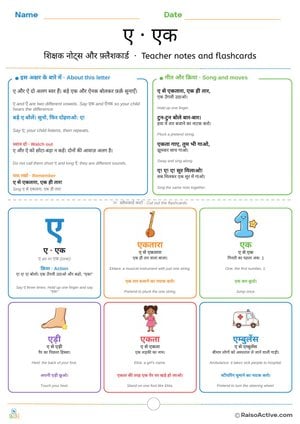
Hindi Letter ए (e) Teacher Notes and Flashcards | ए शिक्षक नोट्स और फ़्लैशकार्ड
Ages 3-7 · Preschool–Grade 1Ages 3-7 · Nursery–Year 2Ages 3-7 · Nursery–Class 1Ages 3-7
Teacher notes and six cut-out flashcards for ए (e) with the words एकतारा, एक, एड़ी, एकता and एम्बुलेंस. Each card has a sentence and a small action, and the page ends with a short song to sing and move to.
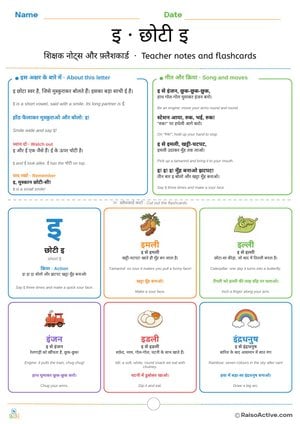
Hindi Letter इ (i) Teacher Notes and Flashcards | इ · छोटी इ
Ages 3-7 · Preschool–Grade 1Ages 3-7 · Nursery–Year 2Ages 3-7 · Nursery–Class 1Ages 3-7
Children meet the short vowel इ with a short note for adults, a song with actions and cut-out flashcards for इमली (tamarind), इल्ली (caterpillar), इंजन (engine), इडली (idli), इंद्रधनुष (rainbow). They hear the sound at the start of real words and link it to a hand action.
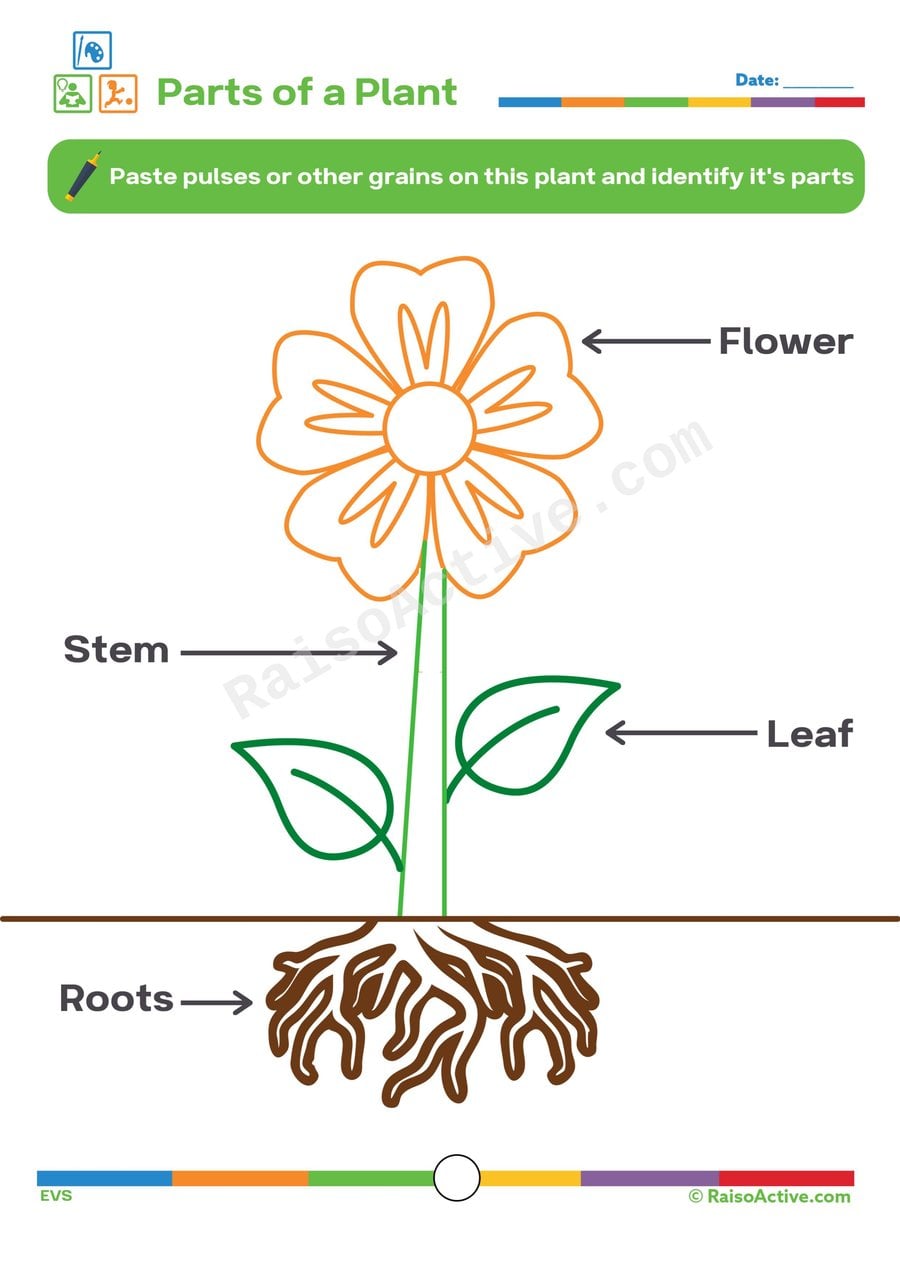
Parts of a Plant Worksheet: Identify and Label!
Ages 3-5 · Preschool–Pre-KAges 3-5 · Nursery–ReceptionAges 3-5 · Nursery–LKGAges 3-5
This activity teaches children ages 3-5 the basic parts of a plant — flower, stem, leaf, and roots — by having them label a diagram and add texture using real pulses or grains glued onto the plant shape. Combining a tactile material with each labeled part helps young children retain the vocabulary better than labeling alone, since touch and sight reinforce the same information.

Animal Action Cards: Fun Movement Worksheet for Kids!
Ages 3-5 · Preschool–Pre-KAges 3-5 · Nursery–ReceptionAges 3-5 · Nursery–LKGAges 3-5
These animal action cards get children ages 3-5 moving as they follow simple instructions, like hopping like a rabbit or slithering like a snake, combining gross motor development with listening and instruction-following skills. Because each card requires reading or recalling a specific action tied to a specific animal, children also reinforce animal vocabulary and movement-based descriptive language. Turning learning into physical movement is especially valuable for this age group, whose attention and retention often improve dramatically when a body movement is involved.
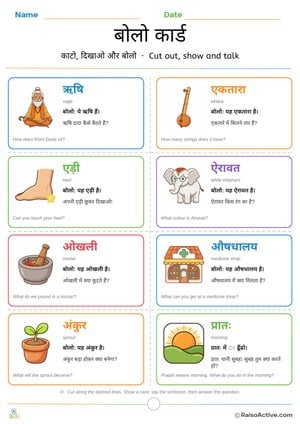
Hindi Bolo Speaking Cards for Vowels Part 2 | बोलो कार्ड
Ages 3-7 · Preschool–Grade 1Ages 3-7 · Nursery–Year 2Ages 3-7 · Nursery–Class 1Ages 3-7
Eight cut-out cards with a picture, a sentence to say (बोलो: यह ... है) and a question to answer, for ऋषि, एकतारा, एड़ी, ऐरावत, ओखली, औषधालय, अंकुर and प्रातः.
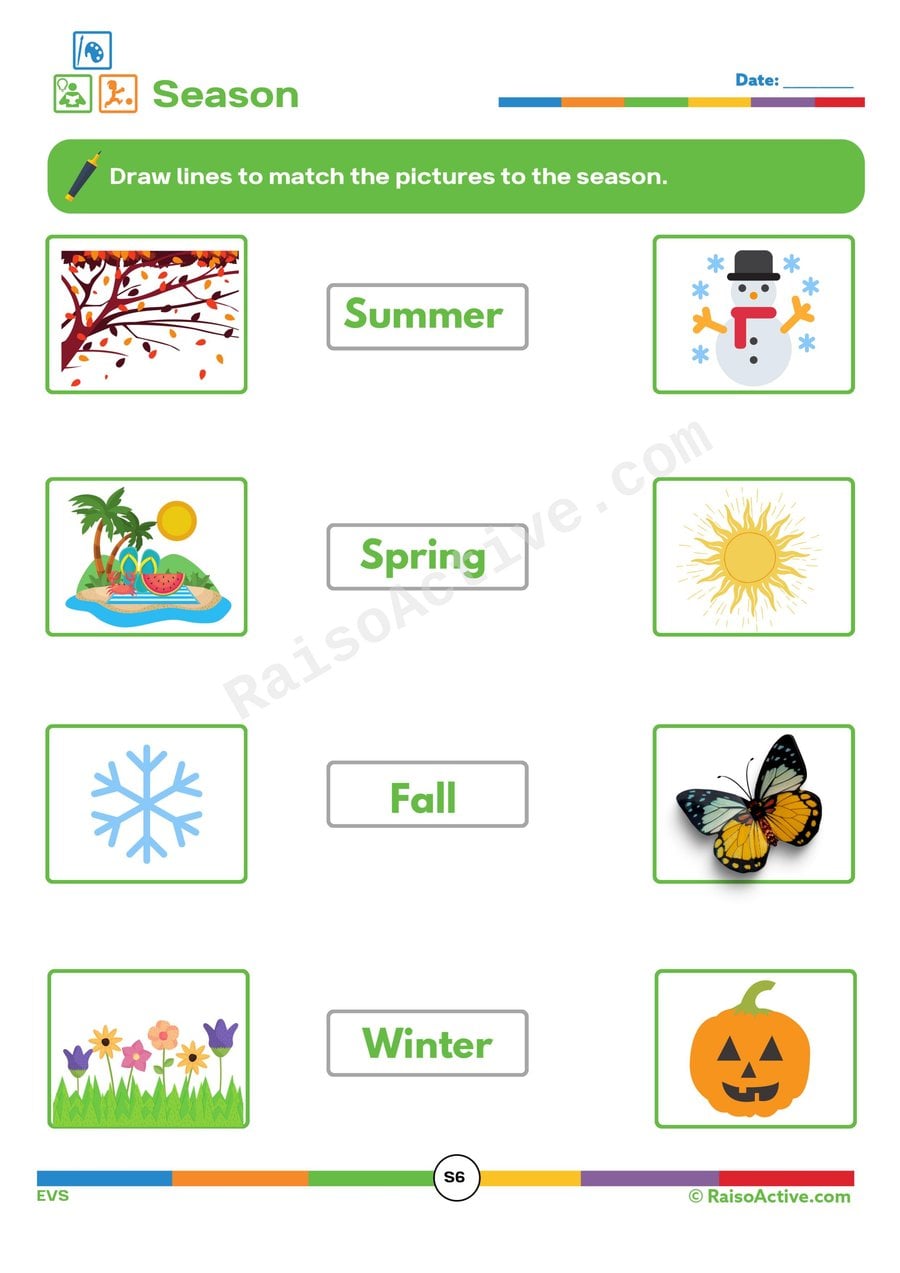
Seasons Matching Worksheet for Preschoolers
Ages 3-5 · Preschool–Pre-KAges 3-5 · Nursery–ReceptionAges 3-5 · Nursery–LKGAges 3-5
This worksheet helps children ages 3-5 learn to recognize the four seasons — summer, fall, winter, and spring — and match seasonal pictures, like snow or falling leaves, to the correct season name. Understanding that weather and nature change in a predictable yearly cycle is an early science concept that also connects naturally to a child's own experience of holidays and clothing changes throughout the year.
Guides for this topic

Discovering Wonder: Nature-Based Learning Activities That Captivate Young Children
Explore nature-based learning activities for children ages 2–7 — leaf rubbings, bug hunts, nature journals, and seasonal Indian outdoor ideas that spark wonder.

Creating Engaging Themed Learning Units for Young Children: A Complete Guide to Integrated Learning
Discover how to create engaging themed learning units for young children that integrate literacy, maths, science, and art — with practical examples and free worksheets.
Hands-On Science Fun: Age-Appropriate Science Activities That Spark Curiosity in Preschoolers
Discover 10+ easy science experiments for preschoolers using Indian household items. Spark curiosity in children ages 2-6 with safe, play-based STEM activities.
Reviews
Every worksheet for ages 3–5, no watermark
Members download the full library of 1,000+ worksheets and every activity pack without watermarks or daily limits. One year costs ₹999 in India or $20 elsewhere.
See membership plansOr download any worksheet free with a watermark (5 a day).