Breathe Lab: Box and Lazy-8 Breathing and a Heartbeat Experiment
Children trace box and lazy-8 breathing shapes, then run a simple experiment: predict, count pulse beats for 15 seconds, multiply by 4 and compare resting, after star jumps and after slow breathing. They fill in a bar chart.
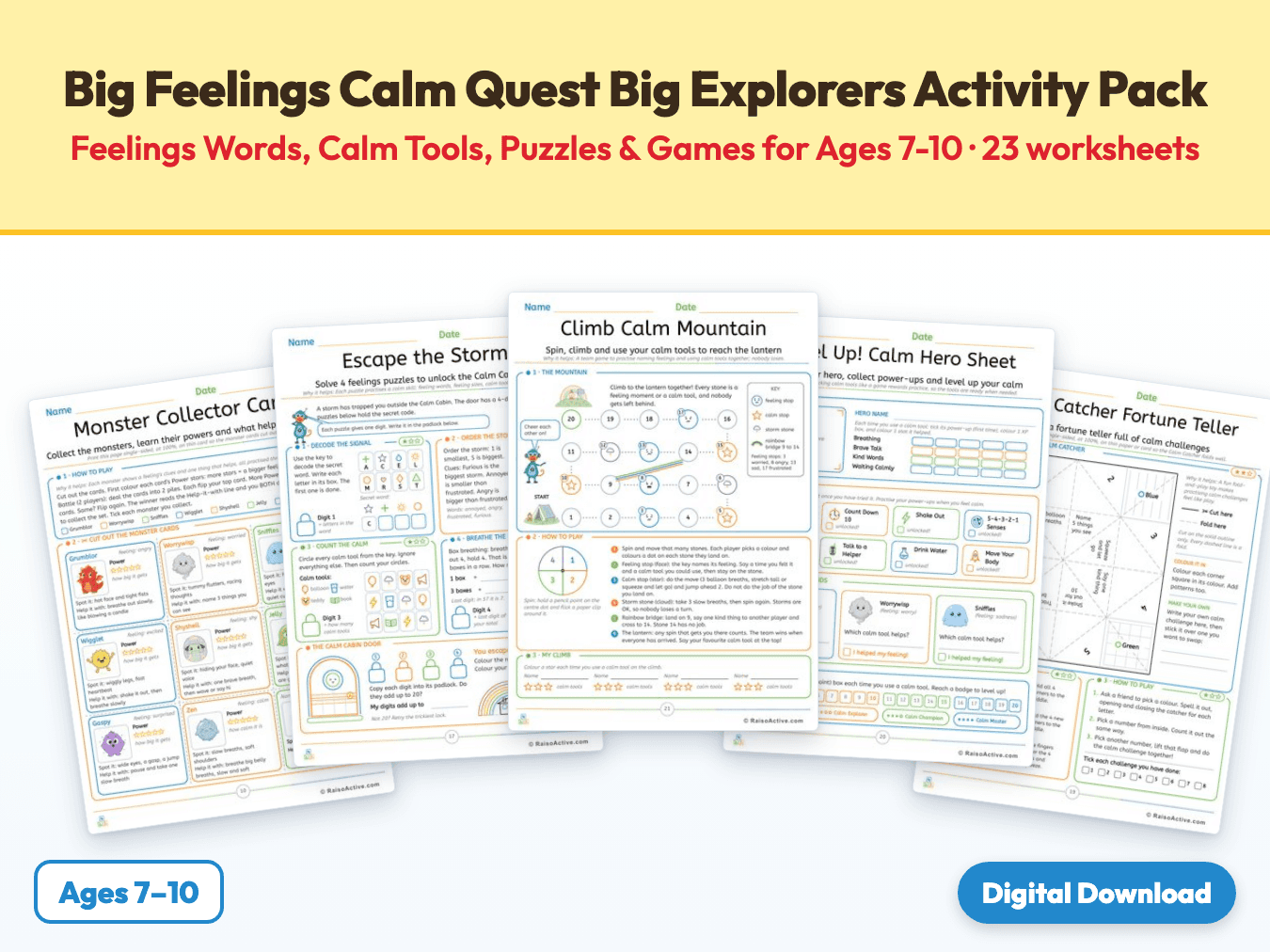
Part of the pack
Big Feelings Calm Quest Big Explorers Activity Pack: Feelings Words, Calm Tools, Puzzles & Games for Ages 7-10
This is page 11 of the pack. Ages 7-10 · Grade 2–Grade 3Ages 7-10 · Year 3–Year 4Ages 7-10 · Class 2–Class 3Ages 7-10
How to use this worksheet
Trace each shape slowly, counting to 4. Find your pulse on your wrist, count for 15 seconds and multiply by 4. Do the slow breathing straight after the star jumps, fill in the table and bars, then complete the sentences.
Materials needed
- Pencil
- Crayons
- A timer or clock
Extension activities
- 1Repeat the test on another day.
- 2Try a different breathing shape and compare.

Written by
Hemsweta Jain · Teacher Cheena
MBA and Early Childhood Educator, teaching since 2014 · Founder of RaisoActive, Mumbai
Every RaisoActive worksheet is designed and checked by the founder before publishing.
Published · Last reviewed
More from Big Feelings Calm Quest Big Explorers Activity Pack: Feelings Words, Calm Tools, Puzzles & Games for Ages 7-10

How Big Is It? Feelings Thermometer and Matching the Size of the Reaction
Ages 7-10 · Grade 2–Grade 3Ages 7-10 · Year 3–Year 4Ages 7-10 · Class 2–Class 3Ages 7-10
Children rank five feelings from coolest to hottest, decide whether a problem is small, medium or big and match the size of the reaction, then think of a reaction that fits a small problem.

The Worst Best Day: A Feelings Reading Comprehension Story with Questions
Ages 7-10 · Grade 2–Grade 3Ages 7-10 · Year 3–Year 4Ages 7-10 · Class 2–Class 3Ages 7-10
Children read a story about Zara's rainy trip, lost lunch and a kind friend. Questions at three levels (tick, short answer, explain it) build inference and feelings vocabulary: grumpy, worried, grateful, amazed.

Big Feelings Calm Quest Certificate: Calm Quest Champion
Ages 7-10 · Grade 2–Grade 3Ages 7-10 · Year 3–Year 4Ages 7-10 · Class 2–Class 3Ages 7-10
A certificate of achievement for children who explored big feelings and completed the Big Feelings Calm Quest pack. Tick the three levels completed.

Level Up! Calm Hero Sheet: Hero Stats, Power-Ups and an XP Tracker
Ages 7-10 · Grade 2–Grade 3Ages 7-10 · Year 3–Year 4Ages 7-10 · Class 2–Class 3Ages 7-10
Children design a calm hero, colour stats for breathing, brave talk, kindness and patience, tick power-ups as they try them, pair three big-feeling friends with calm tools and fill a 20-box XP tracker.

Escape the Storm! A Feelings Escape Room Puzzle Worksheet
Ages 7-10 · Grade 2–Grade 3Ages 7-10 · Year 3–Year 4Ages 7-10 · Class 2–Class 3Ages 7-10
Children solve four mini puzzles (a picture code, ordering by size, counting calm tools and box breathing arithmetic) to get four digits, then check that the digits add up to 20.

Climb Calm Mountain: A Team Board Game with a Paper-Clip Spinner
Ages 7-10 · Grade 2–Grade 3Ages 7-10 · Year 3–Year 4Ages 7-10 · Class 2–Class 3Ages 7-10
Children play a cooperative game up a 20-stone mountain. Feeling stops, calm stops, storm stones and a rainbow bridge practise naming feelings, using calm tools and saying kind words. Everyone wins by arriving at the lantern.

Problem Solvers: Stop, Think, Choose, Try and Matching the Right Calm Tool
Ages 7-10 · Grade 2–Grade 3Ages 7-10 · Year 3–Year 4Ages 7-10 · Class 2–Class 3Ages 7-10
Children use four steps, Stop, Think, Choose and Try, to help Nia after a spill. They match calm tools to places (class, bed, field, shop) and brainstorm three ideas for a friend who wants a different game.

Mixed Feelings Lab: Feeling Potions and Leo's Feelings Line Graph
Ages 7-10 · Grade 2–Grade 3Ages 7-10 · Year 3–Year 4Ages 7-10 · Class 2–Class 3Ages 7-10
Children learn that we can feel two things at once (excited and nervous, sad and happy). They match potions to moments, plot a line graph of Leo's day and explain the biggest change.
Related worksheets

Soap & Pepper Science Experiment Worksheet for Preschoolers
Ages 3-5 · Preschool–Pre-KAges 3-5 · Nursery–ReceptionAges 3-5 · Nursery–LKGAges 3-5
This hands-on demonstration shows children ages 3-5 how soap disrupts water's surface tension, using floating pepper as a simple, visible indicator of the change. Because the reaction happens instantly and dramatically, it gives young children a strong, memorable first experience with predicting an outcome and then observing whether their prediction was right.

Life Cycle Match: Frog, Snake, Ladybug, Butterfly, and Fish Worksheet
Ages 4-6 · Pre-K–KindergartenAges 4-6 · Reception–Year 1Ages 4-6 · LKG–UKGAges 4-6
This matching worksheet helps children ages 4-6 compare life cycle stages across five very different animals: frogs, snakes, ladybugs, butterflies, and fish. By matching each animal to its correct stage picture, children start to notice that not all animals grow the same way — some hatch from eggs looking like miniature adults, while others go through dramatic transformations like metamorphosis. This comparative thinking builds a deeper foundation in life science than studying just one animal alone.
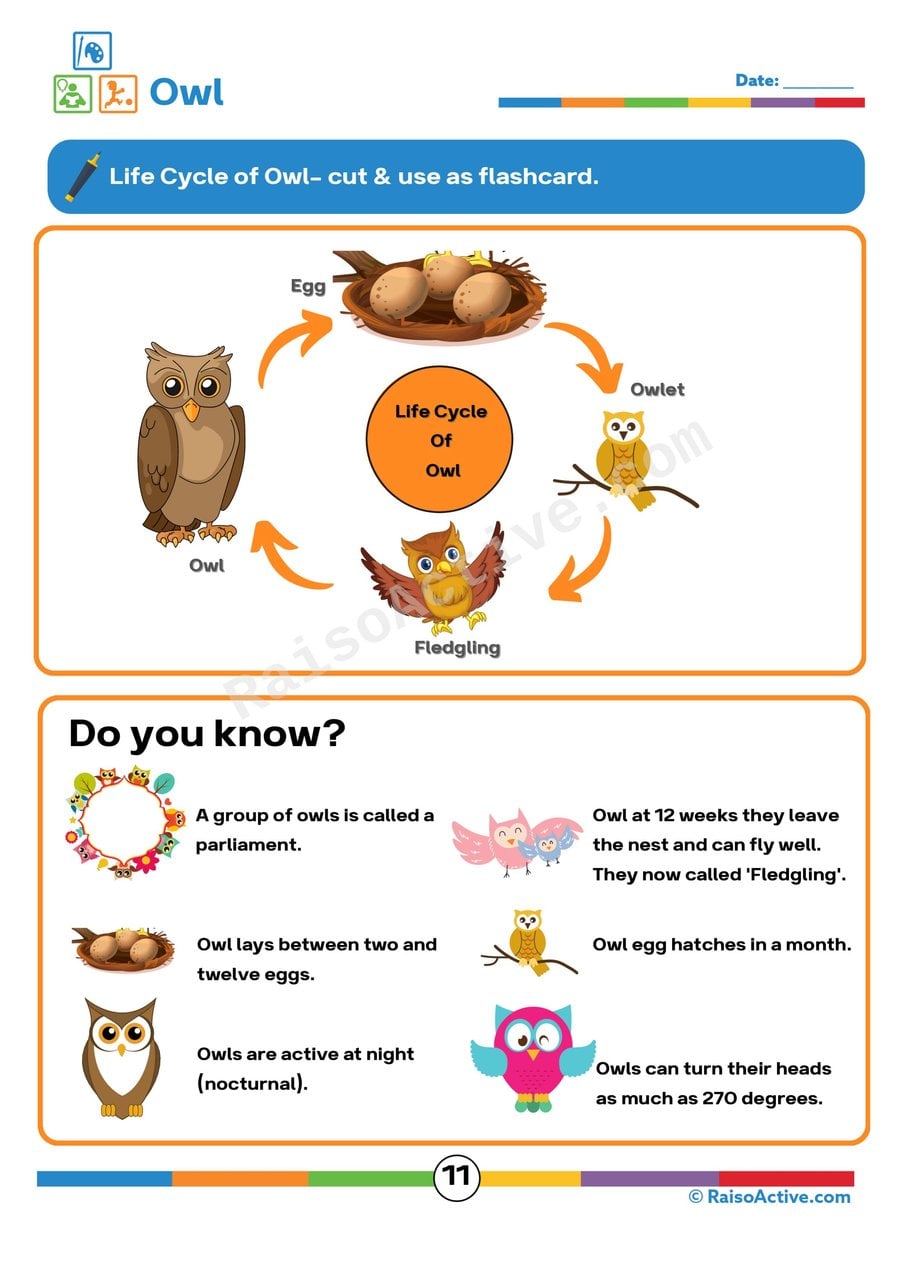
Owl Life Cycle Flashcard Worksheet for Kids
Ages 4-6 · Pre-K–KindergartenAges 4-6 · Reception–Year 1Ages 4-6 · LKG–UKGAges 4-6
Children ages 4-6 learn the stages of an owl's life cycle — egg, owlet, fledgling, and adult owl — while building vocabulary and factual knowledge through flashcards. Beyond sequencing, this worksheet introduces specific scientific terms for baby birds, expanding children's descriptive vocabulary beyond generic words like 'baby.'

Big Feelings Fun Time Answer Key for Grown-Ups
Ages 4-6 · Pre-K–KindergartenAges 4-6 · Reception–Year 1Ages 4-6 · LKG–UKGAges 4-6
A page-by-page answer key for the Big Feelings Fun Time pack, including the maze route, game board squares, story order and notes on pages where answers vary.

Match the Life Cycle Stages Worksheet for Preschoolers
Ages 3-5 · Preschool–Pre-KAges 3-5 · Nursery–ReceptionAges 3-5 · Nursery–LKGAges 3-5
Children ages 3-5 practice matching animals and plants to their correct life cycle stage, reinforcing the broader science concept that all living things grow and change over time. Working across multiple types of living things — not just one animal — helps children recognize life cycles as a general pattern in nature rather than a fact specific to a single creature.
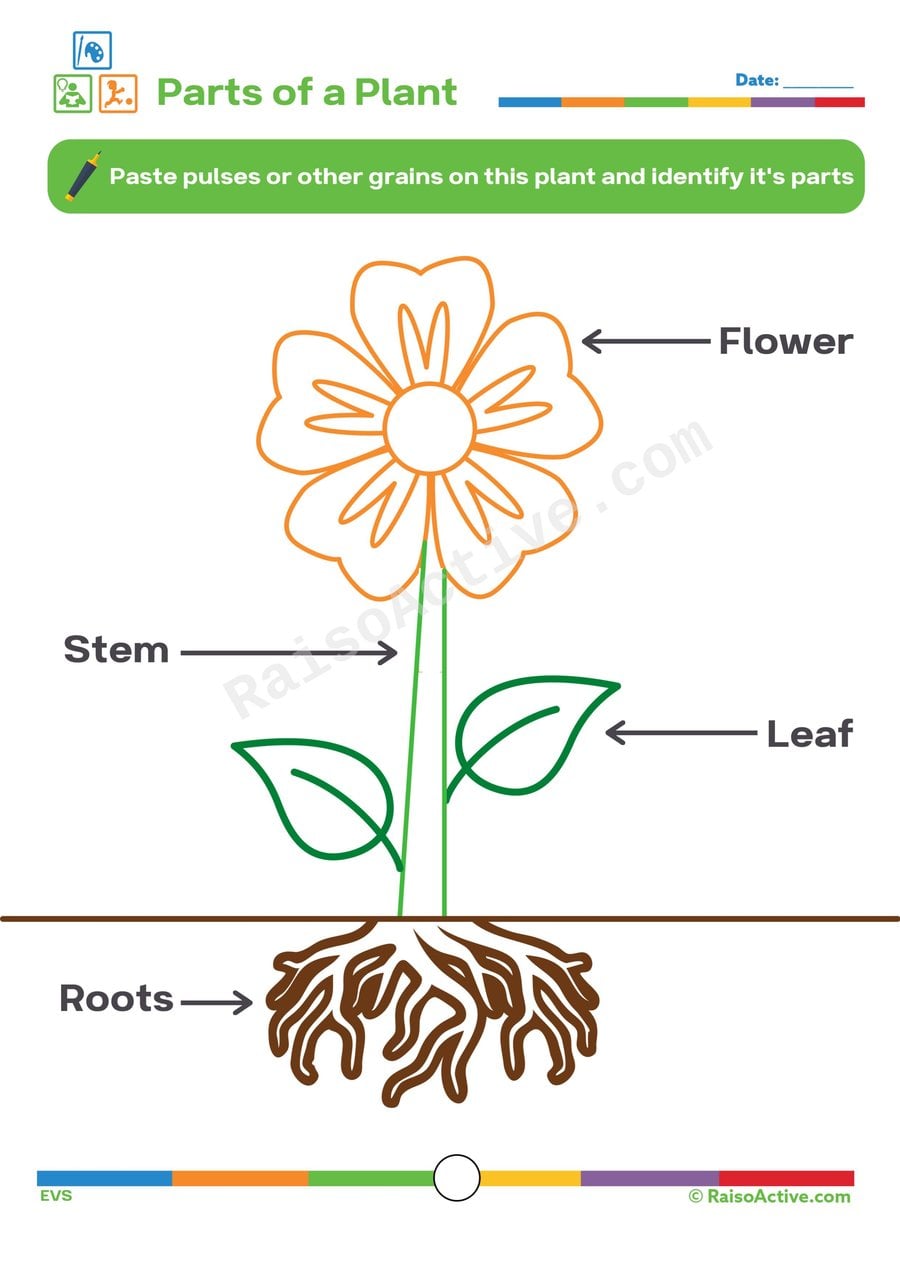
Parts of a Plant Worksheet: Identify and Label!
Ages 3-5 · Preschool–Pre-KAges 3-5 · Nursery–ReceptionAges 3-5 · Nursery–LKGAges 3-5
This activity teaches children ages 3-5 the basic parts of a plant — flower, stem, leaf, and roots — by having them label a diagram and add texture using real pulses or grains glued onto the plant shape. Combining a tactile material with each labeled part helps young children retain the vocabulary better than labeling alone, since touch and sight reinforce the same information.
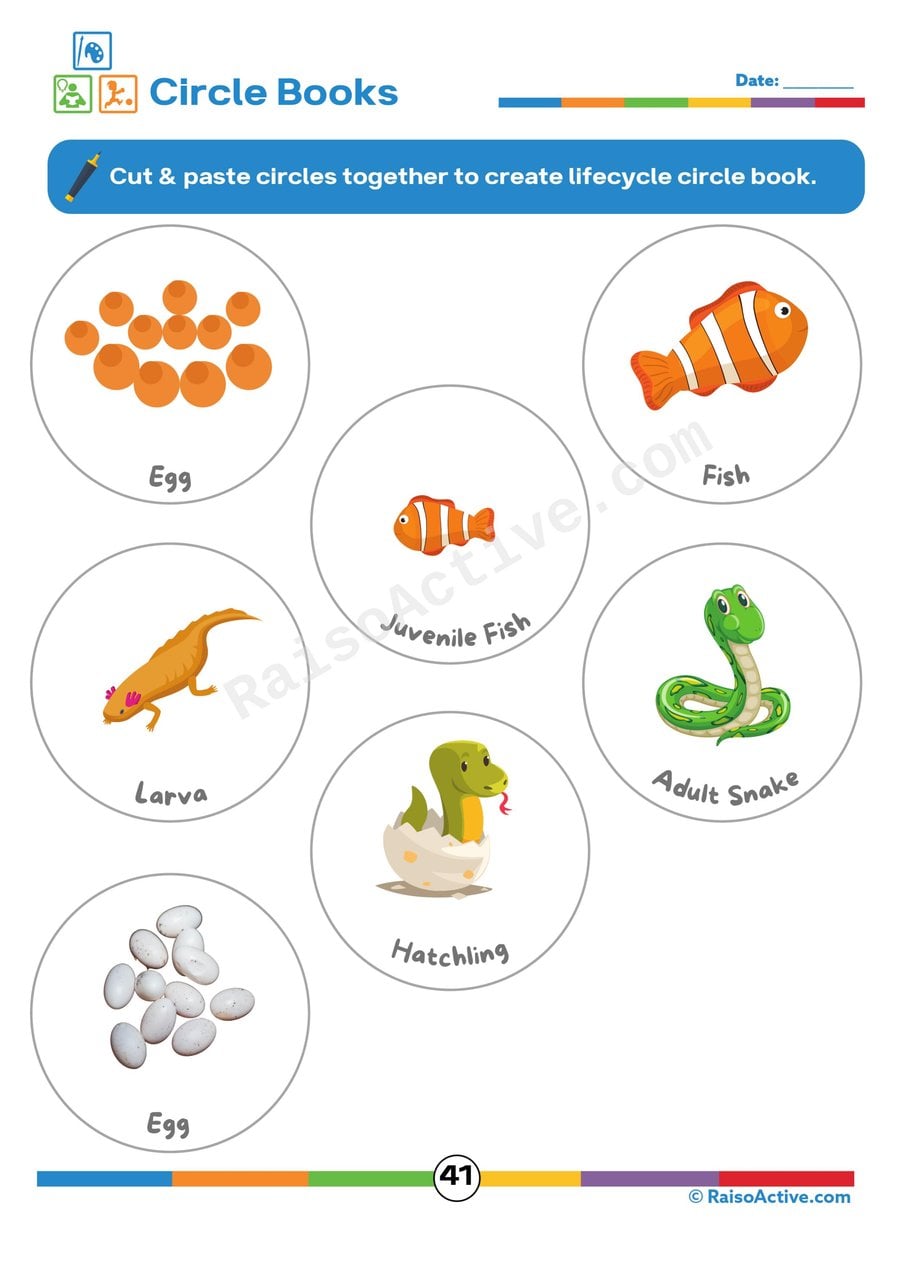
Lifecycle Circle Book: Cut and Paste Worksheet
Ages 3-5 · Preschool–Pre-KAges 3-5 · Nursery–ReceptionAges 3-5 · Nursery–LKGAges 3-5
This worksheet gives children ages 3-5 practice matching pictures to the correct stage of an animal's life cycle while assembling a hands-on circular book. Beyond sequencing, the rotating format helps children internalize that growth is a continuous, repeating process rather than a fixed line from start to finish.

Breathe With Me: Wave, Flower and Candle Breathing Tracing
Ages 4-6 · Pre-K–KindergartenAges 4-6 · Reception–Year 1Ages 4-6 · LKG–UKGAges 4-6
Children trace a wave and a mountain path while breathing slowly, practise 'smell the flower, blow the candle', and colour a bubble after each breath. They check in with how they feel afterwards.
Guides for this topic

Resources for Children with Multiple Disabilities: A Comprehensive Guide for Families
Discover essential resources for children with multiple disabilities. Therapies, inclusive learning, assistive technology, and printable activities for ages 1-8.
Understanding Standardized Testing in Early Childhood: A Parent's Guide to Assessment Balance
Learn how standardised tests work in early childhood, when they help, when they harm, and how to balance formal assessment with observation-based learning.
Addressing Mental Health with Young Children: A Compassionate Guide for Families
Learn how to support your young child's mental health with compassionate strategies. Recognise signs, build emotional resilience, and know when to seek professional help.
Reviews
Every worksheet for ages 7–10, no watermark
Members download the full library of 1,000+ worksheets and every activity pack without watermarks or daily limits. One year costs ₹999 in India or $20 elsewhere.
See membership plansOr download any worksheet free with a watermark (5 a day).