Looking for a structured learning path?
Explore our age-wise monthly curriculum with 4 subjects per month
Free Printable Worksheets
Browse Worksheets
Download free educational worksheets for children ages 1-8. Perfect for preschool, kindergarten, and early elementary learning activities.
Filters
Age Range
Curriculum
Tags
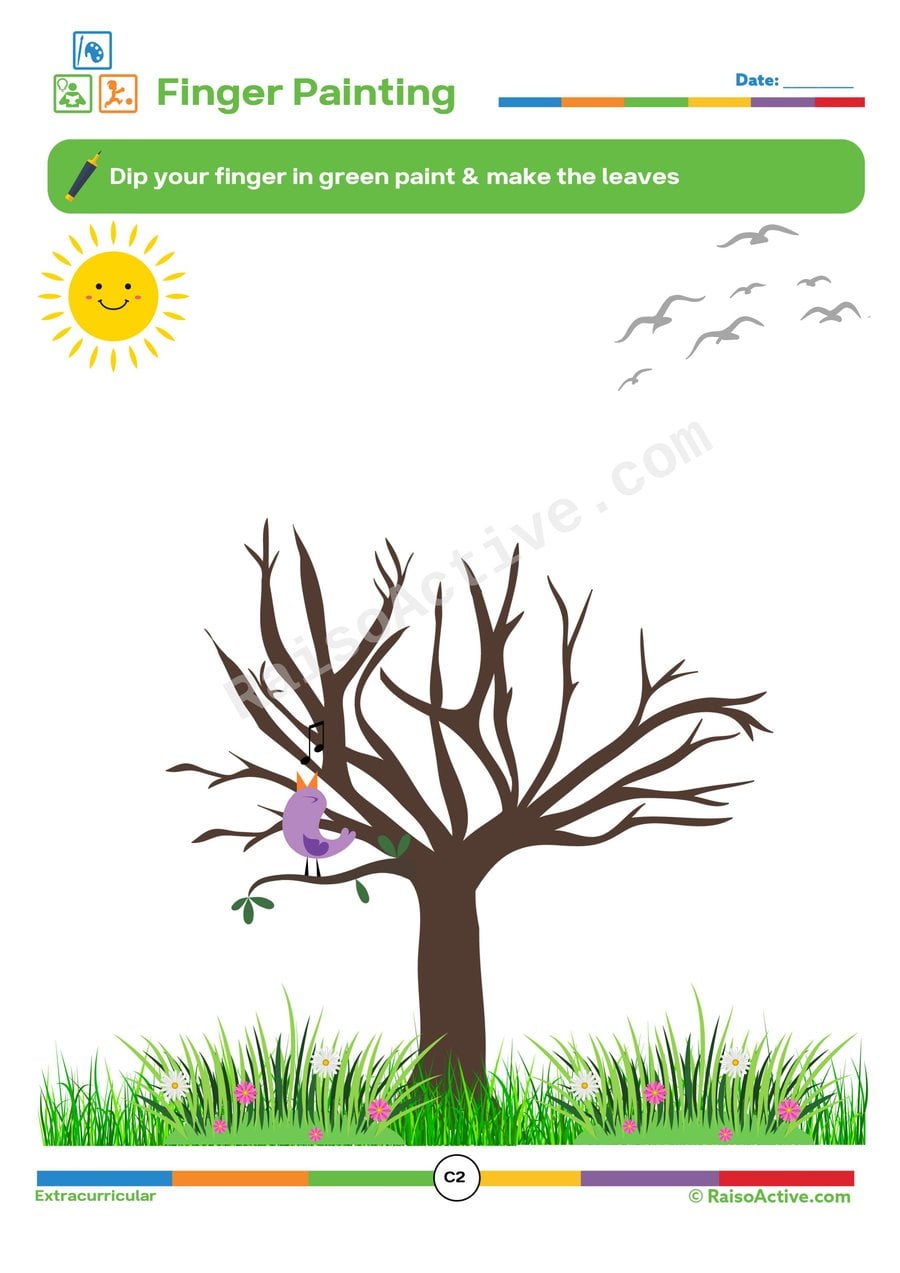
Finger Painting Fun: Make Leaves on the Tree!
This worksheet develops fine motor control and sensory creativity by having children use their fingertip, rather than a brush, to dab green paint onto tree branches to create leaves. For three- to five-year-olds, finger painting builds precise fingertip control in a low-pressure, playful way, and repeating the same dabbing motion across the page also reinforces the concept of filling a space with a repeated mark.
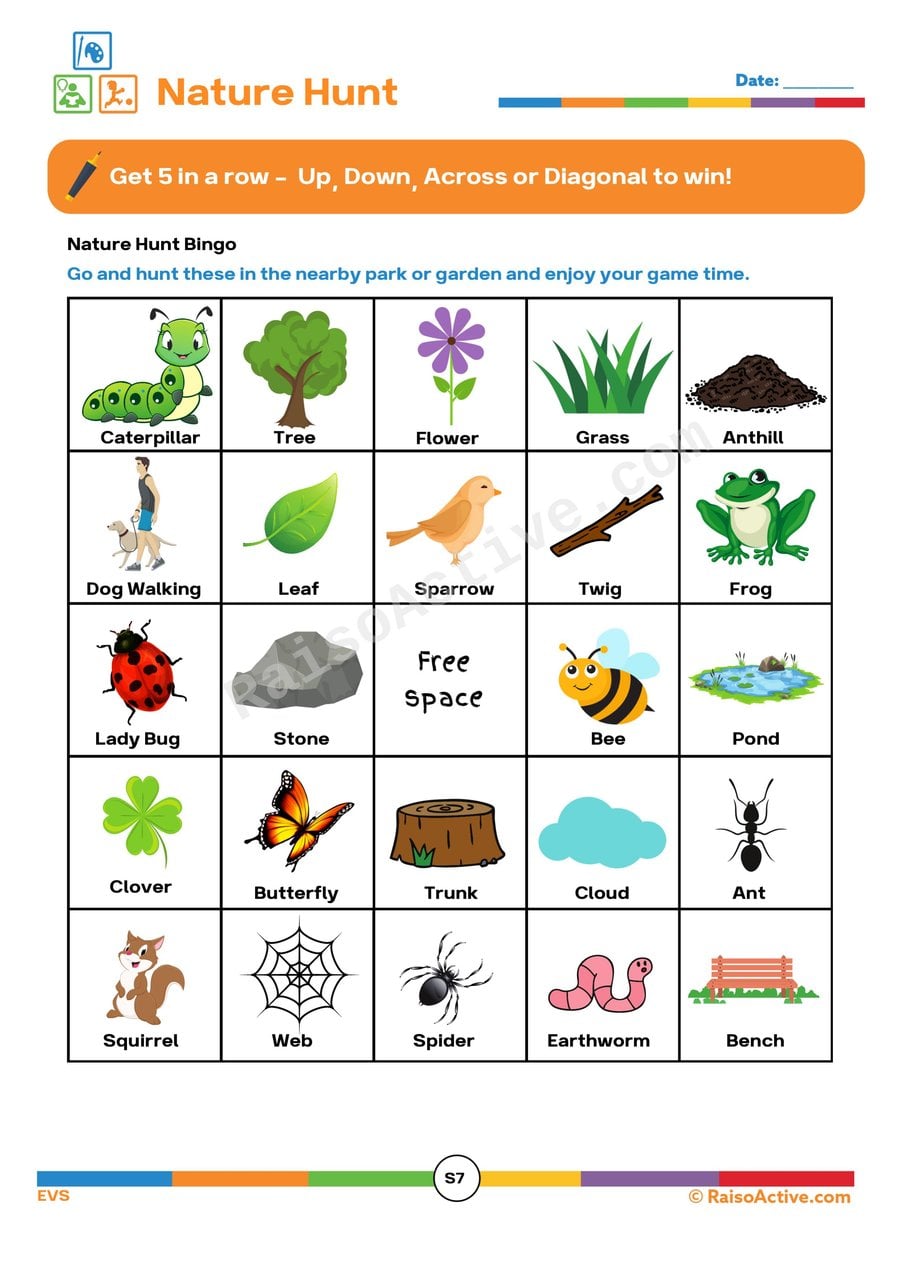
Nature Hunt Bingo Worksheet for Kids
This worksheet helps children ages 3-5 practice identifying and recognizing common items found in nature, like leaves, rocks, or flowers, by searching for them in a real outdoor space and marking them off a bingo card. Turning a nature walk into a bingo game builds observational focus, since children must actively scan their surroundings rather than passively walk through them.

Leaf Painting Worksheet for Kids: Stamp and Create!
This activity builds fine motor skills and early science observation as children examine real leaf shapes and sizes while painting and stamping them onto paper to create original artwork. For three- to five-year-olds, handling actual leaves before turning them into art connects a hands-on nature experience to a creative outcome, reinforcing that natural objects have distinct shapes worth noticing.
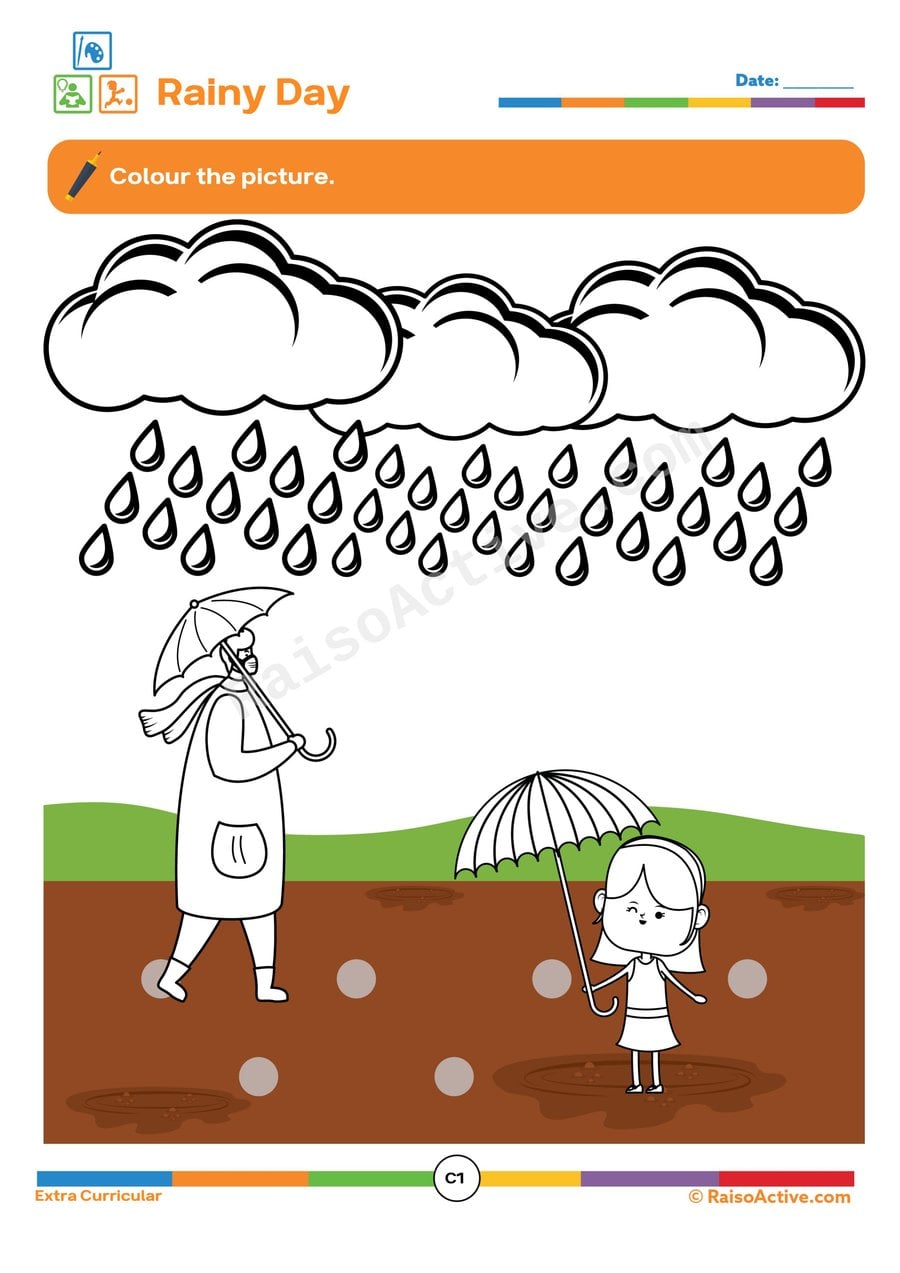
Rainy Day Coloring Worksheet for Preschoolers
This worksheet builds fine motor control and color-within-the-lines coordination while giving children a chance to talk about weather vocabulary tied to a rainy day scene, like clouds, raindrops, and umbrellas. For three- to five-year-olds, coloring a themed scene rather than a random picture also gives adults a natural opening to connect the art activity to real conversations about weather.
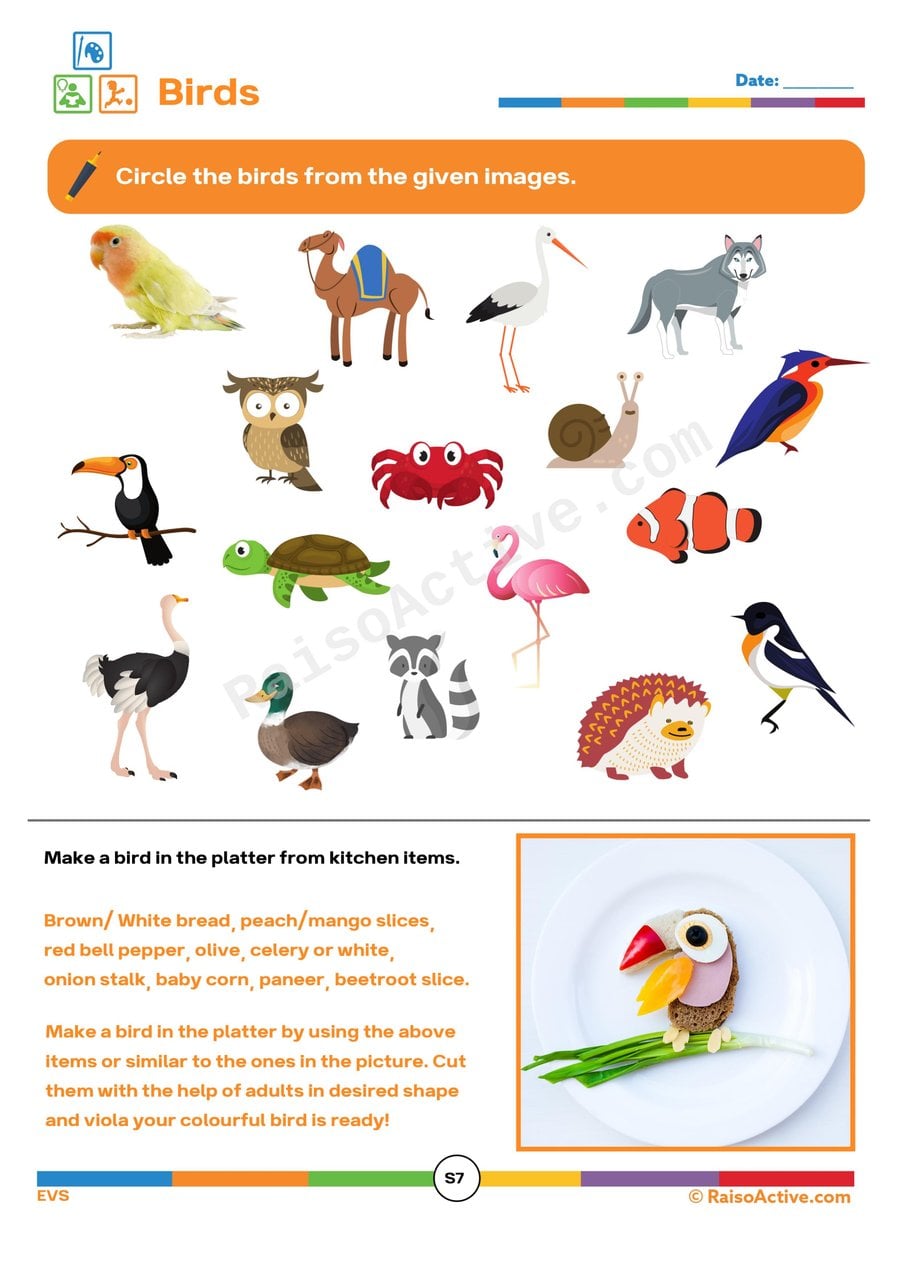
Bird Spotting Worksheet: Circle the Birds!
This worksheet builds visual discrimination and observation skills by asking children to scan a mixed picture and circle only the birds among other animals or objects, sharpening their ability to notice defining features like wings, feathers, or beaks. For ages 3-5, this kind of categorization by visual features is an early step toward broader scientific classification skills.

Coloring Fun: Animals and Nature Worksheet for Preschoolers
Coloring within defined lines strengthens fine motor control and hand strength for children ages 3-5, building the pencil grip and precision they'll eventually need for handwriting. This nature-themed page also gives children a chance to practice sustained focus on a single task, since completing a full scene with multiple elements requires more attention than a single small image. Naming and talking about the animals and natural elements as they color adds a light vocabulary and observation component on top of the fine motor practice.

Colorful Seasons: Dot-to-Dot Tree Leaves Worksheet for Kids
This worksheet introduces children ages 3-5 to the four seasons through a hands-on painting activity, using cotton buds to dab colorful 'leaves' onto tree outlines and matching each tree's colors to the correct season. Connecting a season to its visual cues, like green leaves for spring or bare branches for winter, builds early science vocabulary and observation skills. The dabbing motion with cotton buds also strengthens the pincer grip children need for holding pencils and other tools later on.
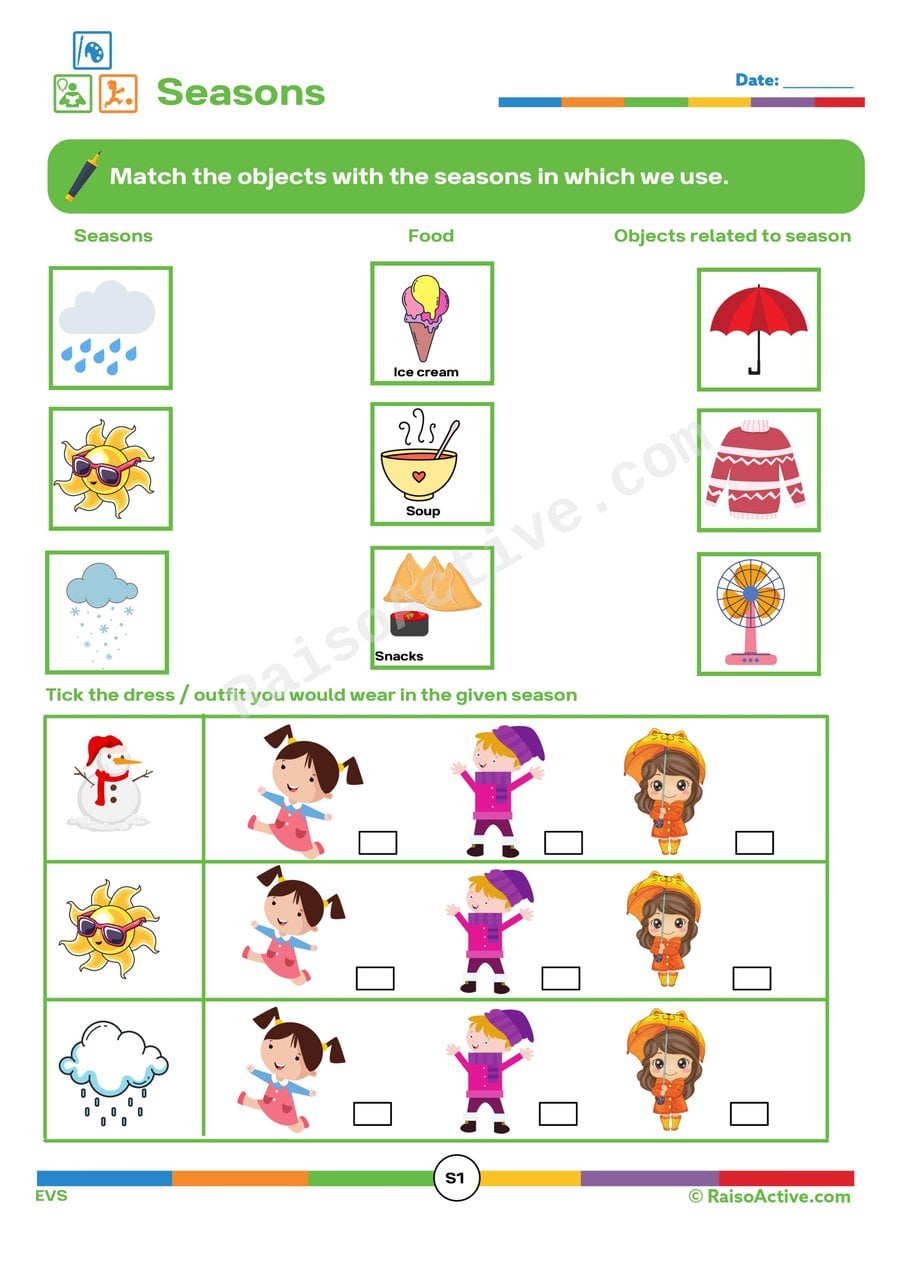
Seasons Matching Worksheet for Preschoolers
Understanding that different seasons bring different weather, clothing, and activities is an early science and life-skills concept for children ages 3-5, and this worksheet builds that understanding by having them match objects to the correct season and consider what they'd wear in each. Making these connections requires observation and categorization skills, since a child has to recall or reason through why a snowman belongs with winter or shorts belong with summer rather than simply memorizing a fixed answer. This kind of seasonal reasoning also lays groundwork for later science topics like weather patterns and the calendar year.
Want Unlimited Downloads?
Subscribe to get unlimited access to all worksheets without watermarks
View Subscription Plans