How to Organize Homeschool Materials for Multiple Ages: A Complete Guide for Multi-Level Learning
Author
RaisoActive - Kids Activities and Fun Learning
Published
Updated
Reading Time
16 min read

- Teaching two or more children at different levels is entirely manageable with the right storage, scheduling, and shared learning strategies
- Colour-coding by child (not just by subject) is the single fastest way to bring order to a multi-age homeschool
- Independent work bins and morning baskets let you give focused attention to each child without neglecting the others
- Unit studies — topics explored at different depths — are the most efficient way to teach multiple ages simultaneously
- Indian space constraints call for creative solutions: vertical shelving, stackable trays, and multi-purpose furniture that fold away when learning is done
The Multi-Age Homeschool Challenge: You Are Not Alone
If you are homeschooling more than one child, you already know that sinking feeling when your seven-year-old needs help with reading just as your four-year-old upends the crayon box, your two-year-old demands a snack, and the maths workbook you spent twenty minutes searching for turns out to be under the sofa cushion. Teaching multiple children at different ages and developmental stages is genuinely one of the hardest logistical puzzles in home education — and it is rarely talked about with the honesty it deserves.
The good news is that generations of families have solved exactly this puzzle, and the solutions are simpler than you might think. The secret is not a perfect timetable or an Instagram-worthy craft room — it is a small number of intentional systems that reduce daily friction dramatically. In this guide, we will walk through every dimension of the multi-age homeschool organisation challenge: how to store materials so each child can access what they need independently, how to schedule your day so no child is left waiting indefinitely, how to use unit studies that teach all ages at once, and how to handle the ever-present reality of Indian home sizes, joint families, and limited dedicated space.
Homeschooling more than one child?
Subscribe for practical multi-age activity ideas, free printables, and weekly organisation tips designed for Indian families.
Colour-Coding by Child: The Simplest System That Actually Works
Before you invest in any organisational product or rearrange your shelves, do this one thing: assign each child a colour. This is not a new idea — early childhood educators have used it for decades — but most families apply it only to book covers and miss the full power of the system. When colour-coding is applied consistently across every element of your homeschool, it becomes almost self-managing.
Choose colours that your children themselves feel excited about — perhaps your older child picks royal blue and your younger one picks bright orange. Now apply those colours to: their individual storage trays and bins, their folders and workbooks (a strip of coloured washi tape on the spine works beautifully), their pencil pouches and art supplies, their name labels on shared materials, and even their designated spots at the learning table. When your four-year-old reaches for her orange tray, she knows immediately that everything inside belongs to her at her level. When you need to hand your seven-year-old his reading folder without interrupting what you are doing with the younger child, you both know exactly where it lives.
In the Indian context, where stationery supplies are wonderfully affordable and widely available, this system costs very little to implement. A set of coloured folders from a stationary shop, some washi tape or even coloured rubber bands, and a packet of sticker dots from a local general store are all you need to begin. Jute baskets from craft stores can be spray-painted or lined with coloured fabric to extend the system to larger storage bins.
Separate Storage Zones vs Shared Spaces: Finding the Right Balance
One of the most common mistakes in multi-age homeschools is trying to share everything. Shared shelves become jumbled shelves. When your toddler can reach your seven-year-old's carefully sorted workbooks, chaos is only a matter of time. The solution is a layered approach: some things are entirely separate and age-specific, while other things are intentionally shared and centrally stored.
Age-specific storage should include each child's current workbooks and activity folders, their independent work materials (more on this below), their in-progress art projects, and any delicate or age-inappropriate materials like scissors, small beads, or paints. These live in that child's personal tray, basket, or shelf section — clearly colour-coded and, where necessary, placed at a height only that child can comfortably reach.
Shared storage works well for items that multiple ages genuinely use together: read-aloud books, art and craft supplies that all children use under supervision, puzzles and games, science materials for unit study experiments, and reference books. These live in a central, accessible zone — a shared bookshelf, a trolley that can be wheeled to wherever learning is happening that day, or a set of open shelves in the main room. The key is that shared materials have a single, clearly defined home and everyone knows to return them there.
Scheduling for Different Ages: How to Give Each Child What They Need
Scheduling a multi-age homeschool is less about rigid timetables and more about understanding the rhythms of each child's attention and energy. Young children (ages 1–4) need frequent movement breaks, cannot sustain focused work for more than 10–15 minutes, and require your direct presence for most activities. Older children (ages 5–8) can work independently for short bursts and benefit from slightly longer lessons, but still tire quickly if lessons drag on.
The most effective multi-age schedules use a technique sometimes called time-stacking: arranging your day so that when one child needs your direct attention, the other children are occupied with independent work they can genuinely do without help. This requires intentional preparation — but once the systems are in place, mornings flow with remarkable smoothness. The goal is never to have two children simultaneously needing your undivided attention for teacher-led work.
A practical rhythm for a family with a 3-year-old and a 7-year-old might look like this: start the morning with 20–30 minutes of morning basket time that all children do together — songs, a read-aloud, a poem, or a simple discussion. Then set the younger child up with an independent activity (a sensory tray, a puzzle, a favourite manipulative) while you do a focused 15-minute lesson with the older child. Switch your attention: give the older child independent written work while you do a hands-on activity with the younger one. Bring everyone back together for a shared project, lunch, or a nature walk. This kind of alternating rhythm, rather than a rigid parallel schedule, is what actually works in real homes.
Unit Studies: The Most Efficient Way to Teach Multiple Ages at Once
A unit study is simply a topic — animals, water, festivals, ancient history, a country, a season — explored across multiple subjects and at multiple levels simultaneously. Instead of each child studying a completely separate curriculum in isolation, the whole family dives into the same theme, with each child engaging at their own depth. Your toddler sorts pictures of ocean animals; your five-year-old draws and labels sea creatures; your eight-year-old reads a chapter book set at sea and writes a narration. All three are learning about the ocean — together, but at their own level.
Unit studies are extraordinarily powerful in the Indian context because our cultural calendar is already built around rich thematic units. A study of Diwali can become a unit covering light and fire (science), the stories of Ramayana (literature and history), diyas and rangoli making (art and fine motor), counting and patterning with rangoli designs (maths), and the geography of India (social studies). A monsoon unit in June can cover the water cycle, cloud observation, Indian farming and food, poetry about rain, and simple rain experiments. These themes are culturally resonant, intrinsically motivating, and work beautifully across ages.
Independent Work Bins and Keeping Younger Children Engaged
The single most transformative practice for multi-age homeschool families is the independent work bin — sometimes called a busy bin or tot tray. These are small collections of self-directed activities that a younger child can access and use without adult help, designed specifically for the times when you need to focus on an older sibling.
Effective independent activities for children aged 1–4 have a few key qualities: they are genuinely engaging (not just distracting), they are self-explanatory and require no instruction to begin, they are safe to use unsupervised, and they are rotated regularly enough to maintain novelty. A bin that your two-year-old has played with every day for three weeks will not hold attention for more than two minutes. But a bin that appears freshly once a week or fortnight, containing a mix of familiar favourites and one new element, can absorb a toddler for 20–30 minutes — exactly the window you need to give your older child a focused lesson.
Ideas for independent bins that work brilliantly in Indian homes include: a tray of lentils (masoor dal or moong) with spoons and small cups for pouring and transferring; a threading activity with large wooden beads and a thick cord; a simple puzzle with 4–8 pieces; a mini sensory tray with sand, rice, or small stones and a few toy animals; a basket of fabric scraps and large buttons for sorting by colour or size; or a set of large pegs and a pegboard. These materials are inexpensive, sourced easily from local shops, and endlessly reusable.
Independent work bins are an investment in preparation, not a shortcut.
Spending 30 minutes on a Sunday setting up four or five independent activity trays for the week pays dividends every single morning. The child who can settle into meaningful self-directed play frees you to give genuine, focused attention to each of your other children in turn.
Morning basket time is the glue that holds multi-age learning together.
Starting every morning with 20–30 minutes of shared read-alouds, songs, poems, and simple discussion gives all children a sense of togetherness and shared purpose, regardless of age. It builds family culture, oral language, and love of learning — and it costs nothing except intentional time.
The goal of multi-age organisation is reducing decision fatigue, not achieving perfection.
Every time a child knows exactly where their materials live, what they are supposed to do next, and how to begin an independent activity without asking, you preserve your own cognitive energy for the moments that actually require your presence and creativity.
- Prepare bins on the weekend for the coming week — Monday morning is not the time to be improvising new activities
- Aim for 4–6 different bins per week; rotate them so each appears once or twice, keeping novelty high
- Store bins out of sight (in a cupboard or high shelf) until needed — the element of discovery adds engagement
- Introduce each new bin to the child before you need them to use it independently; a two-minute demonstration prevents frustration
- Include at least one bin per week that uses a familiar, beloved material — comfort items alongside novelty work best
- Use vertical space: a wall-mounted pegboard or tension rod with hanging baskets creates storage without taking up floor space
- Repurpose a single large almari (wardrobe) shelf as a dedicated learning zone — one shelf per child, fold-up table stored inside
- Rolling trolleys (available at stores like IKEA, Nilkamal, or online) let you bring materials to wherever you are sitting and store them neatly out of the way
- Stackable masala-dabba-style tins with labels work beautifully for small manipulatives — pencil stubs, beads, counting cubes
- In a single-room or open-plan home, a folding partition or bookshelf placed at right angles can define a temporary learning zone that folds back at the end of the day
- Laminated visual schedules that children ignore after day two — keep schedules simple and review them together each morning instead
- Elaborate filing systems with too many categories — three to five categories per child is the maximum most families can maintain
- Shared pencil pots: nothing creates sibling conflict faster than communal art supplies with no ownership. Give each child their own pouch
- Planning independent bins that require reading instructions — all independent activities for under-sixes must be self-evident from looking
- Trying to run two completely separate parallel curricula without any shared learning time — this doubles your planning load unnecessarily
Research on one-room schoolhouse and multi-age classroom models consistently finds that children in mixed-age settings show greater academic gains in literacy and numeracy than same-age peers in traditional settings. The mentoring effect — where older children consolidate their learning by helping younger ones — is a powerful accelerator.
Source: Multigrade Teaching Research Review, UNESCO 2013
Studies on toddler attention spans find that self-directed play with novel materials sustains engagement for an average of 20 minutes — exactly the window you need to give an older sibling a focused, uninterrupted lesson. Regular rotation of independent activities is the key to maintaining this window.
Source: Journal of Applied Developmental Psychology, 2018
Setting Up a Multi-Age Homeschool Organisation System: Step by Step
Audit what you have before buying anything new
Spend 30 minutes pulling out all your homeschool materials and sorting them into three piles: currently in use, occasionally useful, and never used. Most families find they already have far more than they realised — they just cannot find it when they need it. Begin from what you have.
Assign each child a colour and gather colour-coded supplies
Choose a colour per child (let them choose!) and buy coloured folders, washi tape, sticker dots, and a small storage bin or tray in their colour. This single step eliminates the majority of 'whose is this?' conflicts and 'I cannot find my workbook' delays.
Create each child's personal work zone
Designate a shelf section, a drawer, or a dedicated basket for each child's current materials. Everything they need for the week lives there. At the start of each week, refresh this zone with the coming week's workbooks and activities. Nothing lives in this zone that is not currently needed.
Prepare one week of independent bins before the week begins
On Sunday afternoon, gather four to six independent activities for your younger child/children. Pack each one into a small tray or zip-lock bag and store them together out of sight. On each morning, bring out one bin for independent time. Preparation happens once a week, not every morning.
Build your morning basket ritual
Choose three to five elements that work for all your children simultaneously: a picture book read-aloud, a song or rhyme, a poem on a card, a seasonal or calendar discussion, and perhaps a short Scripture or gratitude practice if that fits your family. This 20-minute shared opening sets a tone of togetherness and grounds the whole day.
Map your alternating attention schedule
Write out, even roughly, when each child needs your direct presence versus when they can work or play independently. Look for natural overlaps: when your toddler naps, your seven-year-old gets your full focus. When your younger child is in an independent bin, your older child has a teacher-led lesson. When everyone eats lunch together, you are free from instruction. This map does not need to be a rigid timetable — it is a guide for how your attention flows through the day.
Involve children in setting up and maintaining the system
Children who help design their organisation system are far more likely to maintain it. Let your seven-year-old arrange their own shelf. Let your four-year-old put stickers on their bin. Spend five minutes at the end of each day doing a reset together: books back on shelves, bins tidied, materials returned to their homes. Make it a brief, cheerful ritual, not a chore.
- +Colour-coded personal storage zones per child
- +Pre-prepared weekly independent bins for younger children
- +Shared morning basket time that all ages enjoy together
- +Unit studies that teach all ages on the same theme
- +Alternating attention: one child independent while you teach another
- +A daily reset ritual that children participate in
- +Vertical and fold-away storage suited to small Indian homes
- -All materials shared on a single shelf accessible to all ages
- -Improvising activities for younger children on the spot each morning
- -Attempting parallel completely separate lessons simultaneously
- -Running two or three entirely different curricula with no common threads
- -Trying to give all children your full attention at the same moment
- -Leaving cleanup to the end of the week when chaos has fully accumulated
- -Floor-level sprawling storage that doubles as a toddler play zone
Get Weekly Multi-Age Homeschool Ideas
Subscribe for practical activity ideas, independent bin inspiration, unit study themes, and free printables — all designed to work across ages and fit real Indian homes.
Frequently Asked Questions About Multi-Age Homeschool Organisation
How do I handle teaching a 2-year-old and a 7-year-old at the same time?
Is it worth buying a dedicated curriculum designed for multiple ages?
My older child complains that I spend more time with the younger one. How do I handle this?
We live in a small 2BHK flat. How do we find space for homeschool materials?
How do I use the older child's learning to benefit the younger one?
What is the one thing I should set up first if I am just starting out?
Free worksheets for this topic
Browse all worksheets
Navratri Festival Quest Answer Key for Grown-ups
Ages 7-11 · Grade 2–Grade 3Ages 7-11 · Year 3–Year 4Ages 7-11 · Class 2–Class 3Ages 7-11
Grown-ups can check every answer in the pack, with workings for the maths, grid positions for the word search, the logic grid and sudoku solutions, and the reasons behind the science results.
Navratri Fun Time Answer Key for Grown-ups
Ages 4-6 · Pre-K–KindergartenAges 4-6 · Reception–Year 1Ages 4-6 · LKG–UKGAges 4-6
Grown-ups can quickly check every answer in the Navratri Fun Time pack, page by page.

Parent's Guide: Fun Activities for Early Learning
Ages 3-5 · Preschool–Pre-KAges 3-5 · Nursery–ReceptionAges 3-5 · Nursery–LKGAges 3-5
This parent guide equips caregivers of children ages 3-5 with structured activity ideas around three early-learning concepts: recognizing the days of the week, identifying patterns, and practicing skip counting. Each activity translates an abstract concept into a hands-on or playful format, since young children learn these ideas best through repetition embedded in daily routines rather than worksheets alone. Covering multiple concepts in one guide also gives caregivers flexibility to pick the activity that fits their child's current interest.

Fun Activities for Kids: Blend Words, Reading, and Science Experiments!
Ages 3-5 · Preschool–Pre-KAges 3-5 · Nursery–ReceptionAges 3-5 · Nursery–LKGAges 3-5
This multi-activity guide introduces children ages 3-5 to blend words, simple story reading, and hands-on science experiments like making a chocolate shake and testing dissolving, all in one session. Moving between literacy and science tasks builds flexible thinking and shows children that reading and hands-on exploration are connected, reinforcing that new vocabulary can describe real, observable experiments.

Written by
Hemsweta Jain · Teacher Cheena
MBA and Early Childhood Educator, teaching since 2014 · Founder of RaisoActive, Mumbai
Published · Last reviewed
Related Resources
Printable Resources(4)
View all

Phonics Level 3 Long Vowels Activity Book for Kindergarten & 1st Grade
Ages 5-7 · Kindergarten–Grade 1Ages 5-7 · Year 1–Year 2Ages 5-7 · UKG–Class 1Ages 5-7 · 51 pages
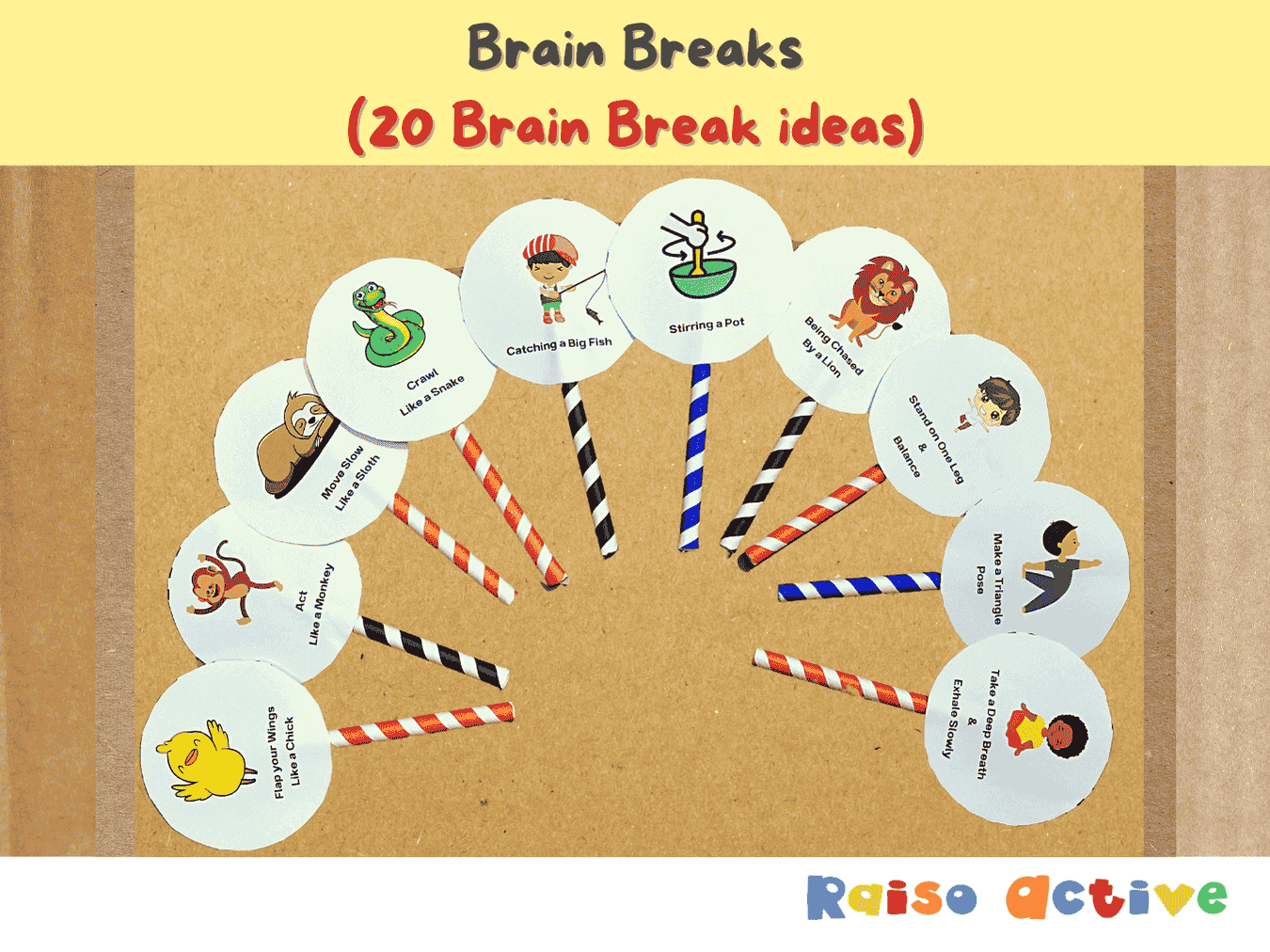

Gross Motor Movement & Imaginative Play Flashcards for Toddlers & Preschoolers
Ages 2-5 · Preschool–Pre-KAges 2-5 · Nursery–ReceptionAges 2-5 · Nursery–LKGAges 2-5 · 5 pages
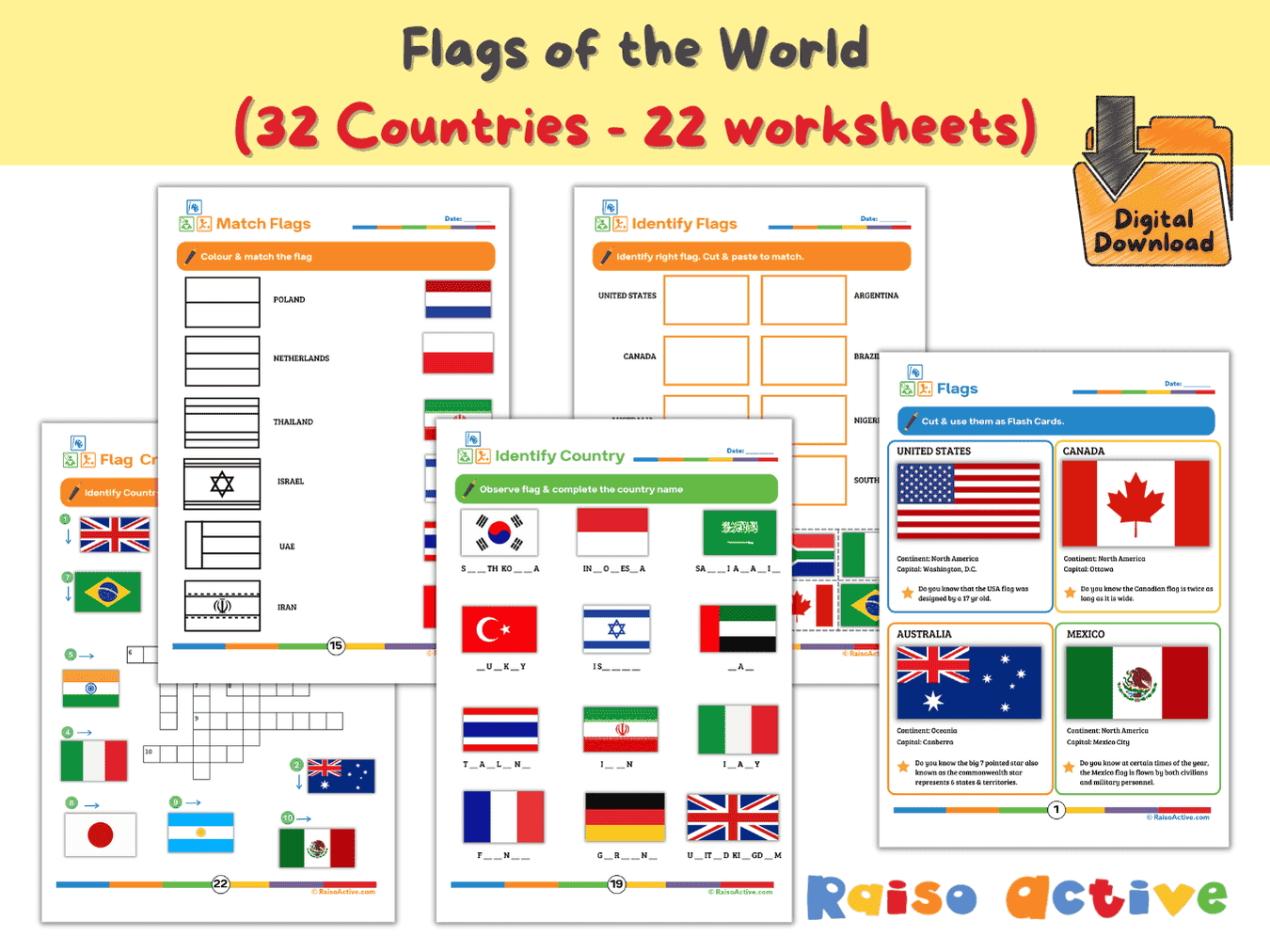

Flags of the World Activity Book & Flashcards for Kids (Ages 5-9)
Ages 5-8 · Kindergarten–Grade 2Ages 5-8 · Year 1–Year 3Ages 5-8 · UKG–Class 2Ages 5-8 · 23 pages
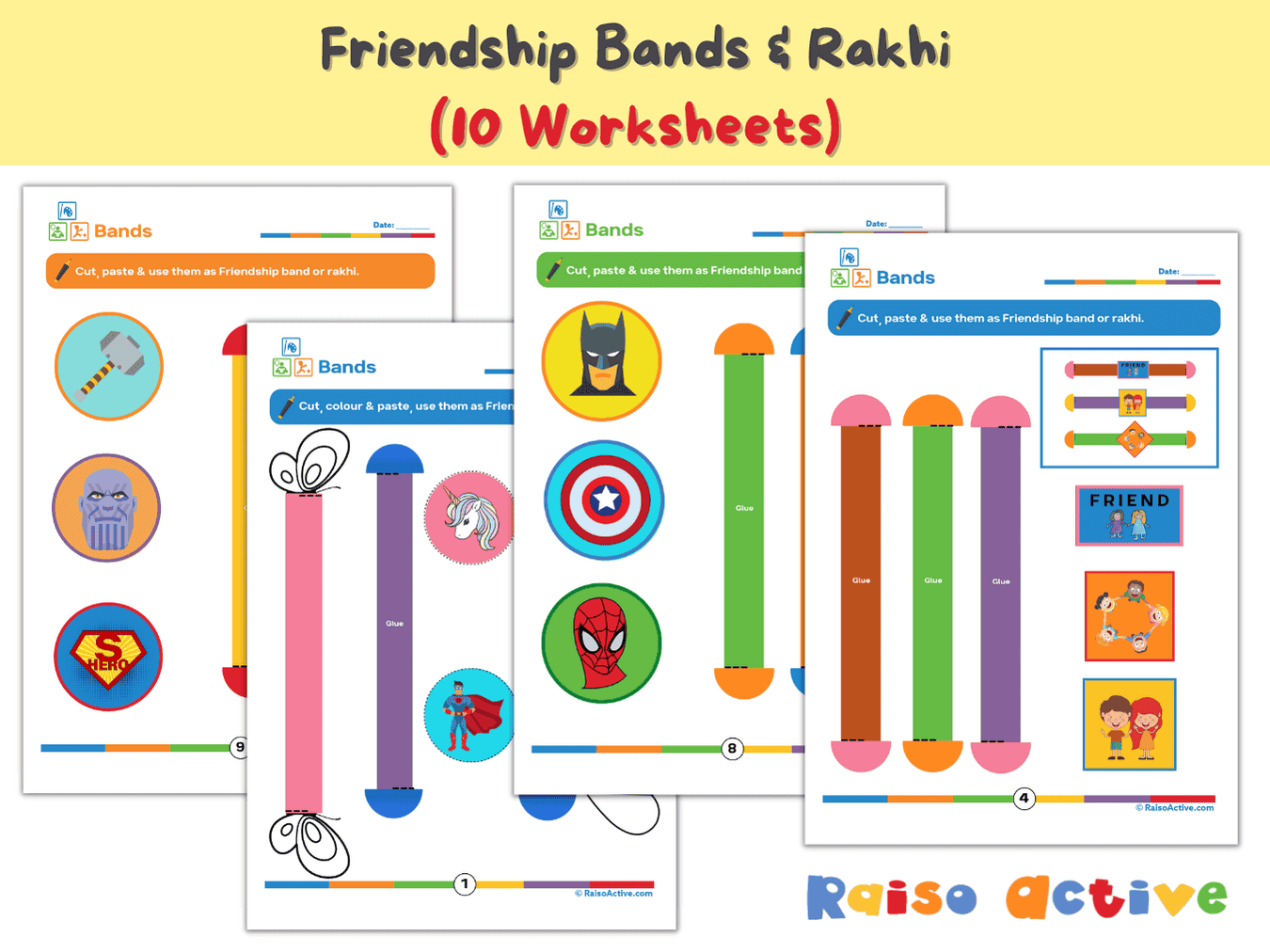

Friendship Band & Rakhi Craft Activity Pack for Kids (Ages 4-7)
Ages 4-7 · Pre-K–Grade 1Ages 4-7 · Reception–Year 2Ages 4-7 · LKG–Class 1Ages 4-7 · 10 pages