The Complete Guide to Storing and Organizing Worksheets: Systems That Actually Work for Busy Families
Author
RaisoActive - Kids Activities and Fun Learning
Published
Updated
Reading Time
19 min read

- Why the paper pile problem gets worse before it gets better — and how to finally solve it
- Five worksheet organisation systems that work even in small Indian apartments
- How to create picture labels so young children can manage their own materials
- Building a simple portfolio to track your child's progress without extra effort
- What to keep, what to display, and what to recycle — a guilt-free guide
The Paper Pile Problem Every Parent Knows
It starts innocuously enough. A worksheet here, a colouring page there, a stack of dot-to-dot printouts from last Thursday. Before you know it, the dining table has disappeared beneath an avalanche of paper, half-completed activities are mixed with blank ones, and your child is tugging your sleeve asking where their missing number tracing sheet has gone.
If this sounds familiar, you are not alone. In Indian homes where space is often at a premium and multiple family members share a single study area, keeping learning materials organised can feel like a full-time job on top of an already full-time job. Add in the sheer volume of printables available online — and the wonderful worksheets from platforms like RaisoActive — and the paper mountain grows fast.
Here is the good news: you do not need a Pinterest-perfect craft room or expensive stationery to solve this problem. With a few smart systems, fifteen minutes of setup time, and some clear labelling, you can go from chaotic paper piles to an organised, child-friendly learning corner that actually stays tidy. This guide shows you exactly how.
Practical tips for busy parents, delivered weekly
Get simple organisation ideas, printable resources, and learning activities for children ages 1-8 — straight to your inbox.
Why Organisation Matters More Than You Think
Before we dive into systems, it is worth understanding why worksheet organisation is about more than just tidiness. When materials are scattered and hard to find, learning time gets eaten up by hunting for the right sheet. When blank worksheets are mixed with completed ones, children get confused — and so do parents trying to assess progress.
But there is a deeper benefit too. When children can see their materials organised clearly, and when they know exactly where things belong, they begin to take ownership of their own learning environment. A four-year-old who can independently find their colouring worksheets and put them back afterwards has learned something far more valuable than anything printed on the page: self-directed learning habits that will serve them for life.
is all it takes to set up a basic worksheet organisation system that saves hours of searching, frustration, and reprinting each month
Five Organisation Systems That Actually Work
Different families have different spaces, budgets, and learning styles. Here are five approaches — from the simplest to the most comprehensive — so you can pick what fits your life. You may find that one method works beautifully, or you might combine two for a hybrid system that suits your home perfectly.
1. The Weekly Rotating Tray System
This is the easiest system to start with and the most effective for very young children (ages 1-4). All you need are two or three stackable trays or shallow baskets — the kind you can find at any local stationery shop or Daiso. Label them simply: This Week, Completed, and Coming Soon (or use picture labels if your child is pre-reading).
At the start of each week, you place five to seven worksheets in the "This Week" tray. As your child completes them, they move to "Completed." On Sunday evening, you spend five minutes reviewing the completed tray — some sheets go into a portfolio (more on that shortly), some get recycled, and the next batch goes into "This Week." The "Coming Soon" tray holds your upcoming worksheets, already printed and ready to go.
- Use bright, distinct colours for each tray so even toddlers can distinguish them without reading the labels
- Keep the tray stack at the child's height so they can access and return worksheets independently
- Never put more than eight worksheets in the active tray — overwhelm leads to avoidance
- Let your child decorate their tray with stickers at the start — ownership increases care
2. The Subject Binder System
For children aged four and above who are doing more structured learning, a binder-per-subject system offers clear organisation and a satisfying sense of progress. You will need one ring binder (or a multi-divider binder) per subject area, plus divider pages and clear pockets or punched sheet protectors.
Typical subjects for early learners might include: English and Reading, Maths and Numbers, Creative Arts, and Activities and Puzzles. Within each binder, use divider pages to separate blank worksheets from completed ones. When a binder gets full, archive the completed section into a storage box — this becomes your child's learning history.
- Use spine labels with your child's name, the subject, and the year — you will thank yourself when digging through archives later
- Keep binders on a low shelf that your child can reach independently
- Add a "Proud Work" pocket at the front of each binder for pieces your child especially wants to show off
- Punch holes in worksheets as you print them so filing takes three seconds, not three minutes
3. The Accordion Folder Method
Accordion folders — the expandable document organisers with multiple pockets — are a brilliant solution for families with limited shelf space. One accordion folder can hold an entire month's worth of worksheets across multiple subjects, and they stand upright on a shelf, slide neatly under a bed, or tuck into a school bag.
Use one pocket per subject or per week, depending on your preference. The real advantage here is portability: if your family does learning sessions at a grandparent's home, a cousin's place, or during a long train journey, everything needed is in one compact, lightweight folder. For Indian families who travel during holidays and want to continue learning on the road, this is invaluable.
4. The Digital Scanning System
Completed worksheets that you want to keep but do not need in physical form can be scanned using your smartphone. Free apps like Adobe Scan, Microsoft Lens, or Google PhotoScan turn your phone into a document scanner in seconds. The result is a clear, flat digital image of the worksheet that you can store in a labelled Google Drive or iCloud folder.
This system is especially useful for keeping a progress record without accumulating physical paper. Scan a writing sample from January and compare it with one from June — the growth is striking, and it takes up zero shelf space. You can also easily share scanned work with teachers, specialists, or proud grandparents via WhatsApp.
- Create a main folder named "[Child's Name] Learning" with subfolders for each school year
- Name files with the date first (e.g., "2026-03-14 Letter A tracing") so they sort chronologically automatically
- Do a monthly scan session — set a calendar reminder for the last Sunday of each month
- Back up to two places (e.g., Google Drive AND an external hard drive) so precious records are never lost
5. The Wall Display and Rotation System
Not all worksheets belong in folders. Some of the most beautiful colouring pages, creative drawings, and first-writing attempts deserve to be displayed. A simple string-and-pegs display line (the kind made popular by Montessori classrooms) lets you rotate artwork in and out without needing to put holes in your walls — perfect for rented flats.
Keep only the current week's best work on display. When new work goes up, the previous piece either moves to the portfolio folder or, if it has served its purpose, is gratefully recycled. This rotation ensures your child always has a fresh sense of accomplishment visible on the wall without the display becoming a chaotic clutter of overlapping papers.
Picture Labels: Making Organisation Child-Led
One of the most powerful upgrades you can make to any organisation system costs nothing: picture labels. Young children who are not yet reading can navigate a system with ease if each folder, tray, or binder has a small picture alongside any text label. A pencil icon for writing activities, a number two for maths, a paintbrush for art.
You can draw these by hand (children love parent-drawn labels), print simple clip art, or cut pictures from old catalogues and magazines. Laminating them makes them last for years. The magic happens when your child starts putting things away independently because they can read the pictures. Organisation becomes a habit, not a chore.
Picture labels turn organisation from a parent task into a child skill — one that develops independence, literacy readiness, and pride in their environment.
When children help create the labels — choosing which picture represents which subject — they are even more invested in maintaining the system. A five-year-old who helped design their own filing system is a five-year-old who puts things away without being asked.
Managing Blank Worksheets vs. Completed Ones
This is the source of most worksheet confusion: blank and completed sheets get mixed together, and suddenly no one knows what has been done and what has not. The solution is deceptively simple — never store blank and completed worksheets in the same folder.
Dedicate one physical space (a shelf, a drawer, a folder) exclusively to blank, ready-to-use worksheets. Think of this as your "worksheet library." When you download and print from RaisoActive, sheets go here first. When a worksheet is completed, it immediately moves to a different location — the completed folder, the portfolio, the display wall, or the recycling bin.
This single distinction — blank here, done there — eliminates the most common source of worksheet chaos. It also helps you see at a glance whether you are running low on a particular type of activity, so you can print more before you run out entirely.
- Use two distinct colours of folders — for example, yellow for blank worksheets and blue for completed ones — so the distinction is visual and instant
- Make it a habit to date and initial completed worksheets before filing them — this takes three seconds and makes portfolio review infinitely easier
- Involve your child in moving their completed work to the finished folder — it is a satisfying ritual that reinforces the sense of accomplishment
- Do a weekly "sort" on Friday afternoons as a closing routine — five minutes of tidying before the weekend begins
Creating a Simple Progress Portfolio
A portfolio is simply a curated collection of your child's work that shows growth over time. It does not need to be elaborate. A simple ring binder with monthly sections, or a box file divided by term, is more than enough. The key word is curated — you are not keeping everything, just the pieces that tell the story of your child's learning journey.
Each month, go through the completed worksheets and choose two to three pieces that best represent where your child is right now. Write the date, your child's age, and a brief note: "First time writing all letters of her name independently" or "Counted to twenty without help for the first time." These notes, simple as they are, transform a folder of paper into a meaningful developmental record.
A portfolio with three dated worksheets per month tells a richer story of growth than a box of fifty undated sheets.
When you review the portfolio at the end of the year, you will be amazed at the transformation. The scrawly first attempts at letter formation in January alongside the neat, confident writing in November are deeply moving — and they give you concrete evidence of progress that no report card can replicate.
selected and dated per month is all you need to build a meaningful progress portfolio that documents your child's learning journey across the year
Organisation in Small Indian Apartments: Space-Smart Solutions
Many Indian families live in 1 or 2 BHK flats where dedicated study rooms are a luxury rather than a given. Learning happens at the dining table, on the floor, in shared bedrooms. This is absolutely fine — the systems above all work beautifully in small spaces — but the organisation solutions need to be space-smart.
Vertical storage is your best friend in a small flat. Wall-mounted magazine holders, over-the-door pocket organisers, and tiered desk caddies all create storage space without eating into floor area. A small accordion folder or zip wallet that lives in a drawer takes up almost no room but keeps everything perfectly sorted.
Under-bed storage boxes with dividers are ideal for archiving completed work and storing extra blank worksheets. Clear plastic boxes let you see the contents without opening them. Label the outside with the contents and date range, and slide them neatly out of sight. In a 2 BHK where every centimetre counts, this keeps your learning materials accessible without dominating the living space.
- Over-the-door shoe organisers make excellent worksheet holders — each pocket can hold one subject's blank sheets, visible at a glance
- Magnetic strips on the fridge hold this week's active worksheets within easy reach during kitchen-table learning sessions
- A single A4-sized desktop file sorter with five or six pockets costs under ₹200 and handles most organisation needs in one compact unit
- Repurpose old dabbas (tins) and boxes as pencil holders and supply caddies — durable, free, and often more robust than plastic alternatives
What to Keep, What to Display, What to Let Go
One of the most common questions parents ask is: "Do I have to keep every single worksheet?" The answer, thankfully, is a resounding no. Being selective about what you keep is not only acceptable — it is essential for maintaining an organised system. Here is a simple framework for deciding the fate of each completed worksheet.
Keep for the portfolio anything that shows a first or a breakthrough: the first time your child wrote their name, the first completed cutting activity, a drawing that shows a leap in detail or creativity. Keep anything that represents a significant skill milestone. Display your child's most recent proud work — rotate it every one to two weeks. Everything else — routine practice sheets, repetitive drills, worksheets that served their purpose — can be recycled without guilt. The learning happened. The paper is not the learning.
Letting go of routine practice worksheets is not forgetting your child's learning — it is honouring the learning by making space for what comes next.
If guilt is stopping you from recycling, try this: photograph the worksheet before recycling it. You have a digital record, you have the memory, and you have cleared the physical space. Everyone wins.
Involving Children in the Organisation Process
Here is something most organisation guides skip: children who help set up and maintain their own organisation systems are far more likely to use them correctly. And the process of organising is itself a rich learning activity — sorting, categorising, sequencing, reading labels, making decisions. It aligns perfectly with the skills you are building through the worksheets themselves.
Start by letting your child choose the colours of their folders or the stickers for their labels. Invite them to sort completed worksheets into categories — "Where should this one go — maths or drawing?" Ask them to help set up the weekly tray each Sunday evening. These small acts of participation build ownership, responsibility, and — crucially — the intrinsic motivation to keep things tidy.
- Sorting worksheets by subject is a real-world categorisation exercise — exactly the cognitive skill you are building with sorting worksheets themselves
- Ask your child to put the worksheets in order from "easiest" to "hardest" — this builds metacognitive awareness
- Counting how many worksheets are in each folder is authentic, meaningful maths practice for young children
- Reviewing the portfolio together at the end of each month turns organisation into a celebration — make it special with a little snack and genuine enthusiasm about the growth you both can see
Using a Digital Worksheet Library Like RaisoActive
One of the biggest contributors to worksheet clutter is printing everything at once. When you discover a wonderful resource online, it is tempting to print the entire pack immediately. Instead, consider maintaining a digital library first, print-on-demand second approach.
Platforms like RaisoActive organise worksheets by age, subject, and skill — which means you do not need to maintain your own complicated filing system for blank worksheets. Your digital library is always organised, always searchable, and always there when you need it. You print what you need for this week, use it, and only keep the physical copy if it is portfolio-worthy.
This print-on-demand approach dramatically reduces the volume of paper in your home. Instead of maintaining a physical archive of hundreds of blank worksheets, you maintain a curated collection of completed work — a far smaller, more meaningful set of papers. Your shelves breathe. Your child can find things. Everybody is happier.
Set Up Your Worksheet Organisation System in One Hour
Gather everything (10 minutes)
Collect all the worksheets currently in your home — off the table, out of school bags, from that pile on the counter — into one big unsorted stack. Do not organise yet. Just gather.
Sort into three piles (15 minutes)
Divide the stack into three piles: Blank (unused), Completed (done and to review), and Rubbish (torn, irrelevant, or duplicated sheets to recycle right now). Recycling the rubbish pile immediately creates an instant sense of progress.
Date and review completed work (10 minutes)
Go through the completed pile quickly. Write today's approximate date on anything undated. Choose two to three pieces for the portfolio, set aside anything worth displaying, and recycle the rest. You now have a manageable completed file.
Set up your storage system (15 minutes)
Choose your primary system from those described above — trays, binders, accordion folder, or a combination. Label everything, adding picture labels if your child is pre-reading. Put the blank worksheets in their designated spot.
Create a weekly routine (5 minutes planning)
Decide on a consistent time each week for the five-minute sort: completed work gets reviewed, the active tray gets refreshed, and new worksheets get moved from the blank library to the week's folder. Sunday evenings or Friday afternoons both work well.
Involve your child (ongoing)
Show your child the new system. Let them place a few worksheets themselves. Explain the picture labels. Make it theirs as much as yours — the system will last far longer if they feel ownership of it.
Review and adjust after one month (10 minutes)
After four weeks, assess what is working and what is not. Is the active tray getting too full? Are the binders the right subjects? Organisation systems are not one-size-fits-all — iterate until you find what fits your family perfectly.
- +Blank and completed sheets mixed together
- +Learning time lost searching for materials
- +No sense of progress or achievement
- +Child cannot find or return materials independently
- +Parents feel guilty about the mess
- +Worksheets get damaged, lost, or reprinted
- +No portfolio — growth is invisible
- -Blank and completed always separate and labelled
- -Materials found in seconds, learning starts immediately
- -Portfolio shows clear growth over time
- -Child independently manages their own materials
- -Parents feel calm and in control
- -Worksheets protected and purposefully stored
- -Portfolio captures milestones to celebrate
Want More Practical Ideas for Organised, Joyful Learning?
Join thousands of Indian parents and educators who receive our weekly newsletter — simple organisation tips, age-appropriate activities, and printable resources for children ages 1-8, delivered straight to your inbox.
Frequently Asked Questions
How many blank worksheets should I keep printed at home at one time?
My child refuses to put worksheets away. How do I encourage tidying up?
How do I organise worksheets for two children of different ages?
Should I keep worksheets my child found very difficult or did not complete?
Is it worth scanning worksheets, or is that too much effort?
How do I organise worksheets for a child who is still too young to help?
Free worksheets for this topic
Browse all worksheets
Pumpkin Lines Dice Game: Halloween Pre-Writing Worksheet
Ages 4-8 · Pre-K–Grade 2Ages 4-8 · Reception–Year 3Ages 4-8 · LKG–Class 2Ages 4-8
Children practise wavy, zigzag and looped pre-writing lines while playing a simple dice game.
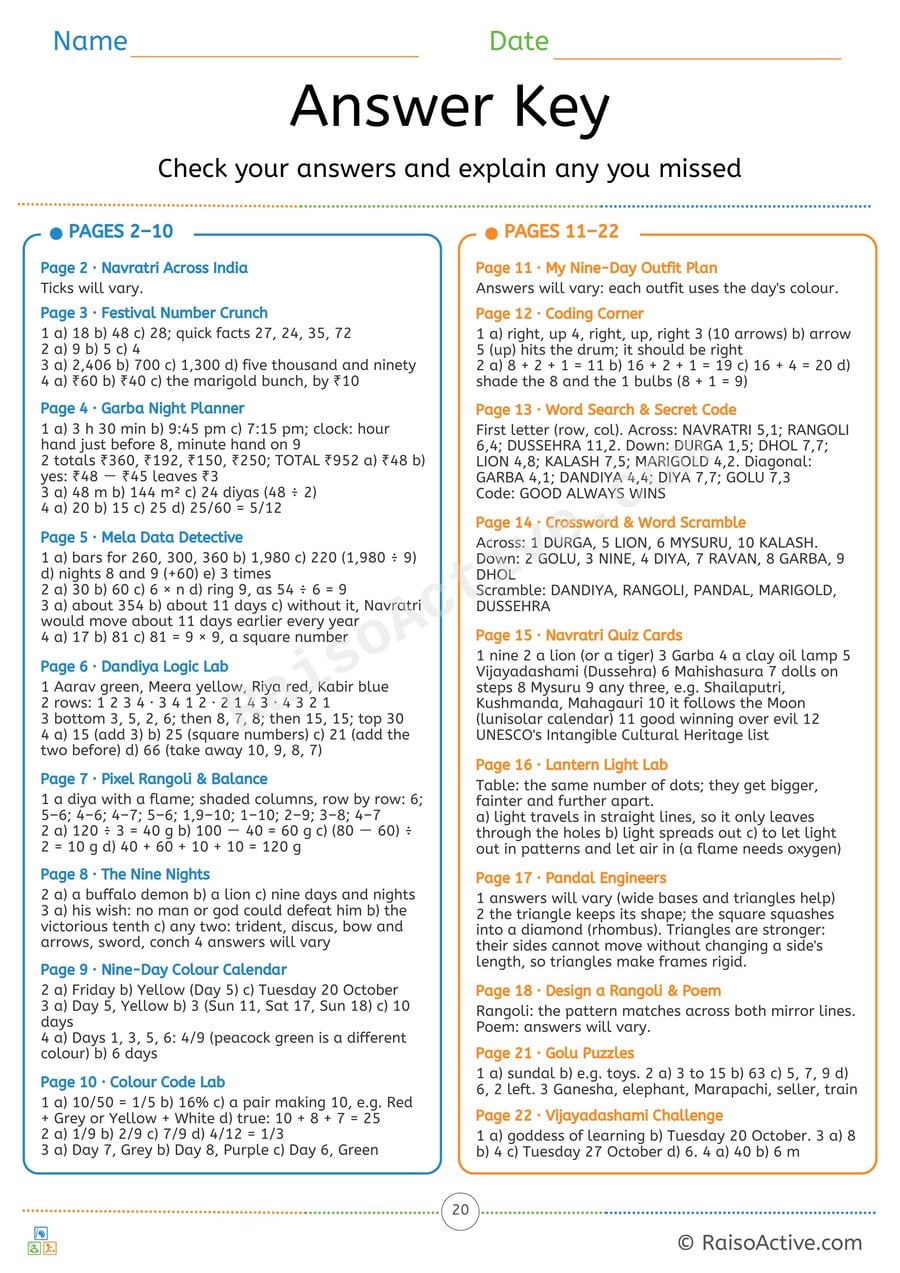
Navratri Festival Quest Answer Key for Grown-ups
Ages 7-11 · Grade 2–Grade 3Ages 7-11 · Year 3–Year 4Ages 7-11 · Class 2–Class 3Ages 7-11
Grown-ups can check every answer in the pack, with workings for the maths, grid positions for the word search, the logic grid and sudoku solutions, and the reasons behind the science results.
Navratri Festival Quest Certificate of Achievement
Ages 7-11 · Grade 2–Grade 3Ages 7-11 · Year 3–Year 4Ages 7-11 · Class 2–Class 3Ages 7-11
Children celebrate finishing the Navratri Festival Quest pack and record which levels they completed.
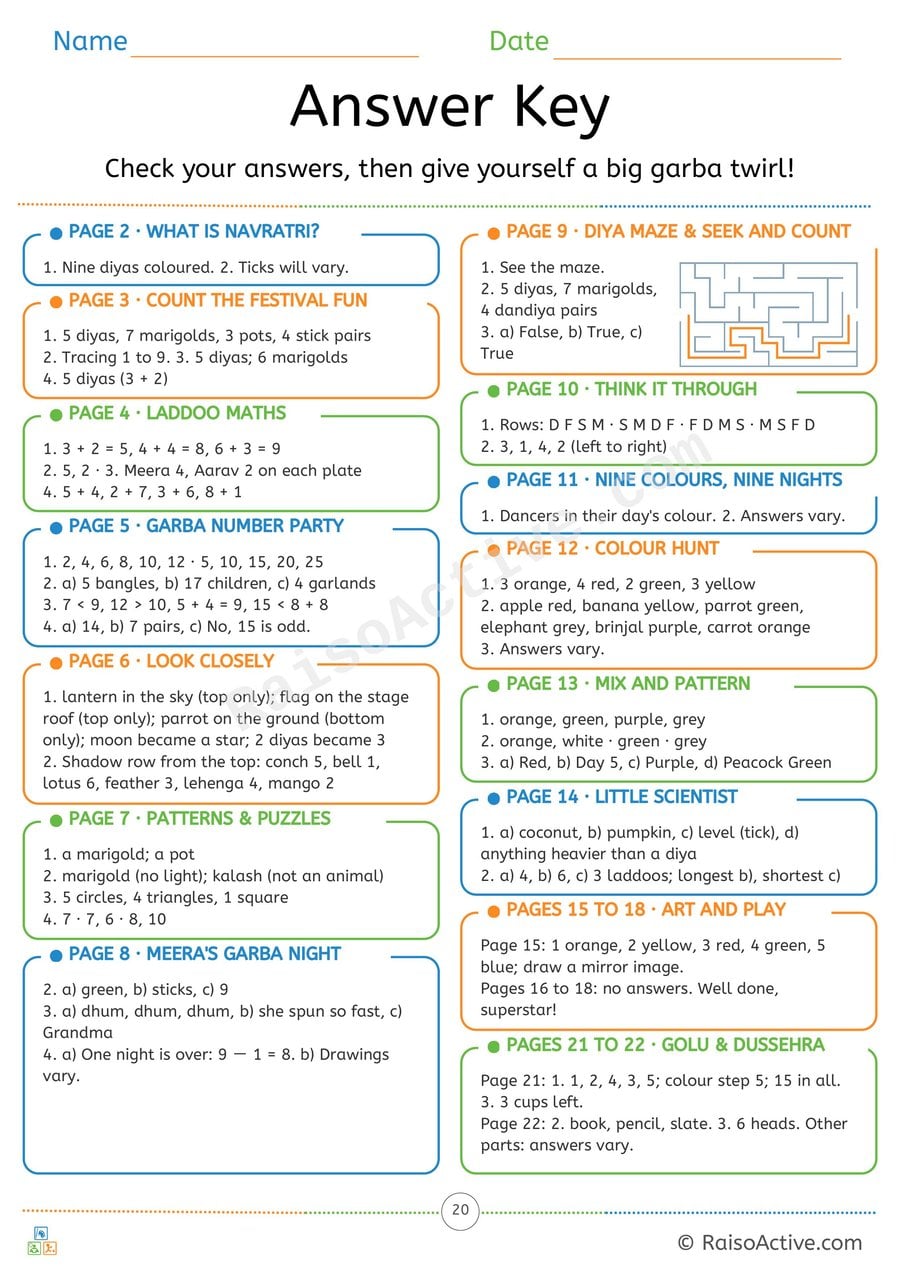
Navratri Fun Time Answer Key for Grown-ups
Ages 4-6 · Pre-K–KindergartenAges 4-6 · Reception–Year 1Ages 4-6 · LKG–UKGAges 4-6
Grown-ups can quickly check every answer in the Navratri Fun Time pack, page by page.

Written by
Hemsweta Jain · Teacher Cheena
MBA and Early Childhood Educator, teaching since 2014 · Founder of RaisoActive, Mumbai
Published · Last reviewed
Related Resources
Printable Resources(10)
View all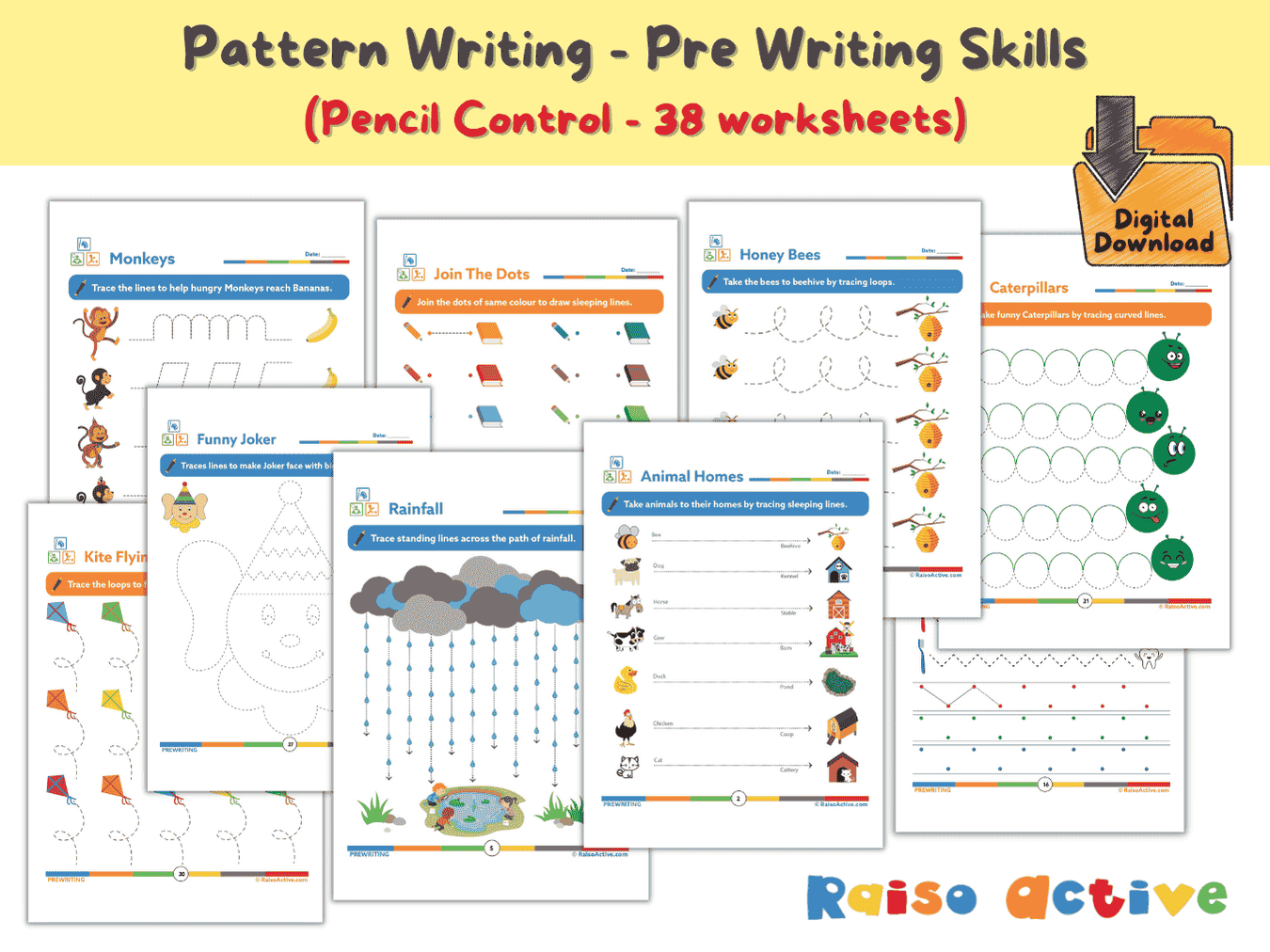

Pattern Writing Pre-writing Skills Activity Book for 3-4 Year Olds
Ages 3-4 · PreschoolAges 3-4 · NurseryAges 3-4 · 44 pages
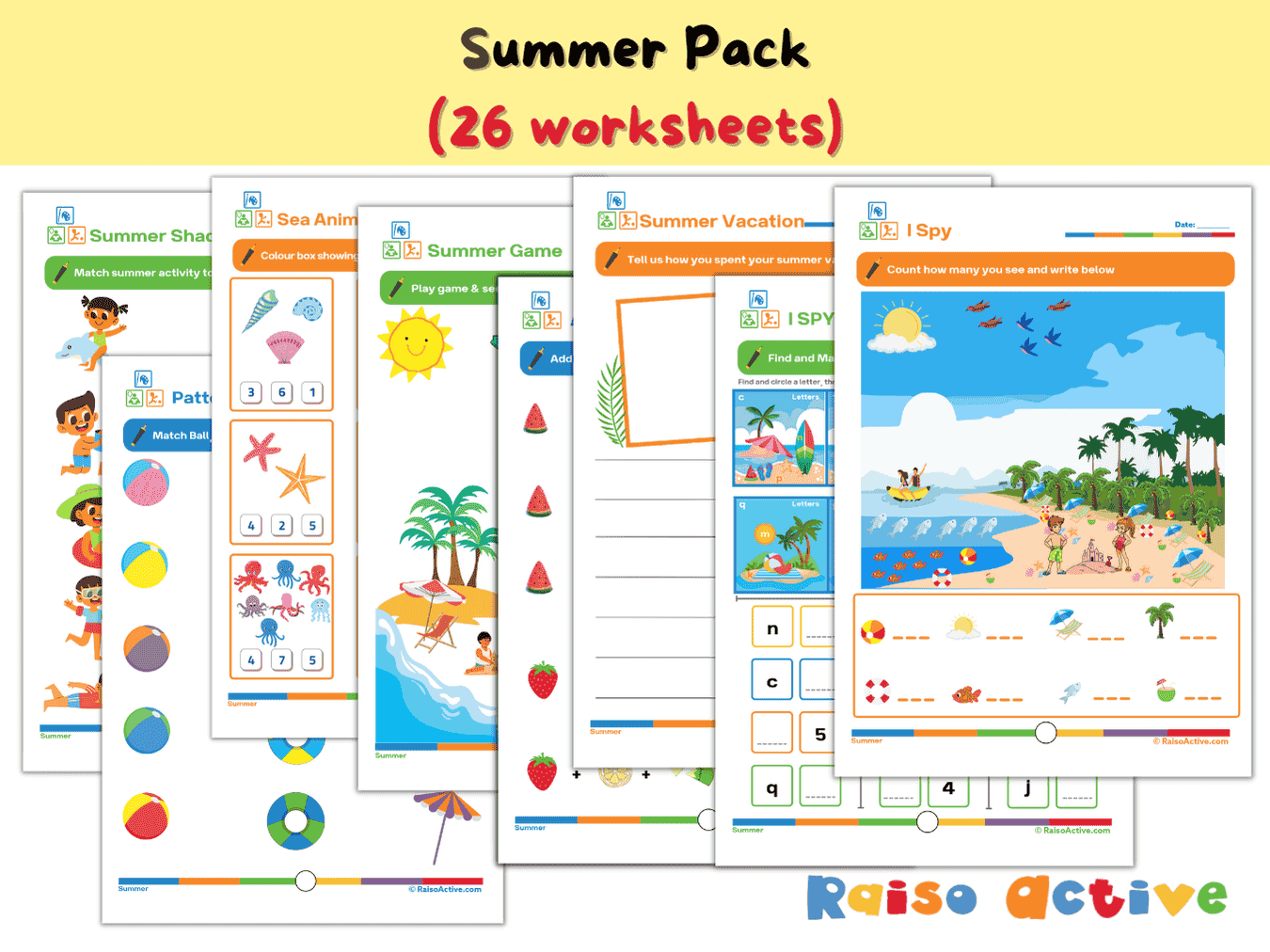

Summer Activity Pack: Math, Literacy, Puzzles & More for Preschool & Kindergarten
Ages 3-7 · Preschool–Grade 1Ages 3-7 · Nursery–Year 2Ages 3-7 · Nursery–Class 1Ages 3-7 · 26 pages
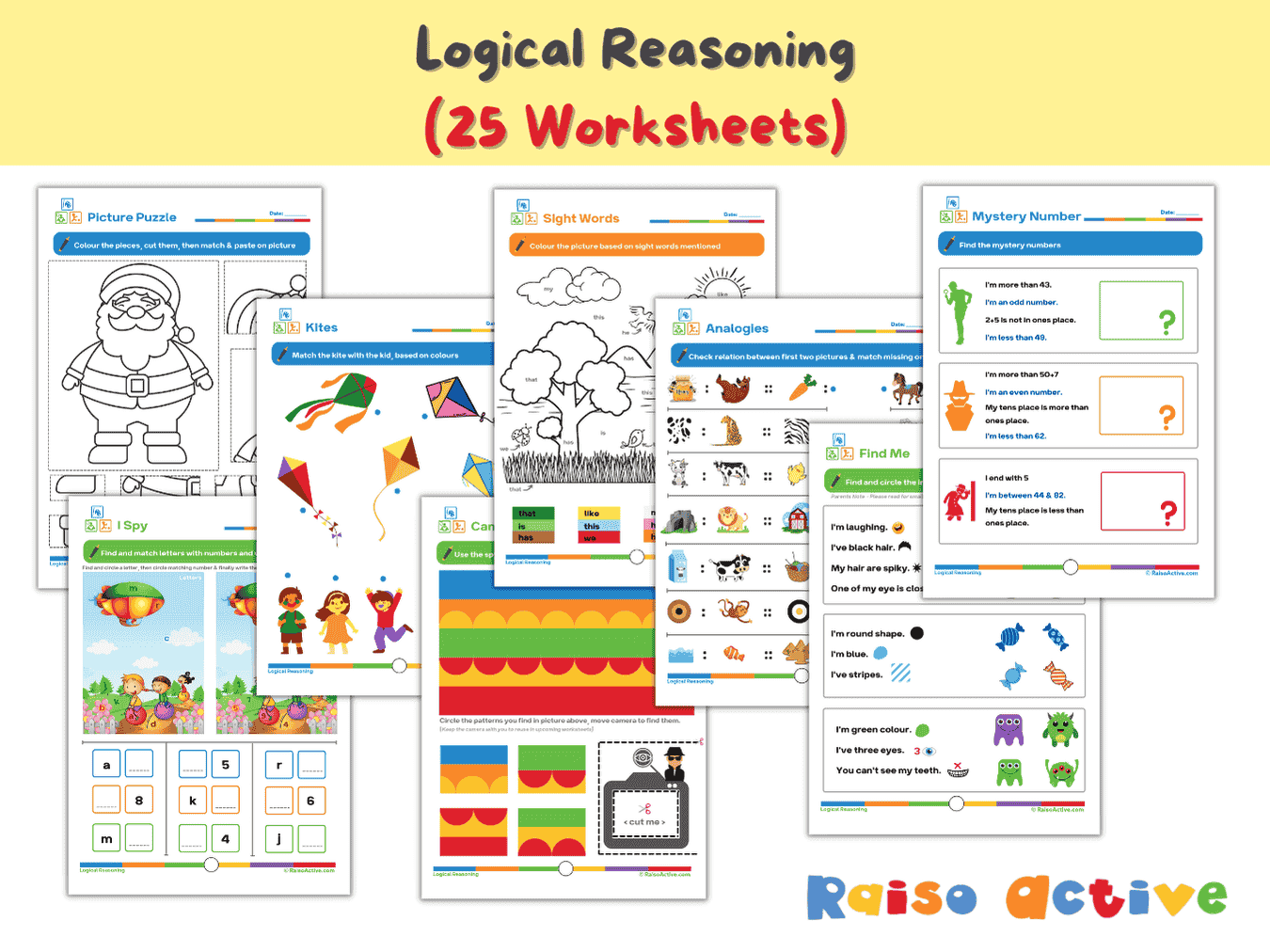

Logical Reasoning Activity Book for Preschool & Kindergarten | Patterns, Puzzles & Analogies
Ages 4-7 · Pre-K–Grade 1Ages 4-7 · Reception–Year 2Ages 4-7 · LKG–Class 1Ages 4-7 · 26 pages
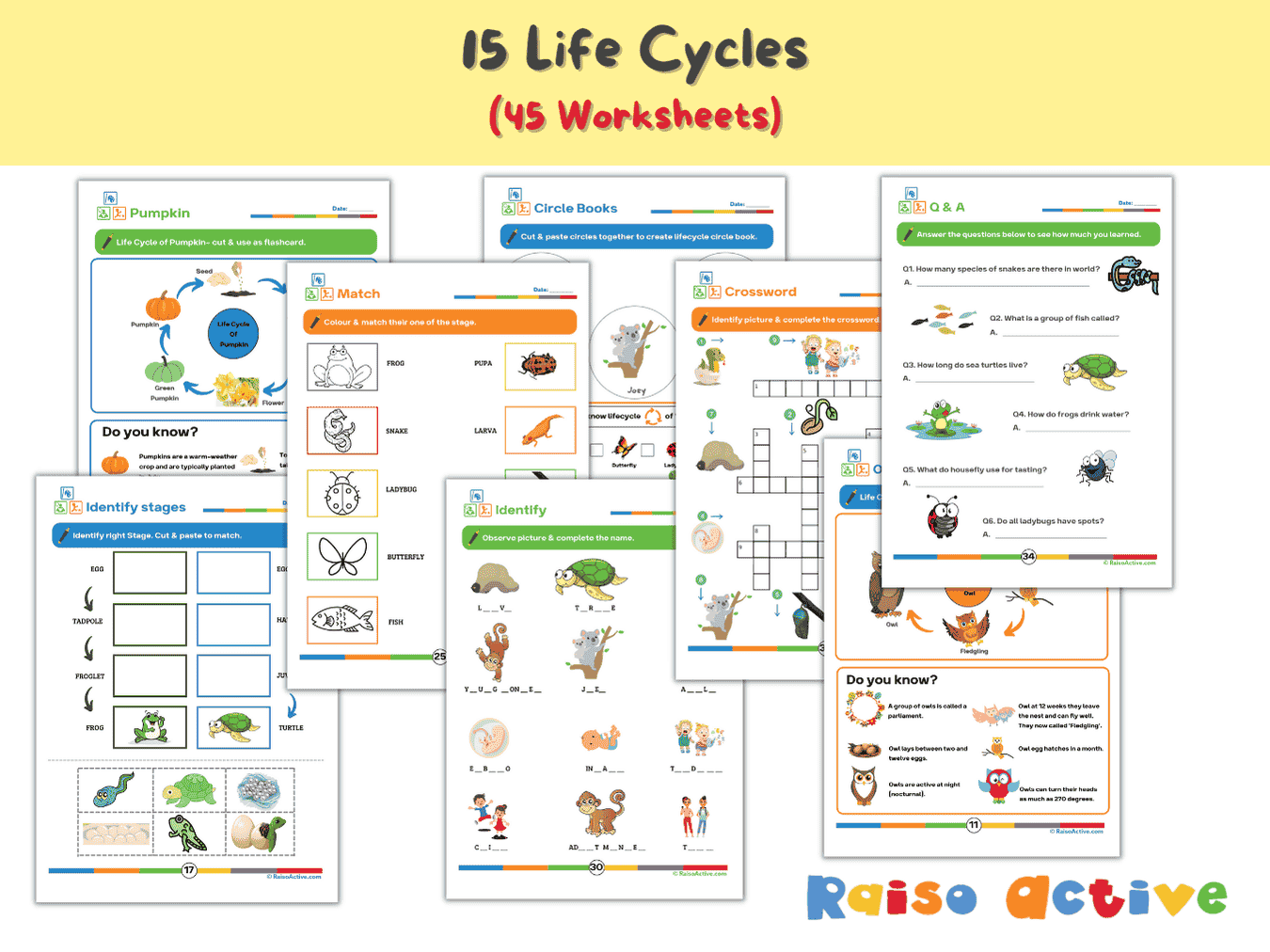

Lifecycles Activity Book & Flashcards for Preschool & Early Elementary
Ages 3-8 · Preschool–Grade 2Ages 3-8 · Nursery–Year 3Ages 3-8 · Nursery–Class 2Ages 3-8 · 46 pages
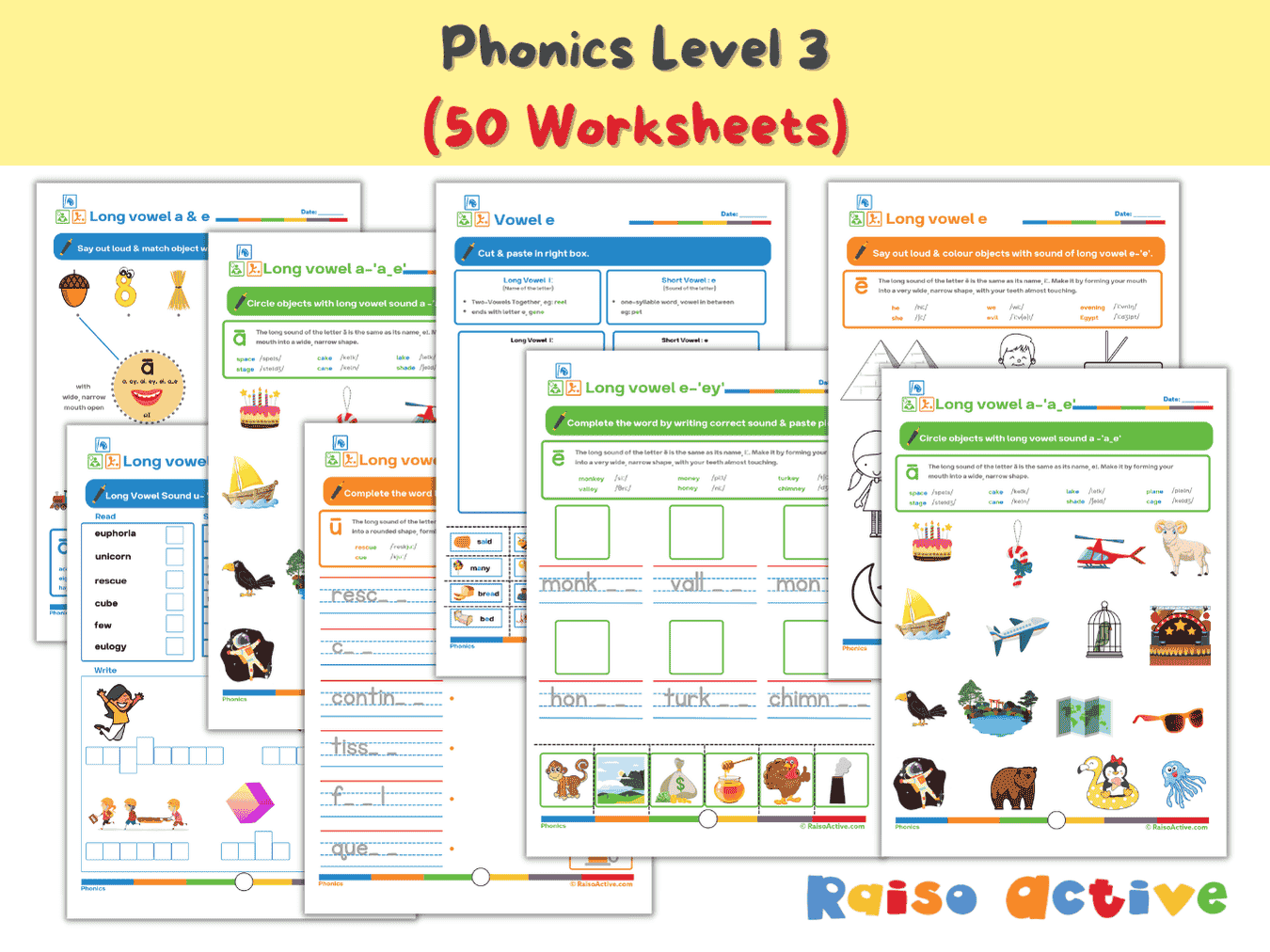

Phonics Level 3 Long Vowels Activity Book for Kindergarten & 1st Grade
Ages 5-7 · Kindergarten–Grade 1Ages 5-7 · Year 1–Year 2Ages 5-7 · UKG–Class 1Ages 5-7 · 51 pages
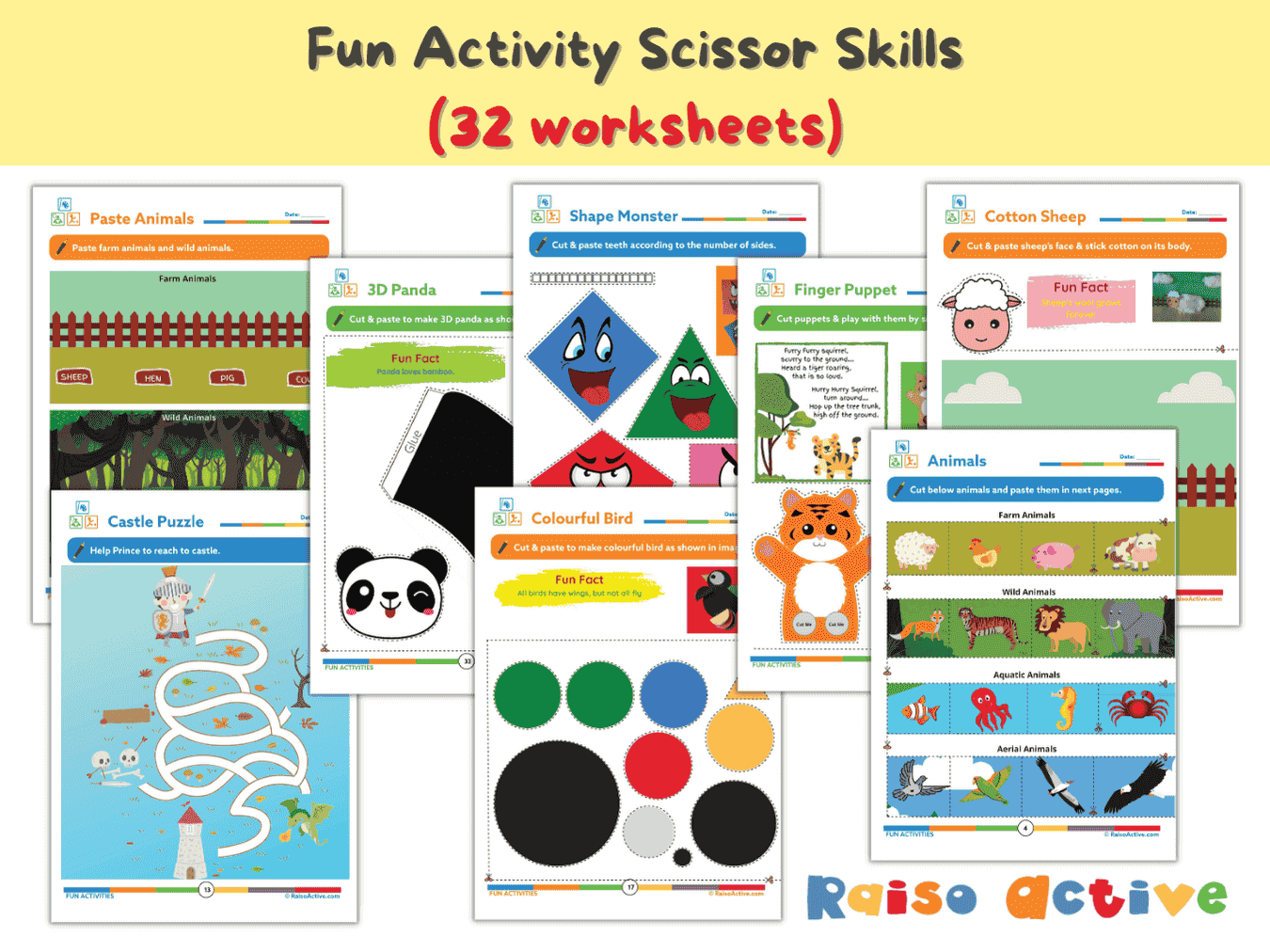
Preschool Scissor Skills Activity Book: Fine Motor & Craft Fun for Ages 3-6
Ages 3-6 · Preschool–KindergartenAges 3-6 · Nursery–Year 1Ages 3-6 · Nursery–UKGAges 3-6 · 35 pages
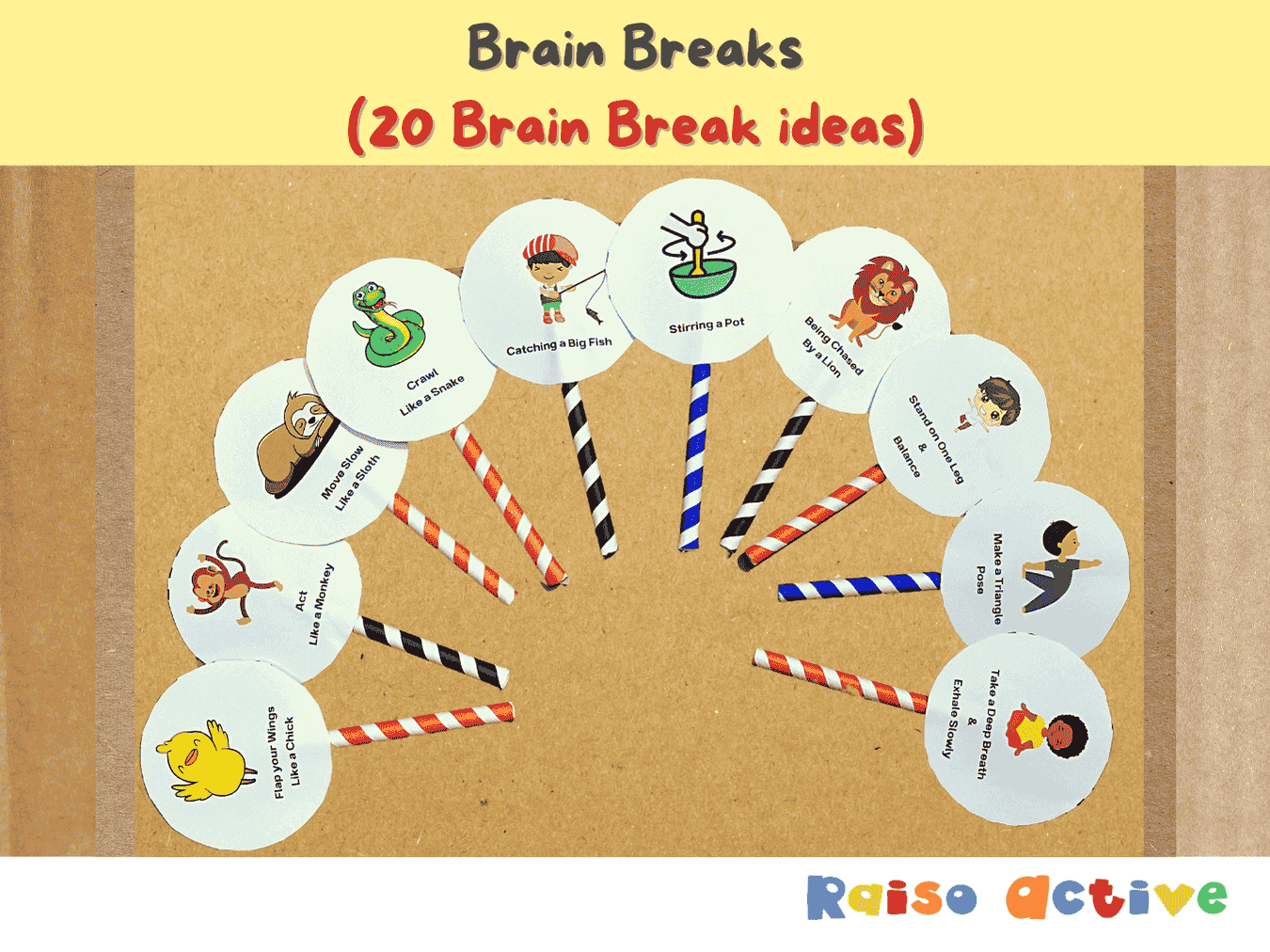
Gross Motor Movement & Imaginative Play Flashcards for Toddlers & Preschoolers
Ages 2-5 · Preschool–Pre-KAges 2-5 · Nursery–ReceptionAges 2-5 · Nursery–LKGAges 2-5 · 5 pages
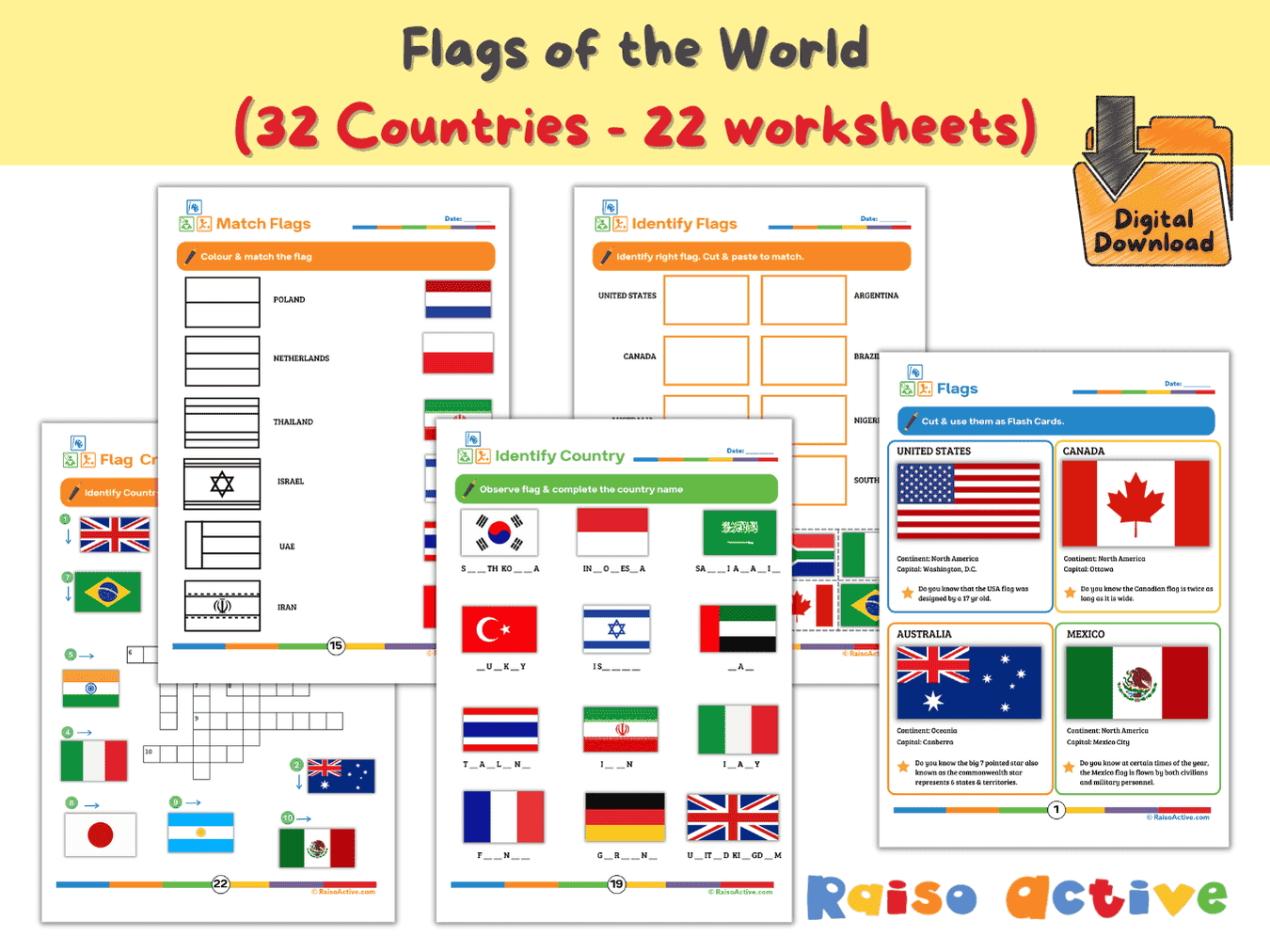
Flags of the World Activity Book & Flashcards for Kids (Ages 5-9)
Ages 5-8 · Kindergarten–Grade 2Ages 5-8 · Year 1–Year 3Ages 5-8 · UKG–Class 2Ages 5-8 · 23 pages
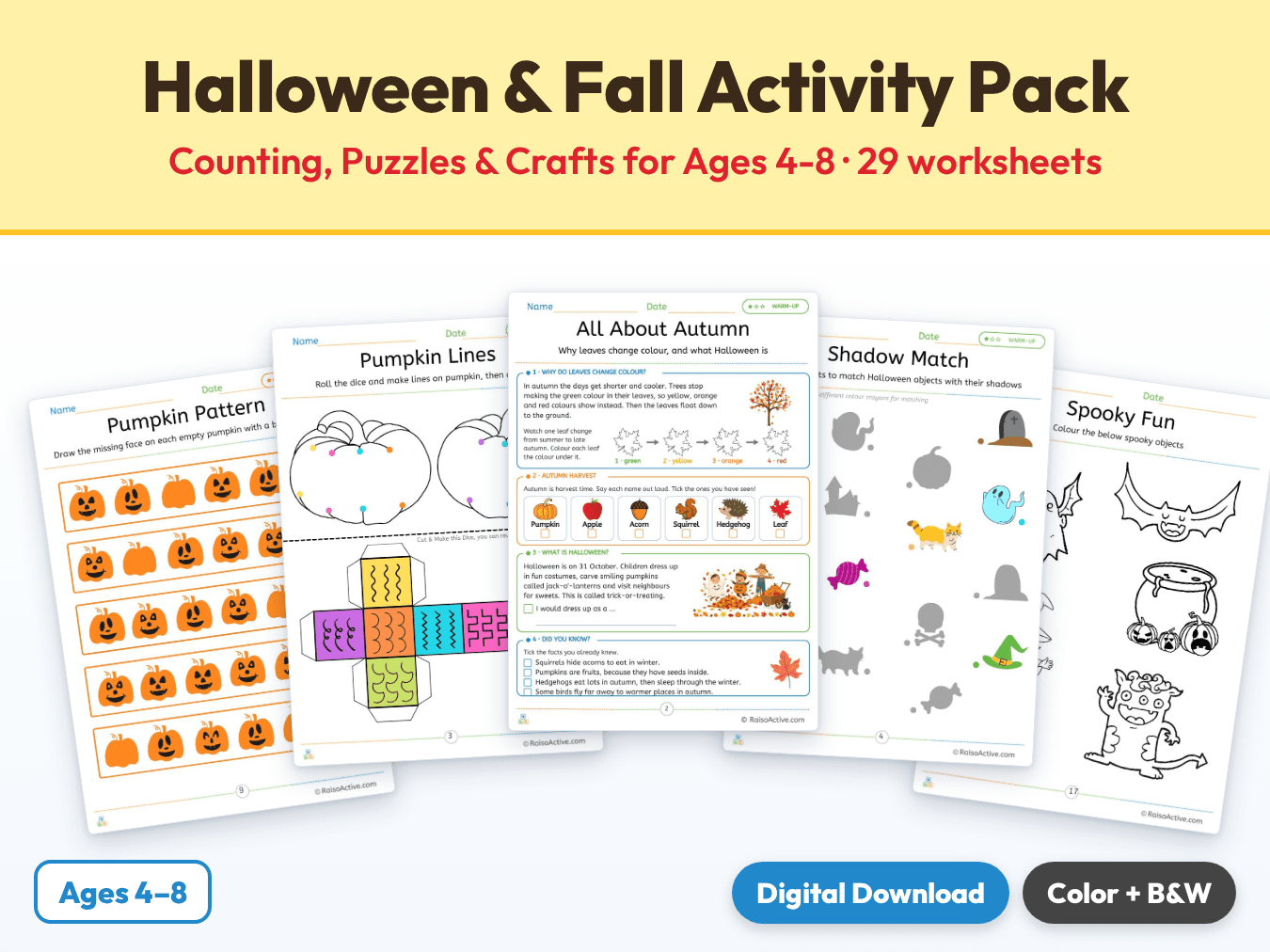
Halloween & Fall Activity Pack: Counting, Puzzles & Crafts for Ages 4-8
Ages 4-8 · Pre-K–Grade 2Ages 4-8 · Reception–Year 3Ages 4-8 · LKG–Class 2Ages 4-8 · 30 pages
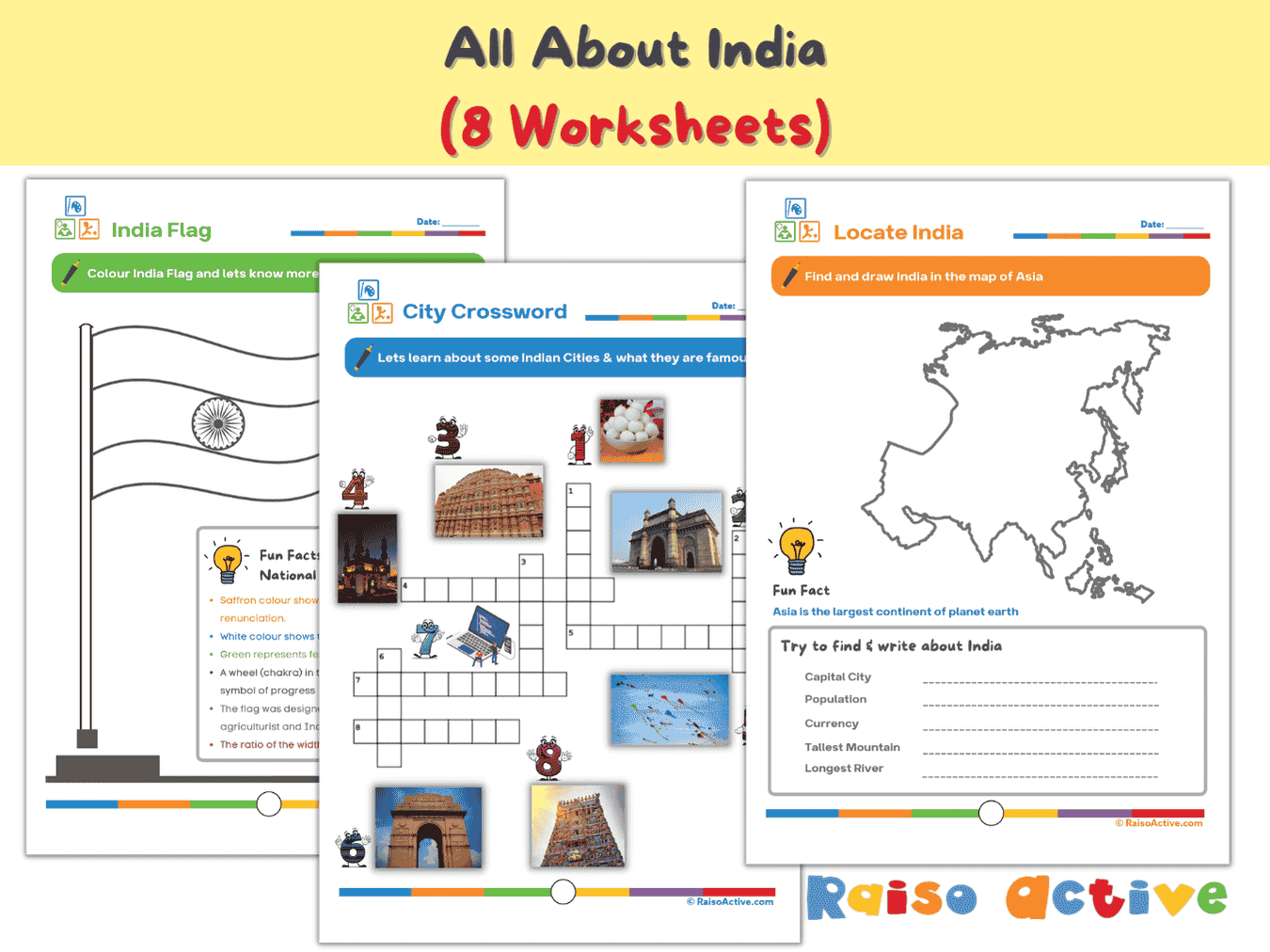
India Activity Book for Kids: Explore Geography, Culture & Symbols (Ages 5-8)
Ages 5-8 · Kindergarten–Grade 2Ages 5-8 · Year 1–Year 3Ages 5-8 · UKG–Class 2Ages 5-8 · 8 pages