Should I Use Formal Assessments with My Preschooler? A Balanced Guide for Parents and Educators
Author
RaisoActive - Kids Activities and Fun Learning
Published
Updated
Reading Time
16 min read

- Formal, high-stakes assessments are generally not recommended for children under six by global early childhood organisations — and here is why that matters
- India has a strong tradition of grade-based exams starting early, but NEP 2020 signals a shift towards observation-based, holistic assessment
- Developmental screening assessments are different from academic tests — they serve a valuable purpose in detecting delays early
- Play-based assessment and portfolio documentation are the gold standard for preschool-age children
- You can do meaningful, stress-free learning check-ins at home without turning your living room into an exam hall
The Question Every Parent Eventually Asks
It usually starts at a birthday party or a school WhatsApp group. Another parent mentions that their three-year-old is already doing worksheets every evening, or that their preschool sends home weekly "assessments" in a sealed envelope. Suddenly you are wondering: should I be doing something like that too? Is my child falling behind? Do I even know where they stand?
These are completely natural worries. The desire to understand how your child is doing — and to give them every advantage — is one of the most universal feelings in parenting. But when it comes to young children aged two to six, the question of formal assessment is more nuanced than it might appear. The answer depends enormously on what kind of assessment we are talking about, why we are doing it, and how it is carried out.
This guide will help you think through those questions with clarity and calm. We will look at what the research says, how the Indian educational tradition frames early assessment, what screening tools are genuinely useful, and what alternatives exist that work beautifully for young children.
Want practical early learning resources?
Get age-appropriate activity ideas, developmental milestone guides, and free printable worksheets delivered straight to your inbox.
What Does 'Formal Assessment' Actually Mean?
Before we can answer whether you should use formal assessments with your preschooler, we need to get clear on what that phrase actually covers. The term is broader than many parents realise, and lumping all types together leads to a lot of unnecessary anxiety on one side — and misplaced confidence on the other.
Formal assessments are structured, standardised tools designed to measure specific knowledge or developmental skills. They typically have set instructions, time limits or conditions, and scoring criteria that are applied the same way across all children. Within this category there are significant differences:
- Standardised academic tests — Written or oral tests that measure reading, numeracy, or language skills against a norm group. Examples include school entrance tests and grade-level assessments. These are the type most experts caution against using with children under six.
- Developmental screening tools — Brief, standardised checklists used by paediatricians or specialists to identify whether a child may need further evaluation for developmental delays. Examples include the ASQ-3 (Ages and Stages Questionnaire) and the MCHAT-R (for autism screening). These are genuinely valuable and recommended.
- Kindergarten readiness assessments — Informal to semi-formal tools that help schools understand what a child knows as they transition into kindergarten. Often observation-based rather than test-based.
- Informal or formative assessment — Observation notes, portfolio documentation, and play-based check-ins that track progress over time. Not "formal" in the high-stakes sense, but systematic.
The crucial distinction is this: developmental screening is not the same as academic testing. One is a health and wellbeing check — the other is an academic performance measure. Confusing the two leads parents and schools to apply the wrong tool at the wrong time.
What Early Childhood Experts Say About Testing Under-Sixes
The global consensus among early childhood researchers and organisations is consistent and clear: standardised, high-stakes academic testing is inappropriate for children below age six, and potentially harmful below age eight. The National Association for the Education of Young Children (NAEYC), the American Academy of Pediatrics, and UNESCO's early childhood frameworks all share this position.
The reasons are rooted in child development science. Young children's brains are still developing the prefrontal cortex — the area responsible for sustained attention, impulse control, and working memory. Sitting still, following test instructions, and managing performance anxiety are genuinely difficult for three to six-year-olds, not because they are incapable learners, but because their nervous systems are not yet wired for that kind of demand.
When a four-year-old "fails" a formal assessment, it often tells us very little about their actual knowledge or potential. What it frequently measures instead is their ability to sit still, their familiarity with test-taking formats, their stress levels on that particular day, and whether they slept well the night before. These are not measures of intelligence or learning capacity.
A poor test result for a preschooler often reflects test conditions, not the child's ability.
Young children are highly variable in their performance — a child who can count to twenty at home may refuse to do it for a stranger in an unfamiliar setting. Test anxiety, hunger, tiredness, and novelty all significantly affect preschool performance in ways that they do not affect older children or adults.
The Indian Context: Navigating a Culture of Early Academic Pressure
In India, formal assessment has traditionally started early — sometimes very early. Many urban preschools conduct "readiness assessments" before admitting children as young as two. Entrance tests for prestigious primary schools are a real phenomenon in cities like Mumbai, Delhi, and Bengaluru, with children as young as three or four being interviewed and assessed for admission.
This creates an understandable pressure on parents. If the school your child may attend conducts a formal entrance assessment, you want your child to be prepared. If peer parents are drilling their toddlers with flashcards, opting out can feel risky. This is a genuinely difficult tension, and it is worth naming honestly.
At the same time, India's National Education Policy 2020 explicitly calls for a shift away from high-stakes, rote-based assessment in the foundational years (ages 3-8). The NEP recommends play-based, activity-based learning for the foundational stage and holistic progress cards rather than traditional examinations. The Nipun Bharat initiative reinforces this by focusing on foundational literacy and numeracy through competency-based, observation-driven approaches.
So while the cultural pressure towards early formal assessment is real, the policy direction in India — and the research globally — is moving firmly away from it. As a parent, knowing this context can help you push back on school practices that may not serve your child's best interests.
NEP 2020 supports your instinct to resist high-pressure early testing.
India's national education policy is aligned with global early childhood best practice: observation-based assessment, play-based learning, and holistic progress tracking for ages 3-8. If a school's approach contradicts this, it is worth asking why — and whether it is truly in your child's interest.
- A school that uses timed written tests for children under five is using an inappropriate assessment method — regardless of how prestigious the institution is.
- "Coaching" a toddler for a school entrance interview with rote-memorised answers teaches the wrong lessons about learning from the very beginning.
- If your child is showing signs of anxiety, reluctance, or sleep disturbances around assessment periods, that is a signal worth taking seriously.
- Assessment results at age three or four have very low predictive validity for later academic performance — do not place too much weight on them.
When Formal Assessment Is Genuinely Valuable: Developmental Screening
Here is where the conversation shifts, because it would be misleading to suggest all formal assessment of young children is harmful. Developmental screening — a specific, targeted type of formal assessment — can be genuinely life-changing when used appropriately.
Developmental screening tools are brief, standardised questionnaires or observation protocols designed to identify children who may be experiencing developmental delays or differences. They are used by paediatricians, developmental specialists, and trained educators to answer a specific question: does this child need a more thorough evaluation in a particular area?
Early identification of developmental differences — in language, motor skills, social-emotional development, cognition, or sensory processing — can make an enormous difference to a child's trajectory. Early intervention services are significantly more effective than later ones, because the young brain is at its most plastic and responsive. A child identified at age two or three with a language delay who receives speech therapy can often close the gap before school entry. The same child identified at age seven has a much longer road ahead.
- Your child is not meeting language milestones (e.g., no words by 15 months, no two-word phrases by 24 months, or speech that is difficult for unfamiliar adults to understand by age three).
- You have concerns about social engagement, eye contact, or your child does not point to share interest with you by 12-14 months.
- Your child has significant difficulty with fine or gross motor skills compared to same-age peers.
- Your child seems to be losing skills they had previously acquired — this always warrants prompt evaluation.
- You simply have a gut feeling that something is not quite right. Parental concern is one of the most reliable indicators of developmental difference.
Approximately 1 in 8 children in India is estimated to have some form of developmental delay or disability. Early screening and intervention — ideally before age three — significantly improves long-term outcomes for these children.
Source: Ministry of Health and Family Welfare, India
Better Alternatives: Observation-Based and Play-Based Assessment
So if formal academic tests are not appropriate for preschoolers, how do we know how they are doing? The answer that early childhood professionals have arrived at — after decades of research — is that we observe them carefully, document what we see, and use that evidence to understand their development.
Observation-based assessment means watching children as they play, create, explore, and interact, and recording what you see in a systematic way. A skilled preschool teacher watching a child build with blocks is simultaneously assessing spatial reasoning, problem-solving, persistence, creativity, and social skills — all without the child knowing they are being assessed, and therefore without the performance anxiety that distorts test results.
Play-based assessment takes this further by creating specific play situations designed to elicit particular skills. A specialist might offer a child a puzzle with a missing piece and observe how they respond to the challenge. Do they try different orientations? Do they ask for help? Do they give up or persist? These behaviours tell you far more about a child's developmental profile than a worksheet ever could.
- Set up a simple activity — building with blocks, sorting objects by colour or size, or a pretend play scenario — and observe without intervening for five minutes.
- Note what your child does spontaneously, how they respond to challenges, how long they persist, and what language they use.
- Jot down a brief observation note with the date, activity, and what you noticed. Over time, these notes become a rich picture of growth.
- You do not need a special form or checklist — a notebook works perfectly. The act of observing with intention is what matters.
of early childhood educators surveyed by NAEYC rated observation and documentation as the most reliable method of assessing young children's learning — significantly above standardised tests or worksheets.
Source: NAEYC Professional Development Survey
Kindergarten Readiness: What It Really Means
"Kindergarten readiness" has become a loaded term that means very different things to different people. For some parents and schools, it means academic readiness: does the child know their letters, numbers, and colours? Can they write their name? For early childhood researchers, readiness means something much broader — and more important.
Research consistently shows that the skills most predictive of school success are not academic content knowledge but self-regulation skills: the ability to manage emotions, follow two-step instructions, take turns, persist through difficulty, and transition between activities. A child who can focus, cooperate, and bounce back from frustration is far better prepared for kindergarten than one who knows their alphabet but dissolves into tears at every challenge.
If your child's school uses a kindergarten readiness assessment, the best version of this tool will be observational and holistic, administered by a familiar adult over multiple sessions, and used to plan for your child's needs — not to make a pass/fail decision. If a school is making admission decisions for five-year-olds based on a timed written test, that tells you something important about their educational philosophy.
Self-regulation, curiosity, and communication matter more than academic content for school readiness.
The most important kindergarten readiness skills — emotional regulation, ability to follow instructions, curiosity, and persistence — are developed through play, warm relationships, and daily routines, not through formal academic drilling. The best preparation for school is a rich early childhood, not early coaching.
How to Do Meaningful Learning Check-Ins at Home (Without Making It a Test)
Choose a natural moment
The best learning check-ins happen during everyday activities — bath time, cooking together, a walk in the park, or bedtime reading. You are not sitting your child down at a table with a pencil. You are noticing what they know and can do in real contexts.
Ask open-ended questions
Instead of "What colour is that?" (a test question with one right answer), try "What do you notice about that flower?" or "What would happen if we added more water?" Open questions reveal thinking, not just recall, and they do not create a right/wrong dynamic.
Observe without intervening
Give your child a problem to solve — a puzzle, a building challenge, a sorting task — and step back. Resist the urge to help immediately. What you observe in the first few minutes of independent effort is incredibly informative about where they are developmentally.
Note what they do spontaneously
The most reliable indicator of a child's ability is what they do without prompting. Does your four-year-old spontaneously count objects? Sort their toys by type? Narrate stories during play? These unprompted behaviours show genuine internalisation of skills.
Keep a simple observation journal
A small notebook where you jot down a couple of sentences each week — what you noticed, what surprised you, what your child seemed proud of — becomes an invaluable record over time. Date every entry. These notes are worth more than any test score.
Compare with developmental milestones, not with other children
Check your child's development against age-based milestones (widely available from paediatric and early education resources) rather than against siblings or peers. Development follows a sequence, not a race. Wide variation within the typical range is completely normal.
Share observations with your child's teacher
Your home observations are valuable information for your child's educator. Share specific examples — not just "she seems behind" but "I noticed she can count objects to ten but gets confused when the objects are arranged in a line rather than scattered." This kind of specific, contextual information shapes teaching far more effectively than a test score.
- +Happens in natural settings during play and daily life
- +Child is unaware of being assessed — no performance anxiety
- +Captures what a child can do independently and with support
- +Reveals thinking processes, not just right/wrong answers
- +Documents growth over time through dated examples
- +Appropriate for all ages from infancy onwards
- +Flexible enough to capture creativity and individual strengths
- -Happens in a structured, unfamiliar test setting
- -Child is aware of being tested — can cause anxiety
- -Measures performance at one point in time only
- -Produces a score, not insight into how the child thinks
- -A snapshot that does not show developmental trajectory
- -Unreliable and inappropriate below age six
- -Rigid format that may disadvantage multilingual or differently-abled children
Get Free Printable Milestone Checklists and Assessment Alternatives
Join thousands of Indian parents and early childhood educators who use our resources to track children's development the right way — with joy, not pressure. Subscribe for free printables delivered weekly.
Frequently Asked Questions About Formal Assessments and Preschoolers
My child's preschool sends home monthly 'assessments'. Should I be worried?
How do I know if my child is developmentally on track without formal tests?
My child's school has an entrance test. How do I prepare my preschooler without causing stress?
What is the difference between a developmental delay and just being 'a late bloomer'?
I feel pressure from my in-laws to start academic worksheets early. How do I explain that play is enough?
At what age is formal academic assessment actually appropriate?
Free worksheets for this topic
Browse all worksheets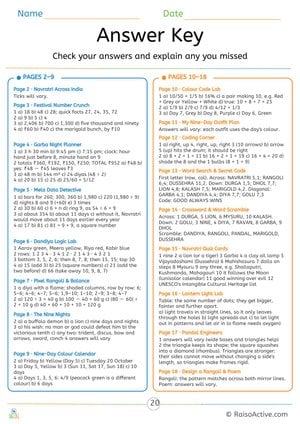
Navratri Festival Quest Answer Key for Grown-ups
Ages 7-11 · Grade 2–Grade 3Ages 7-11 · Year 3–Year 4Ages 7-11 · Class 2–Class 3Ages 7-11
Grown-ups can check every answer in the pack, with workings for the maths, grid positions for the word search, the logic grid and sudoku solutions, and the reasons behind the science results.
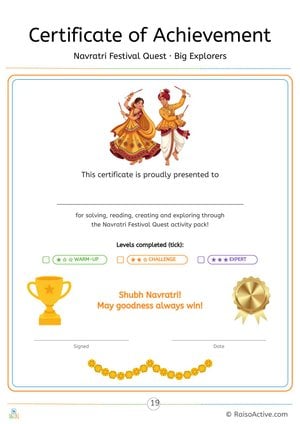
Navratri Festival Quest Certificate of Achievement
Ages 7-11 · Grade 2–Grade 3Ages 7-11 · Year 3–Year 4Ages 7-11 · Class 2–Class 3Ages 7-11
Children celebrate finishing the Navratri Festival Quest pack and record which levels they completed.
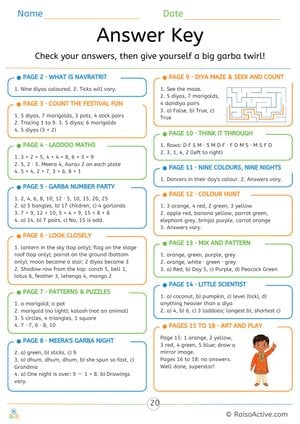
Navratri Fun Time Answer Key for Grown-ups
Ages 4-6 · Pre-K–KindergartenAges 4-6 · Reception–Year 1Ages 4-6 · LKG–UKGAges 4-6
Grown-ups can quickly check every answer in the Navratri Fun Time pack, page by page.

Navratri Fun Time Certificate of Achievement
Ages 4-6 · Pre-K–KindergartenAges 4-6 · Reception–Year 1Ages 4-6 · LKG–UKGAges 4-6
Children celebrate finishing the Navratri Fun Time pages and see which levels they completed.

Written by
Hemsweta Jain · Teacher Cheena
MBA and Early Childhood Educator, teaching since 2014 · Founder of RaisoActive, Mumbai
Published · Last reviewed
Related Resources
Printable Resources(10)
View all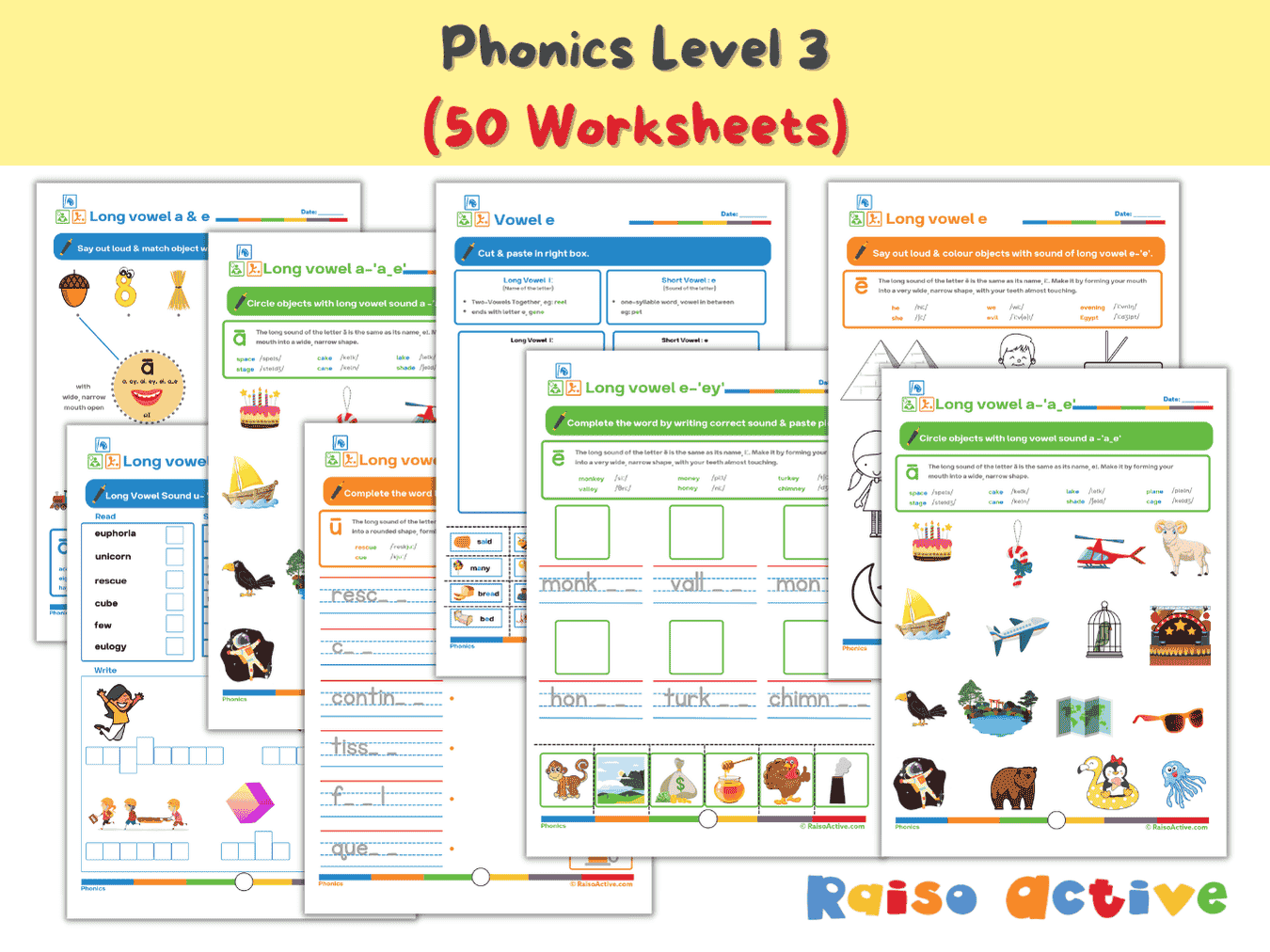

Phonics Level 3 Long Vowels Activity Book for Kindergarten & 1st Grade
Ages 5-7 · Kindergarten–Grade 1Ages 5-7 · Year 1–Year 2Ages 5-7 · UKG–Class 1Ages 5-7 · 51 pages
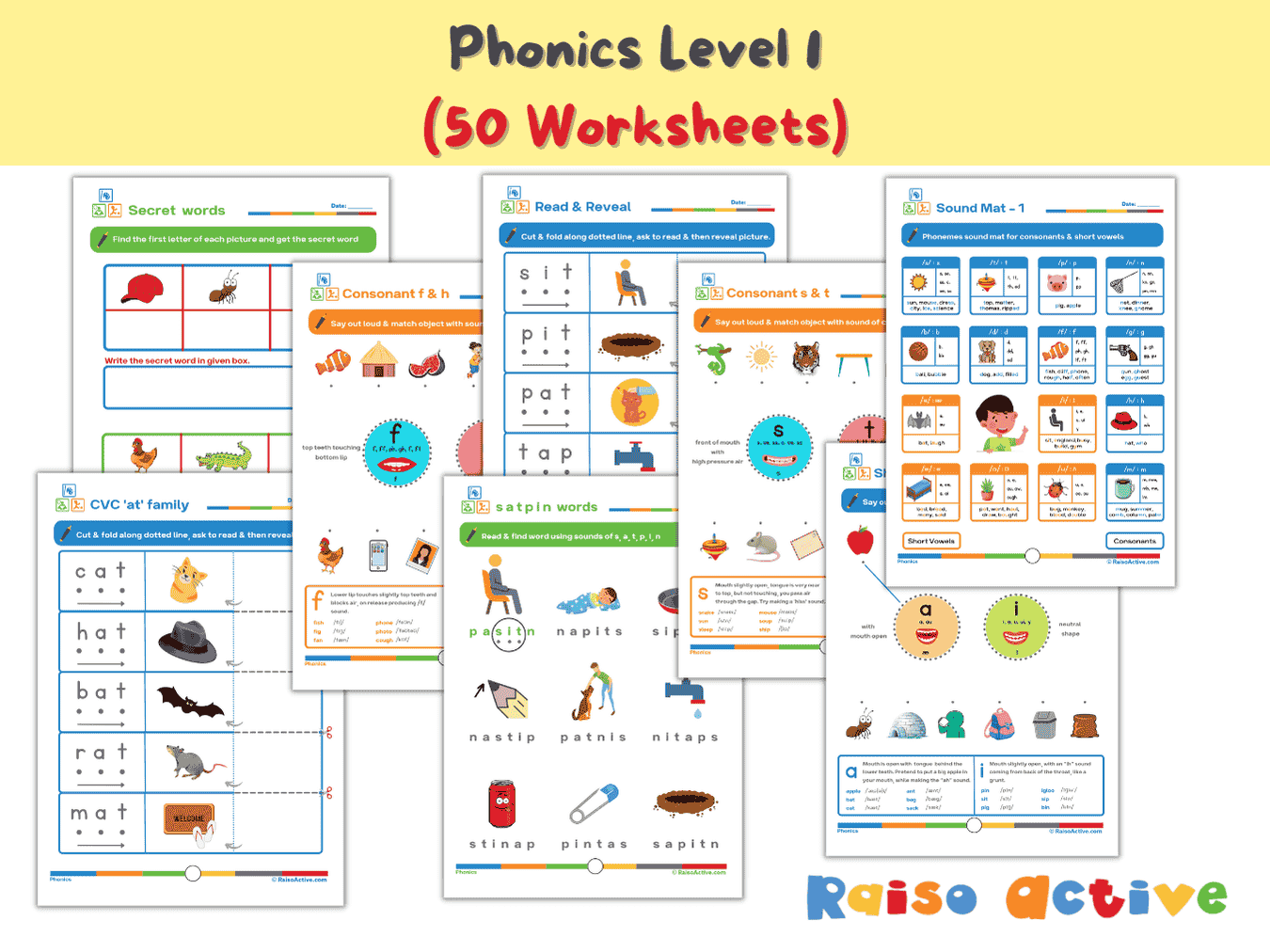
Phonics Level 1 Activity Book: Letter Sounds, Blending & CVC Words for Preschool & Kindergarten
Ages 3-6 · Preschool–KindergartenAges 3-6 · Nursery–Year 1Ages 3-6 · Nursery–UKGAges 3-6 · 60 pages
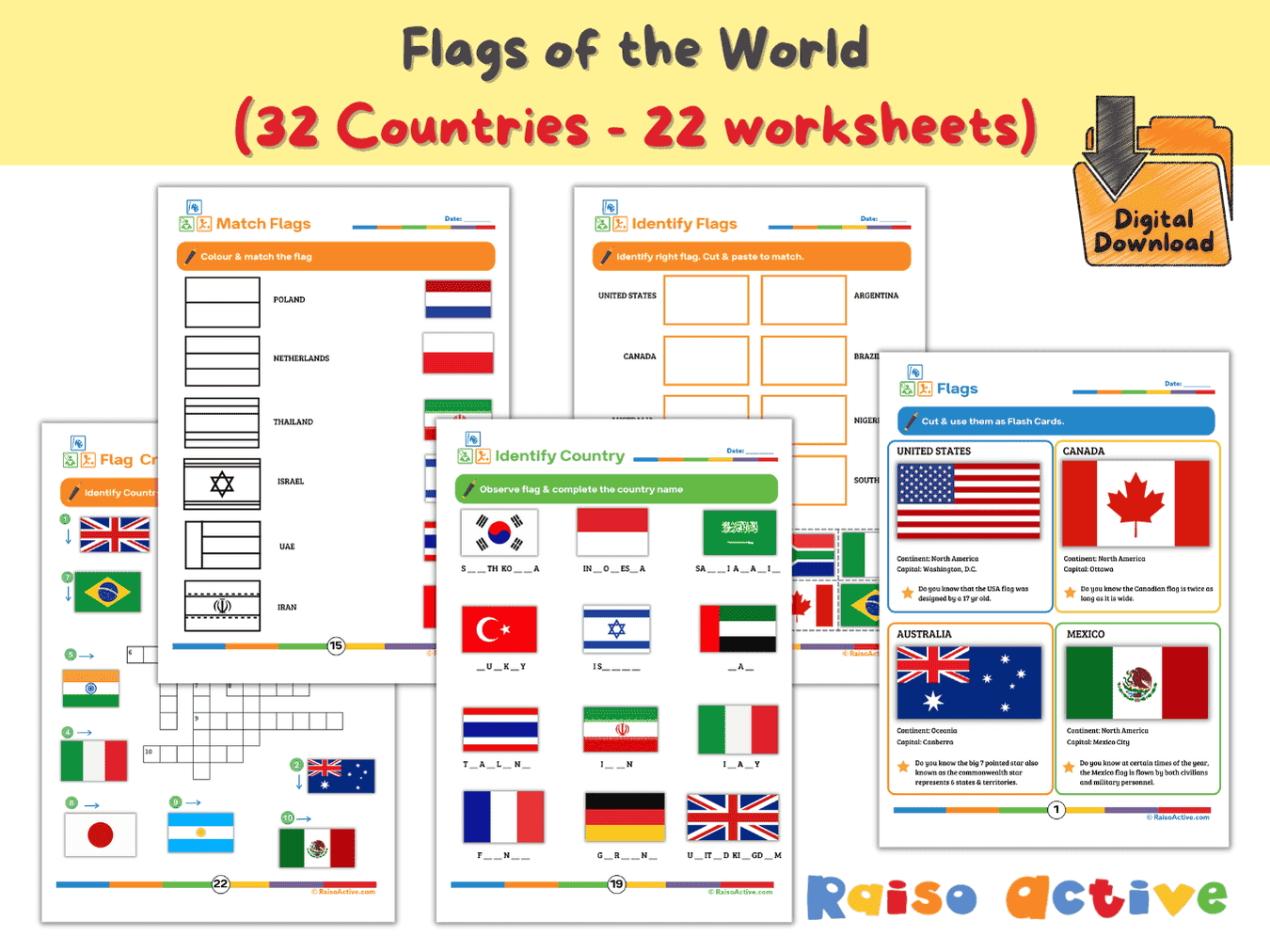

Flags of the World Activity Book & Flashcards for Kids (Ages 5-9)
Ages 5-8 · Kindergarten–Grade 2Ages 5-8 · Year 1–Year 3Ages 5-8 · UKG–Class 2Ages 5-8 · 23 pages
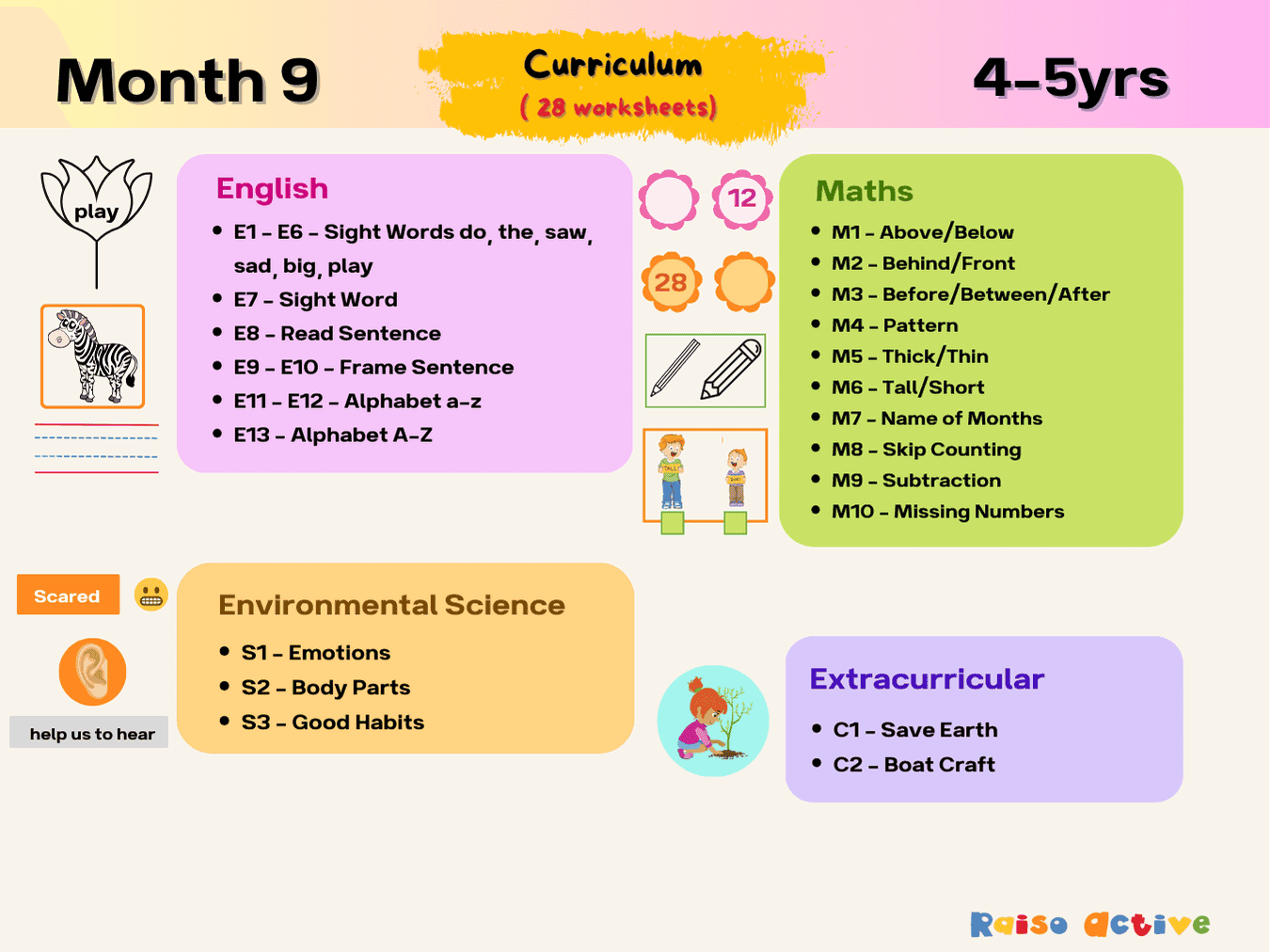

Month 9: Play-Based Preschool Foundational Skills | Ages 4-5
Ages 4-5 · Pre-KAges 4-5 · ReceptionAges 4-5 · LKGAges 4-5 · 31 pages
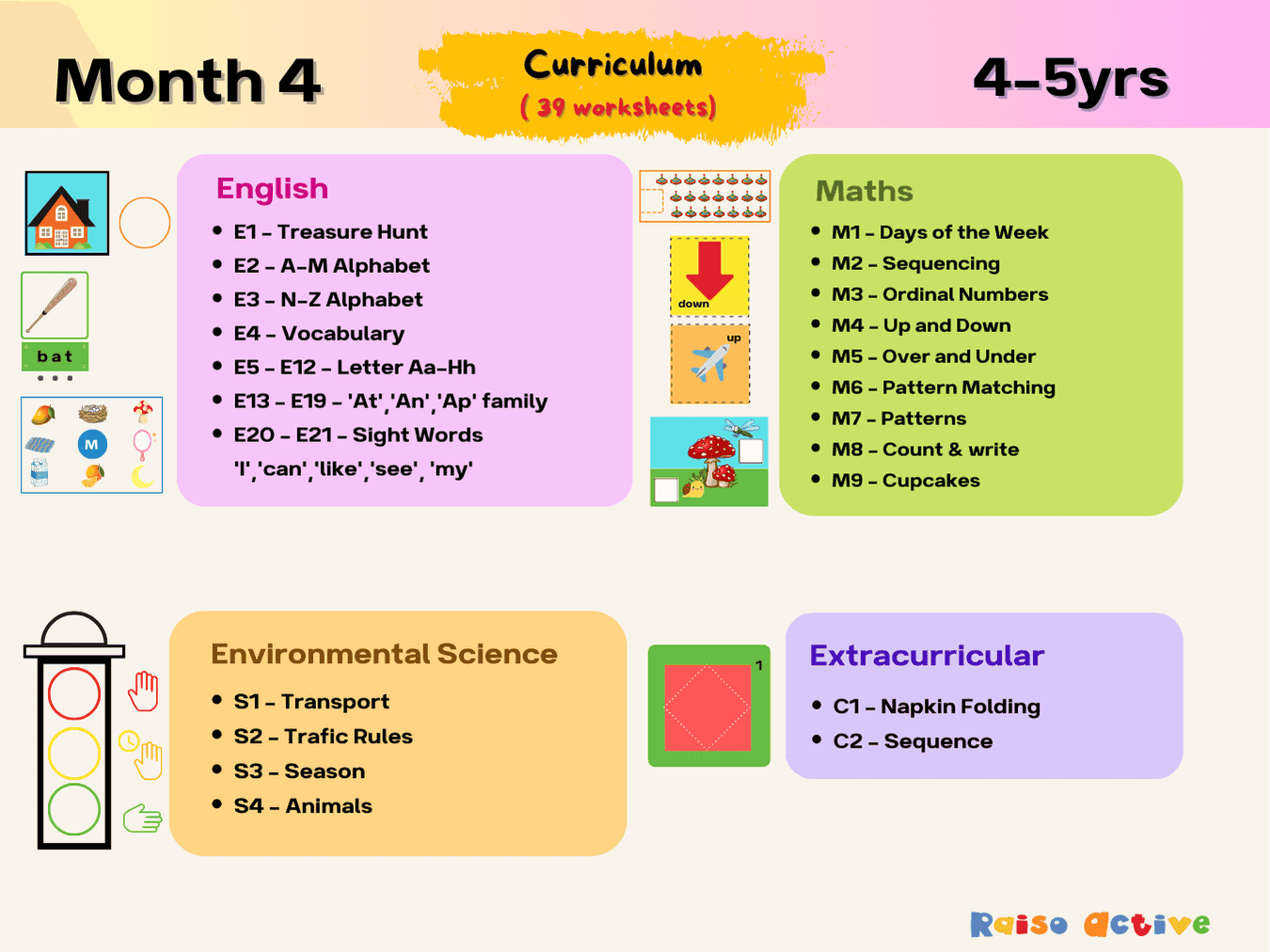
Month 4: Learning & Development | Ages 4-5
Ages 4-5 · Pre-KAges 4-5 · ReceptionAges 4-5 · LKGAges 4-5 · 42 pages
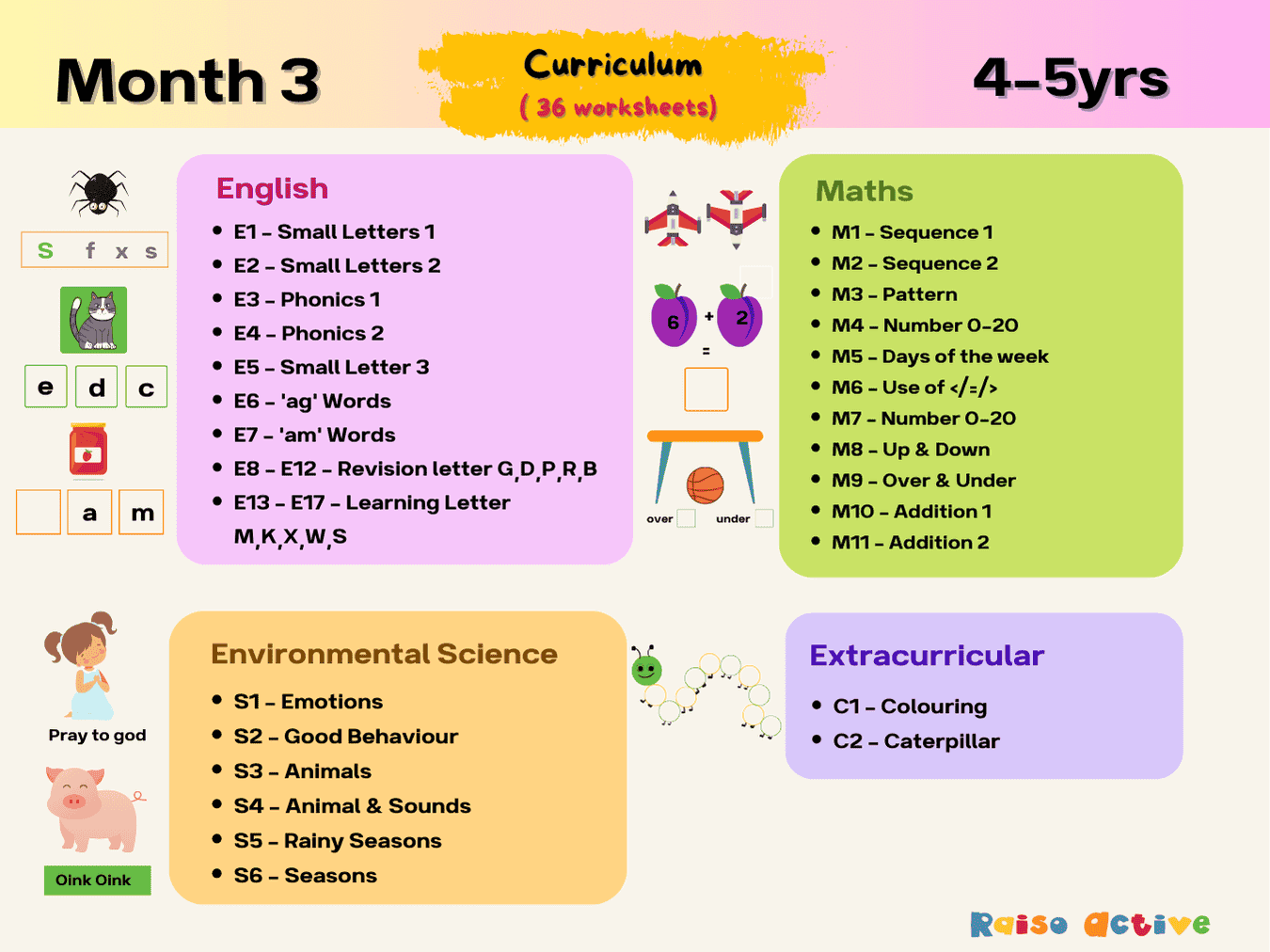
Month 3: Learning & Development | Ages 4-5
Ages 4-5 · Pre-KAges 4-5 · ReceptionAges 4-5 · LKGAges 4-5 · 39 pages
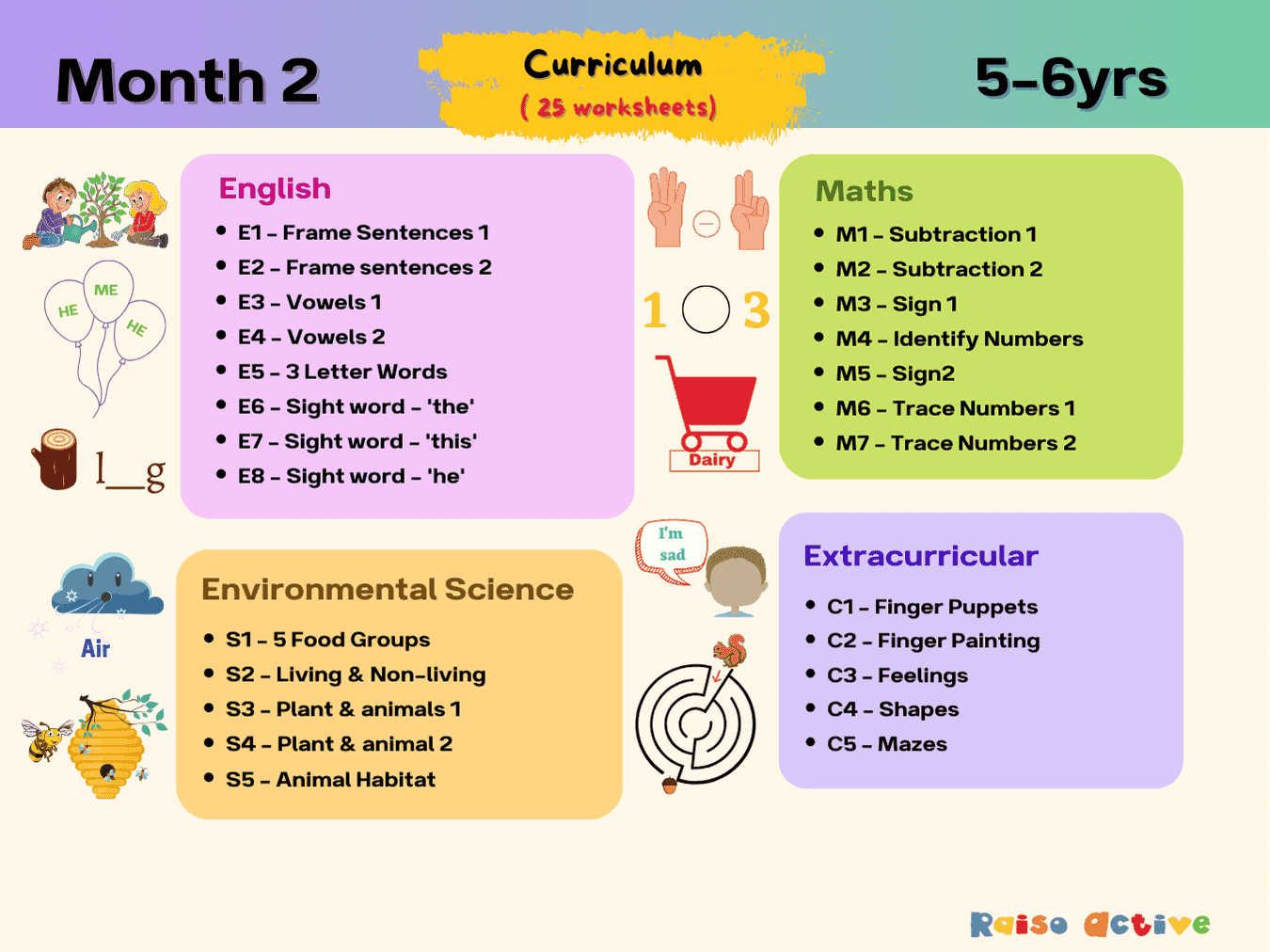
Month 2: Learning & Development | Ages 5-6
Ages 5-6 · KindergartenAges 5-6 · Year 1Ages 5-6 · UKGAges 5-6 · 28 pages
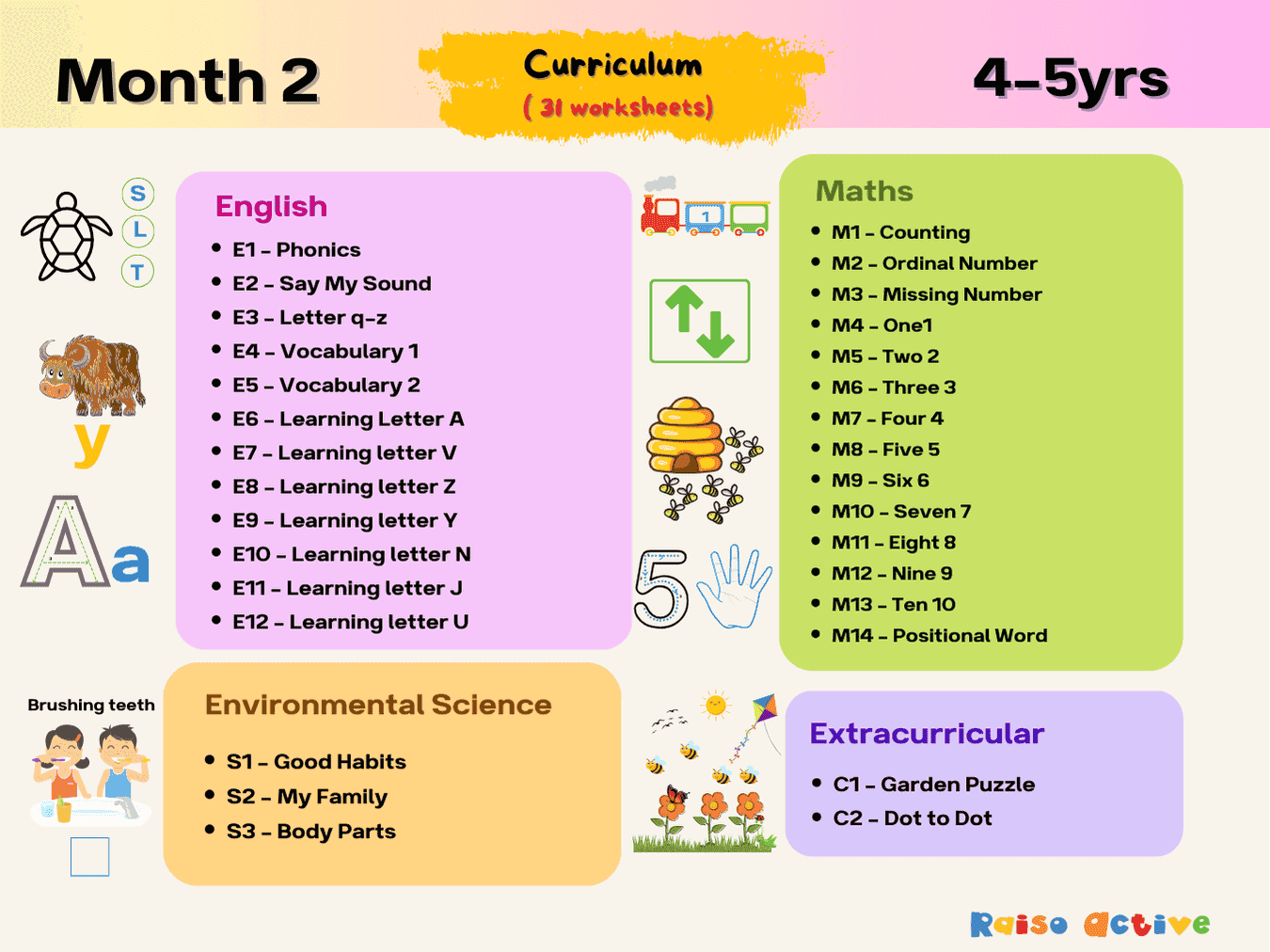
Month 2: Learning & Development | Ages 4-5
Ages 4-5 · Pre-KAges 4-5 · ReceptionAges 4-5 · LKGAges 4-5 · 34 pages
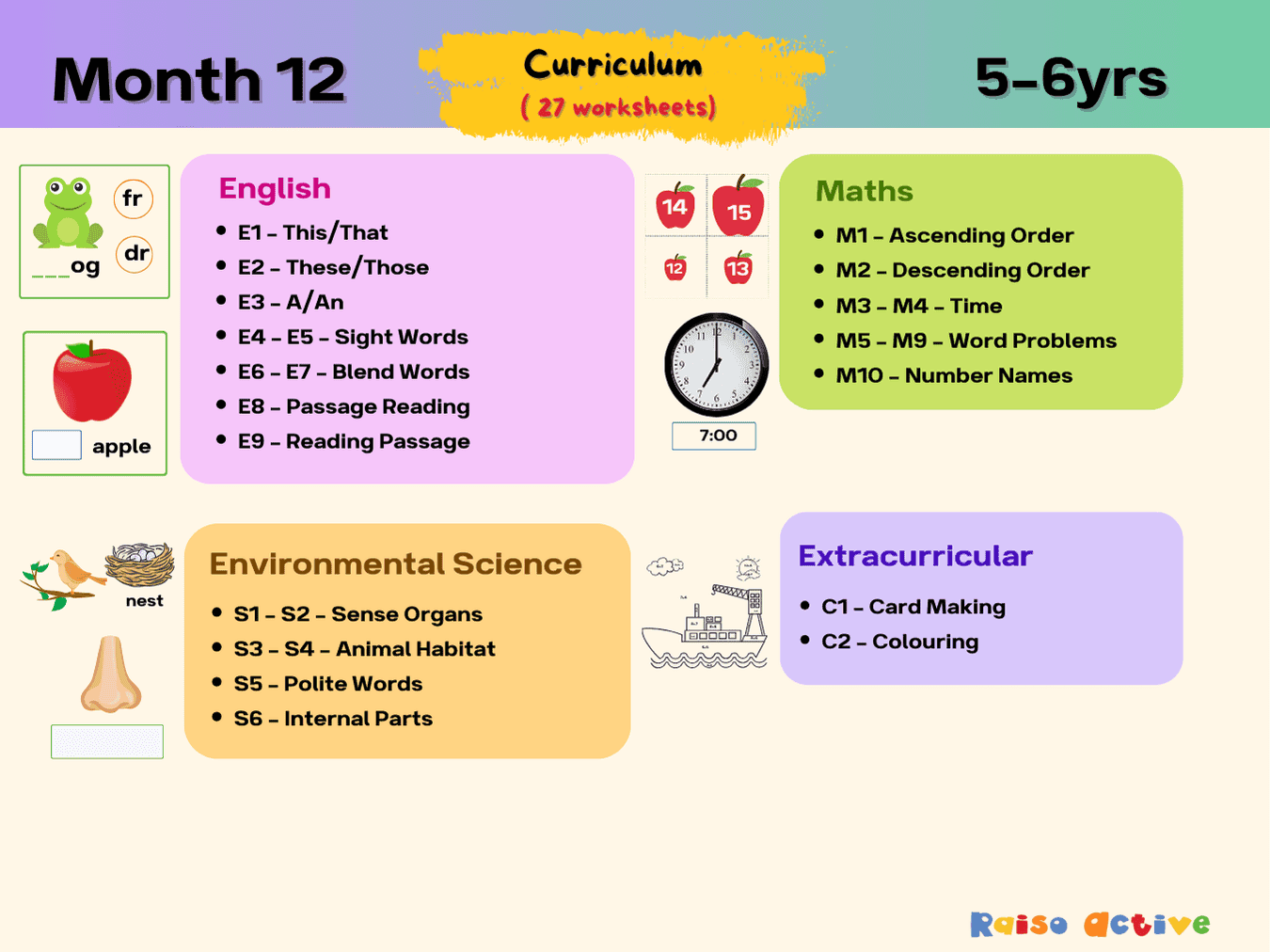
Month 12: Learning & Development | Ages 5-6
Ages 5-6 · KindergartenAges 5-6 · Year 1Ages 5-6 · UKGAges 5-6 · 30 pages
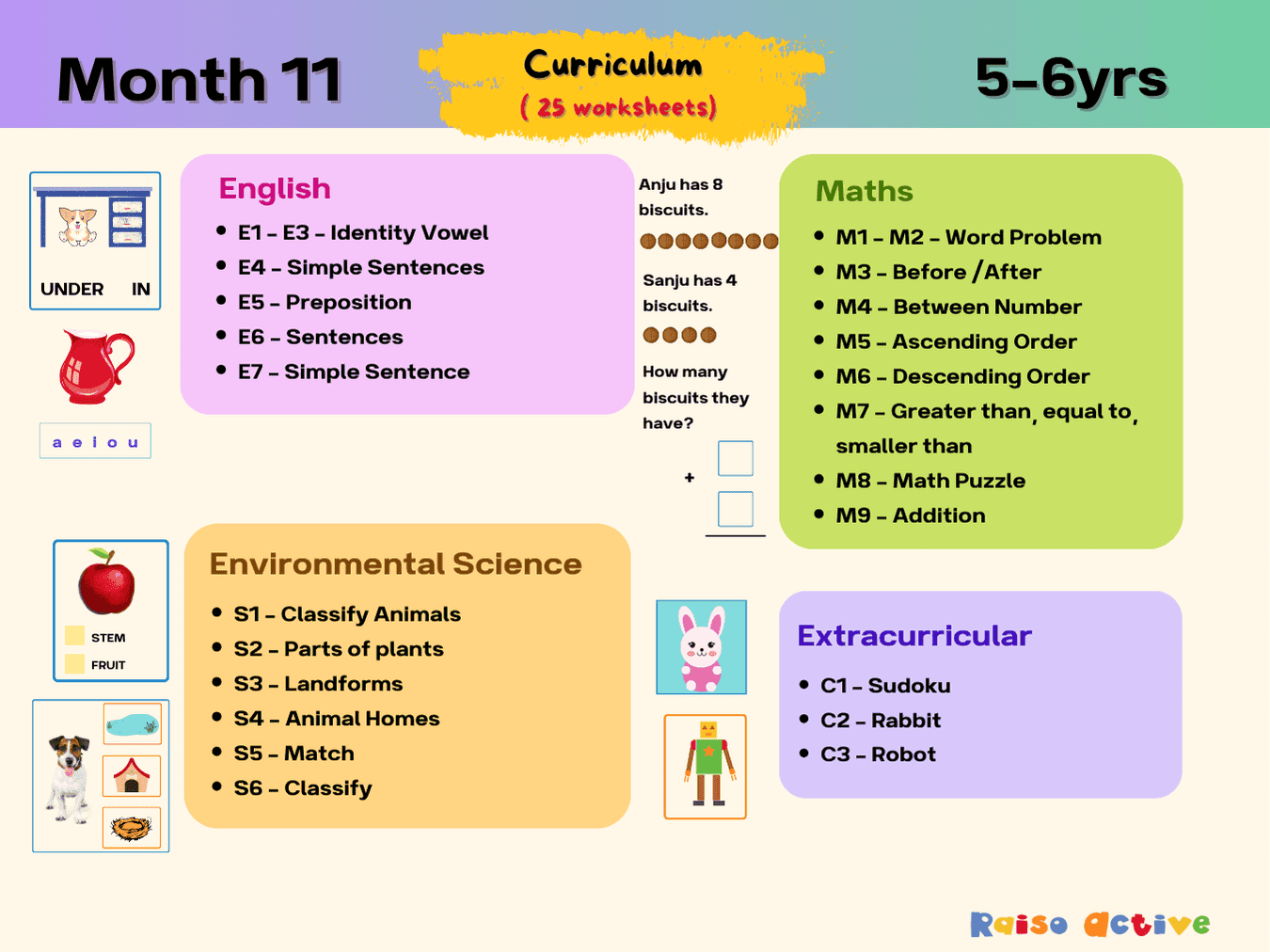
Month 11: Learning & Development | Ages 5-6
Ages 5-6 · KindergartenAges 5-6 · Year 1Ages 5-6 · UKGAges 5-6 · 28 pages