
Pronoun Power: Complete the Sentences Worksheet for Kids
This worksheet gives children ages 4-6 practice choosing the correct pronoun — like 'he', 'she', 'it', or 'they' — to complete simple sentences, reinforcing an early grammar skill that makes spoken and written language flow more naturally. Learning to replace a repeated noun with the right pronoun is a subtle but important step toward writing sentences that sound natural rather than repetitive.
Part of the pack
Month 9: Multi-Subject Early Learning | Ages 6-7Curriculum
How to use this worksheet
Read each sentence aloud together, noticing which noun the sentence is originally about. Look at the list of pronoun options provided and help your child figure out which one correctly replaces or refers back to that noun. Have them write the chosen pronoun in the blank space, then reread the completed sentence aloud to check that it makes sense.
Materials needed
- Pencil
- Eraser
Extension activities
- •Create your own sentences about family members and practice replacing names with the correct pronouns.
- •Draw pictures to illustrate a few of the completed sentences, labeling each character with their pronoun.
- •Play a quick game pointing at objects or people and asking your child to supply the correct pronoun.
- •Retell a familiar story together, intentionally using pronouns instead of repeating character names.
Tips for parents and teachers
Encourage your child to read each sentence aloud and explain out loud why they picked a particular pronoun, since verbalizing their reasoning reveals whether they truly understand the rule or are guessing. Pronoun choice can be confusing when gender or number isn't obvious from context, so point back to the noun being replaced whenever your child hesitates. Offer plenty of encouragement, since grammar concepts like this take repeated exposure across many different sentences to fully click.

Written by
Hemsweta Jain · Teacher Cheena
MBA and Early Childhood Educator, teaching since 2014 · Founder of RaisoActive, Mumbai
Every RaisoActive worksheet is designed and checked by the founder before publishing.
Published · Last reviewed
Related worksheets

Trace the Numbers 1-9 Worksheet for Preschoolers
Tracing the numerals 1 through 9 gives children ages 3-5 repeated, guided practice with the specific pencil strokes each number requires, building the fine motor control and muscle memory needed for independent number writing. Because tracing follows a fixed, correct path, it also reinforces accurate numeral recognition, helping children tell visually similar digits apart.
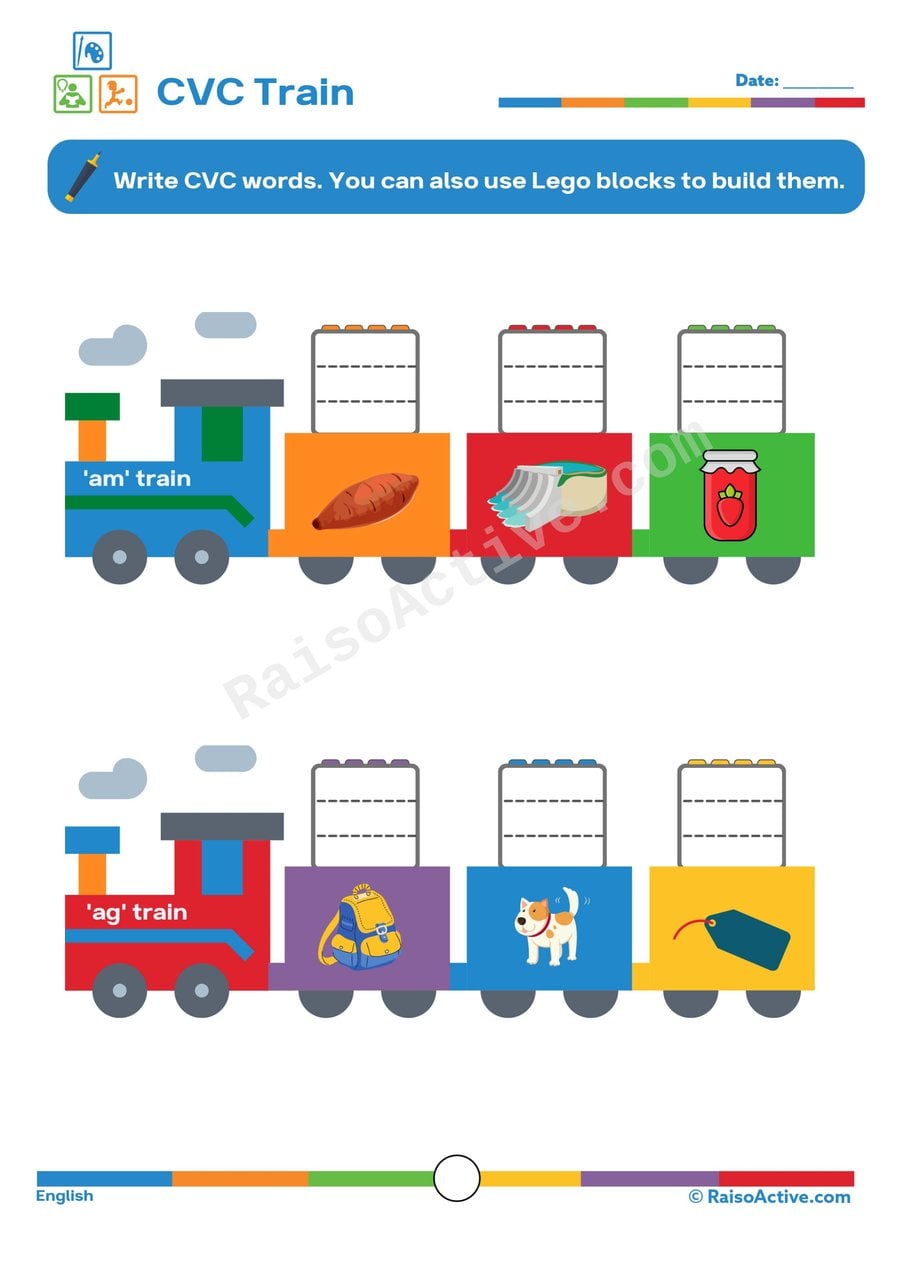
CVC Train Worksheet: Write and Build CVC Words!
This worksheet gives children ages 4-6 focused practice blending letter sounds into consonant-vowel-consonant words, using train-car pictures as clues for words like 'dog,' 'hen,' or 'cup.' Because children both write the word and can optionally build it with Lego blocks, this worksheet reinforces the same phonics skill through two different physical actions — handwriting and hands-on construction — which helps the spelling patterns stick.

Plant Parts Worksheet: Identify and Label the Parts of a Plant!
This worksheet teaches children ages 4-6 to identify and independently label the flower, stem, leaf, and roots of a plant, moving a step beyond simple matching toward recalling vocabulary from memory. Optionally adding pulses or grains to the diagram introduces a tactile, sensory layer that helps reinforce which part is which through touch as well as sight.
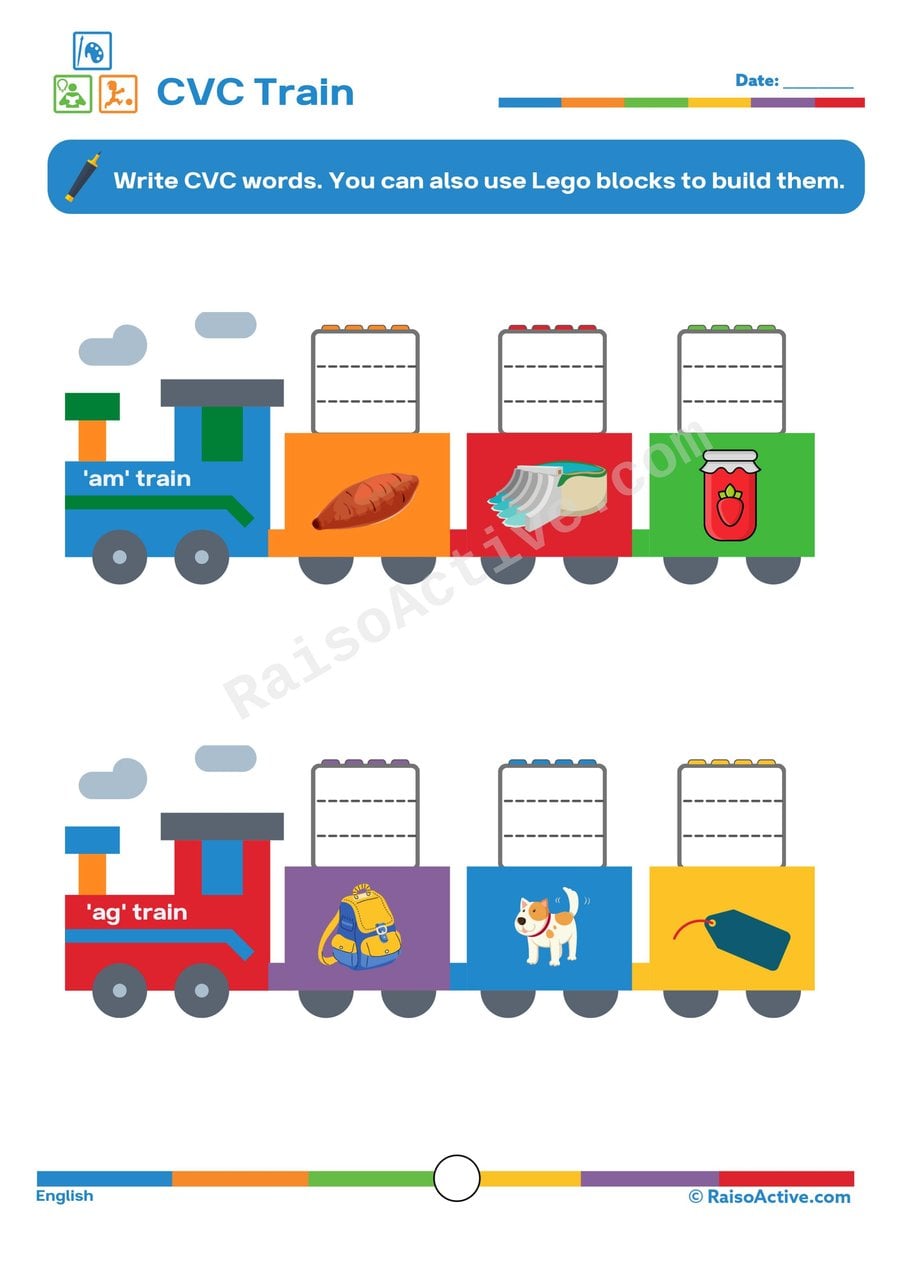
CVC Train Worksheet: Write CVC Words!
Writing consonant-vowel-consonant words like 'cat,' 'sun,' or 'pig' under matching pictures gives children ages 4-6 direct practice with letter-sound blending, a core phonics skill that underpins independent reading. Because each train car pairs a picture clue with a blank space, children also practice translating a spoken word they can sound out into its correctly spelled written form.
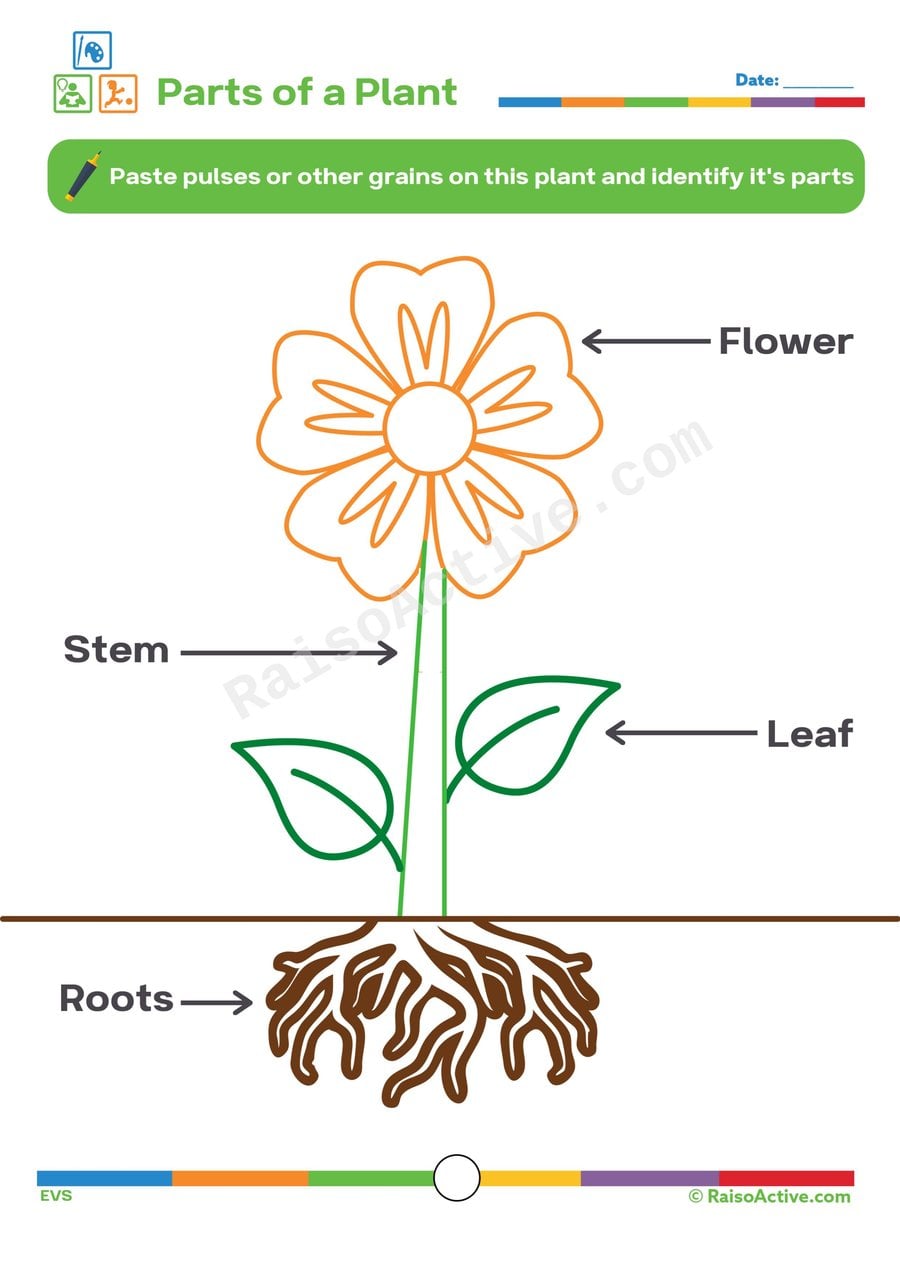
Parts of a Plant Worksheet: Identify and Label!
This activity teaches children ages 3-5 the basic parts of a plant — flower, stem, leaf, and roots — by having them label a diagram and add texture using real pulses or grains glued onto the plant shape. Combining a tactile material with each labeled part helps young children retain the vocabulary better than labeling alone, since touch and sight reinforce the same information.

My Address Worksheet: Color the State and Fill in Your Details!
This worksheet introduces children ages 3-5 to their personal address as a piece of core safety knowledge, while the map-coloring task builds early geography skills by having them physically locate and color their home state within India. Practicing house number, street, city, and PIN code also gives meaningful, motivated handwriting practice since the words are personally relevant.

Christmas Fill-in-the-Blanks Worksheet for Preschoolers
Filling in missing letters of Christmas words like 'S_ _W' or 'TR_ _' helps children ages 3-5 connect letter sounds to their written form, an essential early step toward independent spelling. Using the accompanying picture as a clue also teaches them to cross-check visual and phonetic information — a strategy they'll rely on throughout early reading.
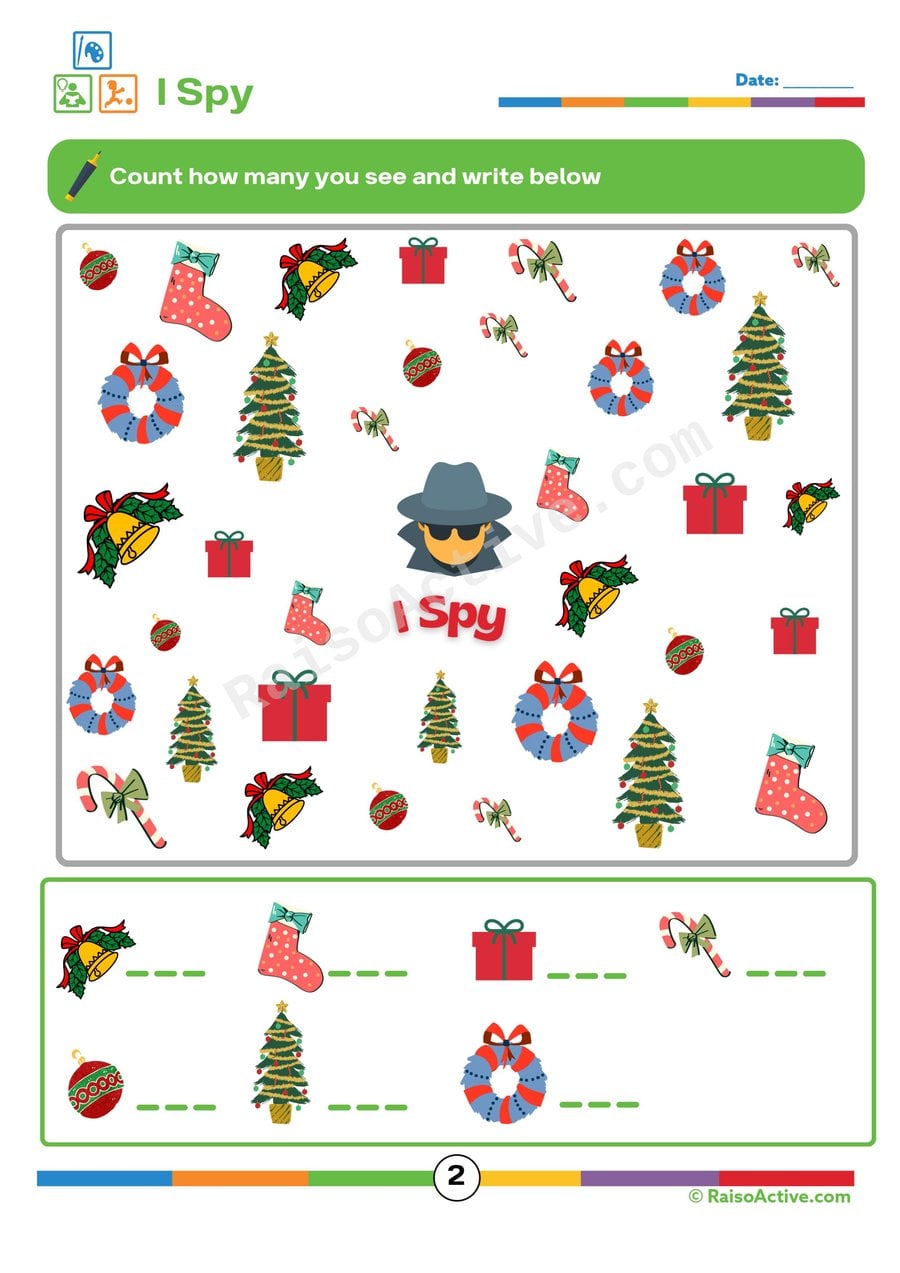
I Spy Christmas Worksheet: Count and Write!
This worksheet strengthens counting accuracy and number writing in children ages 3-5 as they search a busy Christmas scene for specific items and record how many they find. The 'I Spy' search format adds a visual scanning challenge on top of basic counting, since children must first locate every instance of an item scattered across the picture before counting it.
Guides for this topic
Documenting Learning Without Drowning in Data: A Practical Guide for Parents and Teachers
Learn practical ways to document your child's learning without overwhelm. Simple portfolios, observation tips, and printable trackers for ages 1-8.
How to Help Your Child with Letter Reversals: A Complete Guide for Parents and Teachers
Letter reversals are normal until age 7-8. Learn the best multisensory strategies, anchor letter tricks, and activities to help children write b, d, p, and q correctly.
Activities That Help with Pencil Grip Development: A Complete Guide for Parents and Teachers
Discover fun, research-backed activities to develop pencil grip in young children. Age-wise exercises, play ideas, and expert tips for parents and teachers.
Reviews
Every worksheet for ages 4–6, no watermark
Members download the full library of 1,000+ worksheets and every activity pack without watermarks or daily limits. One year costs ₹1,000 in India or $20 elsewhere.
See membership plansOr download any worksheet free with a watermark (5 a day).