Shape Dog Cut and Paste Worksheet for Preschoolers
Preschoolers ages 3-5 practice shape recognition and precise cutting by assembling pre-cut shape pieces into a dog outline, a task that requires matching each shape to its correct spot based on size and form. This shape-based construction builds spatial reasoning, since children must judge how pieces fit together to form a recognizable image. The scissor and glue work also continues strengthening the fine motor control essential for future handwriting.
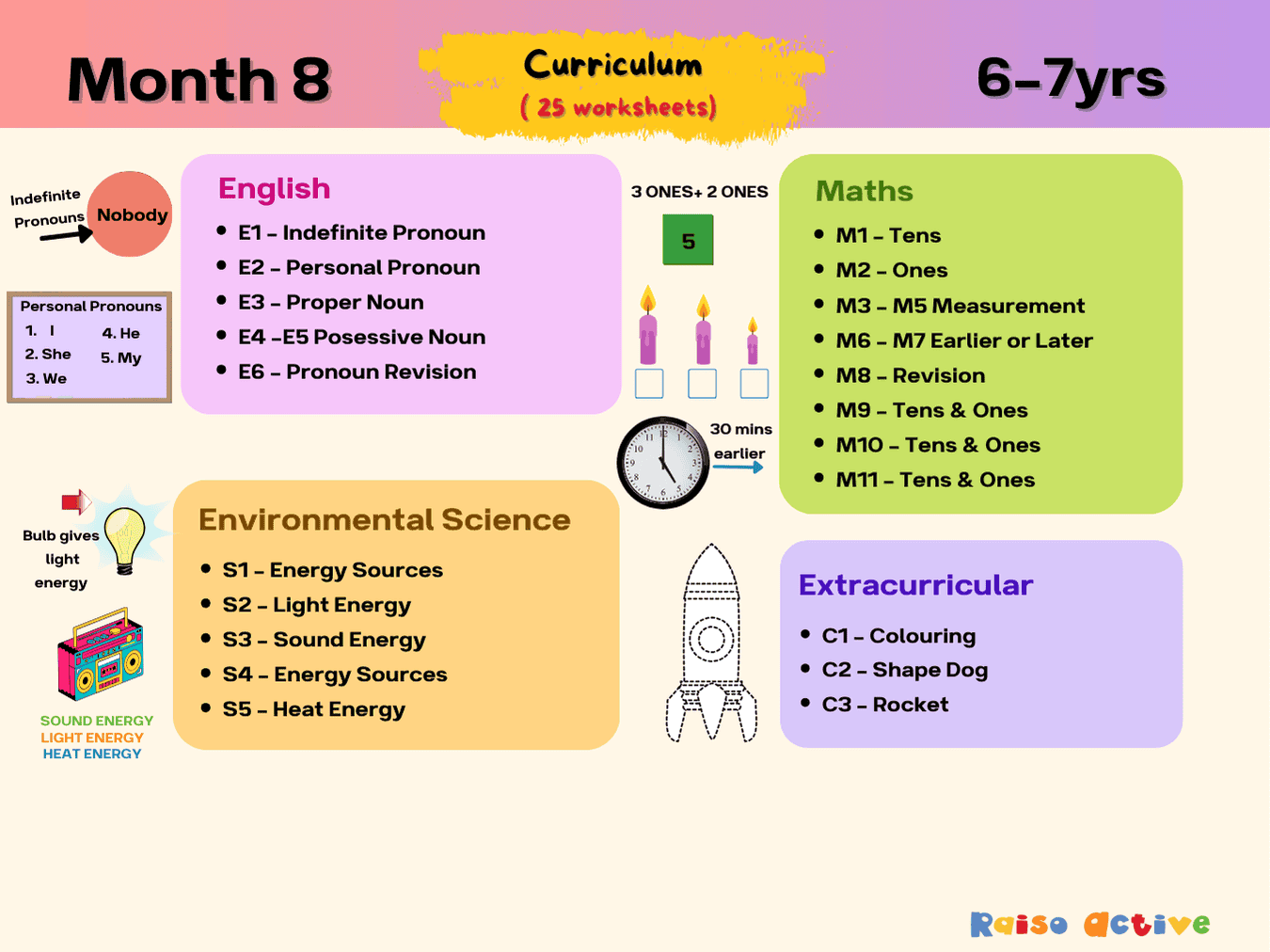
Part of the pack
Month 8: English, Math, Science | Ages 6-7
This is page 27 of the pack. Ages 6-7 · Grade 1Ages 6-7 · Year 2Ages 6-7 · Class 1Ages 6-7
Curriculum
- 2D Shapes > Shapes & Sorting
How to use this worksheet
Look at the dotted dog outline together first, pointing out the different shape sections that need to be filled in, like circles for the head or triangles for the ears. Have your child cut out each shape piece carefully along its edges. One at a time, guide them to match a shape to its correct spot on the outline and glue it into place. Once the dog is fully assembled, have your child color it in to finish the picture.
Materials needed
- Scissors
- Glue
- Pencil or Crayons
Extension activities
- 1Cut extra shapes from colored paper and build a brand-new animal using only shapes.
- 2Go on a shape hunt around the house, finding circles, triangles, and squares in everyday objects.
- 3Practice naming each shape used in the dog and counting how many sides it has.
- 4Sort a pile of paper shapes by type before starting a new cut-and-paste project.
- 5Draw a simple animal outline together and have your child fill it in with cut shapes.

Written by
Hemsweta Jain · Teacher Cheena
MBA and Early Childhood Educator, teaching since 2014 · Founder of RaisoActive, Mumbai
Every RaisoActive worksheet is designed and checked by the founder before publishing.
Published · Last reviewed
More from Month 8: English, Math, Science | Ages 6-7

Energy Sources Worksheet for Kids: Identifying Light and Heat
Ages 3-5 · Preschool–Pre-KAges 3-5 · Nursery–ReceptionAges 3-5 · Nursery–LKGAges 3-5
Children ages 3-5 learn to identify sources of light and heat energy, like the sun, a lamp, or a fire, by ticking the correct option for each pictured scene. Distinguishing natural sources of heat, like the sun, from artificial ones, like a stove, introduces early scientific classification of energy in the world around them. This awareness lays groundwork for later science topics about energy, weather, and how everyday objects work.

Possessive Noun Worksheet: Practice with Examples!
Ages 4-6 · Pre-K–KindergartenAges 4-6 · Reception–Year 1Ages 4-6 · LKG–UKGAges 4-6
Possessive nouns, words like 'the dog's bone' that show ownership, introduce children to how a small change, adding an apostrophe and 's', shifts the meaning of a whole sentence, an early lesson in how grammar carries specific information. For ages four to six, recognizing possession in sentences also supports reading comprehension, since misunderstanding who owns what can confuse the meaning of a story.
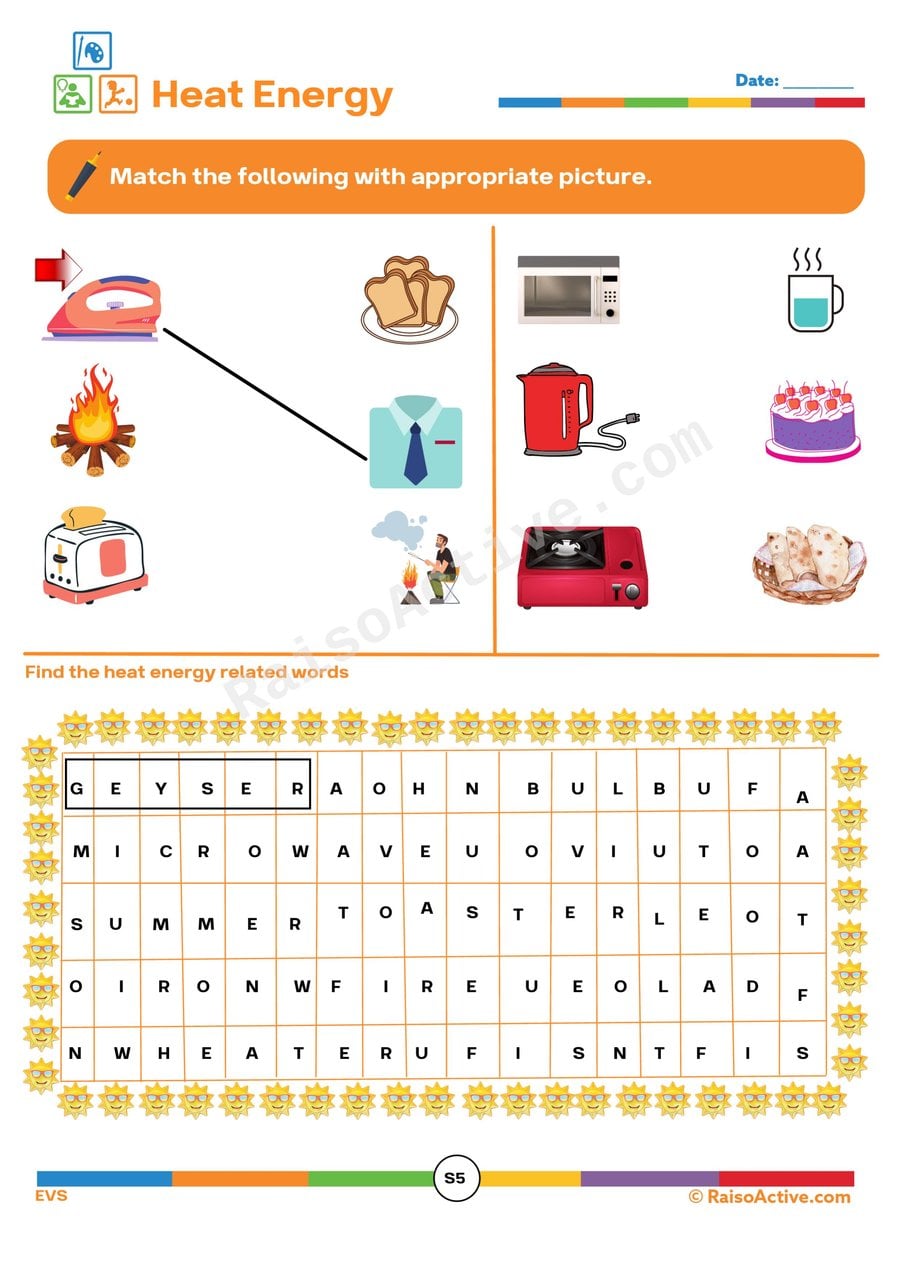
Heat Energy Matching Worksheet for Preschoolers
Ages 3-5 · Preschool–Pre-KAges 3-5 · Nursery–ReceptionAges 3-5 · Nursery–LKGAges 3-5
This worksheet narrows the broad concept of energy down to one specific, easy-to-observe type — heat — and asks children ages 3-5 to match everyday objects to pictures representing heat energy, like a stove, the sun, or a fire. Because heat is something children can directly feel and observe, it's an excellent entry point for early science vocabulary before moving to more abstract energy types like electricity. The word search portion adds early literacy practice, asking children to visually scan for heat-related vocabulary words among a grid of letters.

Pronoun Power: Fill-in-the-Blanks Worksheet for Kids
Ages 4-6 · Pre-K–KindergartenAges 4-6 · Reception–Year 1Ages 4-6 · LKG–UKGAges 4-6
Children ages 4-6 practice using indefinite pronouns like 'someone', 'anything', or 'everybody' correctly within sentences, an early grammar skill that helps their spoken and written language sound more natural and precise. Filling in blanks with the right pronoun requires reading comprehension, since children must understand the sentence's meaning to choose correctly. The coloring step adds a quick visual check that reinforces the correct answer.
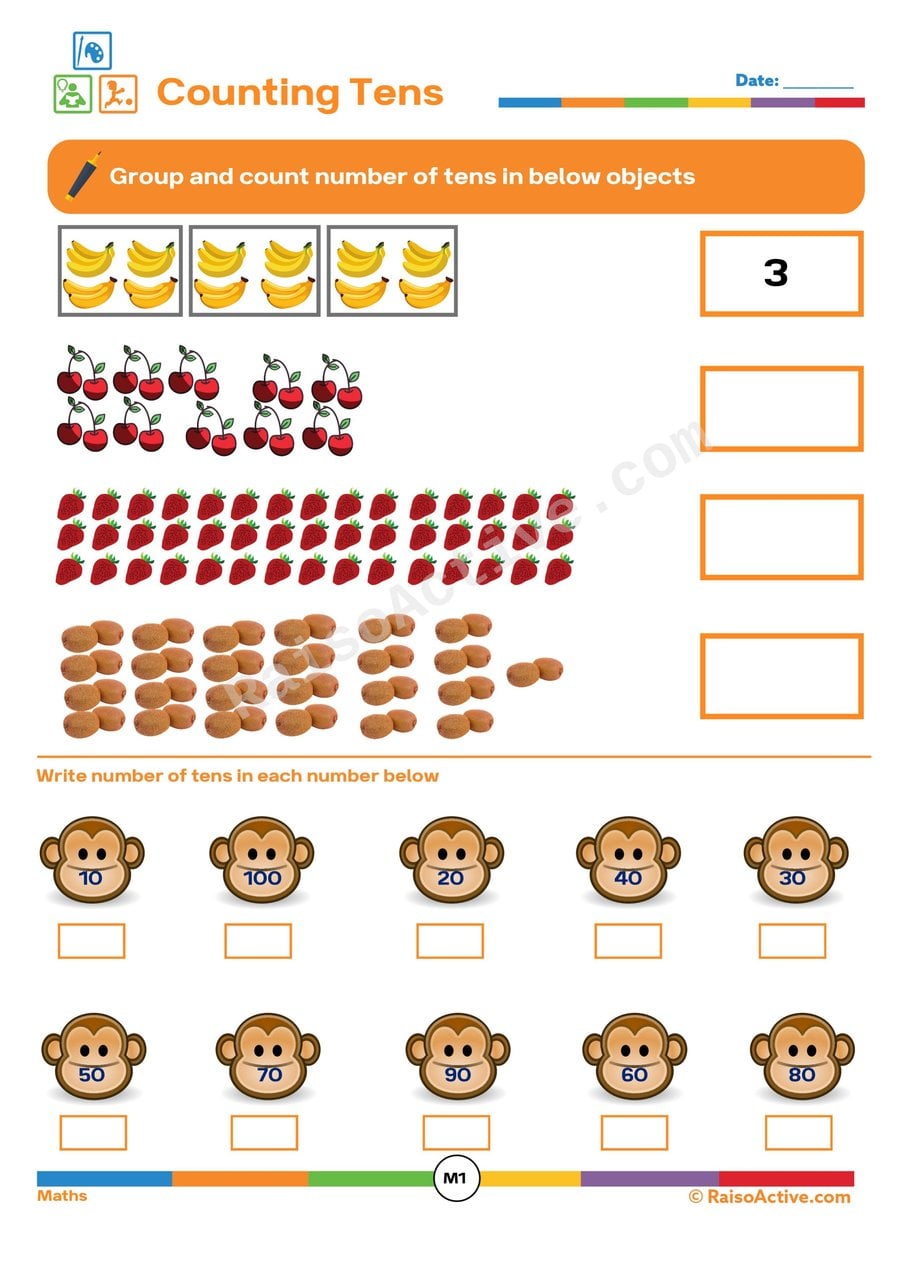
Counting Tens Worksheet: Group and Count!
Ages 4-6 · Pre-K–KindergartenAges 4-6 · Reception–Year 1Ages 4-6 · LKG–UKGAges 4-6
Grouping objects into sets of ten and counting the groups introduces the foundation of place value, the idea that a 'ten' is both ten individual ones and a single unit worth counting on its own. This worksheet gives ages four to six early, hands-on exposure to that concept well before they encounter formal place-value charts in school.

Tens and Ones Worksheet: Practice Place Value with Fun Elephants!
Ages 4-6 · Pre-K–KindergartenAges 4-6 · Reception–Year 1Ages 4-6 · LKG–UKGAges 4-6
This worksheet has children break two-digit numbers into their tens and ones parts, then apply that understanding to simple addition and subtraction, a natural next step once place value clicks. For ages four to six, using the playful elephant images keeps a fairly abstract math concept approachable while still building the numerical foundation they'll rely on for years of arithmetic to come.

Tens and Ones Matching Worksheet for Preschoolers
Ages 4-6 · Pre-K–KindergartenAges 4-6 · Reception–Year 1Ages 4-6 · LKG–UKGAges 4-6
Children ages 4-6 begin exploring the concept of tens and ones by matching groups of objects to their corresponding number sentences, an early step toward understanding place value in two-digit numbers. Cutting and pasting pictures into the correct boxes reinforces the matching logic while adding fine motor practice. This groundwork prepares children for later math concepts like regrouping and multi-digit addition.

Energy Sources Worksheet: Circle the Energy Sources!
Ages 4-6 · Pre-K–KindergartenAges 4-6 · Reception–Year 1Ages 4-6 · LKG–UKGAges 4-6
This worksheet introduces children ages 4-6 to the basic science concept that certain objects and phenomena — like the sun, batteries, or wind — are sources of energy, while other everyday objects are not. Asking children to circle only the true energy sources from a mixed set of pictures builds early categorization and critical thinking skills, since they must apply a definition rather than just recognize familiar objects. Writing numbers stepwise afterward adds a light sequencing task that keeps the page varied rather than focused on a single skill.
Related worksheets

Elephant Shapes: Fun Sorting Worksheet for Preschoolers!
Ages 3-5 · Preschool–Pre-KAges 3-5 · Nursery–ReceptionAges 3-5 · Nursery–LKGAges 3-5
This playful sorting worksheet has children ages 3-5 use an elephant's 'trunk' (their own hand reaching through a cut circle) to pick and sort shapes, building both shape recognition and simple classification skills. Physically selecting and grouping shapes by type, rather than just naming them on sight, helps solidify the concept that shapes can share a category even when their size or color differs.
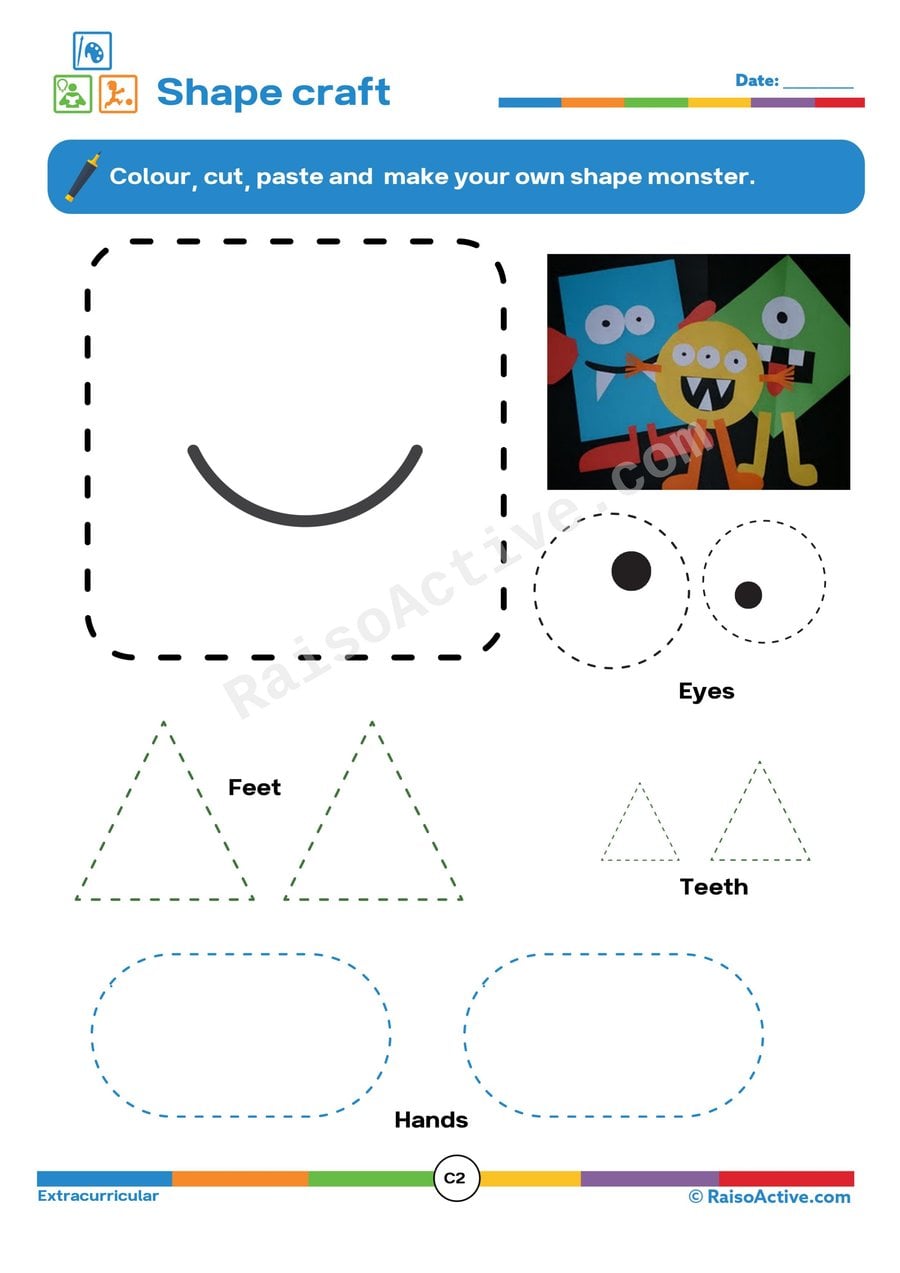
Shape Monster Craft Worksheet for Preschoolers
Ages 3-5 · Preschool–Pre-KAges 3-5 · Nursery–ReceptionAges 3-5 · Nursery–LKGAges 3-5
Coloring, cutting, and gluing shape pieces to build a monster teaches children ages 3-5 to recognize basic 2D shapes, like circles, triangles, and squares, while practicing scissor control along different edge types. Because the shapes need to be arranged in a specific way to form a recognizable monster face and body, this activity also builds spatial reasoning as children decide where each piece belongs. Turning geometry practice into a silly monster craft keeps repetitive shape work feeling like imaginative play rather than a math drill.

Cut and Paste Owl Shapes Worksheet for Preschoolers
Ages 3-5 · Preschool–Pre-KAges 3-5 · Nursery–ReceptionAges 3-5 · Nursery–LKGAges 3-5
This owl-building craft gives children ages 3-5 hands-on practice recognizing and naming basic shapes — circles, triangles, ovals — while developing the scissor and gluing skills needed for more complex crafts later on. Assembling a recognizable owl from separate shape pieces also reinforces spatial reasoning, since children must figure out how individual parts combine into a whole picture. Naming each shape as it's placed connects the fun of crafting directly to early geometry vocabulary.

Under the Sea Shapes Cut and Paste Worksheet for Preschoolers
Ages 3-5 · Preschool–Pre-KAges 3-5 · Nursery–ReceptionAges 3-5 · Nursery–LKGAges 3-5
This worksheet combines shape recognition with fine motor practice as children ages 3-5 cut out geometric shapes and arrange them into an underwater scene. Identifying each shape before placing it, and cutting along the provided lines, builds both early geometry vocabulary and the scissor control needed for more advanced cutting tasks.

3D Shapes Worksheet: Explore and Learn with Playdough!
Ages 4-6 · Pre-K–KindergartenAges 4-6 · Reception–Year 1Ages 4-6 · LKG–UKGAges 4-6
This worksheet teaches children ages 4-6 the basic components of 3D shapes — vertices, edges, and faces — by having them count each feature on shapes like cubes and cones, then build matching shapes out of playdough. Physically constructing a shape and counting its parts by hand builds a far deeper understanding of geometry than looking at flat pictures alone, since children can touch and rotate what they've made.
Coding Shapes Worksheet: Cut and Arrange Shapes!
Ages 3-5 · Preschool–Pre-KAges 3-5 · Nursery–ReceptionAges 3-5 · Nursery–LKGAges 3-5
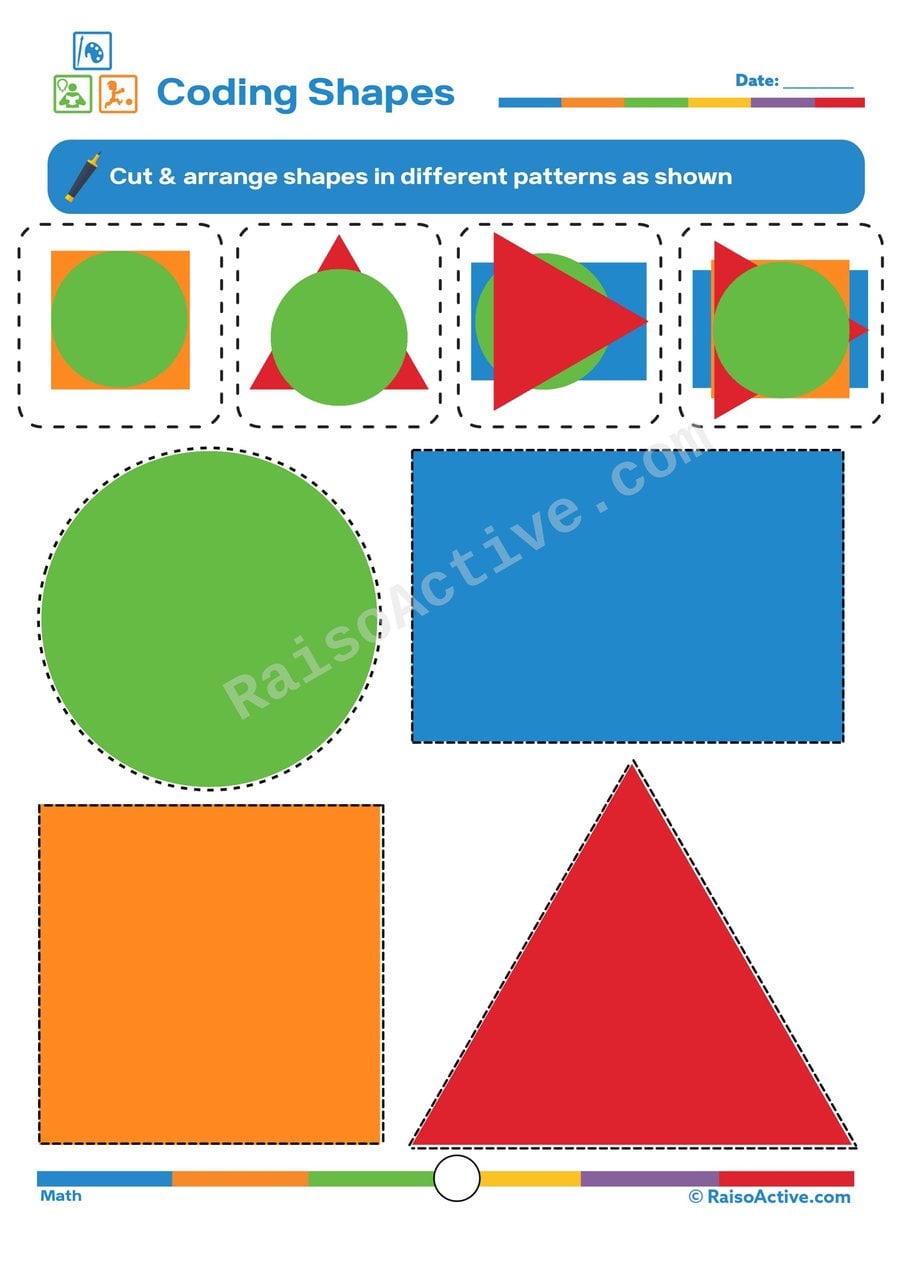
This cut-and-paste worksheet has children ages 3-5 recreate example shape sequences by cutting out individual pieces and arranging them to match, combining shape recognition with the ordered, step-by-step thinking used in early coding and pattern logic. The physical act of cutting and precisely placing each piece also strengthens fine motor control and spatial planning.

Learn India's National Symbols: A Dot-to-Dot Worksheet
Ages 3-5 · Preschool–Pre-KAges 3-5 · Nursery–ReceptionAges 3-5 · Nursery–LKGAges 3-5
Connecting numbered dots to reveal each national symbol builds fine motor control and number-sequence recognition in children ages 3-5, since they must find and connect dots in the correct numerical order to form a recognizable picture. As each symbol emerges from the dots, children also gain early familiarity with important national imagery and its name.

Stick Man Emotions Worksheet: Happy, Sad, Angry, and Surprised!
Ages 4-6 · Pre-K–KindergartenAges 4-6 · Reception–Year 1Ages 4-6 · LKG–UKGAges 4-6
Children ages 4-6 practice reading facial expressions on this worksheet, matching stick-figure faces to their correct emotion labels by noticing details like mouth shape and eyebrow position. This strengthens emotional literacy — the ability to name and recognize feelings in others — which supports empathy and smoother social interactions as children move into more group play and classroom settings.
Guides for this topic

Christmas and Winter Activities That Combine Fun and Learning: Creating Magical Educational Experiences
Discover Christmas and winter activities that combine festive fun with real learning. Crafts, counting, literacy, and printable worksheets for ages 2 to 8 — perfect for home and school.
Age-Appropriate Halloween Learning Activities: Balancing Spooks and Skills for Young Learners
Discover fun, age-appropriate Halloween learning activities for young children. Spooky crafts, counting games, literacy ideas, and printable worksheets for ages 2 to 8.
Reviews
Every worksheet for ages 3–5, no watermark
Members download the full library of 1,000+ worksheets and every activity pack without watermarks or daily limits. One year costs ₹999 in India or $20 elsewhere.
See membership plansOr download any worksheet free with a watermark (5 a day).