Navratri Festival Quest Certificate of Achievement
Ages 7-11 · Grade 2–Grade 3Ages 7-11 · Year 3–Year 4Ages 7-11 · Class 2–Class 3Ages 7-11
Children celebrate finishing the Navratri Festival Quest pack and record which levels they completed.
Free printable worksheets
Download free educational worksheets for children ages 2–8. Perfect for preschool, kindergarten, and early elementary learning activities.
Subscribe to get unlimited access to all worksheets without watermarks
View Subscription Plans289 topics match
24 worksheetsof 1,994
Ages 7-11 · Grade 2–Grade 3Ages 7-11 · Year 3–Year 4Ages 7-11 · Class 2–Class 3Ages 7-11
Children celebrate finishing the Navratri Festival Quest pack and record which levels they completed.
Ages 4-6 · Pre-K–KindergartenAges 4-6 · Reception–Year 1Ages 4-6 · LKG–UKGAges 4-6
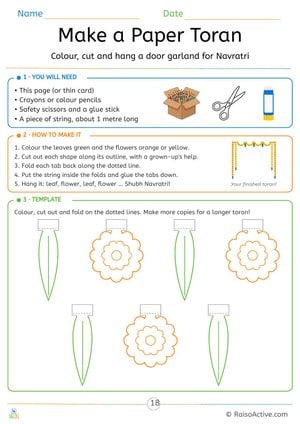
Children follow step-by-step instructions to colour, cut, fold and glue a festival decoration, building scissor skills and fine motor control.
Ages 4-6 · Pre-K–KindergartenAges 4-6 · Reception–Year 1Ages 4-6 · LKG–UKGAges 4-6
Children celebrate finishing the Navratri Fun Time pages and see which levels they completed.
Ages 3-5 · Preschool–Pre-KAges 3-5 · Nursery–ReceptionAges 3-5 · Nursery–LKGAges 3-5
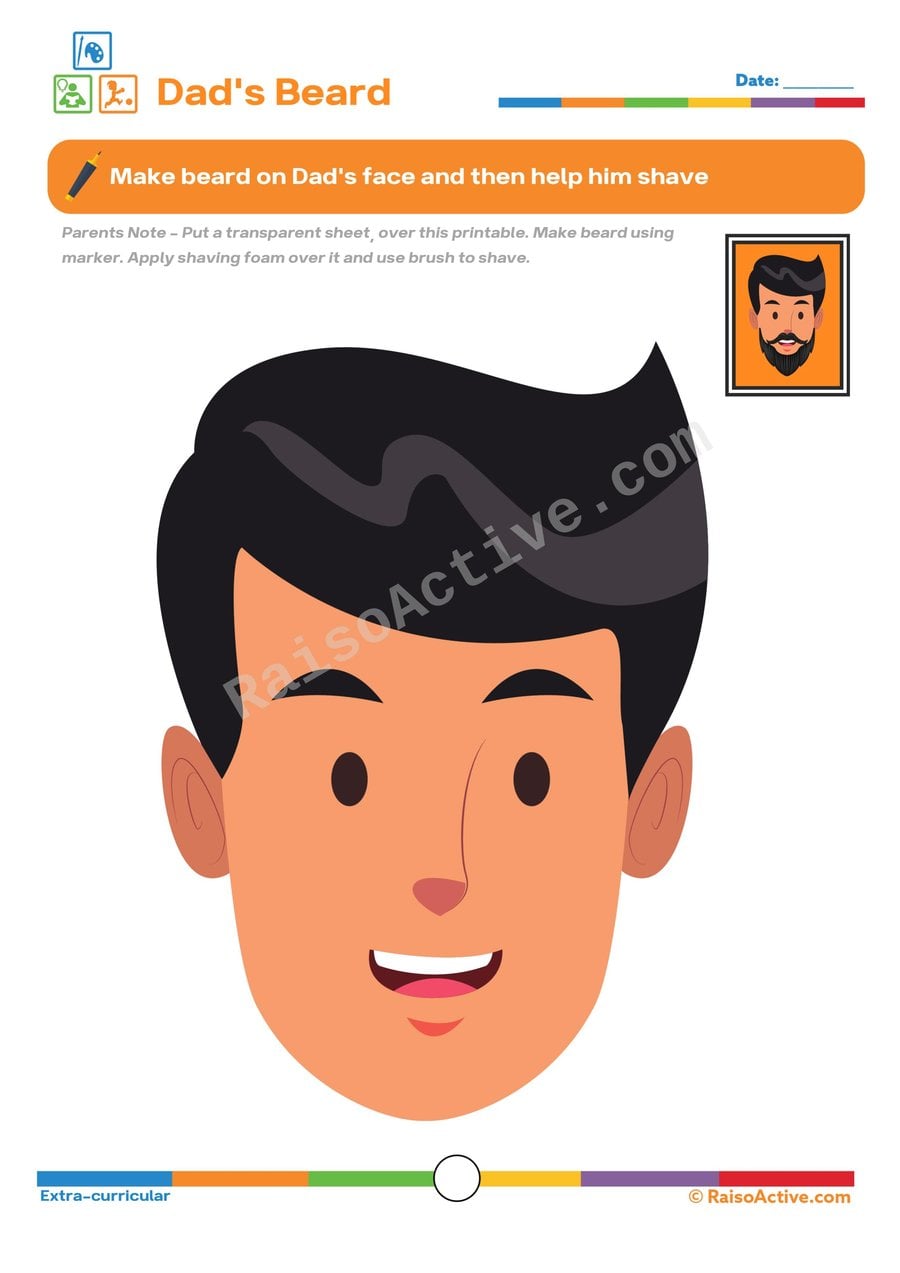
This playful pretend-shaving activity builds fine motor control and bilateral coordination in children ages 3-5, as they draw a beard with a marker and then 'shave' it away using foam and a brush in careful, controlled strokes. It also introduces a simple science idea — that shaving foam can be applied and removed in layers — while giving children a hands-on, sensory way to imitate an everyday grown-up routine.
Ages 3-5 · Preschool–Pre-KAges 3-5 · Nursery–ReceptionAges 3-5 · Nursery–LKGAges 3-5
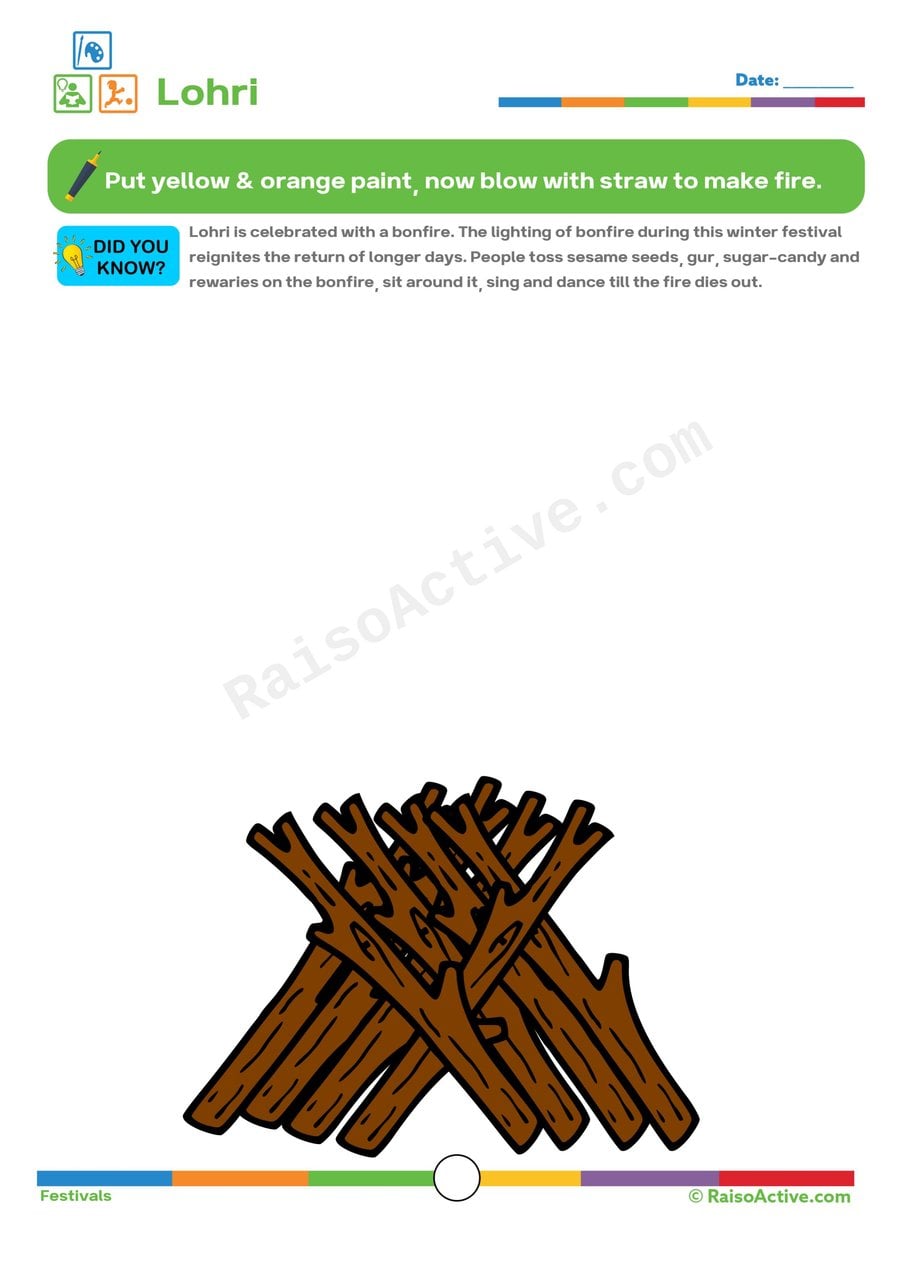
This worksheet combines coloring practice with a simple sensory science activity, helping children ages 3-5 learn about the Lohri festival bonfire tradition while exploring how blowing air can create the illusion of flickering flames. The hands-on painting and blowing step introduces an early, playful science concept about air movement.
Ages 4-6 · Pre-K–KindergartenAges 4-6 · Reception–Year 1Ages 4-6 · LKG–UKGAges 4-6
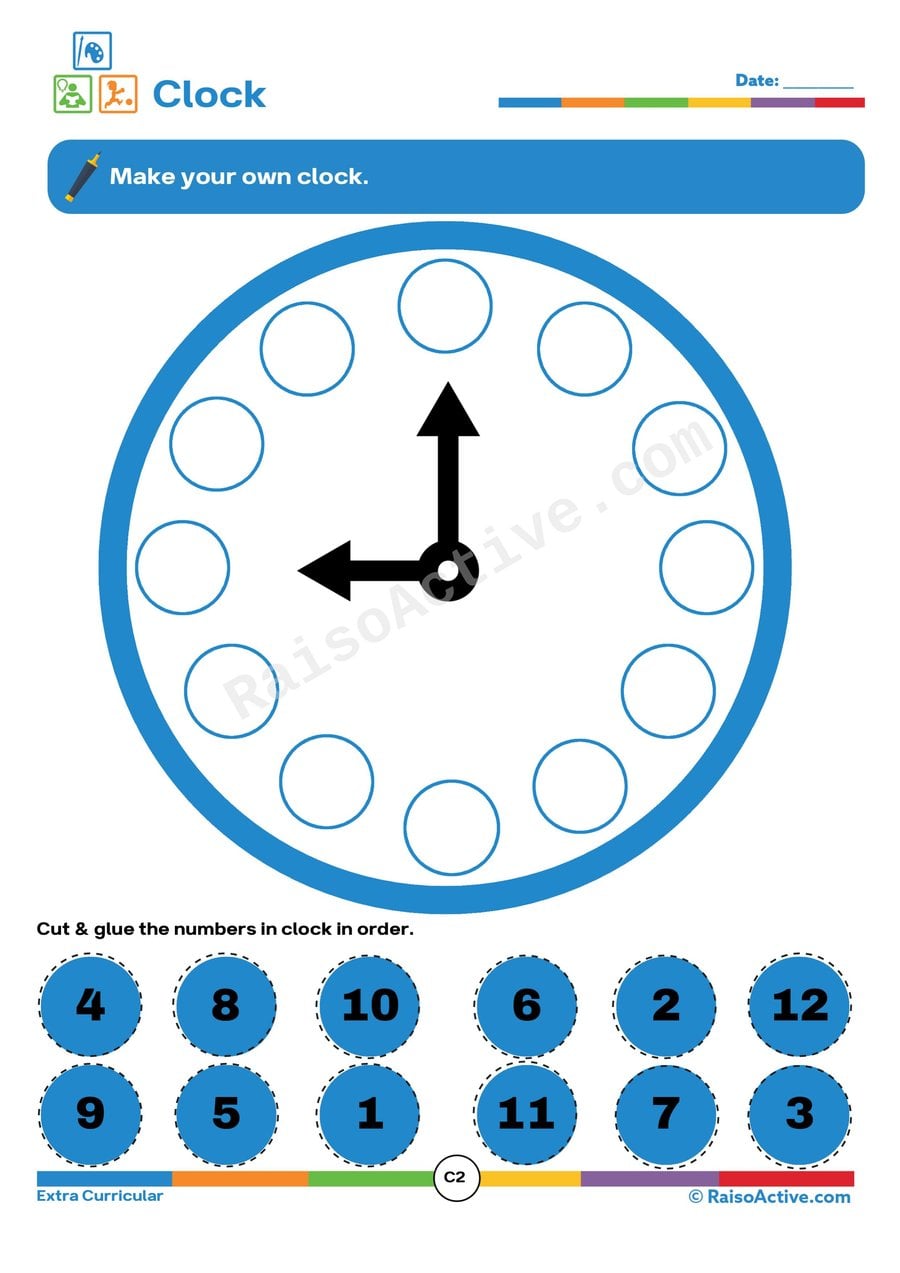
This hands-on craft has children ages 4-6 cut out and glue numbers in order around a clock face, then draw hands to show different times, combining number sequencing with an introduction to how an analog clock is structured. Physically placing each number themselves, rather than reading a pre-printed clock, helps children internalize why the numbers 1 through 12 are arranged in that specific circular order. Drawing the hands afterward extends the activity from static number placement into functional time-telling practice.
Ages 3-5 · Preschool–Pre-KAges 3-5 · Nursery–ReceptionAges 3-5 · Nursery–LKGAges 3-5
This multi-activity guide gives children ages 3-5 hands-on practice with several different skills in one sitting — building a DIY paper clock to learn about time, assembling a simple no-fire recipe to build sequencing and following-directions skills, and exploring color mixing with tissue paper. Rotating through several short, varied activities keeps engagement high for young children whose attention spans are still developing. Each activity also builds language skills as children describe what they are doing.
Ages 3-5 · Preschool–Pre-KAges 3-5 · Nursery–ReceptionAges 3-5 · Nursery–LKGAges 3-5
This owl-building craft gives children ages 3-5 hands-on practice recognizing and naming basic shapes — circles, triangles, ovals — while developing the scissor and gluing skills needed for more complex crafts later on. Assembling a recognizable owl from separate shape pieces also reinforces spatial reasoning, since children must figure out how individual parts combine into a whole picture. Naming each shape as it's placed connects the fun of crafting directly to early geometry vocabulary.
Ages 3-5 · Preschool–Pre-KAges 3-5 · Nursery–ReceptionAges 3-5 · Nursery–LKGAges 3-5
This cotton bud craft has children ages 3-5 paste cotton buds around a yellow center to build flower petals, an activity that strengthens the pincer grip and hand control needed for later pencil writing. Because each cotton bud represents one petal, the craft doubles as a counting exercise, giving children practice with one-to-one correspondence while they work. Combining a sensory material like cotton buds with a familiar shape — the flower — makes fine motor practice feel like play rather than drilling.
Ages 3-5 · Preschool–Pre-KAges 3-5 · Nursery–ReceptionAges 3-5 · Nursery–LKGAges 3-5
This scarecrow-building activity gives children ages 3-5 focused practice in cutting and gluing basic shapes — circles, triangles, rectangles — into place to assemble a recognizable figure. Matching each shape to its correct spot on the scarecrow outline also reinforces spatial reasoning, since children must judge size and orientation before pasting. Naming the shapes aloud as they work connects the craft to early geometry vocabulary rather than treating it as pure art time.
Ages 3-5 · Preschool–Pre-KAges 3-5 · Nursery–ReceptionAges 3-5 · Nursery–LKGAges 3-5
This craft worksheet helps children ages 3-5 build fine motor skills and the ability to follow multi-step instructions as they construct their own working spin drum from cardboard, string, and beads. Because each step depends on the one before it — cutting, assembling, attaching the string and beads — this project strengthens sequencing and sustained attention in a way that a single-step activity cannot.
Ages 3-5 · Preschool–Pre-KAges 3-5 · Nursery–ReceptionAges 3-5 · Nursery–LKGAges 3-5
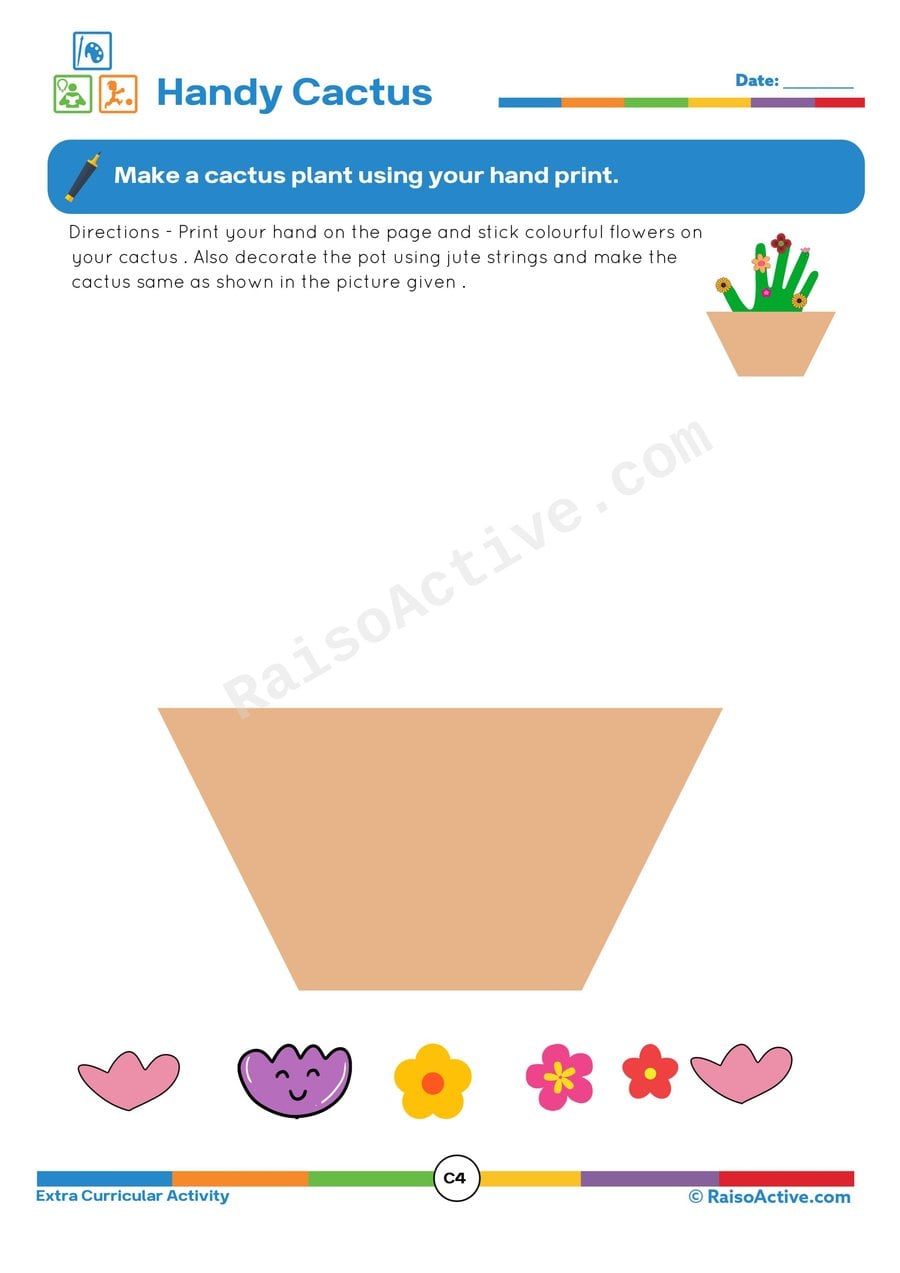
Tracing and decorating a handprint into cactus shapes builds fine motor control and following-directions skills for children ages 3-5, since they must coordinate cutting, gluing, and arranging several craft pieces to match a shown example.