Navratri Festival Quest Certificate of Achievement
Ages 7-11 · Grade 2–Grade 3Ages 7-11 · Year 3–Year 4Ages 7-11 · Class 2–Class 3Ages 7-11
Children celebrate finishing the Navratri Festival Quest pack and record which levels they completed.
Free printable worksheets
Download free educational worksheets for children ages 2–8. Perfect for preschool, kindergarten, and early elementary learning activities.
Subscribe to get unlimited access to all worksheets without watermarks
View Subscription Plans289 topics match
73 worksheetsof 1,994
Ages 7-11 · Grade 2–Grade 3Ages 7-11 · Year 3–Year 4Ages 7-11 · Class 2–Class 3Ages 7-11
Children celebrate finishing the Navratri Festival Quest pack and record which levels they completed.
Ages 4-6 · Pre-K–KindergartenAges 4-6 · Reception–Year 1Ages 4-6 · LKG–UKGAges 4-6
Children celebrate finishing the Navratri Fun Time pages and see which levels they completed.
Ages 4-6 · Pre-K–KindergartenAges 4-6 · Reception–Year 1Ages 4-6 · LKG–UKGAges 4-6
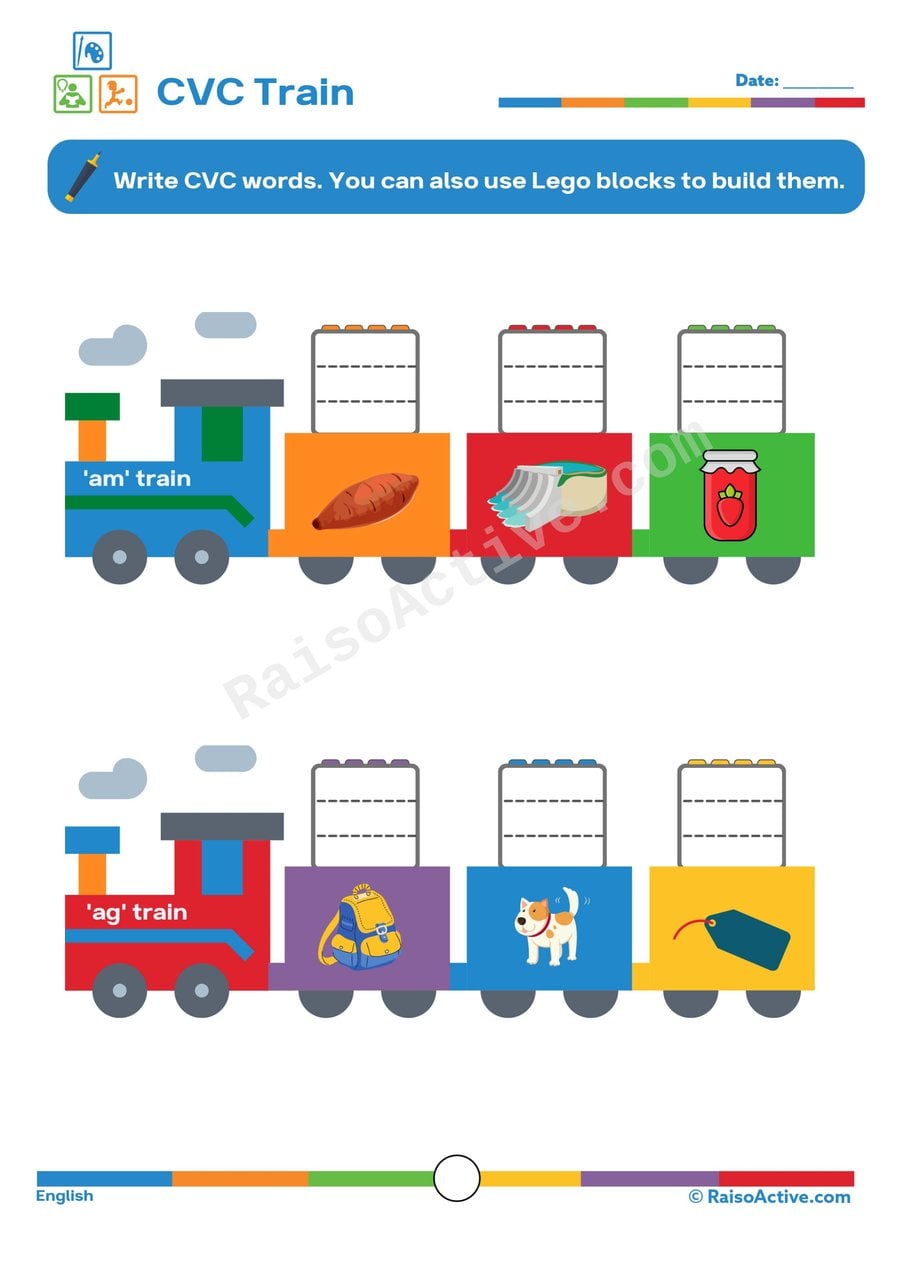
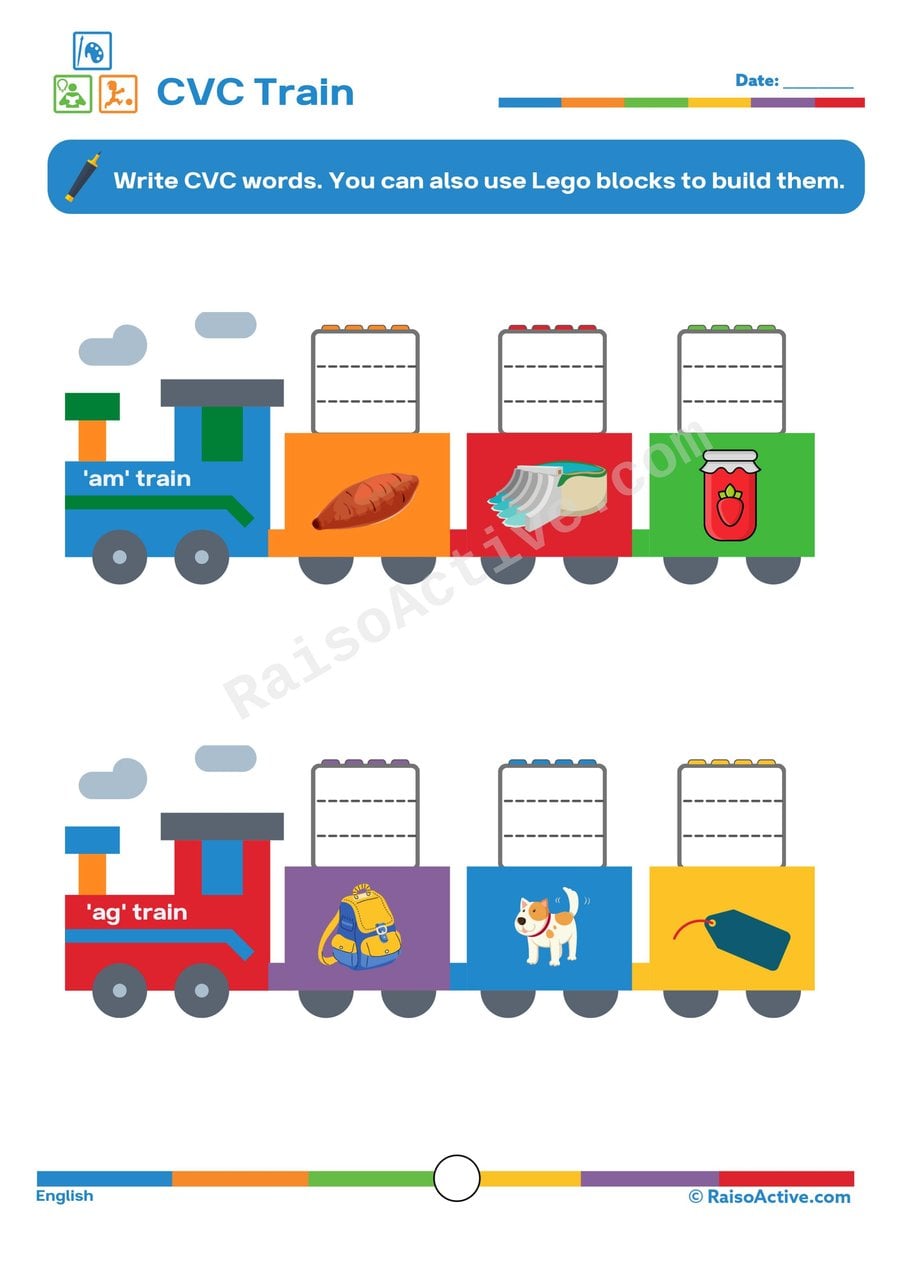
This worksheet gives children ages 4-6 focused practice blending letter sounds into consonant-vowel-consonant words, using train-car pictures as clues for words like 'dog,' 'hen,' or 'cup.' Because children both write the word and can optionally build it with Lego blocks, this worksheet reinforces the same phonics skill through two different physical actions — handwriting and hands-on construction — which helps the spelling patterns stick.
Ages 4-6 · Pre-K–KindergartenAges 4-6 · Reception–Year 1Ages 4-6 · LKG–UKGAges 4-6
Writing consonant-vowel-consonant words like 'cat,' 'sun,' or 'pig' under matching pictures gives children ages 4-6 direct practice with letter-sound blending, a core phonics skill that underpins independent reading. Because each train car pairs a picture clue with a blank space, children also practice translating a spoken word they can sound out into its correctly spelled written form.
Ages 4-5 · Pre-KAges 4-5 · ReceptionAges 4-5 · LKGAges 4-5
This cut-and-paste decoding activity has children ages 4-5 sound out simple CVC (consonant-vowel-consonant) words like 'cat' or 'sun' and match the missing picture to complete each word, directly practicing the phonics blending skills that underpin early reading fluency. Because the word is partly built from letters already on the page, children must connect individual letter sounds to a whole word rather than just recognizing a picture in isolation. This bridges the gap between knowing individual letter sounds and reading complete three-letter words independently.
Ages 3-5 · Preschool–Pre-KAges 3-5 · Nursery–ReceptionAges 3-5 · Nursery–LKGAges 3-5
This worksheet uses a short story about 'Zen the Hen' to give children ages 3-5 practice reading and completing CVC (consonant-vowel-consonant) words, one of the earliest and most important word patterns in learning to read. Filling in missing CVC words within a story context, rather than in isolation, helps children see how decoding skills apply to real reading, building both phonics and comprehension together.
Ages 4-6 · Pre-K–KindergartenAges 4-6 · Reception–Year 1Ages 4-6 · LKG–UKGAges 4-6
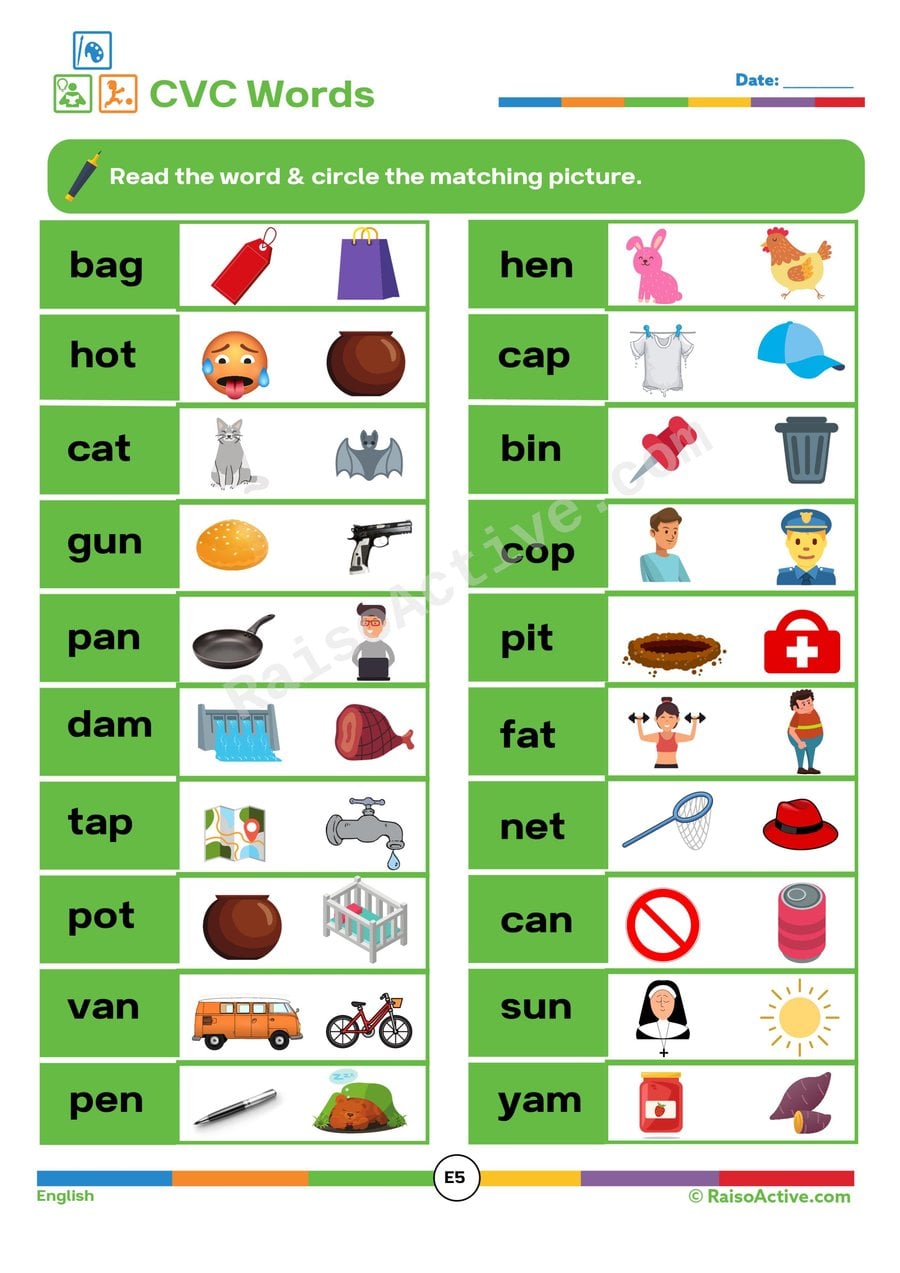
Sounding out each consonant-vowel-consonant word letter by letter strengthens decoding, and matching that word to its picture connects decoding to meaning — an essential step for children ages 4-6 becoming independent readers.
Ages 3-5 · Preschool–Pre-KAges 3-5 · Nursery–ReceptionAges 3-5 · Nursery–LKGAges 3-5
This parent's guide offers a set of hands-on activities for children ages 3-5 that build early reading skills through sight word and CVC (consonant-vowel-consonant) word practice, using letter blocks, storytelling, and even a color-mixing experiment to keep learning varied and engaging. Practicing sight words and simple three-letter words together builds the foundation for sounding out and recognizing whole words while reading.
Ages 3-5 · Preschool–Pre-KAges 3-5 · Nursery–ReceptionAges 3-5 · Nursery–LKGAges 3-5
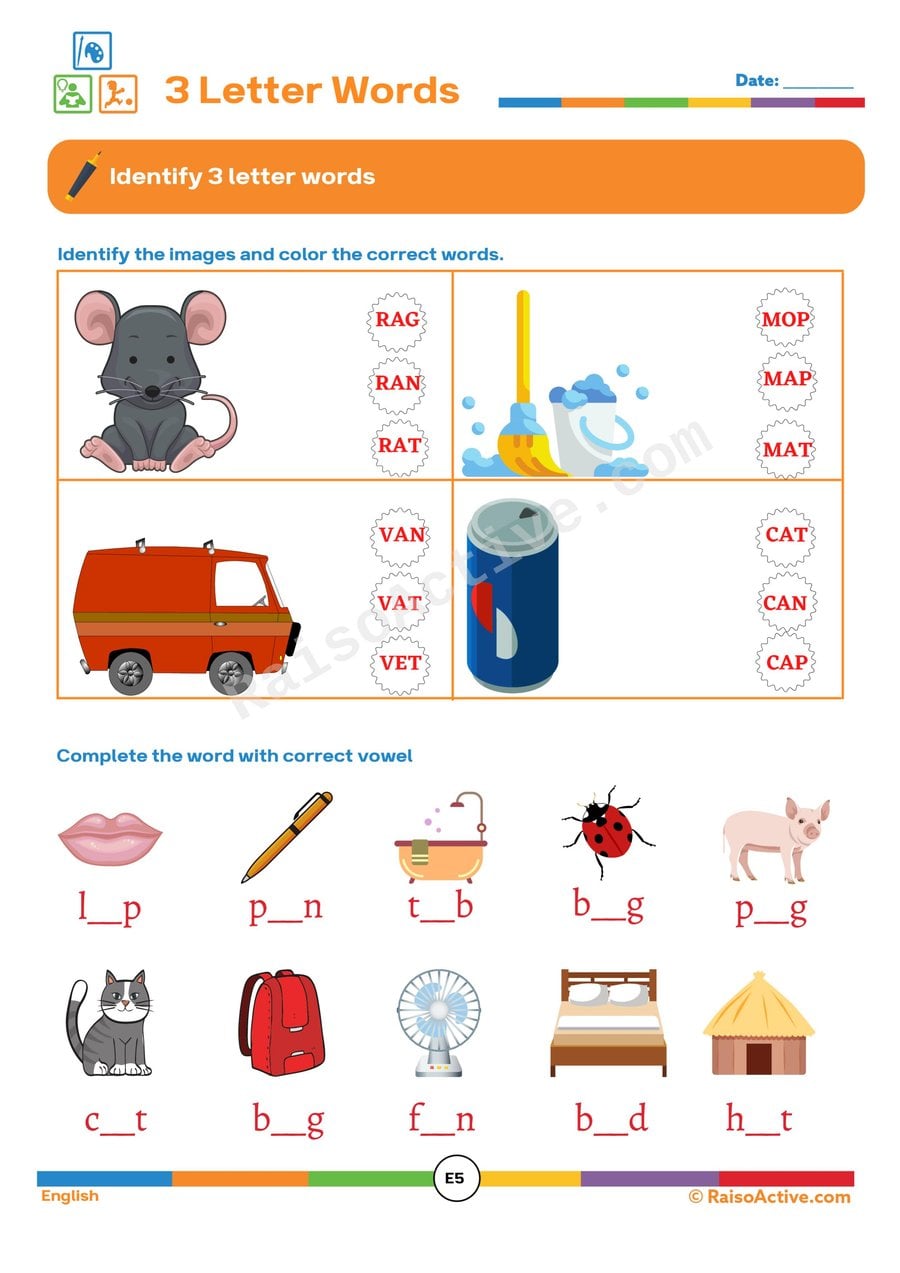
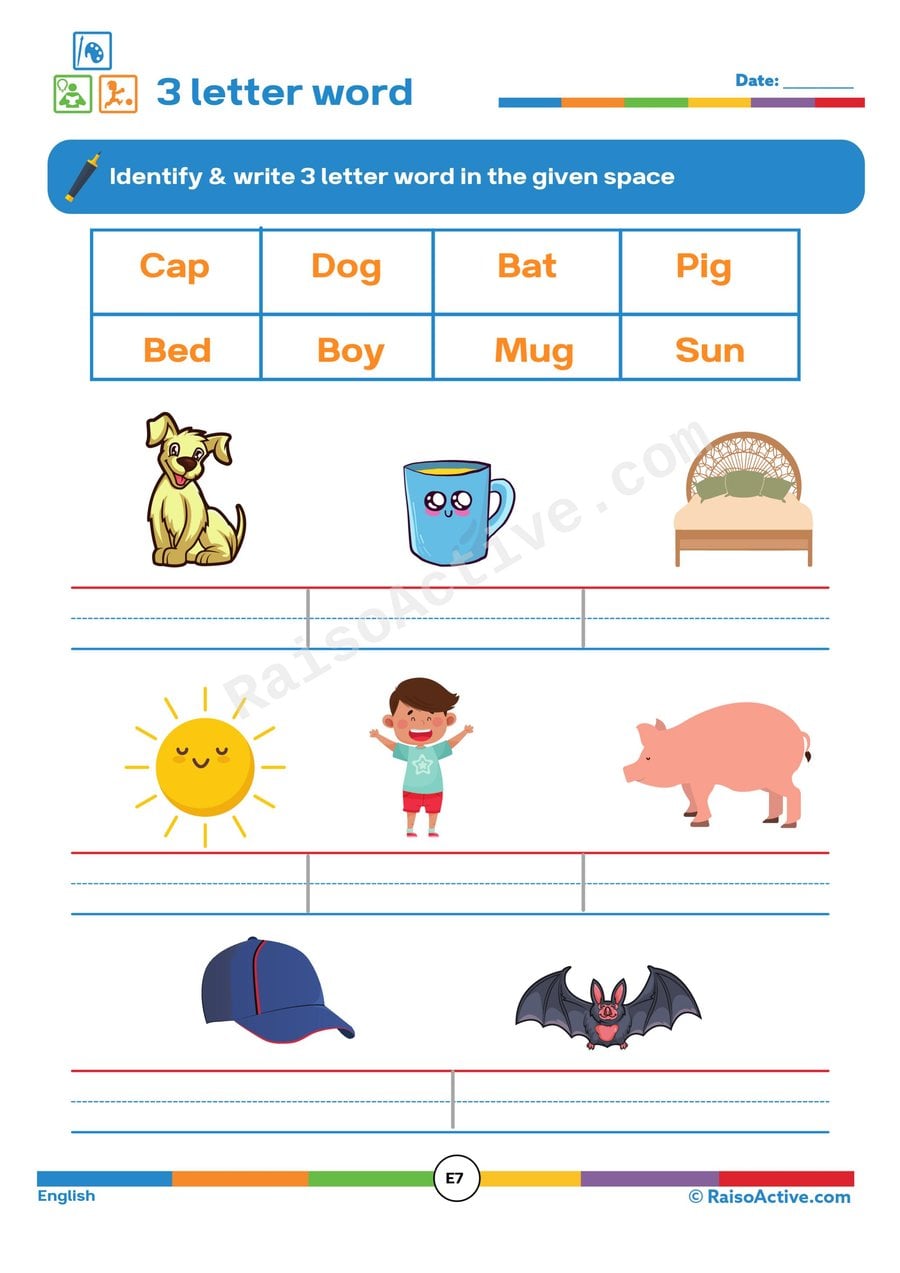
This worksheet helps children ages 3-5 identify and recognize simple three-letter words by matching pictures to their written word and then completing each word by filling in a missing vowel. Working with short, consistent words like these builds the beginning reading skills that let children start decoding independently.
Ages 4-5 · Pre-KAges 4-5 · ReceptionAges 4-5 · LKGAges 4-5
This worksheet builds phonics skills within the 'am' word family — words like 'ham,' 'jam,' and 'Sam' — by having children read words aloud, match them to pictures, and fill in missing letters to complete them. For four- and five-year-olds, working within a single rime family like '-am' helps children generalize a decoding pattern they can apply to many new words, rather than sounding out every word from scratch.
Ages 4-5 · Pre-KAges 4-5 · ReceptionAges 4-5 · LKGAges 4-5
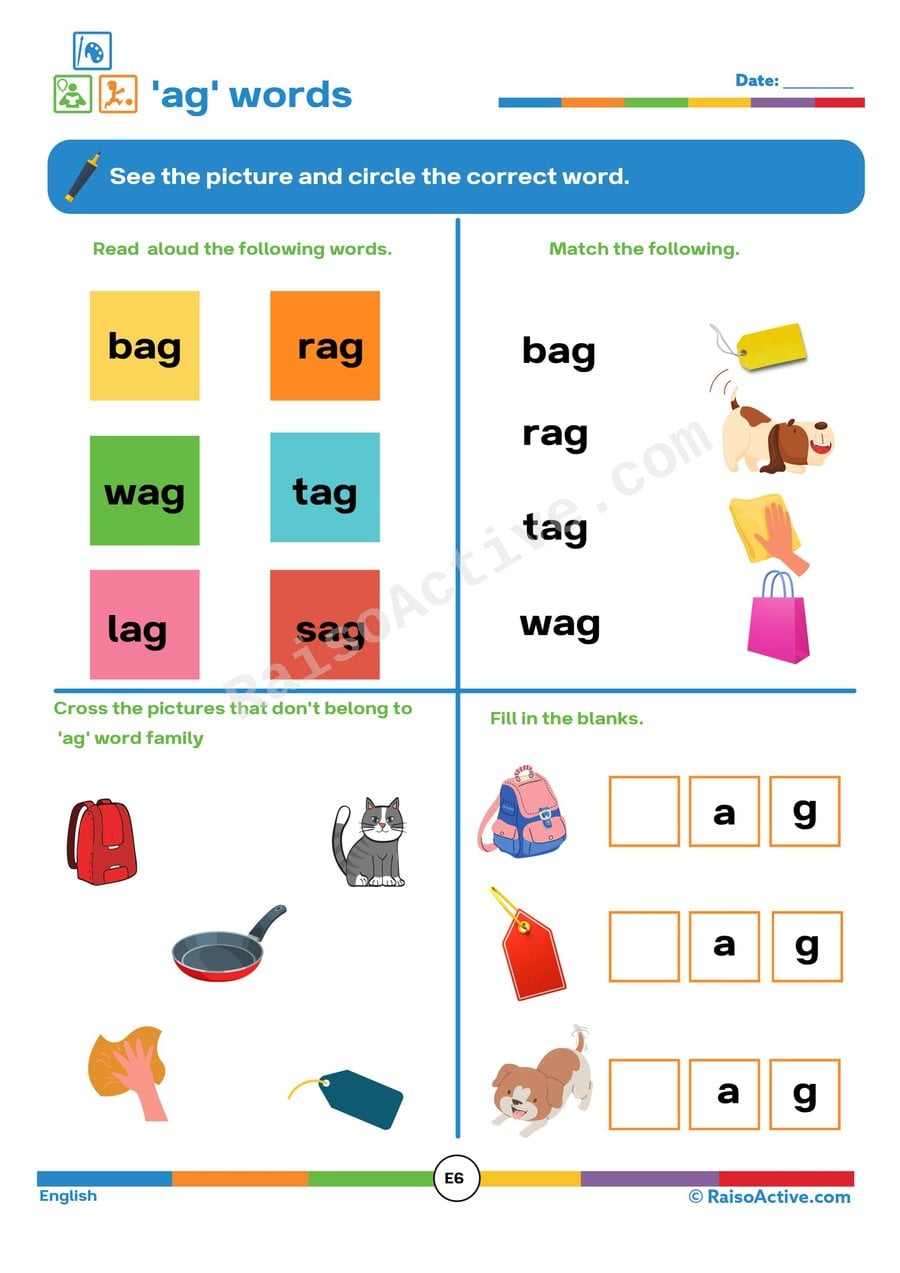
This worksheet helps children ages 4-5 learn and recognize words from the 'ag' word family, like bag, tag, and rag, teaching them that changing just the first letter of a familiar word pattern creates a whole new word. Building fluency with word families like this is one of the most efficient ways young readers expand their reading vocabulary quickly.
Ages 3-5 · Preschool–Pre-KAges 3-5 · Nursery–ReceptionAges 3-5 · Nursery–LKGAges 3-5
This worksheet strengthens CVC (consonant-vowel-consonant) word recognition by having children match a picture to its correct 3-letter word and then write that word themselves. For three- to five-year-olds, writing out a decoded word — not just reading it — cements the connection between letter sounds and spelling, an important step toward independent writing.