Navratri Festival Quest Certificate of Achievement
Ages 7-11 · Grade 2–Grade 3Ages 7-11 · Year 3–Year 4Ages 7-11 · Class 2–Class 3Ages 7-11
Children celebrate finishing the Navratri Festival Quest pack and record which levels they completed.
Free printable worksheets
Download free educational worksheets for children ages 2–8. Perfect for preschool, kindergarten, and early elementary learning activities.
Subscribe to get unlimited access to all worksheets without watermarks
View Subscription Plans289 topics match
10 worksheetsof 1,994
Ages 7-11 · Grade 2–Grade 3Ages 7-11 · Year 3–Year 4Ages 7-11 · Class 2–Class 3Ages 7-11
Children celebrate finishing the Navratri Festival Quest pack and record which levels they completed.
Ages 4-6 · Pre-K–KindergartenAges 4-6 · Reception–Year 1Ages 4-6 · LKG–UKGAges 4-6
Children celebrate finishing the Navratri Fun Time pages and see which levels they completed.
Ages 4-5 · Pre-KAges 4-5 · ReceptionAges 4-5 · LKGAges 4-5
This hands-on craft turns simple addition into a reusable game, as children ages 4-5 build a paper house with numbered windows and a door that can be changed with tape or number stripes. Physically swapping numbers to create new addition problems (like 2 windows + 1 door) helps children grasp that addition means combining separate groups into one total, rather than just memorizing facts.
Ages 4-6 · Pre-K–KindergartenAges 4-6 · Reception–Year 1Ages 4-6 · LKG–UKGAges 4-6
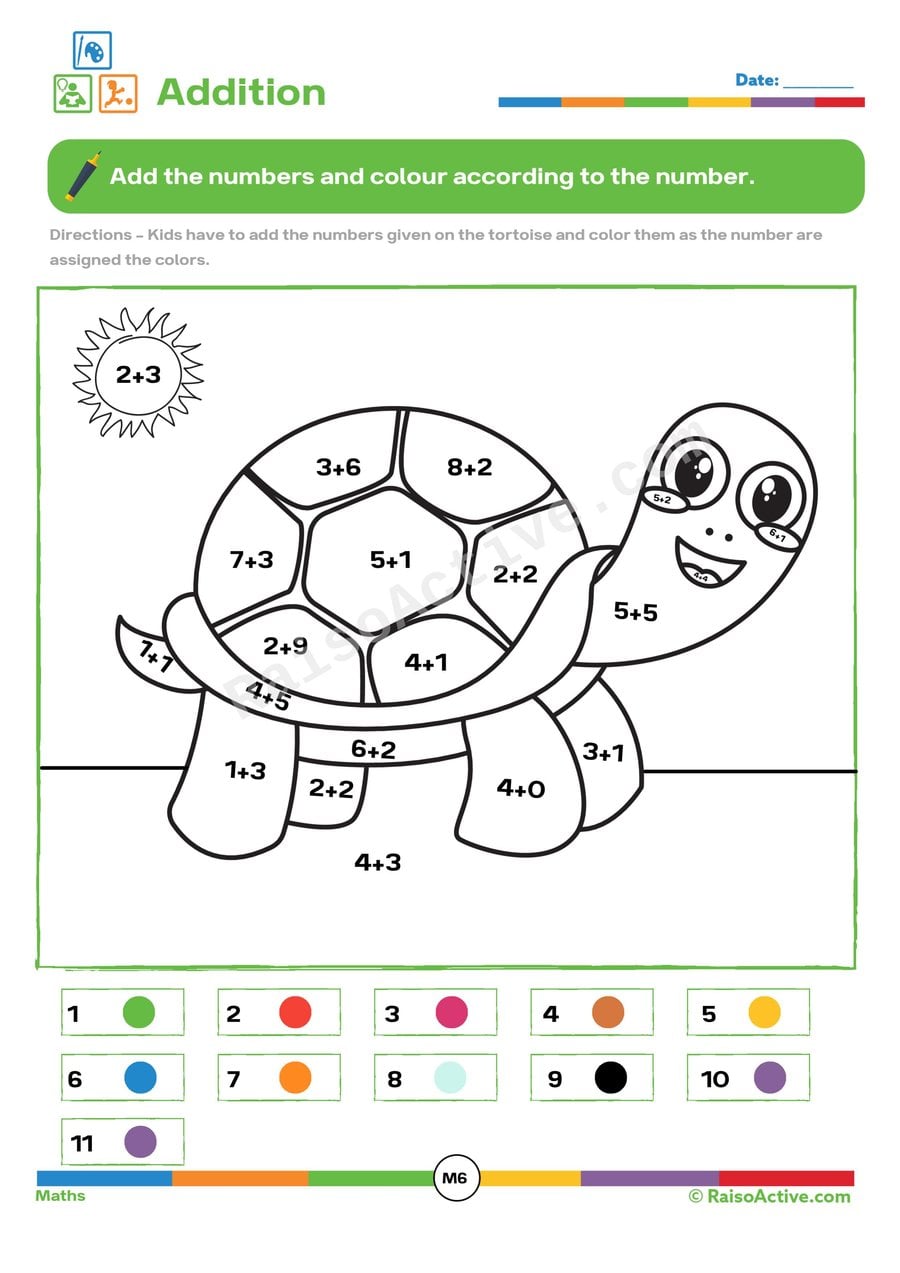
Children ages 4-6 practice single-digit addition facts and then apply a color key to their answers, combining math fluency with careful visual matching as the turtle picture is revealed. The immediate visual payoff of a colored picture gives children a clear, motivating way to check whether their addition was correct.
Ages 4-6 · Pre-K–KindergartenAges 4-6 · Reception–Year 1Ages 4-6 · LKG–UKGAges 4-6
Preschoolers ages 4-6 build early number sense by visually combining two small groups into one total, the concrete foundation every later addition fact depends on. Seeing objects physically joined together, rather than just numbers on a page, helps children grasp that addition means 'putting together' before they ever memorize a sum.
Ages 4-6 · Pre-K–KindergartenAges 4-6 · Reception–Year 1Ages 4-6 · LKG–UKGAges 4-6
This worksheet bridges concrete counting and mental addition by having children count visible dots, add them to a given number, and then draw missing dots to complete equations, reinforcing that addition means combining quantities together. For ages 4-6, physically drawing the missing dots makes the abstract equation tangible, helping cement the connection between a math symbol and what it actually represents.
Ages 4-6 · Pre-K–KindergartenAges 4-6 · Reception–Year 1Ages 4-6 · LKG–UKGAges 4-6
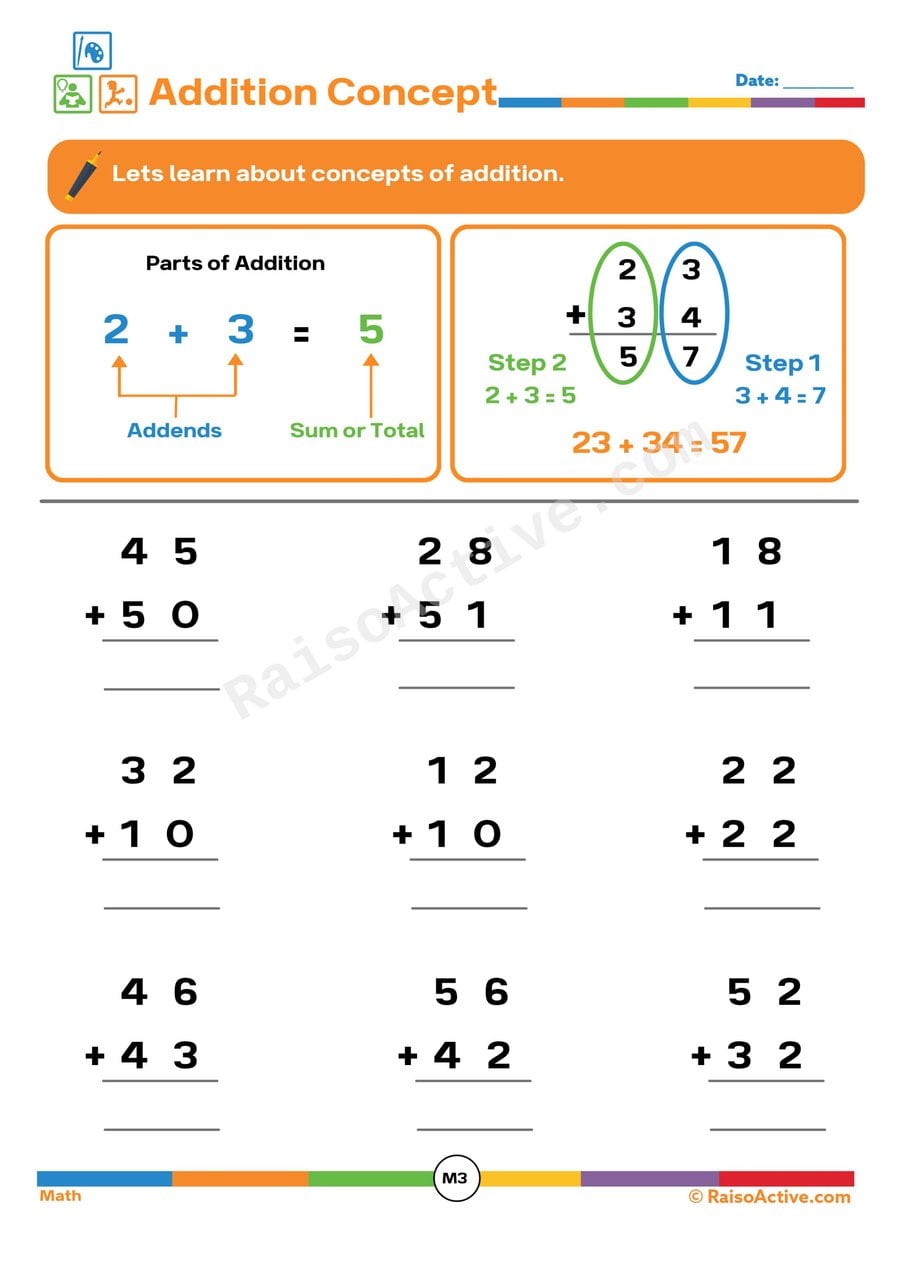
This worksheet builds mental math fluency by asking children to solve simple addition problems in their heads rather than relying on counters or drawings, strengthening the internal number sense that supports faster, more confident arithmetic. For ages 4-6, moving from concrete counting toward mental calculation is a significant milestone that sets the foundation for later multi-digit addition.
Ages 4-5 · Pre-KAges 4-5 · ReceptionAges 4-5 · LKGAges 4-5
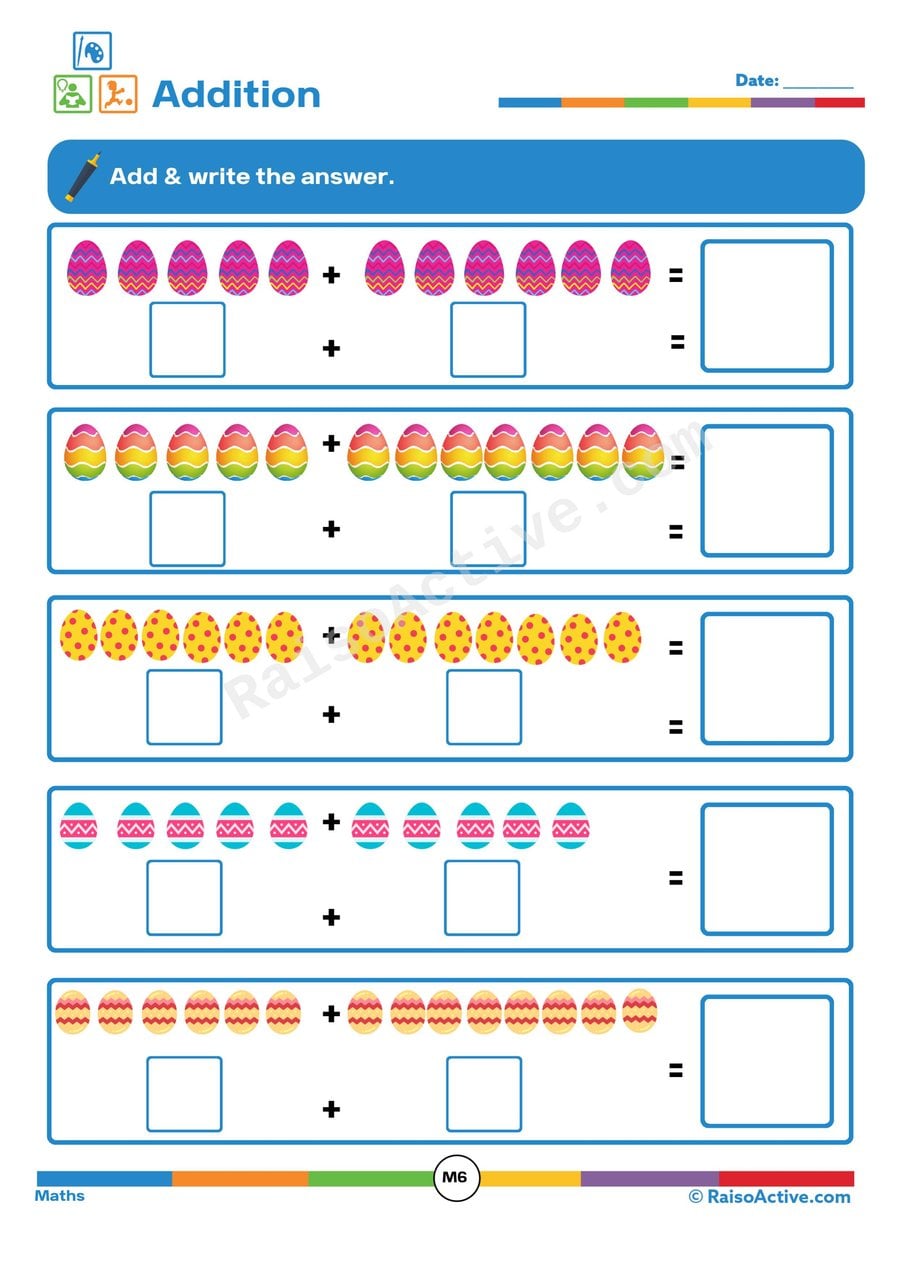
Counting groups of Easter eggs and combining them builds early addition sense for children ages 4-5, showing that putting two smaller groups together creates one larger total. Because the eggs are grouped visually rather than shown as bare numerals, children practice one-to-one counting alongside the abstract addition symbol, connecting the concrete and written forms of the same idea.
Ages 4-6 · Pre-K–KindergartenAges 4-6 · Reception–Year 1Ages 4-6 · LKG–UKGAges 4-6
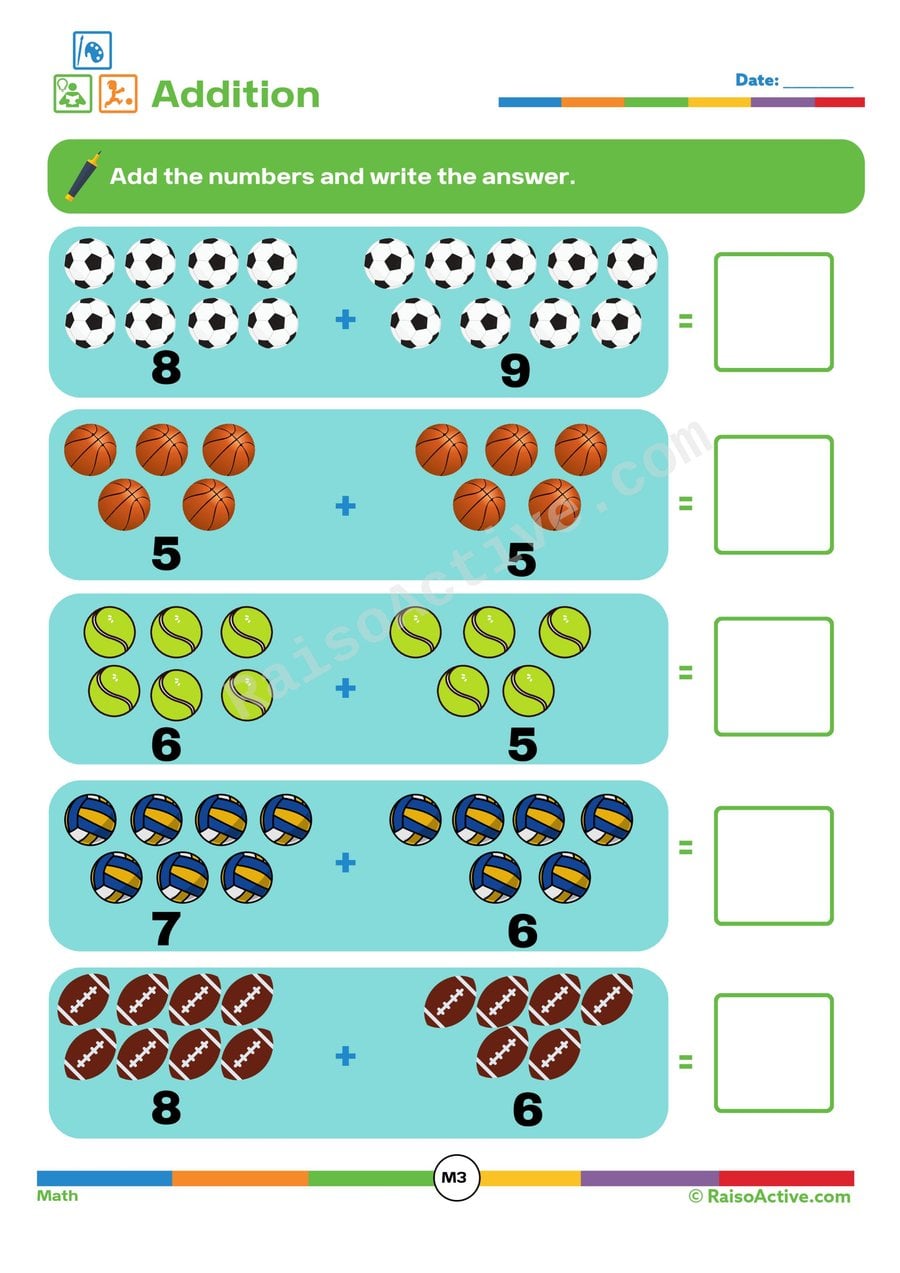
Featuring sports-themed pictures like balls, bats, and trophies, this worksheet gives children ages 4-6 engaging practice with simple addition, counting two separate sets of objects and combining them into a single total. Using a familiar, high-interest theme like sports can help maintain focus during repetitive counting practice, while still building the same foundational addition skills as any other worksheet.
Ages 4-6 · Pre-K–KindergartenAges 4-6 · Reception–Year 1Ages 4-6 · LKG–UKGAges 4-6
This worksheet gives children ages 4-6 practice with simple addition by having them combine two groups of pictured objects and write the resulting total, reinforcing the core idea that addition means putting groups together to find 'how many in all.' Working from pictures rather than numbers alone helps bridge concrete counting to the more abstract number sentences children will encounter as their math skills progress.