Calm Down Activities for Kids: 8 Games to Practise Calm

Big feelings are okay! Let's practise calm on an easy day, so it is ready for a hard one.
- 10 quiet minutes a game
- Printer, scissors, crayons
- Indoors, at a table or on the floor
- Real pages from our packs
Calm down activities for kids work best when they are practised on a calm day, not in the middle of a big feeling. A child who has already spun a feelings wheel or squeezed and let go with a grown-up knows what to do when the storm arrives, because the tool feels familiar rather than new.
Below are eight printable games from our Big Feelings packs. Each one takes about ten minutes, needs only a printer, scissors and crayons, and teaches one small calm skill: naming a feeling, taking a slow breath, or choosing a tool. Do one a day, when everyone is calm, and stop while it is still fun.
Why practise calm when nothing is wrong?
When a child is upset, the thinking part of the brain is not at its best, and a grown-up saying "take a deep breath" often does not help. Practising on a good day turns calm into a habit your child can reach for, much like a fire drill that happens before there is a fire.
- Name it: children who have words for feelings (worried, frustrated, excited) can tell you what is wrong without shouting.
- Choose a tool: a child who has picked a favourite calm tool, such as balloon breaths or a squeeze, is more likely to use it.
- Keep it light: games, faces and silly monsters make the topic fun, so feelings do not feel scary to talk about.
- All feelings are okay: the aim is not to stop feeling angry or sad, only to find kind ways through it.
What are 8 calm down activities for kids to try?
Eight calm down games to play, one a day
Print one page, play it together, and tick it off. Choose the game that matches how your child is today.
0 of 8 done
Cut out two paper wheels and join them with a paper fastener. Turn the wheel to show how you feel today, and the window shows a calm tool to try, such as balloon breath or turtle pause. Then circle your favourite tool.

A picture story about what a big feeling does. The guard dog is fast and shouts "Run!" to keep you safe. The wise owl thinks slowly and makes kind choices. Show it on your hand in four moves, then work out who is talking: the dog or the owl?

Make a paper jar with a sliding strip. Show the busy, swirly worried face first, then pull the tab up slowly and breathe out as the glitter settles. It shows how a busy head settles when we slow down.

Cut and staple four face cards, then flip the strips for brows, eyes and mouth. Make silly mixed-up faces first, then flip back to a real feeling: happy, sad, angry or surprised. It shows how faces tell us what people feel.

A storm has trapped you outside the Calm Cabin. Solve four feelings puzzles, from decoding a word to ordering feelings from small to big, and each gives one digit of the door code. Older children enjoy the box breathing puzzle at the end.

Make a paper pinwheel and spin it with slow, calm breaths: a big slow breath spins it gently, a fast one does not. Spin it for three slow breaths and colour a star each time.

Nine little monsters each stand for a feeling, with clues to spot it and one thing that helps. Colour the power stars to show how big the feeling gets, then play a snap game: the higher card wins, and the winner reads the help line so you both do it.

A team board game where everybody wins together. Roll a paper die and move along the path. A storm square means everyone does a calm tool, a heart means saying a kind word to a friend, and a face means naming a feeling.

You earned a sticker!
All eight played! Now you have a whole calm toolkit.
What is a calm tool?
A calm tool is a small thing a child can do to help a big feeling settle, and it should be quick, quiet and easy to remember. The feelings wheel in the first game lists seven to start with, plus a space for your child to make up their own:
- Balloon breath: breathe in slowly, then blow out as if filling a balloon
- Flower and candle: smell the flower, then blow out the candle
- Turtle pause: tuck in like a turtle and rest for a moment
- Squeeze and let go: squeeze your hands tight, then let them go loose
- Shake it out: wiggle and shake the feeling out of your arms and legs
- Hug and talk: ask a grown-up for a hug and say how you feel
- Share a smile: smile at someone and see them smile back
- Play when everyone is calm. Games are for practising, not for stopping a meltdown in progress.
- Let your child pick the game and the calm tool. Choosing makes a tool theirs.
- Do the tools together. Take the slow breaths and the squeezes yourself and let your child see you use them.
- Keep sessions short, about ten minutes, and stop while it is still fun.
- When a big feeling does come, offer the tool you practised in a quiet voice. Talking about what happened can wait until things are calm.
What do these games build?
Feeling words, slow breathing and a calm plan your child chooses
These games build a vocabulary for feelings, the habit of slowing down with a breath, and a small set of calm tools your child has tried and picked for themselves. They are everyday practice, not a treatment. The guard dog and wise owl page is a simple picture story to help children notice when a big feeling takes over, and it is not exact science. If a child is often overwhelmed or you are worried, talk to your child's teacher or doctor.
How can I make the games easier or harder?
Change the game to suit your child
Little ones
- Start with the feelings wheel and the face flip book, which are mostly about looking and naming.
- Cut the pages out yourself and let your child colour and turn the wheel.
- Practise one calm tool only, such as balloon breaths, for a whole week.
Older kids
- Try Escape the Storm and the guard dog and wise owl page, which ask for more reading and thinking.
- Ask your child to make up their own calm tool and add it to the wheel.
- Let them teach the board game to a younger sibling or friend.
Where can I find more feelings and calm printables?
All eight games come from our two Big Feelings packs, one for younger children and one for older ones, each in colour and in an ink-saver black-and-white edition. You can see them all on our feelings worksheets page. For more ideas on building kindness and feelings words into everyday play, read our guide to social-emotional learning activities for preschoolers. Want to make the pinwheel step by step? Try our pinwheel breathing activity.
Questions parents ask about calm down activities
When is the best time to do calm down activities?
How long should a calm down activity take?
What if my child will not join in?
Do I need to print in colour?
What if my child's big feelings seem too big?

Written by
Hemsweta Jain · Teacher Cheena
MBA and Early Childhood Educator, teaching since 2014 · Founder of RaisoActive, Mumbai
Published · Last reviewed
Related posts
Understanding Normal Developmental Milestones for 4-Year-Olds: A Comprehensive Guide for Parents and Educators
Discover what your 4-year-old should be doing across language, cognitive, motor, and social domains — plus red flags to watch for and Indian context tips.
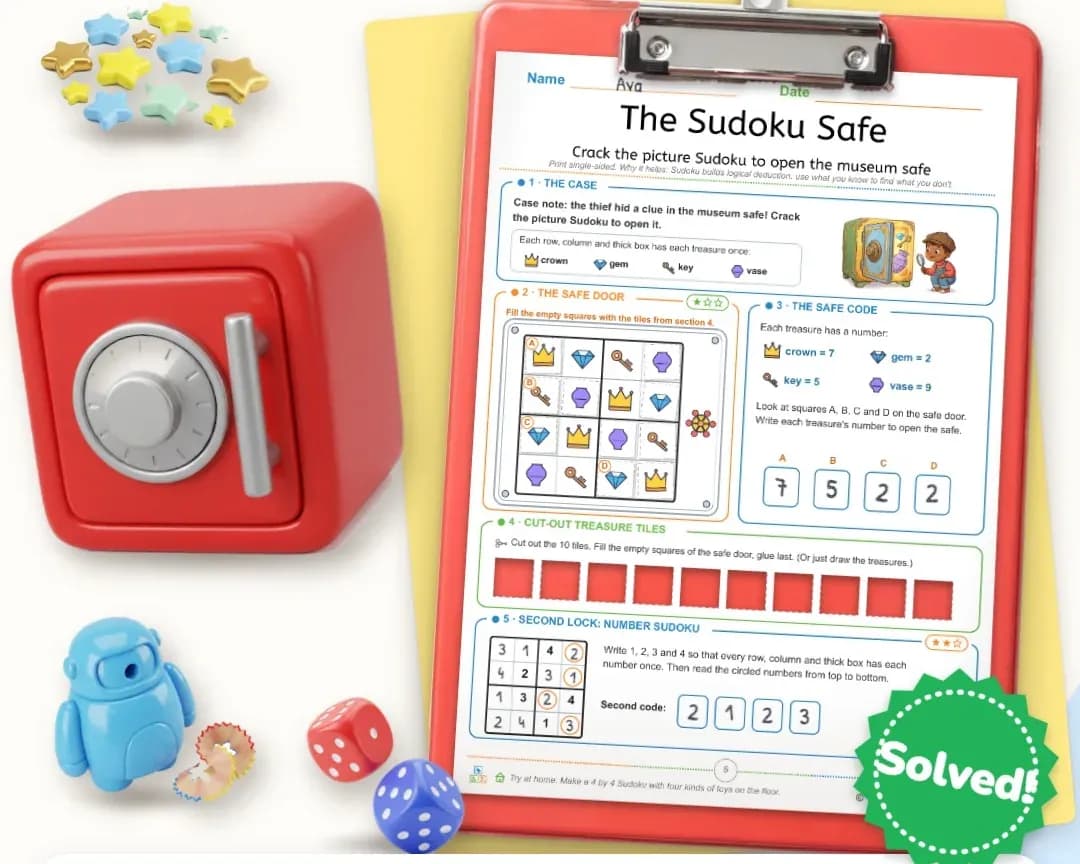
Logic Puzzles for Kids: 7 Printable Types to Try at Home
Logic puzzles for kids that make them think: picture sudoku, code wheels, tangrams, clue puzzles and escape rooms. What each builds and how to start.
Quiet Activities for Kids When Guests Are Visiting
Eight quiet activities for kids while guests are visiting: seek and find, spot the difference, picture sudoku, code wheels and more. Calm and mess-free.