Understanding Normal Developmental Milestones for 4-Year-Olds: A Comprehensive Guide for Parents and Educators
Author
RaisoActive - Kids Activities and Fun Learning
Published
Updated
Reading Time
15 min read

- What language and communication skills to expect at age 4 — and why Indian multilingual children may develop differently
- Key cognitive milestones: counting, letter recognition, and early problem-solving that set the stage for school readiness
- Fine and gross motor milestones — from drawing recognisable figures to hopping on one foot
- Social-emotional growth at 4: cooperative play, empathy, rule-following, and managing big feelings
- Red flags that warrant a closer look, plus practical activities parents and educators can do every day
Why the Fourth Year Is So Remarkable
Four is a magical age. Just a year ago, your child was still very much a toddler — unpredictable, intensely dependent, and ruled entirely by impulse. But somewhere between their third and fourth birthdays, something shifts. Your 4-year-old is now a little person with opinions, stories, jokes, and a burning need to understand how everything works. They ask "why" approximately forty-seven times a day (we counted), negotiate with the persistence of a seasoned lawyer, and can hold a proper conversation with the neighbours' grandmother.
Understanding what is developmentally typical at this age is one of the most useful tools a parent or educator can have. It takes away unnecessary worry on one hand ("Is it normal that she still cannot tie her shoelaces?") and helps you notice genuine concerns early on the other. Developmental milestones are not rigid benchmarks that every child must hit on a fixed date — they are ranges and patterns that give us a picture of healthy growth. In India especially, where children grow up navigating two, three, or even four languages simultaneously, it is important to understand how context shapes development.
This guide walks through all the major developmental domains for 4-year-olds — language, cognition, fine motor, gross motor, social-emotional, and self-care — with an eye on what is typical, what is remarkable, and what warrants a conversation with your paediatrician or a developmental specialist.
Get age-wise activity ideas in your inbox
Free worksheets, milestone trackers, and playful learning ideas for children aged 1–8, curated for Indian families.
Language and Communication: Telling Stories, Asking Questions
By their fourth birthday, most children have a working vocabulary of 1,000 to 2,000 words — though many children, especially those growing up in richly stimulating environments, will know considerably more. More importantly, they are not just naming things; they are using language to narrate, question, reason, and connect.
A typically developing 4-year-old can speak in sentences of four to six words or longer, and many speak in complex sentences with conjunctions: "I don't want to go to Pooja's house because her dog barks at me." They can retell a familiar story with a beginning, middle, and end — even if the details get delightfully muddled. They enjoy rhymes, songs, and wordplay, and they ask endless questions beginning with "why," "how," and "what if."
A note on Indian multilingual children: Research consistently shows that children growing up with two or more languages may appear to have a smaller vocabulary in each individual language when assessed separately. However, their total conceptual vocabulary — counting words across all languages — is typically on par with or even richer than monolingual peers. A child who calls water "paani" at home and "water" at school is not language-delayed; they are language-enriched. If your 4-year-old code-switches fluently between Hindi, Marathi, and English, that is a remarkable cognitive feat, not a red flag.
Cognitive Milestones: Counting, Thinking, and Problem-Solving
The 4-year-old brain is in a period of extraordinary growth. Executive function — the ability to plan, hold information in mind, and regulate impulses — is developing rapidly. This is the age when children begin to demonstrate logical thinking, even if their logic occasionally reaches conclusions that make adults double over with laughter.
Cognitively, most 4-year-olds can count to 10 or beyond, though understanding the concept that the last number counted tells you how many objects there are (cardinality) is a milestone that comes to different children at different times between ages 3.5 and 5. They can sort objects by shape, colour, and size, match shapes and patterns, and complete simple puzzles of 10 to 20 pieces. Many 4-year-olds begin to recognise letters of the alphabet, especially those in their own name, and can identify a handful of numbers. They understand concepts like "more" and "less," "yesterday" and "tomorrow" (even if not perfectly), and they can follow two- to three-step instructions.
In terms of problem-solving, 4-year-olds are beginning to move beyond trial-and-error. They can think through simple problems before acting, and they can come up with creative solutions — sometimes surprising us entirely. Imaginative play at this age is rich and elaborate, with detailed scenarios that can sustain themselves over many days.
Fine Motor Skills: From Scribbles to Recognisable Figures
Fine motor development at 4 is one of the most visible and exciting areas of growth. Children who were making circular scribbles at age 2 are now drawing figures that others can actually recognise — a person with a circle head, stick arms and legs, maybe a smile, and sometimes even fingers. They can draw a cross (+), a square, and sometimes a triangle. Many 4-year-olds can write some or all of the letters in their name, though the letters may be oversized, wobbly, or occasionally reversed.
At this age, children should be able to use child-safe scissors to cut along a straight line, though cutting curves and complex shapes is a skill that develops closer to age 5. They can button and unbutton large buttons, string large beads onto a lace, and manipulate small objects with reasonable precision. Pencil grip is transitioning from a full-fist grip towards a more mature grip, and many 4-year-olds are comfortable with a digital tripod grip (though some children will naturally arrive at mature grip a little later, and this is normal).
Gross Motor Skills: Jumping, Hopping, and Balancing
Four-year-olds are gloriously physical. They run with better coordination than a year ago, can stop and change direction without falling, and love to jump, hop, skip, and climb. Most 4-year-olds can hop on one foot (at least briefly), walk up and down stairs alternating feet, and catch a large ball that is gently thrown to them. Many can ride a tricycle confidently, and some are beginning to balance on a bicycle with training wheels.
Balance and coordination continue to improve through this year. Children at 4 can stand on one foot for up to five seconds, walk along a low balance beam or a line on the ground, and attempt cartwheels and forward rolls with varying degrees of success. Outdoor play and unstructured physical activity are essential at this age — not just for gross motor development, but for overall brain development, emotional regulation, and social learning.
Social and Emotional Development: Friends, Feelings, and Rules
The social world of a 4-year-old is far richer and more complex than it was just a year ago. At 3, parallel play (playing alongside but not really with another child) was still common. By 4, most children have shifted into genuine cooperative play — they negotiate roles, make up rules, and play elaborate make-believe games together. Best friendships begin to form, and children show real preferences for certain playmates.
Empathy is growing. Four-year-olds often notice when someone is sad and will try to comfort them — offering a hug, a favourite toy, or a cheerful suggestion. They are beginning to understand that others have thoughts and feelings different from their own (this is the development of theory of mind), though they are still very much working on this. They can follow simple rules in games, though rule-bending when they are losing remains a perfectly normal occurrence.
Emotional regulation at 4 is a work in progress. Children this age feel emotions intensely and can still have spectacular meltdowns — but compared to a toddler, they are developing better tools to cope. They can use words to express feelings (with prompting), calm down more quickly with adult support, and wait their turn with reasonable patience in structured settings.
Development is not a race. Every domain — language, motor, cognitive, and social-emotional — has a range of what is typical. A 4-year-old who is thriving in some areas and still catching up in others is completely normal. Look at the whole child, not a checklist.
Self-Care and Independence: Building Everyday Competence
Four-year-olds are eager to do things themselves — sometimes to a fault ("I can do it! Don't help me!"). This drive for independence is developmentally appropriate and should be gently encouraged. Most 4-year-olds can dress and undress themselves with minimal help, manage buttons and zips on familiar clothing, use the toilet independently (including handwashing), and feed themselves neatly with a spoon and fork. Many are beginning to learn to pour from a small jug and prepare simple snacks.
At this age, children can also begin to take responsibility for simple household tasks: putting away their toys, carrying their plate to the kitchen, setting out their own school bag. These small contributions build executive function, responsibility, and self-esteem — they are far more than chores.
Encouraging independence in self-care tasks is one of the most powerful things you can do for your 4-year-old. Resisting the urge to always do things for them — even when it is faster — builds the competence and confidence they need for school and beyond.
- **Language:** Read aloud together every day — pause to ask what happens next and how the character is feeling; these questions build comprehension and empathy.
- **Cognitive:** Play simple board games, do jigsaw puzzles together, and sort household objects (spoons vs forks, red blocks vs blue blocks)
- **Fine motor:** Offer playdough, threading beads, tearing paper for collages, and child-safe scissors with scrap paper — aim for 10–15 minutes daily
- **Gross motor:** Build an obstacle course in the garden or living room; roll, hop, balance, and crawl together
- **Social-emotional:** Name feelings throughout the day — yours and theirs; use a simple feelings chart at home
- **Self-care:** Create a visual morning routine chart so your child can check off steps independently
- Cannot speak in sentences of at least four words, or speech is very difficult to understand even for familiar adults
- Does not engage in imaginative or make-believe play, or play remains at the level of a much younger child
- Cannot hold a crayon and make marks on paper, or shows very little interest in fine motor activities
- Has extreme difficulty separating from parents beyond what is age-typical, or shows persistent and intense anxiety
- Does not show interest in playing with other children, or is regularly aggressive in a way that cannot be redirected
- Has lost skills they previously had — this is always worth prompt investigation
Red flags are not cause for panic — they are invitations to look more closely. The earlier a developmental concern is identified and supported, the better the outcomes. Trust your instincts, and do not hesitate to seek a professional opinion.
of critical brain development occurs before age 5. The experiences, language, relationships, and stimulation a child receives in the first five years shape the neural architecture that supports all future learning, behaviour, and health.
Source: Harvard Center on the Developing Child
more words per day are heard by children in language-rich environments. Children whose caregivers engage them in conversation, storytelling, and reading develop significantly stronger vocabulary and literacy skills by the time they start school.
Source: Hart & Risley, Meaningful Differences in the Everyday Experience of Young American Children
How to Support Your 4-Year-Old's Development Every Day
Talk — and listen — constantly
Narrate your day, ask open-ended questions, and genuinely listen to the answers. A 20-minute mealtime conversation where your child talks and you listen is one of the most powerful vocabulary-builders available.
Read together every single day
Even 15 minutes of shared reading builds vocabulary, comprehension, phonological awareness, and a love of stories. Let your child choose the book, ask questions during reading, and revisit favourite books many times.
Create opportunities for hands-on exploration
Sand, water, clay, paint, blocks, and loose parts are not just play materials — they are cognitive tools. Children who manipulate materials with their hands are building spatial reasoning, cause-and-effect understanding, and creative problem-solving.
Prioritise unstructured outdoor play
Let your child run, climb, dig, and explore without a fixed agenda for at least 30–60 minutes daily. Physical activity supports brain development, emotional regulation, and social skills — it is not optional.
Name and validate emotions consistently
When your child is frustrated, say "I can see you're feeling really frustrated right now. That's okay." When they're proud, say "You look so proud of yourself! I'm proud of you too." This emotional language is the foundation of self-regulation.
Build in predictable routines
A consistent morning and bedtime routine gives 4-year-olds a sense of security and teaches them to manage transitions. Visual routine charts (with pictures) are particularly helpful for children who are anxious about changes.
Foster independence in manageable doses
Let them choose their outfit, pour their own water, and help with simple cooking tasks. Each moment of independence builds their confidence, executive function, and belief that they are capable.
- +Speaks in 4–6+ word sentences and tells simple stories
- +Vocabulary of 1,000–2,000+ words (across all languages spoken)
- +Can count to 10 and understands basic quantity concepts
- +Draws a person with head, body, and limbs
- +Plays cooperatively with other children for extended periods
- +Can follow 2–3 step instructions reliably
- +Dresses and undresses with minimal help
- +Hops on one foot and catches a large ball
- -Speech is very hard to understand even for close family members
- -Vocabulary seems very limited; rarely initiates conversation
- -Has no concept of counting or one-to-one correspondence
- -Still at scribbling stage with no recognisable shapes or figures
- -Avoids other children entirely or is persistently aggressive
- -Frequently confused by simple, familiar instructions
- -Has significant difficulty with basic self-care tasks
- -Very poor balance, frequent falling, or avoids physical play
Free Printables for Your 4-Year-Old
Join thousands of Indian parents and educators who receive age-specific worksheets, milestone guides, and playful activity ideas straight to their inbox every week.
Frequently Asked Questions About 4-Year-Old Development
My 4-year-old speaks three languages but seems behind in all of them. Should I be worried?
My son cannot write his name yet at age 4. Is that a problem?
How much screen time is appropriate for a 4-year-old?
My daughter has tantrums that seem more intense than other children her age. Is this normal?
When should my child start kindergarten, and what skills do they need to have first?
What is the difference between a developmental delay and just being a late bloomer?
Free worksheets for this topic
Browse all worksheets
Pumpkin Lines Dice Game: Halloween Pre-Writing Worksheet
Ages 4-8 · Pre-K–Grade 2Ages 4-8 · Reception–Year 3Ages 4-8 · LKG–Class 2Ages 4-8
Children practise wavy, zigzag and looped pre-writing lines while playing a simple dice game.
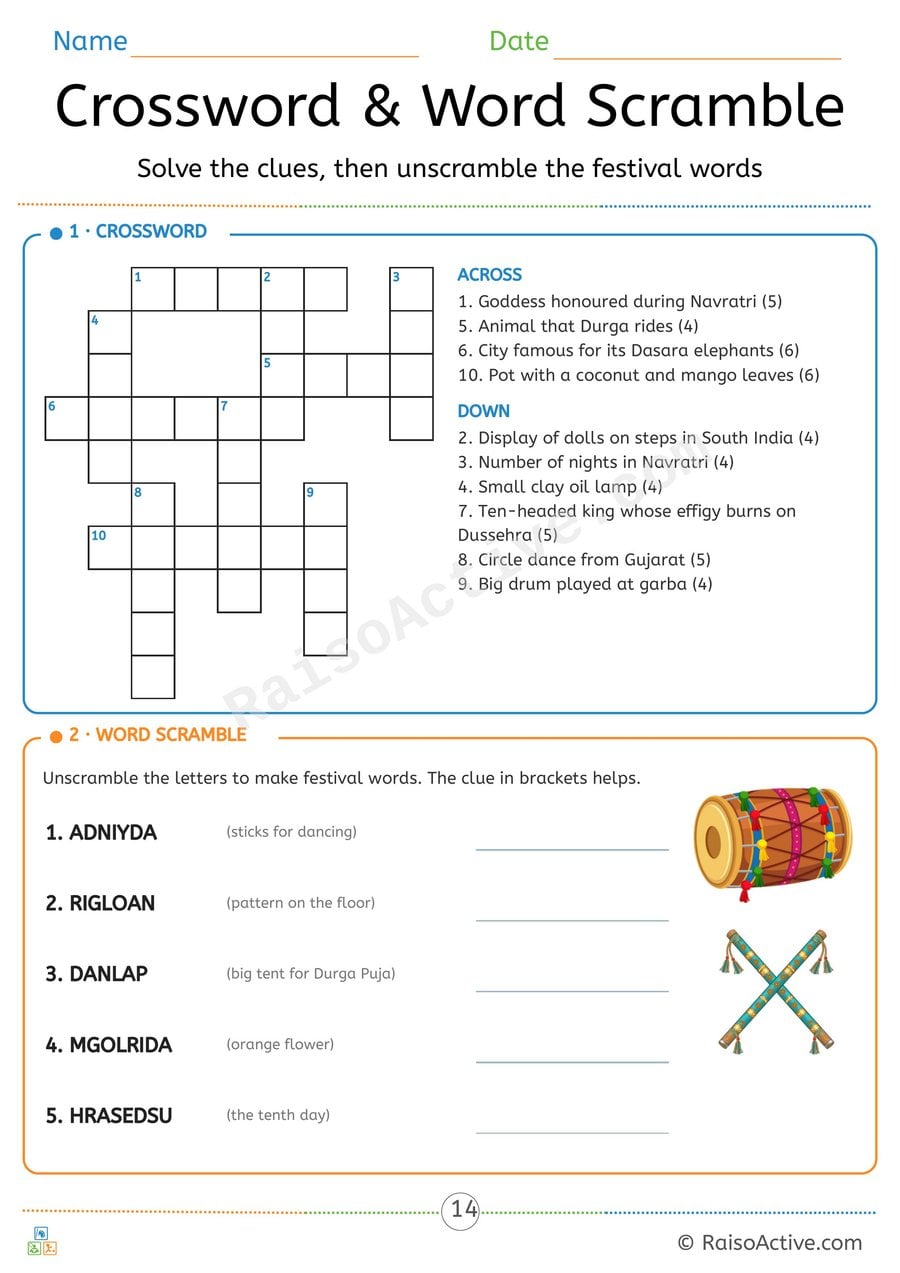
Navratri Crossword and Word Scramble
Ages 7-11 · Grade 2–Grade 3Ages 7-11 · Year 3–Year 4Ages 7-11 · Class 2–Class 3Ages 7-11
Children solve 10 crossword clues about the goddess, the lion, Mysuru, the kalash, Golu, diyas, Ravan, garba and the dhol, and unscramble five festival words with a clue for each.
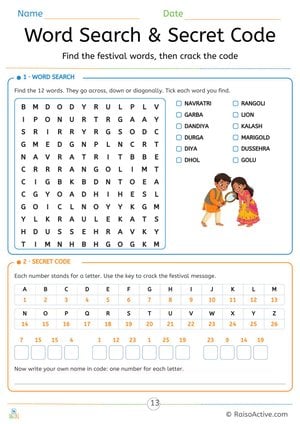
Navratri Word Search and Secret Code Puzzle
Ages 7-11 · Grade 2–Grade 3Ages 7-11 · Year 3–Year 4Ages 7-11 · Class 2–Class 3Ages 7-11
Children find 12 festival words that run across, down and diagonally, and use an A = 1 to Z = 26 key to decode a message about the festival. Then they write their own name in code.
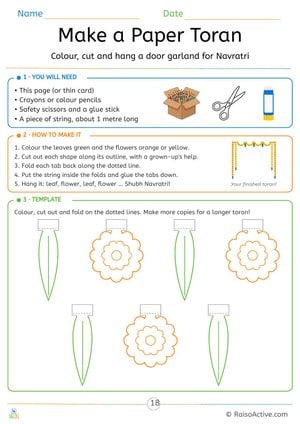
Make a Paper Toran: Navratri Craft Template
Ages 4-6 · Pre-K–KindergartenAges 4-6 · Reception–Year 1Ages 4-6 · LKG–UKGAges 4-6
Children follow step-by-step instructions to colour, cut, fold and glue a festival decoration, building scissor skills and fine motor control.

Written by
Hemsweta Jain · Teacher Cheena
MBA and Early Childhood Educator, teaching since 2014 · Founder of RaisoActive, Mumbai
Published · Last reviewed
Related Resources
Printable Resources(10)
View all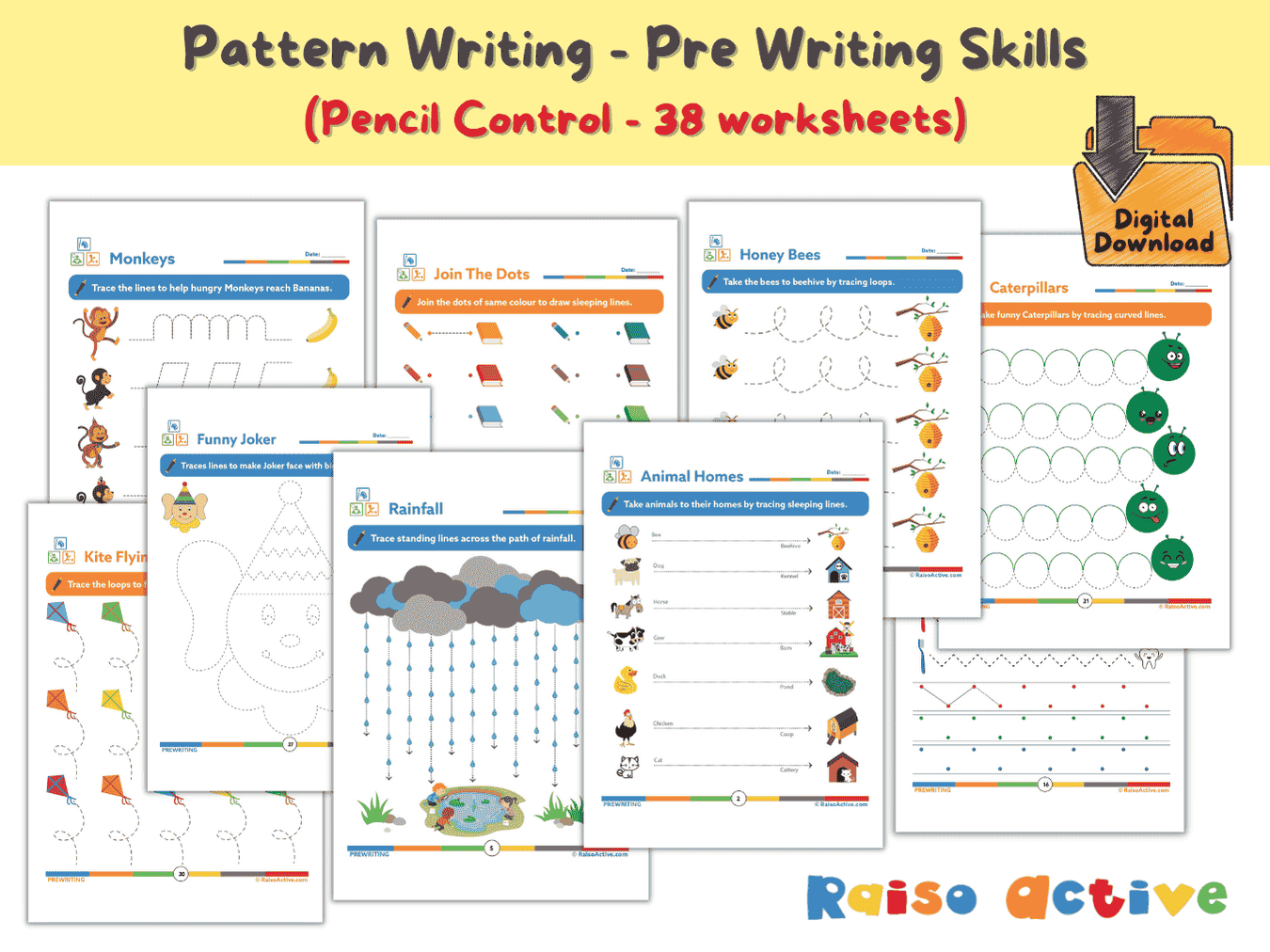

Pattern Writing Pre-writing Skills Activity Book for 3-4 Year Olds
Ages 3-4 · PreschoolAges 3-4 · NurseryAges 3-4 · 44 pages
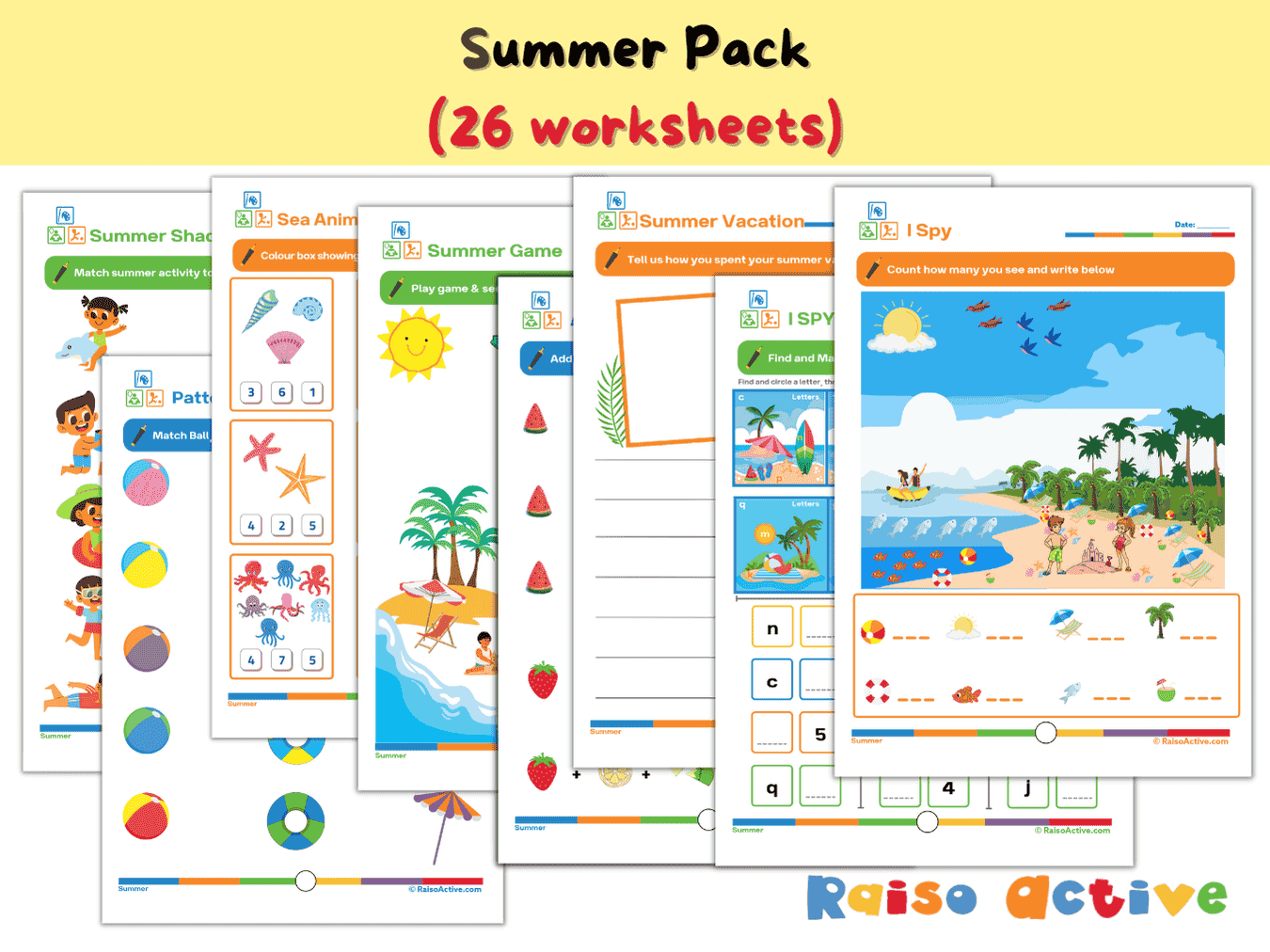

Summer Activity Pack: Math, Literacy, Puzzles & More for Preschool & Kindergarten
Ages 3-7 · Preschool–Grade 1Ages 3-7 · Nursery–Year 2Ages 3-7 · Nursery–Class 1Ages 3-7 · 26 pages
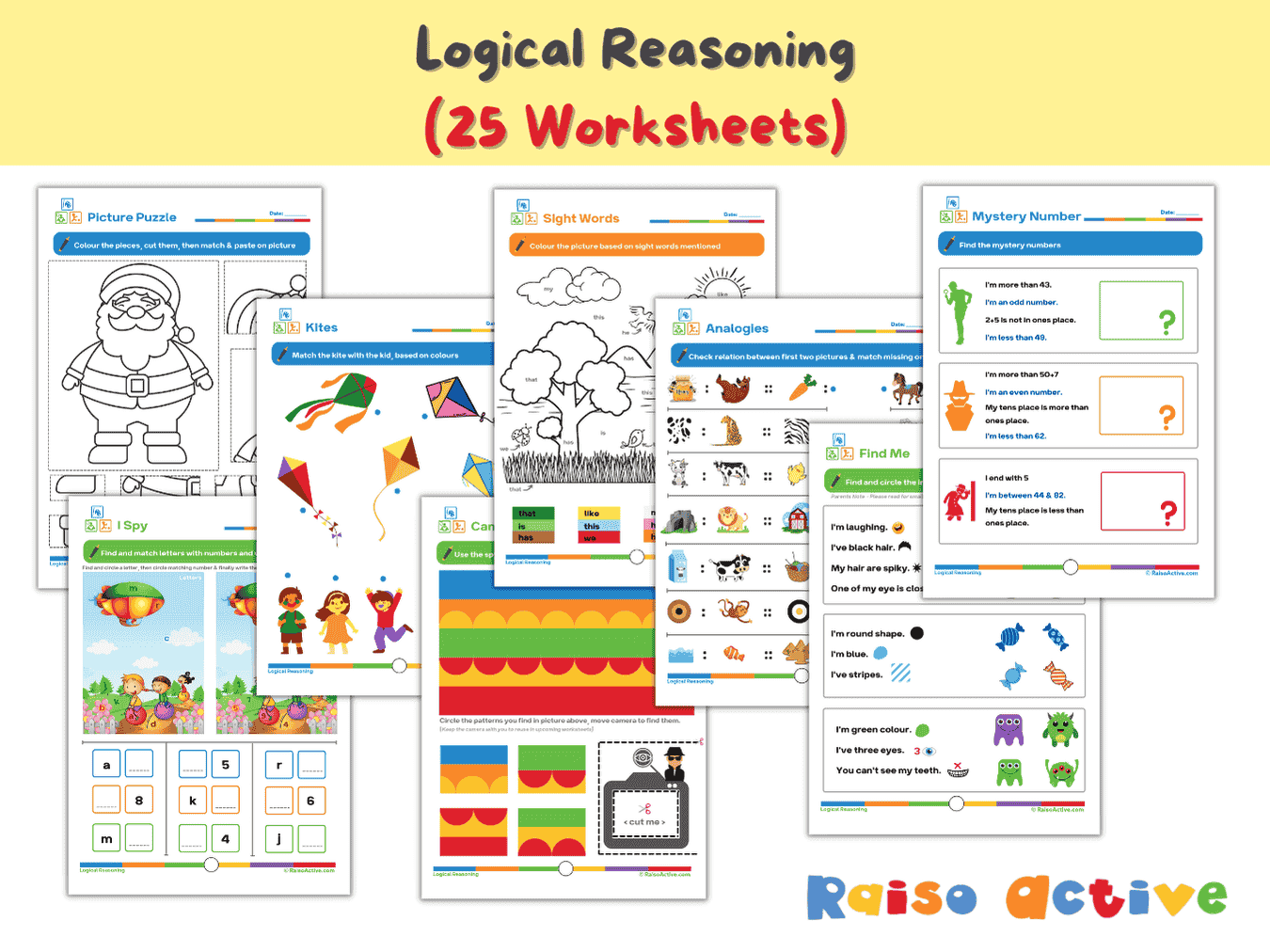

Logical Reasoning Activity Book for Preschool & Kindergarten | Patterns, Puzzles & Analogies
Ages 4-7 · Pre-K–Grade 1Ages 4-7 · Reception–Year 2Ages 4-7 · LKG–Class 1Ages 4-7 · 26 pages
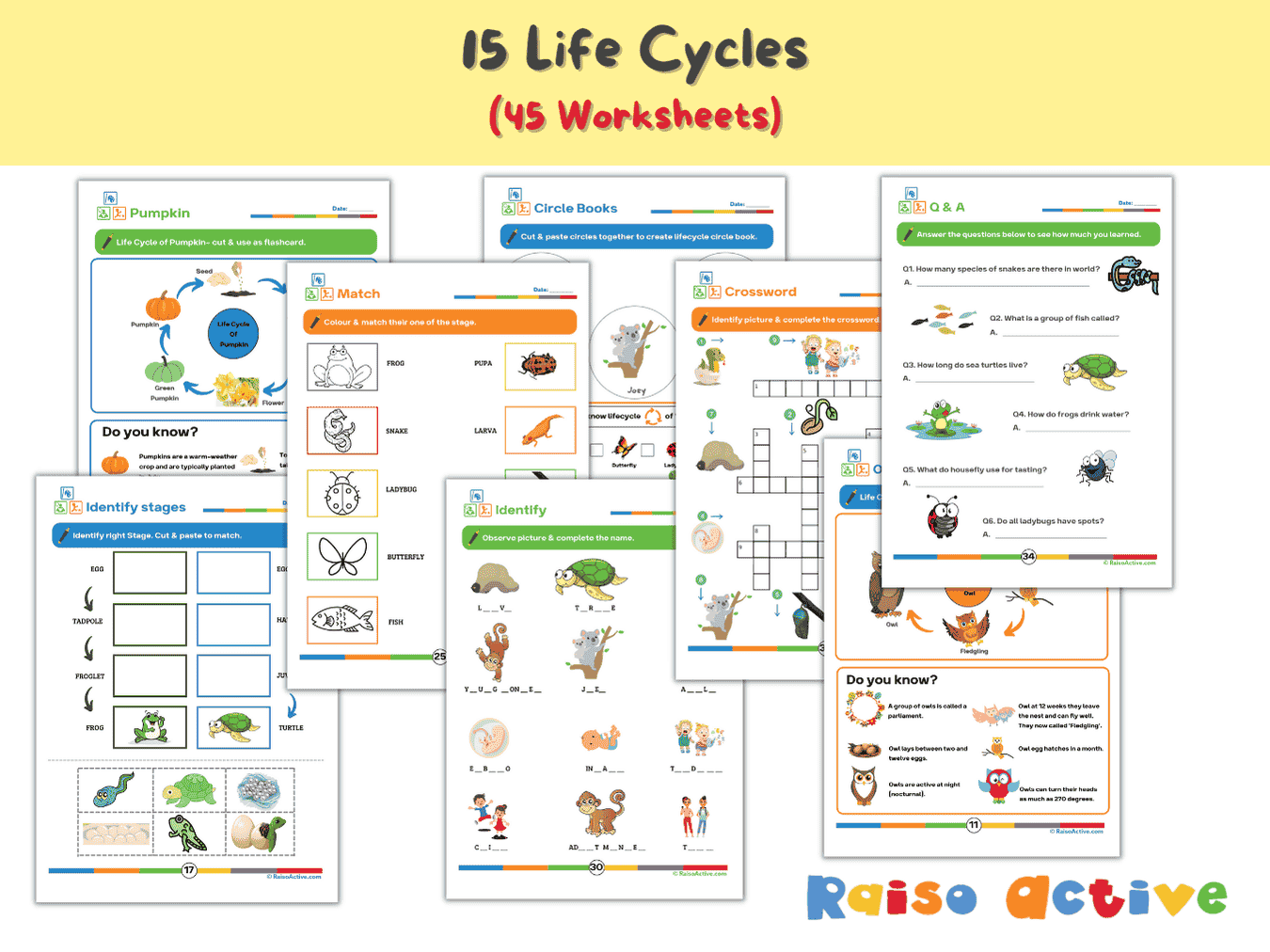

Lifecycles Activity Book & Flashcards for Preschool & Early Elementary
Ages 3-8 · Preschool–Grade 2Ages 3-8 · Nursery–Year 3Ages 3-8 · Nursery–Class 2Ages 3-8 · 46 pages
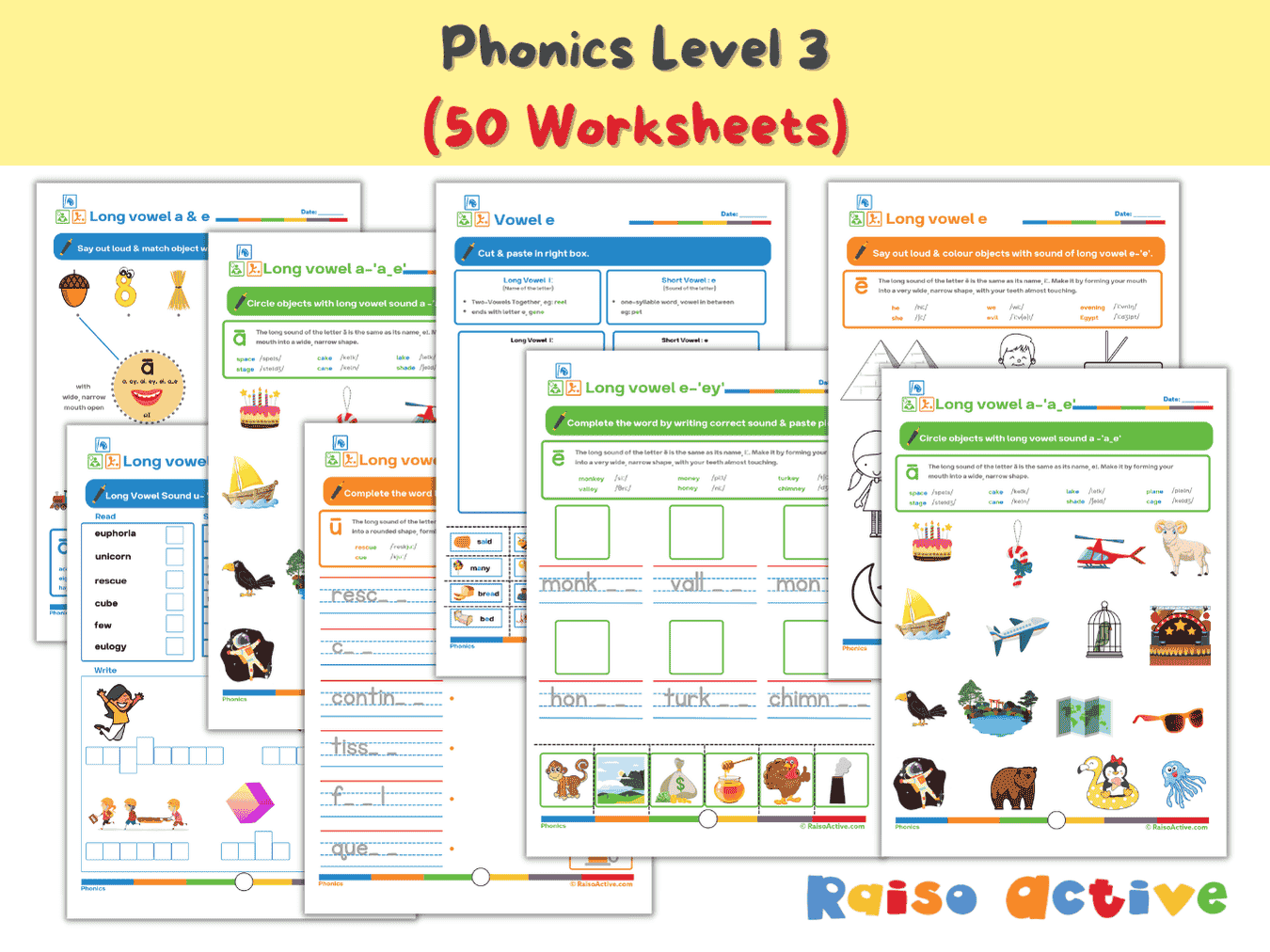

Phonics Level 3 Long Vowels Activity Book for Kindergarten & 1st Grade
Ages 5-7 · Kindergarten–Grade 1Ages 5-7 · Year 1–Year 2Ages 5-7 · UKG–Class 1Ages 5-7 · 51 pages
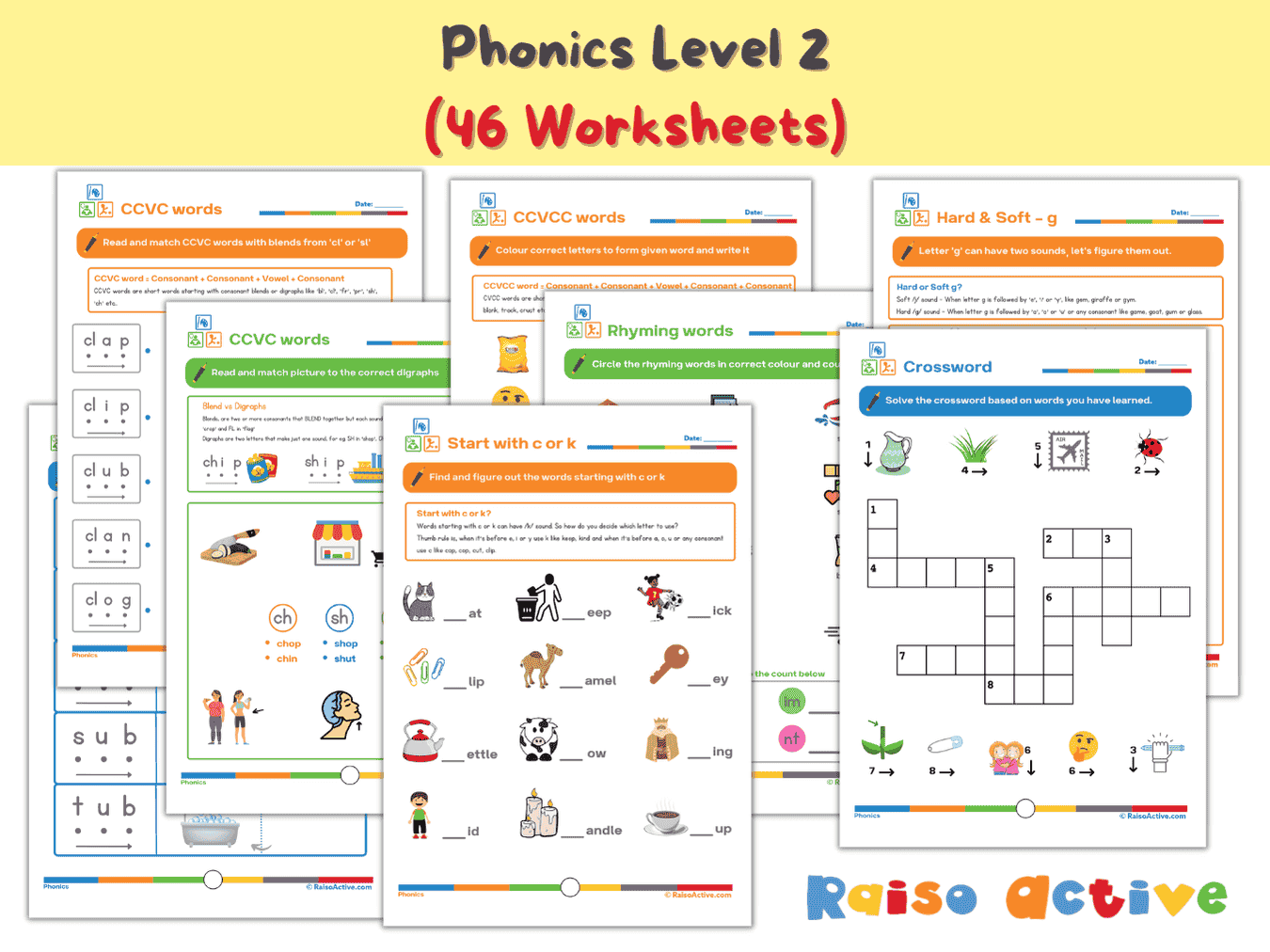
Phonics Level 2 Worksheets: CVC, CCVC, CVCC Word Families & Blends for Early Readers (Ages 4-7)
Ages 4-7 · Pre-K–Grade 1Ages 4-7 · Reception–Year 2Ages 4-7 · LKG–Class 1Ages 4-7 · 47 pages
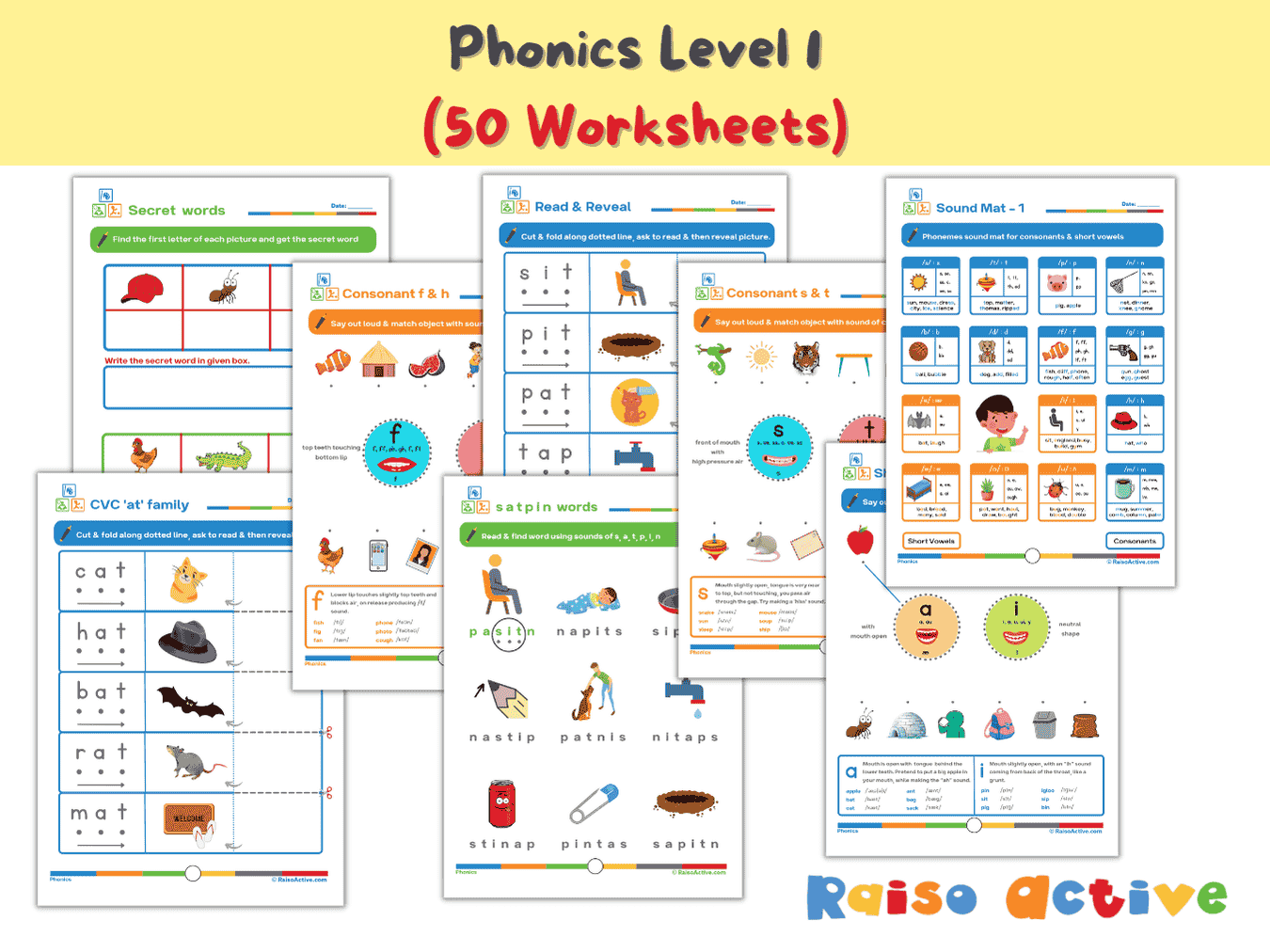
Phonics Level 1 Activity Book: Letter Sounds, Blending & CVC Words for Preschool & Kindergarten
Ages 3-6 · Preschool–KindergartenAges 3-6 · Nursery–Year 1Ages 3-6 · Nursery–UKGAges 3-6 · 60 pages
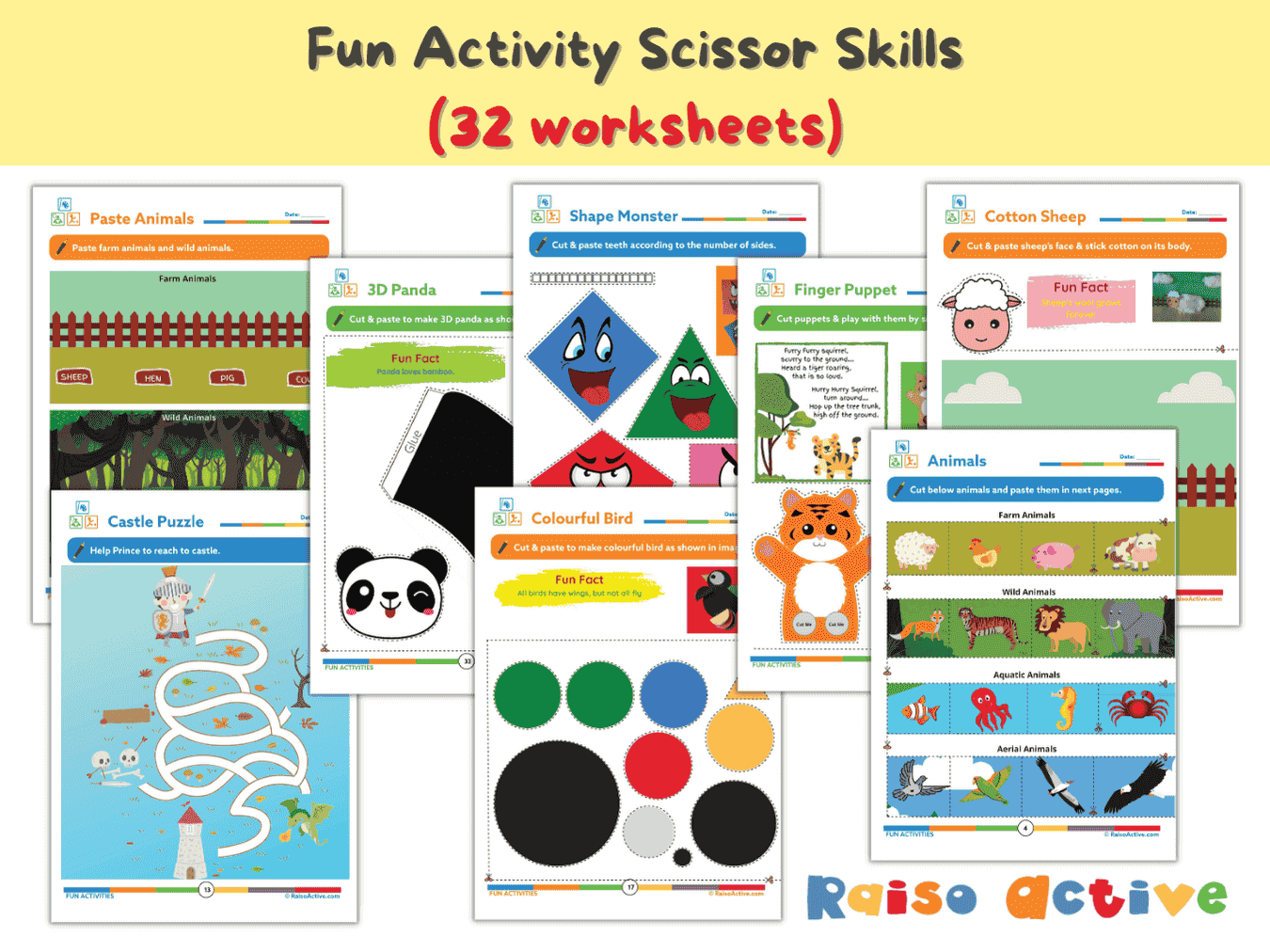
Preschool Scissor Skills Activity Book: Fine Motor & Craft Fun for Ages 3-6
Ages 3-6 · Preschool–KindergartenAges 3-6 · Nursery–Year 1Ages 3-6 · Nursery–UKGAges 3-6 · 35 pages
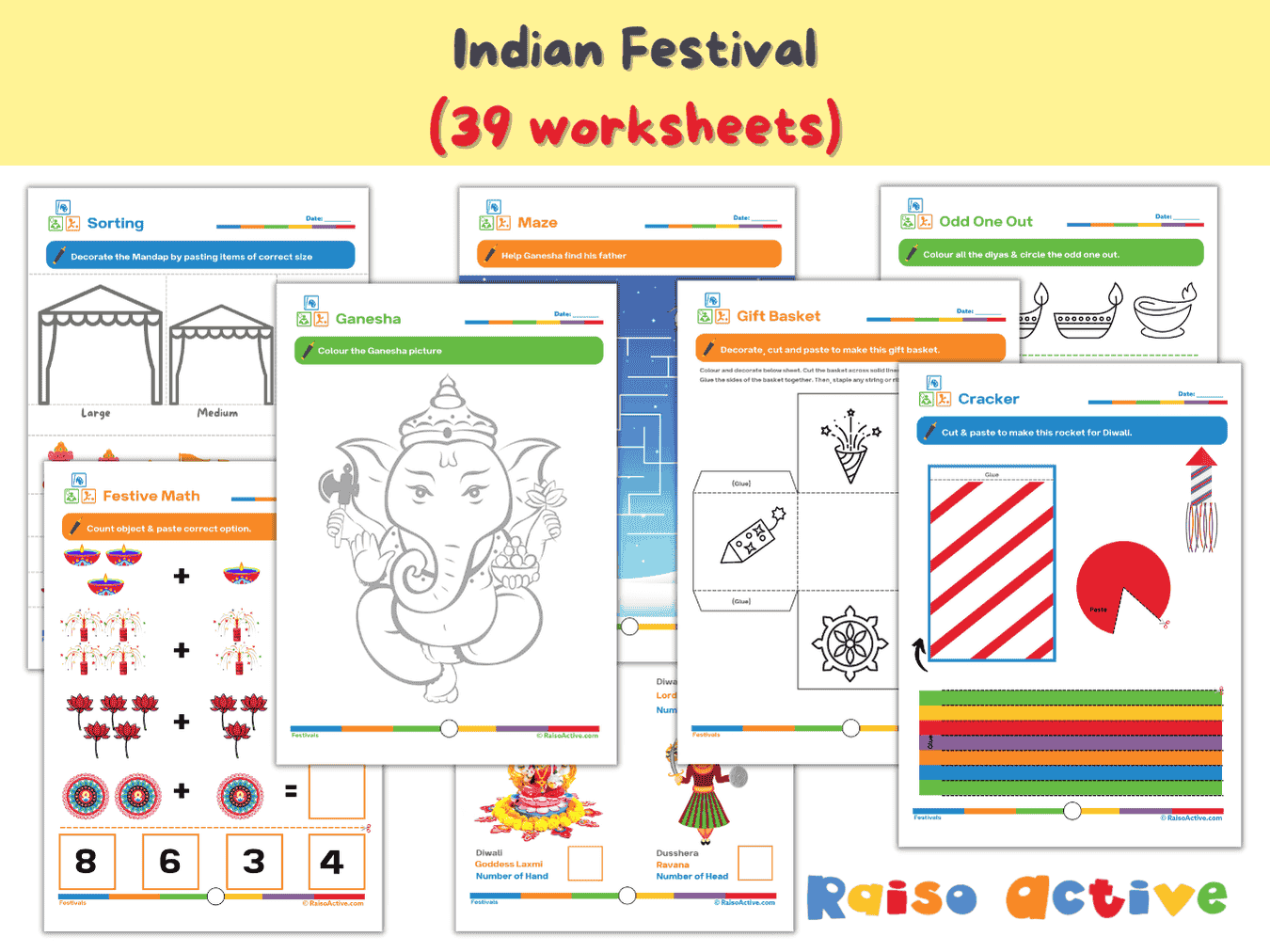
Festivals & Cultural Diversity Activity Book for Kids (Ages 4-8)
Ages 4-8 · Pre-K–Grade 2Ages 4-8 · Reception–Year 3Ages 4-8 · LKG–Class 2Ages 4-8 · 30 pages
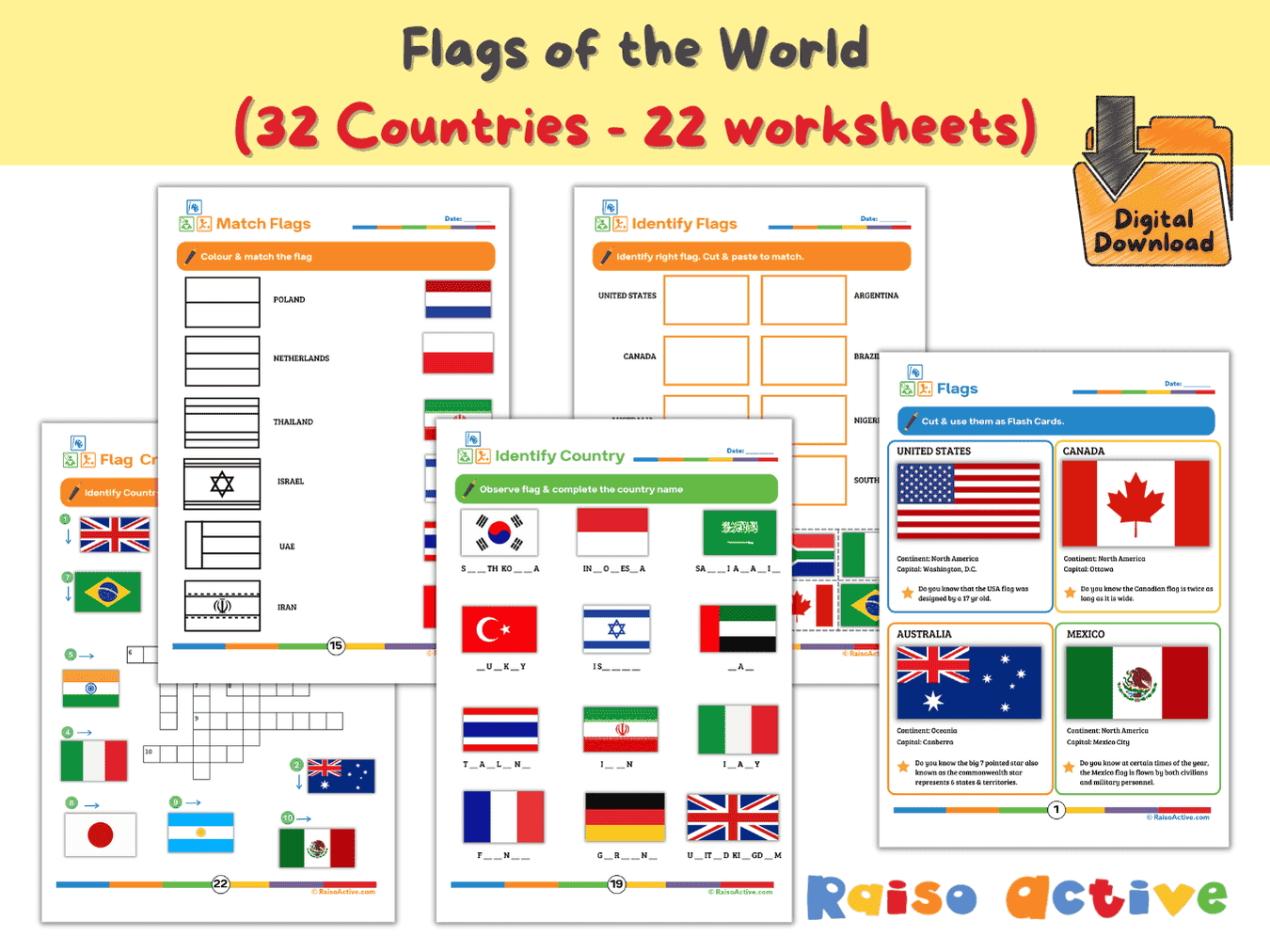
Flags of the World Activity Book & Flashcards for Kids (Ages 5-9)
Ages 5-8 · Kindergarten–Grade 2Ages 5-8 · Year 1–Year 3Ages 5-8 · UKG–Class 2Ages 5-8 · 23 pages