All feelings are okay
Feelings & Emotions Worksheets (Ages 4–10)
Name it, find it in your body, and choose a calm way forward.
Hi, I am Tia! Tap a face and I will show you how it feels.
Breathe with me
Watch the balloon. In for 4, out for 4, five times.
Printable activity packs
Big Feelings activity packs
Two full packs, one for each age group: Big Feelings Fun Time for ages 4 to 6 (Little Stars) and Big Feelings Calm Quest for ages 7 to 10 (Big Explorers). Each comes in colour and black-and-white editions.
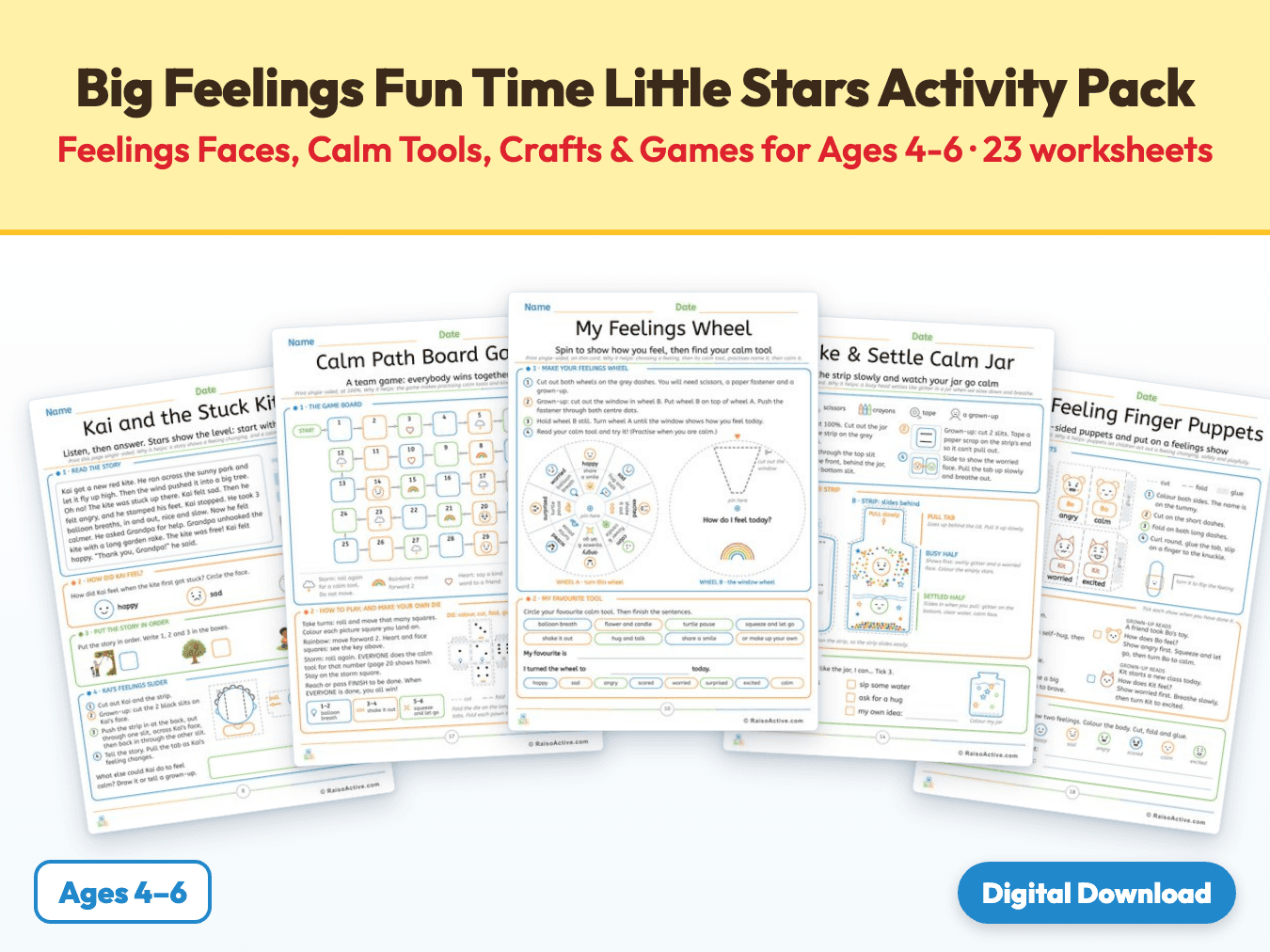
Big Feelings Fun Time Little Stars Activity Pack: Feelings Faces, Calm Tools, Crafts & Games for Ages 4-6
Ages 4-6 · Pre-K–KindergartenAges 4-6 · Reception–Year 1Ages 4-6 · LKG–UKGAges 4-6 · 24 pages
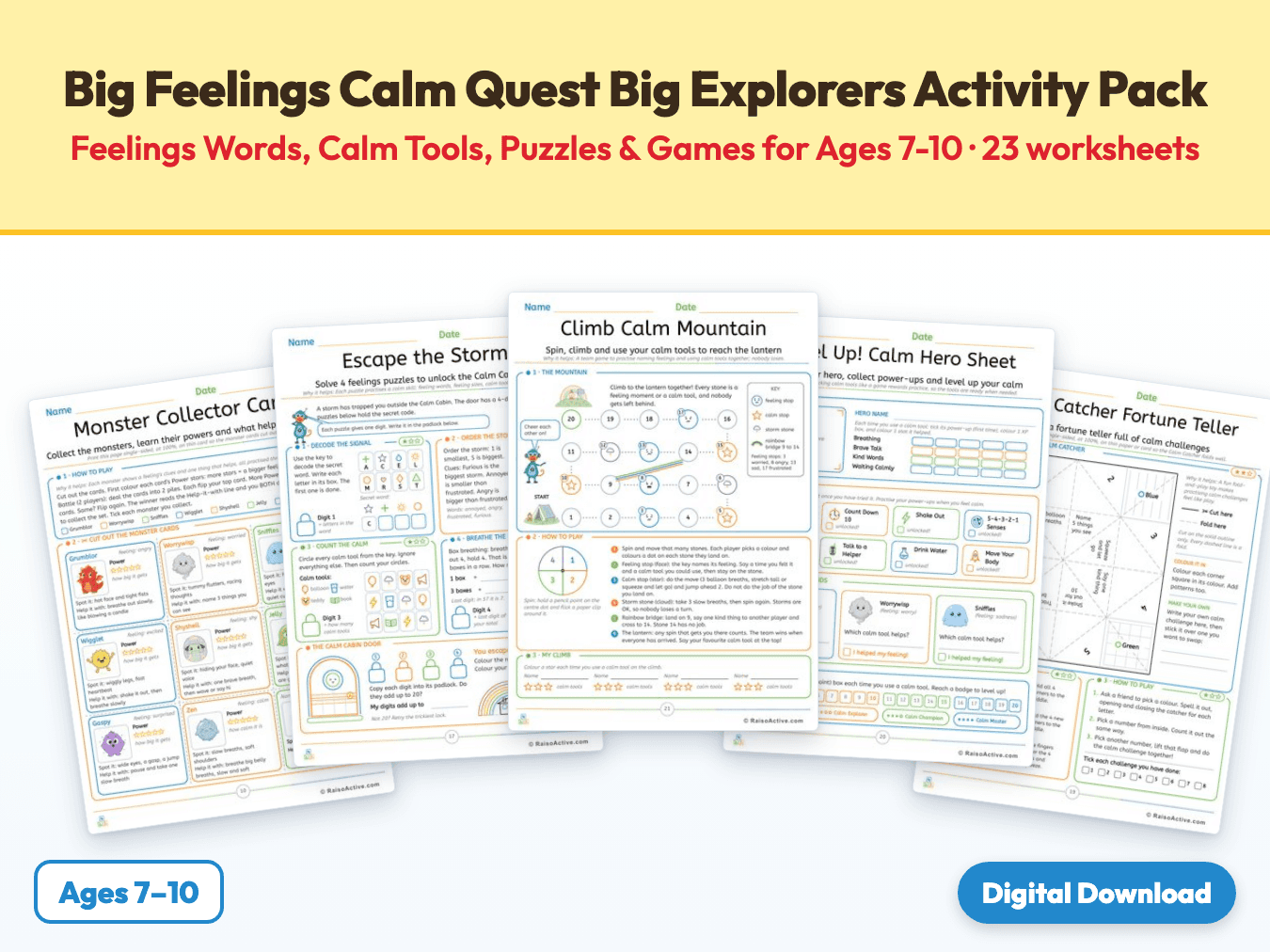
Big Feelings Calm Quest Big Explorers Activity Pack: Feelings Words, Calm Tools, Puzzles & Games for Ages 7-10
Ages 7-10 · Grade 2–Grade 3Ages 7-10 · Year 3–Year 4Ages 7-10 · Class 2–Class 3Ages 7-10 · 24 pages
Inside the packs
Two Big Feelings packs, 24 pages each
One pack for each age group, each in a colour edition and a black-and-white colour-in edition, with a certificate and an answer key for grown-ups.
Big Feelings Fun Time
Little Stars · ages 4 to 6Faces, flaps, a story, puppets and breathing buddies: young children name their feelings, find them in their bodies and choose a calm-down tool, with a grown-up beside them.
All 23 pages by name
- Meet My Feelings
- Feelings Faces
- How Do They Feel?
- Feelings Detective
- Peek-a-Boo Feelings Flaps
- Where Do I Feel It?
- Kai and the Stuck Kite (story)
- Mix-a-Face Flip Book
- My Calm Toolbox
- Breathe With Me
- Pinwheel Breathing Buddy
- Calm Maze & Seek
- Shake & Settle Calm Jar
- Big Feeling Calm Choice
- Feelings Puzzles
- Calm Quest Board Game
- Flip-a-Feeling Finger Puppets
- Feelings Bingo
- My Pocket Calm Book
- Kind Friends
- My Feelings Garden
- Certificate
- Answer key
Big Feelings Calm Quest
Big Explorers · ages 7 to 10A quest through the feelings brain: word wheels, body clues, triggers, collector cards, a calm-down lab and problem-solving, ending with a calm plan and a Calm Hero sheet.
All 23 pages by name
- Feelings Word Wheel
- Name That Feeling
- How Big Is It?
- Mixed Feelings Lab
- Inside My Brain (guard dog & wise owl)
- Body Clues & Triggers
- The Worst Best Day (story)
- Feelings Detective Case Files
- Feelings Monsters Collector Cards
- Breathe Lab
- 5-4-3-2-1 Senses Hunt
- Thought Switch
- Problem Solvers
- Choose Your Path
- Say It Kindly
- Escape the Storm!
- Word Search & Secret Code
- Calm Catcher Fortune Teller
- Level Up! Calm Hero Sheet
- Comic & CALM Poem
- My Calm Plan & Weather Report
- Certificate
- Answer key
Feelings & Emotions Worksheets to print
Browse all worksheets for ages 4–10
Where Do I Feel It? Colour Body Clues for Big Feelings
Ages 4-6 · Pre-K–KindergartenAges 4-6 · Reception–Year 1Ages 4-6 · LKG–UKGAges 4-6
Children discover that feelings show up in our bodies: hot when angry, butterflies when worried, heavy when sad and bouncy when excited. There is no wrong answer.

Big Feelings Fun Time Certificate: Calm Star Award
Ages 4-6 · Pre-K–KindergartenAges 4-6 · Reception–Year 1Ages 4-6 · LKG–UKGAges 4-6
A certificate of achievement for children who named big feelings and tried calm tools in the Big Feelings Fun Time pack. Tick the three levels completed.
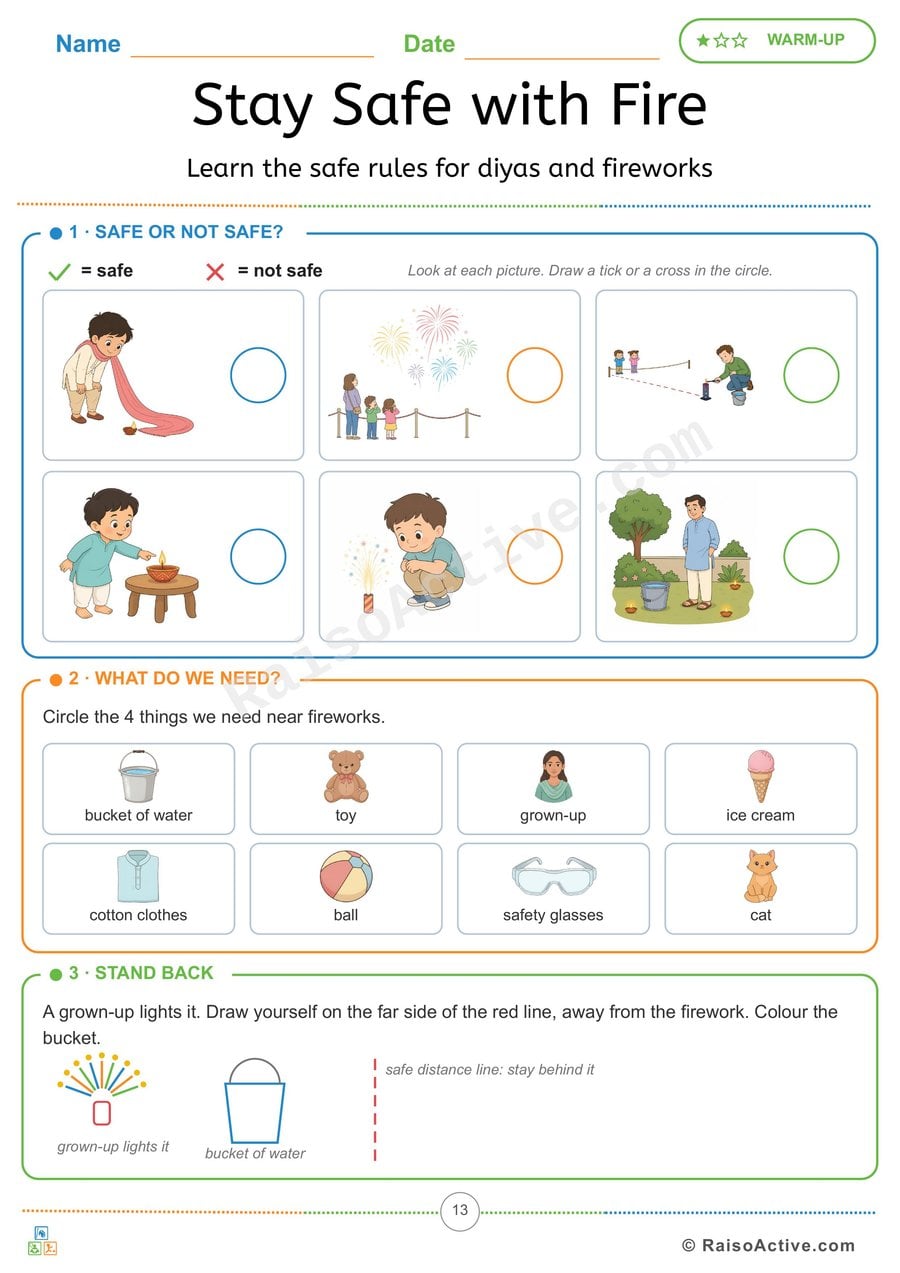
Diwali Fire Safety for Kids: Safe or Not Safe Worksheet
Ages 4-6 · Pre-K–KindergartenAges 4-6 · Reception–Year 1Ages 4-6 · LKG–UKGAges 4-6
Children look at six pictures and mark each as safe or not safe, circle the four things needed near fireworks, and show where to stand by drawing themselves behind the safe-distance line.

My Pocket Calm Book: A Mini Book of Six Calm Tools
Ages 4-6 · Pre-K–KindergartenAges 4-6 · Reception–Year 1Ages 4-6 · LKG–UKGAges 4-6
Children make a pocket-sized book with six calm tools: balloon breath, flower and candle, turtle pause, squeeze and let go, shake it out, and hug and talk. They tick 'I tried it!' as they practise.

Big Feelings Fun Time Answer Key for Grown-Ups
Ages 4-6 · Pre-K–KindergartenAges 4-6 · Reception–Year 1Ages 4-6 · LKG–UKGAges 4-6
A page-by-page answer key for the Big Feelings Fun Time pack, including the maze route, game board squares, story order and notes on pages where answers vary.

Big Feeling, Calm Choice: Stop, Breathe, Talk Worksheet
Ages 4-6 · Pre-K–KindergartenAges 4-6 · Reception–Year 1Ages 4-6 · LKG–UKGAges 4-6
Children hear three tricky moments (a swing, a lost game, leaving the park) and pick the calm choice. They learn a three-step routine, Stop, Breathe, Talk, and draw a place where they feel calm.

Kind Friends: Match Ways to Help a Friend with a Big Feeling
Ages 4-6 · Pre-K–KindergartenAges 4-6 · Reception–Year 1Ages 4-6 · LKG–UKGAges 4-6
Children think about how to help a friend who is sad, scared, angry or worried, colour kind hearts for things they did this week, and draw how they would help a new friend.

Calm Path Board Game with a Make-Your-Own Calm Die
Ages 4-6 · Pre-K–KindergartenAges 4-6 · Reception–Year 1Ages 4-6 · LKG–UKGAges 4-6
Children play a cooperative game with feeling squares, storm squares, rainbow squares and kind hearts. They practise naming feelings, using calm tools such as balloon breaths and squeezing and letting go, and saying kind words.

Thought Switch: Turn Unhelpful Thoughts into Helpful Thoughts
Ages 7-10 · Grade 2–Grade 3Ages 7-10 · Year 3–Year 4Ages 7-10 · Class 2–Class 3Ages 7-10
Children compare unhelpful and helpful thoughts (such as 'I can't do it yet, I'll keep trying'), match each unhelpful thought to a helpful one and write their own switches.

Big Feelings Calm Quest Certificate: Calm Quest Champion
Ages 7-10 · Grade 2–Grade 3Ages 7-10 · Year 3–Year 4Ages 7-10 · Class 2–Class 3Ages 7-10
A certificate of achievement for children who explored big feelings and completed the Big Feelings Calm Quest pack. Tick the three levels completed.

Escape the Storm! A Feelings Escape Room Puzzle Worksheet
Ages 7-10 · Grade 2–Grade 3Ages 7-10 · Year 3–Year 4Ages 7-10 · Class 2–Class 3Ages 7-10
Children solve four mini puzzles (a picture code, ordering by size, counting calm tools and box breathing arithmetic) to get four digits, then check that the digits add up to 20.

The Worst Best Day: A Feelings Reading Comprehension Story with Questions
Ages 7-10 · Grade 2–Grade 3Ages 7-10 · Year 3–Year 4Ages 7-10 · Class 2–Class 3Ages 7-10
Children read a story about Zara's rainy trip, lost lunch and a kind friend. Questions at three levels (tick, short answer, explain it) build inference and feelings vocabulary: grumpy, worried, grateful, amazed.

Calm Catcher Fortune Teller: Fold a Paper Fortune Teller of Calm Challenges
Ages 7-10 · Grade 2–Grade 3Ages 7-10 · Year 3–Year 4Ages 7-10 · Class 2–Class 3Ages 7-10
Children cut and fold a fortune teller (cootie catcher) whose eight flaps hold calm challenges: balloon breaths, name five things you see, stretch tall, squeeze and let go, say one kind thing and more.

Big Feelings Calm Quest Answer Key for Grown-Ups
Ages 7-10 · Grade 2–Grade 3Ages 7-10 · Year 3–Year 4Ages 7-10 · Class 2–Class 3Ages 7-10
A page-by-page answer key for the Big Feelings Calm Quest pack, including the logic puzzle, escape room digits, word search positions and the calm code, with notes on open pages.

Climb Calm Mountain: A Team Board Game with a Paper-Clip Spinner
Ages 7-10 · Grade 2–Grade 3Ages 7-10 · Year 3–Year 4Ages 7-10 · Class 2–Class 3Ages 7-10
Children play a cooperative game up a 20-stone mountain. Feeling stops, calm stops, storm stones and a rainbow bridge practise naming feelings, using calm tools and saying kind words. Everyone wins by arriving at the lantern.
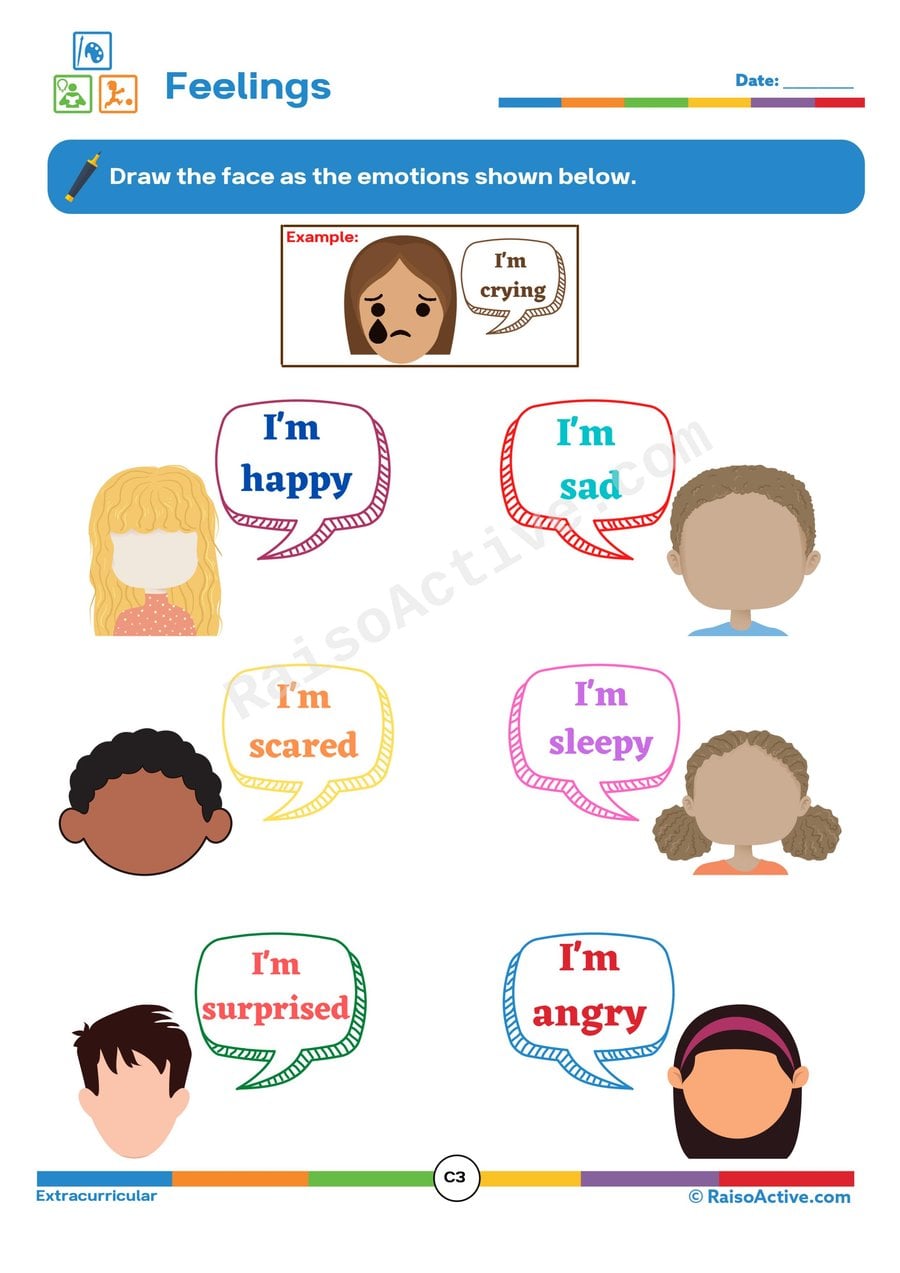
Feelings Worksheet: Draw the Faces!
Ages 3-5 · Preschool–Pre-KAges 3-5 · Nursery–ReceptionAges 3-5 · Nursery–LKGAges 3-5
This worksheet builds emotional literacy by having children draw a face expressing a specific feeling named in a word bubble, such as happy, sad, angry, or surprised. For three- to five-year-olds, practicing how to represent an emotion visually helps them build the vocabulary and self-awareness needed to name and talk about their own feelings, a key early social-emotional skill.
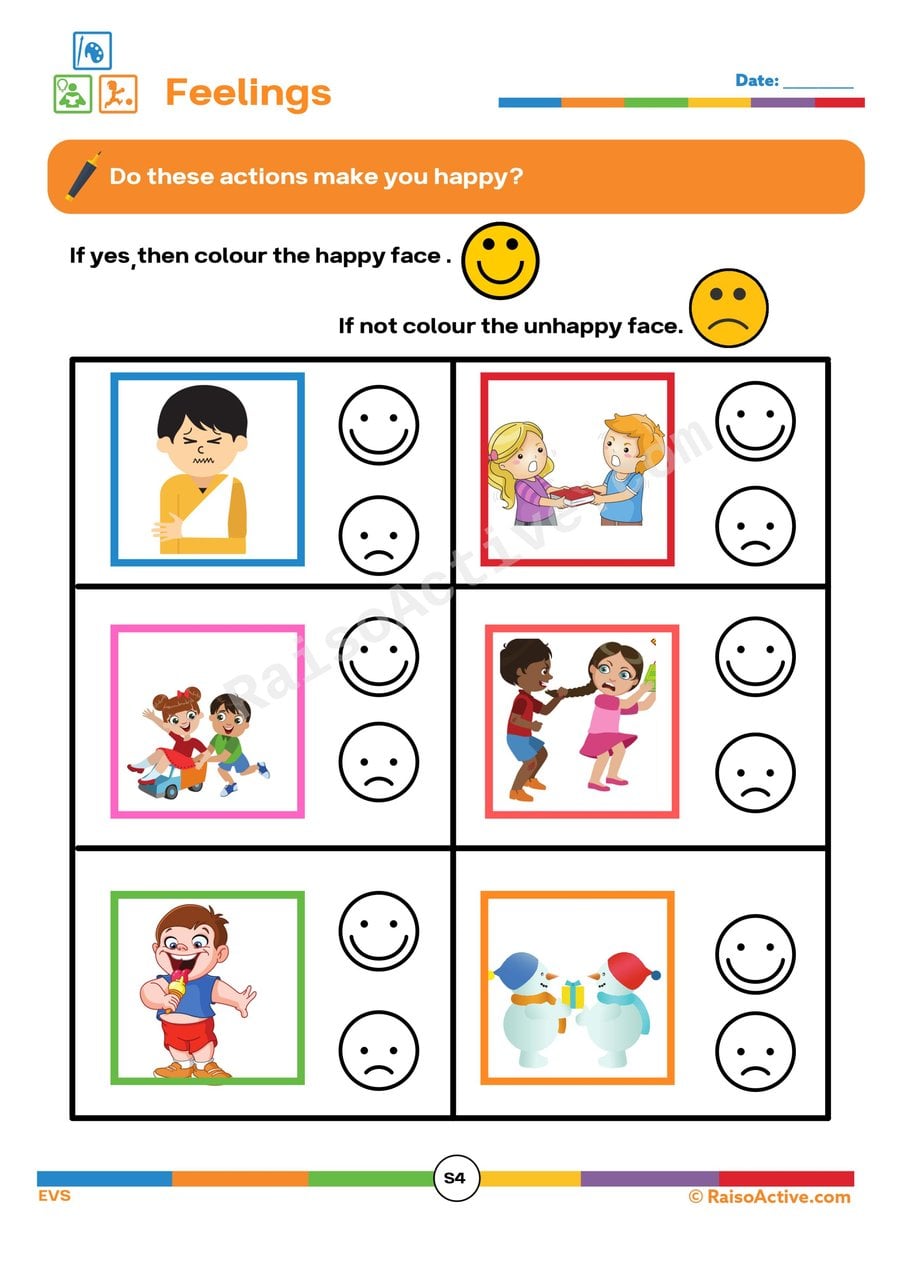
Feelings Worksheet: Happy or Sad?
Ages 3-5 · Preschool–Pre-KAges 3-5 · Nursery–ReceptionAges 3-5 · Nursery–LKGAges 3-5
Looking closely at faces and deciding whether they show happy or sad builds emotional literacy, the ability to read facial cues and put a name to a feeling, in children ages 3-5. This is an early and important social-emotional milestone, since recognizing emotions in others is a first step toward empathy and toward naming their own feelings instead of just acting them out.
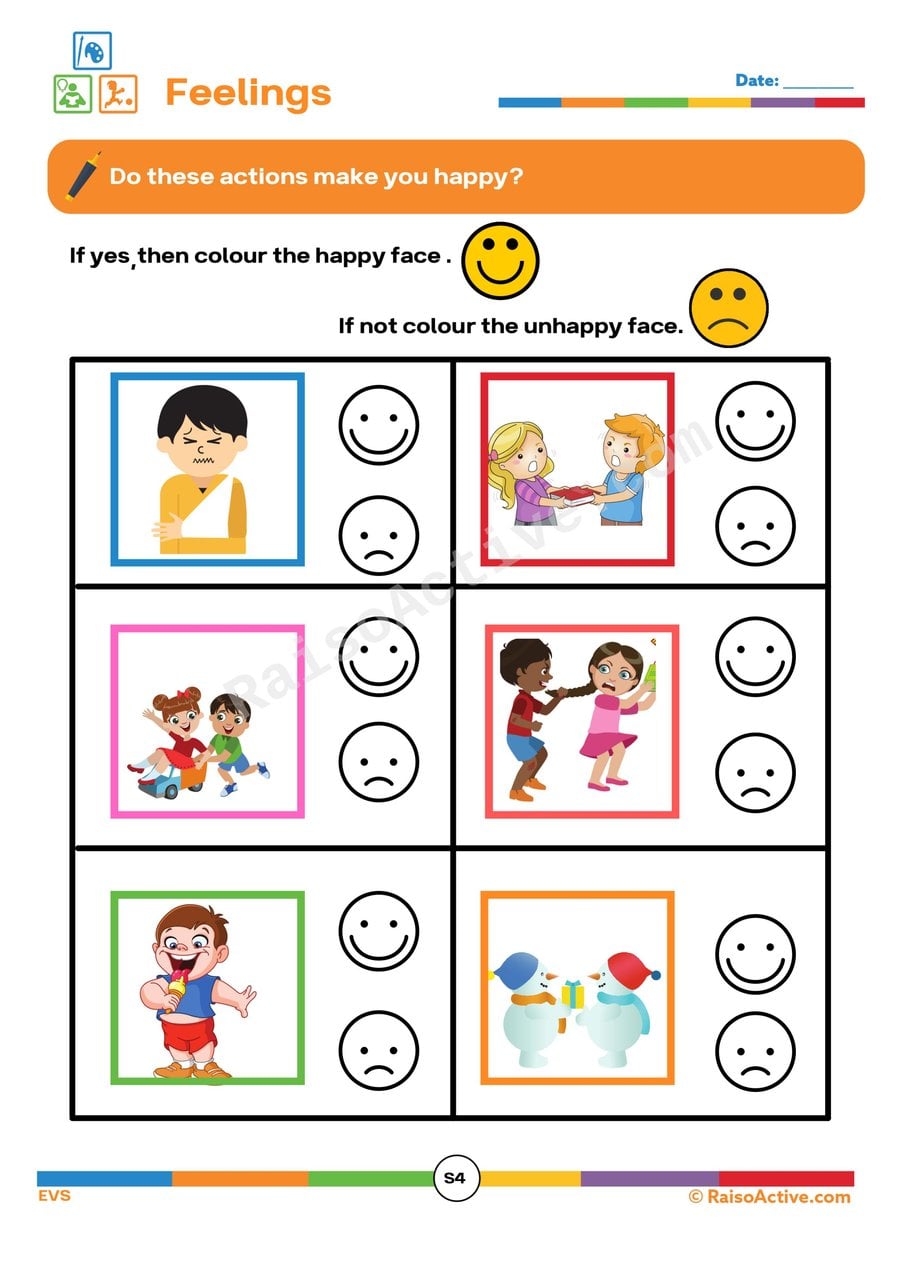
Feelings Worksheet: Happy or Sad?
Ages 3-5 · Preschool–Pre-KAges 3-5 · Nursery–ReceptionAges 3-5 · Nursery–LKGAges 3-5
Children ages 3-5 build emotional vocabulary and self-awareness as they decide whether different everyday situations would make them feel happy or sad. Naming and sorting emotions based on a scenario is an early social-emotional skill that helps children recognize and eventually talk about their own feelings more clearly.
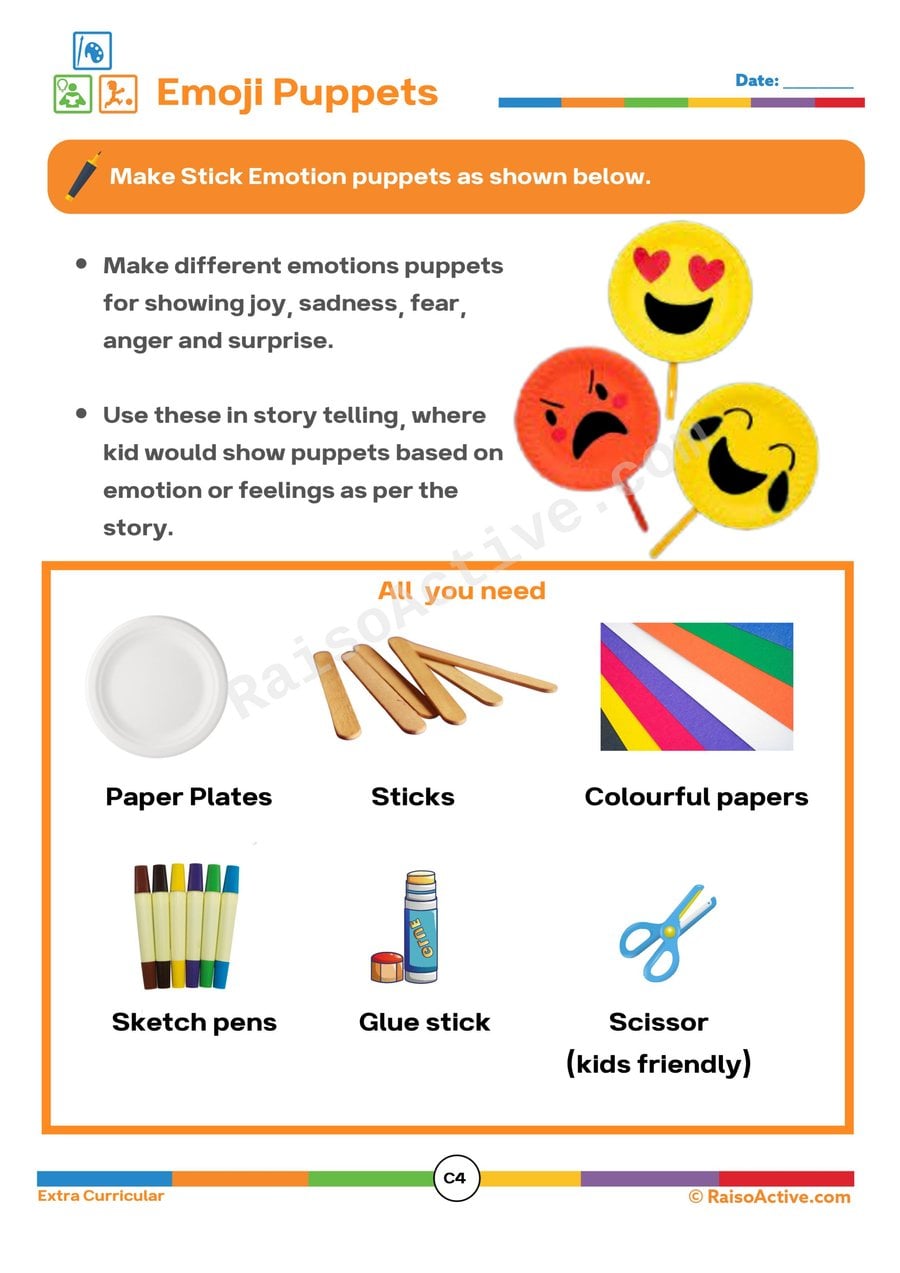
Emoji Puppets Craft Worksheet for Kids
Ages 3-5 · Preschool–Pre-KAges 3-5 · Nursery–ReceptionAges 3-5 · Nursery–LKGAges 3-5
This craft worksheet helps children ages 3-5 create emoji puppets representing different emotions, building emotional vocabulary and fine motor scissor skills at the same time as creative storytelling. Making a physical puppet for each feeling gives children a tangible way to talk about emotions that can feel abstract when discussed with words alone.
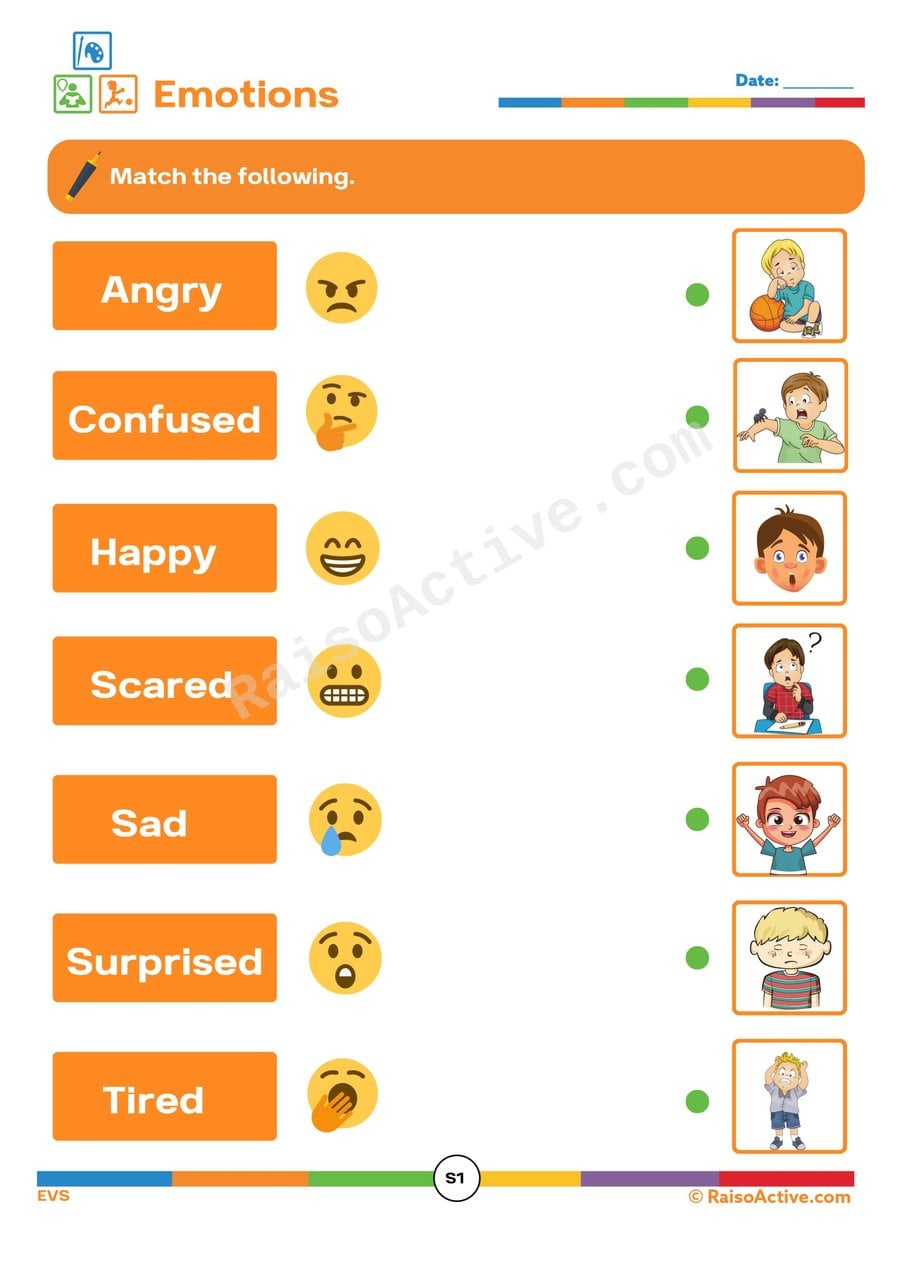
Emotions Matching Worksheet for Preschoolers
Ages 3-5 · Preschool–Pre-KAges 3-5 · Nursery–ReceptionAges 3-5 · Nursery–LKGAges 3-5
Recognizing and naming emotions is a foundational social-emotional skill for children ages 3-5, helping them build the vocabulary needed to express their own feelings and understand the feelings of others. This worksheet asks children to match emotion words to corresponding facial expressions, strengthening their ability to read facial cues — a skill that supports empathy and smoother social interactions. Building this kind of emotional vocabulary early also gives children better tools for self-regulation, since naming a feeling is often the first step toward managing it.
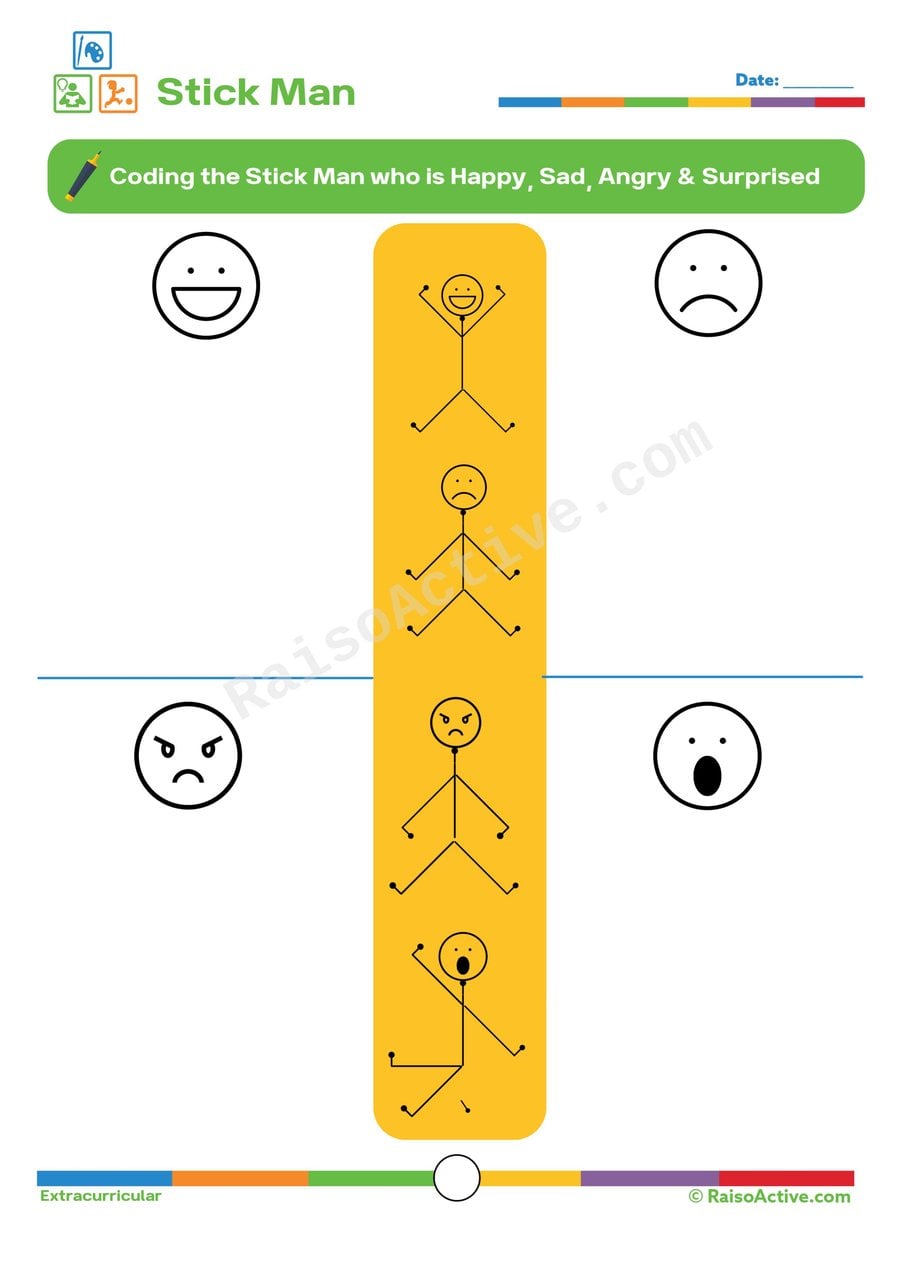
Stick Man Emotions Worksheet: Happy, Sad, Angry & Surprised!
Ages 3-5 · Preschool–Pre-KAges 3-5 · Nursery–ReceptionAges 3-5 · Nursery–LKGAges 3-5
Matching simple stick-figure faces to emotion words helps children ages 3-5 build an early emotional vocabulary, connecting facial cues like a curved mouth or raised eyebrows to specific feeling words. This kind of emotion recognition is a foundational social-emotional skill, helping children name what they and others are feeling instead of just reacting.

Emotions Worksheet: Match the Emoji to the Feeling!
Ages 3-5 · Preschool–Pre-KAges 3-5 · Nursery–ReceptionAges 3-5 · Nursery–LKGAges 3-5
This worksheet helps children ages 3-5 identify and understand different emotions by comparing a child's facial expression in a picture to a set of emoji faces and choosing the one that matches. Learning to read facial cues and name feelings is a foundational social-emotional skill that helps children both recognize their own emotions and empathize with others.

Use Please: A Fun Worksheet to Practice Polite Language!
Ages 3-5 · Preschool–Pre-KAges 3-5 · Nursery–ReceptionAges 3-5 · Nursery–LKGAges 3-5
This worksheet teaches children the specific social skill of using the word 'please' when making requests, connecting polite language to real, relatable everyday scenarios shown in pictures. For ages 3-5, learning concrete phrases for politeness supports both social-emotional development and early reading, since children practice recognizing and repeating a functional sight word in context.
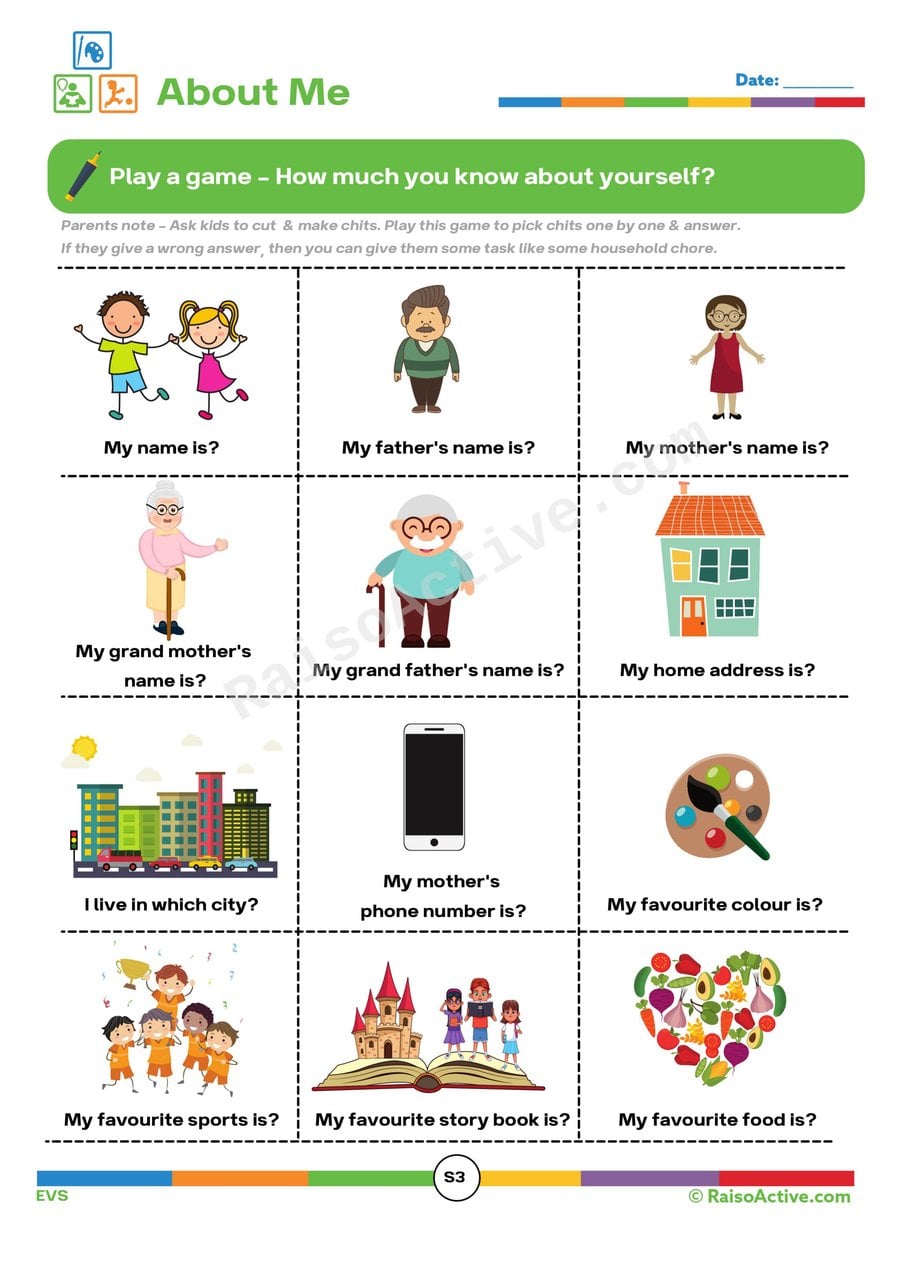
About Me Worksheet: Learn About Yourself!
Ages 3-5 · Preschool–Pre-KAges 3-5 · Nursery–ReceptionAges 3-5 · Nursery–LKGAges 3-5
This 'About Me' worksheet helps children ages 3-5 build self-awareness and early identity vocabulary by prompting them to describe their name, family, favorites, and feelings. Putting personal facts into words or pictures strengthens expressive language and gives children practice sharing information about themselves in a structured way. It's also a gentle first step into autobiographical writing, well before children can spell full sentences.
Try it at home
Calm-down tools to try at home
Practise these together when everyone is calm, so the tools feel familiar on a hard day.
Balloon breathing · 1 minute
Put your hands on your tummy. Breathe in through your nose as your belly grows like a balloon, then breathe out slowly as it shrinks. Count to four each way.
5-4-3-2-1 senses · 2 minutes
Look around and find five things you can see, four you can touch, three you can hear, two you can smell and one you can taste. Whisper them out loud.
A calm corner · Any time
Choose a soft, quiet spot with a cushion, a book and a favourite soft toy. It is a place to rest and reset, never a punishment, and a grown-up can sit with you.
Squeeze and release · 1 minute
Squeeze your hands into tight fists, hold for three, then let go and feel them go floppy like noodles. Try it with your shoulders and toes too.
If big feelings last a long time or get in the way of everyday life, it is worth talking to your child's doctor or teacher.
About Feelings & Emotions Worksheets
Feelings and emotions worksheets are printable activities for children aged 4 to 10 that help them name how they feel, notice where they feel it in their body, and practise calm-down tools such as slow breathing. They use faces, stories, puzzles and games, and build emotional vocabulary, self-awareness, kindness and problem-solving.
Young children feel everything at full volume, and finding the words for it is a skill that takes practice. These worksheets give that practice a friendly shape. A four-year-old matches faces to feelings, points to where a worry sits in the tummy and breathes with a pinwheel, while a ten-year-old tracks a trigger, learns what the guard dog and the wise owl in the brain do, and writes a calm plan for a hard day. There are two activity packs, Big Feelings Fun Time for ages 4 to 6 and Big Feelings Calm Quest for ages 7 to 10, each in colour and black-and-white colour-in editions, alongside single worksheets for feelings, kindness and friendship.
What children learn from feelings worksheets
Children aged 4 to 6 learn to name the main feelings, read them on faces, and say where they feel them in the body, with a grown-up to talk it over. Children aged 7 to 10 go further: they grade how big a feeling is, spot mixed feelings, notice what sets a feeling off and practise different ways to respond.
- Naming feelings, from happy, sad, angry and scared to proud, disappointed and jealous
- Body clues: where a feeling shows up, such as hot cheeks, a tight tummy or a fast heartbeat
- Calm-down tools: slow breathing, the senses, squeezing and letting go, and a calm corner
- Kindness: noticing how a friend feels and saying something kind
- Problem-solving: pausing, choosing what to do next and saying it kindly
For grown-ups: talking about big feelings
All feelings are okay, including the loud and uncomfortable ones. What children do when they feel them is a choice, and that choice can be practised. Naming the feeling together is often the first step: you look cross, are you feeling angry? Stay close, keep your voice slow and soft, and leave the lesson for later, when everyone is calm.
- Say what you see, without judging: you are stamping and your face is hot
- Offer a tool rather than an order: shall we blow up the balloon together?
- Practise the tools when your child is calm, so they are familiar on a hard day
- Show your own calm-down out loud: I am cross, so I am taking three slow breaths
How to use the packs
Each pack is built for short, friendly sessions: one or two pages at a time, about ten minutes. Read the story together, play the games as a family, and save the board game, bingo and finger puppets for a rainy afternoon. Both packs end with a certificate and an answer key page for grown-ups, and the black-and-white colour-in editions use less ink.
- Print on A4 or Letter, and use the Warm-up pages first
- Little Stars (4–6): sit beside your child and read the pages aloud
- Big Explorers (7–10): let your child lead, then talk about what they found
- If a page brings up a worry, stop and talk it through; there is no need to finish it
Frequently asked questions
What are feelings and emotions worksheets for kids?
They are printable activities that help children name their feelings, notice them in their bodies and choose calm ways to respond. Younger children match faces, follow a story and breathe with a pinwheel. Older children explore triggers, mixed feelings and problem-solving. They sit alongside the everyday talking, listening and cuddling that really help children with big feelings.
What age are the Big Feelings packs for?
Big Feelings Fun Time (Little Stars) is for ages 4 to 6, with a grown-up beside the child. It uses faces, flaps, a story, puppets and breathing games. Big Feelings Calm Quest (Big Explorers) is for ages 7 to 10 and is more independent, with word wheels, a calm-down lab, comics and problem-solving. Each has 24 pages and comes in colour and black-and-white.
Is it okay for my child to feel angry or sad?
Yes. All feelings are okay, including anger, sadness and fear: they are signals, not mistakes. What a child does when they feel something is a choice, and children can learn better choices with practice. The worksheets never call a feeling bad. They help children notice the feeling, name it and pick a calm next step.
Are the feelings packs in black and white as well as colour?
Yes. Each Big Feelings pack has a colour edition and a black-and-white colour-in edition with line-art pictures that children colour themselves. The black-and-white edition uses much less printer ink, and every activity works in either one. Both editions include a certificate and an answer key page for grown-ups.
What calm-down tools can we try at home?
Four simple ones are balloon breathing, the 5-4-3-2-1 senses game, a calm corner with soft things to rest with, and squeeze and release for hands and shoulders. Try them together when everyone is calm, so they feel familiar. The stage at the top of this page has a breathing balloon your child can follow, breathing in for four and out for four.
When should I talk to a doctor or teacher about my child’s feelings?
Big feelings are a normal part of growing up. If worries, sadness or angry outbursts last a long time, happen very often or get in the way of sleeping, eating, friendships or school, it is worth talking to your child’s doctor or teacher. These worksheets are for learning and play, and they do not replace that support.

Written by
Hemsweta Jain · Teacher Cheena
MBA and Early Childhood Educator, teaching since 2014 · Founder of RaisoActive, Mumbai
Written and reviewed by Hemsweta Jain (Teacher Cheena), who designs every RaisoActive worksheet.
Last reviewed
Guides for parents and teachers
See all guides
Resources for Children with Multiple Disabilities: A Comprehensive Guide for Families
Discover essential resources for children with multiple disabilities. Therapies, inclusive learning, assistive technology, and printable activities for ages 1-8.
Understanding Standardized Testing in Early Childhood: A Parent's Guide to Assessment Balance
Learn how standardised tests work in early childhood, when they help, when they harm, and how to balance formal assessment with observation-based learning.
Addressing Mental Health with Young Children: A Compassionate Guide for Families
Learn how to support your young child's mental health with compassionate strategies. Recognise signs, build emotional resilience, and know when to seek professional help.
Social-Emotional Learning Activities for Preschoolers: Nurturing Hearts and Minds
Discover practical social-emotional learning activities for preschoolers. Build emotional intelligence, empathy, and cooperation skills with fun, age-appropriate SEL activities.
Building Bridges: How to Connect with Other Parents Facing Similar Challenges
Discover practical ways to connect with other parents facing similar challenges. From WhatsApp groups to school communities, build your support network today.
Motivating the Reluctant Learner: Strategies to Rekindle Your Child's Love of Learning
Is your child refusing to learn or losing interest? Discover why reluctant learners disengage and proven strategies to rekindle their love of learning at home.