When Your Child Is Ahead or Behind Their Peers: Navigating Academic Differences with Confidence
Author
RaisoActive - Kids Activities and Fun Learning
Published
Updated
Reading Time
18 min read

- A two-year developmental spread is entirely normal — children of the same age can legitimately be at very different academic stages
- Signs your child may be gifted, and how to challenge them meaningfully without causing anxiety or burnout
- When a child who is behind is simply developing at their own pace versus when a formal evaluation is worth pursuing
- How to talk to your child's teacher about academic differences — and what to actually say
- Building strong self-esteem in children regardless of where they fall on the academic spectrum
The Comparison Trap Every Parent Falls Into
It usually starts innocently. A casual conversation at a birthday party, a WhatsApp message in the class group, or a well-meaning question from a relative at Diwali: "Arey, Riya is already reading full sentences — what about your Aarav?" In that moment, every parent's stomach does a small, familiar drop.
Comparing children is practically a national sport in India. From the neighbour's child who knows all their tables at age four to the cousin who was reading before kindergarten, Indian parents are surrounded by benchmarks — real, exaggerated, and imagined. And yet, the child sitting across from you at the dinner table is not a benchmark. They are a person, developing on their own unique timeline.
Here is what child development science tells us clearly: among children of the same chronological age, a spread of up to two full years in academic readiness is completely within the range of typical development. That means a group of five-year-olds in the same classroom can legitimately include children who are developmentally more like three-year-olds and children who are developmentally more like seven-year-olds — and all of them can be perfectly healthy. This article will help you understand where your child sits, what it means, and what to do about it with clarity and calm.
Get practical parenting tips in your inbox
Free worksheets, expert guidance, and activity ideas for children ages 1–8. Join thousands of Indian parents learning with RaisoActive.
Understanding the Wide Range of Normal Development
One of the most reassuring things a parent can learn is that developmental timelines are wide, not narrow. When we say a child "should" be able to read by age six, that is not a cliff edge — it is the centre of a very broad bell curve. Some children are ready at four and a half. Others are not fully ready until seven. Both can go on to become strong, confident readers.
This two-year spread is especially pronounced in early childhood — roughly ages three to eight — because the brain is developing at an extraordinary rate during these years and children's experiences, temperaments, home environments, and neurological wiring all influence how quickly different skills emerge. A child who seemed "behind" at age five in letter recognition may surge ahead by age seven once their brain is developmentally ready. The child who "blazed ahead" at four may settle into an average pace by second standard as peers catch up.
This is not an excuse to ignore genuine concerns. It is context that prevents unnecessary panic. If your three-year-old is not writing yet, that is not a red flag — it is a developmental reality. If your seven-year-old still cannot reliably write their own name despite consistent practice and exposure, that is worth investigating. The key is knowing what is genuinely typical for a given age, rather than using a neighbour's precocious child as the reference point.
When Your Child Is Ahead: Understanding Gifted and Advanced Learners
If your child taught themselves to read at three, asks questions that stump you at five, or seems bored and restless in a classroom that cannot keep pace with them, you may be parenting a gifted learner. And while this sounds like an entirely good problem to have, parents of advanced children will tell you it comes with its own challenges — ones that are often invisible because "doing well" looks fine from the outside.
Signs that your child may be advanced or gifted include: early achievement of milestones (reading, counting, complex language) well ahead of peers; an unusually high level of curiosity and sustained interest in specific topics; the ability to think abstractly earlier than expected (understanding concepts like fairness, cause and effect, or time earlier than age norms suggest); a strong memory; heightened sensitivity — emotional and sensory; perfectionism or frustration when things do not go as planned; and a preference for older children or adults over same-age peers.
In school, gifted children who are not adequately challenged can develop what looks like behavioural problems — they may become disruptive, withdrawn, or mysteriously reluctant to attend school. This is often because boredom is genuinely uncomfortable for a mind that needs stimulation. The child is not misbehaving; they are a high-performance engine being asked to idle all day.
How do you challenge a gifted child without causing burnout? The answer is depth, not speed. Rather than racing ahead to the next grade's content, explore the current topic more deeply. If your five-year-old is interested in animals, do not just move to harder books — explore animal habitats, design a pretend zoo, read about animal conservation. Enrichment through passion and project-based exploration tends to nurture gifted children far more sustainably than academic acceleration for its own sake.
When Your Child Is Behind: Developmental Variation vs Learning Difficulty
This is where the emotional weight is often heaviest for parents. Noticing that your child is struggling — watching them work hard at something their classmates seem to do effortlessly — is genuinely painful. And the uncertainty makes it worse: Is this just a late bloomer situation? Should I be worried? Am I doing enough?
Developmental variation is when a child is taking longer to acquire a skill but is progressing — slowly but consistently — with appropriate support. There are no other concerning signs. The child is happy, communicating, playing, and making some forward movement, just at a different pace. Many children who are late readers, for instance, simply need their brains to mature a little longer before the reading circuitry clicks into place. With patient, low-pressure exposure and practice, they catch up.
A learning difficulty is different. Signs that warrant a professional evaluation include: a significant, persistent gap between effort and outcome (the child is trying hard but making very little progress); difficulty in multiple areas rather than just one; signs of anxiety, avoidance, or distress specifically around learning tasks; reversal of letters or numbers that persists well past age seven; difficulty following spoken instructions even when they seem to understand individual words; or a marked difference between what the child can say verbally and what they can express in writing or reading.
Common learning difficulties that are frequently identified in this age range include dyslexia (difficulty with reading and decoding), dysgraphia (difficulty with writing), dyscalculia (difficulty with numbers and maths concepts), and attention difficulties (ADHD). It is important to understand that these are not indicators of low intelligence. Many highly intelligent children have learning differences. An early identification and the right support can make an enormous difference to a child's trajectory — and to their relationship with learning itself.
A learning difficulty is not the same as low ability. Identifying it early is an act of love — it gives your child the right support at the age when the brain is most responsive to intervention.
If you have genuine concerns, request a referral to a developmental paediatrician or educational psychologist. In India, these assessments are available at major hospitals, private clinics, and some NGO-run resource centres. The waiting list can be long — start early.
The Neighbour's Child Syndrome: Breaking India's Comparison Culture
"Sharma ji ka beta" is not just a joke — it is a cultural reflex that runs deep in Indian families. The tendency to measure children against each other, to treat academic achievement as a family's social currency, and to use comparison as a motivational tool is genuinely embedded in many households. And while it often comes from love and aspiration, it causes measurable harm to children's self-esteem and intrinsic motivation.
Research consistently shows that children who are measured against peers rather than their own personal progress develop what psychologists call a fixed mindset — they come to believe that ability is a fixed trait, not something that grows with effort. Fixed-mindset children avoid challenges (because failing would prove they are "not smart"), give up more easily, and feel threatened by others' success. The comparison culture we well-meaningly maintain is, in many cases, actively undermining the very achievement we want to encourage.
If you have relatives who compare children at family gatherings, you cannot always control what they say — but you can control what happens in your own home. Make your home a comparison-free zone. Instead of "Riya already knows her tables, why don't you?" try "I noticed you worked really hard on that pattern today — I saw you try three times before you got it. That is real learning." Celebrate effort, persistence, and personal growth. These are the habits of mind that actually predict long-term success.
Comparison does not motivate children — it demoralises them. The most powerful thing you can do is measure your child only against their own past self, and make that visible to them.
Communicating with Teachers and Supporting Your Child at Home
Whether your child is ahead or behind, the most productive step you can take is opening a genuine, collaborative conversation with their teacher. Teachers observe your child in a structured environment for several hours each day — they have information you do not, and you have information they do not. Together, you have a much fuller picture.
If your child is advanced, share this with the teacher and ask how the classroom can offer enrichment. A good teacher will not be threatened by this conversation — they will appreciate knowing that a child needs more challenge. Ask whether your child can work on extension tasks, take on a helper role in a meaningful way, or explore topics in greater depth through projects. Many schools, particularly in larger cities, have gifted education programmes or resource teachers who can help design an enriched experience.
If your child is behind, approach the teacher with curiosity rather than alarm. Describe what you observe at home: "Priya works very hard at her reading but gets very upset when she cannot decode a word. Have you noticed similar patterns in class?" This opens a collaborative conversation rather than putting the teacher on the defensive. Ask for specific strategies you can use at home to mirror what the teacher is doing in class — consistency between home and school makes a significant difference.
At home, the most important thing you can do for a child who is behind is to protect their love of learning. This means keeping practice sessions short and positive, stopping before frustration peaks, choosing materials that are slightly within reach rather than frustratingly far ahead, and reading aloud together even when independent reading is difficult. A child who still loves books at eight — even if they cannot yet read them alone — is in a far better position than a child who has learned to hate reading.
For children who are ahead: go deeper, not just faster. For children who are behind: protect the love of learning above all else. In both cases, your relationship with your child matters more than any specific academic outcome.
- Follow your child's interests rather than pushing academic content — deep dives into topics they love build the same cognitive skills as formal academic work, with far more joy.
- Choose open-ended activities over rote tasks: puzzles, building projects, creative writing, experiments, and strategy games challenge advanced minds sustainably.
- Resist the urge to enrol in every enrichment class simultaneously — gifted children need downtime and unstructured play as much as any child.
- Connect them with books, documentaries, and materials beyond their grade level — reading challenging content independently, at their own pace, is one of the best enrichment tools available.
- Watch for signs of perfectionism or anxiety — advanced children can put enormous pressure on themselves. Normalise mistakes and model your own learning process openly.
- Your child is working hard but making very little progress over several months, despite consistent practice and support.
- There is a significant gap between your child's verbal intelligence (what they can say and discuss) and their ability to read or write.
- Your child shows signs of anxiety, distress, school refusal, or extreme frustration specifically around learning tasks.
- Letter or number reversals (b/d, p/q, 6/9) persist consistently beyond age seven.
- Your child's teacher has flagged concerns across multiple areas — not just one subject.
- "I noticed" moments: each day, tell your child one specific thing you noticed them do well — not 'good job' but 'I noticed you kept trying even when it was hard. That is real strength.'
- Growth journals for older children: a simple notebook where your child records one thing they learned or improved each week creates a visible record of their own progress.
- Play-based practice: games like snakes and ladders, card sorting, and simple cooking recipes build maths and literacy skills in a context where there is no pressure and no failure.
- Read aloud together every day regardless of your child's reading level — hearing fluent, expressive reading is one of the most powerful literacy inputs a child can receive.
Child development experts consistently find that a spread of up to two years in academic readiness is entirely normal among same-age children. A classroom of five-year-olds may legitimately include children developing at the level of three-year-olds and seven-year-olds — all within the typical range.
Source: National Association for the Education of Young Children (NAEYC), Developmentally Appropriate Practice Framework
Approximately one in five children has some form of learning difference, including dyslexia, ADHD, or processing difficulties. The majority go unidentified during the early years when intervention would have the greatest impact.
Source: Dyslexia Association of India, 2022
How to Respond When You Notice Your Child Is Significantly Ahead or Behind
Observe without alarm for at least four to six weeks
Before taking any action, spend a few weeks simply paying close attention. Note specific situations where the difference shows up — which tasks, what time of day, with what materials. Is the gap consistent or does it come and go? Is your child distressed, or just developing at a different pace? Good observation gives you much more useful information than a reactive response.
Talk to your child about how learning feels for them
Ask open questions: 'What parts of school feel easy for you? What parts feel hard?' For younger children, you might use a simple feelings chart. The child's own experience is important data. A child who says 'I hate reading because it makes my head hurt' is telling you something different from a child who says 'Reading is boring because I already know this stuff.'
Request a meeting with the class teacher
Contact the school and request a brief meeting — not a crisis conversation, but a check-in. Frame it as wanting to understand your child's experience: 'I would love to get your perspective on how Aryan is settling in and whether there is anything we can do together to support him.' Come with your specific observations written down, and listen as much as you speak.
Adjust your home environment to support your child's current level
For advanced children: add depth and variety through books, projects, and open-ended materials slightly beyond their current level. For children who are behind: simplify the at-home practice, make it shorter and more playful, and focus on one skill at a time. Avoid turning home into a second school — the pressure can backfire.
Consult your paediatrician if concerns persist
If your child is significantly behind and not making progress despite support, or significantly ahead and showing signs of distress, mention this at your next paediatric check-up. Your child's paediatrician can screen for developmental concerns, refer you to a specialist if needed, and help you understand whether what you are seeing is within a typical range.
Pursue a formal assessment if recommended
If the teacher, paediatrician, or your own observations suggest a specific learning difficulty, pursue a formal educational psychology assessment. In India, these are available at major hospitals, private clinics, and NGOs such as the Dyslexia Association of India. The assessment will give you a clear picture of your child's strengths and areas of need, and will form the basis for any accommodations or support plans.
Keep the focus on your child as a whole person
Throughout this process, keep coming back to the big picture. Academic placement matters, but so does your child's happiness, curiosity, friendships, and sense of self. Children who feel loved and capable — regardless of where they are academically — are more resilient, more motivated, and ultimately more successful than children who are pushed ahead at the cost of their wellbeing.
- +Observe specifically and calmly before reacting
- +Talk to your child about how learning feels for them
- +Collaborate with teachers and share home observations
- +Focus on effort, persistence, and personal growth
- +Seek professional evaluation when there are genuine, persistent concerns
- +Keep home practice short, positive, and low-pressure
- +Celebrate your child's strengths across all areas, not just academics
- -Reacting immediately with alarm or denial
- -Comparing your child to siblings, classmates, or cousins
- -Loading the child with extra classes and pressure to catch up or stay ahead
- -Tying praise to results rather than effort ('You are so clever' rather than 'You worked so hard')
- -Avoiding evaluation out of fear of labelling
- -Turning every home activity into a learning test
- -Ignoring non-academic strengths because they do not seem to matter as much
Support every child's unique learning journey
Join thousands of Indian parents and educators who receive free worksheets, milestone checklists, and expert parenting tips from RaisoActive every week. Resources designed for children ages 1–8, built with love.
Frequently Asked Questions
How do I know if my child is genuinely gifted or just well-prepared by early tutoring?
My child was doing well and then suddenly seemed to fall behind. What happened?
Is it harmful to enrol an advanced child in a higher grade?
How do I explain to my child why they learn differently from their classmates?
How do I handle relatives who constantly compare my child to others?
At what age should I seek an evaluation if I am concerned my child is behind?
Free worksheets for this topic
Browse all worksheets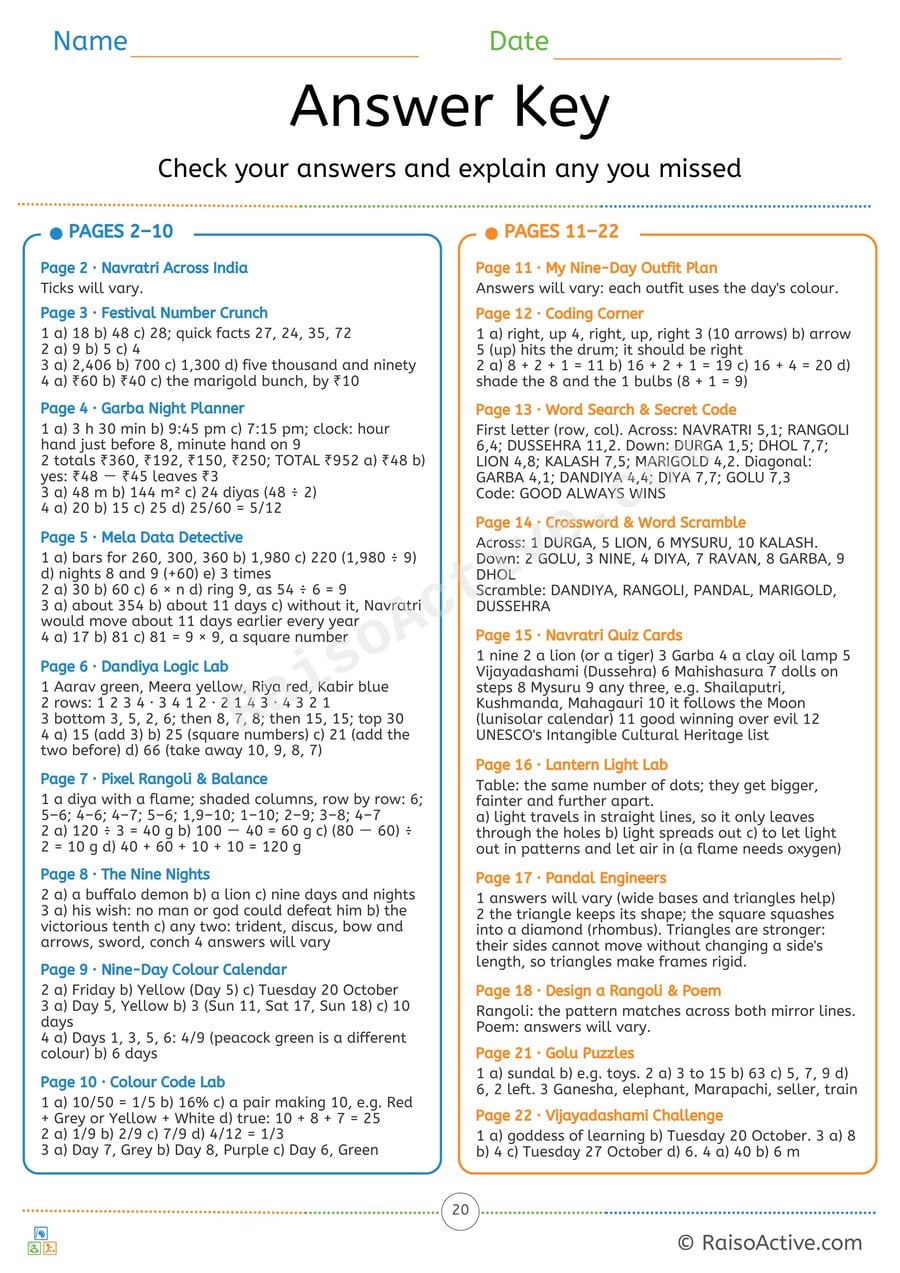
Navratri Festival Quest Answer Key for Grown-ups
Ages 7-11 · Grade 2–Grade 3Ages 7-11 · Year 3–Year 4Ages 7-11 · Class 2–Class 3Ages 7-11
Grown-ups can check every answer in the pack, with workings for the maths, grid positions for the word search, the logic grid and sudoku solutions, and the reasons behind the science results.
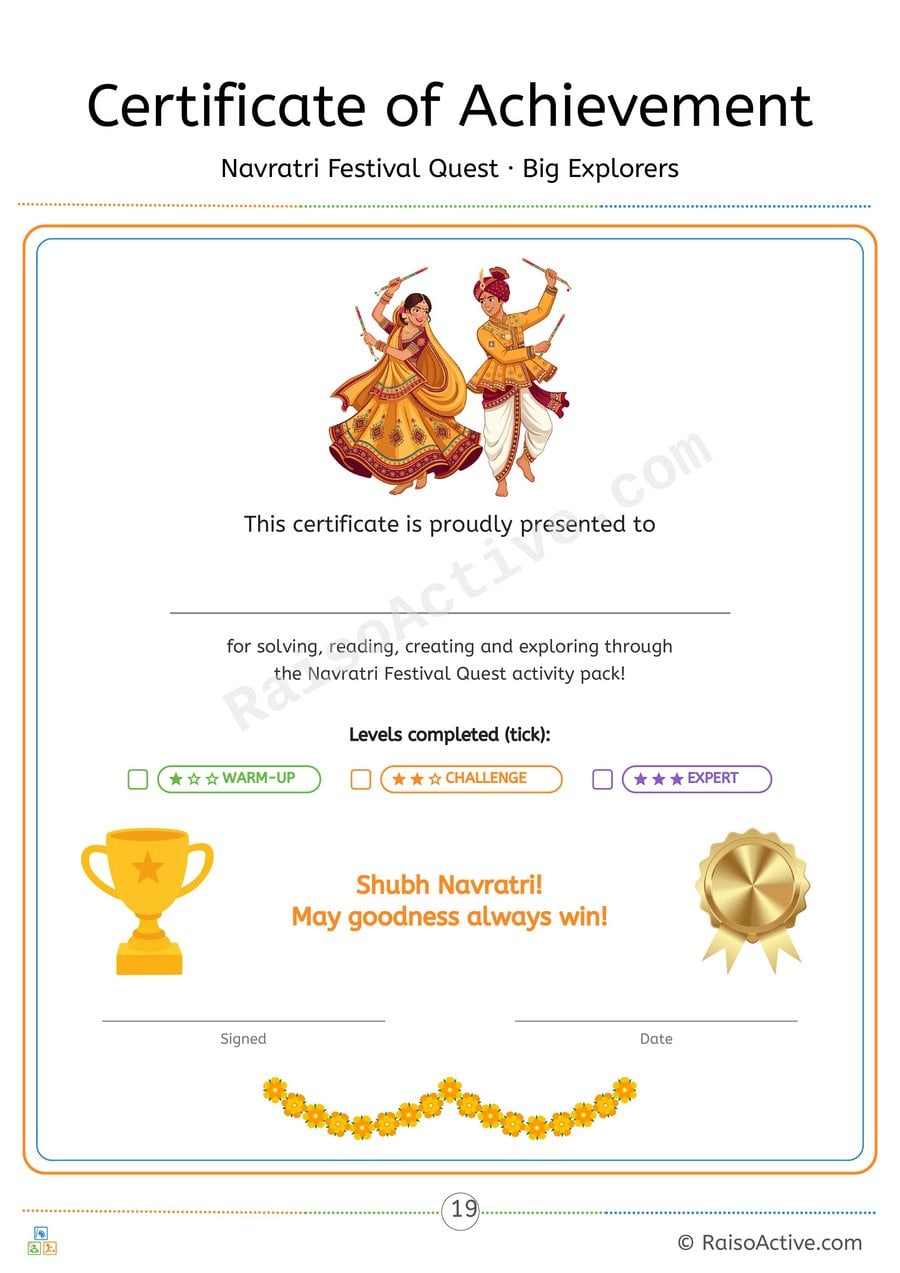
Navratri Festival Quest Certificate of Achievement
Ages 7-11 · Grade 2–Grade 3Ages 7-11 · Year 3–Year 4Ages 7-11 · Class 2–Class 3Ages 7-11
Children celebrate finishing the Navratri Festival Quest pack and record which levels they completed.
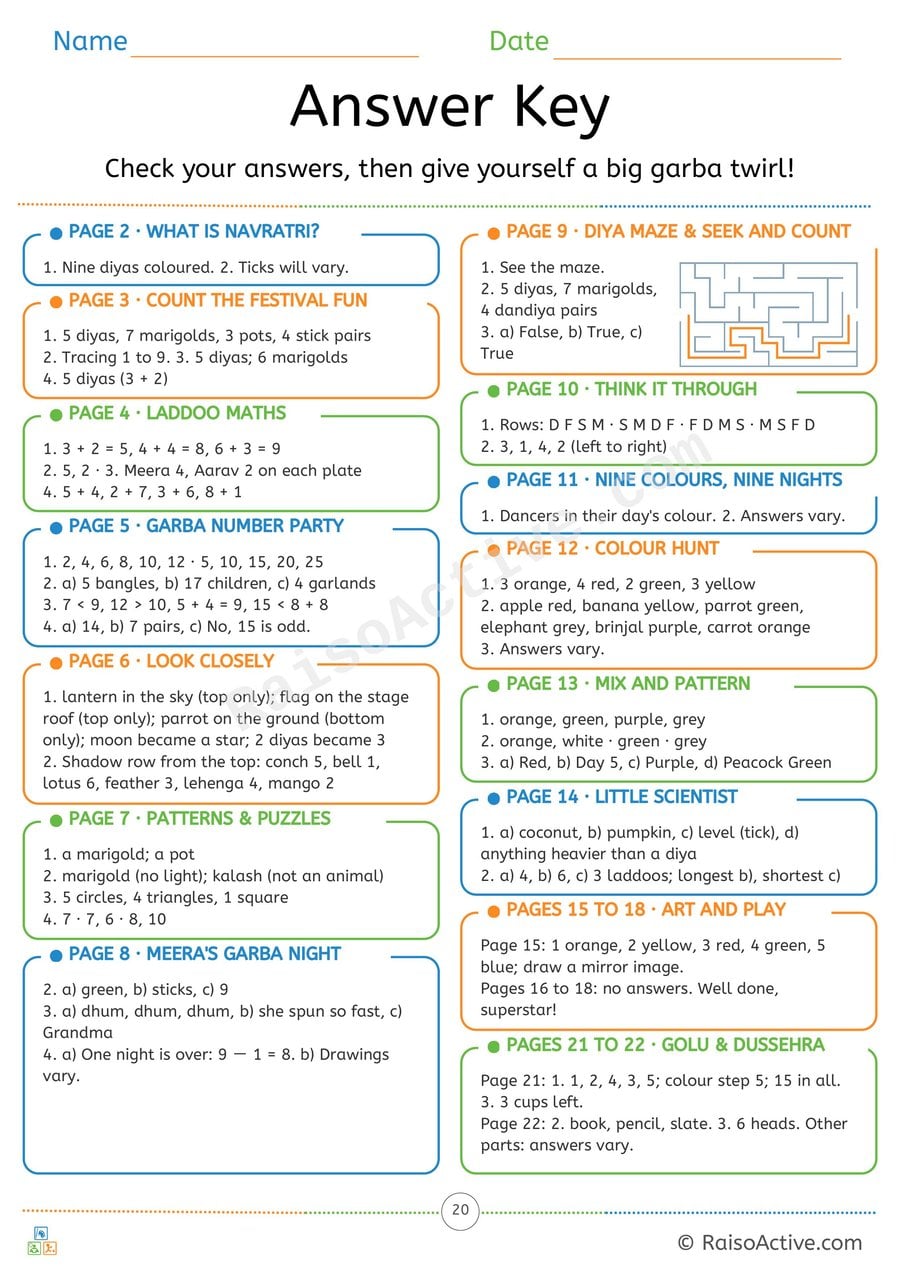
Navratri Fun Time Answer Key for Grown-ups
Ages 4-6 · Pre-K–KindergartenAges 4-6 · Reception–Year 1Ages 4-6 · LKG–UKGAges 4-6
Grown-ups can quickly check every answer in the Navratri Fun Time pack, page by page.
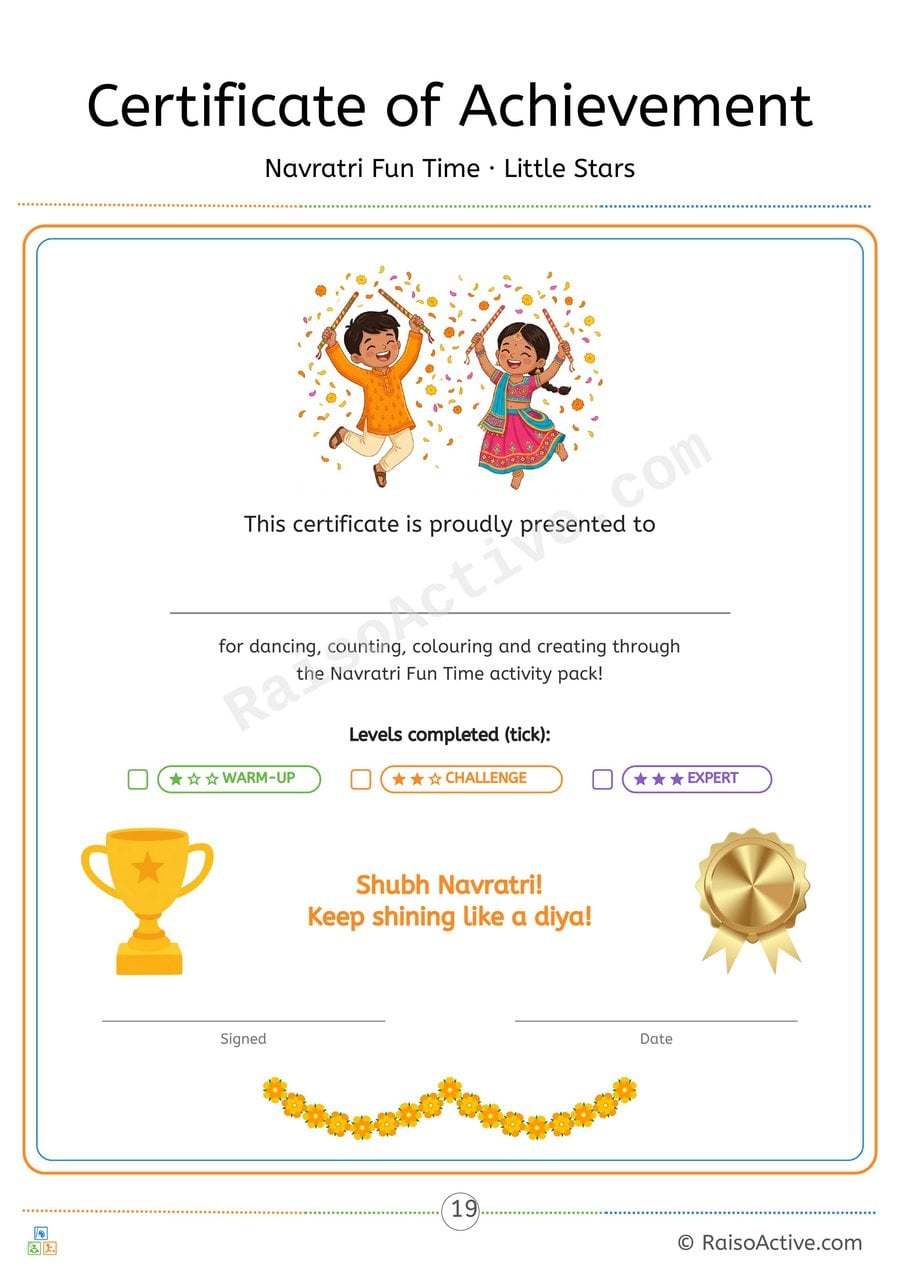
Navratri Fun Time Certificate of Achievement
Ages 4-6 · Pre-K–KindergartenAges 4-6 · Reception–Year 1Ages 4-6 · LKG–UKGAges 4-6
Children celebrate finishing the Navratri Fun Time pages and see which levels they completed.

Written by
Hemsweta Jain · Teacher Cheena
MBA and Early Childhood Educator, teaching since 2014 · Founder of RaisoActive, Mumbai
Published · Last reviewed
Related Resources
Printable Resources(10)
View all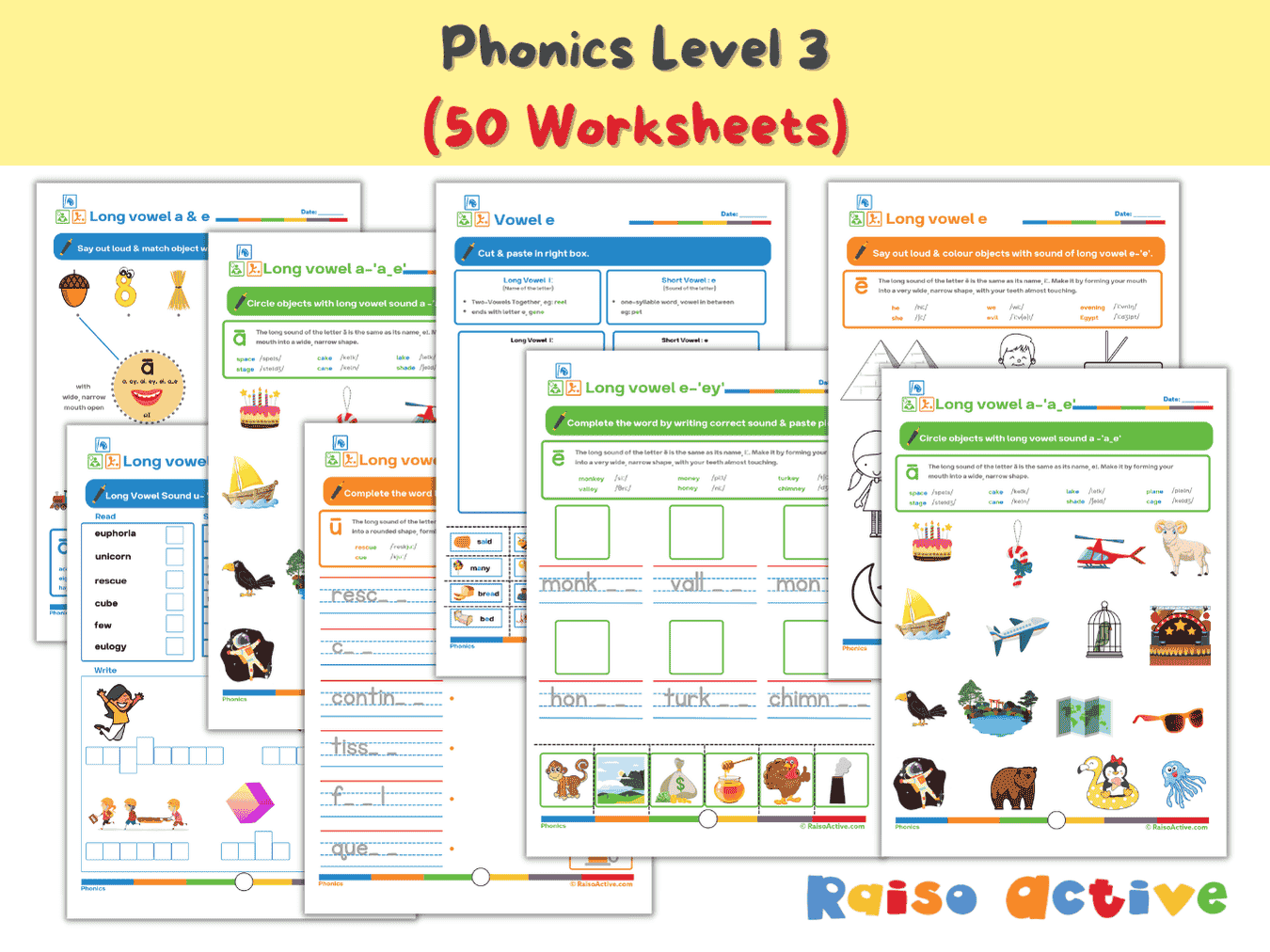

Phonics Level 3 Long Vowels Activity Book for Kindergarten & 1st Grade
Ages 5-7 · Kindergarten–Grade 1Ages 5-7 · Year 1–Year 2Ages 5-7 · UKG–Class 1Ages 5-7 · 51 pages
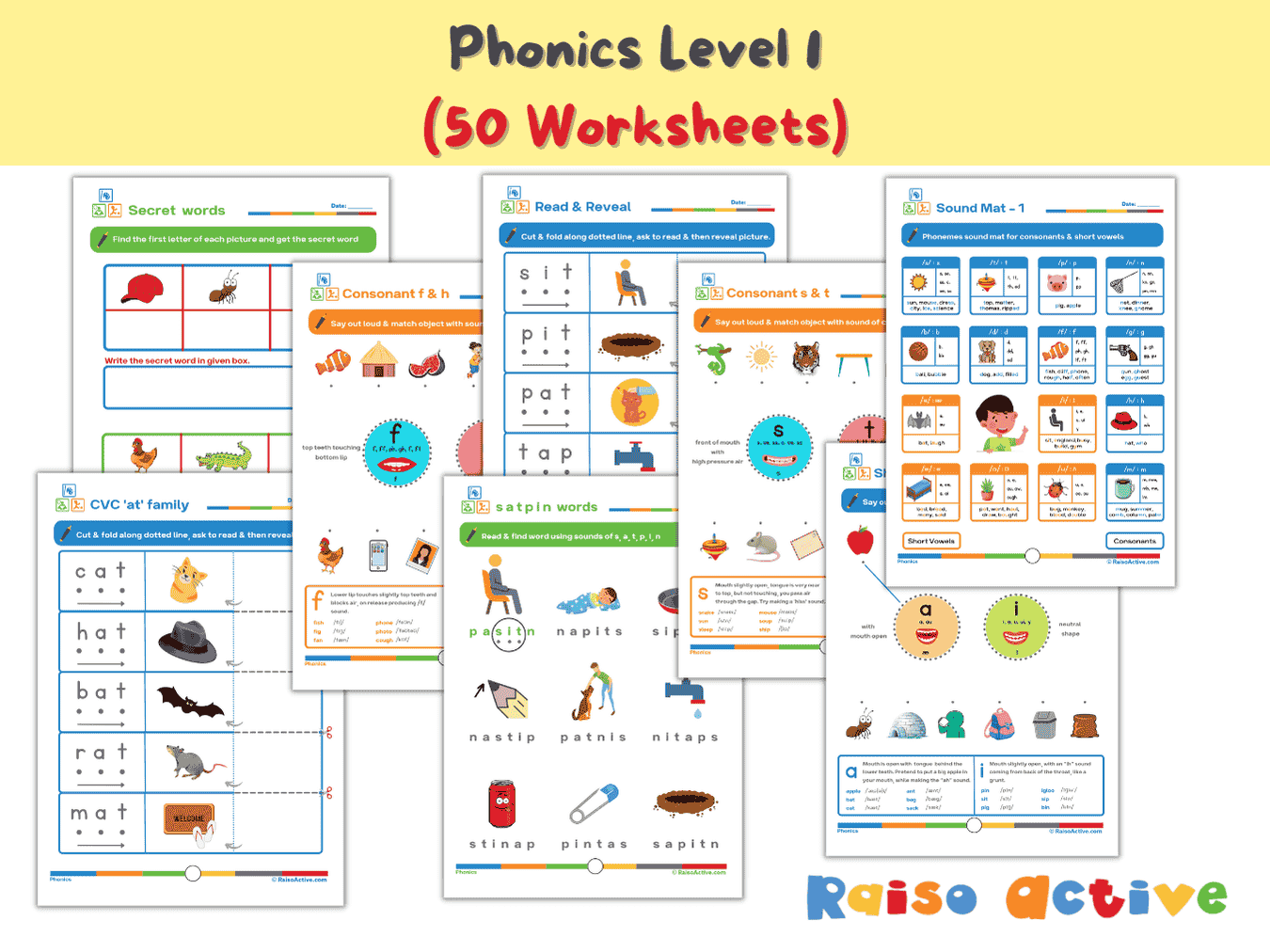
Phonics Level 1 Activity Book: Letter Sounds, Blending & CVC Words for Preschool & Kindergarten
Ages 3-6 · Preschool–KindergartenAges 3-6 · Nursery–Year 1Ages 3-6 · Nursery–UKGAges 3-6 · 60 pages


Flags of the World Activity Book & Flashcards for Kids (Ages 5-9)
Ages 5-8 · Kindergarten–Grade 2Ages 5-8 · Year 1–Year 3Ages 5-8 · UKG–Class 2Ages 5-8 · 23 pages
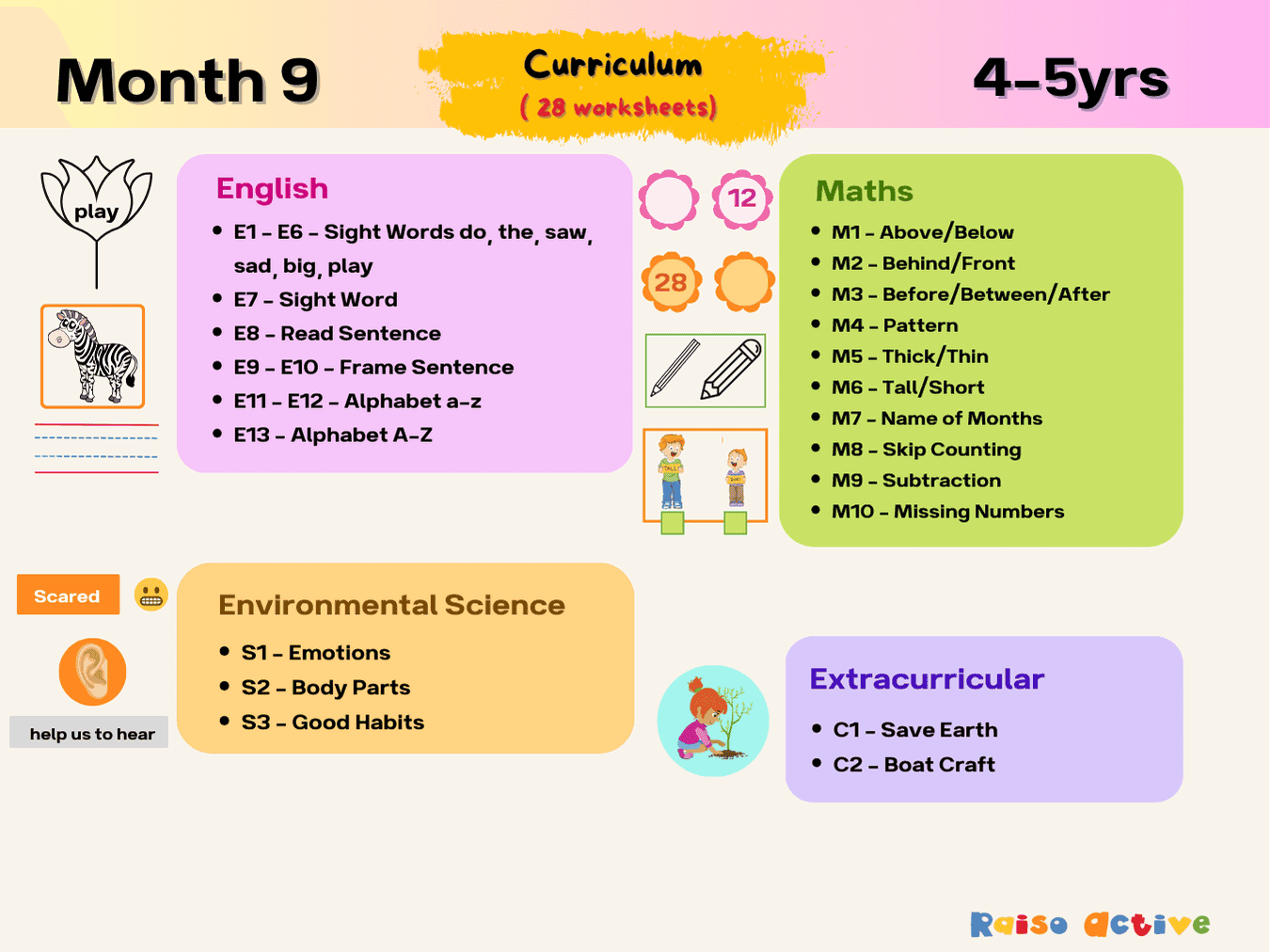

Month 9: Play-Based Preschool Foundational Skills | Ages 4-5
Ages 4-5 · Pre-KAges 4-5 · ReceptionAges 4-5 · LKGAges 4-5 · 31 pages
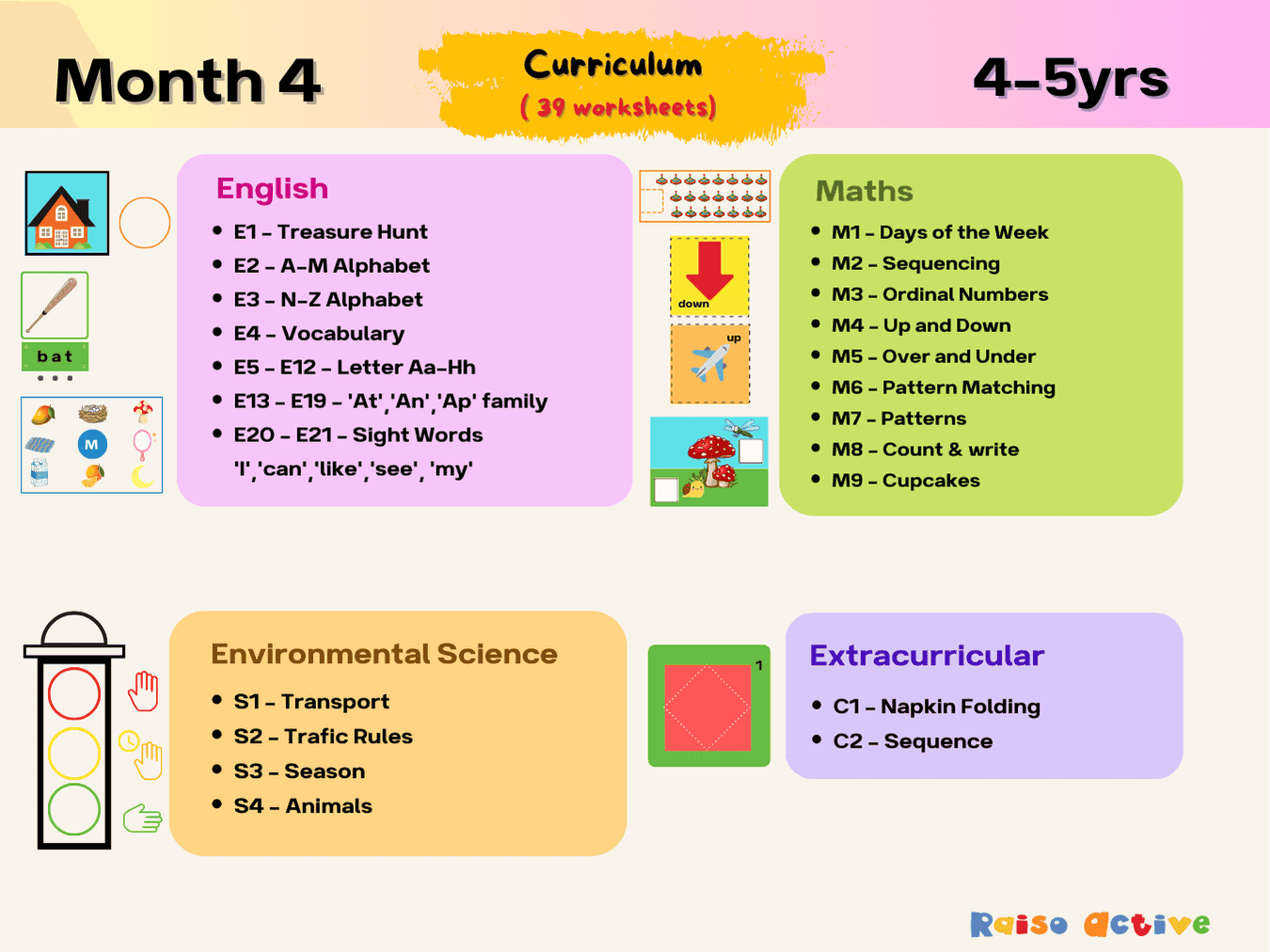
Month 4: Learning & Development | Ages 4-5
Ages 4-5 · Pre-KAges 4-5 · ReceptionAges 4-5 · LKGAges 4-5 · 42 pages
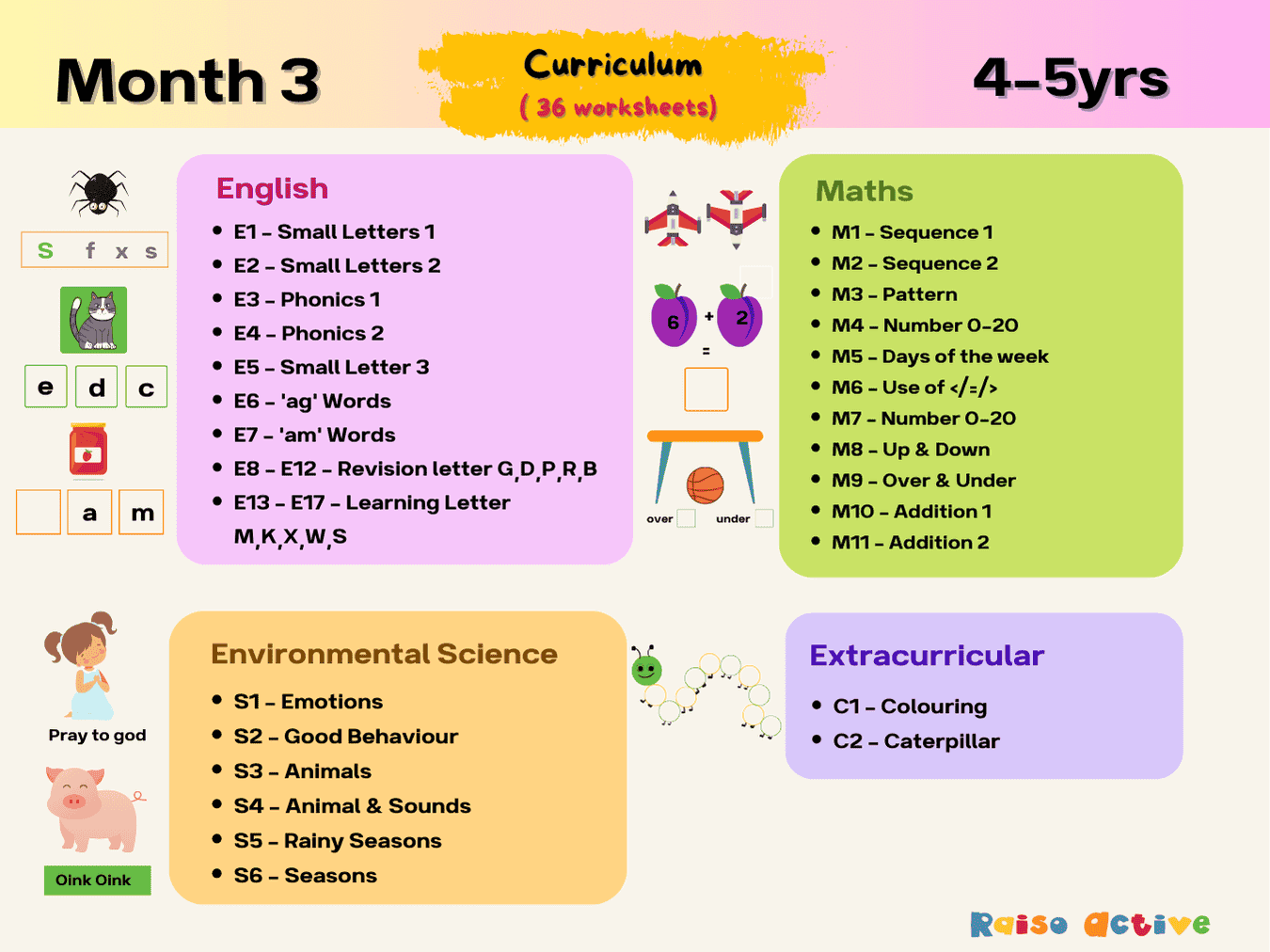
Month 3: Learning & Development | Ages 4-5
Ages 4-5 · Pre-KAges 4-5 · ReceptionAges 4-5 · LKGAges 4-5 · 39 pages
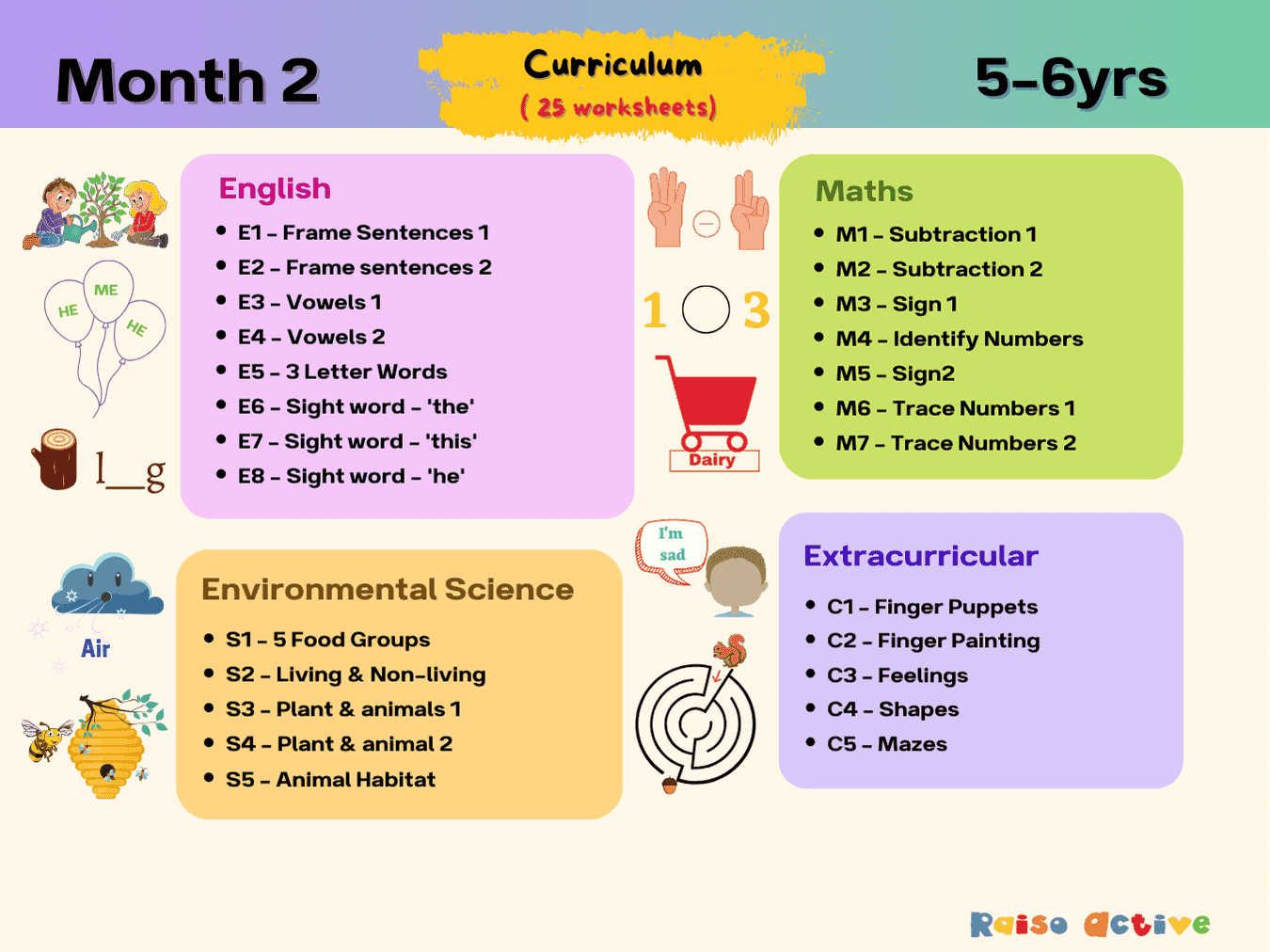
Month 2: Learning & Development | Ages 5-6
Ages 5-6 · KindergartenAges 5-6 · Year 1Ages 5-6 · UKGAges 5-6 · 28 pages
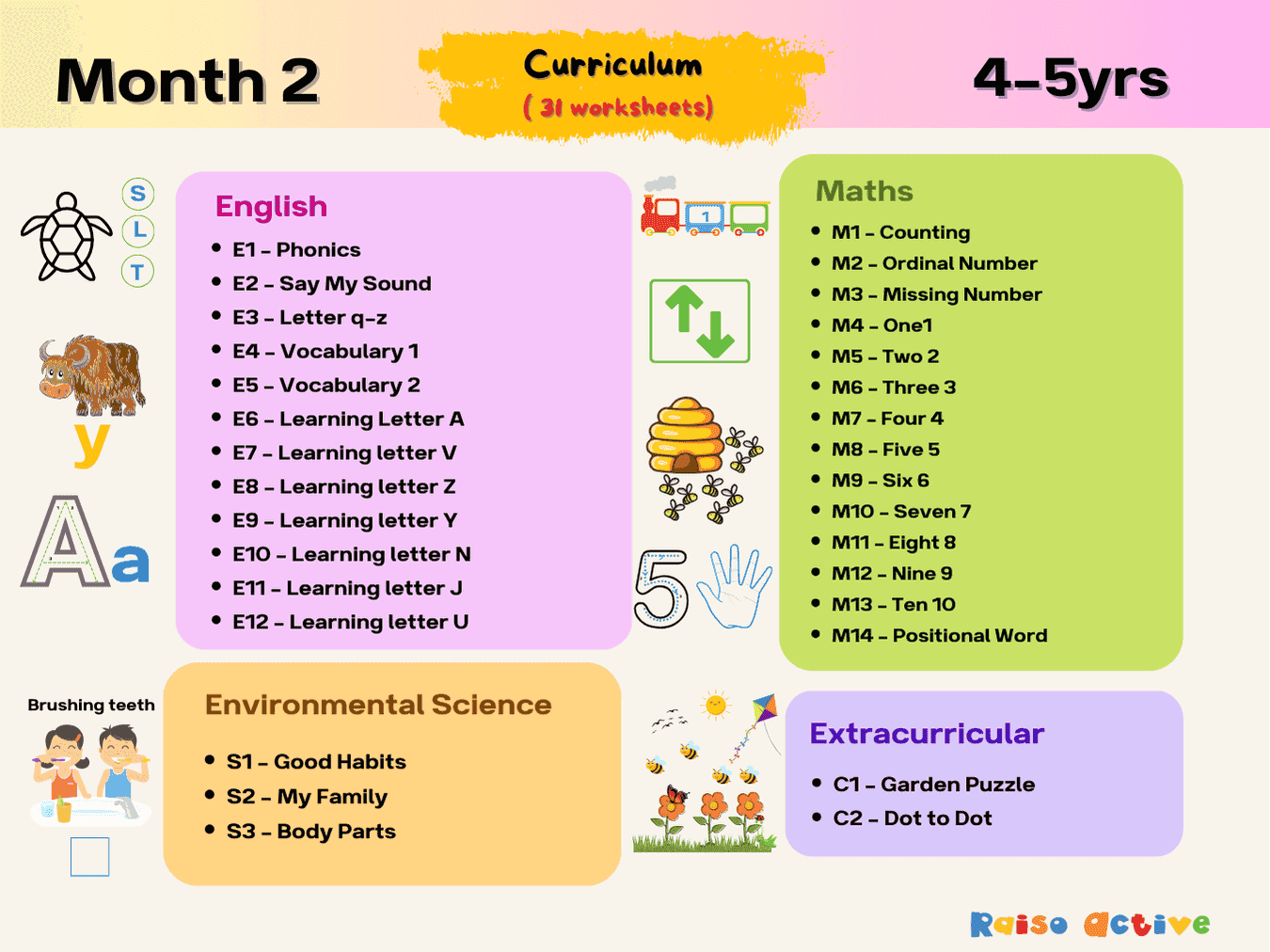
Month 2: Learning & Development | Ages 4-5
Ages 4-5 · Pre-KAges 4-5 · ReceptionAges 4-5 · LKGAges 4-5 · 34 pages
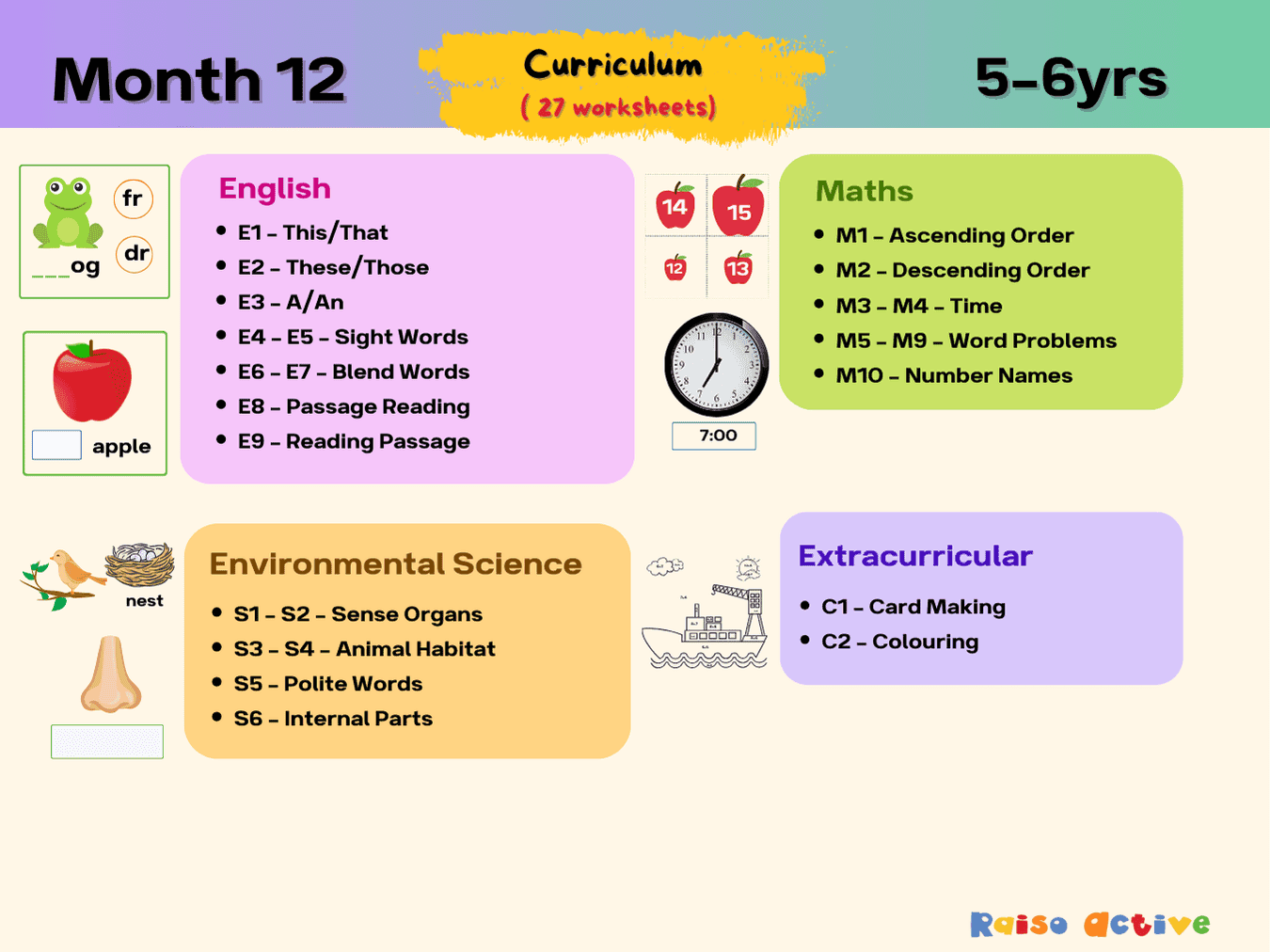
Month 12: Learning & Development | Ages 5-6
Ages 5-6 · KindergartenAges 5-6 · Year 1Ages 5-6 · UKGAges 5-6 · 30 pages
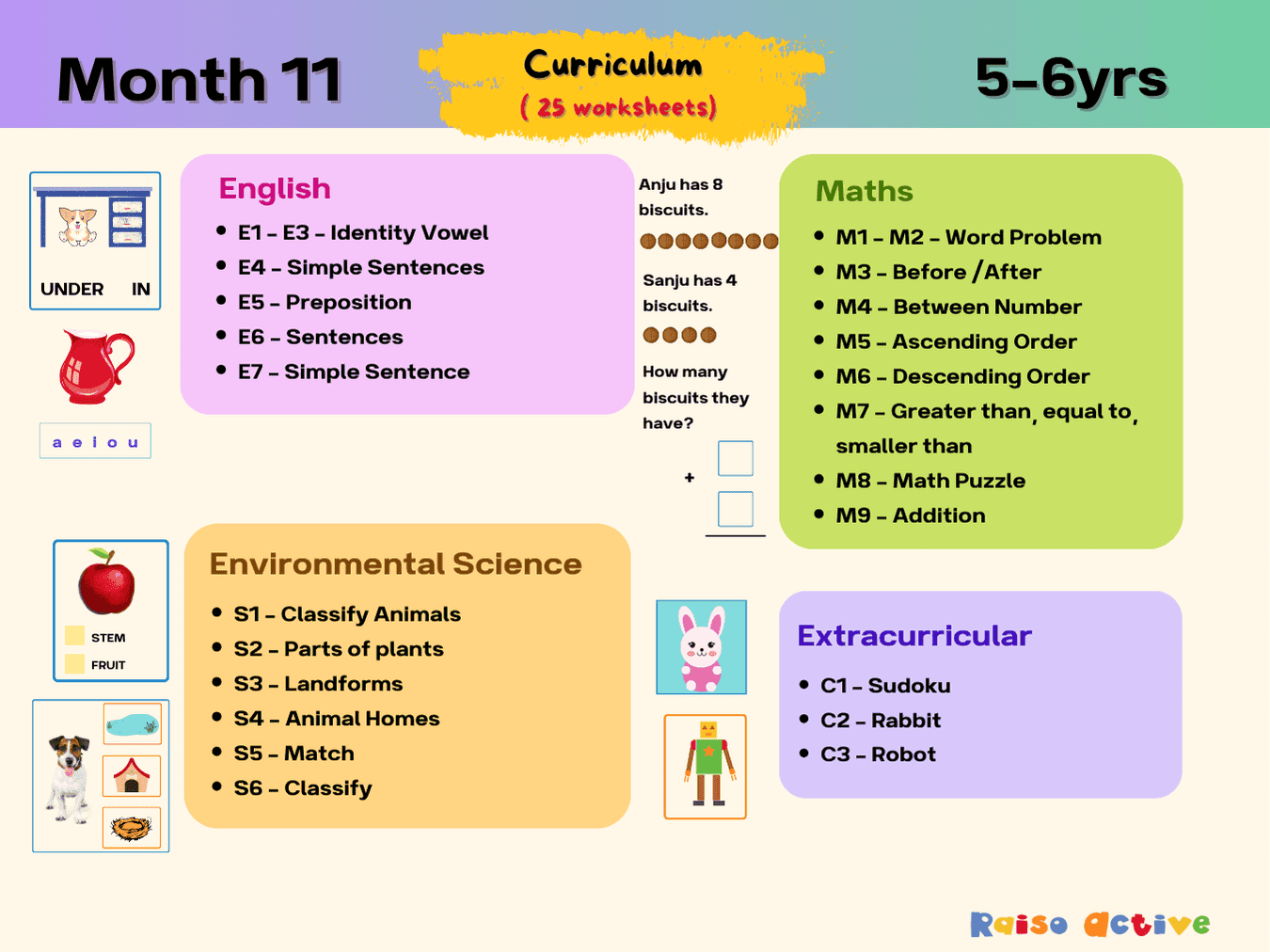
Month 11: Learning & Development | Ages 5-6
Ages 5-6 · KindergartenAges 5-6 · Year 1Ages 5-6 · UKGAges 5-6 · 28 pages