Road Safety Worksheet for Preschoolers: Safe Travel Fun!
Identifying safe versus unsafe travel behaviors by ticking pictures and circling thumbs up or thumbs down builds early critical thinking about real-world safety for children ages 3-5, connecting classroom learning to a practical life skill.

Part of the pack
Month 12: Learning & Development | Ages Up to 4
This is page 22 of the pack. Ages 2-4 · PreschoolAges 2-4 · NurseryAges 2-4
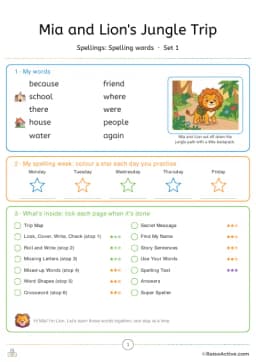
Made for your child
Spelling practice, made for your child
Their own spelling words turned into a pack: trace or look-cover-write-check, roll and write, a secret picture code, a word search, a crossword and a test, with their name in it.
Make a spelling packFree preview · free for members
Or start free: a word search with sight wordsCurriculum
- Safety > Road Safety
How to use this worksheet
Look at the first picture showing a travel behavior, like crossing at a crosswalk or wearing a seatbelt. Discuss whether the action is safe or unsafe, then have your child tick the safe choices and circle a thumbs up or thumbs down to show their judgment. Continue through the remaining pictures, talking through the reasoning behind each answer.
Materials needed
- Pencil
- Crayons
Extension activities
- 1Discuss different road signs and their meanings during a walk or drive.
- 2Create a pretend road with toy cars and act out safe crossing practices.
- 3Read books about road safety together.
- 4Practice looking both ways before crossing an empty parking lot or quiet street together.

Written by
Hemsweta Jain · Teacher Cheena
MBA and Early Childhood Educator, teaching since 2014 · Founder of RaisoActive, Mumbai
Every RaisoActive worksheet is designed and checked by the founder before publishing.
Published · Last reviewed
More from Month 12: Learning & Development | Ages Up to 4

Many vs. Few: Object Counting Worksheet for Preschoolers
Ages 3-5 · Preschool–Pre-KAges 3-5 · Nursery–ReceptionAges 3-5 · Nursery–LKGAges 3-5
This worksheet builds early quantity comparison skills as children ages 3-5 look at groups of objects and decide whether each group shows 'many' or 'few.' Beyond simple counting, this task develops relative reasoning — understanding that quantity is judged by comparison, not just a fixed number — which lays groundwork for later concepts like greater than and less than. Circling the correct group also reinforces visual scanning and attention to detail.
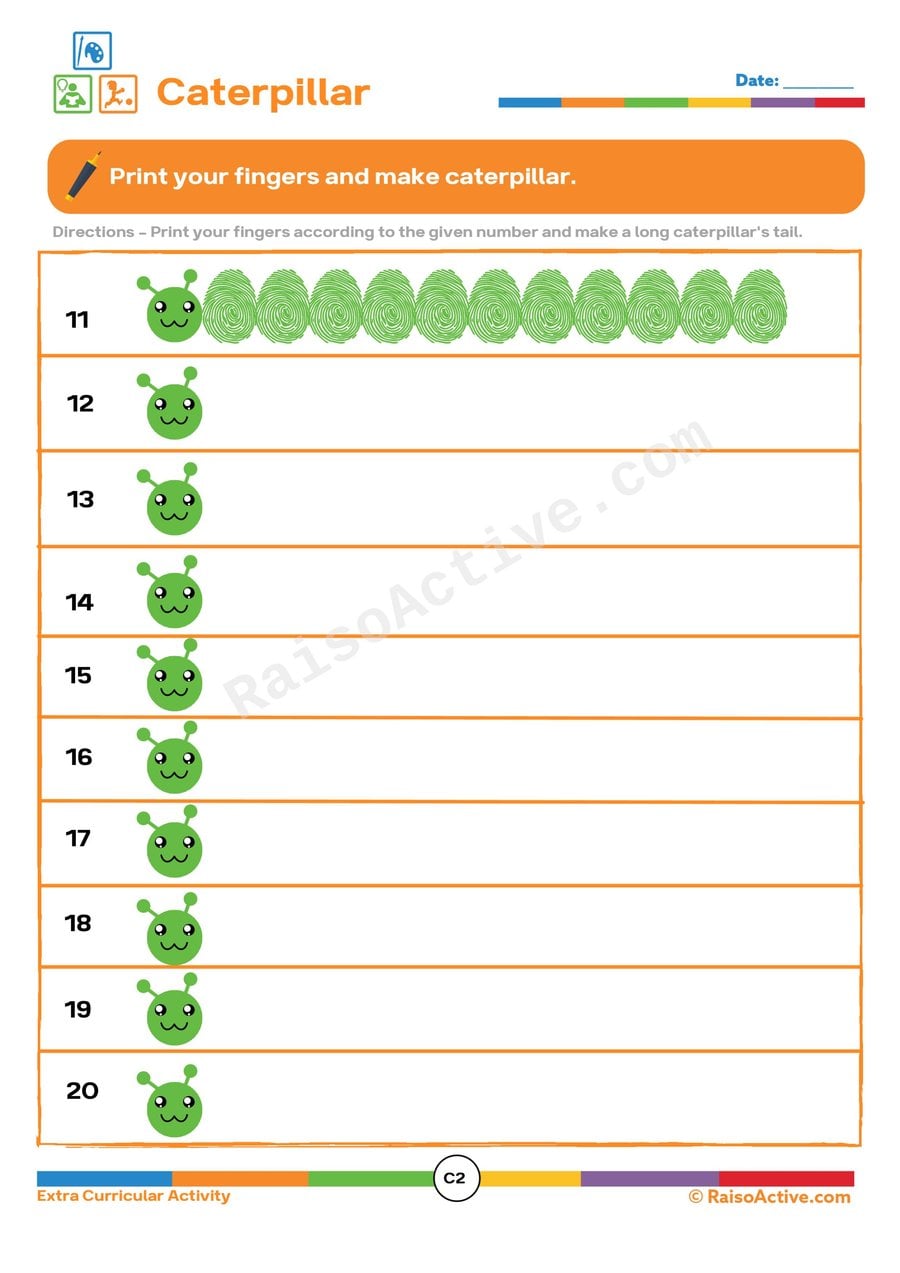
Caterpillar Fingerprint Fun Worksheet for Kids
Ages 3-5 · Preschool–Pre-KAges 3-5 · Nursery–ReceptionAges 3-5 · Nursery–LKGAges 3-5
This worksheet helps children ages 3-5 practice following numbered instructions and develop fine motor control by creating a caterpillar's body using their own fingerprints in a specific sequence. Beyond the sensory fun of fingerprint art, this activity builds counting skills as each segment requires a specific number of prints, along with the careful hand control needed to place each fingerprint deliberately rather than randomly.

Alphabet Games Worksheet: Match the Letters to the Games!
Ages 4-6 · Pre-K–KindergartenAges 4-6 · Reception–Year 1Ages 4-6 · LKG–UKGAges 4-6
This worksheet helps children ages 4-6 practice beginning-sound letter recognition by matching alphabet cards to pictures of games whose names start with that letter. Placing a letter card on its matching game picture, rather than simply circling an answer, adds a hands-on sorting element that keeps the activity active and physical rather than purely paper-based.

Traffic Signals Cut and Paste Worksheet for Preschoolers
Ages 3-5 · Preschool–Pre-KAges 3-5 · Nursery–ReceptionAges 3-5 · Nursery–LKGAges 3-5
Children ages 3-5 learn to recognize red, yellow, and green traffic signals and connect each color to its meaning, an early road-safety skill that also reinforces color recognition and matching. Understanding what each signal means builds real-world safety awareness they'll use as pedestrians and passengers.

Before and After: Counting and Sequencing Worksheet
Ages 4-6 · Pre-K–KindergartenAges 4-6 · Reception–Year 1Ages 4-6 · LKG–UKGAges 4-6
Spinning a wheel to find the number that follows a given number, then writing it in the 'after' column, builds number sequencing skills for children ages 4-6 while the matching step connects the abstract number to a picture representation.
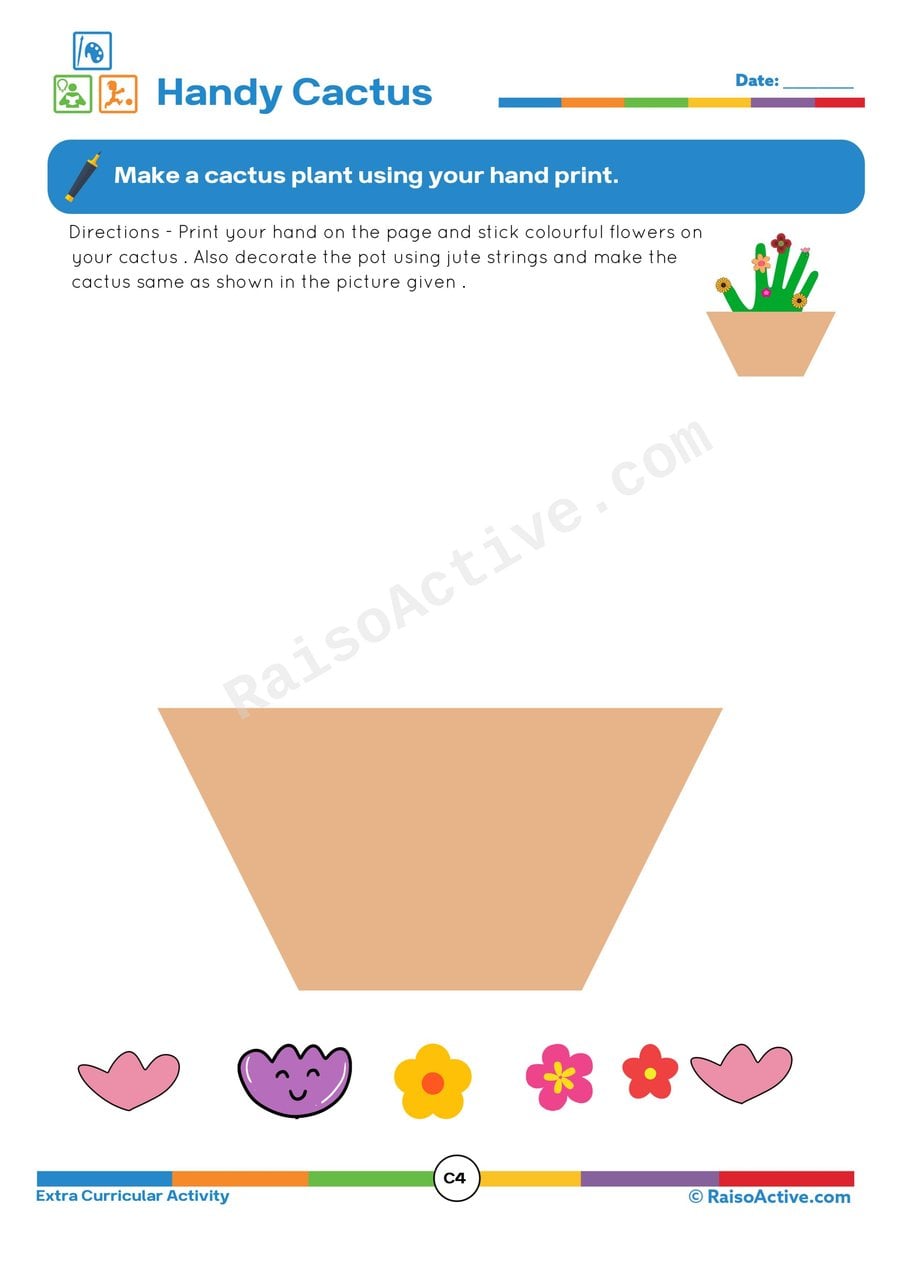
Handprint Cactus Craft Worksheet for Kids
Ages 3-5 · Preschool–Pre-KAges 3-5 · Nursery–ReceptionAges 3-5 · Nursery–LKGAges 3-5
Tracing and decorating a handprint into cactus shapes builds fine motor control and following-directions skills for children ages 3-5, since they must coordinate cutting, gluing, and arranging several craft pieces to match a shown example.

Phonics Fun: Circle the Beginning Letter Worksheet for Kids
Ages 4-6 · Pre-K–KindergartenAges 4-6 · Reception–Year 1Ages 4-6 · LKG–UKGAges 4-6
This 'Circle the Beginning Letter' worksheet strengthens phoneme-grapheme correspondence for children ages 4-6, teaching them to connect the sound they hear at the start of a word to its written letter. Naming each picture aloud and choosing among several letter options builds auditory discrimination, a skill that predicts later decoding success. It also reinforces letter recognition by asking children to distinguish the target letter from visually similar distractors.

Phonics Worksheet: Write the First Letter and Draw!
Ages 3-5 · Preschool–Pre-KAges 3-5 · Nursery–ReceptionAges 3-5 · Nursery–LKGAges 3-5
Identifying the first letter of a pictured object's name and writing it down builds phonemic awareness and letter-formation practice for children ages 3-5, while the follow-up drawing task builds creative thinking and fine motor control.
Related worksheets

Road Safety Signs Matching Worksheet for Preschoolers
Ages 3-5 · Preschool–Pre-KAges 3-5 · Nursery–ReceptionAges 3-5 · Nursery–LKGAges 3-5
Matching road safety signs teaches 3-5 year olds to recognize specific shapes, colors, and symbols and connect them to their real-world meaning — an early form of symbol literacy that matters well beyond the worksheet, since these are signs your child will actually encounter on walks and car rides. Coloring the signs first, then matching them, reinforces visual recognition through repetition before the matching task asks them to recall each sign's identity without color cues alone.
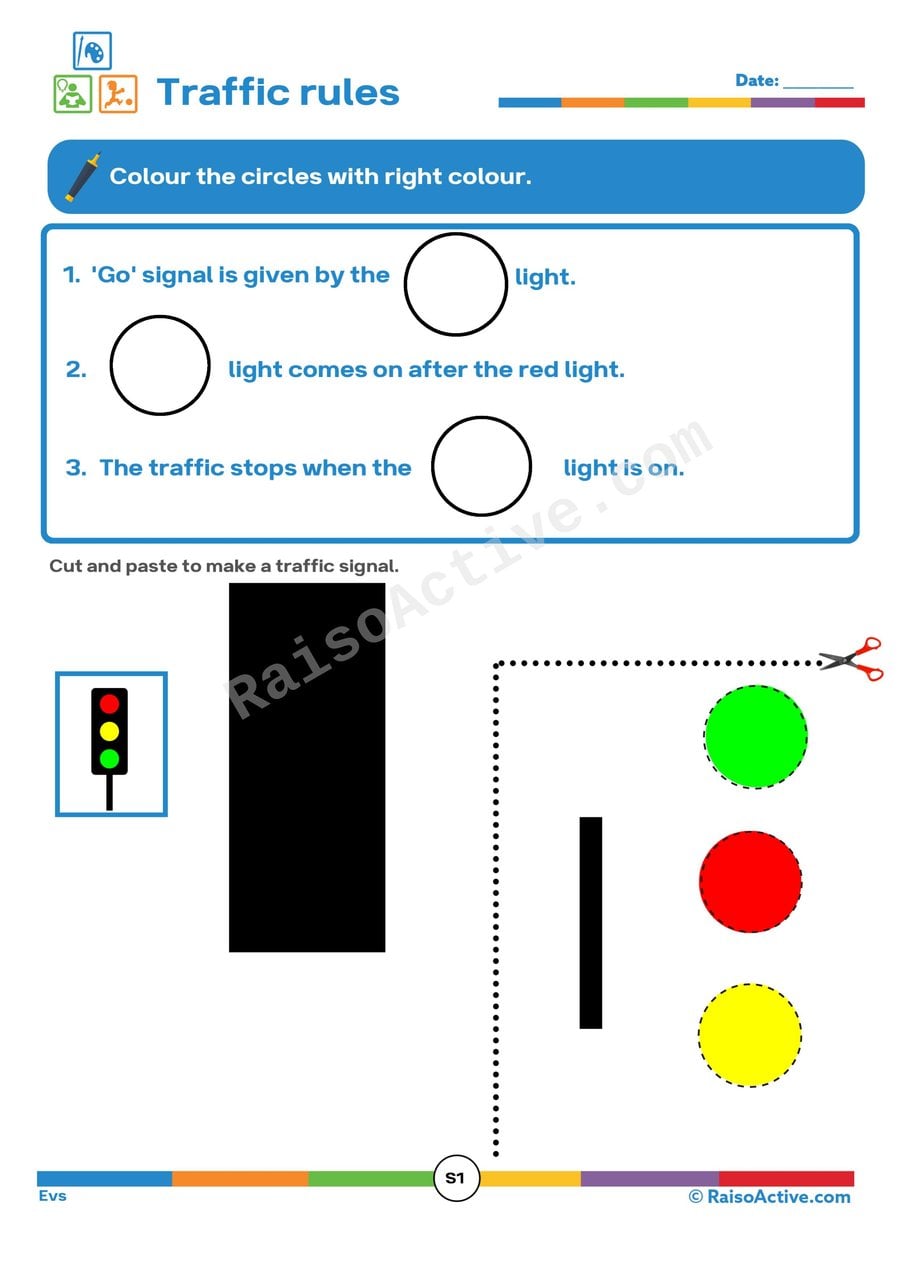
Traffic Light Colors Worksheet for Kids
Ages 3-5 · Preschool–Pre-KAges 3-5 · Nursery–ReceptionAges 3-5 · Nursery–LKGAges 3-5
Coloring the traffic light and completing the signal teaches children ages 3-5 what each color means, connecting red, yellow, and green to stop, wait, and go in a way that supports real road safety awareness. Cutting and pasting the finished signal also gives extra fine motor practice tied directly to the lesson.

Safety Stairs Worksheet: Matching Traffic Signs and Following Directions
Ages 3-5 · Preschool–Pre-KAges 3-5 · Nursery–ReceptionAges 3-5 · Nursery–LKGAges 3-5
This worksheet builds road safety awareness in children ages 3-5 while also practicing sign recognition, visual matching, and following a multi-step path from start to finish. Matching sign names to sign shapes teaches children to recognize traffic signs by both their look and their meaning, a real-world reading skill that supports their safety once they're out walking or biking.

Road Safety Worksheet for Kids: Fill-in-the-Blanks
Ages 3-5 · Preschool–Pre-KAges 3-5 · Nursery–ReceptionAges 3-5 · Nursery–LKGAges 3-5
This worksheet teaches children ages 3-5 essential road safety vocabulary and rules — like looking both ways, using crosswalks, and obeying traffic signals — by having them choose the correct word to complete each safety-related sentence. Learning these rules in a reading and writing context, rather than just hearing them, helps reinforce safety habits that protect children in real traffic situations.

Safe Walker Worksheet: Following Pedestrian Rules for Kids
Ages 3-5 · Preschool–Pre-KAges 3-5 · Nursery–ReceptionAges 3-5 · Nursery–LKGAges 3-5
This worksheet teaches children ages 3-5 the core rules of safe pedestrian behavior — looking both ways, using crosswalks, and holding an adult's hand — by having them read simple instructions and fill in the correct safety word. Learning these specific rules early builds habits that matter for real-world safety long before a child is old enough to cross streets independently.

Traffic Rules Worksheet: Cut and Glue the Traffic Signs!
Ages 3-5 · Preschool–Pre-KAges 3-5 · Nursery–ReceptionAges 3-5 · Nursery–LKGAges 3-5
Cutting out traffic sign pictures and matching them to their correct labels builds early sign recognition and vocabulary for children ages 3-5, connecting a familiar shape and color to its real-world safety meaning.

Traffic Rules Worksheet for Kids: Learn Road Safety!
Ages 3-5 · Preschool–Pre-KAges 3-5 · Nursery–ReceptionAges 3-5 · Nursery–LKGAges 3-5
This worksheet builds children ages 3-5's understanding of basic traffic rules, including who controls traffic, where it's safe to cross, and what each traffic light color means, through a combination of circling correct answers and coloring a traffic signal. Learning these rules early helps children build genuine road safety awareness rather than just memorized instructions.
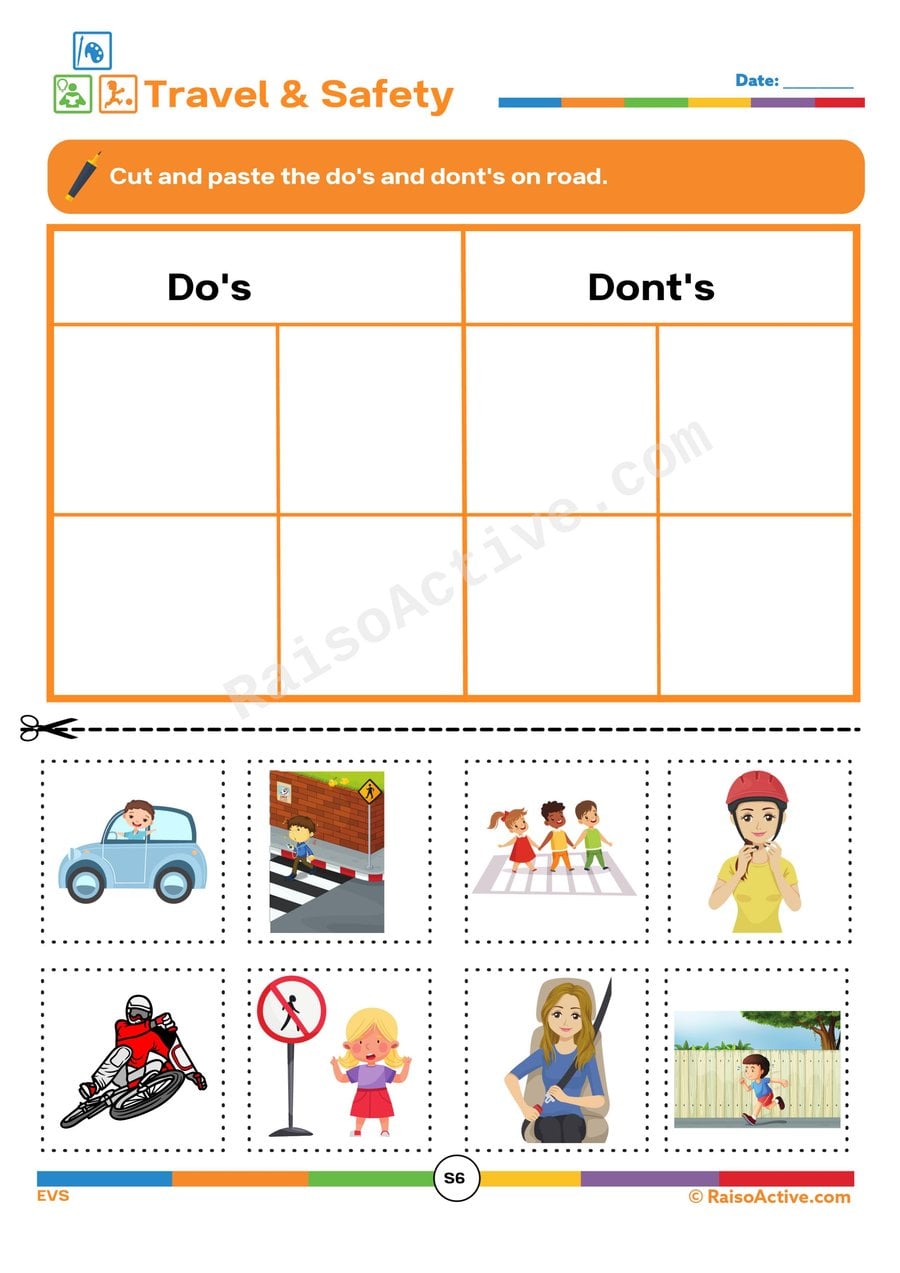
Road Safety Cut and Paste Worksheet for Kids
Ages 3-5 · Preschool–Pre-KAges 3-5 · Nursery–ReceptionAges 3-5 · Nursery–LKGAges 3-5
Children ages 3-5 practice identifying safe versus unsafe behaviors near roads and traffic by sorting pictures into 'Do's' and 'Don'ts' columns, building early safety awareness alongside basic classification skills. Talking through why each picture belongs in its column helps children move beyond simply memorizing rules toward actually understanding the reasoning behind road safety.
Guides for this topic

Documenting Learning Without Drowning in Data: A Practical Guide for Parents and Teachers
Learn practical ways to document your child's learning without overwhelm. Simple portfolios, observation tips, and printable trackers for ages 1-8.

Age-Appropriate Problem-Solving Activities: Building Critical Thinkers from the Ground Up
Discover fun, age-appropriate problem-solving activities for children ages 1-8. Build critical thinking, logic, and reasoning skills through play-based learning.
Critical Thinking Activities That Actually Work for Young Children: Building Tomorrow's Thinkers Today
Discover proven critical thinking activities for young children. Age-wise logic games, questioning techniques, and hands-on ideas to build thinking skills at home.
Reviews
Every worksheet for ages 3–5, no watermark
Members download the full library of 1,000+ worksheets and every activity pack without watermarks or daily limits. One year costs ₹999 in India or $20 elsewhere.
See membership plansOr download any worksheet free with a watermark (5 a day).