
Safe Walker Worksheet: Following Pedestrian Rules for Kids
This worksheet teaches children ages 3-5 the core rules of safe pedestrian behavior — looking both ways, using crosswalks, and holding an adult's hand — by having them read simple instructions and fill in the correct safety word. Learning these specific rules early builds habits that matter for real-world safety long before a child is old enough to cross streets independently.
Part of the pack
Month 3: Learning & Development | Ages 6-7Curriculum
How to use this worksheet
Read each sentence or instruction aloud together, pointing to the word box if the worksheet includes one. Ask your child to think about which word best completes each safety rule before filling in the blank, cutting and pasting the correct word if that format is used. After completing each item, talk through why that rule keeps a pedestrian safe. Finish by reviewing all the rules together as a simple checklist.
Materials needed
- Pencil
- Scissors
- Glue (optional)
Extension activities
- •Role-play crossing a pretend street at home, practicing 'stop, look left, look right, look left again.'
- •Take a real walk together and narrate each safety step out loud as you cross an actual street.
- •Draw a picture of a safe crosswalk, including the stripes, a traffic light, and pedestrians holding hands.
- •Create a family 'walking rules' poster and hang it near the front door as a reminder.
- •Practice identifying real crosswalk and pedestrian signs in your neighborhood.
Tips for parents and teachers
Use real walks as the true test of this worksheet's lessons — ask your child to narrate the safety steps out loud before you cross, so the rules become automatic rather than just something they filled in on paper. Young children often understand the words but forget to apply them when excited or distracted, so gentle repeated reminders matter more than one lesson. Keep the tone reassuring rather than frightening; the goal is confident habits, not anxiety about roads.

Written by
Hemsweta Jain · Teacher Cheena
MBA and Early Childhood Educator, teaching since 2014 · Founder of RaisoActive, Mumbai
Every RaisoActive worksheet is designed and checked by the founder before publishing.
Published · Last reviewed
Related worksheets

Safety Stairs Worksheet: Matching Traffic Signs and Following Directions
This worksheet builds road safety awareness in children ages 3-5 while also practicing sign recognition, visual matching, and following a multi-step path from start to finish. Matching sign names to sign shapes teaches children to recognize traffic signs by both their look and their meaning, a real-world reading skill that supports their safety once they're out walking or biking.
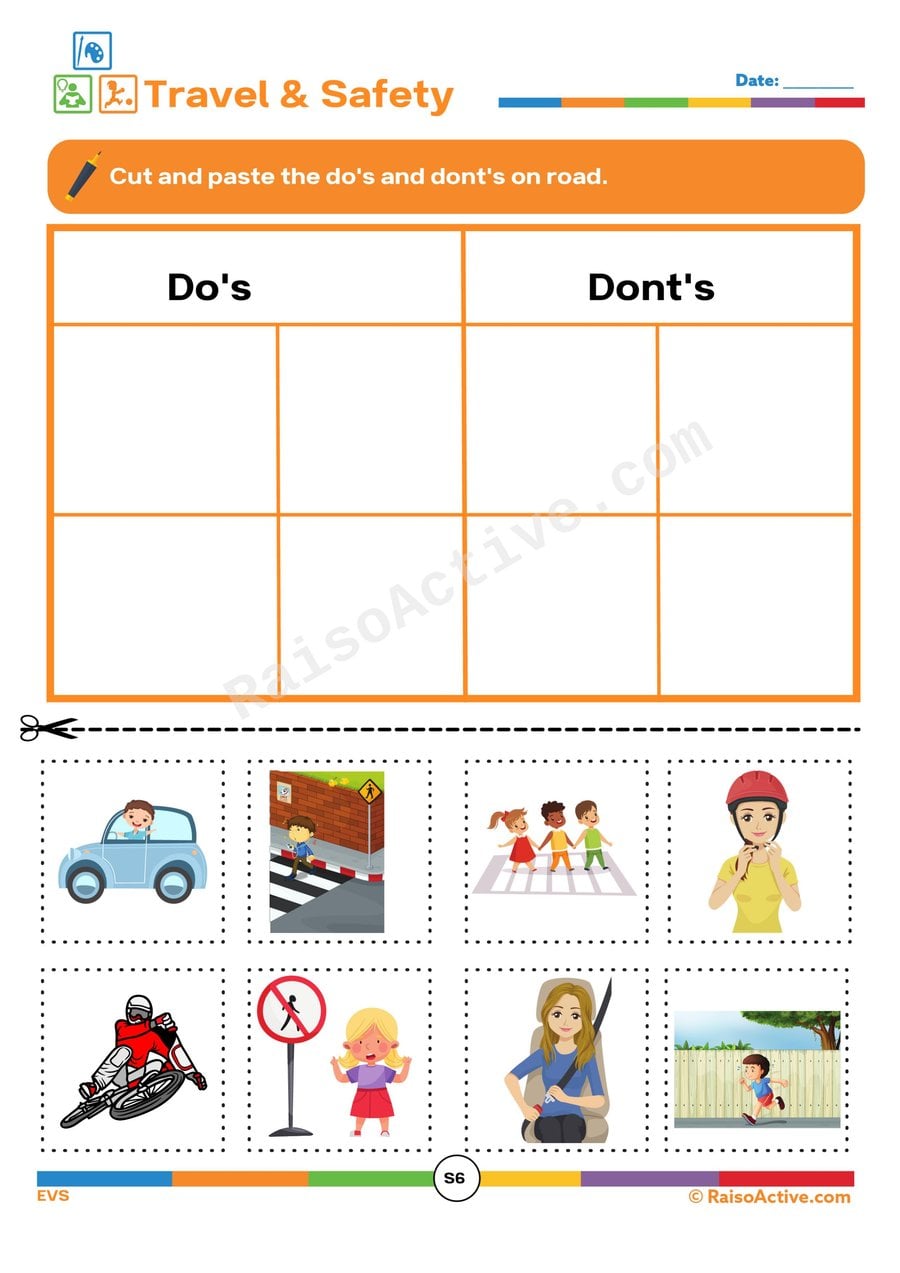
Road Safety Cut and Paste Worksheet for Kids
Children ages 3-5 practice identifying safe versus unsafe behaviors near roads and traffic by sorting pictures into 'Do's' and 'Don'ts' columns, building early safety awareness alongside basic classification skills. Talking through why each picture belongs in its column helps children move beyond simply memorizing rules toward actually understanding the reasoning behind road safety.

Traffic Rules Worksheet: Cut and Glue the Traffic Signs!
Cutting out traffic sign pictures and matching them to their correct labels builds early sign recognition and vocabulary for children ages 3-5, connecting a familiar shape and color to its real-world safety meaning.

Traffic Signals Cut and Paste Worksheet for Preschoolers
Children ages 3-5 learn to recognize red, yellow, and green traffic signals and connect each color to its meaning, an early road-safety skill that also reinforces color recognition and matching. Understanding what each signal means builds real-world safety awareness they'll use as pedestrians and passengers.

Road Safety Worksheet for Preschoolers: Safe Travel Fun!
Identifying safe versus unsafe travel behaviors by ticking pictures and circling thumbs up or thumbs down builds early critical thinking about real-world safety for children ages 3-5, connecting classroom learning to a practical life skill.

Traffic Rules Worksheet for Kids: Learn Road Safety!
This worksheet builds children ages 3-5's understanding of basic traffic rules, including who controls traffic, where it's safe to cross, and what each traffic light color means, through a combination of circling correct answers and coloring a traffic signal. Learning these rules early helps children build genuine road safety awareness rather than just memorized instructions.
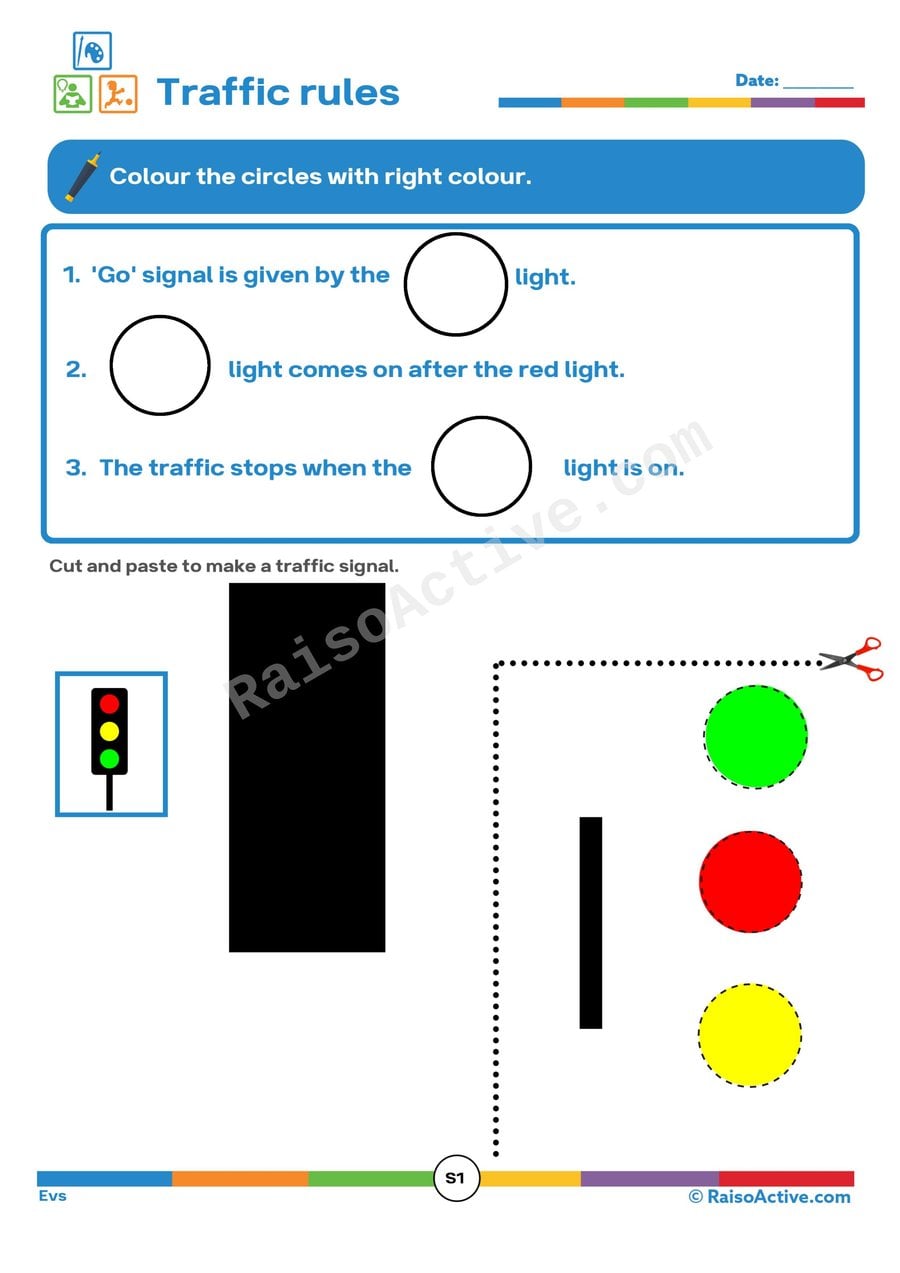
Traffic Light Colors Worksheet for Kids
Coloring the traffic light and completing the signal teaches children ages 3-5 what each color means, connecting red, yellow, and green to stop, wait, and go in a way that supports real road safety awareness. Cutting and pasting the finished signal also gives extra fine motor practice tied directly to the lesson.
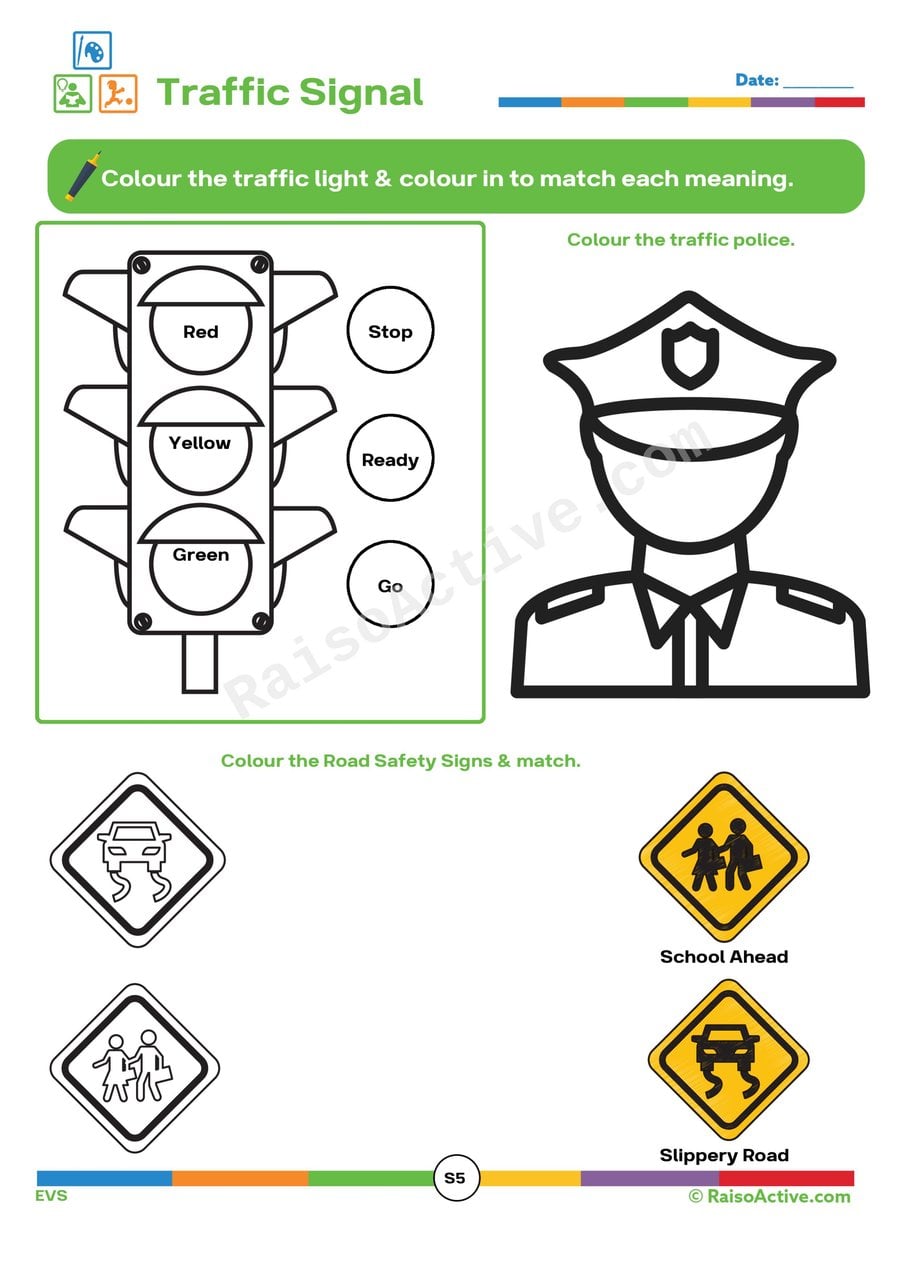
Traffic Signal Fun: Color and Match the Meanings!
Coloring traffic lights and matching words to their meanings teaches children ages 3-5 that colors carry specific, important messages in the real world, an early and practical form of symbol recognition and road safety awareness. Matching written words to the correct traffic light or road sign also reinforces early reading skills by connecting simple vocabulary to something visually familiar from everyday outings. Understanding what red, yellow, and green mean at a traffic light gives children knowledge they can apply immediately as pedestrians and future road users.
Guides for this topic
Documenting Learning Without Drowning in Data: A Practical Guide for Parents and Teachers
Learn practical ways to document your child's learning without overwhelm. Simple portfolios, observation tips, and printable trackers for ages 1-8.
Age-Appropriate Problem-Solving Activities: Building Critical Thinkers from the Ground Up
Discover fun, age-appropriate problem-solving activities for children ages 1-8. Build critical thinking, logic, and reasoning skills through play-based learning.
Critical Thinking Activities That Actually Work for Young Children: Building Tomorrow's Thinkers Today
Discover proven critical thinking activities for young children. Age-wise logic games, questioning techniques, and hands-on ideas to build thinking skills at home.
Reviews
Every worksheet for ages 3–5, no watermark
Members download the full library of 1,000+ worksheets and every activity pack without watermarks or daily limits. One year costs ₹1,000 in India or $20 elsewhere.
See membership plansOr download any worksheet free with a watermark (5 a day).