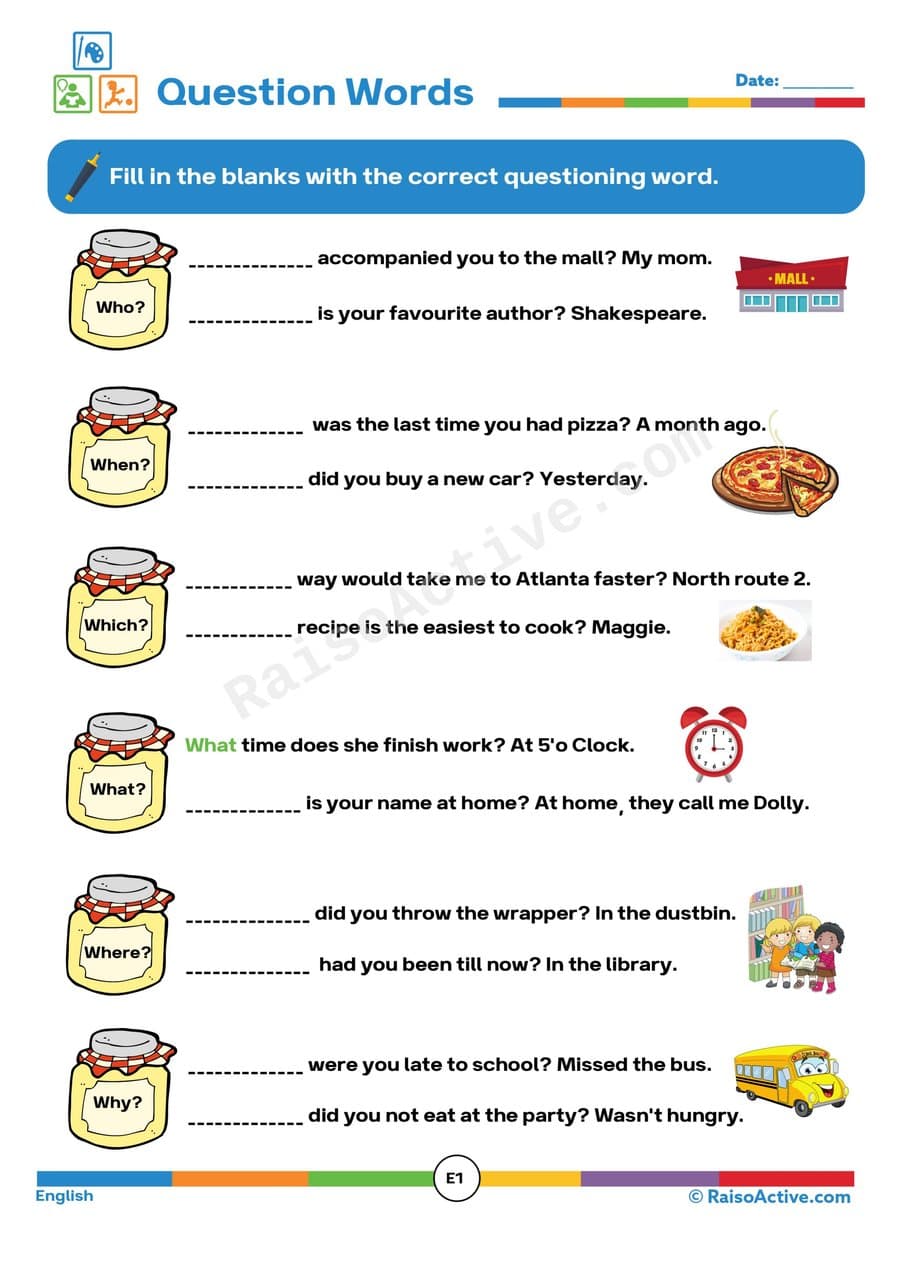
Question Words Worksheet for Early Learners
This worksheet teaches children ages 4-6 to recognize and correctly use the six core question words — who, what, when, where, why, and which — by choosing the right one to complete a sentence. Understanding what kind of information each question word asks for (a person, a time, a place, a reason) is an important early grammar and comprehension skill that also improves how children ask their own questions.
Part of the pack
Month 3: Learning & Development | Ages 6-7Curriculum
How to use this worksheet
Read the first sentence aloud together, pausing at the blank. Look at the question word choices in the jar or word bank and talk through what each one is asking for. Ask your child which word makes the most sense for that sentence, then have them write it in the blank. Repeat for each remaining sentence, checking together that the completed sentence makes sense when read aloud.
Materials needed
- Pencil
- Eraser
Extension activities
- •Take turns asking each other real questions using each of the six question words.
- •Read a short story together and pause to ask a 'who,' 'what,' or 'where' question about what just happened.
- •Play a guessing game where your child must figure out an object using only questions that start with the six question words.
- •Write a silly question together using each question word, then answer it with an equally silly response.
- •Make a simple poster listing each question word with a picture reminder of what it asks about.
Tips for parents and teachers
If your child mixes up similar question words, like 'who' and 'what,' point out that 'who' always asks about a person while 'what' asks about a thing or action. Reading each completed sentence back aloud helps your child self-check whether their chosen word actually makes sense. Encourage them to use these question words naturally in everyday conversation, not just on the worksheet, since real use cements the skill fastest.

Written by
Hemsweta Jain · Teacher Cheena
MBA and Early Childhood Educator, teaching since 2014 · Founder of RaisoActive, Mumbai
Every RaisoActive worksheet is designed and checked by the founder before publishing.
Published · Last reviewed
Related worksheets

Trace the Numbers 1-9 Worksheet for Preschoolers
Tracing the numerals 1 through 9 gives children ages 3-5 repeated, guided practice with the specific pencil strokes each number requires, building the fine motor control and muscle memory needed for independent number writing. Because tracing follows a fixed, correct path, it also reinforces accurate numeral recognition, helping children tell visually similar digits apart.
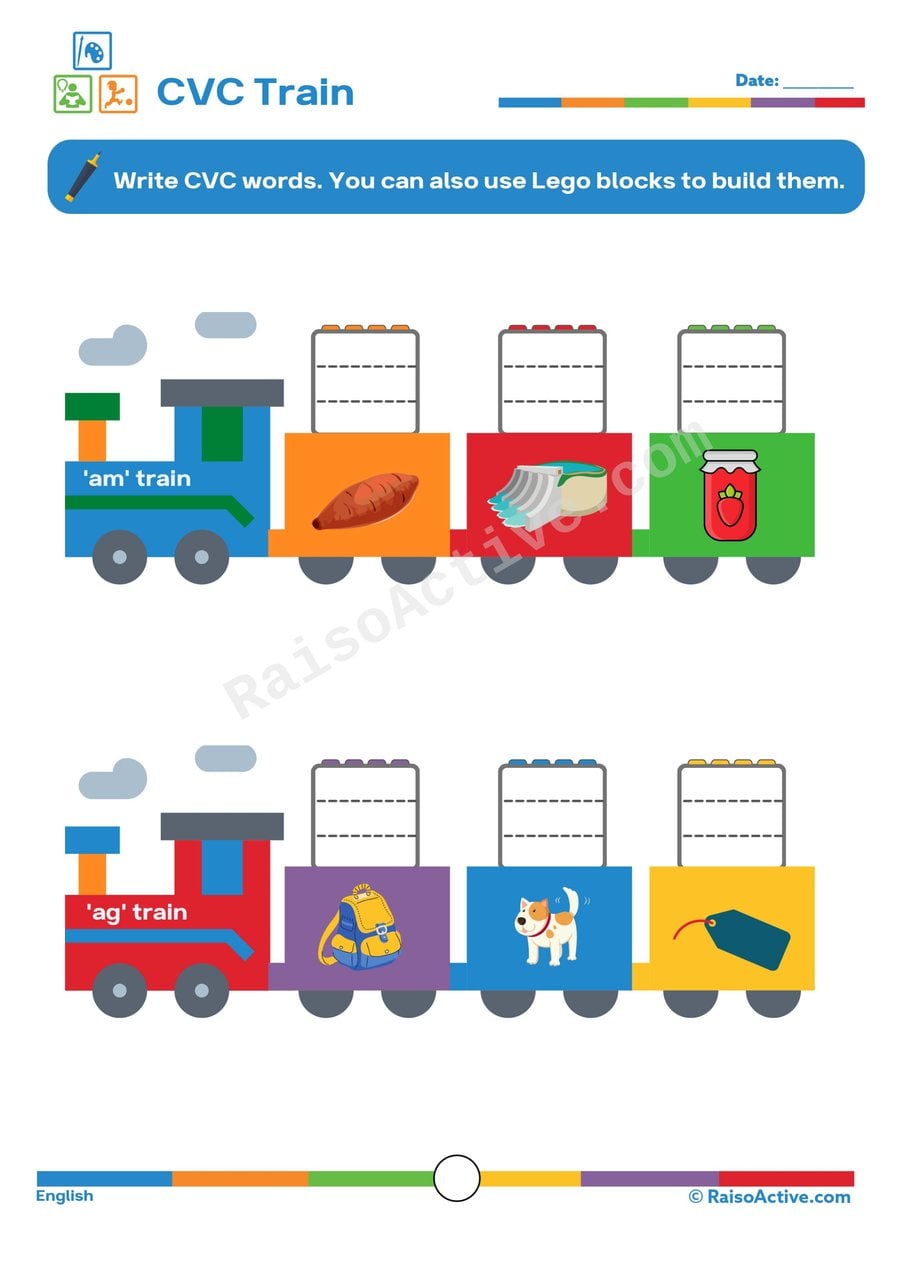
CVC Train Worksheet: Write and Build CVC Words!
This worksheet gives children ages 4-6 focused practice blending letter sounds into consonant-vowel-consonant words, using train-car pictures as clues for words like 'dog,' 'hen,' or 'cup.' Because children both write the word and can optionally build it with Lego blocks, this worksheet reinforces the same phonics skill through two different physical actions — handwriting and hands-on construction — which helps the spelling patterns stick.

Plant Parts Worksheet: Identify and Label the Parts of a Plant!
This worksheet teaches children ages 4-6 to identify and independently label the flower, stem, leaf, and roots of a plant, moving a step beyond simple matching toward recalling vocabulary from memory. Optionally adding pulses or grains to the diagram introduces a tactile, sensory layer that helps reinforce which part is which through touch as well as sight.
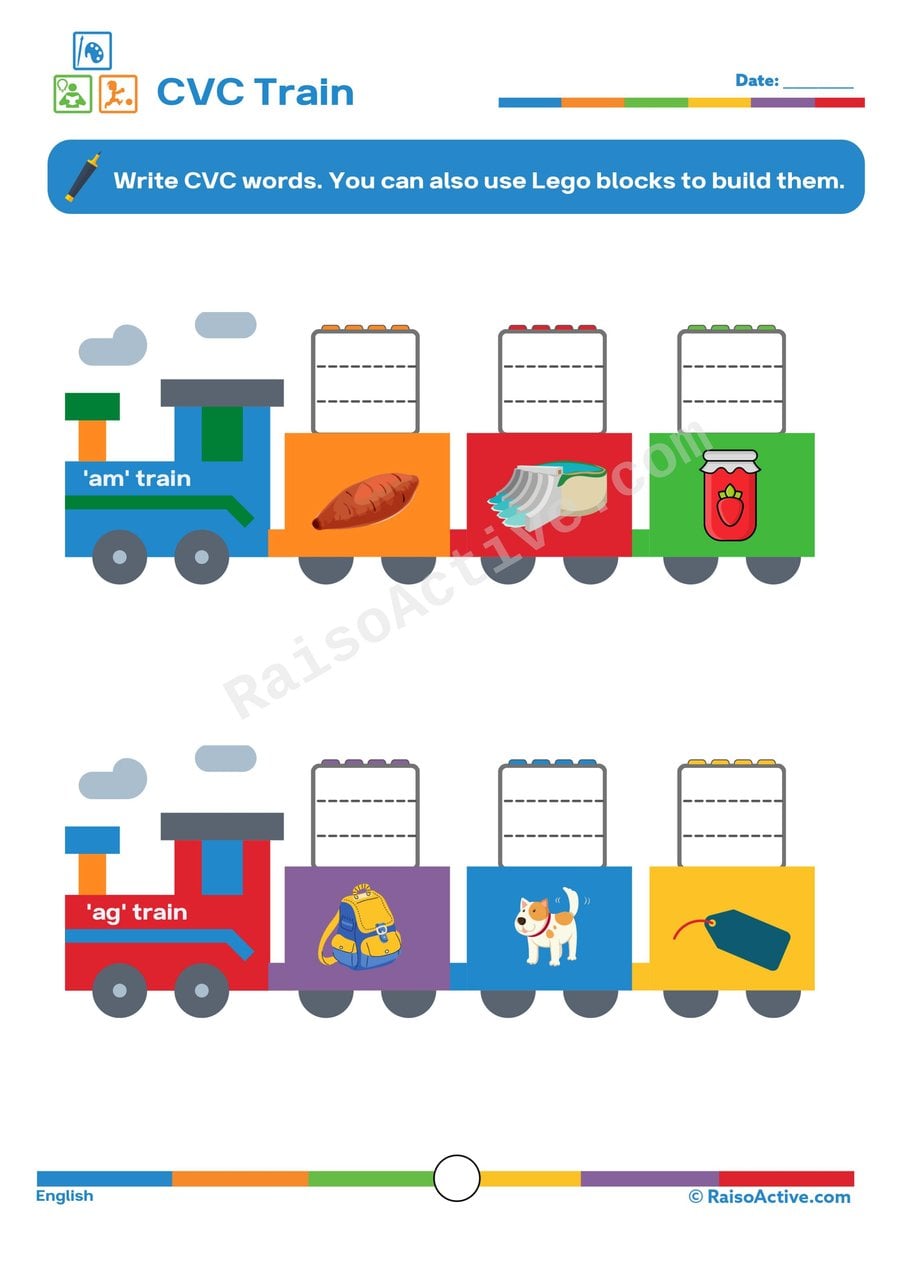
CVC Train Worksheet: Write CVC Words!
Writing consonant-vowel-consonant words like 'cat,' 'sun,' or 'pig' under matching pictures gives children ages 4-6 direct practice with letter-sound blending, a core phonics skill that underpins independent reading. Because each train car pairs a picture clue with a blank space, children also practice translating a spoken word they can sound out into its correctly spelled written form.
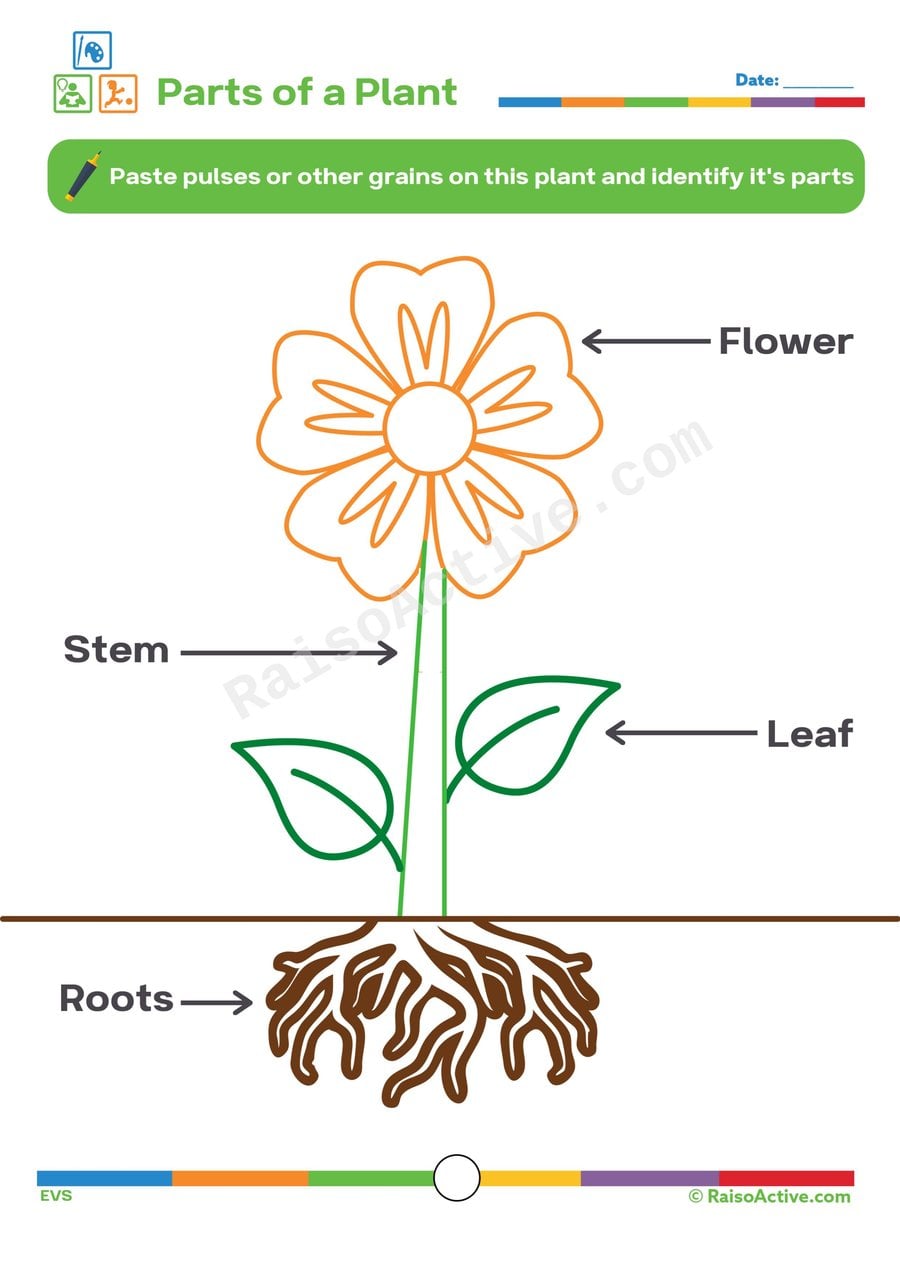
Parts of a Plant Worksheet: Identify and Label!
This activity teaches children ages 3-5 the basic parts of a plant — flower, stem, leaf, and roots — by having them label a diagram and add texture using real pulses or grains glued onto the plant shape. Combining a tactile material with each labeled part helps young children retain the vocabulary better than labeling alone, since touch and sight reinforce the same information.

Indian Cities Crossword Puzzle Worksheet for Kids
This crossword challenges children ages 4-6 to identify famous Indian cities from picture clues of their landmarks and then spell out each city's name in the puzzle grid, combining observation skills with early geography knowledge. Counting the crossword boxes to match each city's letter count also reinforces attention to word length before writing.

My Address Worksheet: Color the State and Fill in Your Details!
This worksheet introduces children ages 3-5 to their personal address as a piece of core safety knowledge, while the map-coloring task builds early geography skills by having them physically locate and color their home state within India. Practicing house number, street, city, and PIN code also gives meaningful, motivated handwriting practice since the words are personally relevant.
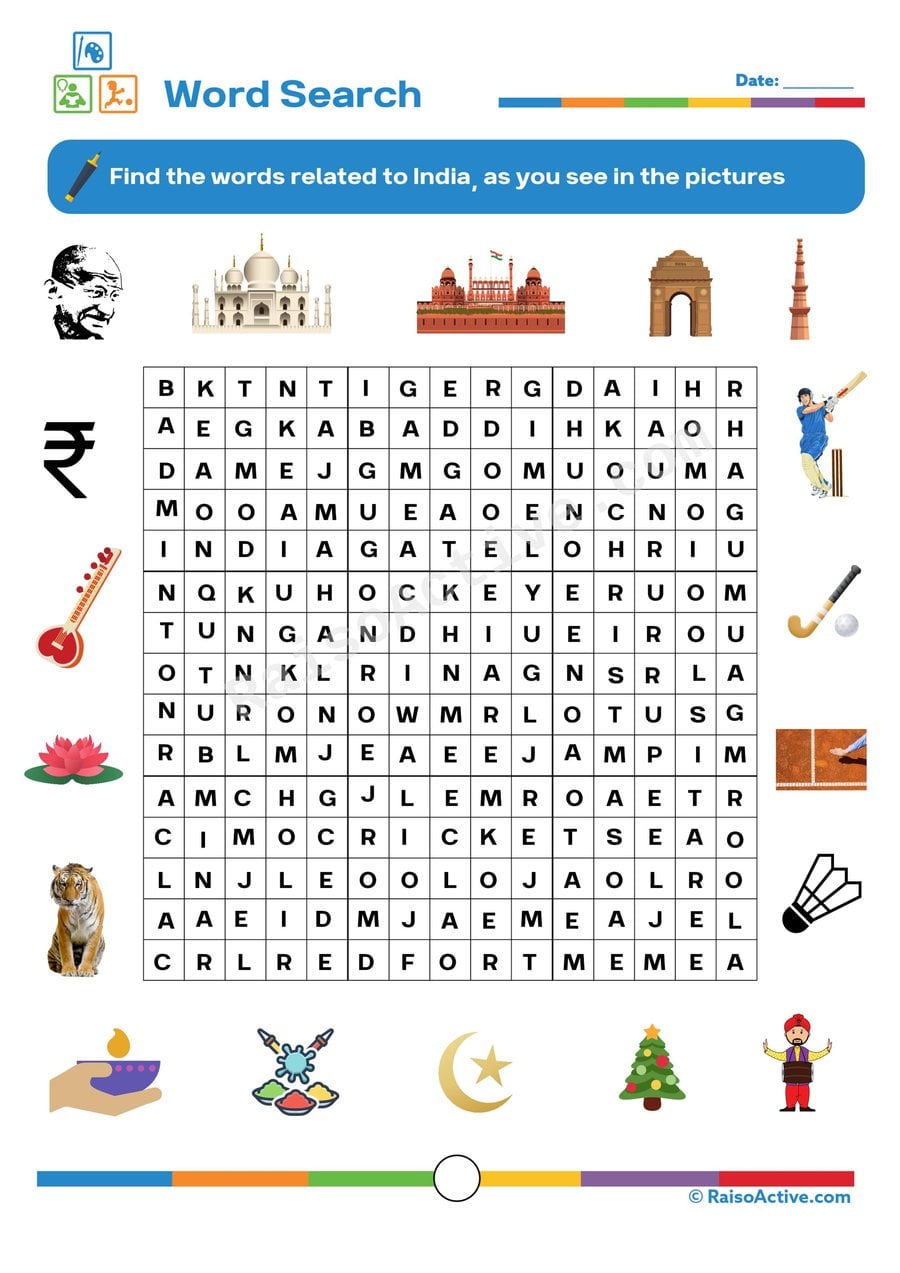
India Word Search Worksheet for Kids
Searching a letter grid for words connected to India, such as festival names, foods, or landmarks, builds visual scanning and word-recognition skills in children ages 4-7 while introducing vocabulary tied to Indian culture and geography. Because the target words vary in length and may run in different directions through the grid, children also practice sustained visual attention and letter-sequence tracking, both important pre-reading skills. This worksheet pairs literacy practice with cultural and social studies exposure in a single activity.
Guides for this topic
Sight Words by Age: The First 50 Words and How to Teach Them Without Flashcard Fatigue
Which sight words to teach first and why, the heart-word method, a read-trace-write-find routine, games, and a by-age table of typical sight-word progress.
How to Teach CVC Blending: A Step-by-Step Method That Works in Two Weeks
A step-by-step method for teaching CVC blending, covering continuous sounds, word families, common errors, and a 14-day plan that most children finish reading CVC words.
Documenting Learning Without Drowning in Data: A Practical Guide for Parents and Teachers
Learn practical ways to document your child's learning without overwhelm. Simple portfolios, observation tips, and printable trackers for ages 1-8.
Reviews
Every worksheet for ages 4–6, no watermark
Members download the full library of 1,000+ worksheets and every activity pack without watermarks or daily limits. One year costs ₹1,000 in India or $20 elsewhere.
See membership plansOr download any worksheet free with a watermark (5 a day).