Common and Proper Nouns Worksheet for Kids
This worksheet introduces children ages 4-6 to the grammar concept of common nouns (general words like city or dog) versus proper nouns (specific names like Mumbai or Rex), building an early foundation for capitalization rules and sentence structure. Learning to tell the two apart also sharpens attention to detail, since proper nouns are marked by capital letters that common nouns don't use.
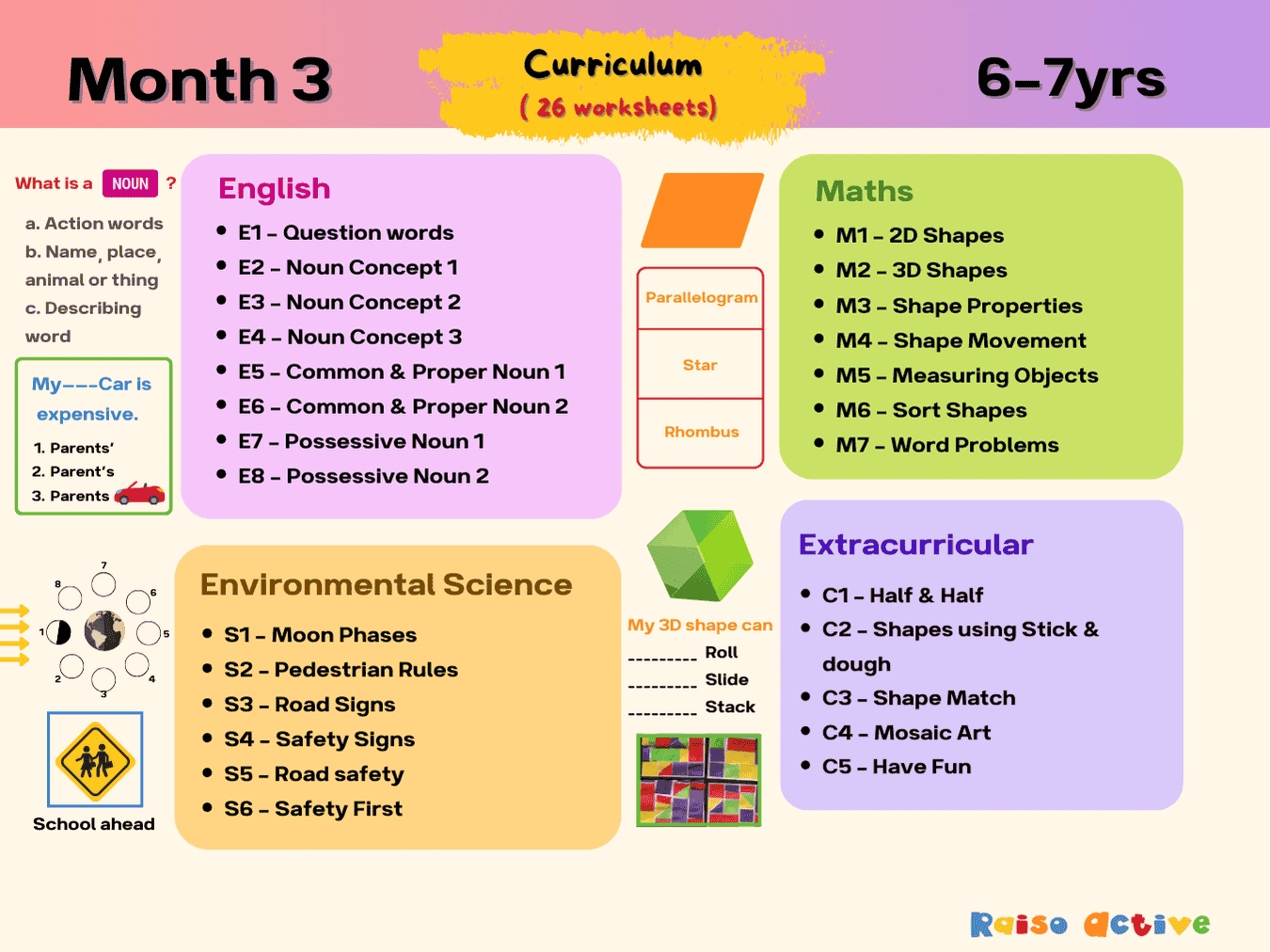
Part of the pack
Month 3: Learning & Development | Ages 6-7
This is page 8 of the pack. Ages 6-7 · Grade 1Ages 6-7 · Year 2Ages 6-7 · Class 1Ages 6-7
Made for your child
Spelling practice, made for your child
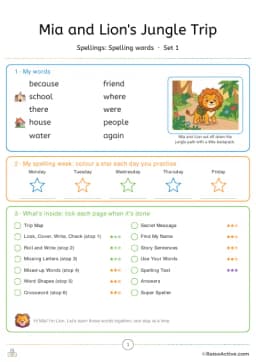
Their own spelling words turned into a pack: trace or look-cover-write-check, roll and write, a secret picture code, a word search, a crossword and a test, with their name in it.
Make a spelling packFree preview · free for members
Or start free: a word search with sight wordsCurriculum
- Grammar > Nouns & Grammar
How to use this worksheet
Read through the instructions together and look at the first set of words or sentences. Ask your child to identify which words name something general (a common noun) and which name something specific (a proper noun). Have them underline the common nouns and circle the proper nouns as instructed. Finish by matching common nouns to their related proper noun examples, reading each pair aloud together.
Materials needed
- Pencil
- Eraser
Extension activities
- 1Have your child write a few sentences using both a common noun and a matching proper noun, like 'My dog is named Rex.'
- 2Create a list together of common and proper nouns found around the classroom or house.
- 3Play a game naming a common noun and taking turns naming a specific proper noun example of it.
- 4Look through a book and spot capital letters that signal proper nouns.

Written by
Hemsweta Jain · Teacher Cheena
MBA and Early Childhood Educator, teaching since 2014 · Founder of RaisoActive, Mumbai
Every RaisoActive worksheet is designed and checked by the founder before publishing.
Published · Last reviewed
More from Month 3: Learning & Development | Ages 6-7

Shape Exploration: A Parent's Guide to Shapes and Movement
Ages 3-5 · Preschool–Pre-KAges 3-5 · Nursery–ReceptionAges 3-5 · Nursery–LKGAges 3-5
This parent-led guide helps children ages 3-5 connect shape knowledge to physical movement and everyday observation, exploring how shapes look, how they can move (rolling, sliding, stacking), and where they appear in the real world. Linking abstract shape names to hands-on exploration and movement builds a much deeper understanding than simply naming shapes on a page.

Moon Phases Worksheet for Kids: Learn About the Moon!
Ages 4-6 · Pre-K–KindergartenAges 4-6 · Reception–Year 1Ages 4-6 · LKG–UKGAges 4-6
This worksheet introduces children ages 4-6 to basic astronomy by having them shade the parts of the moon that aren't lit by the sun and draw how the moon actually appears from Earth during each phase. Understanding that the moon's shape doesn't change but the part we see does is an early, concrete way to introduce the science of light, shadow, and orbit.
Question Words Worksheet for Early Learners
Ages 4-6 · Pre-K–KindergartenAges 4-6 · Reception–Year 1Ages 4-6 · LKG–UKGAges 4-6
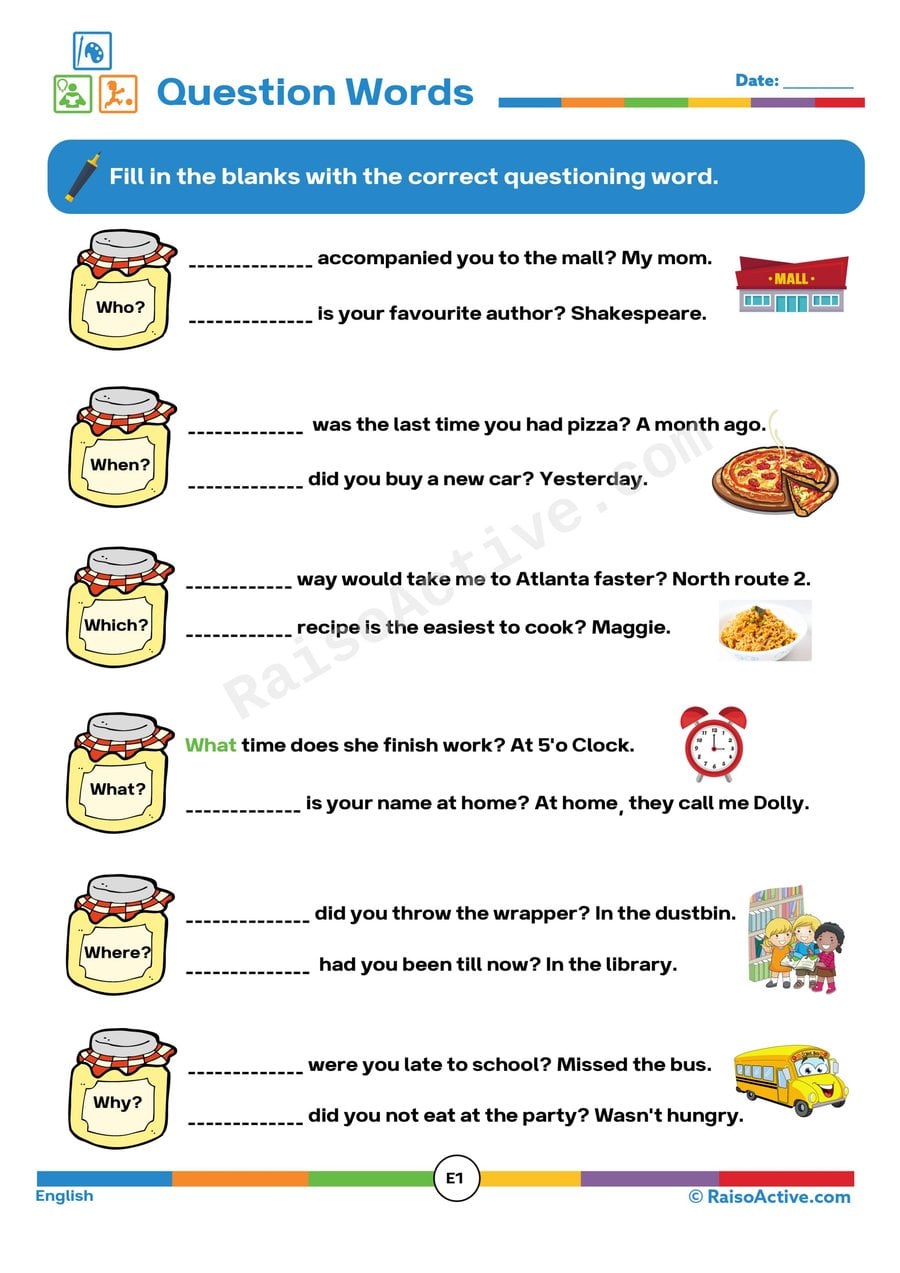
This worksheet teaches children ages 4-6 to recognize and correctly use the six core question words — who, what, when, where, why, and which — by choosing the right one to complete a sentence. Understanding what kind of information each question word asks for (a person, a time, a place, a reason) is an important early grammar and comprehension skill that also improves how children ask their own questions.
Road Signs Matching Worksheet for Preschoolers
Ages 3-5 · Preschool–Pre-KAges 3-5 · Nursery–ReceptionAges 3-5 · Nursery–LKGAges 3-5
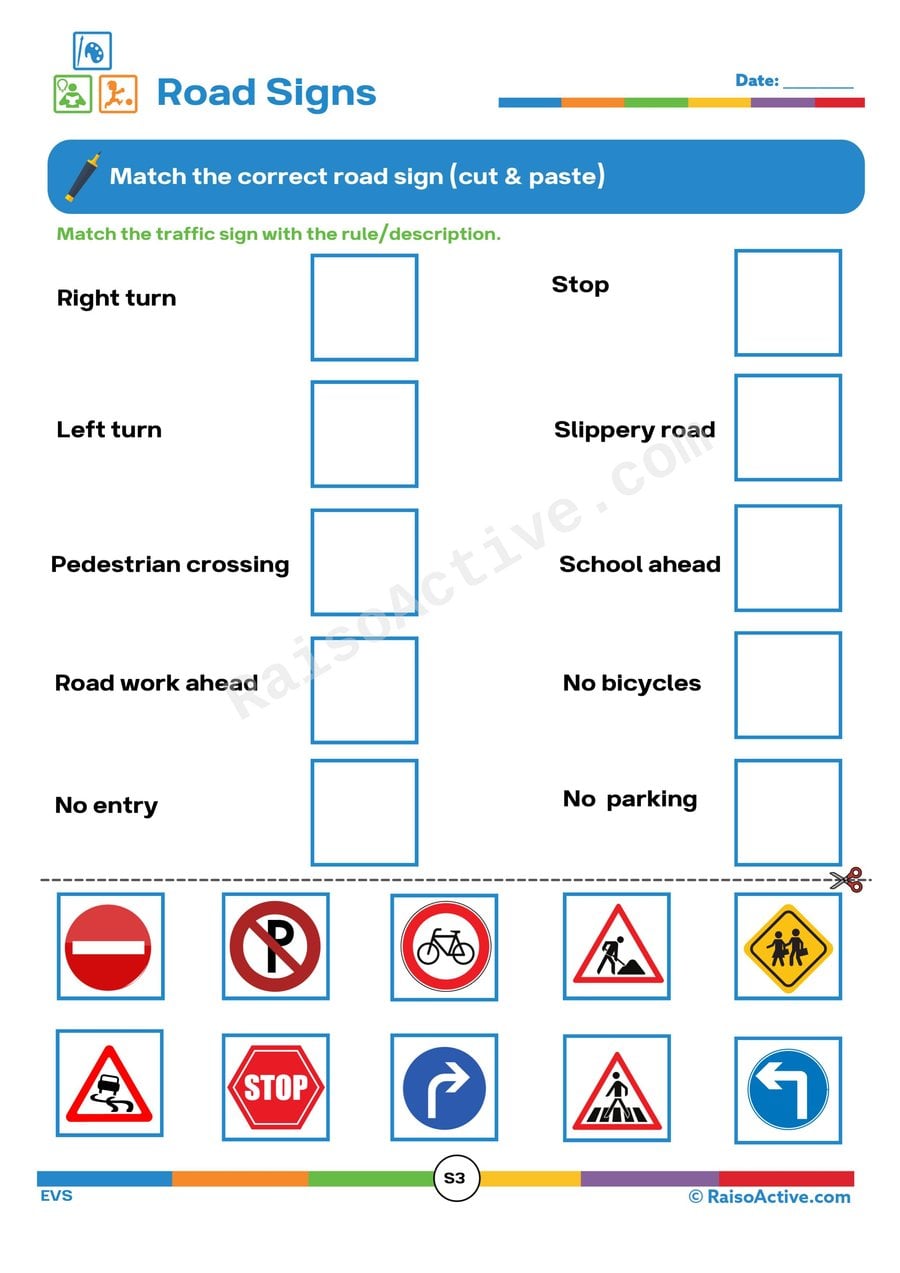
This cut-and-paste worksheet helps children ages 3-5 build early road safety literacy by matching common signs — such as stop, crosswalk, and traffic light — to their correct meanings, while also practicing scissor control and precise gluing. Recognizing road signs by shape and color is a practical real-world skill that keeps children safer as pedestrians and future road users.

Noun Flower Worksheet: Identify Nouns and Build Sentences!
Ages 4-6 · Pre-K–KindergartenAges 4-6 · Reception–Year 1Ages 4-6 · LKG–UKGAges 4-6
This hands-on flower craft teaches children ages 4-6 to identify nouns — people, places, and things — by opening petal flaps to reveal example words, then building a simple sentence using each noun they find. Turning grammar into a physical, foldable object makes an abstract concept like 'noun' concrete and memorable for early learners.

Road Safety Worksheet for Kids: Fill-in-the-Blanks
Ages 3-5 · Preschool–Pre-KAges 3-5 · Nursery–ReceptionAges 3-5 · Nursery–LKGAges 3-5
This worksheet teaches children ages 3-5 essential road safety vocabulary and rules — like looking both ways, using crosswalks, and obeying traffic signals — by having them choose the correct word to complete each safety-related sentence. Learning these rules in a reading and writing context, rather than just hearing them, helps reinforce safety habits that protect children in real traffic situations.
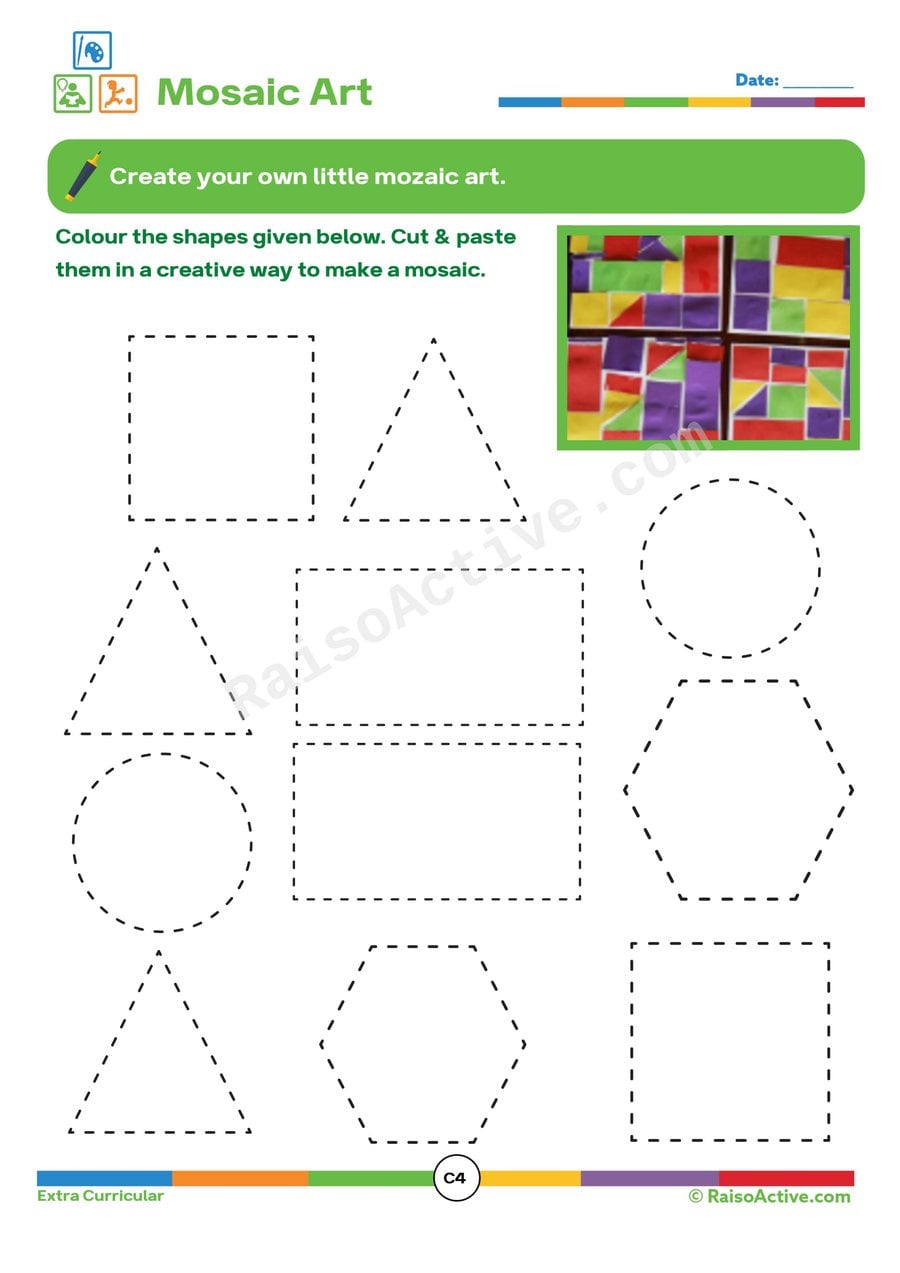
Mosaic Art Shapes Worksheet for Kids
Ages 3-5 · Preschool–Pre-KAges 3-5 · Nursery–ReceptionAges 3-5 · Nursery–LKGAges 3-5
This mosaic craft asks children ages 3-5 to color, cut, and arrange individual shape pieces into a larger picture, combining shape recognition with sustained fine motor practice in scissor use and precise placement. Working piece by piece toward a bigger image also builds early planning skills, as children must think about how small parts combine to form a whole.

Color the Shapes! A Fun Coloring Worksheet for Kids
Ages 3-5 · Preschool–Pre-KAges 3-5 · Nursery–ReceptionAges 3-5 · Nursery–LKGAges 3-5
This worksheet strengthens children ages 3-5 in both shape recognition and color matching by having them reproduce a colored key onto a black-and-white picture made of shapes. Matching a printed example rather than choosing colors freely also builds a new skill: following a visual reference precisely, which is different from — and complements — open-ended coloring.
Related worksheets
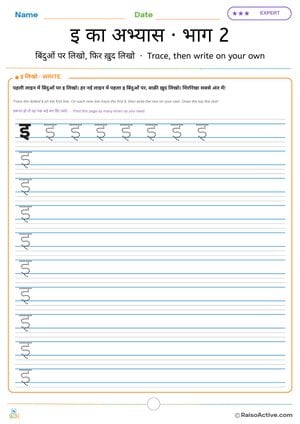
Hindi Letter इ Practice Part 2: Trace and Write on Your Own | इ का अभ्यास · भाग 2
Ages 3-7 · Preschool–Grade 1Ages 3-7 · Nursery–Year 2Ages 3-7 · Nursery–Class 1Ages 3-7
Children build writing fluency by tracing the dotted line इ on the first line and then writing the letter on their own, line after line, as the dotted help fades. The headline (शिरोरेखा) is drawn last, as in Hindi handwriting.

Phonics Level 2 Certificate of Achievement: Super Reader
Ages 4-7 · Pre-K–Grade 1Ages 4-7 · Reception–Year 2Ages 4-7 · LKG–Class 1Ages 4-7
Children celebrate reading and spelling words with blends and digraphs, and tick what they can read: CVC words, blends and digraphs.
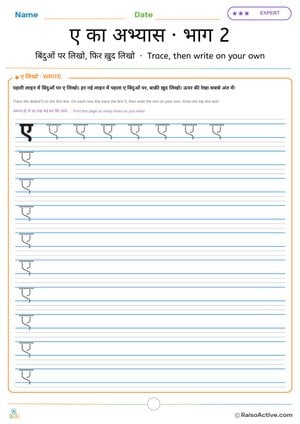
Hindi Letter ए (e) Practice 2: Trace, then Write on Your Own | ए का अभ्यास · भाग 2
Ages 5-7 · Kindergarten–Grade 1Ages 5-7 · Year 1–Year 2Ages 5-7 · UKG–Class 1Ages 5-7
An expert page for confident writers: trace the dotted ए on the first line, then on each new line trace the first ए and write the rest on your own, adding the top line last.
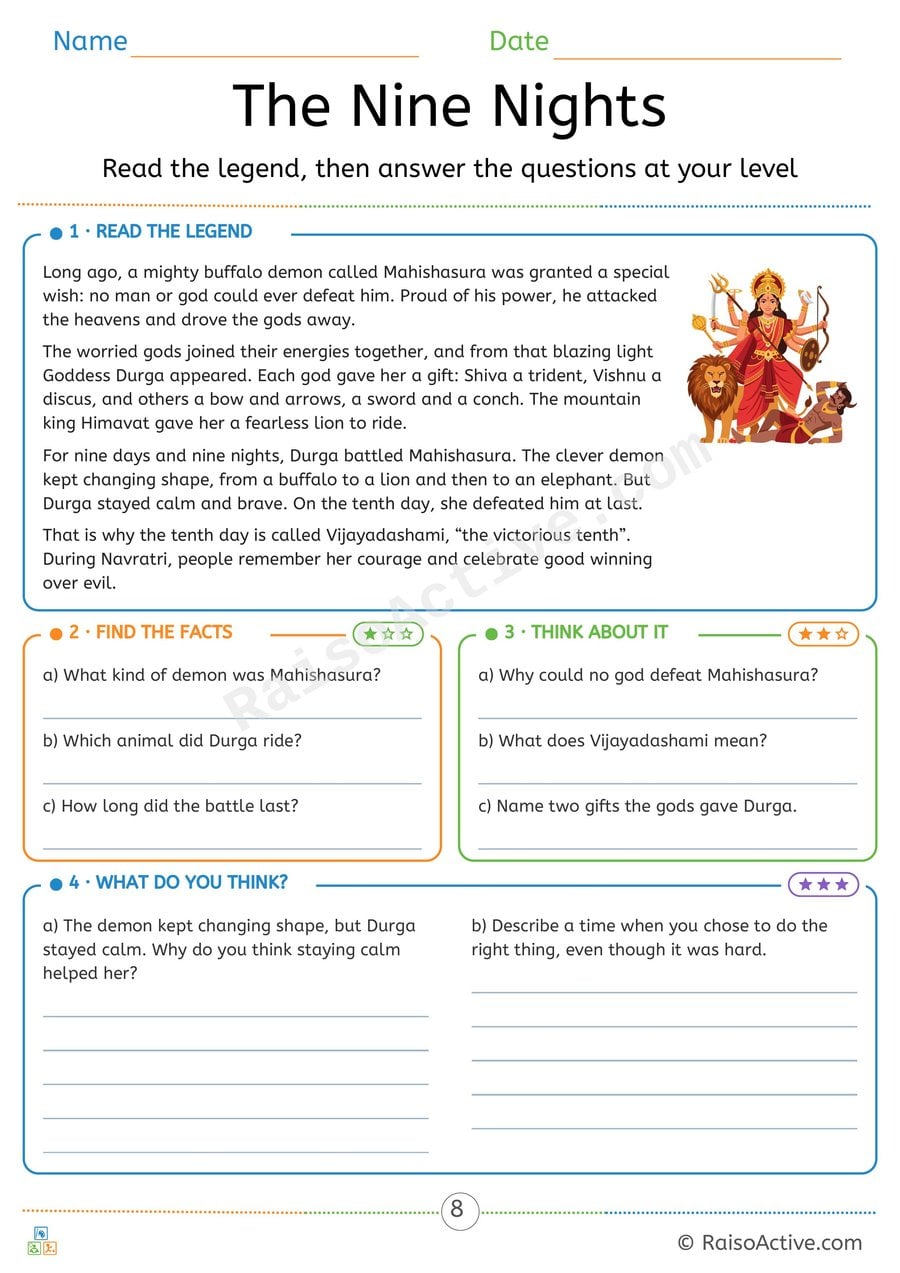
The Nine Nights: Durga and Mahishasura Reading Comprehension
Ages 7-11 · Grade 2–Grade 3Ages 7-11 · Year 3–Year 4Ages 7-11 · Class 2–Class 3Ages 7-11
Children read a retelling of the legend of Durga and Mahishasura, find facts in the text, answer inference questions about why things happened, and write their own opinion about staying calm and doing the right thing.
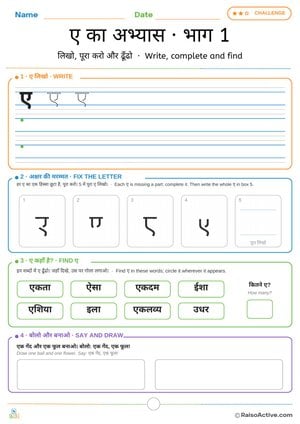
Hindi Letter ए (e) Practice 1: Write, Fix the Letter and Find | ए का अभ्यास · भाग 1
Ages 4-7 · Pre-K–Grade 1Ages 4-7 · Reception–Year 2Ages 4-7 · LKG–Class 1Ages 4-7
A challenge page: write ए between the lines, complete four letters that are each missing a part and then write the whole ए in box 5, find ए in words such as एकता, एकदम, एशिया and एकलव्य, and draw a picture. ए is not the short form of ऐ; the practice page keeps them apart.
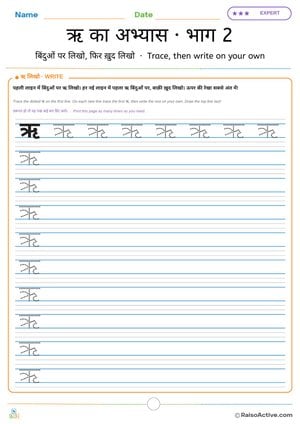
Hindi Letter ऋ (ri) Practice 2: Trace, then Write on Your Own | ऋ का अभ्यास · भाग 2
Ages 5-7 · Kindergarten–Grade 1Ages 5-7 · Year 1–Year 2Ages 5-7 · UKG–Class 1Ages 5-7
An expert page for confident writers: trace the dotted ऋ on the first line, then on each new line trace the first ऋ and write the rest on your own, adding the top line last.
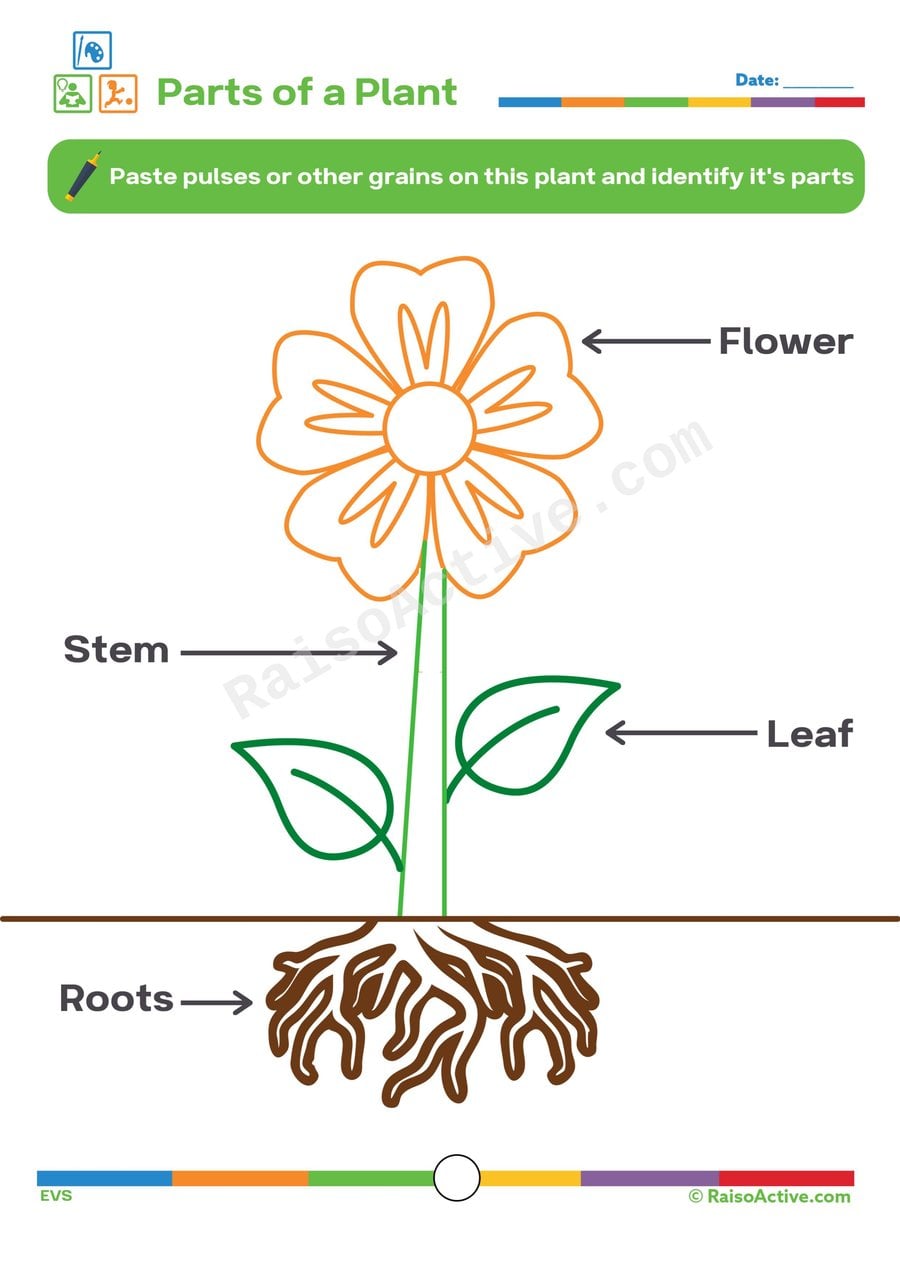
Parts of a Plant Worksheet: Identify and Label!
Ages 3-5 · Preschool–Pre-KAges 3-5 · Nursery–ReceptionAges 3-5 · Nursery–LKGAges 3-5
This activity teaches children ages 3-5 the basic parts of a plant — flower, stem, leaf, and roots — by having them label a diagram and add texture using real pulses or grains glued onto the plant shape. Combining a tactile material with each labeled part helps young children retain the vocabulary better than labeling alone, since touch and sight reinforce the same information.
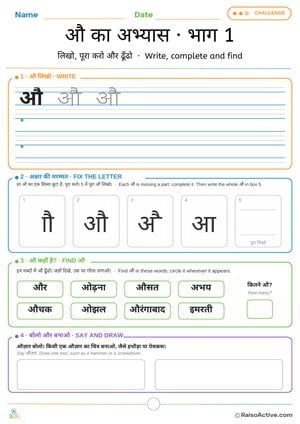
Hindi Letter औ (au) Practice 1: Write, Fix the Letter and Find | औ का अभ्यास · भाग 1
Ages 4-7 · Pre-K–Grade 1Ages 4-7 · Reception–Year 2Ages 4-7 · LKG–Class 1Ages 4-7
A challenge page: write औ between the lines, complete four letters that are each missing a part and then write the whole औ in box 5, find औ in words such as और, औसत, औचक and औरंगाबाद, and draw a picture. औ and ओ are different vowels; औ has two marks on top and ओ has one.
Guides for this topic

Documenting Learning Without Drowning in Data: A Practical Guide for Parents and Teachers
Learn practical ways to document your child's learning without overwhelm. Simple portfolios, observation tips, and printable trackers for ages 1-8.

How to Help Your Child with Letter Reversals: A Complete Guide for Parents and Teachers
Letter reversals are normal until age 7-8. Learn the best multisensory strategies, anchor letter tricks, and activities to help children write b, d, p, and q correctly.

Activities That Help with Pencil Grip Development: A Complete Guide for Parents and Teachers
Discover fun, research-backed activities to develop pencil grip in young children. Age-wise exercises, play ideas, and expert tips for parents and teachers.
Reviews
Every worksheet for ages 4–6, no watermark
Members download the full library of 1,000+ worksheets and every activity pack without watermarks or daily limits. One year costs ₹999 in India or $20 elsewhere.
See membership plansOr download any worksheet free with a watermark (5 a day).