Navratri Festival Quest Certificate of Achievement
Ages 7-11 · Grade 2–Grade 3Ages 7-11 · Year 3–Year 4Ages 7-11 · Class 2–Class 3Ages 7-11
Children celebrate finishing the Navratri Festival Quest pack and record which levels they completed.
Free printable worksheets
Download free educational worksheets for children ages 2–8. Perfect for preschool, kindergarten, and early elementary learning activities.
Subscribe to get unlimited access to all worksheets without watermarks
View Subscription Plans289 topics match
6 worksheetsof 1,994
Ages 7-11 · Grade 2–Grade 3Ages 7-11 · Year 3–Year 4Ages 7-11 · Class 2–Class 3Ages 7-11
Children celebrate finishing the Navratri Festival Quest pack and record which levels they completed.
Ages 4-6 · Pre-K–KindergartenAges 4-6 · Reception–Year 1Ages 4-6 · LKG–UKGAges 4-6
Children celebrate finishing the Navratri Fun Time pages and see which levels they completed.
Ages 4-6 · Pre-K–KindergartenAges 4-6 · Reception–Year 1Ages 4-6 · LKG–UKGAges 4-6
This worksheet has 4-6 year olds take a given verb and write it correctly in past, present, and future tense boxes, which is a more demanding task than simply identifying tense since it requires actually producing the correct verb form each time — including the common '-ed' ending pattern for regular verbs. Practicing this transformation across multiple verbs builds the flexible understanding that the same action word changes shape depending on when it happens.
Ages 4-6 · Pre-K–KindergartenAges 4-6 · Reception–Year 1Ages 4-6 · LKG–UKGAges 4-6
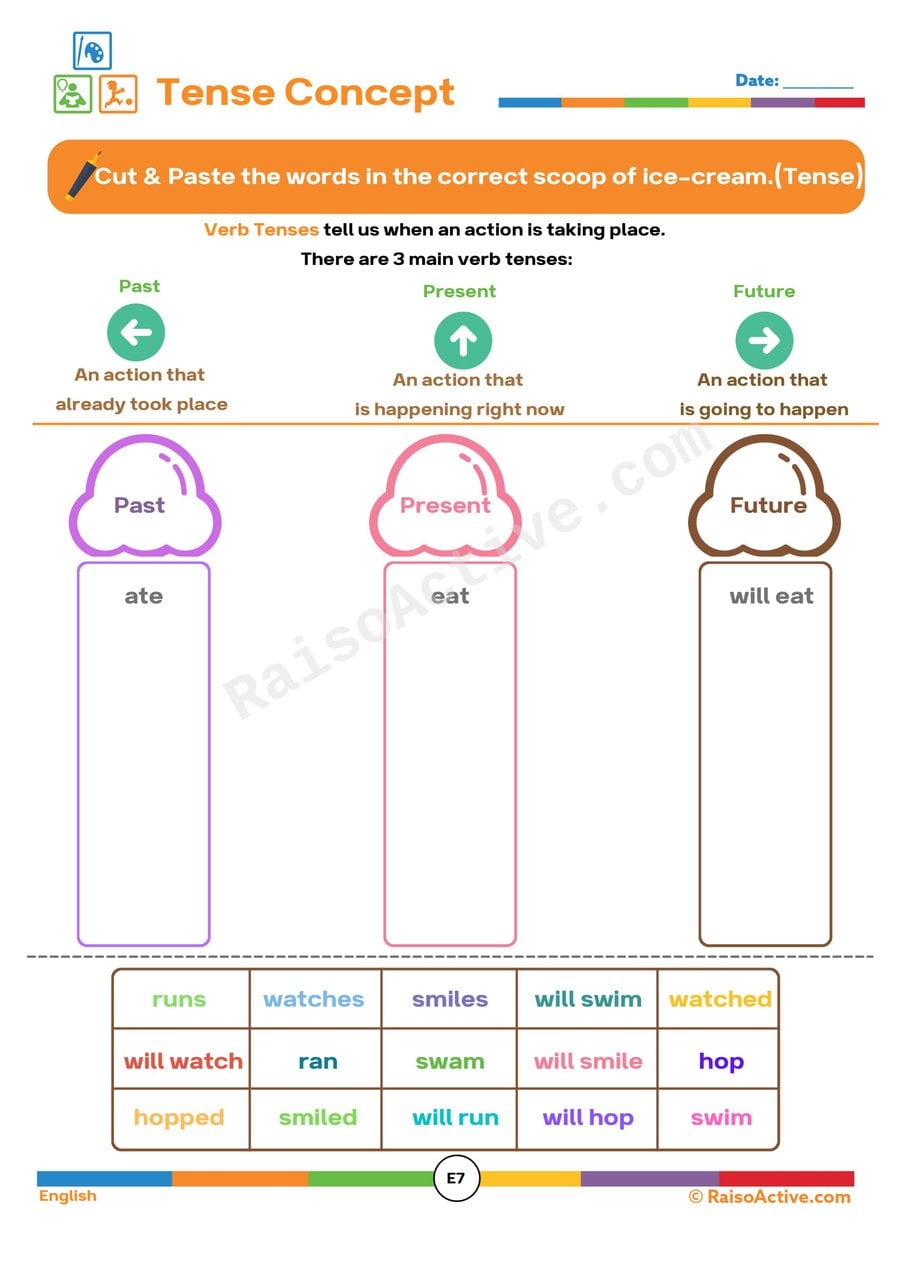
Sorting verbs into past, present, and future ice cream scoops teaches 4-6 year olds that verbs physically change form to show when something happens — a foundational grammar concept that often trips kids up because English tense endings are inconsistent (walked, but went, not goed). Because your child has to read each word, decide its tense, and then correctly cut and place it, the worksheet demands genuine comprehension rather than pattern-matching by ending alone, especially where irregular verbs are involved.
Ages 5-7 · Kindergarten–Grade 1Ages 5-7 · Year 1–Year 2Ages 5-7 · UKG–Class 1Ages 5-7
This worksheet asks 5-7 year olds to read a full sentence and identify which tense it's written in — past, present, or future — based on the verb form and clue words used, which is a meaningfully harder skill than simply writing verbs in different tenses since it requires recognizing the grammar pattern rather than producing it. This kind of tense-identification practice is exactly what supports stronger reading comprehension and writing later, since understanding when something happens is core to following any story.
Ages 4-6 · Pre-K–KindergartenAges 4-6 · Reception–Year 1Ages 4-6 · LKG–UKGAges 4-6
This worksheet gives children ages 4-6 focused practice with present tense verbs, both producing them correctly in fill-in-the-blank sentences and recognizing them when identifying whether a given sentence is written in the present tense. Distinguishing tense is an important grammar milestone that helps children communicate clearly about what is happening right now versus what already happened, a distinction they're actively sorting out in their own speech at this age.