Tense Time! Identifying Past, Present, and Future Tense Worksheet
This worksheet asks 5-7 year olds to read a full sentence and identify which tense it's written in — past, present, or future — based on the verb form and clue words used, which is a meaningfully harder skill than simply writing verbs in different tenses since it requires recognizing the grammar pattern rather than producing it. This kind of tense-identification practice is exactly what supports stronger reading comprehension and writing later, since understanding when something happens is core to following any story.
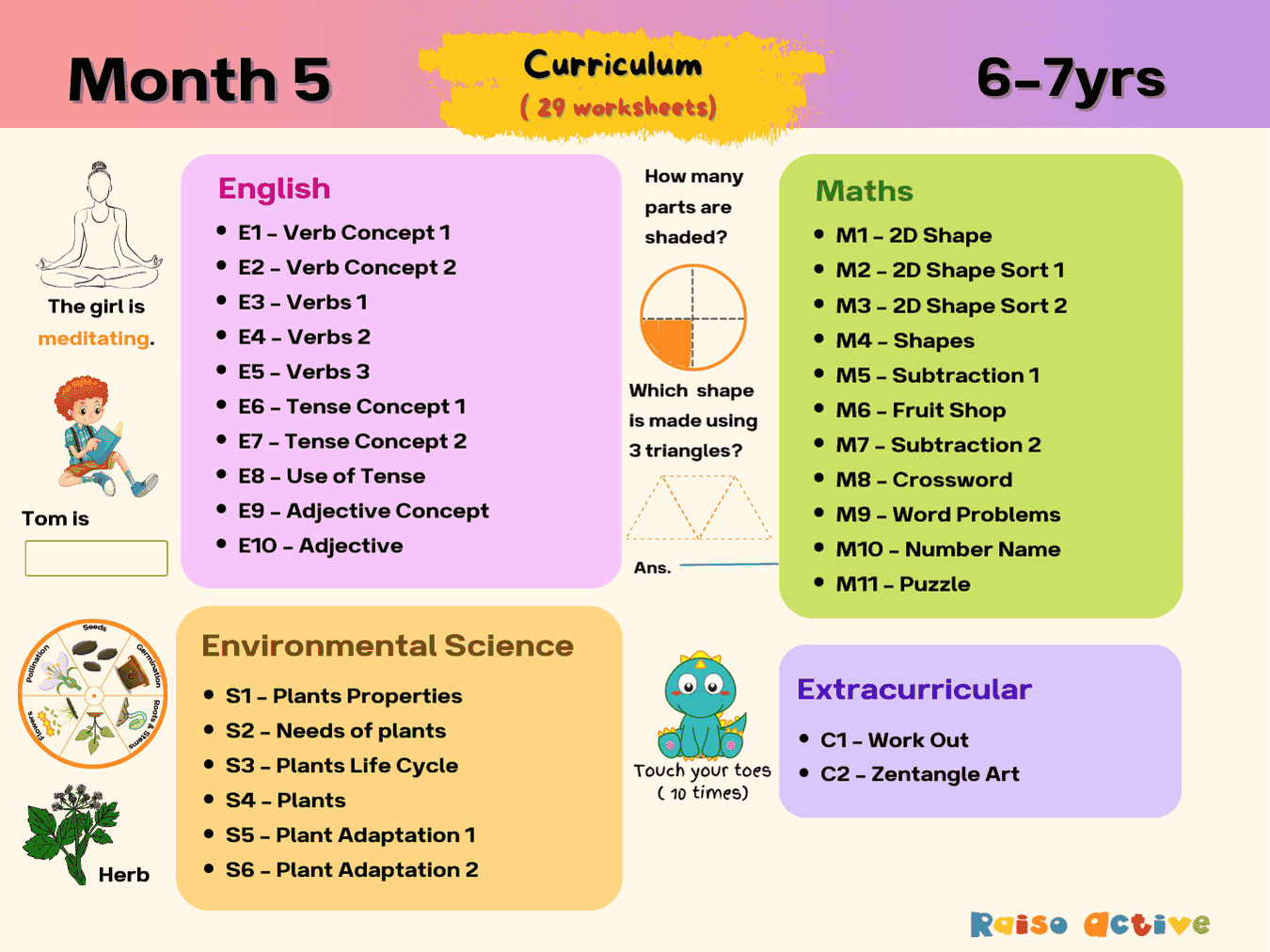
Part of the pack
Month 5: Essential English, Math, Science | Ages 6-7
This is page 9 of the pack. Ages 6-7 · Grade 1Ages 6-7 · Year 2Ages 6-7 · Class 1Ages 6-7
Curriculum
- Grammar > Verb Tenses
How to use this worksheet
Read the first sentence aloud together, paying close attention to the verb. Ask your child what clues tell them when the action happens — words like 'yesterday,' 'now,' or 'will' — or the ending of the verb itself. Have them circle or color the box for the correct tense based on those clues. Move sentence by sentence down the page, asking your child to explain their reasoning each time before confirming the answer.
Materials needed
- Pencil
- Crayons
Extension activities
- 1Have your child write their own sentence for each of the three tenses.
- 2Look through a favorite book together and find examples of past, present, and future tense sentences.
- 3Play a quick game of tense charades, acting out a sentence and having others guess its tense.
- 4Talk through your child's day using all three tenses — what they did, what they're doing, what they'll do.
- 5Challenge your child to change a past-tense sentence into present and future tense versions.

Written by
Hemsweta Jain · Teacher Cheena
MBA and Early Childhood Educator, teaching since 2014 · Founder of RaisoActive, Mumbai
Every RaisoActive worksheet is designed and checked by the founder before publishing.
Published · Last reviewed
More from Month 5: Essential English, Math, Science | Ages 6-7
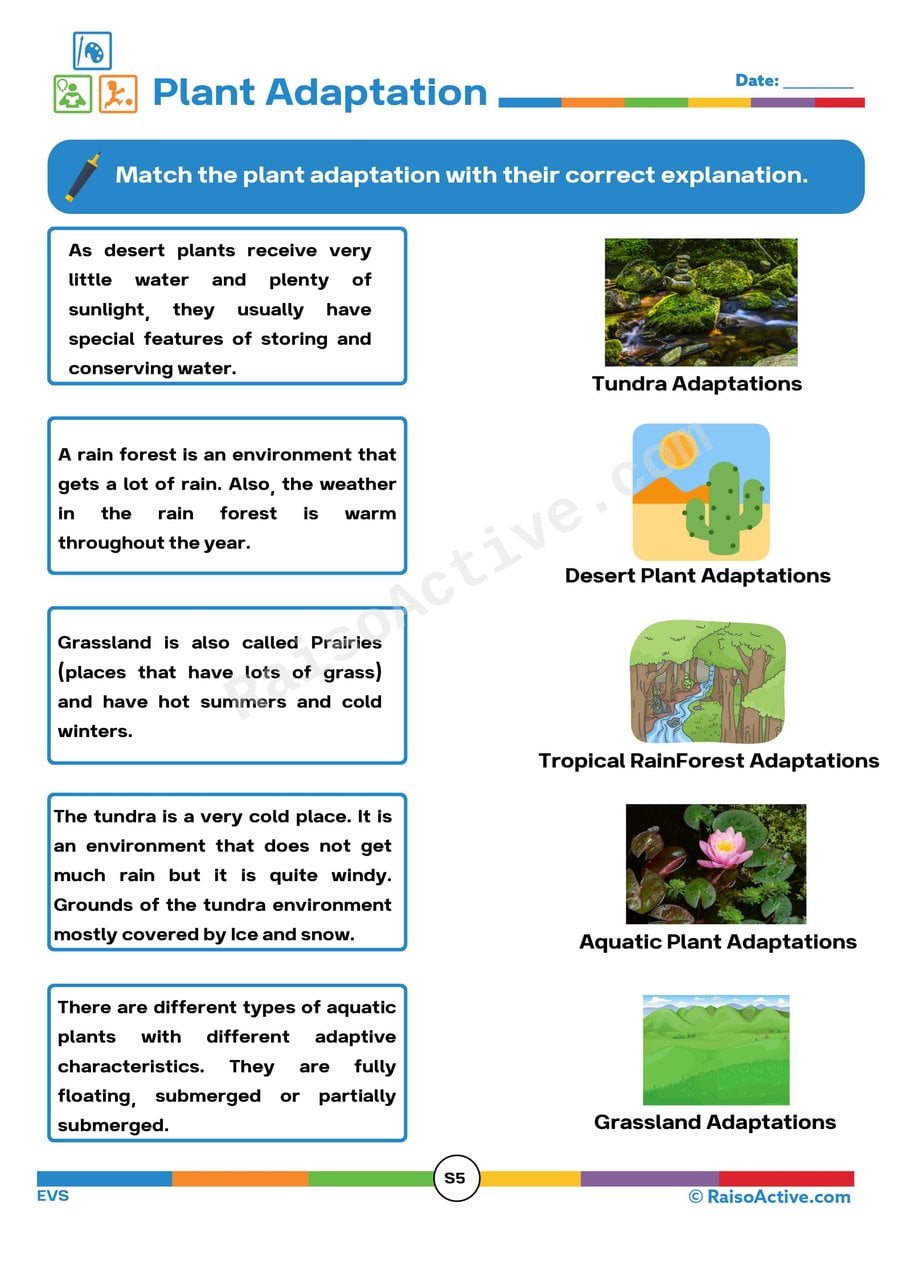
Plant Adaptation Matching Worksheet for Kids
Ages 4-6 · Pre-K–KindergartenAges 4-6 · Reception–Year 1Ages 4-6 · LKG–UKGAges 4-6
This worksheet has 4-6 year olds match written descriptions of plant adaptations to the correct pictures, building on the idea that plants develop specific features — thick leaves, deep roots, bright flowers — to help them survive in their particular environment. Matching a description to an image requires your child to connect an abstract idea (why does this feature help?) to a concrete picture, which is a genuine step up from simple plant-part identification.

Shape Sorting Fun: Matching Shapes by Properties Worksheet
Ages 4-5 · Pre-KAges 4-5 · ReceptionAges 4-5 · LKGAges 4-5
This worksheet has 4-5 year olds match written shape descriptions — number of sides, number of corners — to the correct shapes, then count how many of each shape appear in an accompanying picture. Reasoning from a property description back to the shape itself is a step up from simple naming, since it requires your child to hold the definition in mind and scan for a match, and the counting task afterward adds a quantity check to the geometry practice.

2D Shapes Worksheet for Preschoolers: Identifying Shapes and Properties
Ages 4-6 · Pre-K–KindergartenAges 4-6 · Reception–Year 1Ages 4-6 · LKG–UKGAges 4-6
This worksheet pushes 4-6 year olds past simply naming shapes into analyzing their properties — counting sides and corners for circles, triangles, squares, rectangles, pentagons, and hexagons, and using those properties to answer more complex questions about which shapes combine to form others. That combination-and-composition piece (asking what shapes make up a bigger shape, or identifying a shaded portion) is genuine early geometric reasoning, well beyond simple shape recognition.
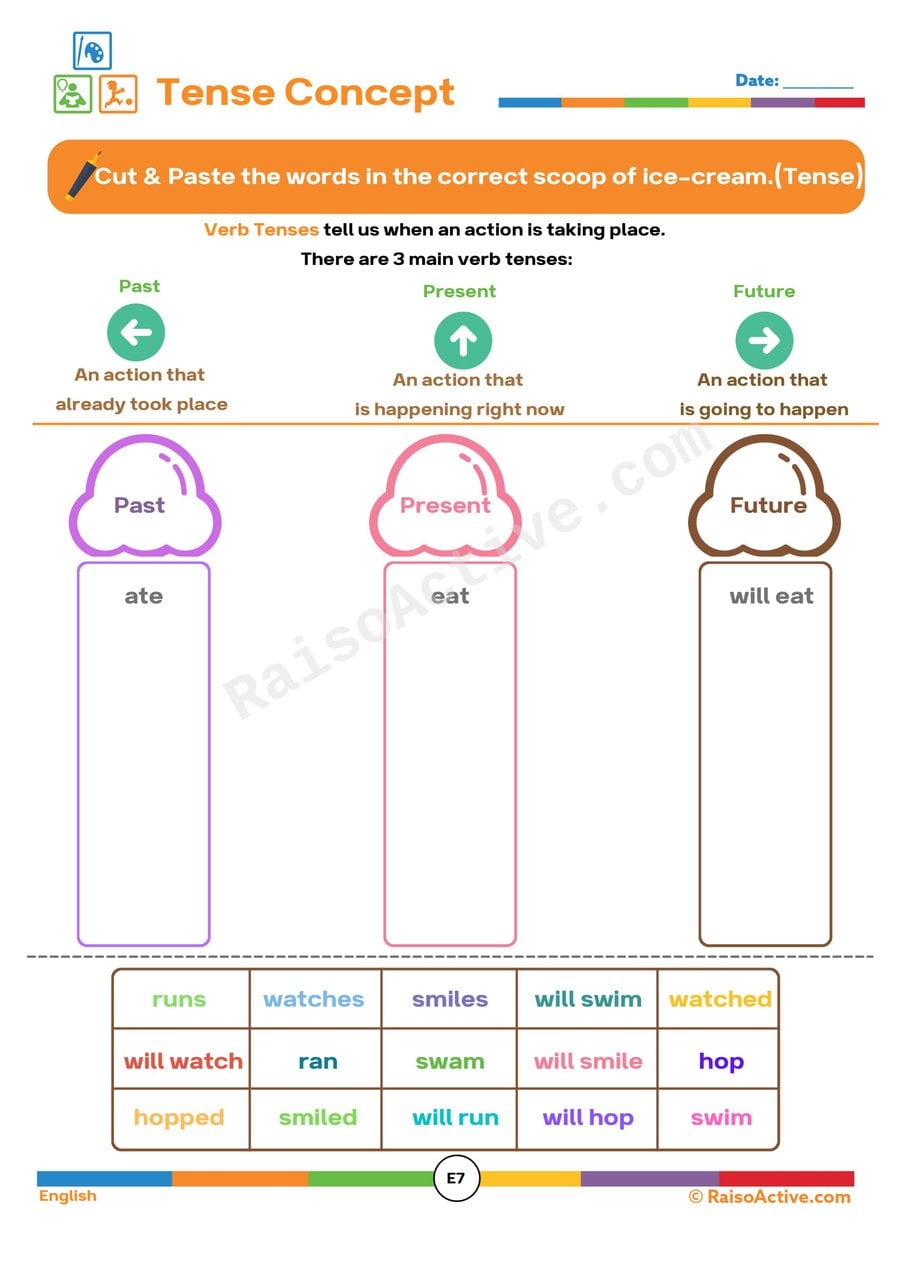
Tense Time! Cut and Paste the Verbs Worksheet
Ages 4-6 · Pre-K–KindergartenAges 4-6 · Reception–Year 1Ages 4-6 · LKG–UKGAges 4-6
Sorting verbs into past, present, and future ice cream scoops teaches 4-6 year olds that verbs physically change form to show when something happens — a foundational grammar concept that often trips kids up because English tense endings are inconsistent (walked, but went, not goed). Because your child has to read each word, decide its tense, and then correctly cut and place it, the worksheet demands genuine comprehension rather than pattern-matching by ending alone, especially where irregular verbs are involved.

Adjective Adventure: Cut and Paste Worksheet for Early Readers
Ages 4-6 · Pre-K–KindergartenAges 4-6 · Reception–Year 1Ages 4-6 · LKG–UKGAges 4-6
This cut-and-paste worksheet has 4-6 year olds fill in the blanks of a short story using adjectives, then reread the finished story to see how those descriptive words change and enrich the meaning — a more advanced application of adjective knowledge than isolated sentence work, since it shows how word choice affects a whole narrative. Choosing which cut-out adjective fits best in context also builds reading comprehension alongside vocabulary.
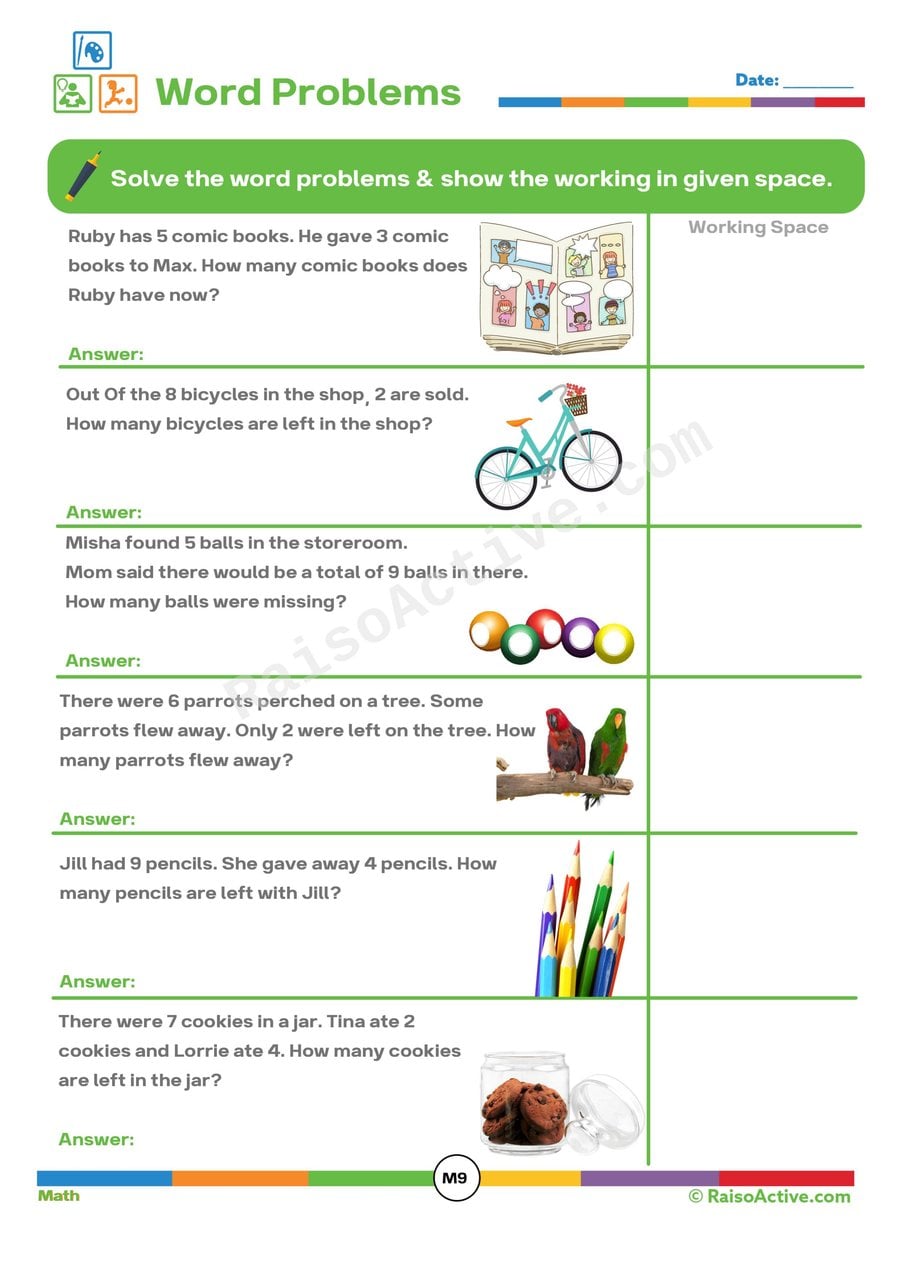
Word Problems Worksheet for Early Learners
Ages 4-6 · Pre-K–KindergartenAges 4-6 · Reception–Year 1Ages 4-6 · LKG–UKGAges 4-6
Word problems ask 4-6 year olds to do something harder than a bare equation: read a short story, figure out what operation it's describing, and only then do the addition or subtraction. That translation step — turning 'Sam had 3 apples and ate 1' into a subtraction fact — is the real skill this worksheet builds, and it's the foundation for all later math word problems your child will encounter in school. Because the numbers here stay small, the challenge is almost entirely about comprehension rather than calculation.

Plant Adaptation Worksheet for Kids: Matching Examples
Ages 4-6 · Pre-K–KindergartenAges 4-6 · Reception–Year 1Ages 4-6 · LKG–UKGAges 4-6
This worksheet introduces 4-6 year olds to plant adaptations — the specific features that help plants survive in their environment, like thick leaves that store water or thorns that deter animals — by having them match real plant examples to the correct type of adaptation and then write it in. This is a genuinely abstract science concept for this age group, since it requires connecting a visible feature to an invisible purpose (why does a cactus have thick, waxy skin?), making it more conceptually demanding than simple plant-part labeling.

2D Shape Sort Worksheet for Preschoolers: Matching Shapes!
Ages 3-5 · Preschool–Pre-KAges 3-5 · Nursery–ReceptionAges 3-5 · Nursery–LKGAges 3-5
This worksheet connects a shape's visual form to its written name, asking 3-5 year olds to match circles, squares, triangles, and rectangles on one side of the page to their names on the other. That word-to-shape link builds early reading vocabulary alongside geometry, since shape names are often a child's first exposure to reading multi-letter words that describe something they can see and touch. The follow-up questions at the bottom add a light counting or identification check to confirm the matching was done with real understanding.
Related worksheets

Tenses in Verbs Worksheet: Tick & Write the Correct Option!
Ages 4-6 · Pre-K–KindergartenAges 4-6 · Reception–Year 1Ages 4-6 · LKG–UKGAges 4-6
This worksheet has children ages 4-6 practice identifying whether a sentence describes a past, present, or future action, ticking the correct verb tense option and then writing it into the sentence. Distinguishing between tenses is a core grammar skill that helps children eventually narrate their own experiences accurately, whether describing something that already happened or something they plan to do.

Future Tense Fun: Fill-in-the-Blanks Worksheet for Kids
Ages 4-6 · Pre-K–KindergartenAges 4-6 · Reception–Year 1Ages 4-6 · LKG–UKGAges 4-6
This worksheet introduces children ages 4-6 to the future tense, having them choose and write the correct verb form to complete sentences about things that 'will' happen. Understanding that verbs change to reflect when an action takes place — past, present, or future — is a foundational grammar concept that helps children communicate more precisely as their sentences grow longer and more complex.

Present Tense Worksheet: Fill in the Blanks and Identify Sentences!
Ages 4-6 · Pre-K–KindergartenAges 4-6 · Reception–Year 1Ages 4-6 · LKG–UKGAges 4-6
This worksheet gives children ages 4-6 focused practice with present tense verbs, both producing them correctly in fill-in-the-blank sentences and recognizing them when identifying whether a given sentence is written in the present tense. Distinguishing tense is an important grammar milestone that helps children communicate clearly about what is happening right now versus what already happened, a distinction they're actively sorting out in their own speech at this age.

Tenses Worksheet: Identifying Past, Present, and Future Verbs
Ages 4-6 · Pre-K–KindergartenAges 4-6 · Reception–Year 1Ages 4-6 · LKG–UKGAges 4-6
Identifying whether an underlined verb describes something that already happened, is happening now, or will happen later introduces children ages 4-6 to verb tense, an important step toward constructing grammatically correct sentences of their own.
Past Tense Verbs Worksheet for Kids
Ages 4-6 · Pre-K–KindergartenAges 4-6 · Reception–Year 1Ages 4-6 · LKG–UKGAges 4-6
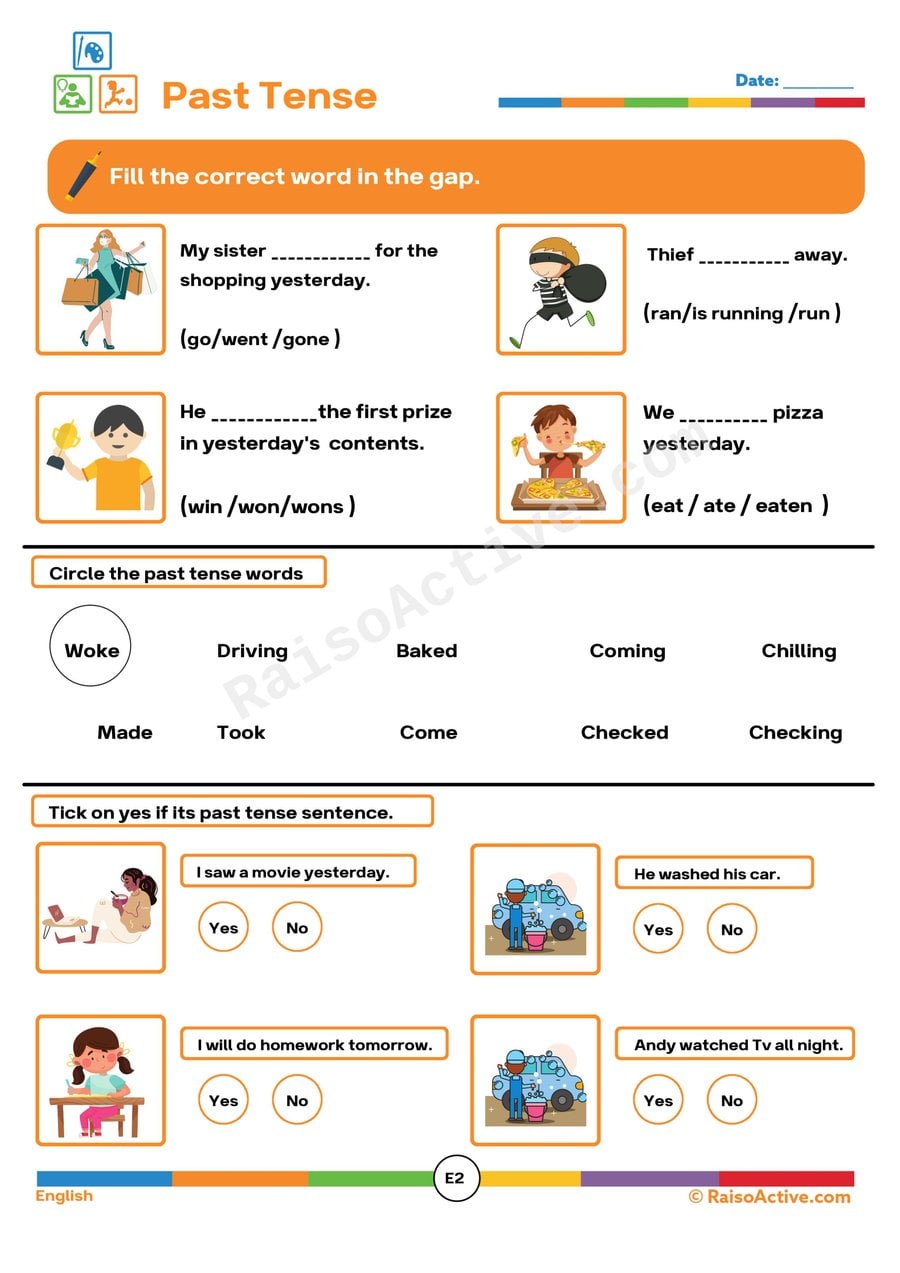
Understanding that verbs change form to show when an action happened is an important grammar concept for children ages 4-6, and this worksheet gives them focused practice recognizing and using past tense verbs in context. Filling in blanks with the correct past tense form, circling past tense words, and judging whether a sentence is already in the past tense all approach the same grammar skill from different angles, which helps solidify the pattern. This kind of grammar awareness supports both clearer spoken language and more accurate writing as children begin composing their own sentences.

Soap & Pepper Science Experiment Worksheet for Preschoolers
Ages 3-5 · Preschool–Pre-KAges 3-5 · Nursery–ReceptionAges 3-5 · Nursery–LKGAges 3-5
This hands-on demonstration shows children ages 3-5 how soap disrupts water's surface tension, using floating pepper as a simple, visible indicator of the change. Because the reaction happens instantly and dramatically, it gives young children a strong, memorable first experience with predicting an outcome and then observing whether their prediction was right.

Lock and Key Matching Worksheet for Preschoolers
Ages 3-5 · Preschool–Pre-KAges 3-5 · Nursery–ReceptionAges 3-5 · Nursery–LKGAges 3-5
Matching each key to the lock sharing the same letter helps children ages 3-5 practice letter recognition in a playful, puzzle-like context rather than rote drilling. Because each key must be checked against several similar-looking locks before finding the right match, this worksheet also builds visual scanning and careful comparison skills that support problem-solving.
Positional Words Worksheet: Before, You, and After!
Ages 3-5 · Preschool–Pre-KAges 3-5 · Nursery–ReceptionAges 3-5 · Nursery–LKGAges 3-5
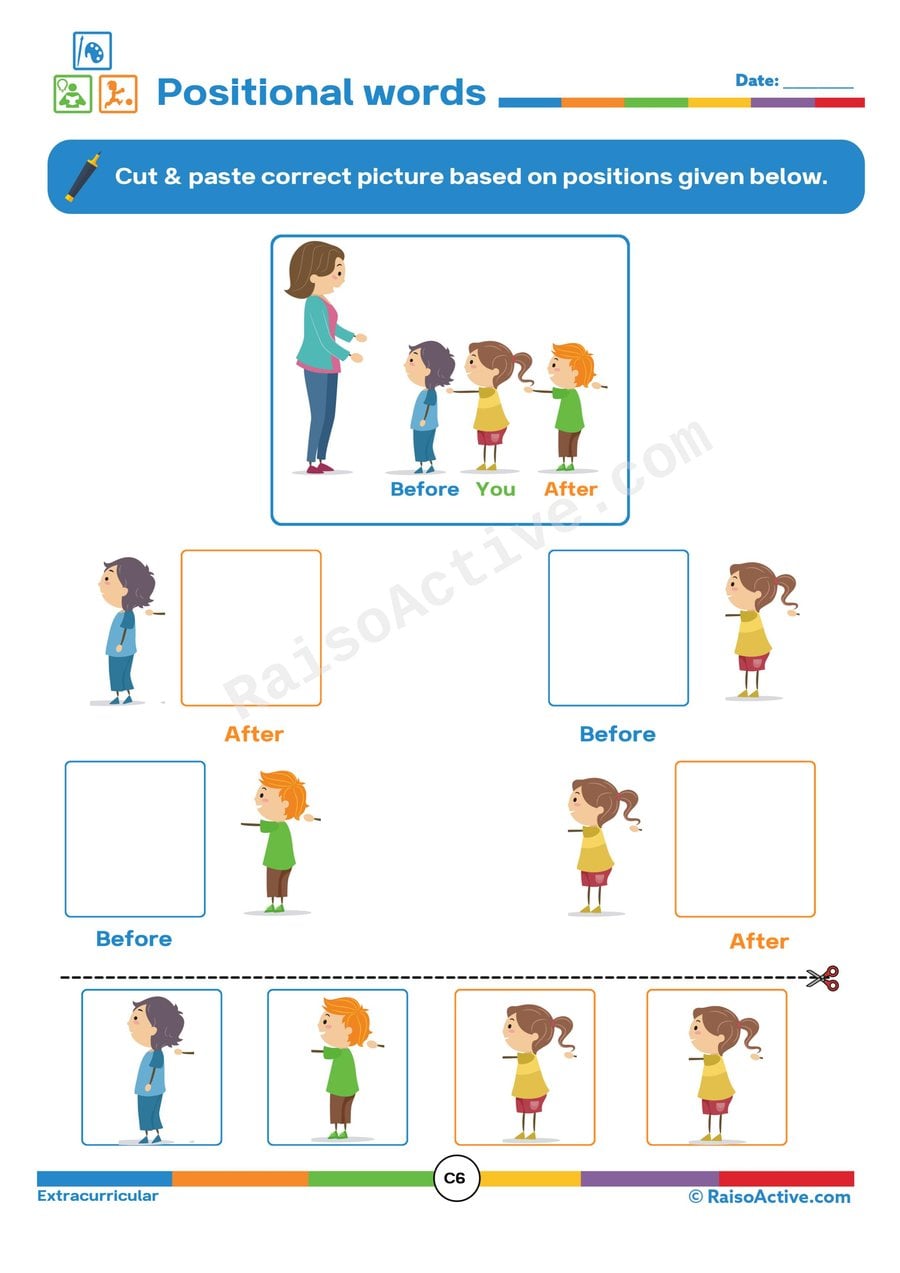
This cut-and-paste worksheet teaches children ages 3-5 to apply the positional words 'before' and 'after' to a sequence of objects or people, connecting an abstract language concept to a visual, hands-on task. Understanding order words like these is an important building block for later skills such as retelling stories in sequence and understanding time concepts like yesterday and tomorrow. Choosing and placing the correct picture also reinforces careful listening and following two-step directions.
Guides for this topic

Age-Appropriate Problem-Solving Activities: Building Critical Thinkers from the Ground Up
Discover fun, age-appropriate problem-solving activities for children ages 1-8. Build critical thinking, logic, and reasoning skills through play-based learning.
Critical Thinking Activities That Actually Work for Young Children: Building Tomorrow's Thinkers Today
Discover proven critical thinking activities for young children. Age-wise logic games, questioning techniques, and hands-on ideas to build thinking skills at home.

Preparing Your Child for a Rapidly Changing World: Essential Skills for Future Success
Discover the essential 21st century skills your child needs for future success. Practical tips on creativity, critical thinking, digital literacy & emotional intelligence for ages 1-8.
Reviews
Every worksheet for ages 5–7, no watermark
Members download the full library of 1,000+ worksheets and every activity pack without watermarks or daily limits. One year costs ₹999 in India or $20 elsewhere.
See membership plansOr download any worksheet free with a watermark (5 a day).