Navratri Festival Quest Certificate of Achievement
Ages 7-11 · Grade 2–Grade 3Ages 7-11 · Year 3–Year 4Ages 7-11 · Class 2–Class 3Ages 7-11
Children celebrate finishing the Navratri Festival Quest pack and record which levels they completed.
Free printable worksheets
Download free educational worksheets for children ages 2–8. Perfect for preschool, kindergarten, and early elementary learning activities.
Subscribe to get unlimited access to all worksheets without watermarks
View Subscription Plans289 topics match
37 worksheetsof 1,994
Ages 7-11 · Grade 2–Grade 3Ages 7-11 · Year 3–Year 4Ages 7-11 · Class 2–Class 3Ages 7-11
Children celebrate finishing the Navratri Festival Quest pack and record which levels they completed.
Ages 4-6 · Pre-K–KindergartenAges 4-6 · Reception–Year 1Ages 4-6 · LKG–UKGAges 4-6
Children celebrate finishing the Navratri Fun Time pages and see which levels they completed.
Ages 3-5 · Preschool–Pre-KAges 3-5 · Nursery–ReceptionAges 3-5 · Nursery–LKGAges 3-5
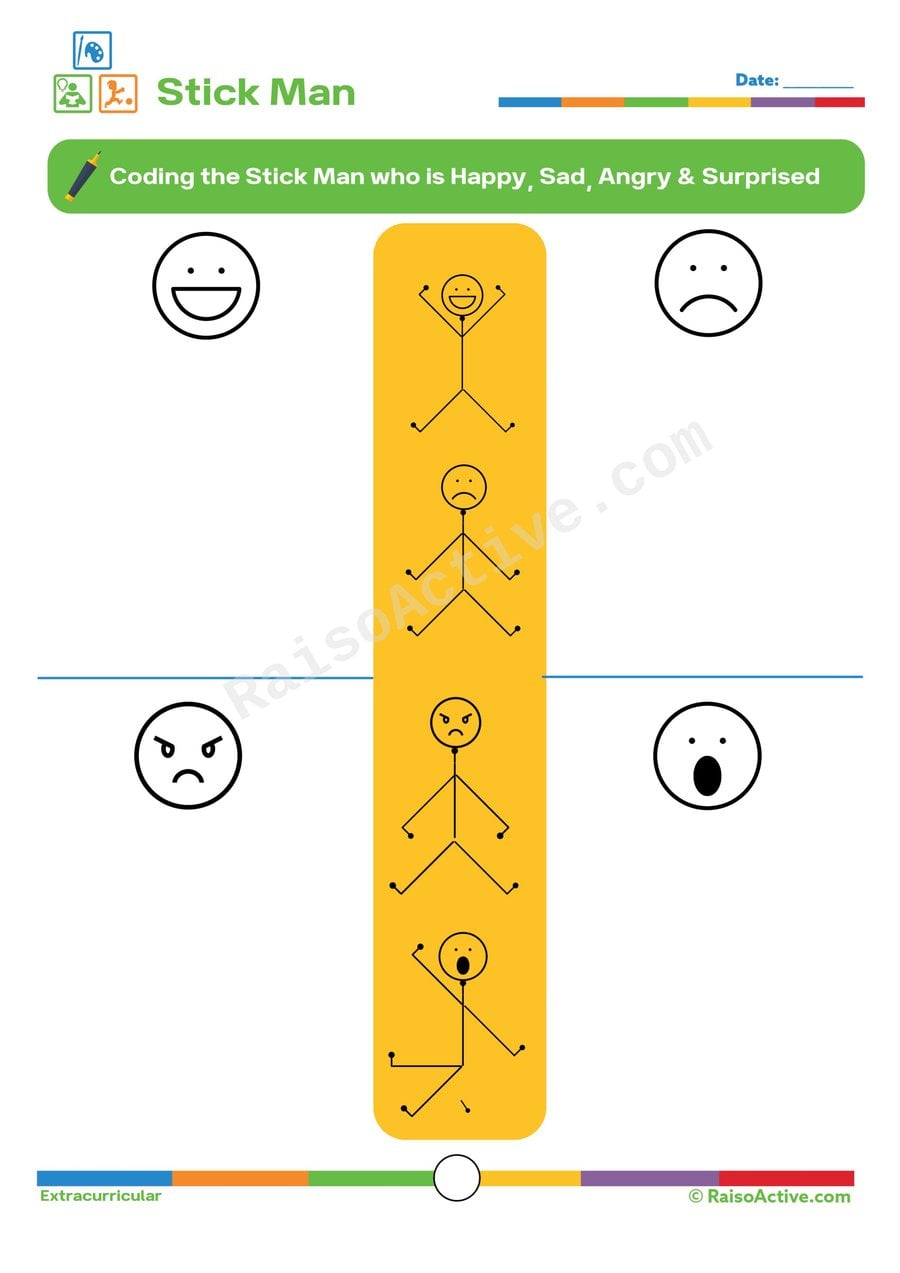
Matching simple stick-figure faces to emotion words helps children ages 3-5 build an early emotional vocabulary, connecting facial cues like a curved mouth or raised eyebrows to specific feeling words. This kind of emotion recognition is a foundational social-emotional skill, helping children name what they and others are feeling instead of just reacting.
Ages 3-5 · Preschool–Pre-KAges 3-5 · Nursery–ReceptionAges 3-5 · Nursery–LKGAges 3-5
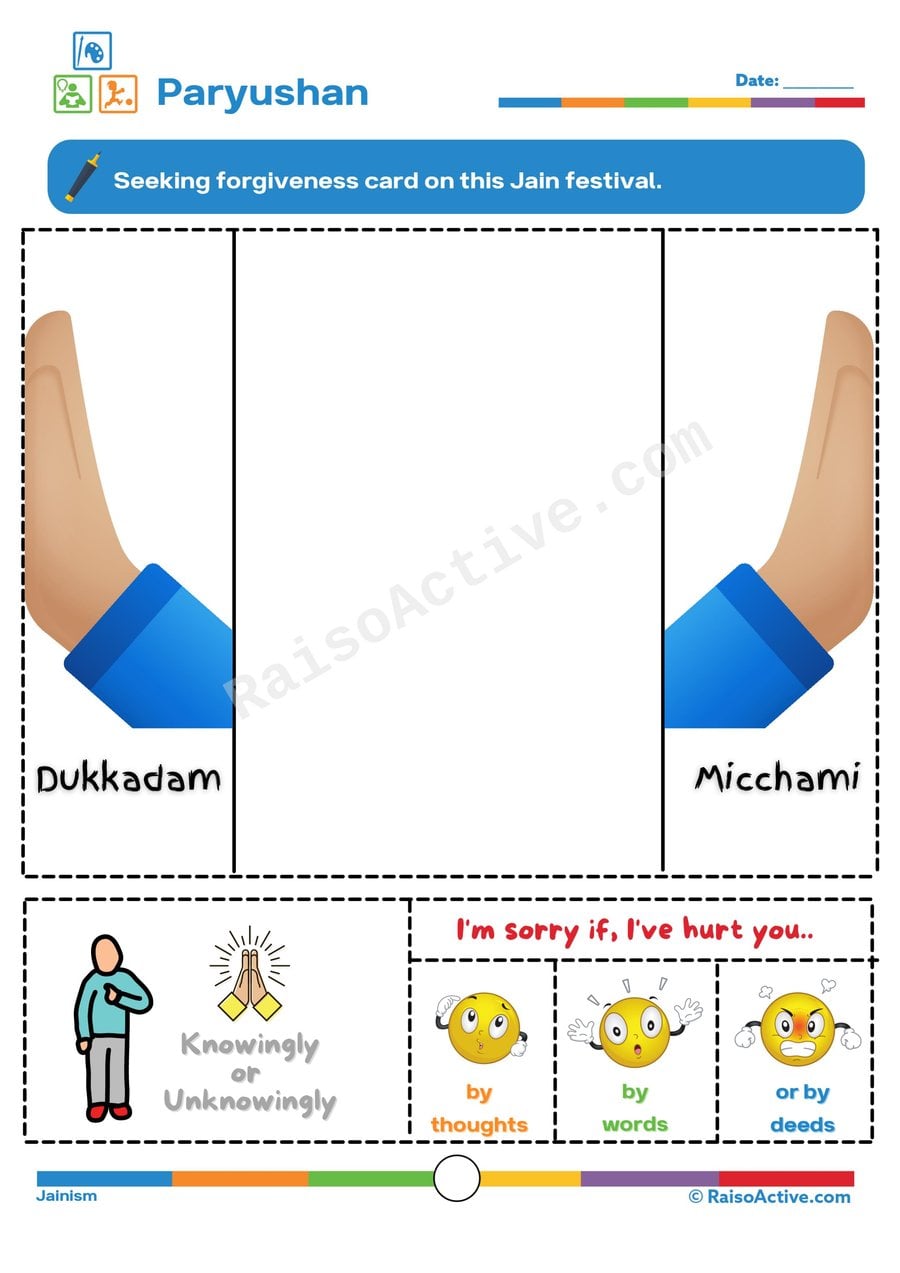
This worksheet introduces children ages 3-5 to the Jain concept of seeking forgiveness during Paryushan by creating a personal forgiveness card. At this age, children are beginning to understand that their words and actions can affect others, and this activity gives them a gentle, guided way to practice empathy and simple self-reflection.
Ages 3-5 · Preschool–Pre-KAges 3-5 · Nursery–ReceptionAges 3-5 · Nursery–LKGAges 3-5
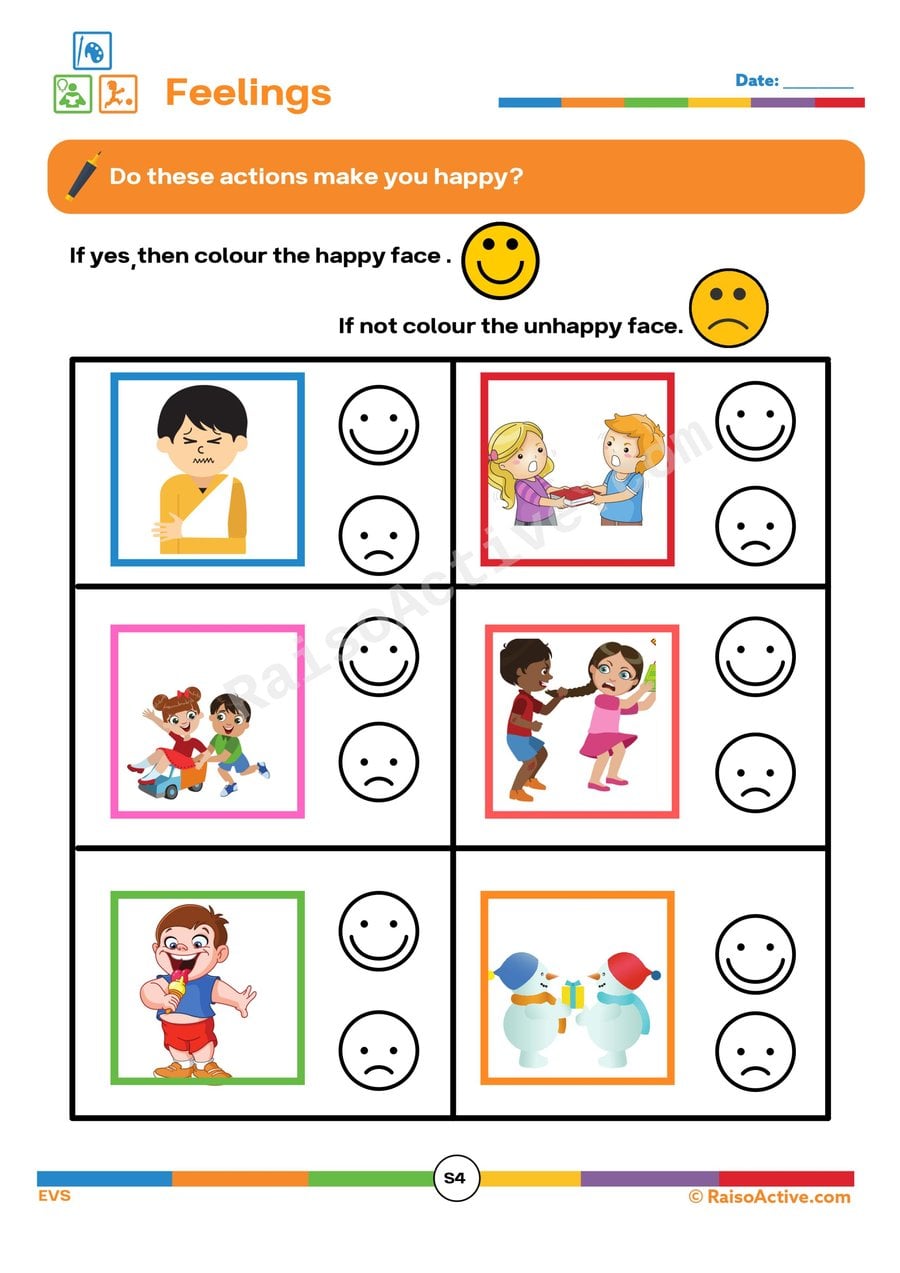
Children ages 3-5 build emotional vocabulary and self-awareness as they decide whether different everyday situations would make them feel happy or sad. Naming and sorting emotions based on a scenario is an early social-emotional skill that helps children recognize and eventually talk about their own feelings more clearly.
Ages 3-5 · Preschool–Pre-KAges 3-5 · Nursery–ReceptionAges 3-5 · Nursery–LKGAges 3-5
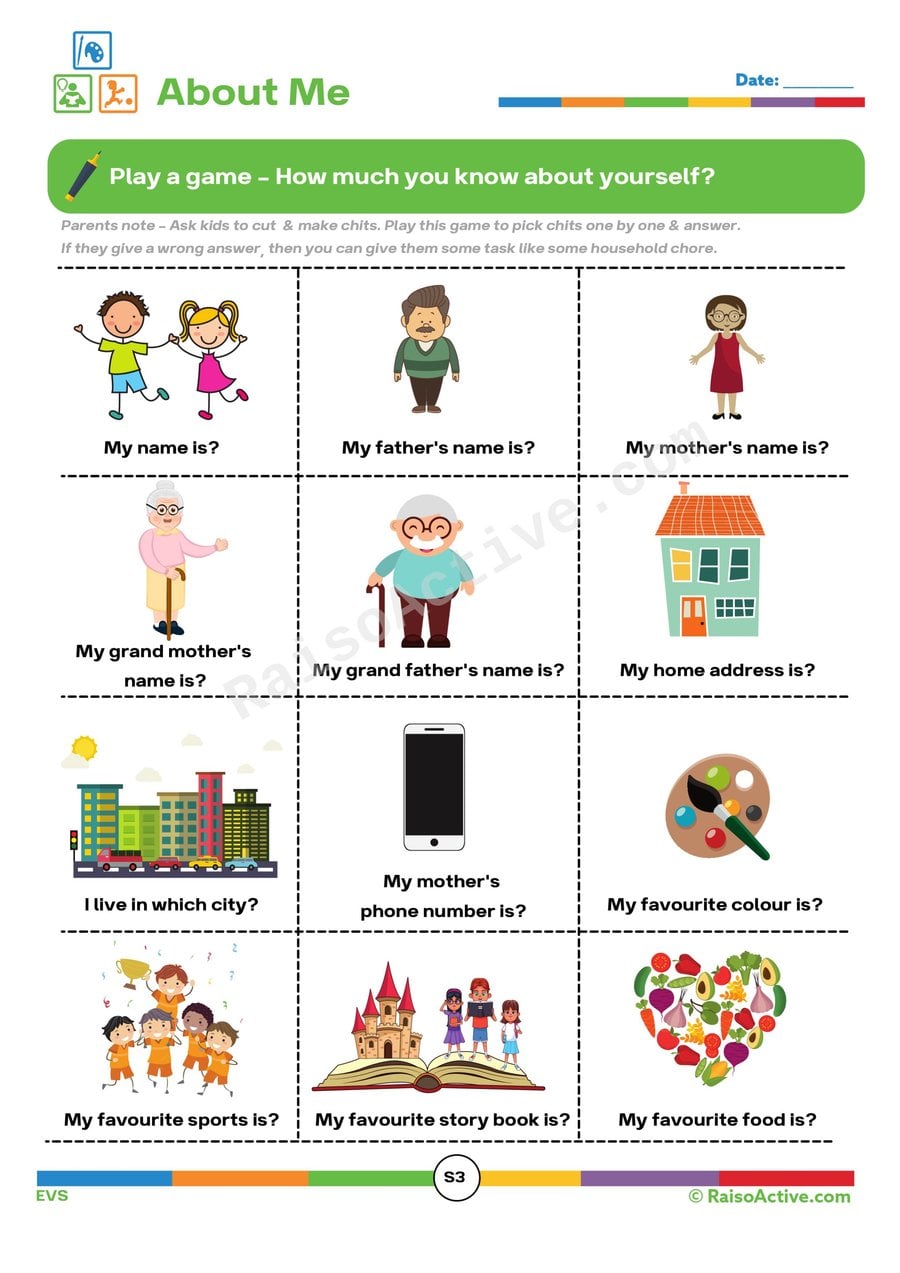
This 'About Me' worksheet helps children ages 3-5 build self-awareness and early identity vocabulary by prompting them to describe their name, family, favorites, and feelings. Putting personal facts into words or pictures strengthens expressive language and gives children practice sharing information about themselves in a structured way. It's also a gentle first step into autobiographical writing, well before children can spell full sentences.
Ages 3-5 · Preschool–Pre-KAges 3-5 · Nursery–ReceptionAges 3-5 · Nursery–LKGAges 3-5
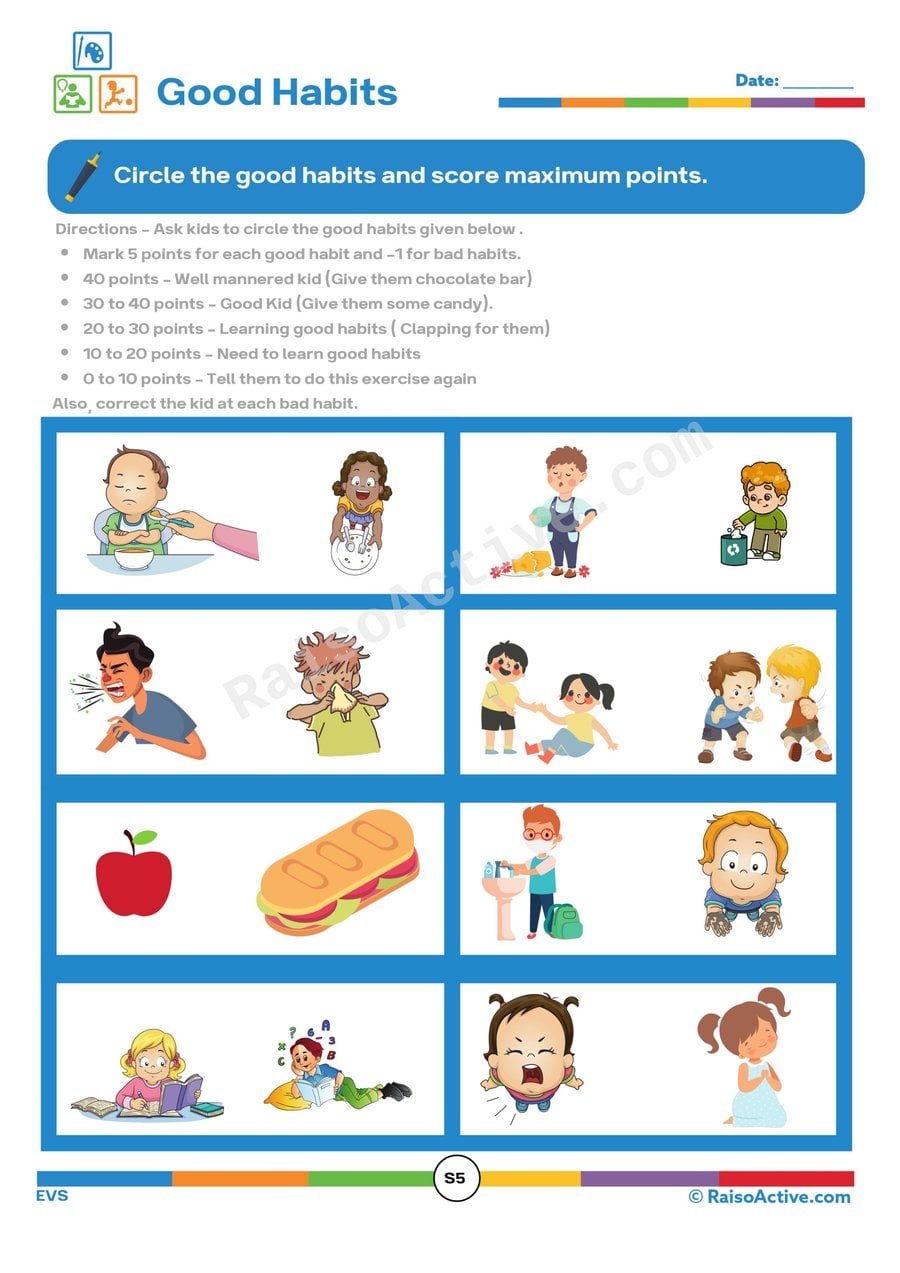
Circling pictures that show good habits, like washing hands or sharing toys, helps children ages 3-5 build early social-emotional understanding by connecting a picture to a value judgment about right and helpful behavior. This visual identification task lays the groundwork for self-regulation, since recognizing a good habit in a picture is a first step toward recognizing and choosing that same behavior in real life. The point-based reward system also introduces the early concept of positive reinforcement tied to good choices.
Ages 3-5 · Preschool–Pre-KAges 3-5 · Nursery–ReceptionAges 3-5 · Nursery–LKGAges 3-5
This dice-based board game teaches children ages 3-5 healthy habits and polite social language by combining movement, counting, and speaking practice in one activity. Rolling the dice and counting spaces builds number recognition and one-to-one counting, while landing on speaker icons gives structured practice saying polite phrases like 'please' and 'thank you' out loud. Coloring a smiley or sad face based on the habit shown also reinforces the idea that choices have positive or negative consequences.
Ages 3-5 · Preschool–Pre-KAges 3-5 · Nursery–ReceptionAges 3-5 · Nursery–LKGAges 3-5
Spinning a homemade wheel and performing whatever action it lands on teaches children ages 3-5 to listen carefully and follow a one-step instruction, a foundational social and self-regulation skill for classroom and group settings. Because the action changes with every spin, children also practice quick physical responses, like jumping, hopping, or spinning, which supports gross motor development. The randomness of the spinner keeps the activity unpredictable and exciting, which helps sustain engagement through repeated rounds.
Ages 3-5 · Preschool–Pre-KAges 3-5 · Nursery–ReceptionAges 3-5 · Nursery–LKGAges 3-5
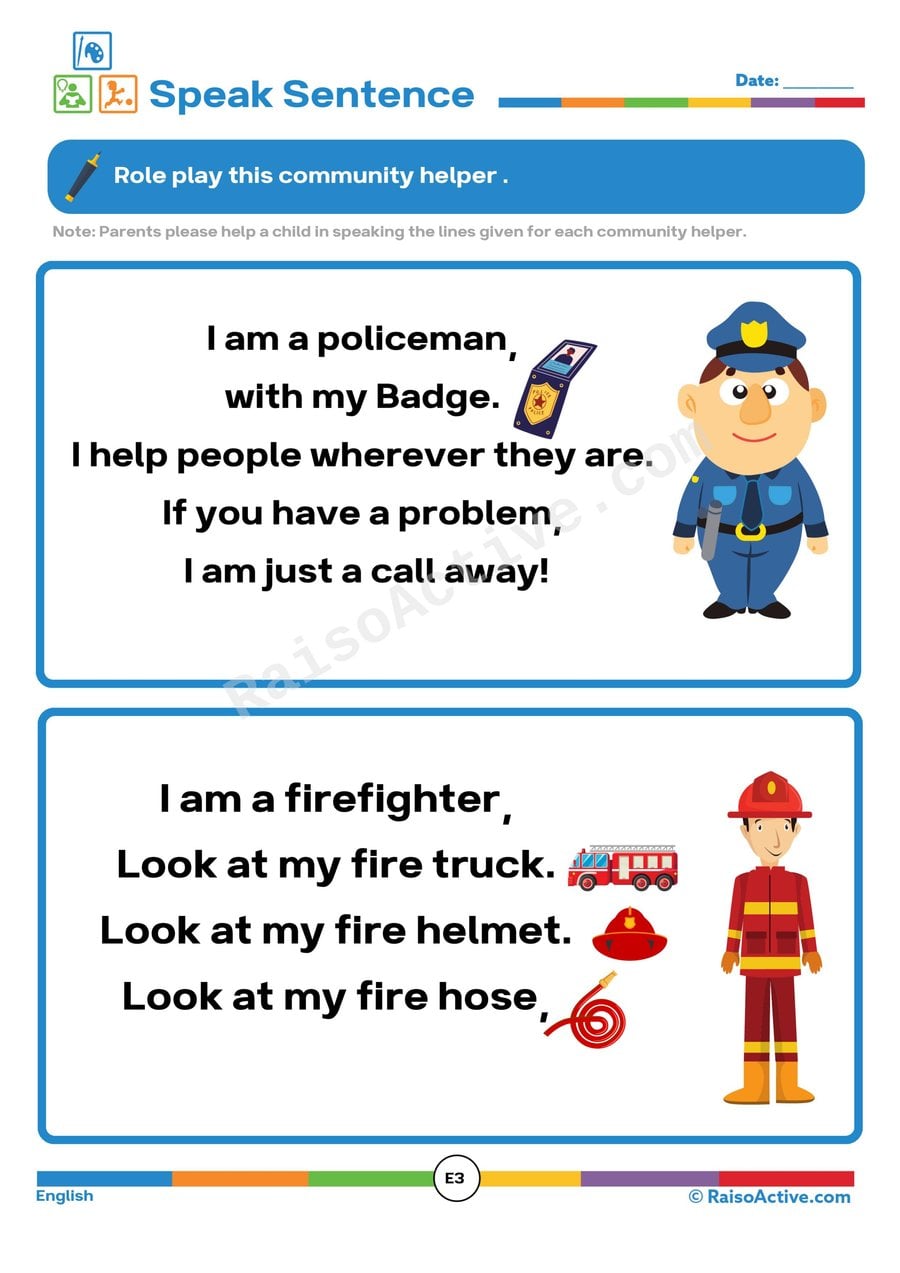
This worksheet helps children ages 3-5 learn about community helpers while practicing spoken sentence structure through guided role play. Reading a short scripted sentence aloud and then acting out the role of that helper builds oral language and expressive confidence alongside social studies knowledge, giving children a chance to practice full sentences in a low-pressure, playful context.
Ages 3-5 · Preschool–Pre-KAges 3-5 · Nursery–ReceptionAges 3-5 · Nursery–LKGAges 3-5
Children ages 3-5 practice recognizing which polite word fits a given social scenario, like saying 'please' when asking for something or 'sorry' after bumping into someone, building early social-emotional vocabulary alongside reading skills. Learning to match politeness to situation helps children apply good manners appropriately rather than just memorizing words in isolation.
Ages 3-5 · Preschool–Pre-KAges 3-5 · Nursery–ReceptionAges 3-5 · Nursery–LKGAges 3-5
This worksheet helps children ages 3-5 build early social-emotional understanding by looking at pictures of everyday behaviors and judging whether each one is a good habit or a bad habit. Making this distinction and marking it with a tick or a cross also introduces basic symbolic reasoning, since children must translate a judgment into a specific mark.