Where Can I Find Worksheets to Go with YouTube Educational Videos? A Complete Parent's Guide
Author
RaisoActive - Kids Activities and Fun Learning
Published
Updated
Reading Time
17 min read

- Popular YouTube channels like Numberblocks, Alphablocks, ChuChu TV, Jack Hartmann, Blippi, and BabyBus all have printable worksheet companions available online
- Pairing a video with a worksheet within five minutes of watching transforms passive screen time into active, multi-sensory learning that children actually retain
- Free and paid worksheets can be found on Teachers Pay Teachers, Pinterest, official channel websites, and educational platforms like RaisoActive
- You can also create simple DIY companion worksheets in minutes after any video — no design skills required
- The right video-plus-worksheet routine reduces screen time guilt while dramatically improving learning outcomes for children aged 1–8
Why Every Indian Parent Is Looking for Worksheets to Pair with Educational Videos
If your child has ever spent twenty enthusiastic minutes watching Numberblocks and could still not write the number seven the next morning, you have experienced one of the central challenges of educational screen time. The video was excellent. The engagement was real. But somehow, the learning did not quite stick. You are not alone — this is one of the most common observations parents share, and there is a very clear educational reason why it happens.
Watching a video is a largely passive activity. Even the most interactive, movement-based educational content — jumping with Jack Hartmann, dancing with ChuChu TV characters, building with Numberblocks — is primarily an input experience. The child receives information, enjoys it, and moves on. What most children need to consolidate that learning is an output experience: an opportunity to actively retrieve, apply, and use what they just absorbed. Printable worksheets, when chosen thoughtfully, provide exactly this follow-up in a format that also builds fine motor skills, concentration, and the habit of structured practice.
In India, where screen time questions are increasingly common as tablets and smartphones become household staples, pairing educational videos with worksheets offers parents something genuinely valuable: a way to make screen time purposeful without eliminating it. This guide covers every major educational YouTube channel popular with Indian families, where to find their companion worksheets, how to evaluate quality, and how to structure a simple video-plus-worksheet learning session that works for children from ages one to eight.
Get worksheets matched to your child's favourite videos
Subscribe for a free weekly selection of printable worksheets paired with popular educational video themes — delivered straight to your inbox, ready to print.
The Science Behind Video + Worksheet Learning
Educational psychologists call it the dual coding effect: when children receive information through both visual-auditory channels (a video) and then immediately process it through a physical-written channel (a worksheet), the information is encoded in multiple memory systems simultaneously. This makes recall significantly stronger than either channel alone. Research from cognitive science consistently shows that retrieval practice — actively recalling and using new information shortly after learning it — is one of the most powerful learning strategies available, and a well-chosen worksheet is simply a structured form of retrieval practice.
The timing of the worksheet matters enormously. Ideally, move to the worksheet within five to ten minutes of the video ending, while the content is still vivid in your child's mind. This is not the time for a snack break or a different activity — the transition should feel seamless, almost like a continuation. A child who has just watched Numberblocks introduce the number six with colourful animation is primed and excited to trace, count, and play with sixes on paper. That enthusiasm is educational gold, and worksheets are how you capture it.
Popular Educational YouTube Channels and Their Best Worksheet Companions
Let us look at the most popular educational channels used by Indian families and where to find worksheets that specifically complement each one.
Numberblocks and Alphablocks (BBC)
Numberblocks and its sister series Alphablocks are arguably the most educationally sophisticated channels available for young children. Produced by the BBC and widely celebrated by early childhood researchers, Numberblocks teaches deep mathematical understanding — not just counting, but the structure of numbers, part-whole relationships, and number bonds — through brilliantly designed animated blocks. Alphablocks does the same for phonics, using character-based sound play to build letter-sound awareness. Both channels have a dedicated, global following among teachers and parents.
For Numberblocks, the official CBeebies website (cbeebies.bbc.co.uk) offers free printable activities directly tied to episodes. These are exceptionally well-designed and curriculum-aligned. Beyond the official site, Teachers Pay Teachers (TPT) hosts hundreds of Numberblocks-themed worksheets created by experienced early years teachers — number bond mats, ten-frame activities, building-block colouring sheets, and more. Search specifically for 'Numberblocks printables' or 'Numberblocks maths worksheets'. For Alphablocks, the BBC site similarly offers letter-sound activities, and Pinterest is an excellent source for fan-created Alphablocks letter worksheets.
ChuChu TV (Made in India)
ChuChu TV is one of the most-watched children's educational channels in India and globally, with over 50 million subscribers and content spanning nursery rhymes, phonics, numbers, shapes, colours, and moral stories. Indian parents particularly love ChuChu TV because the content feels culturally familiar and the English is clear and accessible. The official ChuChu TV website (chuchutv.com) offers a learning section with printable worksheets and activity packs that align directly with their video themes. These include alphabet tracing, number recognition, colouring pages based on beloved characters, and simple puzzle sheets — all free to download.
Jack Hartmann Kids Music Channel
Jack Hartmann combines movement, music, and academics to teach counting, letters, phonics, and sight words with extraordinary energy. His channel has over six million subscribers and is enormously popular in Indian homes and classrooms. Jack Hartmann does not maintain a large free worksheet library himself, but the educational community has created an abundance of companion materials. Teachers Pay Teachers is the best source — search 'Jack Hartmann worksheets' or 'Jack Hartmann [topic]' to find resources aligned to specific videos. Sight word practice sheets, skip-counting number lines, and CVC phonics worksheets pair particularly well with his content.
Blippi and BabyBus
Blippi is a favourite among toddlers and preschoolers for his enthusiastic, curiosity-driven explorations of vehicles, machines, places, and nature. His content builds vocabulary, general knowledge, and early science concepts. While Blippi does not have a dedicated worksheet library, his themes lend themselves beautifully to simple follow-up activities: after watching a Blippi garbage truck video, a vehicle-themed colouring and labelling worksheet reinforces vocabulary learned. Search Pinterest for 'Blippi printables' or 'Blippi activities' to find community-created resources. BabyBus similarly inspires follow-up creative and learning activities, and the official BabyBus website offers a range of printable colouring and activity pages tied to their character universe.
Official channel websites are always the first place to check — many major channels offer free, curriculum-aligned printables you may not know exist.
CBeebies (for Numberblocks and Alphablocks), ChuChu TV, and BabyBus all maintain free printable sections on their websites. Bookmark these pages and check them regularly, as new materials are added alongside new video releases.
Where to Find Channel-Specific Worksheets Online
Beyond individual channel websites, several platforms have become go-to sources for educational video companion worksheets. Here is a practical breakdown of the best options, including free and paid resources.
Teachers Pay Teachers (TPT): The world's largest marketplace for teacher-created educational resources, TPT has thousands of worksheets specifically designed to complement popular educational videos. Search by channel name, topic, or skill level. Many resources are free; paid ones typically cost between one and five US dollars and offer excellent value. Look for resources with high ratings (4.5 stars and above) and detailed previews before purchasing.
Pinterest: An underrated worksheet discovery tool. Search 'Numberblocks worksheets free', 'ChuChu TV printables', or 'Blippi learning activities' and you will find hundreds of blog posts and direct PDF downloads from educators around the world. Pin a dedicated board to organise what you find.
RaisoActive: For Indian families specifically, RaisoActive offers a growing library of printable worksheets designed for children aged one to eight, aligned to early childhood learning goals including numeracy, literacy, fine motor, and creative skills. The worksheets are thoughtfully designed for the Indian curriculum context, printable at home on standard A4 paper, and updated regularly with new themes and skills.
Pinterest and TPT together cover almost any channel-specific worksheet need — but for Indian curriculum alignment, dedicated platforms like RaisoActive offer better contextual fit.
US-based platforms like TPT use American curriculum standards, grade labels, and spelling conventions. Indian parents may find that locally created resources — which use Indian English, familiar contexts like rupees, Indian names, and local animals — are more immediately relevant to their child's world.
Creating Your Own Simple Companion Worksheets After Any Video
You do not need to be a designer or a teacher to create an effective follow-up worksheet. Some of the most powerful companion activities are the simplest — a blank page with a prompt is often all you need. After watching any educational video, ask yourself: what was the core concept? What would require my child to actively use that concept? Then write or draw a simple prompt.
After a Numberblocks episode about the number five, for instance, you might draw five blank boxes and ask your child to draw objects to fill them, then write the number five below. After a ChuChu TV alphabet video focusing on the letter B, you could draw a large capital and lowercase B and ask your child to trace them, then think of three things starting with B and draw them. These take two minutes to create and are perfectly matched to what your child just watched.
- Draw a large number or letter from the video and ask your child to trace it, decorate it, and count or find objects matching it around the house
- Create a simple 'What did you learn?' sheet with three blank boxes and ask your child to draw one thing they saw in the video in each box
- Write the key word or number from the video in large dotted letters and let your child trace over it with a crayon or marker
- Draw a simple sorting mat (two columns with labels) based on the video's concept — for example, 'Big / Small' after a size video, or 'Living / Non-Living' after a nature video
Addressing Screen Time Concerns: Using Videos as a Learning Launchpad
Screen time anxiety is real for many Indian parents, and it is worth addressing directly. The World Health Organisation and the American Academy of Pediatrics both recommend limiting screen time for young children — under two years, only video calling with family; ages two to five, no more than one hour of high-quality programming per day; ages six and above, consistent limits as part of a balanced routine. These guidelines exist for good reasons: passive, unstructured screen time displaces physical activity, social interaction, and self-directed play, all of which are crucial for healthy development.
However, the video-plus-worksheet approach fundamentally changes the nature of screen engagement. When a fifteen-minute educational video is immediately followed by a fifteen-minute worksheet session, the total screen exposure is shorter (the worksheet requires no screen), and the quality of learning is dramatically higher. The video becomes a learning launchpad rather than a passive entertainment experience. Parents who shift to this approach often report that they feel much better about the screen time their child has, because they can see the immediate educational pay-off in the child's hands.
- Set a clear 'video time' window — for example, 10 am to 10:20 am — so children know the screen goes off and worksheet time begins. Predictability reduces resistance enormously
- Avoid using educational videos as background entertainment. Watch together when possible, discuss what you see, and ask questions during the video to keep engagement active
- Keep the device in a common area of the house, not the child's bedroom — this naturally limits duration and keeps video time a shared, supervised activity
- Celebrate the transition to worksheets with a small ritual — 'Video time is done, now let us do the really fun part!' — to frame worksheets as the exciting next step
How to Evaluate a Companion Worksheet: What Makes One Worth Printing
Not every worksheet found online is worth your printer ink. A good companion worksheet should meet several clear quality criteria. First, it should directly address the same concept covered in the video — not merely be on the same broad topic, but engage the specific skill or knowledge the video presented. If your child just watched a video about the number eight, a worksheet about counting to ten in general is less effective than one focusing specifically on the number eight.
Second, the activity should require active processing, not just passive recognition. Colouring the number eight is less effective than tracing it, counting eight objects, or drawing eight things from memory. Third, the visual design should be clean and uncluttered — too many images or instructions on a single page overwhelm young children and reduce focus. Finally, the difficulty level should be appropriate: slightly challenging but achievable, so your child finishes with a sense of accomplishment rather than frustration.
A good companion worksheet requires active output — tracing, drawing, writing, cutting, or matching — not just passive recognition or colouring.
Worksheets that ask children to produce something (write a number, label a picture, draw a matching set) build deeper memory traces than those that merely ask for recognition (circle the correct answer). When choosing or creating worksheets, always ask: what does my child have to actively do, produce, or create on this page?
Studies on multimedia learning consistently show that children who engage in active follow-up practice after watching an educational video retain concepts approximately twice as well as those who watch the video alone with no follow-up activity.
Source: Mayer, R.E. — Multimedia Learning (Cambridge University Press)
How to Structure a Video + Worksheet Learning Session
Choose your focus topic and video
Pick a concept your child is working on — counting to ten, the letter D, shapes, colours — and select a video that covers it engagingly. Aim for videos of five to ten minutes for toddlers and up to fifteen minutes for children aged five and above. Queue the video before sitting down so there is no fumbling with the device during session time.
Watch together actively
Sit with your child if possible and watch the video actively. Point at the screen, repeat key words aloud, make the movements or gestures the video suggests, and ask simple questions: 'How many is that? Can you show me on your fingers?' Active co-viewing dramatically improves what children absorb compared to watching alone.
Have the worksheet ready before the video ends
In the last minute of the video, quietly place the worksheet on the table. Do not make a fuss about it — just have it there, with a crayon or pencil ready. When the video ends, point to it naturally: 'Look, here is the worksheet to go with our video!' The smooth transition prevents the 'I want to watch another one' request.
Complete the worksheet together
For children under four, do the worksheet alongside them — trace together, count aloud together, draw together. For children aged four and above, give them increasing independence but stay nearby to offer encouragement and gentle guidance. Read out instructions clearly and let your child work at their own pace. Avoid correcting too quickly — allow time for independent effort.
Connect the worksheet back to the video
As your child works, make explicit connections: 'Remember in the video how the Numberblock eight had two rows of four? Can you draw that here?' This metacognitive linking — helping children consciously connect the video learning to the worksheet activity — deepens understanding and is one of the most powerful things a parent or teacher can do.
Celebrate and display the work
When the worksheet is done, celebrate it genuinely. Stick it on the fridge, put it in a learning folder, or let your child show it to another family member. This recognition reinforces that the worksheet was meaningful and worth doing — and builds the habit of completing activities with care and pride.
Brief review the next day
The following morning, pull out yesterday's worksheet and spend two to three minutes reviewing it together. 'What number did we practise yesterday? Can you still show me on your fingers?' This spaced repetition — revisiting the material one day later — is one of the most evidence-backed strategies for long-term memory formation.
- +Learning is actively applied within minutes of watching
- +Fine motor skills are developed alongside concepts
- +Multiple memory pathways engaged simultaneously
- +Child has a tangible, physical record of learning
- +Screen time is shorter and more purposeful
- +Progress is visible and trackable over time
- +Transition to books and independent work is smoother
- -Learning is received passively and fades quickly
- -No fine motor or writing development occurs
- -Only visual and auditory memory pathways used
- -Nothing physical to show for the learning session
- -Screen time often extends as child asks for more videos
- -Progress is invisible and difficult to assess
- -Gap between video learning and school tasks remains wide
Get a free worksheet pack matched to your child's favourite videos
Subscribe to RaisoActive and receive a curated collection of printable worksheets paired with popular educational YouTube themes — Numberblocks, alphabet, counting, and more — for children aged 1–8.
Frequently Asked Questions
Are there official worksheets from Numberblocks and Alphablocks?
How do I find worksheets for a YouTube video that is not from a major channel?
My child is under two years old. Should I be pairing videos with worksheets at this age?
ChuChu TV has so many videos. Which ones have the best worksheet companions?
Is it worth paying for worksheets on Teachers Pay Teachers, or are free resources good enough?
How do I handle a child who loves the video but refuses to do the worksheet?
Free worksheets for this topic
Browse all worksheets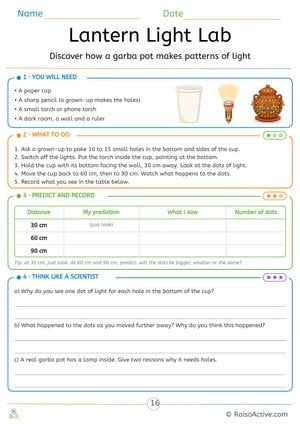
Lantern Light Lab: Navratri Garba Pot Light Experiment
Ages 7-11 · Grade 2–Grade 3Ages 7-11 · Year 3–Year 4Ages 7-11 · Class 2–Class 3Ages 7-11
Children make holes in a paper cup, shine a torch through it and see one spot of light for each hole. They predict and record what happens as they move further from the wall, and explain the results and why a real garba pot needs holes.

Soap & Pepper Science Experiment Worksheet for Preschoolers
Ages 3-5 · Preschool–Pre-KAges 3-5 · Nursery–ReceptionAges 3-5 · Nursery–LKGAges 3-5
This simple experiment introduces children ages 3-5 to the basic science of surface tension and how soap breaks it, using pepper flakes sprinkled on water as a visual demonstration. Watching the pepper scatter away the instant soap touches the water gives children a concrete, memorable example of cause and effect, an early building block for scientific thinking.
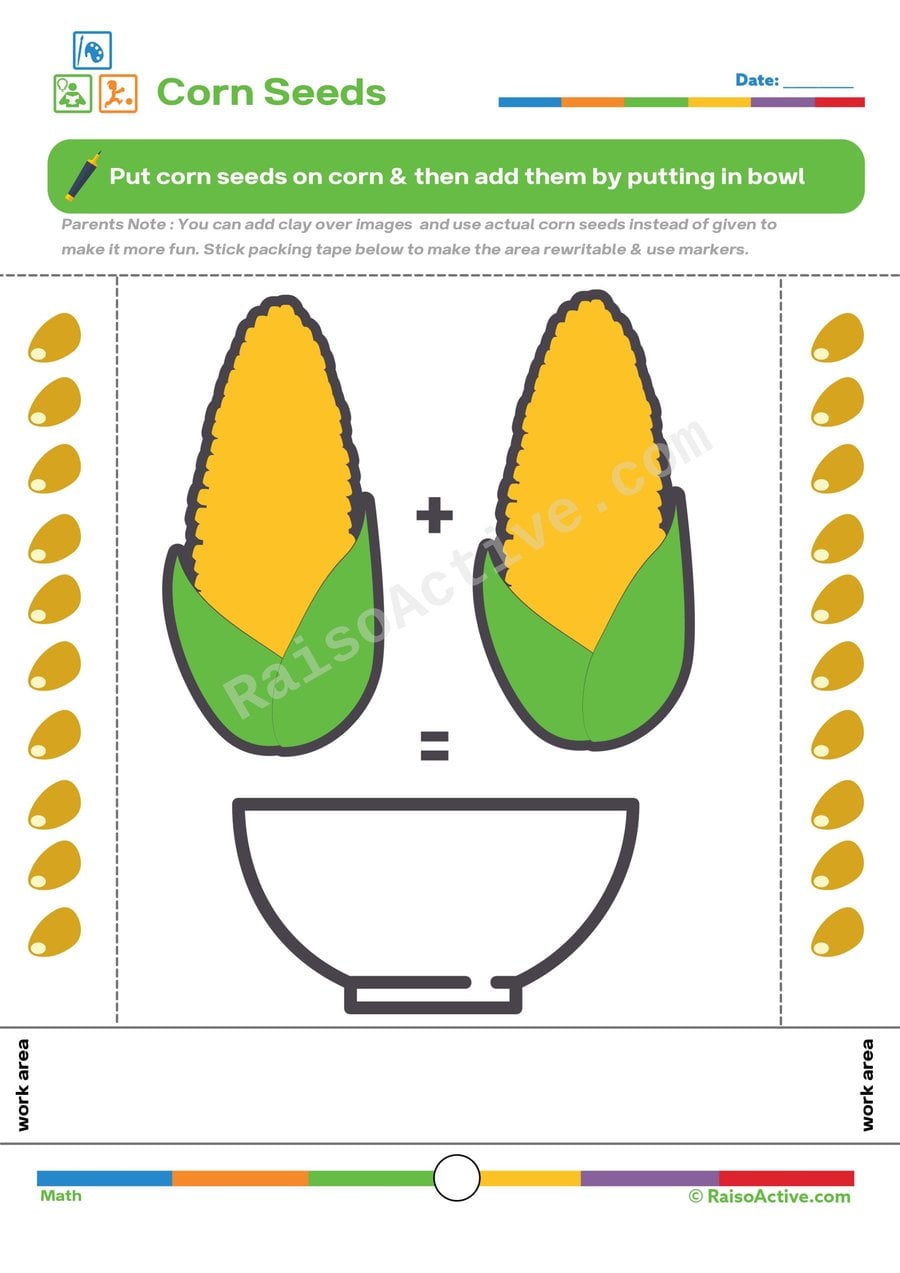
Corn Seed Addition Worksheet for Preschoolers
Ages 3-5 · Preschool–Pre-KAges 3-5 · Nursery–ReceptionAges 3-5 · Nursery–LKGAges 3-5
Counting corn seeds on two ears of corn and combining them into one total teaches children ages 3-5 the core concept of addition as joining groups together, using a concrete, countable image rather than abstract numerals alone. This worksheet also builds one-to-one correspondence, since accurate addition depends on touching or pointing to each seed exactly once while counting.

3D Shapes Worksheet: Explore and Learn with Playdough!
Ages 4-6 · Pre-K–KindergartenAges 4-6 · Reception–Year 1Ages 4-6 · LKG–UKGAges 4-6
This worksheet teaches children ages 4-6 the basic components of 3D shapes — vertices, edges, and faces — by having them count each feature on shapes like cubes and cones, then build matching shapes out of playdough. Physically constructing a shape and counting its parts by hand builds a far deeper understanding of geometry than looking at flat pictures alone, since children can touch and rotate what they've made.

Written by
Hemsweta Jain · Teacher Cheena
MBA and Early Childhood Educator, teaching since 2014 · Founder of RaisoActive, Mumbai
Published · Last reviewed
Related Resources
Printable Resources(4)
View all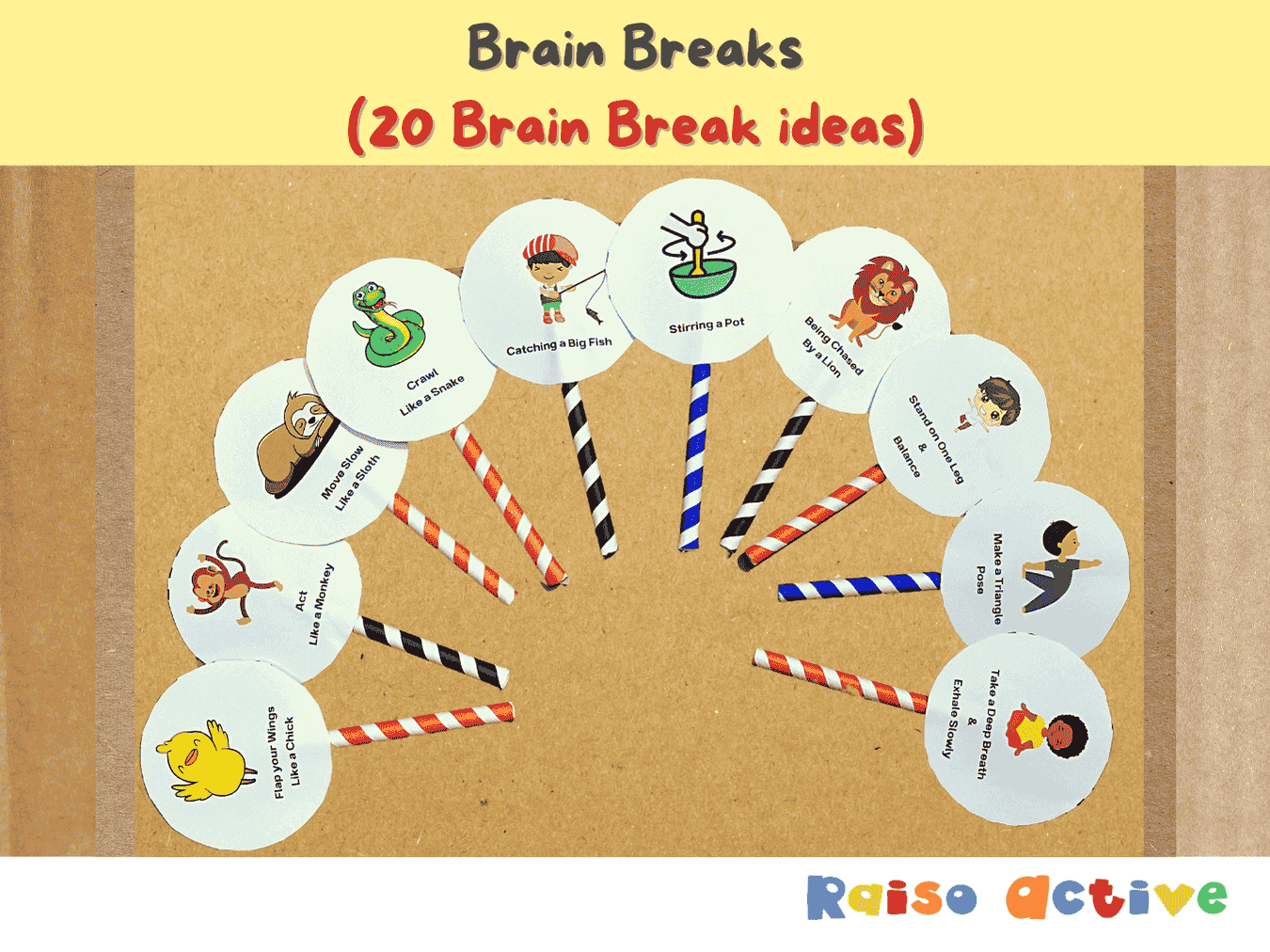

Gross Motor Movement & Imaginative Play Flashcards for Toddlers & Preschoolers
Ages 2-5 · Preschool–Pre-KAges 2-5 · Nursery–ReceptionAges 2-5 · Nursery–LKGAges 2-5 · 5 pages
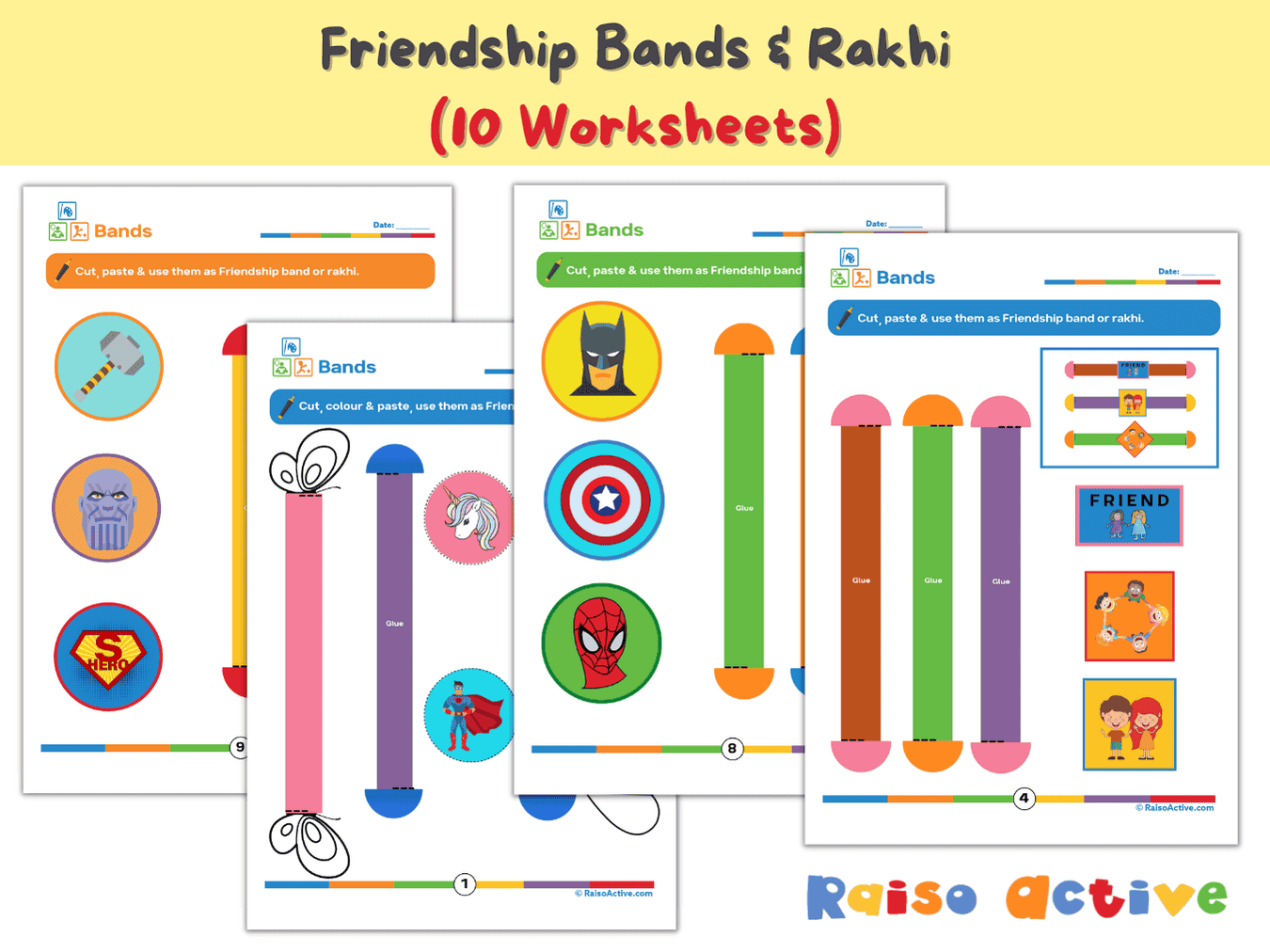

Friendship Band & Rakhi Craft Activity Pack for Kids (Ages 4-7)
Ages 4-7 · Pre-K–Grade 1Ages 4-7 · Reception–Year 2Ages 4-7 · LKG–Class 1Ages 4-7 · 10 pages
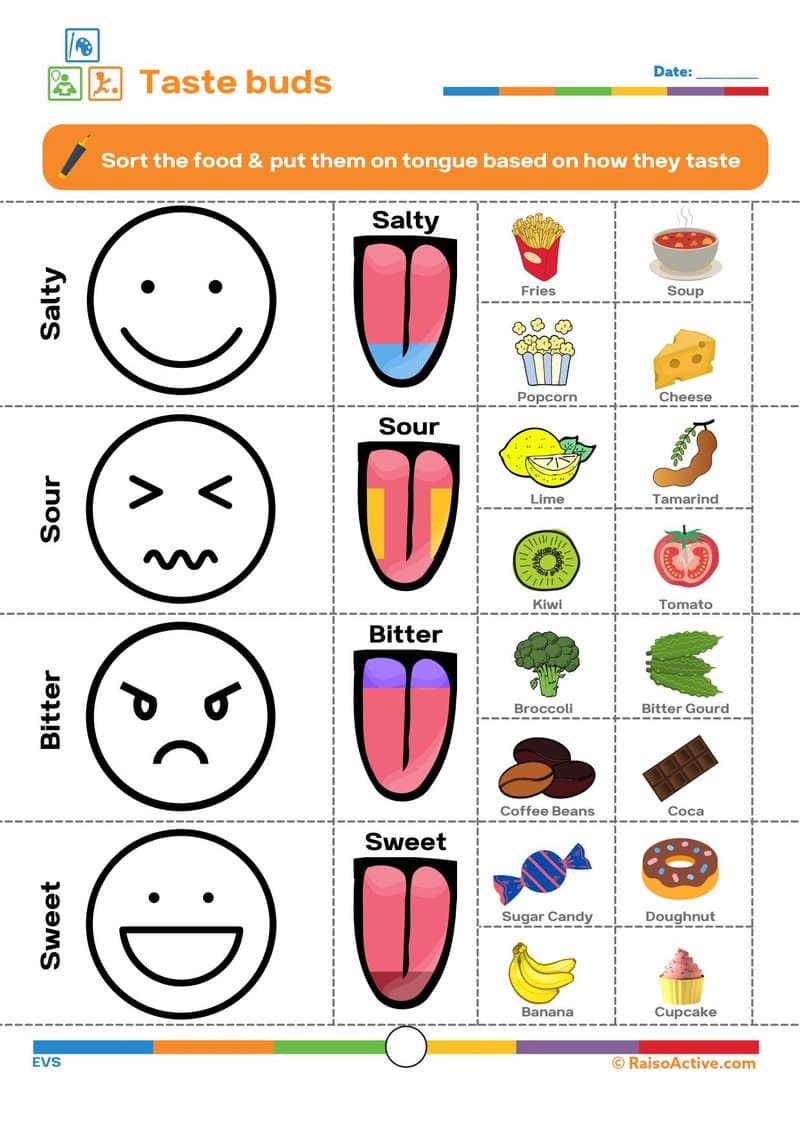

Hands-On Early Learning Activity Book: Math, Science, Literacy & Emotions for Ages 3-6
Ages 3-6 · Preschool–KindergartenAges 3-6 · Nursery–Year 1Ages 3-6 · Nursery–UKGAges 3-6 · 17 pages
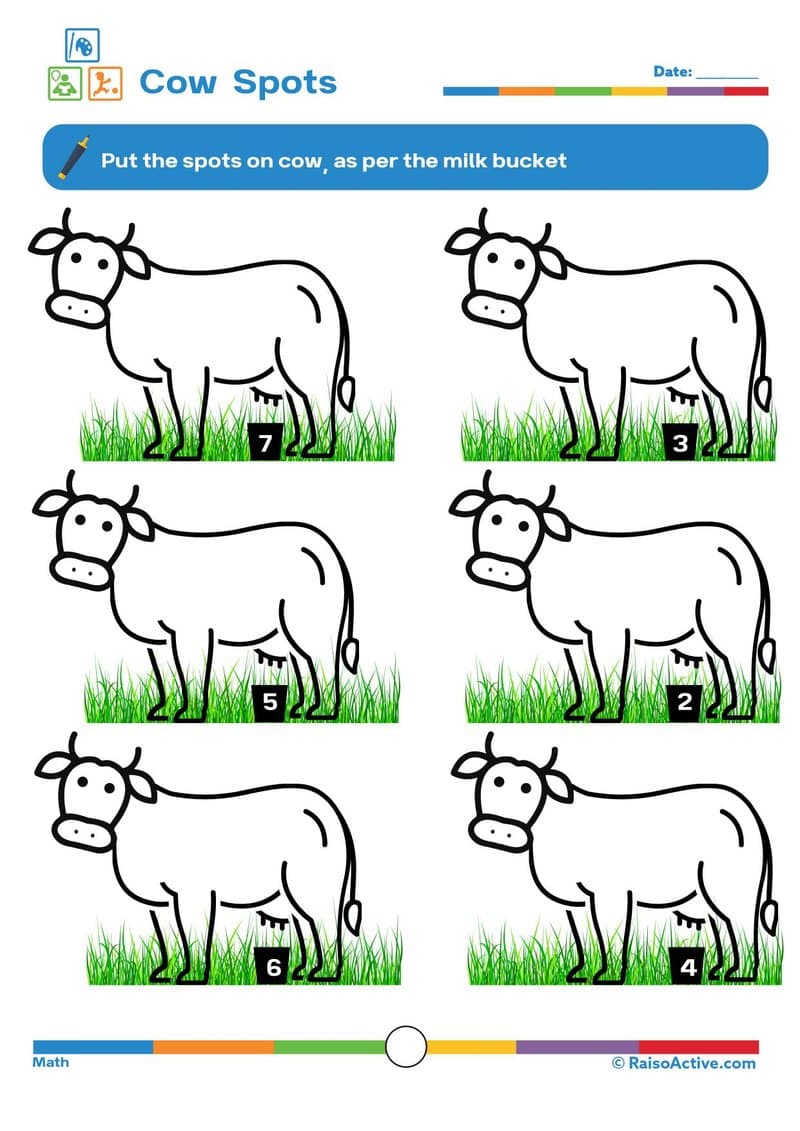
Early Learning Activity Book: Math, Science, Literacy & Cognitive Skills for Preschoolers (Ages 3-6)
Ages 3-6 · Preschool–KindergartenAges 3-6 · Nursery–Year 1Ages 3-6 · Nursery–UKGAges 3-6 · 16 pages