3D Panda Craft: Cut, Paste, and Create!
Folding and gluing flat paper pieces into a standing 3D panda asks children to understand that a flat shape can become a solid form — an early, hands-on introduction to the difference between 2D and 3D that most kids won't meet formally until later in school. The multi-step fold-and-glue sequence at ages 3-5 also builds patience and the ability to follow a picture-based set of instructions rather than verbal ones alone.
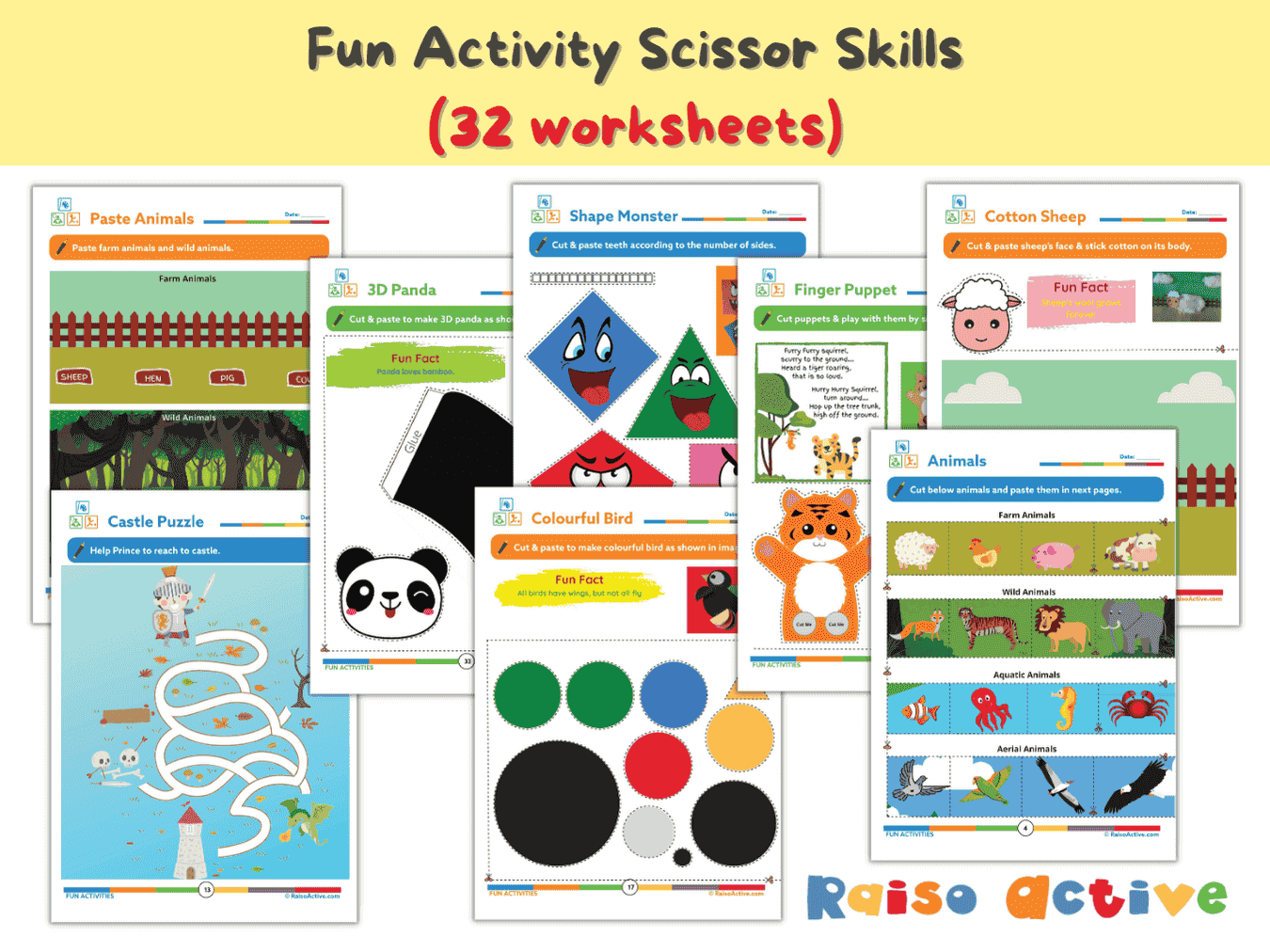
Part of the pack
Preschool Scissor Skills Activity Book: Fine Motor & Craft Fun for Ages 3-6
This is page 33 of the pack. Ages 3-6 · Preschool–KindergartenAges 3-6 · Nursery–Year 1Ages 3-6 · Nursery–UKGAges 3-6
Curriculum
- Art & Craft > 3D Paper Crafts
How to use this worksheet
Cut out all the panda pieces along their dotted lines. Fold each piece along the marked fold lines as shown in the example picture. Glue the folded pieces together in the order shown, building from the body outward to the ears and face. Let the glue set before standing the finished 3D panda upright.
Materials needed
- Scissors
- Glue
- Crayons (optional)
Extension activities
- 1Talk about where pandas live and what they eat, since bamboo is a fun, specific detail kids enjoy.
- 2Make a simple bamboo forest background using strips of green paper for the panda to 'live' in.
- 3Try folding a second 3D animal from scrap paper using the same fold-and-glue technique.
- 4Look at pictures of real pandas and compare their black-and-white markings to the craft version.
- 5Line up several finished 3D animal crafts to make a small paper zoo.

Written by
Hemsweta Jain · Teacher Cheena
MBA and Early Childhood Educator, teaching since 2014 · Founder of RaisoActive, Mumbai
Every RaisoActive worksheet is designed and checked by the founder before publishing.
Published · Last reviewed
More from Preschool Scissor Skills Activity Book: Fine Motor & Craft Fun for Ages 3-6

Snail Craft: Cut, Fold, and Paste Worksheet for Preschoolers
Ages 3-5 · Preschool–Pre-KAges 3-5 · Nursery–ReceptionAges 3-5 · Nursery–LKGAges 3-5
Building this snail adds a folding step to the usual cut-and-paste routine — the orange circle must be folded before it becomes the shell — which asks 3-5 year olds to think in three dimensions and follow a short sequence of instructions rather than a single action. This kind of multi-step assembly builds the sequencing and instruction-following skills children will lean on heavily once they start following classroom directions.
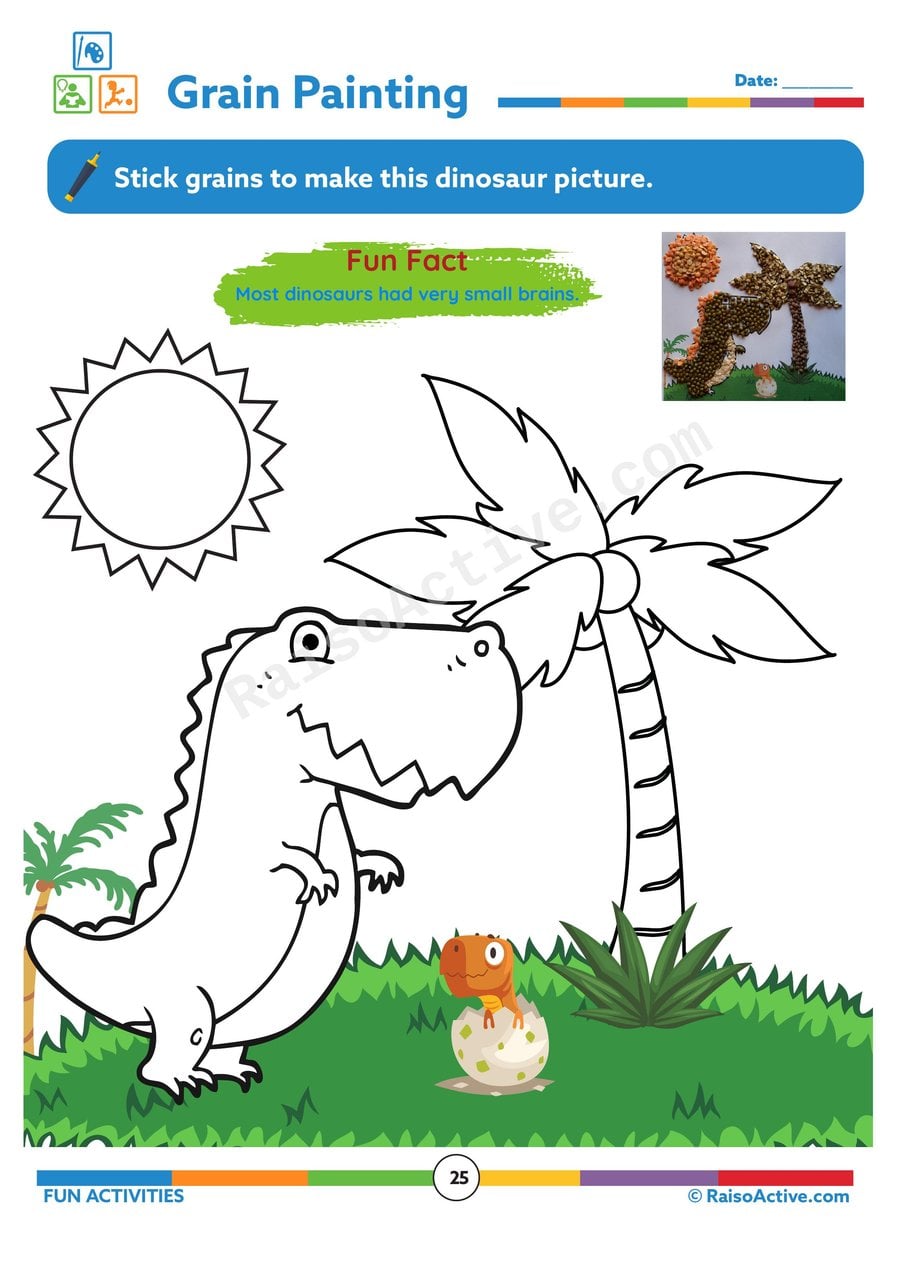
Dinosaur Grain Painting Worksheet for Kids
Ages 3-5 · Preschool–Pre-KAges 3-5 · Nursery–ReceptionAges 3-5 · Nursery–LKGAges 3-5
Sticking individual grains like rice or lentils onto a dinosaur outline is a sensory-rich fine motor task that asks for a precise pinch-and-place motion very different from painting or crayon coloring, building the same small-muscle control used later for holding scissors and a pencil. The tactile variety of different grains also gives young children valuable sensory input that supports attention and focus.
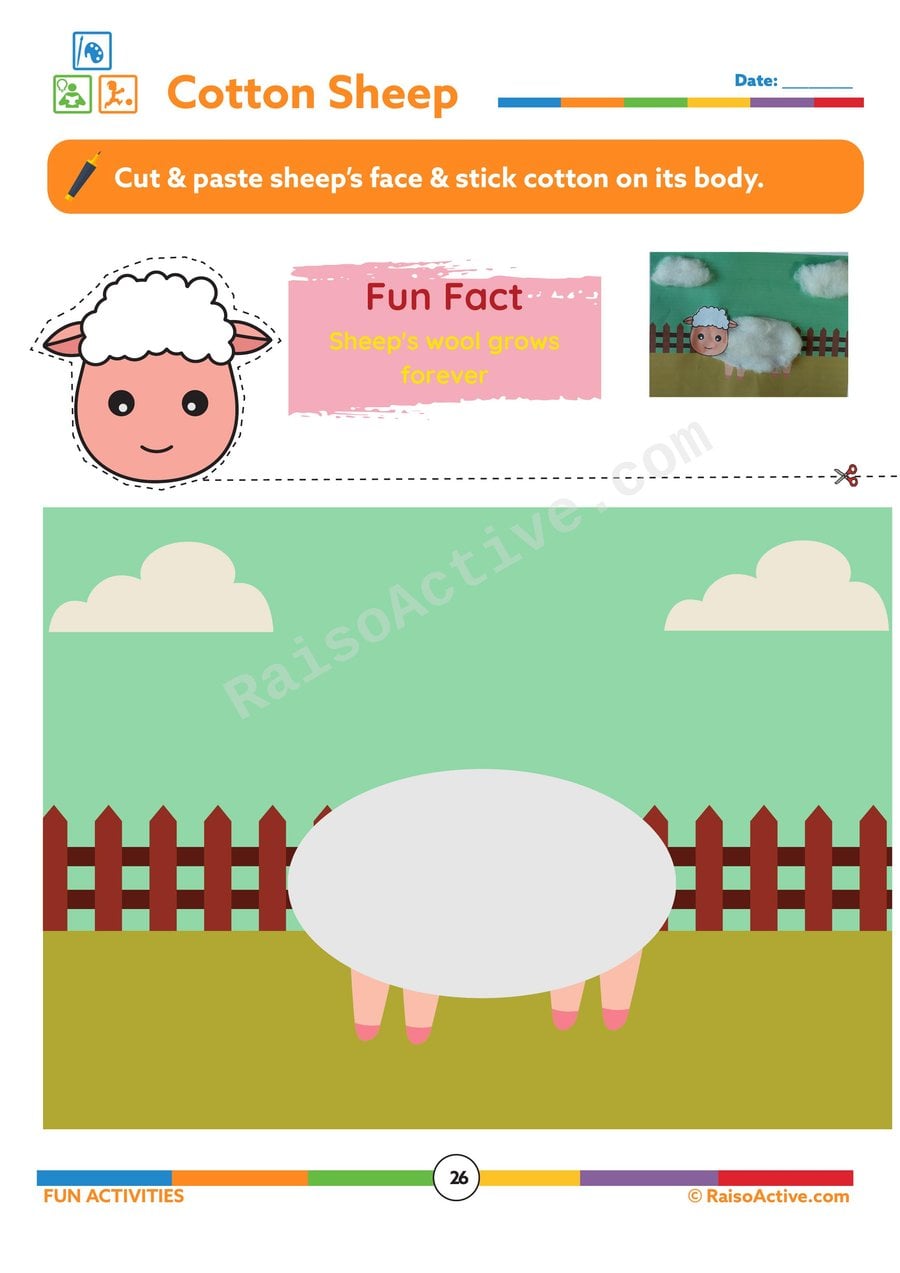
Cotton Sheep Craft Worksheet for Preschoolers
Ages 3-5 · Preschool–Pre-KAges 3-5 · Nursery–ReceptionAges 3-5 · Nursery–LKGAges 3-5
Cutting out the sheep's face and body and then pressing on individual cotton balls to build up its wool gives children a satisfying sensory contrast — the crisp, controlled cut of paper versus the soft, pinch-and-place texture of cotton — while practicing pincer grip strength needed for holding a pencil. The sheep theme also opens up simple, concrete conversation about where wool comes from.

Finger Puppet Fun: Make and Play with Mouse and Elephant!
Ages 3-5 · Preschool–Pre-KAges 3-5 · Nursery–ReceptionAges 3-5 · Nursery–LKGAges 3-5
Cutting out the mouse and elephant shapes and then folding the tabs to form each puppet adds a sequencing step — cut, then fold, then assemble — that goes a level beyond simple cutting and paste worksheets, teaching children to follow a short chain of instructions in order. The size contrast between a tiny mouse and a huge elephant also gives a natural, playful way to talk about big and small.

Giraffe Cut and Paste Worksheet for Preschoolers
Ages 3-5 · Preschool–Pre-KAges 3-5 · Nursery–ReceptionAges 3-5 · Nursery–LKGAges 3-5
Assembling a giraffe from separate cut-out parts and gluing them onto a background gives children practice with proportion and placement — a giraffe's long neck and small head need to be positioned correctly relative to its body — which is a slightly more advanced spatial task than assembling rounder, simpler animals. This craft at ages 3-5 builds scissor control alongside basic animal knowledge.
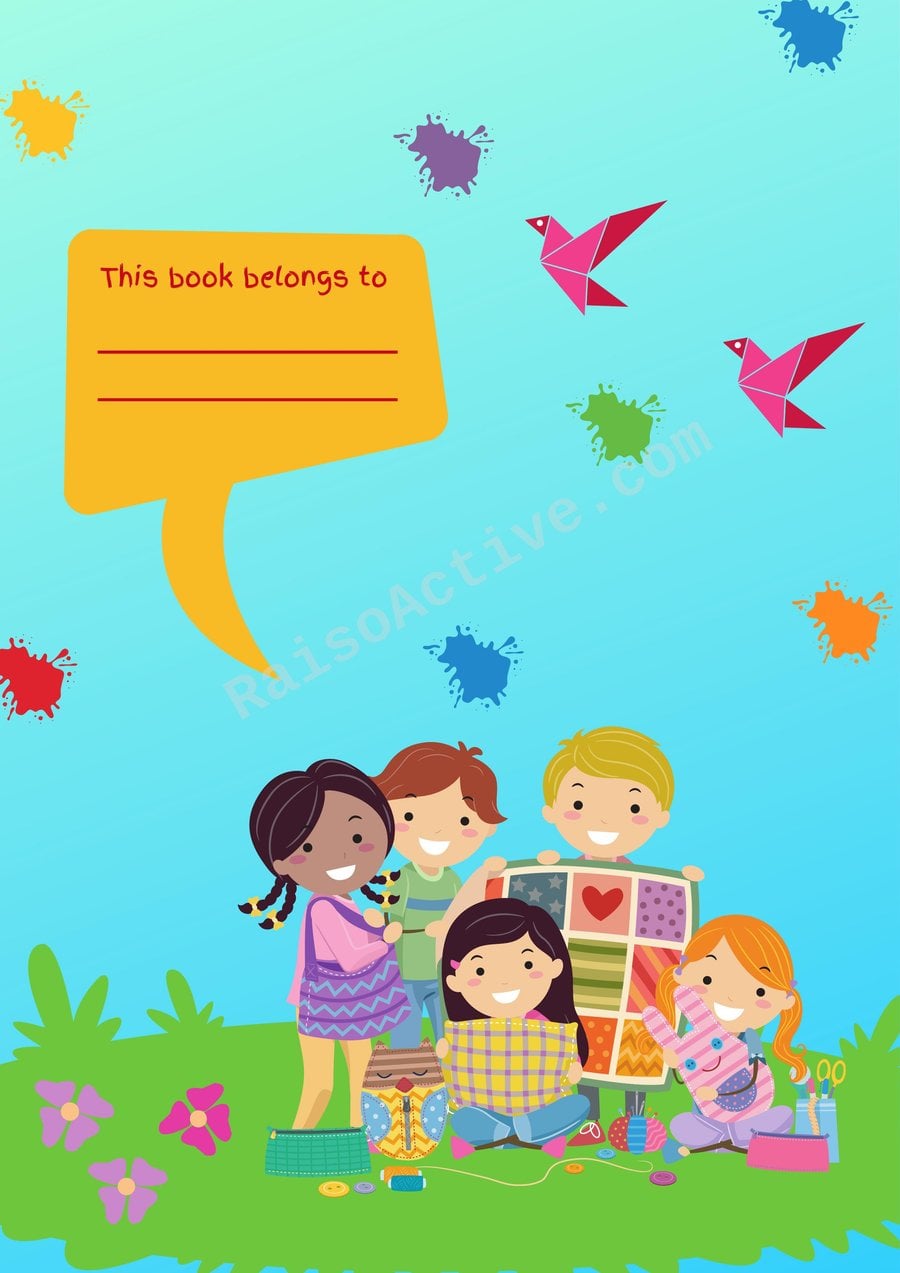
My Book Belongs To: A Fun Craft for Kids!
Ages 3-5 · Preschool–Pre-KAges 3-5 · Nursery–ReceptionAges 3-5 · Nursery–LKGAges 3-5
Writing their own name on a bookplate-style page gives children a real, personal reason to practice handwriting rather than tracing an abstract letter, which increases motivation considerably at ages 3-5. Coloring the accompanying image also reinforces the idea of ownership and care for books — a small but meaningful step toward treating books as valued objects.
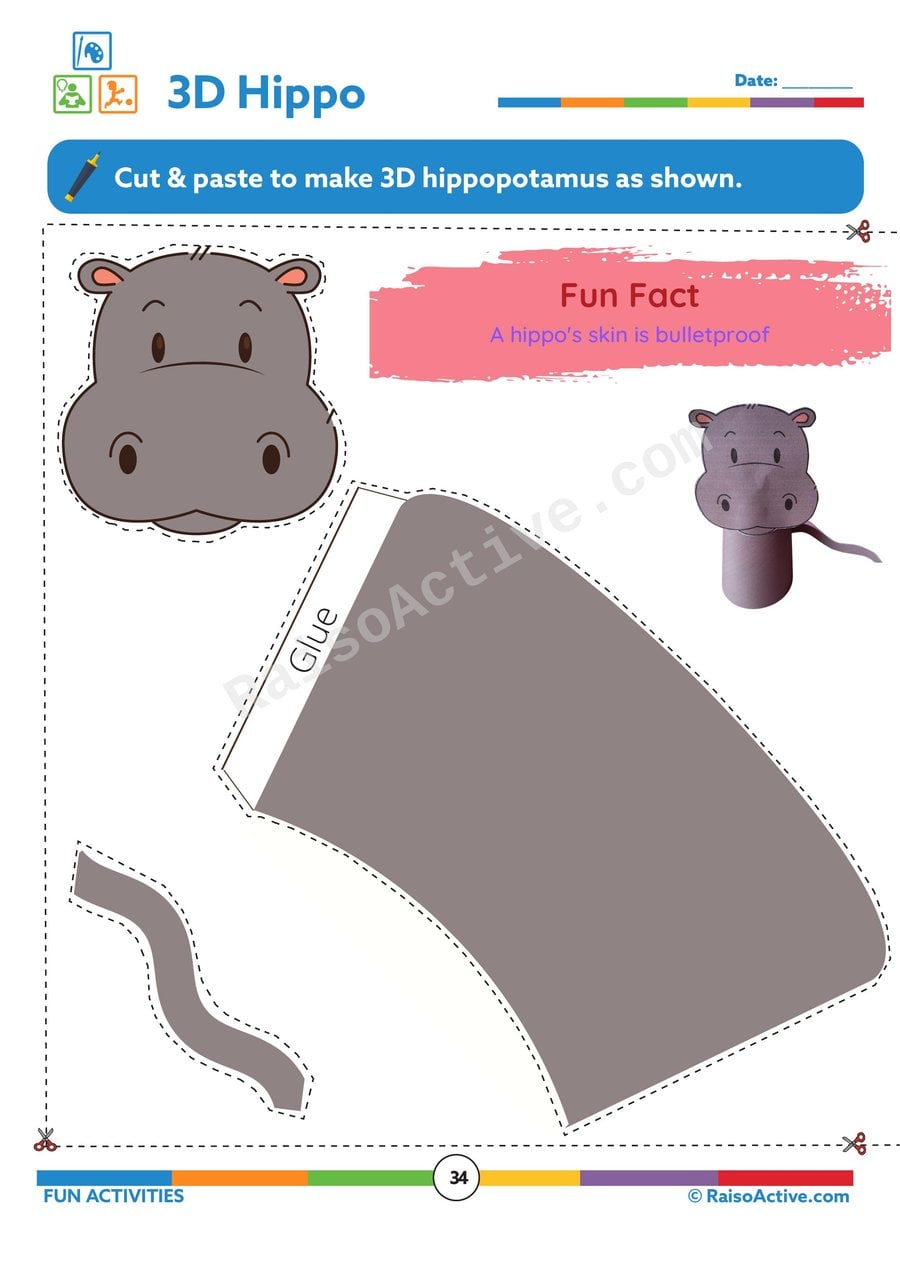
3D Hippo Cut & Paste Worksheet for Preschoolers
Ages 3-5 · Preschool–Pre-KAges 3-5 · Nursery–ReceptionAges 3-5 · Nursery–LKGAges 3-5
Like other 3D paper crafts, building this hippo from flat cut pieces that fold and glue into a standing shape helps 3-5 year olds grasp that paper can be transformed from flat to solid, while the multi-step process — cut, fold, glue — builds sequencing skills beyond a single-action worksheet. The hippo theme also gives an easy hook for a fun animal fact conversation.

Colorful Bird Cut and Paste Worksheet for Preschoolers
Ages 3-5 · Preschool–Pre-KAges 3-5 · Nursery–ReceptionAges 3-5 · Nursery–LKGAges 3-5
Assembling a colorful bird from separate cut-out shapes teaches children to build a recognizable image from individual parts — body, wings, beak, tail — which strengthens both scissor control and the visual-spatial planning needed to see how pieces relate to a whole picture. The bright color theme also gives a natural opportunity to build color-naming vocabulary as each piece goes on.
Related worksheets

Identify Flags Worksheet: Cut and Paste Matching Activity
Ages 4-6 · Pre-K–KindergartenAges 4-6 · Reception–Year 1Ages 4-6 · LKG–UKGAges 4-6
This worksheet gives children ages 4-6 further practice matching country flags to their names, reinforcing visual discrimination and geography vocabulary through repetition with a new set of flags. Repeated matching practice across different worksheets helps move flag recognition from short-term recall into more durable, lasting memory.

Spooky Fun: Complete the Halloween Sketches Worksheet
Ages 3-5 · Preschool–Pre-KAges 3-5 · Nursery–ReceptionAges 3-5 · Nursery–LKGAges 3-5
This worksheet has children ages 3-5 complete partially drawn Halloween sketches by tracing or extending existing lines, building visual perception and fine motor control as they figure out what shape a sketch is meant to become. Coloring the completed pictures afterward adds a creative finishing step that rewards the careful tracing work.
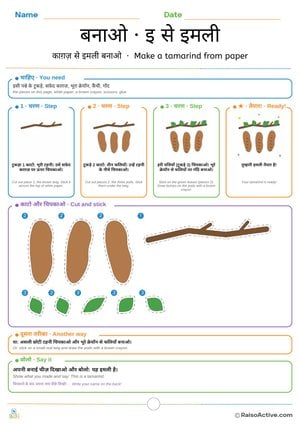
Make a Paper Tamarind: Hindi Letter इ Craft | बनाओ · इ से इमली
Ages 3-7 · Preschool–Grade 1Ages 3-7 · Nursery–Year 2Ages 3-7 · Nursery–Class 1Ages 3-7
Children cut out the pieces, put them together following three step pictures and make a paper tamarind. Saying the word इमली as they make it links the sound इ to something they built themselves.
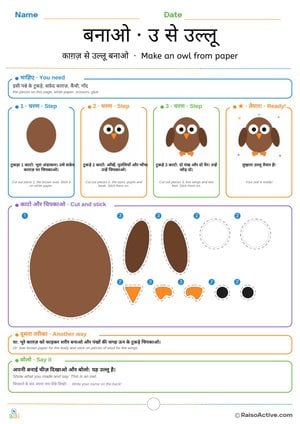
Make a Paper Owl: Hindi Letter उ Craft | बनाओ · उ से उल्लू
Ages 3-7 · Preschool–Grade 1Ages 3-7 · Nursery–Year 2Ages 3-7 · Nursery–Class 1Ages 3-7
Children cut out the pieces, put them together following three step pictures and make a paper owl. Saying the word उल्लू as they make it links the sound उ to something they built themselves.

Reindeer Craft: Follow Instructions and Create a Festive Decoration!
Ages 3-5 · Preschool–Pre-KAges 3-5 · Nursery–ReceptionAges 3-5 · Nursery–LKGAges 3-5
This multi-step reindeer craft has children ages 3-5 follow a sequence of folding and assembly instructions to build a three-dimensional decoration, strengthening both listening comprehension and the fine motor skills needed to position and attach small pieces accurately. Because each step depends on the one before it, children also practice patience and sequencing, skills that carry over into following any multi-step task.
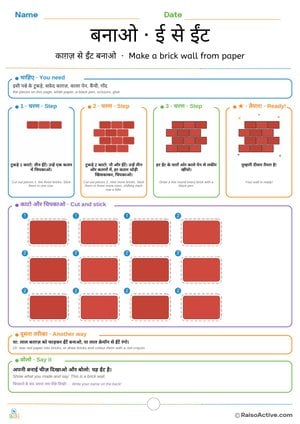
Make a Paper Brick Wall: Hindi Letter ई Craft | बनाओ · ई से ईंट
Ages 3-7 · Preschool–Grade 1Ages 3-7 · Nursery–Year 2Ages 3-7 · Nursery–Class 1Ages 3-7
Children cut out the pieces, put them together following three step pictures and make a paper brick wall. Saying the word ईंट as they make it links the sound ई to something they built themselves.
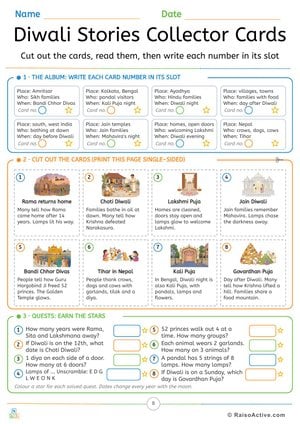
Diwali Stories Collector Cards: Cut-Out Cards and Quest Puzzles
Ages 7-10 · Grade 2–Grade 3Ages 7-10 · Year 3–Year 4Ages 7-10 · Class 2–Class 3Ages 7-10
Children cut out eight cards that tell where and how families celebrate, including Rama's return, Lakshmi Puja, Jain Diwali, Bandi Chhor Divas, Tihar in Nepal, Kali Puja and Govardhan Puja, then match them to an album and solve eight quests.

Happy Easter Coloring Card Worksheet for Preschoolers
Ages 3-5 · Preschool–Pre-KAges 3-5 · Nursery–ReceptionAges 3-5 · Nursery–LKGAges 3-5
Coloring the Easter egg and bunny images on this fold-into-a-card worksheet gives children ages 3-5 practice with controlled crayon strokes and color choice, while the act of turning their artwork into a card for someone else introduces an early sense of purpose and gift-giving. Because the finished piece becomes a keepsake rather than just a worksheet, children also build pride and motivation to complete their coloring carefully. This blends fine motor practice with a first taste of creating something meaningful for another person.
Guides for this topic

Celebrating Diversity: How to Incorporate Cultural Awareness in Learning Activities for Young Children
Practical cultural awareness activities for young children aged 2-8. Explore Indian festivals, world cultures, food, music, and crafts to teach diversity and inclusion.
How to Teach Cutting Skills to Your Preschooler: A Complete Guide for Parents and Teachers
Help your child master scissor skills safely. Expert guide covering readiness signs, scissor types, progression steps, pre-cutting exercises, and fun practice ideas for ages 2-6.
What Supplies Do You Need for Preschool Learning at Home: The Complete Essential Guide
Discover the essential supplies for preschool learning at home — from crayons and counting blocks to sensory bins. Affordable options available in India for ages 2–6.
Reviews
Every worksheet for ages 3–5, no watermark
Members download the full library of 1,000+ worksheets and every activity pack without watermarks or daily limits. One year costs ₹999 in India or $20 elsewhere.
See membership plansOr download any worksheet free with a watermark (5 a day).