Colorful Bird Cut and Paste Worksheet for Preschoolers
Assembling a colorful bird from separate cut-out shapes teaches children to build a recognizable image from individual parts — body, wings, beak, tail — which strengthens both scissor control and the visual-spatial planning needed to see how pieces relate to a whole picture. The bright color theme also gives a natural opportunity to build color-naming vocabulary as each piece goes on.
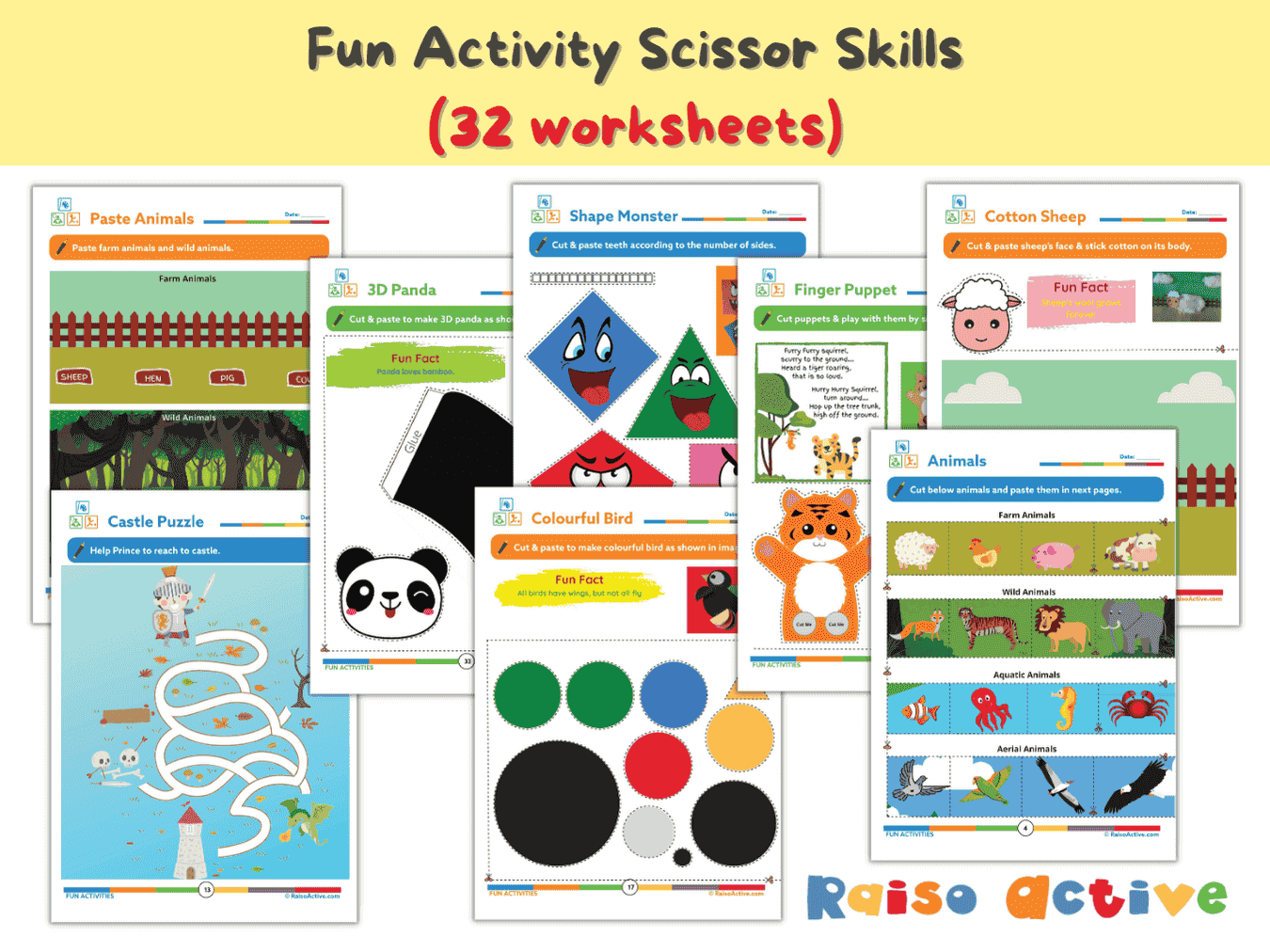
Part of the pack
Preschool Scissor Skills Activity Book: Fine Motor & Craft Fun for Ages 3-6
This is page 17 of the pack. Ages 3-6 · Preschool–KindergartenAges 3-6 · Nursery–Year 1Ages 3-6 · Nursery–UKGAges 3-6
Curriculum
- Fine Motor > Scissor Skills & Cutting
How to use this worksheet
Cut out the provided bird shapes along their dotted lines, keeping the pieces organized so none get lost. Glue each shape onto the designated area of the page, following the example image to see where the body, wings, and other parts belong. Work through the pieces one at a time, checking the picture as you go rather than gluing everything at once. Let your child color the bird and add extra details once assembly is complete.
Materials needed
- Scissors
- Glue
- Pencil or Marker (optional)
Extension activities
- 1Go on a bird walk and look for real birds, noticing their colors and shapes.
- 2Make a simple bird feeder out of a pinecone and birdseed to attract real visitors.
- 3Talk about the different colors on the finished bird and name each one out loud.
- 4Draw a nest or a tree branch for the bird to perch on.
- 5Look up pictures of a few brightly colored real birds, like a parrot or peacock, and compare them.

Written by
Hemsweta Jain · Teacher Cheena
MBA and Early Childhood Educator, teaching since 2014 · Founder of RaisoActive, Mumbai
Every RaisoActive worksheet is designed and checked by the founder before publishing.
Published · Last reviewed
More from Preschool Scissor Skills Activity Book: Fine Motor & Craft Fun for Ages 3-6
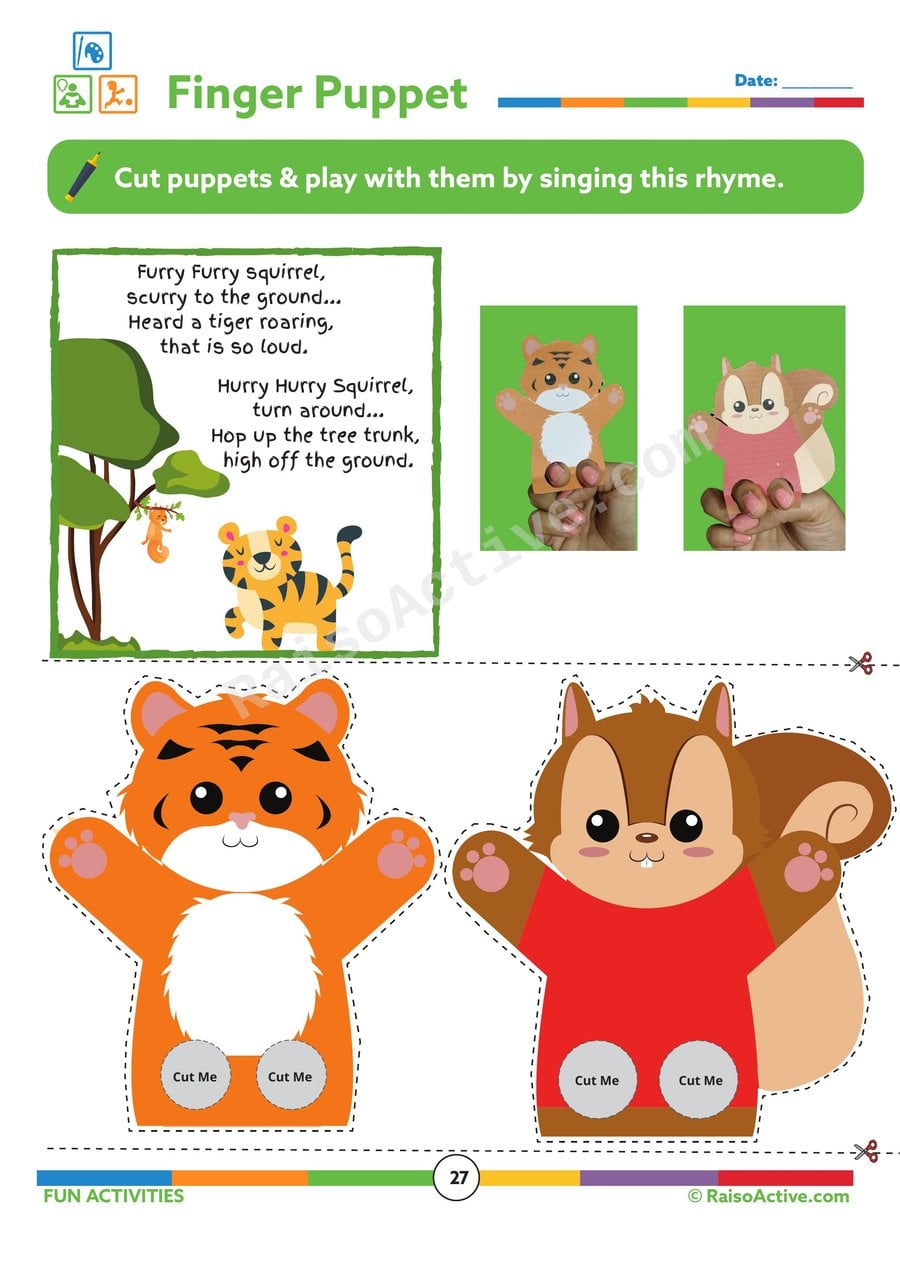
Finger Puppet Fun: Cut and Play with a Rhyme!
Ages 3-5 · Preschool–Pre-KAges 3-5 · Nursery–ReceptionAges 3-5 · Nursery–LKGAges 3-5
Cutting out the tiger and squirrel puppets and then using them to act out an accompanying rhyme builds scissor precision on animal shapes while also developing oral language and memory, since repeating a short rhyme with props helps children internalize its rhythm and words. This blend of fine motor and language practice at ages 3-5 supports both handwriting readiness and early literacy at once.

Snail Craft: Cut, Fold, and Paste Worksheet for Preschoolers
Ages 3-5 · Preschool–Pre-KAges 3-5 · Nursery–ReceptionAges 3-5 · Nursery–LKGAges 3-5
Building this snail adds a folding step to the usual cut-and-paste routine — the orange circle must be folded before it becomes the shell — which asks 3-5 year olds to think in three dimensions and follow a short sequence of instructions rather than a single action. This kind of multi-step assembly builds the sequencing and instruction-following skills children will lean on heavily once they start following classroom directions.

Castle Puzzle: Cut and Assemble the Castle Worksheet for Kids
Ages 3-5 · Preschool–Pre-KAges 3-5 · Nursery–ReceptionAges 3-5 · Nursery–LKGAges 3-5
Cutting a picture into puzzle pieces and reassembling them asks 3-5 year olds to hold a mental image of the whole picture while working with fragments of it — an early visual-spatial reasoning skill that supports later map-reading and geometry. The castle theme also gives a natural jumping-off point for imaginative play and vocabulary about towers, drawbridges, and moats.
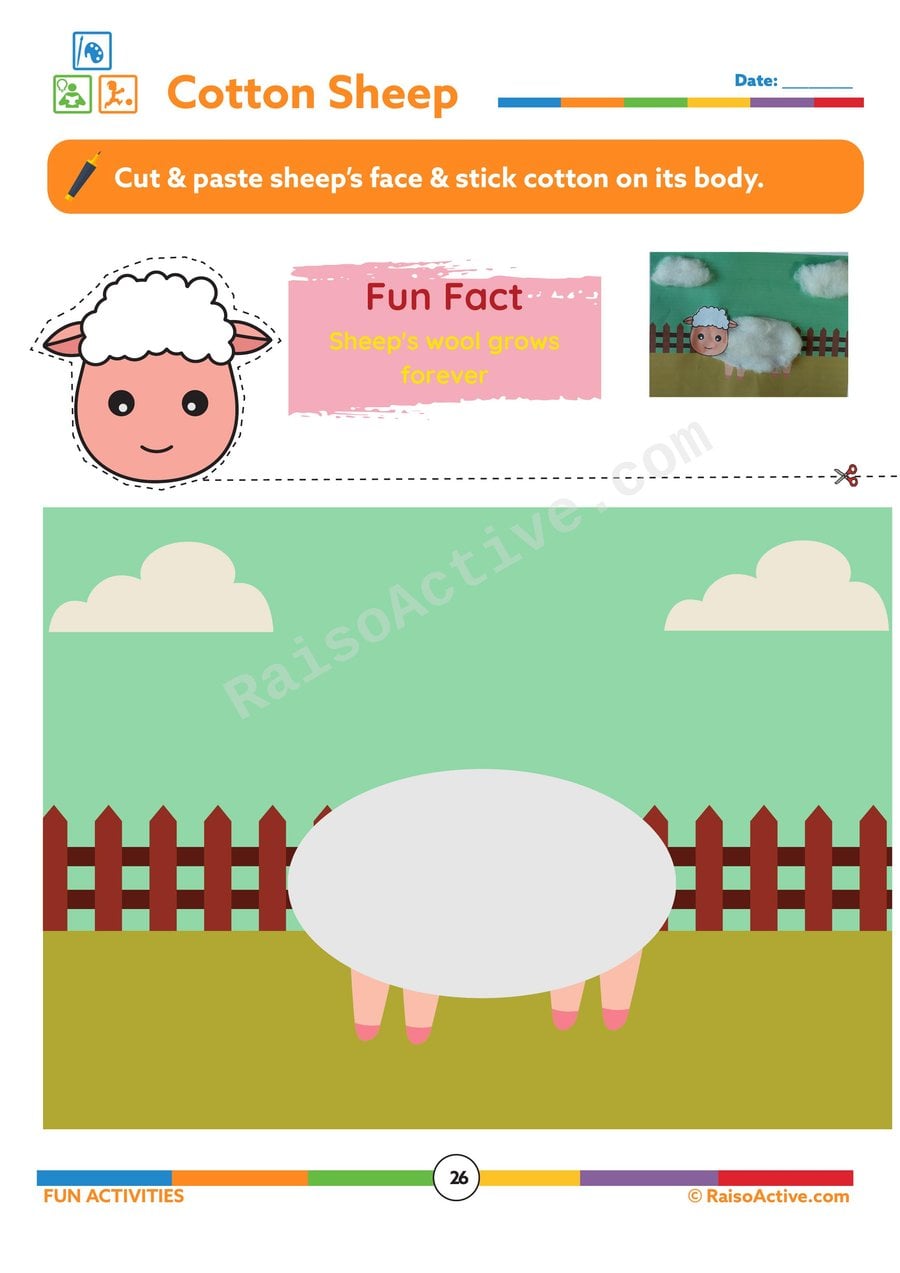
Cotton Sheep Craft Worksheet for Preschoolers
Ages 3-5 · Preschool–Pre-KAges 3-5 · Nursery–ReceptionAges 3-5 · Nursery–LKGAges 3-5
Cutting out the sheep's face and body and then pressing on individual cotton balls to build up its wool gives children a satisfying sensory contrast — the crisp, controlled cut of paper versus the soft, pinch-and-place texture of cotton — while practicing pincer grip strength needed for holding a pencil. The sheep theme also opens up simple, concrete conversation about where wool comes from.
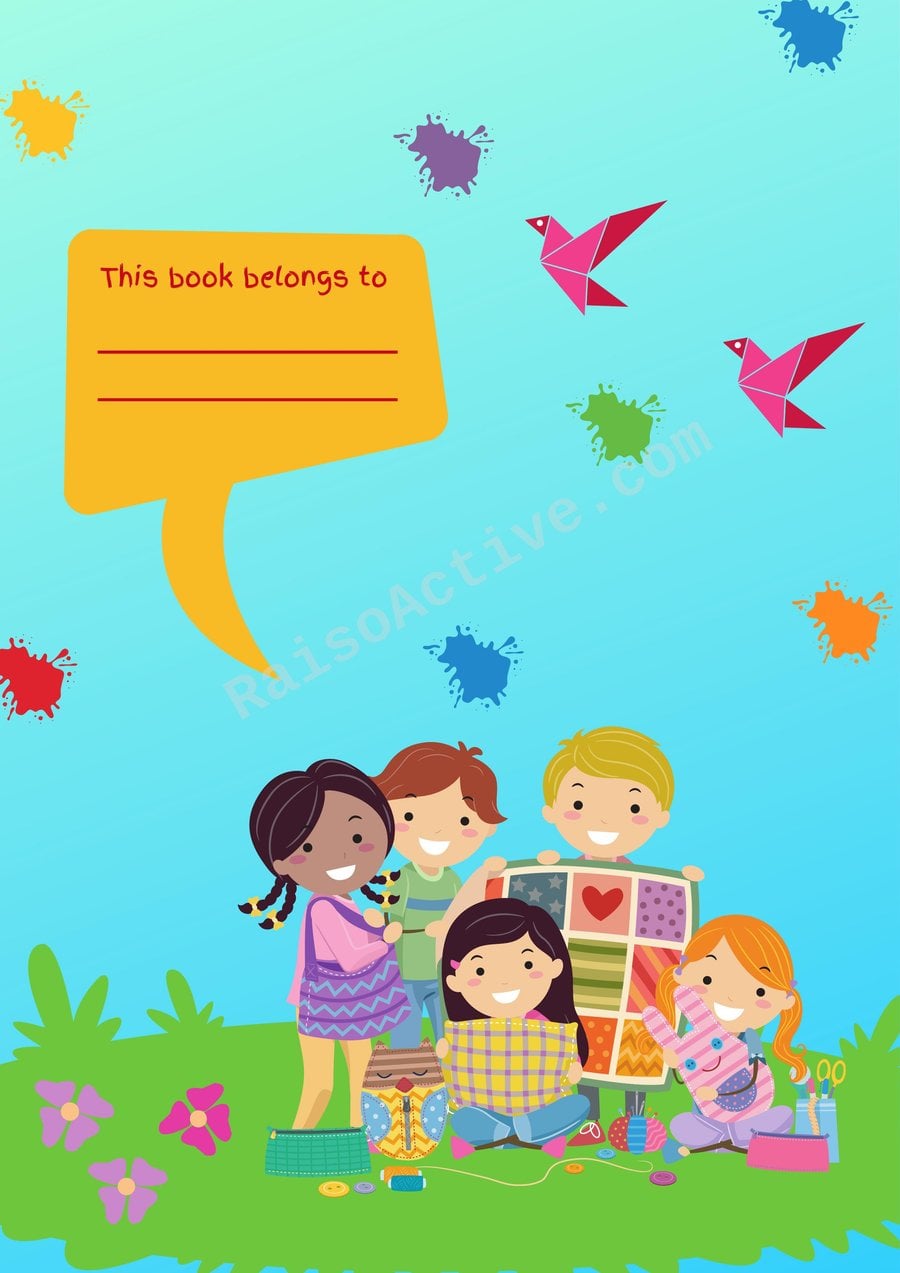
My Book Belongs To: A Fun Craft for Kids!
Ages 3-5 · Preschool–Pre-KAges 3-5 · Nursery–ReceptionAges 3-5 · Nursery–LKGAges 3-5
Writing their own name on a bookplate-style page gives children a real, personal reason to practice handwriting rather than tracing an abstract letter, which increases motivation considerably at ages 3-5. Coloring the accompanying image also reinforces the idea of ownership and care for books — a small but meaningful step toward treating books as valued objects.

Cut and Paste a Fun Fish Worksheet for Preschoolers
Ages 3-5 · Preschool–Pre-KAges 3-5 · Nursery–ReceptionAges 3-5 · Nursery–LKGAges 3-5
Building a fish from separate cut-out shapes glued onto a large circle base gives children practice constructing a picture within a defined boundary, teaching them to fit and arrange pieces inside a fixed space rather than a blank page. This kind of bounded assembly at ages 3-5 builds spatial planning alongside the usual scissor and gluing practice.
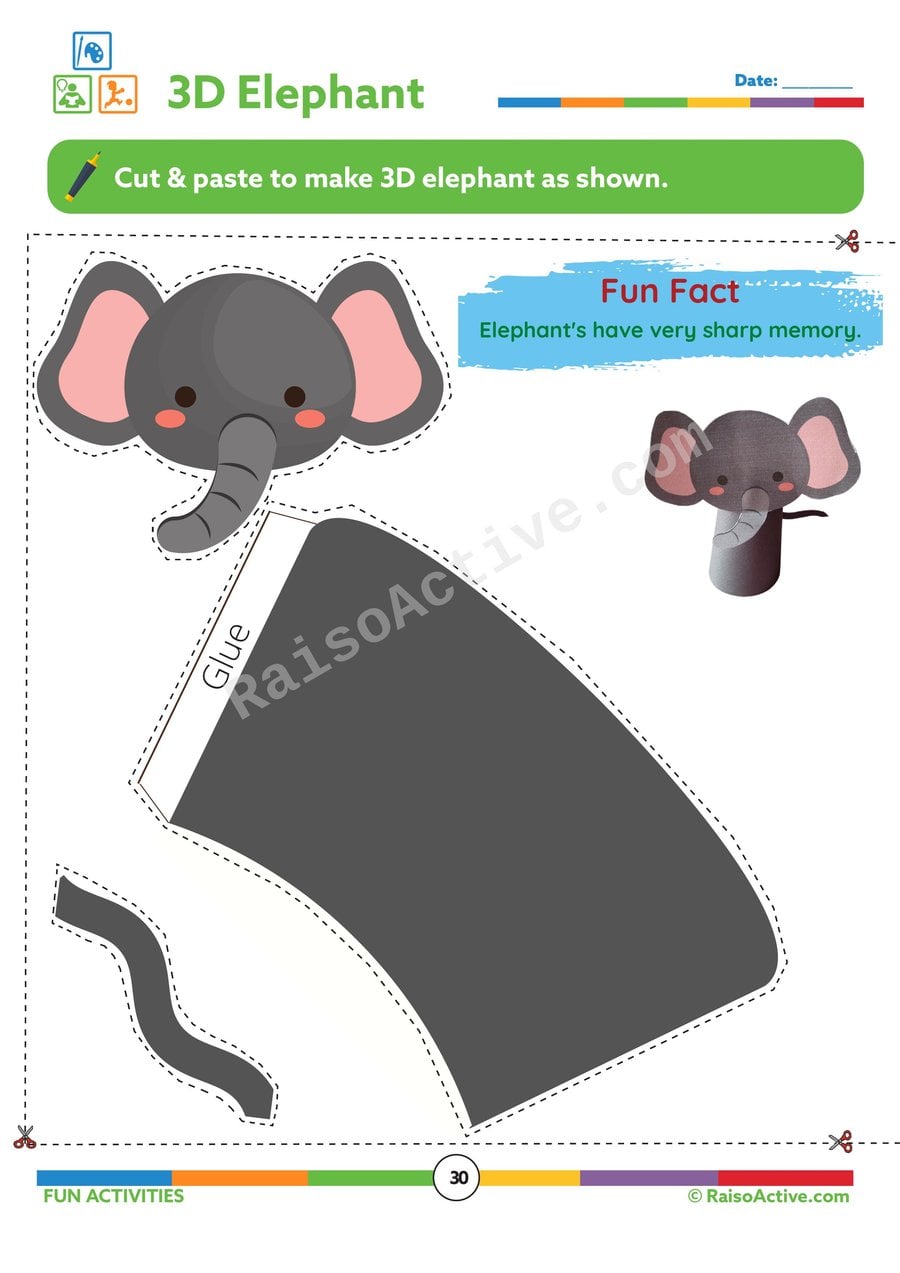
3D Elephant Craft Worksheet for Preschoolers
Ages 3-5 · Preschool–Pre-KAges 3-5 · Nursery–ReceptionAges 3-5 · Nursery–LKGAges 3-5
Folding and gluing flat pieces into a standing 3D elephant builds on simpler flat cut-and-paste crafts by adding a spatial, structural challenge — the pieces need to hold their shape once assembled, not just lie flat on a page. This kind of construction at ages 3-5 introduces the concept that paper can become a solid object, while the elephant theme opens the door to a memorable animal fact about memory.

Parent's Guide to Scissor Skills: Fun Activities for Preschoolers
Ages 3-5 · Preschool–Pre-KAges 3-5 · Nursery–ReceptionAges 3-5 · Nursery–LKGAges 3-5
This guide walks through the progression of scissor skills that most children move through between ages 3 and 5 — from squeezing to snip fringe, to cutting straight lines, to curves — rather than a single activity, so it teaches adults how to sequence practice rather than teaching a single skill directly. Following the staged activities (tearing, spraying water, punching holes, snipping with chopsticks) builds the specific hand-strength and bilateral coordination that true scissor cutting depends on before a child is even handed scissors.
Related worksheets
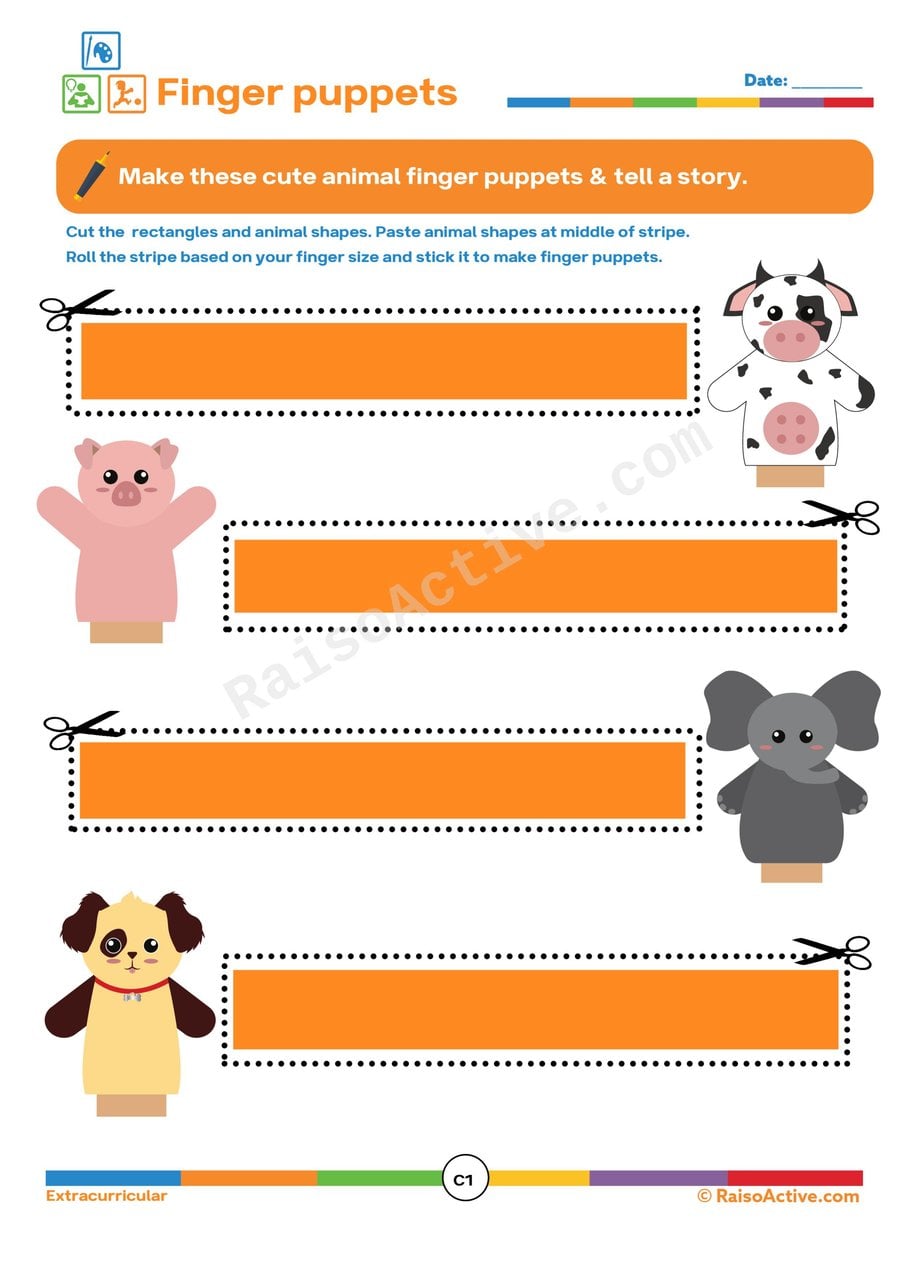
Make Finger Puppets! Fun Animal Craft Worksheet
Ages 3-5 · Preschool–Pre-KAges 3-5 · Nursery–ReceptionAges 3-5 · Nursery–LKGAges 3-5
This hands-on craft worksheet builds scissor control and fine motor precision in children ages 3-5 as they cut out animal shapes and rectangles, then roll and secure the rectangle into a puppet that fits their finger. The three-dimensional assembly step also introduces early spatial reasoning, since children must figure out how a flat shape becomes a wearable tube.

Color the Snowman! A Fun Coloring Worksheet for Kids
Ages 3-5 · Preschool–Pre-KAges 3-5 · Nursery–ReceptionAges 3-5 · Nursery–LKGAges 3-5
This worksheet helps children ages 3-5 practice fine motor control and creative choice while coloring a winter snowman scene. Because the image invites open-ended color decisions rather than following a strict code, it also builds confidence in making independent artistic choices.
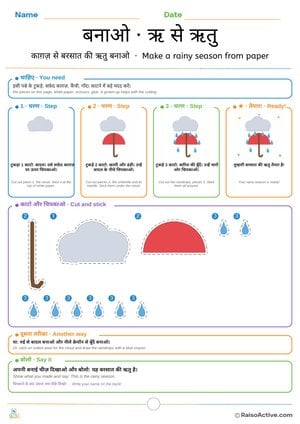
Make a Paper Rainy Season: Hindi Letter ऋ (ri) Cut and Stick Craft | बनाओ · ऋ से ऋतु
Ages 4-7 · Pre-K–Grade 1Ages 4-7 · Reception–Year 2Ages 4-7 · LKG–Class 1Ages 4-7
Children cut out the numbered pieces and stick them in order to make a rainy season scene with a cloud, umbrella and rain, then show it and say a full sentence about it. It links the letter ऋ with a real picture word, ऋतु (season), and practises scissor control and following steps.

Akash Kandil Craft: Make a Paper Lantern for Diwali
Ages 4-8 · Pre-K–Grade 2Ages 4-8 · Reception–Year 3Ages 4-8 · LKG–Class 2Ages 4-8
Children learn that families in Maharashtra and Goa hang an akash kandil sky lantern at Diwali, and that many festivals have their own special light.

Spooky Fun: Complete the Halloween Sketches Worksheet
Ages 3-5 · Preschool–Pre-KAges 3-5 · Nursery–ReceptionAges 3-5 · Nursery–LKGAges 3-5
This worksheet has children ages 3-5 complete partially drawn Halloween sketches by tracing or extending existing lines, building visual perception and fine motor control as they figure out what shape a sketch is meant to become. Coloring the completed pictures afterward adds a creative finishing step that rewards the careful tracing work.

Reindeer Craft: Follow Instructions and Create a Festive Decoration!
Ages 3-5 · Preschool–Pre-KAges 3-5 · Nursery–ReceptionAges 3-5 · Nursery–LKGAges 3-5
This multi-step reindeer craft has children ages 3-5 follow a sequence of folding and assembly instructions to build a three-dimensional decoration, strengthening both listening comprehension and the fine motor skills needed to position and attach small pieces accurately. Because each step depends on the one before it, children also practice patience and sequencing, skills that carry over into following any multi-step task.

Rocking Santa Card Craft Worksheet for Preschoolers
Ages 3-5 · Preschool–Pre-KAges 3-5 · Nursery–ReceptionAges 3-5 · Nursery–LKGAges 3-5
This rocking Santa card craft has children ages 3-5 cut out individual shape pieces and assemble them onto a folded card base, combining scissor control with an early understanding of how folding creates movement, since the 'rocking' effect comes from the card's fold. Following the assembly steps in order also reinforces sequencing and attention to visual instructions.

Christmas Cut and Paste Worksheet for Preschoolers
Ages 3-5 · Preschool–Pre-KAges 3-5 · Nursery–ReceptionAges 3-5 · Nursery–LKGAges 3-5
Cutting out a moon, snowman, gifts, and trees and arranging them inside a circle builds scissor precision and compositional thinking in children ages 3-5. Because there's no single 'correct' layout, children also practice early creative decision-making — choosing where each element belongs within a bordered space, which supports spatial awareness.
Guides for this topic

Celebrating Diversity: How to Incorporate Cultural Awareness in Learning Activities for Young Children
Practical cultural awareness activities for young children aged 2-8. Explore Indian festivals, world cultures, food, music, and crafts to teach diversity and inclusion.
How to Teach Cutting Skills to Your Preschooler: A Complete Guide for Parents and Teachers
Help your child master scissor skills safely. Expert guide covering readiness signs, scissor types, progression steps, pre-cutting exercises, and fun practice ideas for ages 2-6.
What Supplies Do You Need for Preschool Learning at Home: The Complete Essential Guide
Discover the essential supplies for preschool learning at home — from crayons and counting blocks to sensory bins. Affordable options available in India for ages 2–6.
Reviews
Every worksheet for ages 3–5, no watermark
Members download the full library of 1,000+ worksheets and every activity pack without watermarks or daily limits. One year costs ₹999 in India or $20 elsewhere.
See membership plansOr download any worksheet free with a watermark (5 a day).