Frog Life Cycle Worksheet for Preschoolers
This worksheet walks children ages 3-5 through a frog's life cycle, egg, tadpole, tadpole with legs, and adult frog, introducing the concept of metamorphosis through a creature many children find fascinating. Recognizing that a tadpole and a frog are the same animal at different stages challenges early assumptions and builds flexible scientific thinking.
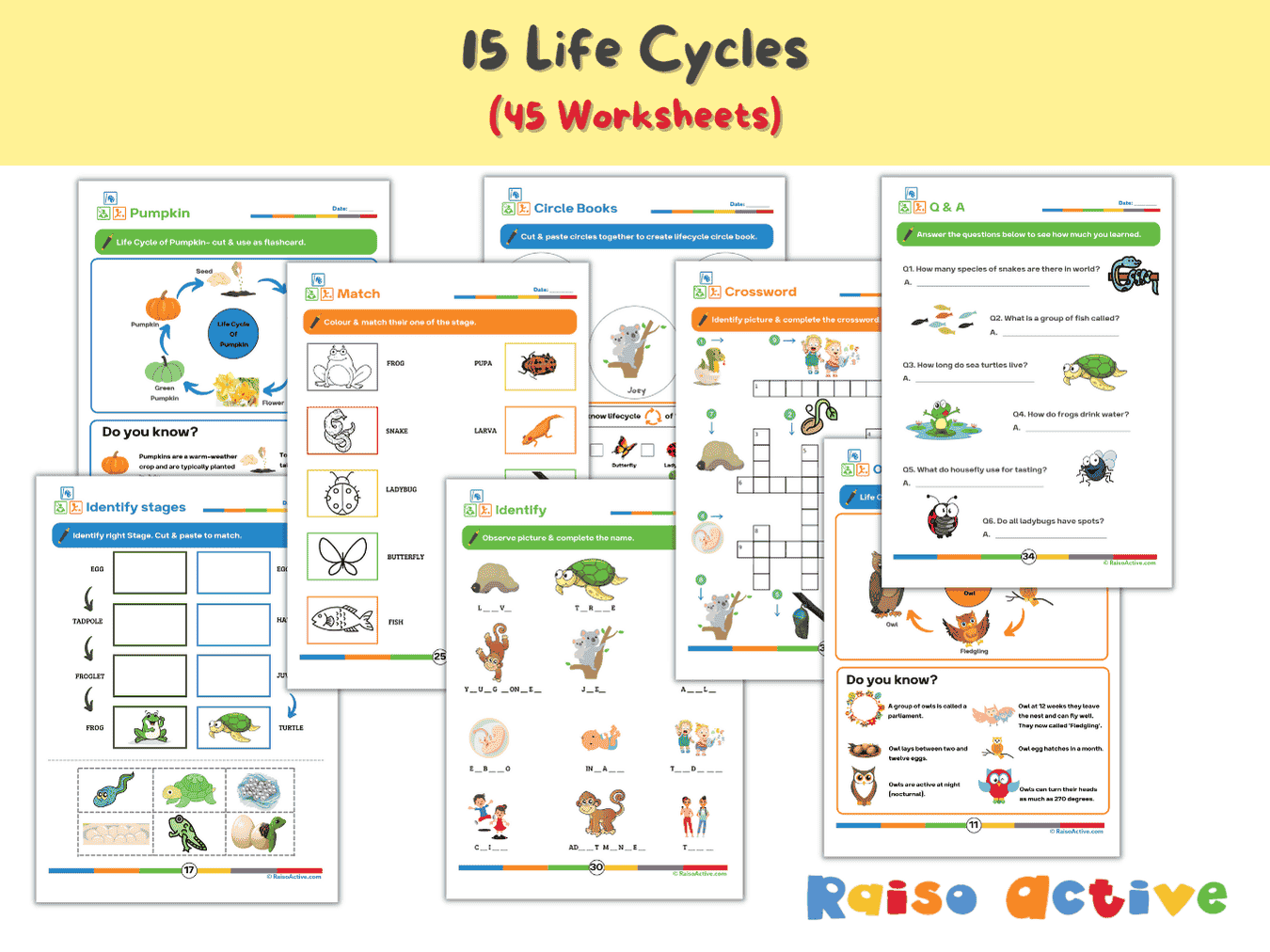
Part of the pack
Lifecycles Activity Book & Flashcards for Preschool & Early Elementary
This is page 7 of the pack. Ages 3-8 · Preschool–Grade 2Ages 3-8 · Nursery–Year 3Ages 3-8 · Nursery–Class 2Ages 3-8
Curriculum
- Living Things - Animals > Animal Life Cycles
How to use this worksheet
Look at the pictures together and name each stage: egg, tadpole, tadpole growing legs, and finally a full-grown frog. Talk about what changes between each picture, like how the tail disappears and legs appear. Use the images as flashcards by mixing them up and asking your child to put them back in the correct growing order. Point to each stage as your child names what's happening in it.
Materials needed
- Pencil
- Crayons
Extension activities
- 1Draw your own frog life cycle from egg to adult frog.
- 2Read a book about frogs and their habitats.
- 3Visit a pond or wetland and look for frogs or tadpoles, with adult supervision.
- 4Make a tadpole-to-frog craft using cotton balls and green paper.
- 5Practice frog jumps and croaking sounds to act out the adult stage.

Written by
Hemsweta Jain · Teacher Cheena
MBA and Early Childhood Educator, teaching since 2014 · Founder of RaisoActive, Mumbai
Every RaisoActive worksheet is designed and checked by the founder before publishing.
Published · Last reviewed
More from Lifecycles Activity Book & Flashcards for Preschool & Early Elementary

Housefly Life Cycle Flashcards Worksheet for Kids
Ages 3-5 · Preschool–Pre-KAges 3-5 · Nursery–ReceptionAges 3-5 · Nursery–LKGAges 3-5
These flashcards teach children ages 3-5 the four stages of a housefly's life cycle, egg, larva, pupa, and adult fly, giving them a concrete, sequential science concept using an insect they likely encounter often in daily life. Learning that a familiar insect goes through such distinct changes also builds curiosity and reduces the instinct to simply dismiss it.

Identify and Complete the Names Worksheet for Preschoolers
Ages 4-5 · Pre-KAges 4-5 · ReceptionAges 4-5 · LKGAges 4-5
Children ages 4-5 build on early spelling skills by identifying pictures and completing their names using provided letter hints, strengthening both vocabulary and phonics awareness. Using hints rather than a fully blank space offers just enough support to keep the task achievable while still requiring active problem-solving.
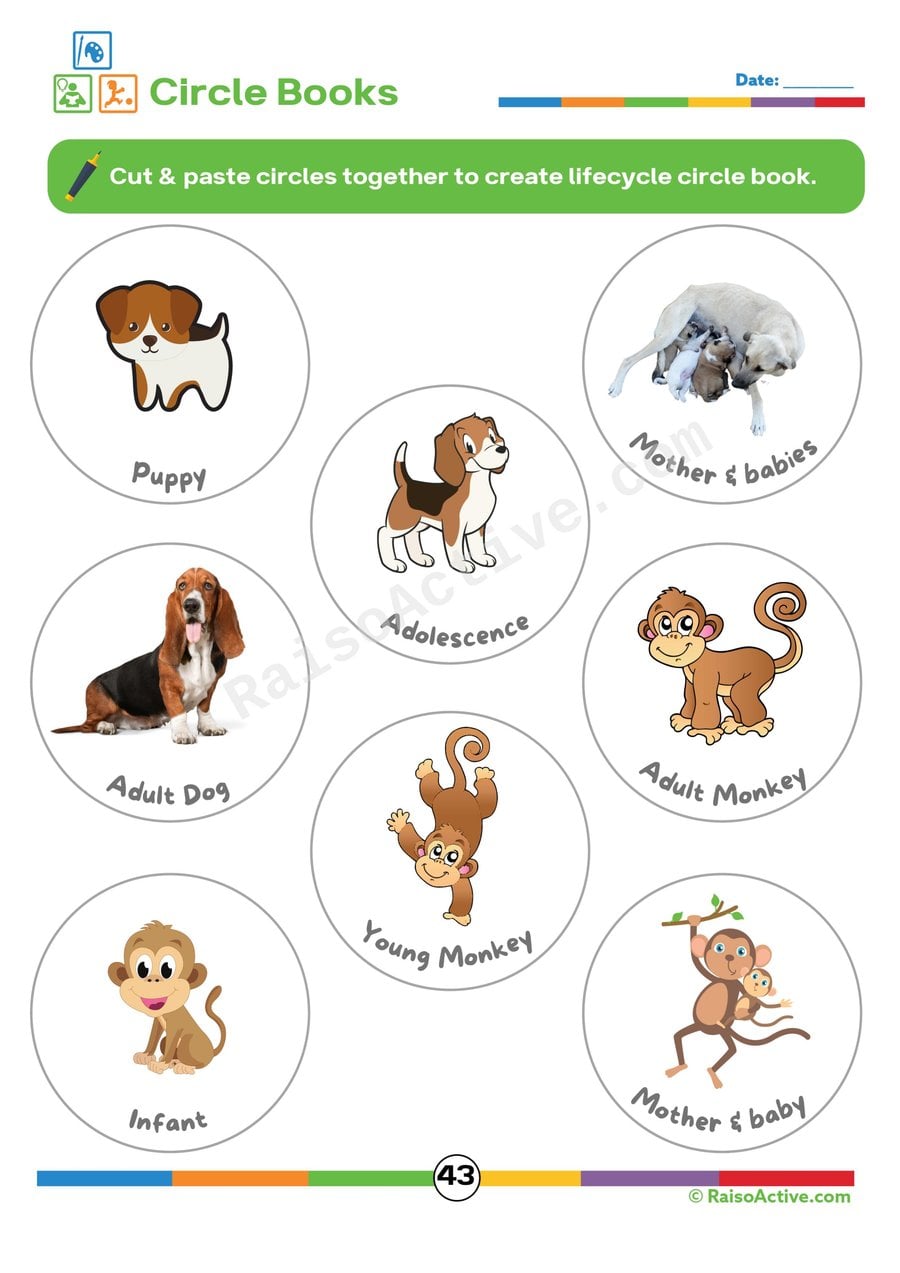
Lifecycle Circle Book: Cut and Paste Fun!
Ages 3-5 · Preschool–Pre-KAges 3-5 · Nursery–ReceptionAges 3-5 · Nursery–LKGAges 3-5
This worksheet gives children ages 3-5 more practice assembling a rotating lifecycle circle book, reinforcing the skills of sequencing, cutting, and gluing built in earlier lifecycle activities. Repeating this hands-on format with new content helps the process itself — cut, sequence, glue, review — become a familiar and confident routine.

Lifecycle Circle Book: Cut & Paste Activity for Young Learners
Ages 3-5 · Preschool–Pre-KAges 3-5 · Nursery–ReceptionAges 3-5 · Nursery–LKGAges 3-5
This activity has children ages 3-5 cut out circular pages and assemble them into a small 'circle book' that flips through different animals' life cycles, combining fine motor cutting and gluing with the concept that a book can hold information in sequence. Matching each animal to its correct life stage across several circles also reinforces the idea that different animals go through different growth patterns.

Complete the Words: Identify the Animals Worksheet for Preschoolers
Ages 3-5 · Preschool–Pre-KAges 3-5 · Nursery–ReceptionAges 3-5 · Nursery–LKGAges 3-5
This worksheet helps children ages 3-5 practice early letter recognition and spelling by filling in missing letters to complete animal names using picture clues. Working from a picture to a partially completed word builds phonics skills gradually, since children only need to identify one or two missing sounds rather than spelling an entire word from scratch.

Butterfly Life Cycle Flashcard Worksheet for Kids
Ages 3-5 · Preschool–Pre-KAges 3-5 · Nursery–ReceptionAges 3-5 · Nursery–LKGAges 3-5
This flashcard worksheet introduces children ages 3-5 to the four stages of a butterfly's life cycle — egg, caterpillar, chrysalis, and butterfly — giving them an early foundation in life science and the concept of gradual change over time. Learning a life cycle in sequence helps children practice ordering events, a skill that also supports storytelling and understanding cause and effect. Using flashcards, rather than a static picture, allows for repeated hands-on review and discussion at a child's own pace.
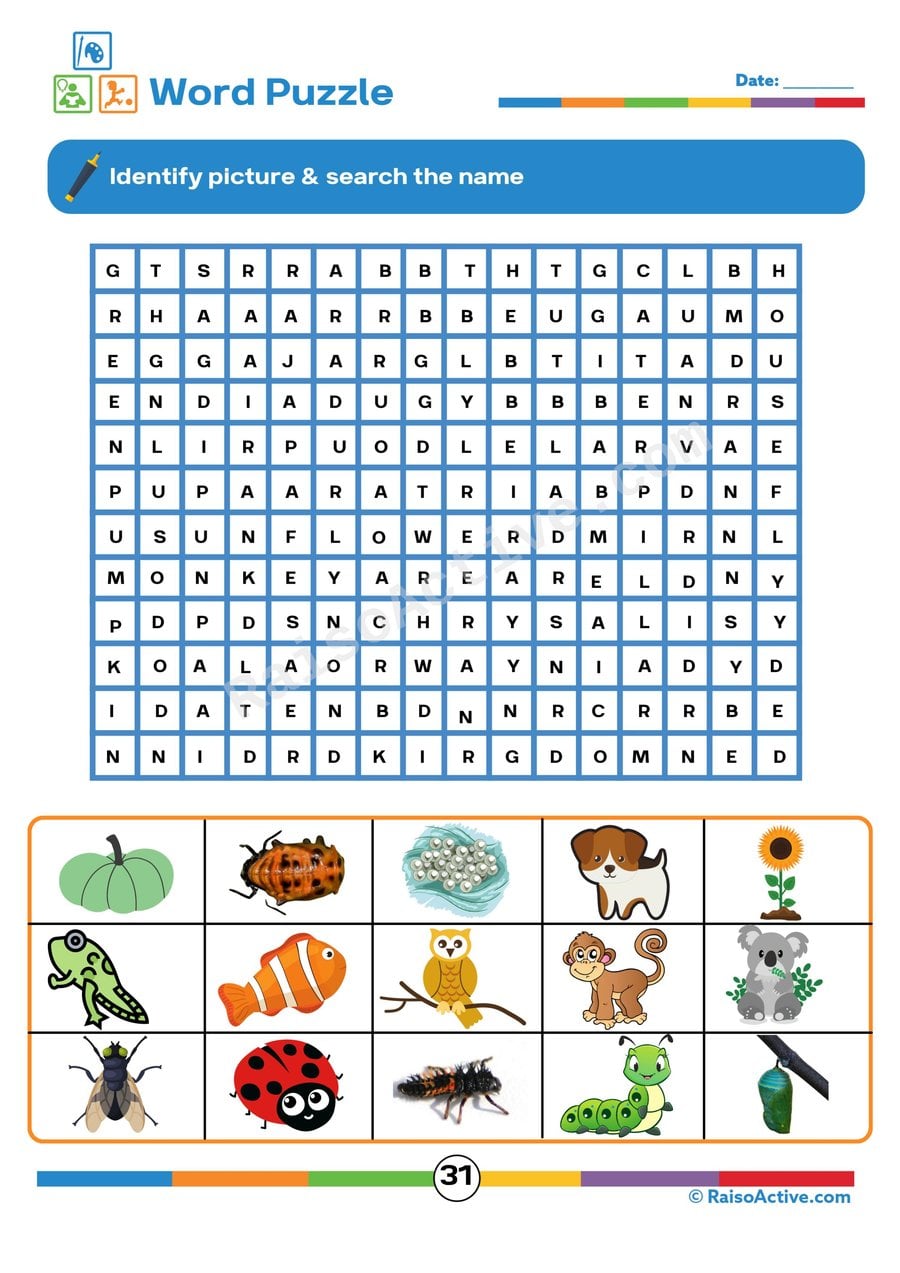
Word Search Worksheet: Find the Hidden Words!
Ages 5-7 · Kindergarten–Grade 1Ages 5-7 · Year 1–Year 2Ages 5-7 · UKG–Class 1Ages 5-7
Searching this life cycle-themed word grid strengthens children's letter-by-letter visual scanning and spelling recognition, both essential pre-reading skills for ages 5-7. As they hunt for words tied to animal growth stages — such as egg, larva, or adult — children reinforce life cycle vocabulary while training their eyes to track left-to-right and top-to-bottom across a busy grid. This dual focus on reading mechanics and science content makes the puzzle more valuable than a generic word search.

Identify Bird Life Cycle Stages Worksheet for Preschoolers
Ages 4-6 · Pre-K–KindergartenAges 4-6 · Reception–Year 1Ages 4-6 · LKG–UKGAges 4-6
Children ages 4-6 practice identifying and sequencing the stages of a bird's life — egg, hatchling, chick, and adult bird — while strengthening the scissor control and precision placement needed for cut-and-paste tasks. This worksheet also reinforces one-to-one matching between an image and its labeled box, an early classification skill.
Related worksheets
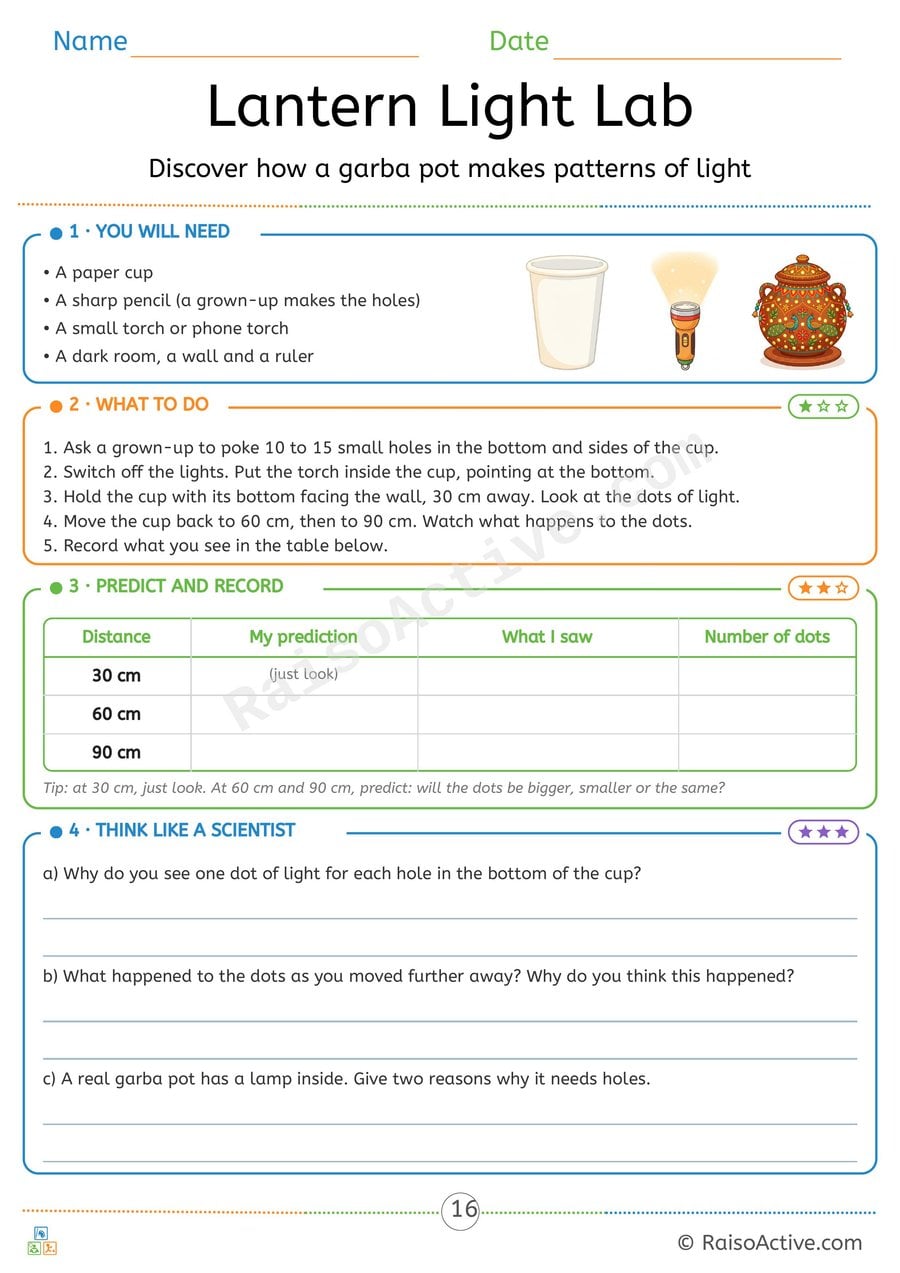
Lantern Light Lab: Navratri Garba Pot Light Experiment
Ages 7-11 · Grade 2–Grade 3Ages 7-11 · Year 3–Year 4Ages 7-11 · Class 2–Class 3Ages 7-11
Children make holes in a paper cup, shine a torch through it and see one spot of light for each hole. They predict and record what happens as they move further from the wall, and explain the results and why a real garba pot needs holes.

Human Skeleton Cut and Join Worksheet for Preschoolers
Ages 4-6 · Pre-K–KindergartenAges 4-6 · Reception–Year 1Ages 4-6 · LKG–UKGAges 4-6
This hands-on worksheet introduces children ages 4-6 to basic human anatomy as they cut out individual bone shapes, like the skull, ribs, arms, and legs, and assemble them into a complete skeleton. Beyond scissor control, the activity requires spatial reasoning, since children must figure out where each bone belongs relative to the others to build an accurate body shape.
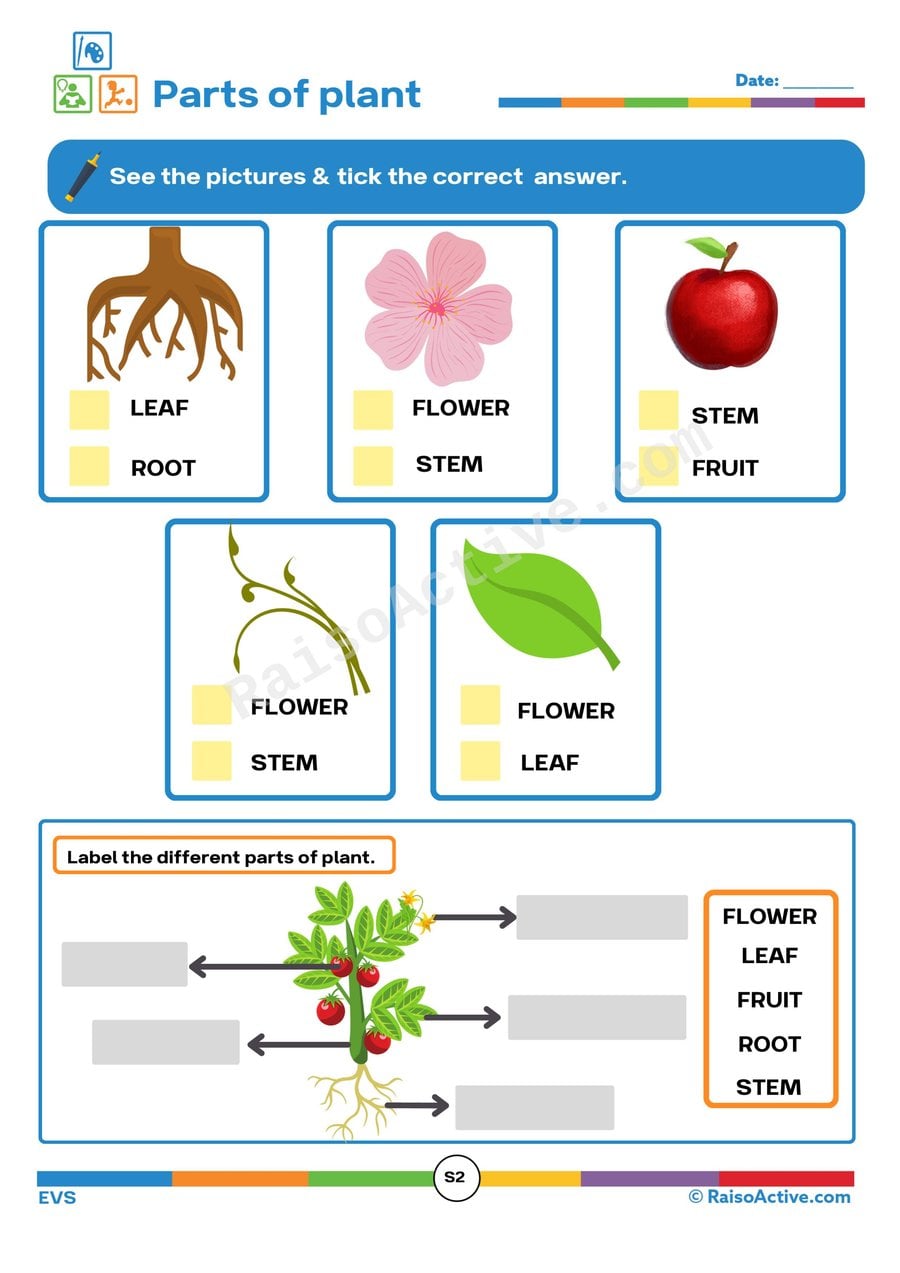
Parts of a Plant Worksheet for Kids
Ages 4-6 · Pre-K–KindergartenAges 4-6 · Reception–Year 1Ages 4-6 · LKG–UKGAges 4-6
This worksheet helps children ages 4-6 identify and label the main parts of a plant — roots, stem, leaves, flower, and fruit — building foundational botany knowledge. Learning to associate each part with its picture and location on a plant diagram develops both vocabulary and an early understanding of plant structure, which supports later lessons on how plants grow and survive.

Animal Homes Worksheet: Match the Animals to Their Habitats!
Ages 4-6 · Pre-K–KindergartenAges 4-6 · Reception–Year 1Ages 4-6 · LKG–UKGAges 4-6
Children ages 4-6 build early life-science knowledge as they match each animal to the habitat where it actually lives, such as a fish to water or a bird to a nest. This worksheet moves beyond simple animal identification into understanding the relationship between a living thing and its environment, an important building block for later ecosystem and habitat topics in science class.

Animal Habitats Cut and Paste Worksheet for Preschoolers
Ages 3-5 · Preschool–Pre-KAges 3-5 · Nursery–ReceptionAges 3-5 · Nursery–LKGAges 3-5
Children ages 3-5 learn about different animal habitats — like the ocean, forest, or desert — by cutting out animal pictures and pasting each one into its correct home environment. Matching an animal to where it actually lives builds early science classification skills and introduces the idea that living things are adapted to survive in specific environments, a concept children will revisit in more depth throughout school.

Animal Homes Worksheet: Circle the Correct Answer!
Ages 3-5 · Preschool–Pre-KAges 3-5 · Nursery–ReceptionAges 3-5 · Nursery–LKGAges 3-5
Matching an animal to its correct home among three picture choices builds science classification skills for children ages 3-5, introducing the idea that different animals are suited to different environments.
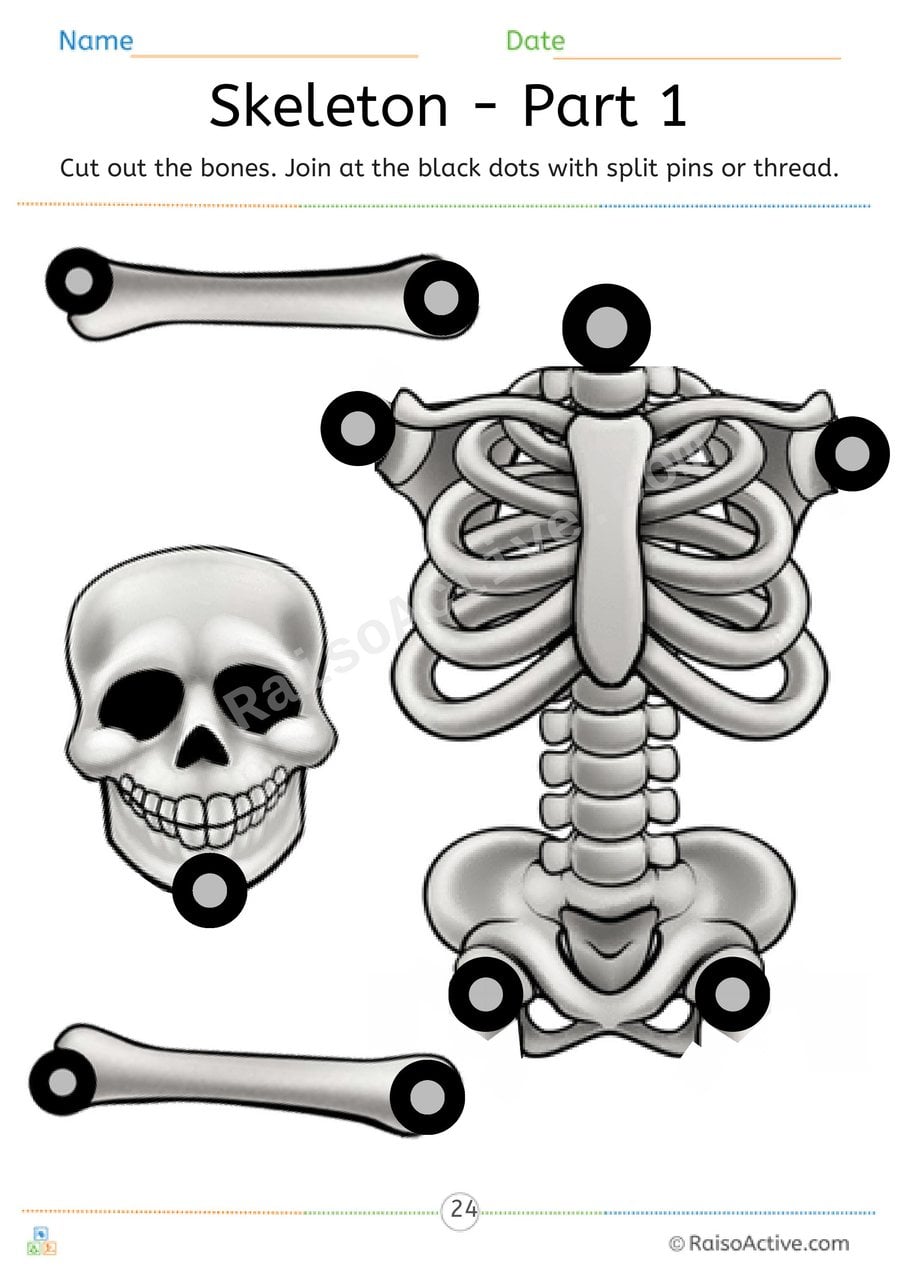
Skeleton Cut and Join Worksheet for Kids
Ages 3-5 · Preschool–Pre-KAges 3-5 · Nursery–ReceptionAges 3-5 · Nursery–LKGAges 3-5
This worksheet has children ages 3-5 cut out individual bone shapes and piece them together to assemble a skeleton, building scissor control and spatial reasoning as they figure out where each bone belongs relative to the others. Gluing the assembled bones onto a backing sheet also gives the activity a lasting, displayable result.
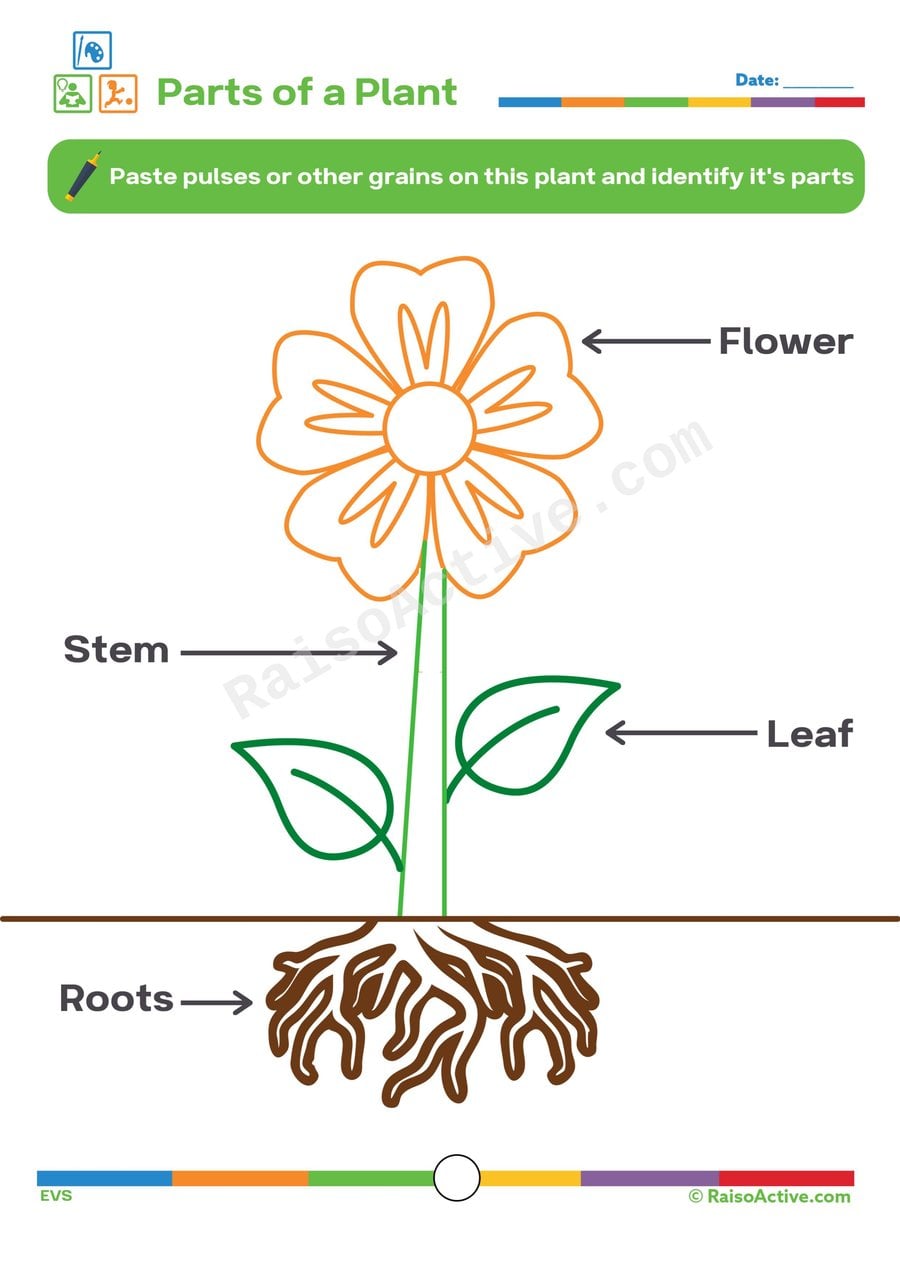
Parts of a Plant Worksheet: Identify and Label!
Ages 3-5 · Preschool–Pre-KAges 3-5 · Nursery–ReceptionAges 3-5 · Nursery–LKGAges 3-5
This activity teaches children ages 3-5 the basic parts of a plant — flower, stem, leaf, and roots — by having them label a diagram and add texture using real pulses or grains glued onto the plant shape. Combining a tactile material with each labeled part helps young children retain the vocabulary better than labeling alone, since touch and sight reinforce the same information.
Guides for this topic

Discovering Wonder: Nature-Based Learning Activities That Captivate Young Children
Explore nature-based learning activities for children ages 2–7 — leaf rubbings, bug hunts, nature journals, and seasonal Indian outdoor ideas that spark wonder.

Creating Engaging Themed Learning Units for Young Children: A Complete Guide to Integrated Learning
Discover how to create engaging themed learning units for young children that integrate literacy, maths, science, and art — with practical examples and free worksheets.
Hands-On Science Fun: Age-Appropriate Science Activities That Spark Curiosity in Preschoolers
Discover 10+ easy science experiments for preschoolers using Indian household items. Spark curiosity in children ages 2-6 with safe, play-based STEM activities.
Reviews
Every worksheet for ages 3–5, no watermark
Members download the full library of 1,000+ worksheets and every activity pack without watermarks or daily limits. One year costs ₹999 in India or $20 elsewhere.
See membership plansOr download any worksheet free with a watermark (5 a day).