Match the Country Symbols Worksheet for Kids
Matching country flags to their national symbols introduces children ages 4-6 to the idea that countries have their own distinct visual identities, an early and engaging entry point into geography and cultural awareness. This matching task builds visual discrimination, since flags and symbols can share similar colors or shapes that require careful comparison. Learning to associate a flag with a symbol also plants early vocabulary for talking about different countries and cultures around the world.
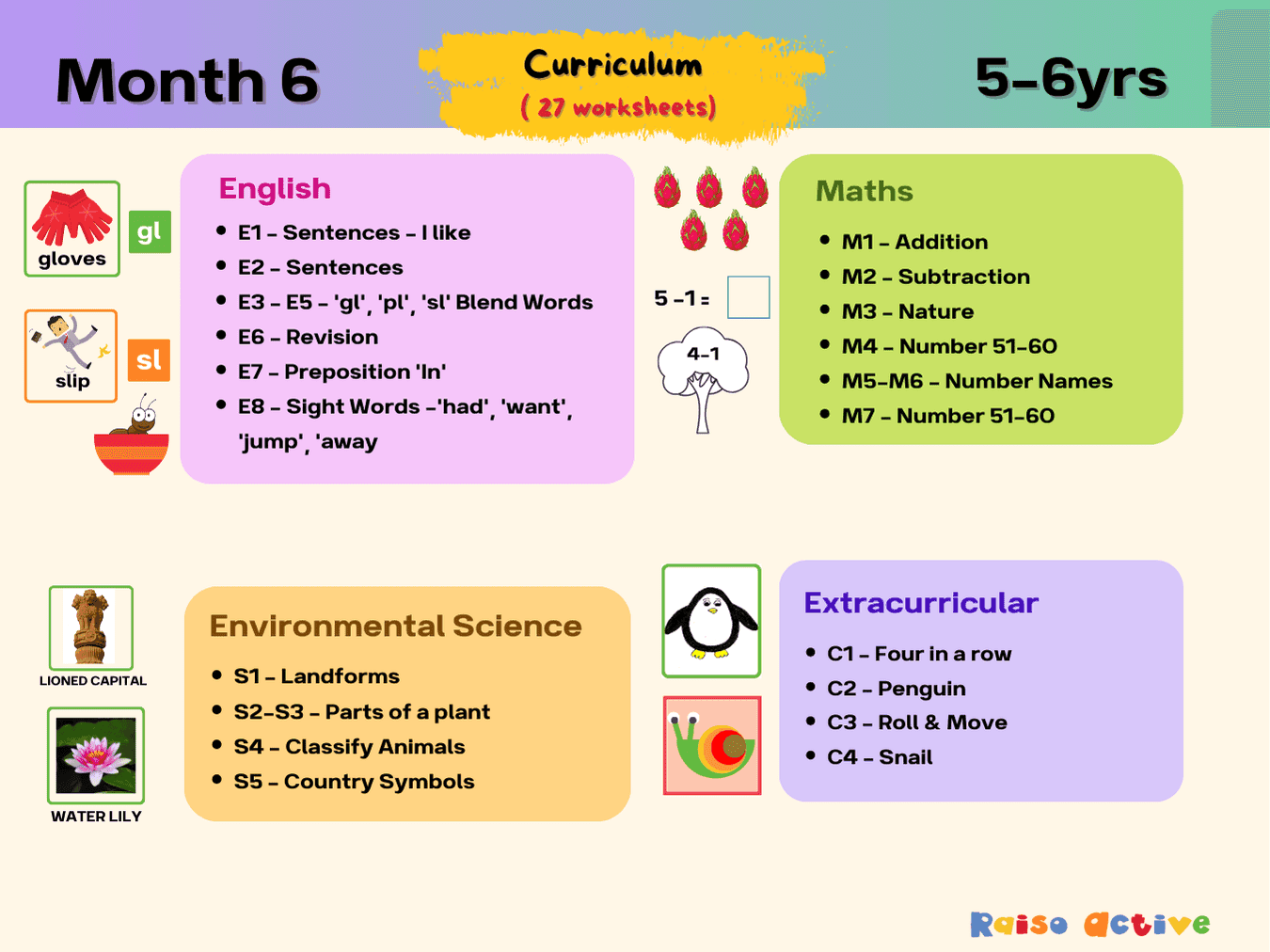
Part of the pack
Month 6: Holistic early learning activities | Ages 5-6
This is page 26 of the pack. Ages 5-6 · KindergartenAges 5-6 · Year 1Ages 5-6 · UKGAges 5-6
Made for your child
Counting to 10, made for your child
A maths pack with your child's name in it: pictures that explain, practice at three levels, puzzles and story sums about them. Print a new set whenever they finish.
Make a maths packFree preview · free for members
Curriculum
- Earth & Environment > Country Symbols
How to use this worksheet
Look at each flag on the page together and, if you know it, say which country it belongs to. Ask your child to look at the symbols on the other side of the page and think about which one matches or is associated with each flag. Have them draw a line connecting each flag to its corresponding symbol. Once all the lines are drawn, review the matches together, talking briefly about what makes each symbol special to its country.
Materials needed
- Pencil
- Crayons
Extension activities
- 1Look up a few of the countries from the worksheet on a map or globe and talk about where they are.
- 2Draw and color a flag from a country your family has visited or has roots in.
- 3Create simple flashcards with flags on one side and symbols on the other for a quick matching game.
- 4Cook or taste a food that comes from one of the countries shown on the worksheet.
- 5Watch a short video or look at photos of a famous landmark from one of the countries featured.

Written by
Hemsweta Jain · Teacher Cheena
MBA and Early Childhood Educator, teaching since 2014 · Founder of RaisoActive, Mumbai
Every RaisoActive worksheet is designed and checked by the founder before publishing.
Published · Last reviewed
More from Month 6: Holistic early learning activities | Ages 5-6

Addition Fun: Counting and Adding Worksheet for Kids
Ages 4-6 · Pre-K–KindergartenAges 4-6 · Reception–Year 1Ages 4-6 · LKG–UKGAges 4-6
This worksheet builds foundational addition skills by having children count two separate groups of objects and then combine those counts to find a total sum. For ages 4-6, grounding addition in physical counting of pictured objects, rather than abstract numbers alone, helps children understand that addition means putting two groups together to make a bigger group.

Sl Blend Words Worksheet: Read, Identify, and Circle!
Ages 4-6 · Pre-K–KindergartenAges 4-6 · Reception–Year 1Ages 4-6 · LKG–UKGAges 4-6
Reading and circling words that begin with the 'sl' consonant blend helps children ages 4-6 hear that two consonants pressed together, like s and l, still form one connected sound at the start of a word. This is a more advanced phonics skill than single-letter sounds, since children must blend two consonants smoothly rather than separating them. Recognizing blends like 'sl' in words such as 'slide' or 'sled' builds the decoding fluency needed to read longer, less predictable words independently.
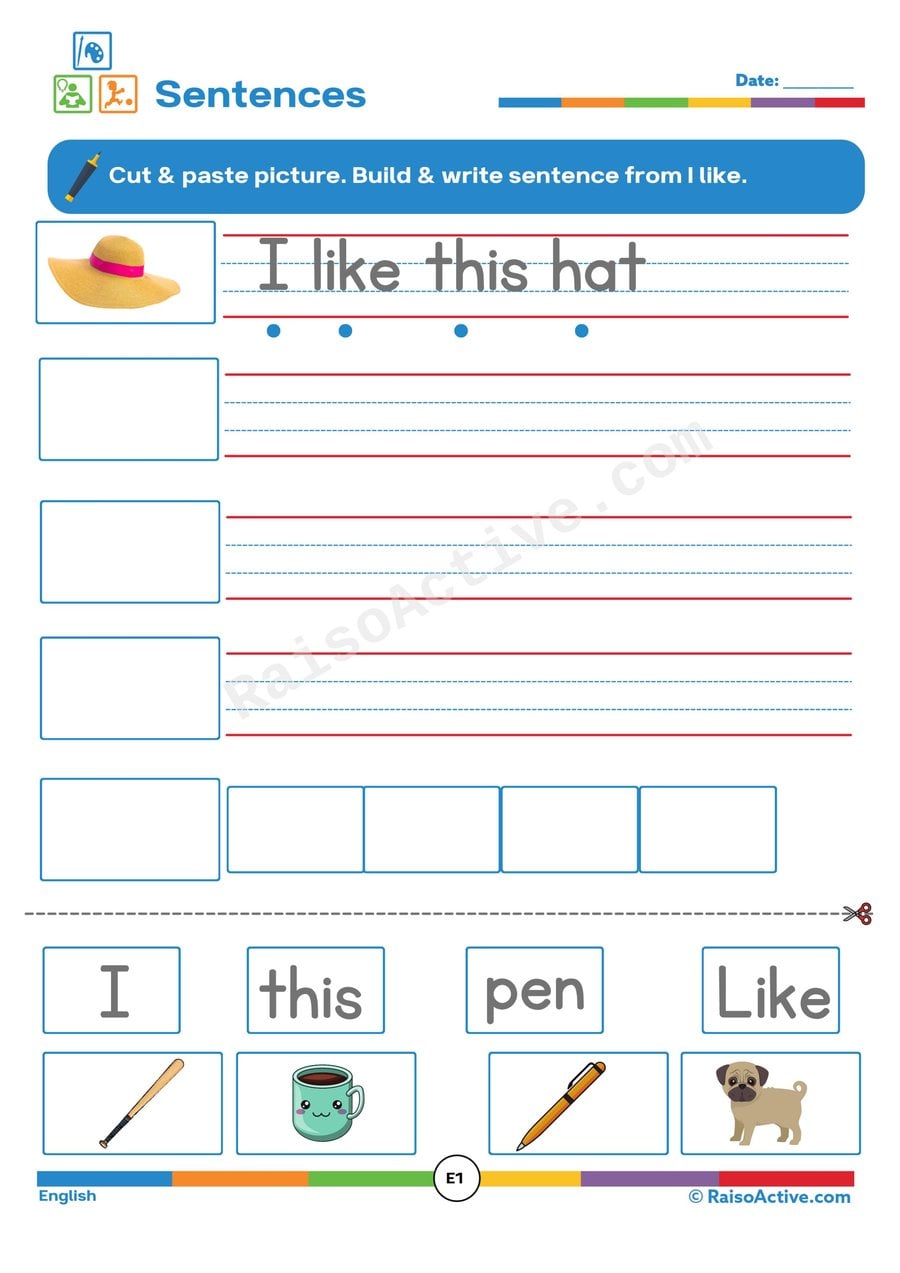
I Like Sentences Worksheet: Cut, Paste, and Write!
Ages 4-5 · Pre-KAges 4-5 · ReceptionAges 4-5 · LKGAges 4-5
This worksheet builds early sentence construction and fine motor skills together, having children cut out a picture and word cards, paste them into a simple 'I like ___' sentence frame, and then copy the full sentence in their own writing. For ages 4-5, physically assembling a sentence from separate word pieces before writing it independently helps children understand that sentences are built from individual words in a specific order.
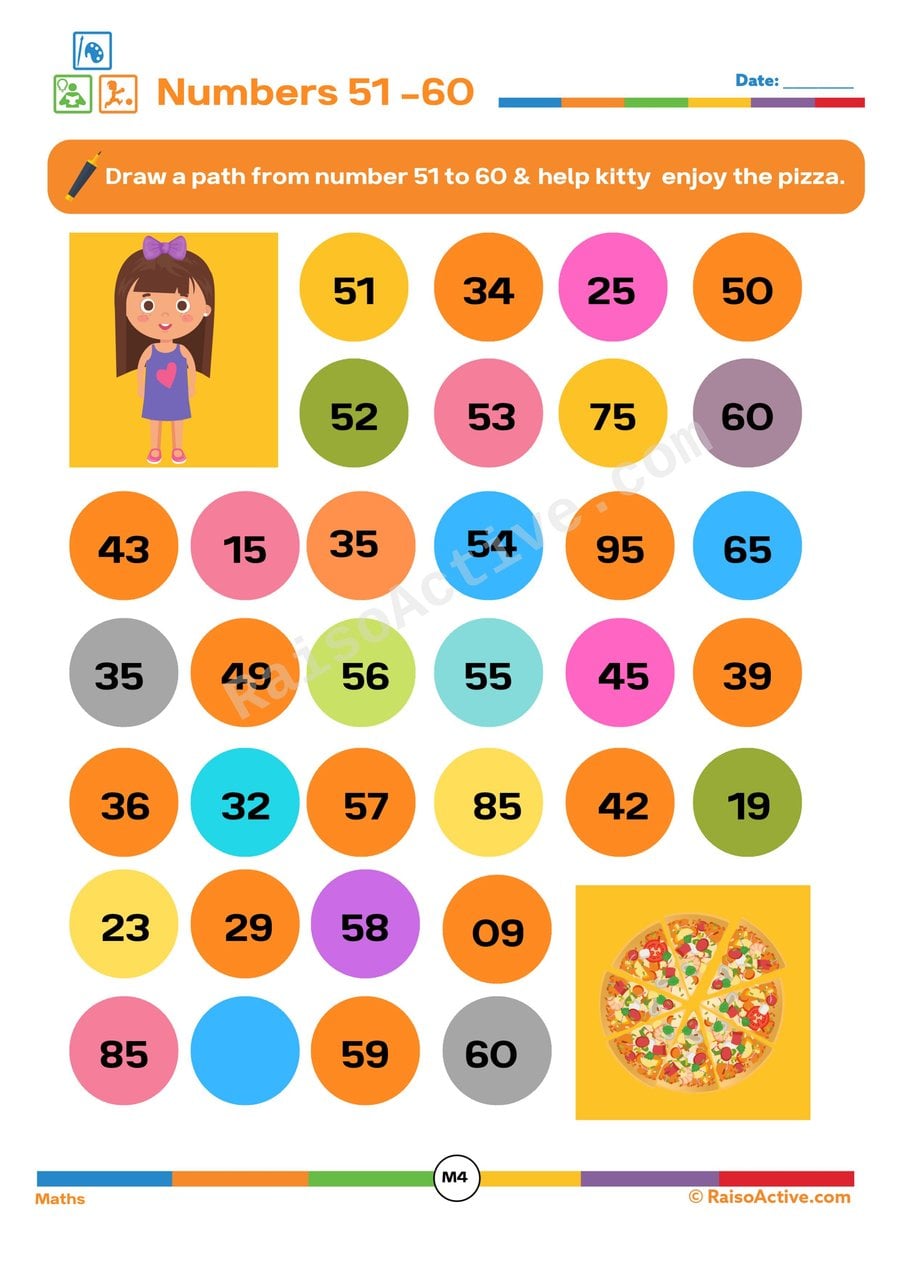
Pizza Path: Numbers 51-60 Worksheet for Kids
Ages 4-5 · Pre-KAges 4-5 · ReceptionAges 4-5 · LKGAges 4-5
Connecting the dots from 51 to 60 in order pushes children ages 4-5 beyond the more familiar 1-20 range, helping them recognize two-digit numbers and understand that counting sequences continue predictably into higher decades. This dot-to-dot format turns number recognition into a rewarding visual payoff, since a hidden pizza picture only appears once every number is found and connected correctly. It's a motivating way to practice number order without it feeling like repetitive drilling.

Subtraction Worksheet: Count and Subtract for Preschoolers
Ages 4-5 · Pre-KAges 4-5 · ReceptionAges 4-5 · LKGAges 4-5
This worksheet introduces basic subtraction by having children count a starting group of objects, remove or cross out a specified number, and count what remains to find the answer. For ages 4-5, grounding subtraction in physical counting rather than abstract numbers alone helps children understand that subtraction means 'taking away' a quantity, not just manipulating symbols.

Sight Word 'Away' Worksheet: Learn to Read and Write!
Ages 3-5 · Preschool–Pre-KAges 3-5 · Nursery–ReceptionAges 3-5 · Nursery–LKGAges 3-5
Like many high-frequency words, 'away' doesn't follow standard phonics rules cleanly, so children ages 3-5 need to build instant visual recognition of it as a whole sight word rather than sounding it out each time. This worksheet delivers that repetition through several varied tasks — coloring, tracing, word-hunting, sentence completion, and letter reassembly — which keeps a young learner engaged while reinforcing the same word from multiple angles. Strong sight-word recognition for common words like 'away' is one of the biggest accelerators of early reading fluency.
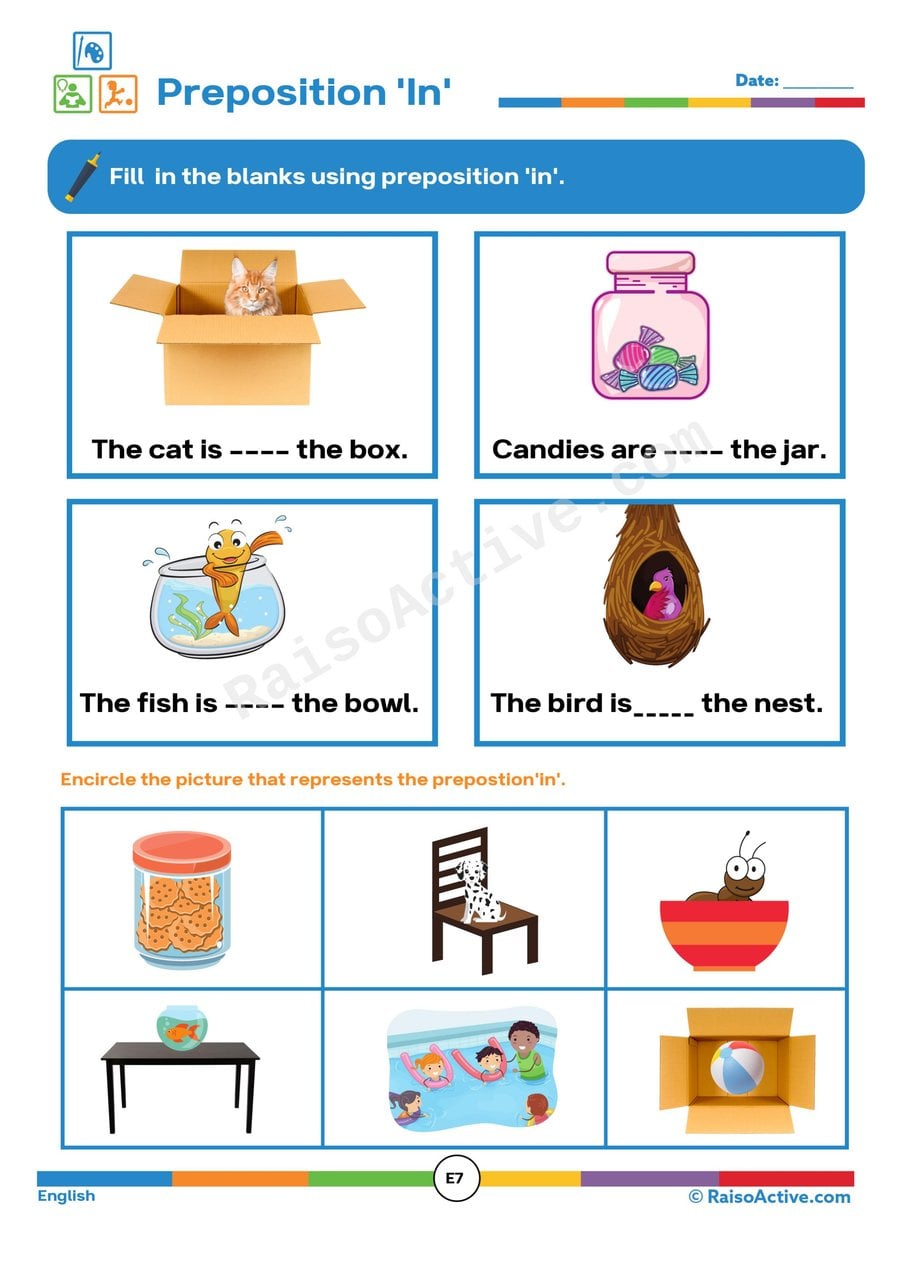
Preposition 'In' Worksheet: Fill-in-the-Blanks Fun!
Ages 4-6 · Pre-K–KindergartenAges 4-6 · Reception–Year 1Ages 4-6 · LKG–UKGAges 4-6
This worksheet introduces the preposition 'in' as a specific positional word describing something located inside another object, building both grammar knowledge and spatial vocabulary. For ages 4-6, understanding prepositions like 'in' is essential for constructing clear, descriptive sentences and following spatial directions in everyday life.
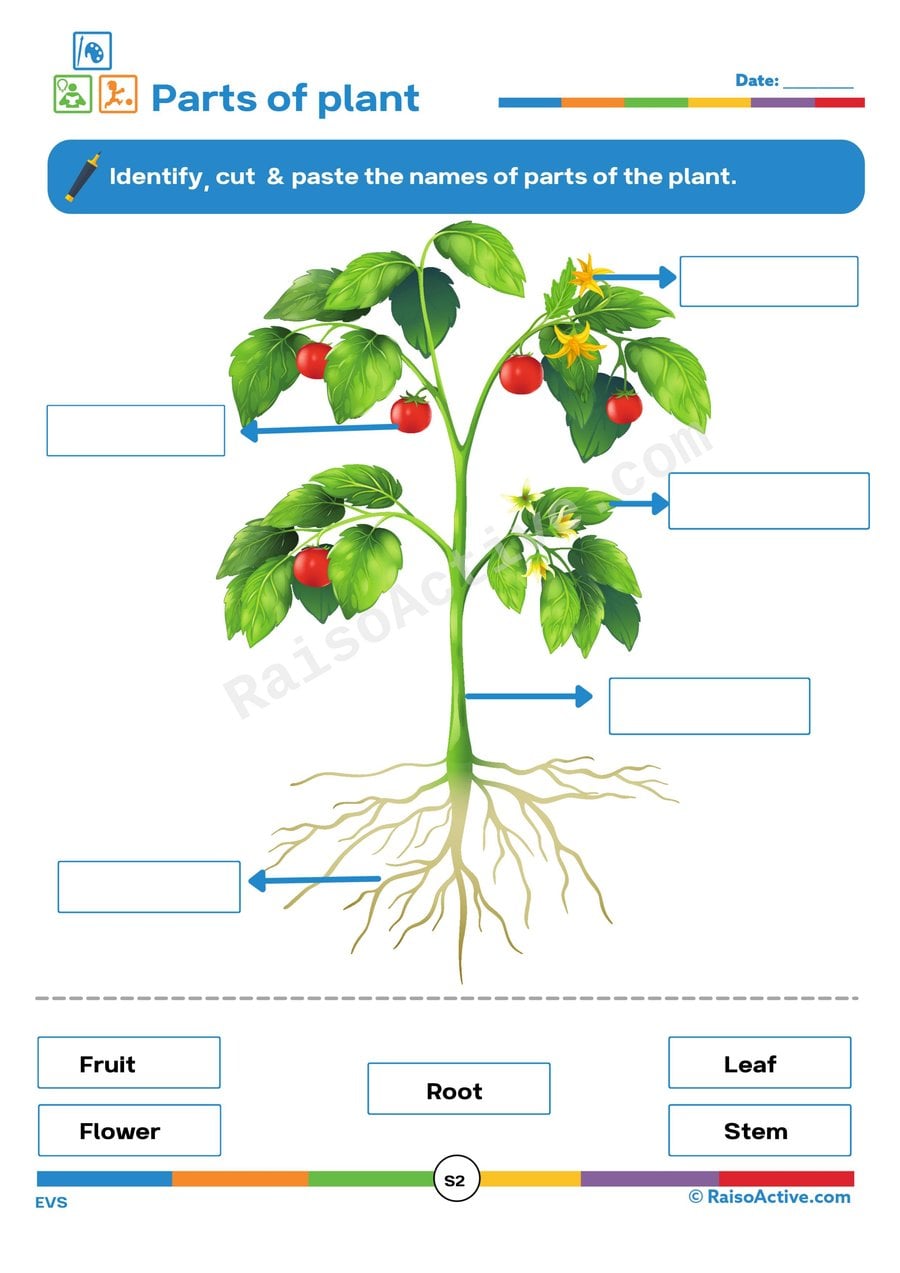
Parts of a Plant Worksheet: Identify and Label!
Ages 3-5 · Preschool–Pre-KAges 3-5 · Nursery–ReceptionAges 3-5 · Nursery–LKGAges 3-5
Labeling the root, stem, leaf, flower, and fruit of a plant teaches children ages 3-5 that living things are made of distinct parts that each serve a purpose, an early foundation for life science. The cut-and-paste labeling format requires children to match a written or pictured label to the correct location on a plant diagram, strengthening both vocabulary and visual mapping skills. Understanding plant anatomy also gives children language to describe the gardens, parks, and plants they encounter in daily life.
Related worksheets

My Address Worksheet: Color the State and Fill in Your Details!
Ages 3-5 · Preschool–Pre-KAges 3-5 · Nursery–ReceptionAges 3-5 · Nursery–LKGAges 3-5
This worksheet introduces children ages 3-5 to their personal address as a piece of core safety knowledge, while the map-coloring task builds early geography skills by having them physically locate and color their home state within India. Practicing house number, street, city, and PIN code also gives meaningful, motivated handwriting practice since the words are personally relevant.

Festivals of Many Faiths: Places of Worship and Greetings
Ages 4-8 · Pre-K–Grade 2Ages 4-8 · Reception–Year 3Ages 4-8 · LKG–Class 2Ages 4-8
Children learn that India is home to many faiths, each with its own festivals, places of worship and festival greetings.

Navratri Colour Hunt: Colour Words, Matching and Bangles
Ages 4-6 · Pre-K–KindergartenAges 4-6 · Reception–Year 1Ages 4-6 · LKG–UKGAges 4-6
Children read colour words, colour bangles to match, count how many of each colour, match everyday things to their colours and find colours around the home.
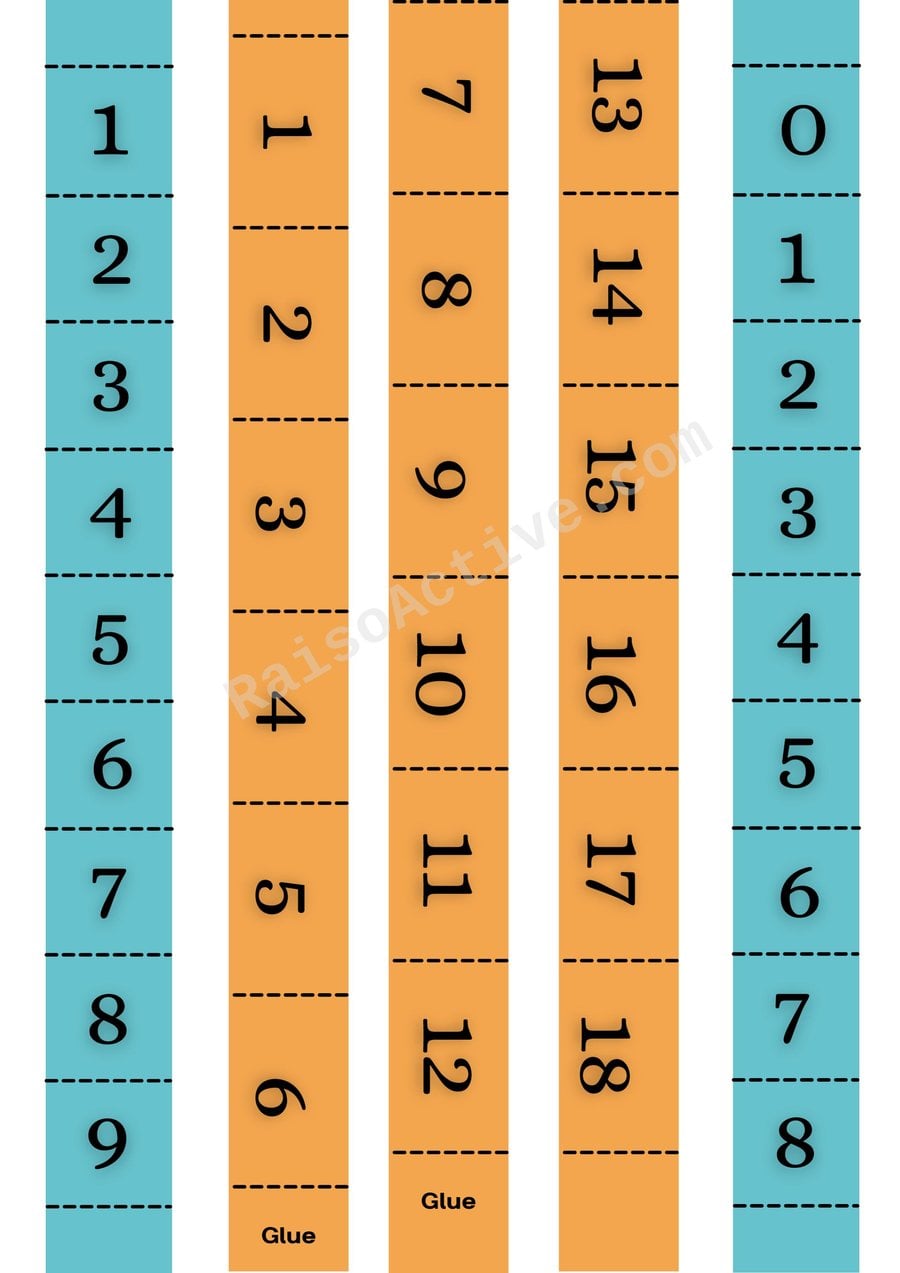
Number Matching Worksheet: 0-18
Ages 3-5 · Preschool–Pre-KAges 3-5 · Nursery–ReceptionAges 3-5 · Nursery–LKGAges 3-5
This activity strengthens numeral recognition for children ages 3-5 by having them find and pair matching numbers from 0 to 18 printed on separate strips. Because the numbers are scattered rather than in order, children must recognize each digit shape on its own rather than relying on counting sequence, which builds true number recognition instead of rote list-reciting.
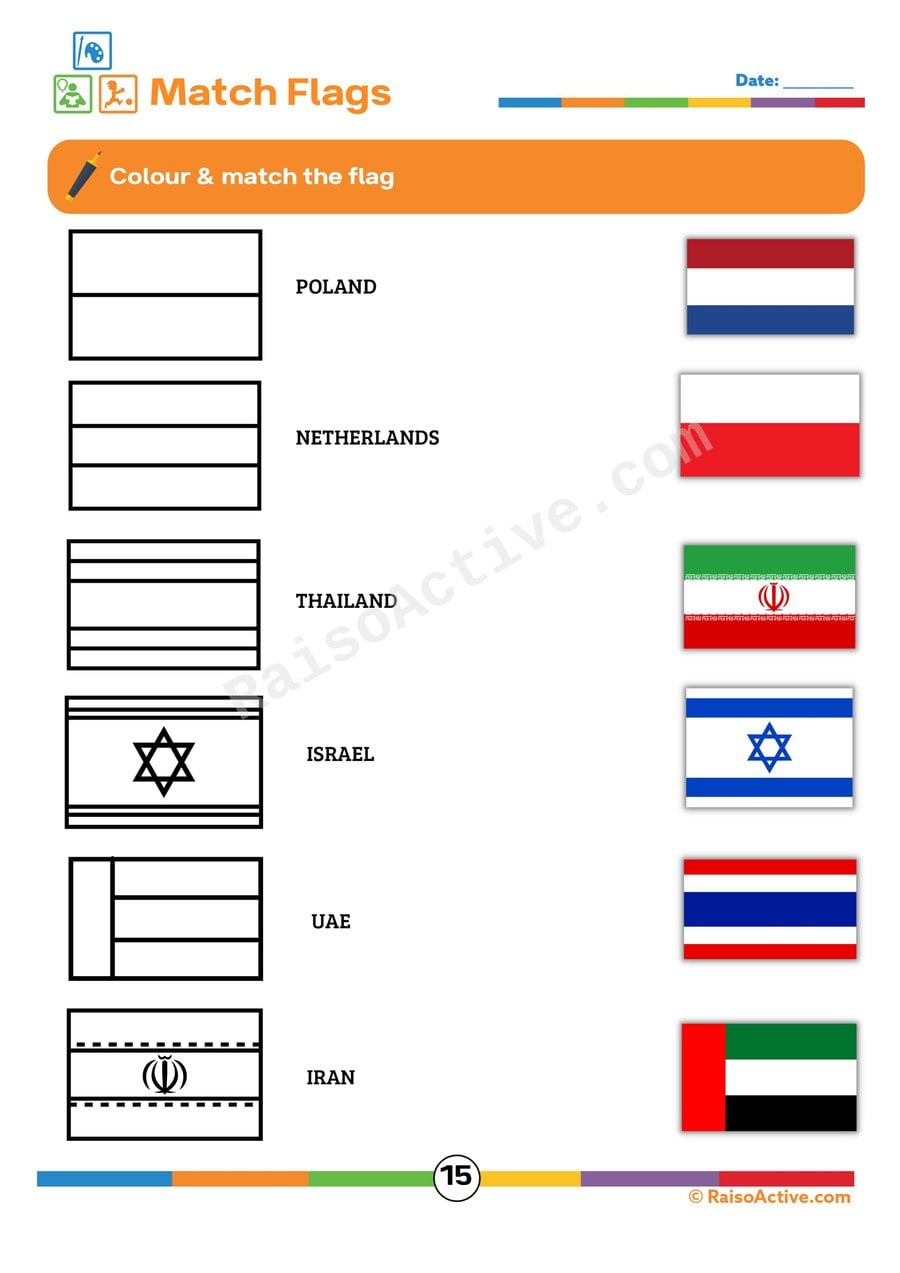
Match the Flags Worksheet: Color and Learn!
Ages 3-5 · Preschool–Pre-KAges 3-5 · Nursery–ReceptionAges 3-5 · Nursery–LKGAges 3-5
This worksheet asks children ages 3-5 to color a set of country flags and then match each one to its printed name, combining fine motor coloring practice with early visual-word association. Matching a colored flag to text also builds pre-reading skills, since children learn to recognize whole words as symbols tied to a picture even before they can sound them out.

Easter Egg Color Match Worksheet for Preschoolers
Ages 3-5 · Preschool–Pre-KAges 3-5 · Nursery–ReceptionAges 3-5 · Nursery–LKGAges 3-5
This worksheet builds on color recognition by asking children ages 3-5 to color a full row of eggs so they all match one another, reinforcing visual discrimination alongside color vocabulary. Rather than following a printed key, children must compare their own work egg to egg, which adds a self-checking element to the coloring task.

Identify Flags Worksheet: Cut and Paste Matching Activity
Ages 4-6 · Pre-K–KindergartenAges 4-6 · Reception–Year 1Ages 4-6 · LKG–UKGAges 4-6
Children ages 4-6 practice identifying country flags and matching them to their correct names, continuing to build geography vocabulary and visual discrimination through this repeated worksheet format. Working through several similar flag-matching worksheets over time helps children build a broader mental library of recognizable flags rather than memorizing just one set.

Coloring Worksheet: Identify and Color the Symbols!
Ages 3-5 · Preschool–Pre-KAges 3-5 · Nursery–ReceptionAges 3-5 · Nursery–LKGAges 3-5
This worksheet introduces children ages 3-5 to national symbols by having them color each one and then match or write its name from a list of options. Beyond fine motor coloring practice, naming each symbol builds early cultural knowledge and category-matching skills, since children must connect a picture to the correct word rather than color at random.
Guides for this topic

Best Worksheets for 3-Year-Olds: What Works and What to Avoid
What works on worksheets for 3-year-olds: short sessions, crayons, tracing lines, matching, cutting, a free weekly plan, and signs one is too advanced.
Celebrating Diversity: How to Incorporate Cultural Awareness in Learning Activities for Young Children
Practical cultural awareness activities for young children aged 2-8. Explore Indian festivals, world cultures, food, music, and crafts to teach diversity and inclusion.

Building Future Citizens: How to Teach Social Studies to Young Children Through Creative Exploration
Practical ideas to teach social studies to kids ages 2-8: community helpers, Indian states, maps, festivals, and cultural diversity through play-based learning.
Reviews
Every worksheet for ages 4–6, no watermark
Members download the full library of 1,000+ worksheets and every activity pack without watermarks or daily limits. One year costs ₹999 in India or $20 elsewhere.
See membership plansOr download any worksheet free with a watermark (5 a day).