Phonics Level 3 Parent's Guide: Long Vowel Sounds and Spellings
Grown-ups see what Phonics Level 3 teaches: the five long vowel sounds and their spellings, such as ay, ai, a_e, ee, ea, igh, oa, ow, ew and ue, and how the pages build from one spelling to long-or-short sorting.
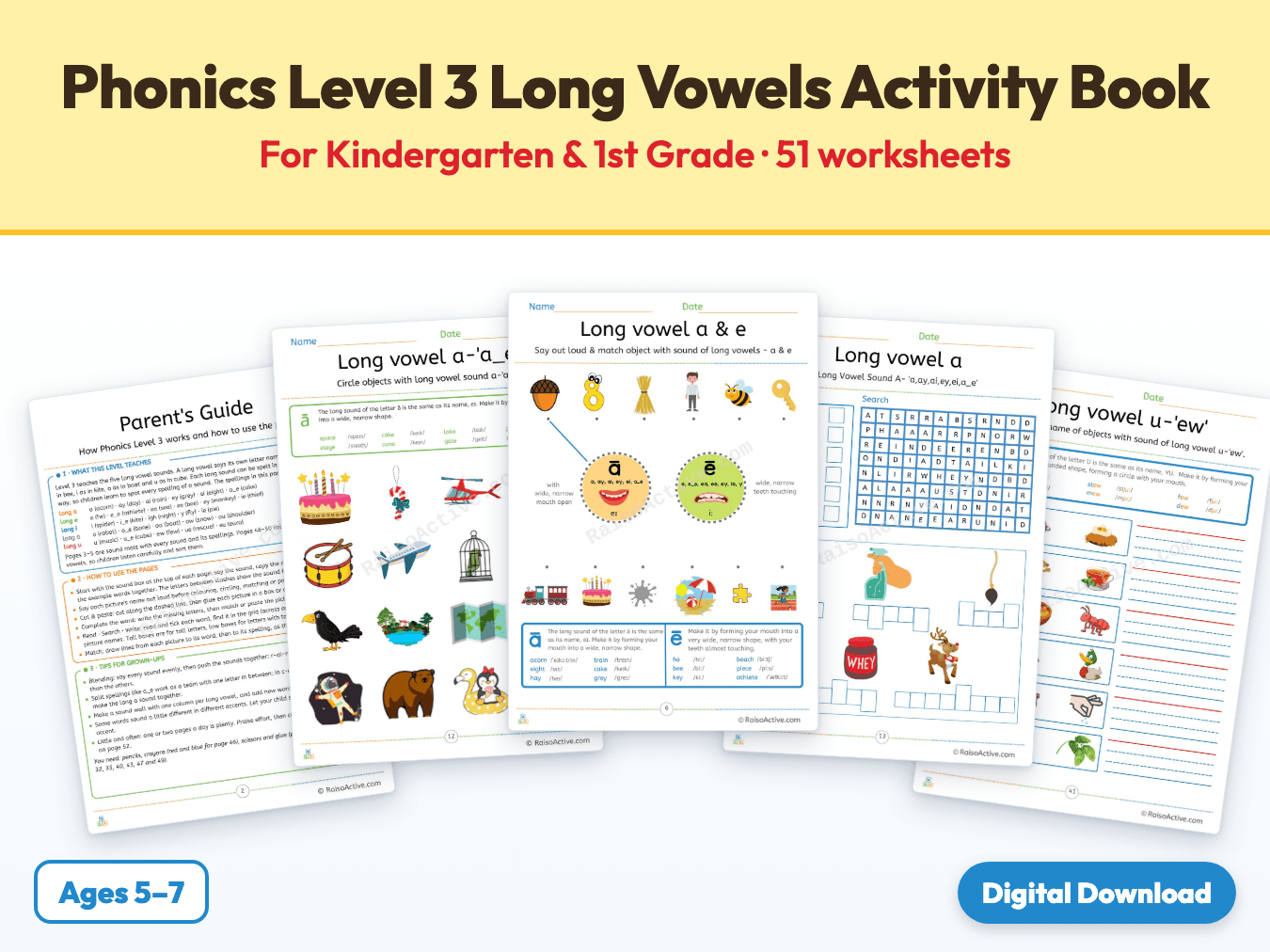
Part of the pack
Phonics Level 3 Long Vowels Activity Book for Kindergarten & 1st Grade
This is page 2 of the pack. Ages 5-7 · Kindergarten–Grade 1Ages 5-7 · Year 1–Year 2Ages 5-7 · UKG–Class 1Ages 5-7
Made for your child
Spelling practice, made for your child
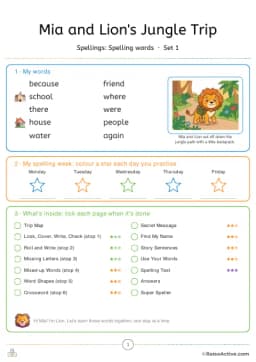
Their own spelling words turned into a pack: trace or look-cover-write-check, roll and write, a secret picture code, a word search, a crossword and a test, with their name in it.
Make a spelling packFree preview · free for members
Or start free: a word search with sight wordsCurriculum
- Phonics - Long Vowels > Long Vowel A
- Phonics - Letter Sounds > Vowel Sounds
How to use this worksheet
Read the guide before you start. It lists every spelling with an example word, explains each activity type (colour, cut and paste, circle and write, complete the word, read, search and write, match) and says which pages need scissors and glue.
Materials needed
- Nothing for the child; a pen for your own notes
Extension activities
- 1Start a sound wall with one column per long vowel
- 2Collect long vowel words from bedtime stories

Written by
Hemsweta Jain · Teacher Cheena
MBA and Early Childhood Educator, teaching since 2014 · Founder of RaisoActive, Mumbai
Every RaisoActive worksheet is designed and checked by the founder before publishing.
Published · Last reviewed
More from Phonics Level 3 Long Vowels Activity Book for Kindergarten & 1st Grade

Long Vowel a 'ey' Complete the Word and Match Worksheet
Ages 5-7 · Kindergarten–Grade 1Ages 5-7 · Year 1–Year 2Ages 5-7 · UKG–Class 1Ages 5-7
Children finish six long a words by writing the 'ey' letters (prey, they, hey, obey, grey and survey) and match each word to its picture.

Long Vowel i 'i_e' Cut and Paste Worksheet
Ages 5-7 · Kindergarten–Grade 1Ages 5-7 · Year 1–Year 2Ages 5-7 · UKG–Class 1Ages 5-7
Children practise the long i spelling 'i_e' by finding the six pictures that have it: ice, bike, dice, prize, kite and smile.

Long Vowel i and o Say and Match Worksheet
Ages 5-7 · Kindergarten–Grade 1Ages 5-7 · Year 1–Year 2Ages 5-7 · UKG–Class 1Ages 5-7
Children hear and say the long i and long o sounds and match each picture to the right sound circle (long i: sky, pie, kite, spider, ice and night; long o: open, bone, cone, boat, dough and sow).

Long Vowel u 'ue' Complete the Word and Match Worksheet
Ages 5-7 · Kindergarten–Grade 1Ages 5-7 · Year 1–Year 2Ages 5-7 · UKG–Class 1Ages 5-7
Children finish six long u words by writing the 'ue' letters (rescue, statue, barbecue, tissue, fuel and queue) and match each word to its picture.
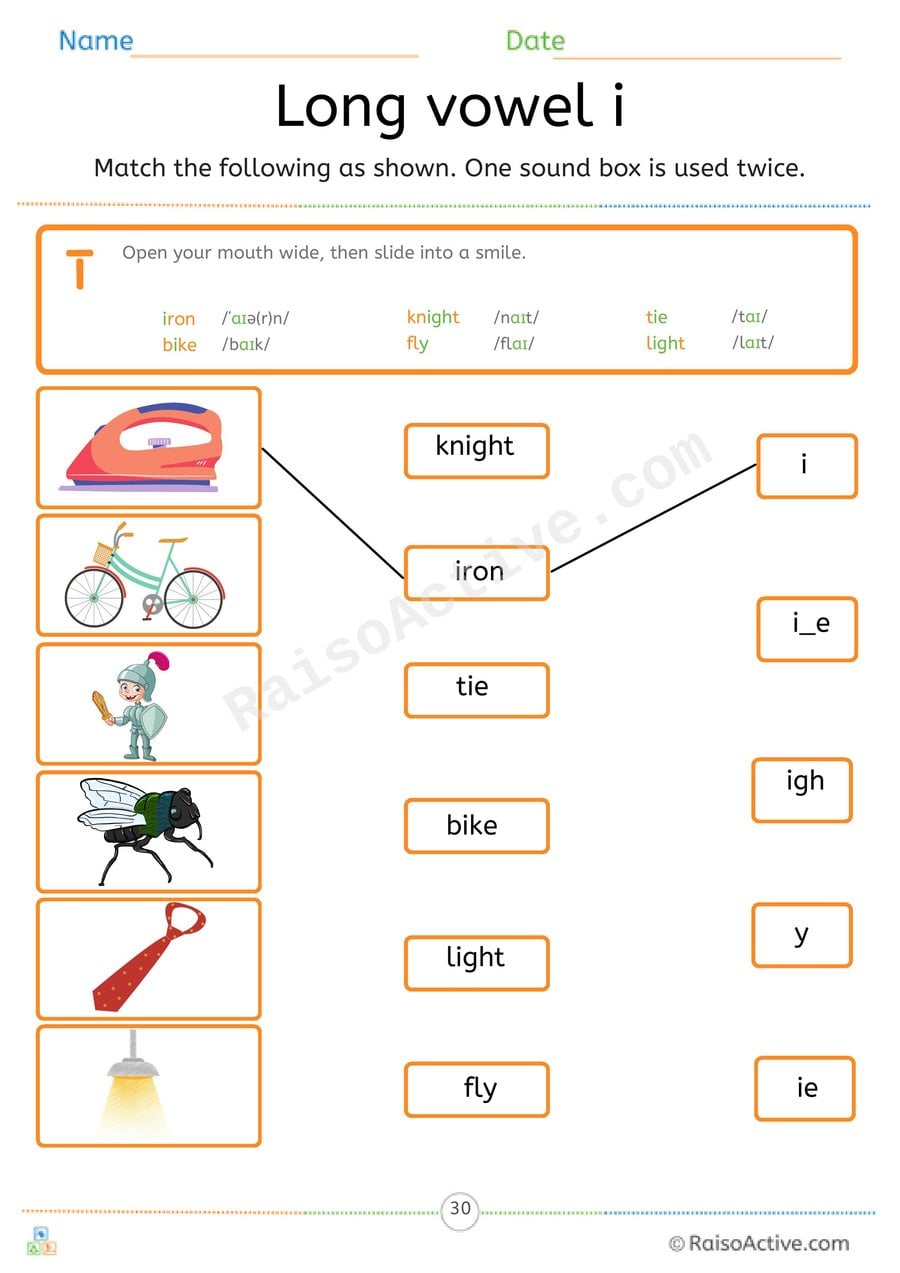
Long Vowel i Spellings Match Worksheet: i, i_e, igh, y, ie
Ages 5-7 · Kindergarten–Grade 1Ages 5-7 · Year 1–Year 2Ages 5-7 · UKG–Class 1Ages 5-7
Children link each picture to its word and then to its long i spelling (iron: i; bike: i_e; knight: igh; fly: y; tie: ie; light: igh). One spelling, igh, is used twice.
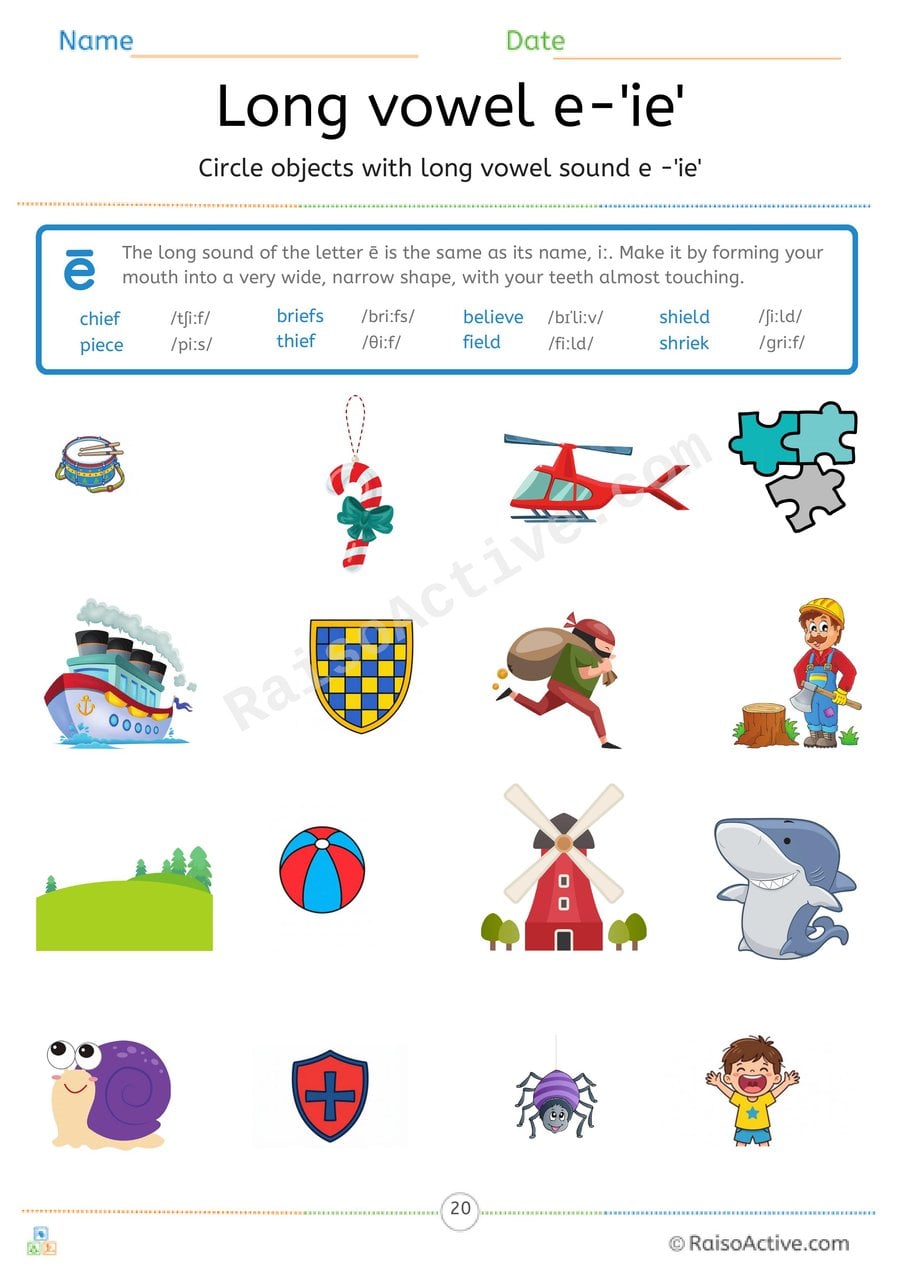
Long Vowel e 'ie' Circle the Pictures Worksheet
Ages 5-7 · Kindergarten–Grade 1Ages 5-7 · Year 1–Year 2Ages 5-7 · UKG–Class 1Ages 5-7
Children find the long e 'ie' pictures among sixteen and circle them: the jigsaw piece, both shields, the thief, the field and the shrieking boy.
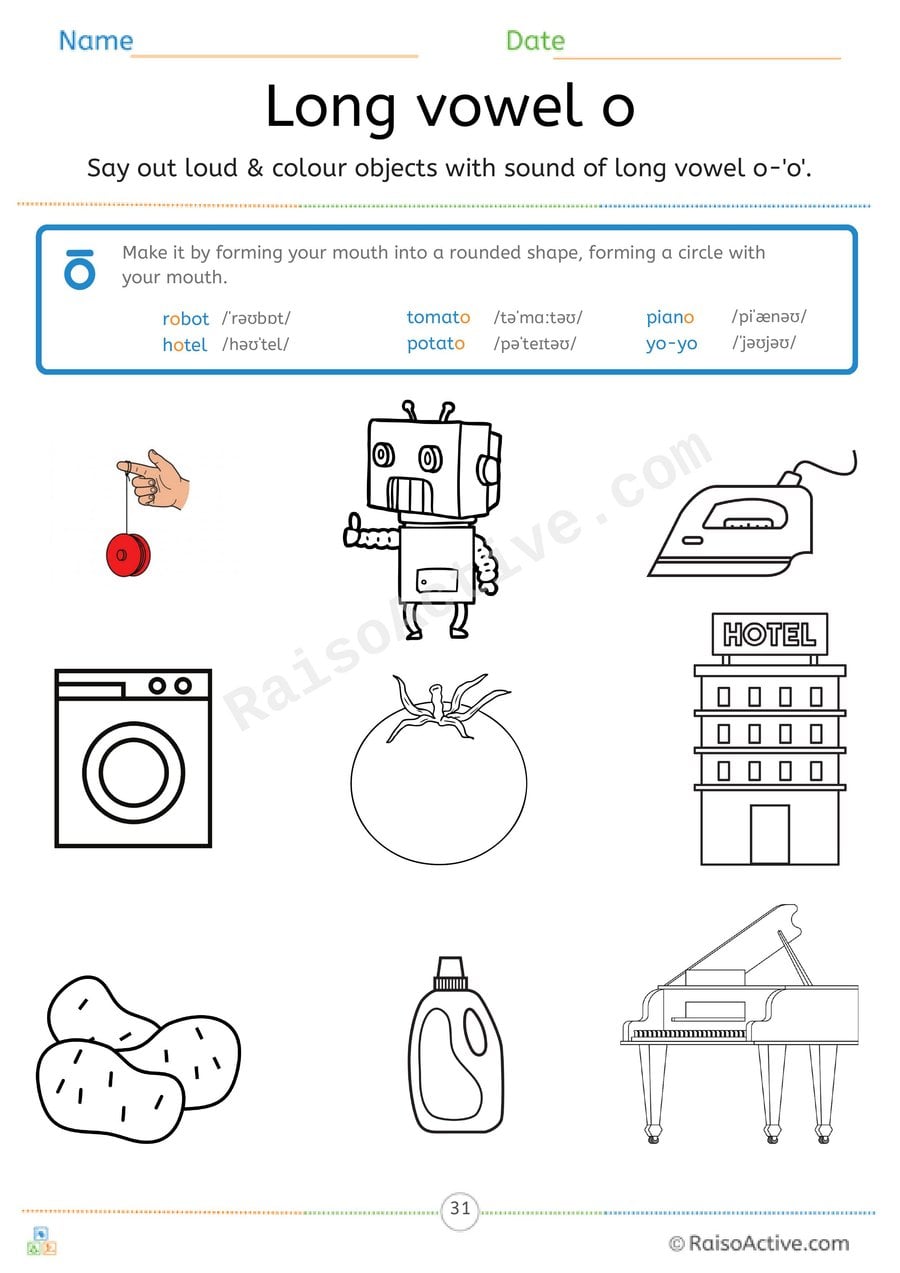
Long Vowel o Say and Colour Worksheet
Ages 5-7 · Kindergarten–Grade 1Ages 5-7 · Year 1–Year 2Ages 5-7 · UKG–Class 1Ages 5-7
Children listen for the long o sound, which says its own letter name, and colour only the pictures that have it: yo-yo, robot, tomato, hotel, potatoes and piano.

Long Vowel i 'igh' Circle and Write Worksheet
Ages 5-7 · Kindergarten–Grade 1Ages 5-7 · Year 1–Year 2Ages 5-7 · UKG–Class 1Ages 5-7
Children spot the long i 'igh' word in each row of three pictures, then spell it: high, sigh, flight, light, night and knight.
Related worksheets
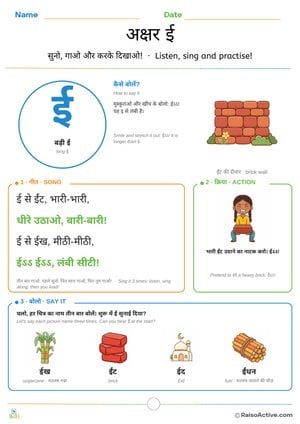
Hindi Letter ई (ee) Song, Action and Say It | अक्षर ई
Ages 3-7 · Preschool–Grade 1Ages 3-7 · Nursery–Year 2Ages 3-7 · Nursery–Class 1Ages 3-7
Children hear and say the long vowel ई, learn a short rhyme with an action, and say the names of the picture words ईंट (brick), ईख (sugarcane), ईद (Eid), ईंधन (fuel) to practise hearing ई at the start.
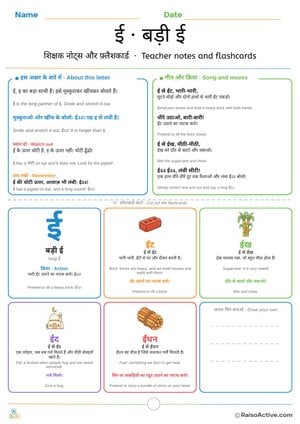
Hindi Letter ई (ee) Teacher Notes and Flashcards | ई · बड़ी ई
Ages 3-7 · Preschool–Grade 1Ages 3-7 · Nursery–Year 2Ages 3-7 · Nursery–Class 1Ages 3-7
Children meet the long vowel ई with a short note for adults, a song with actions and cut-out flashcards for ईंट (brick), ईख (sugarcane), ईद (Eid), ईंधन (fuel). They hear the sound at the start of real words and link it to a hand action.
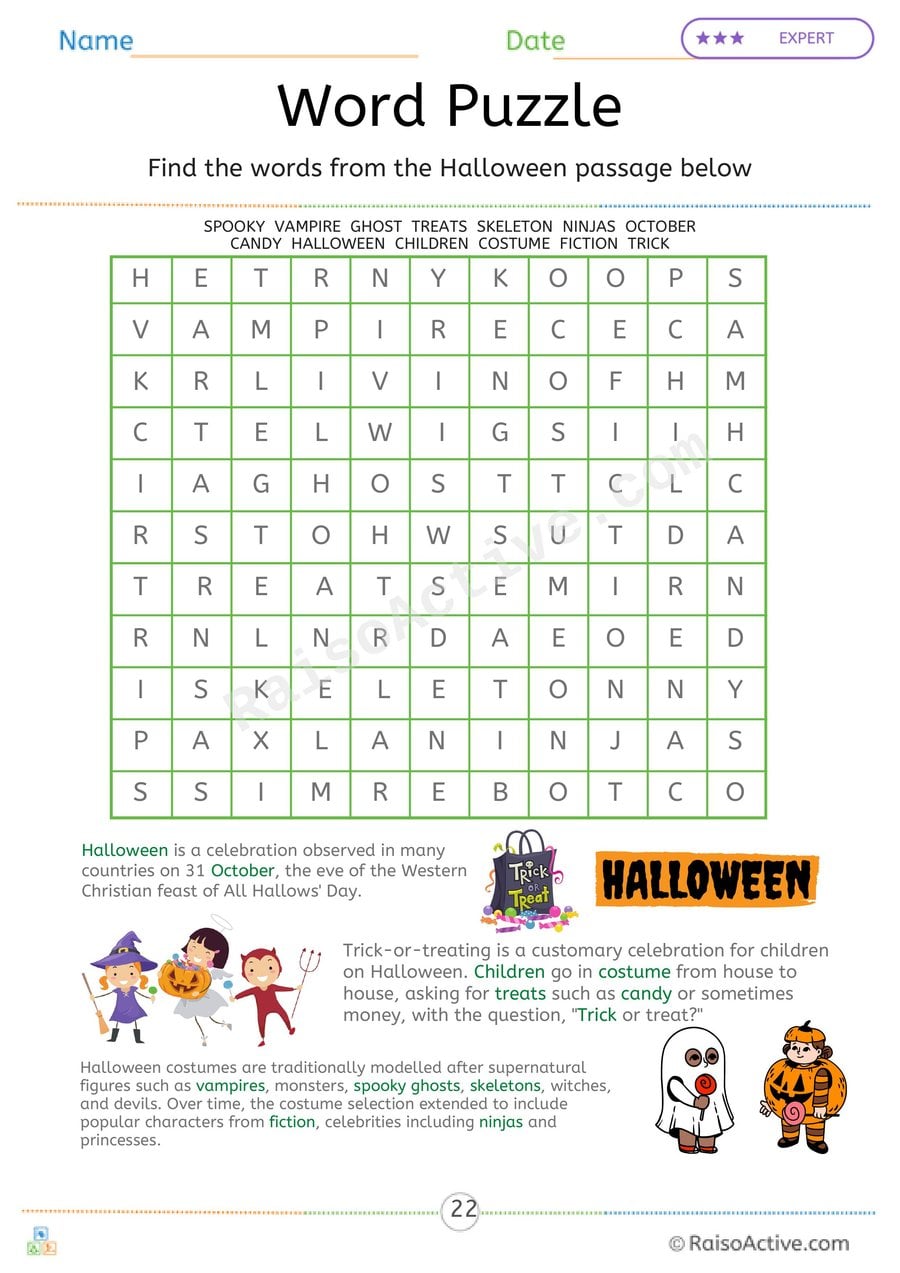
Halloween Word Search Worksheet for Kids
Ages 4-6 · Pre-K–KindergartenAges 4-6 · Reception–Year 1Ages 4-6 · LKG–UKGAges 4-6
This Halloween word search has children ages 4-6 scan a grid of letters to locate seasonal vocabulary words, building visual tracking skills and reinforcing the spelling of words like 'pumpkin,' 'ghost,' or 'witch' that they can recognize from the picture-based worksheets in this set. Searching systematically through rows and columns also strengthens the left-to-right, top-to-bottom scanning pattern used in reading.

Phonics Level 2 Sound Mat 2: Consonants and Consonant Digraphs
Ages 4-7 · Pre-K–Grade 1Ages 4-7 · Reception–Year 2Ages 4-7 · LKG–Class 1Ages 4-7
Children meet more consonant sounds and the digraphs th, sh, ch, zh and ng, with pictures, spellings and example words.
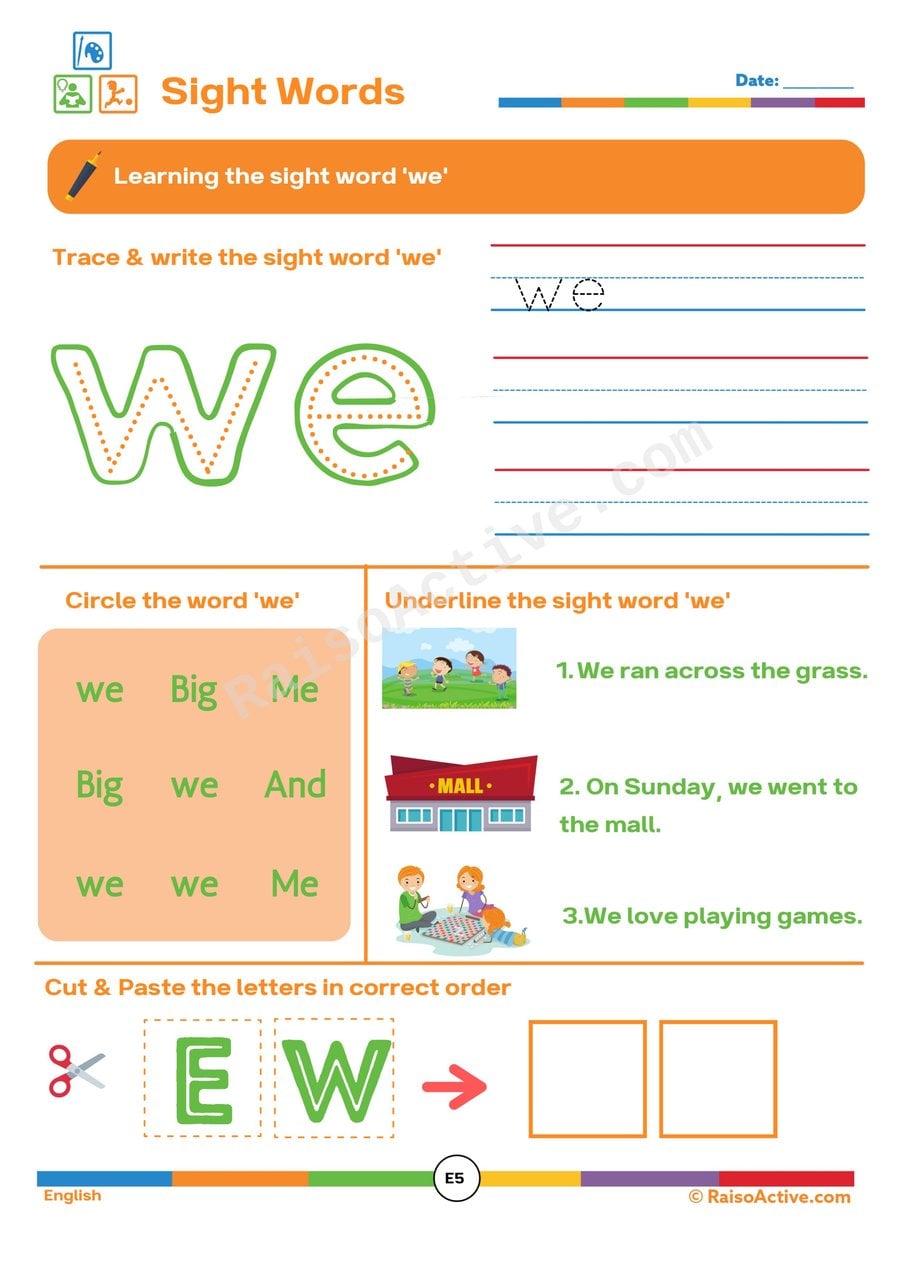
Sight Word 'We' Worksheet: Trace, Write, and Find!
Ages 3-5 · Preschool–Pre-KAges 3-5 · Nursery–ReceptionAges 3-5 · Nursery–LKGAges 3-5
This worksheet builds deep familiarity with the sight word 'we' in children ages 3-5 through four different practice formats — tracing, independent writing, circling, and finding the word within sentences — layered onto a single page. Repeating the same word across so many formats in one sitting is specifically designed to move 'we' from a word your child sounds out each time into one they recognize instantly on sight.
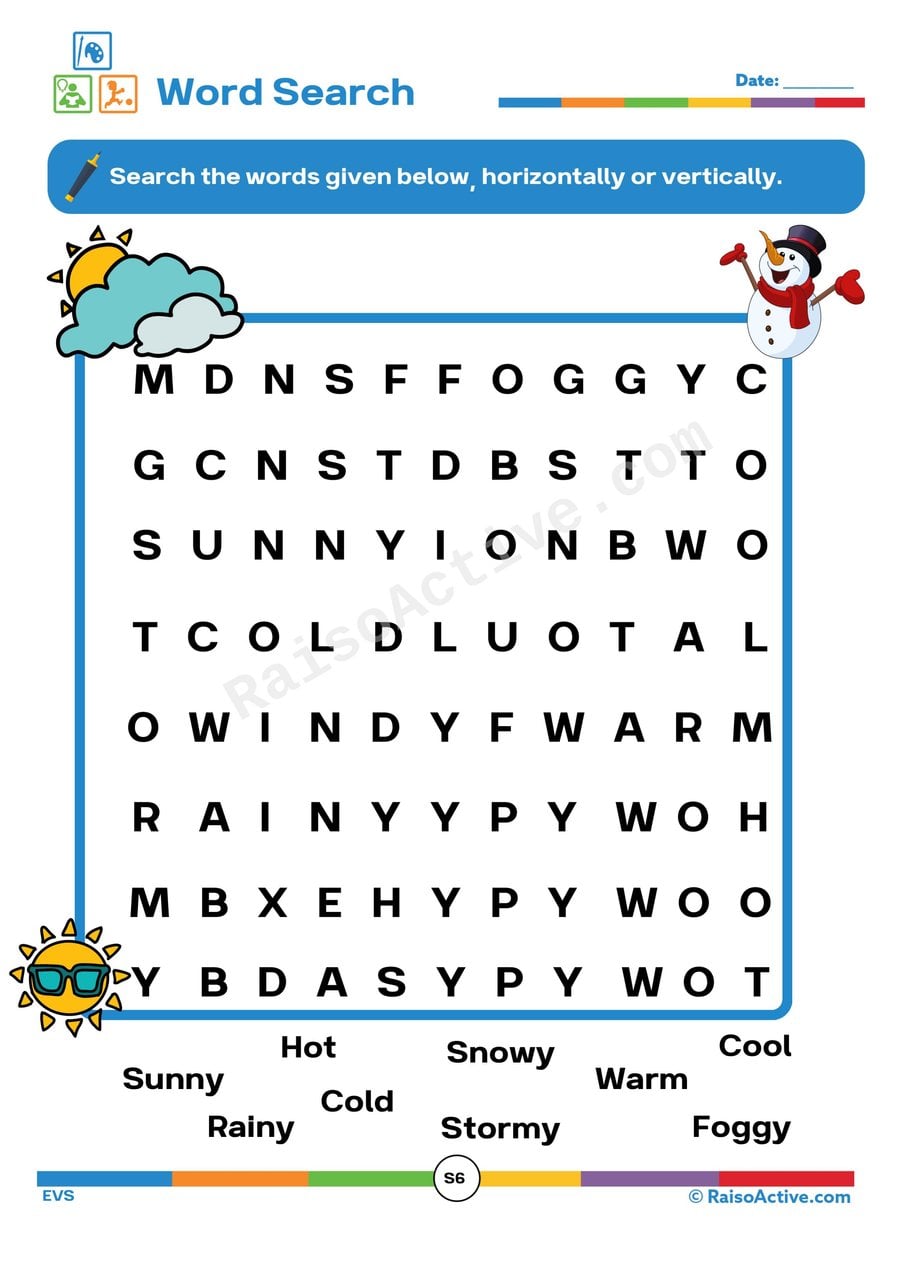
Weather Word Search Worksheet for Kids
Ages 4-6 · Pre-K–KindergartenAges 4-6 · Reception–Year 1Ages 4-6 · LKG–UKGAges 4-6
This word search strengthens children's visual scanning and spelling recognition for ages 4-6 by having them locate weather-related vocabulary — like rain, wind, or cloud — hidden horizontally and vertically within a letter grid. Searching for words in more than one direction adds an extra layer of challenge beyond a simple left-to-right search, training children's eyes to scan more flexibly across a grid. Pairing this puzzle-solving with familiar weather vocabulary also reinforces words children already use to describe daily conditions.
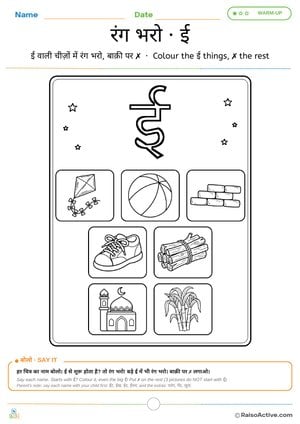
Colour the ई Things: Hindi Letter ई Colouring Page | रंग भरो · ई
Ages 3-7 · Preschool–Grade 1Ages 3-7 · Nursery–Year 2Ages 3-7 · Nursery–Class 1Ages 3-7
Children listen for the first sound of each picture name and decide whether it starts with ई. They colour the ई pictures, cross out the others and colour the big letter.
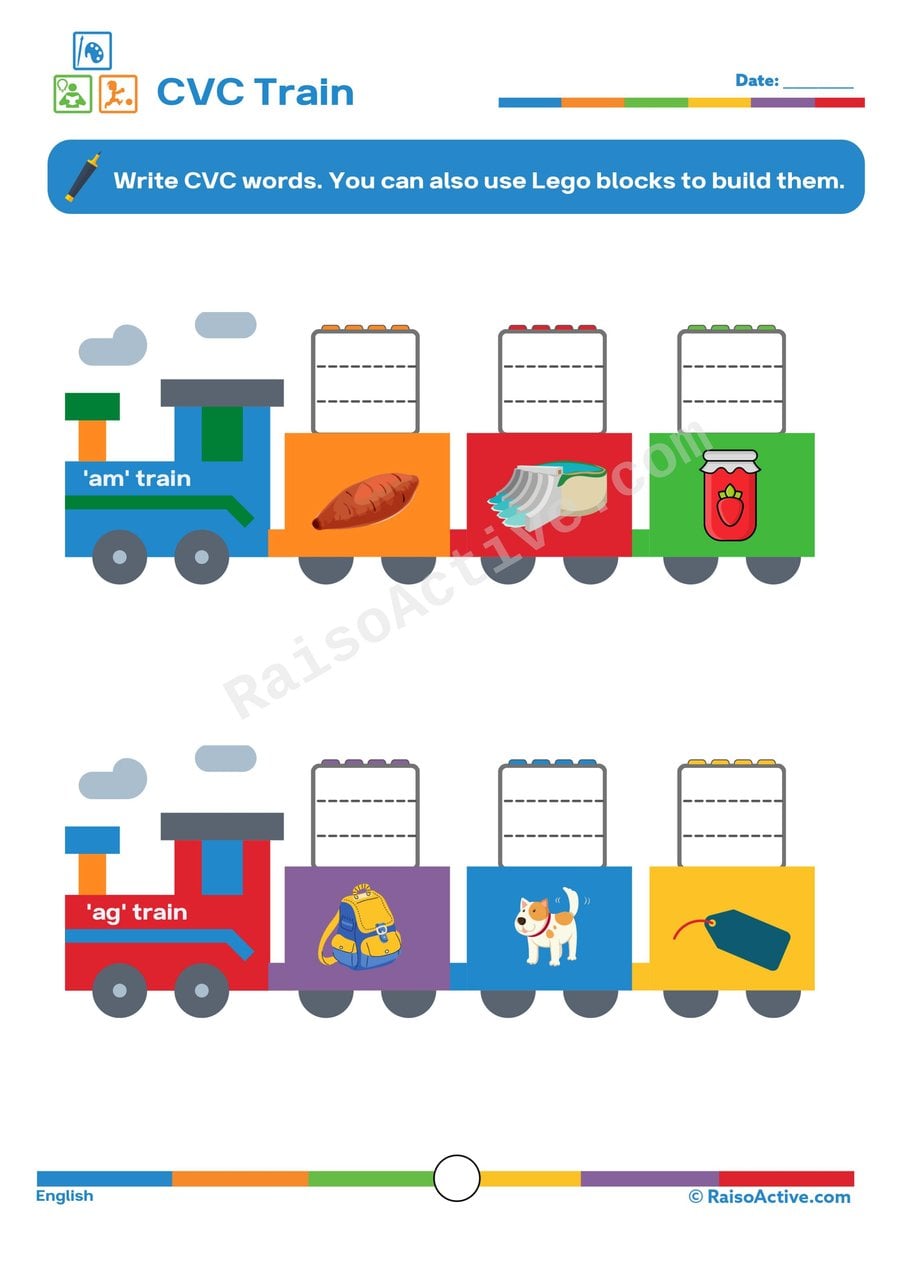
CVC Train Worksheet: Write CVC Words!
Ages 4-6 · Pre-K–KindergartenAges 4-6 · Reception–Year 1Ages 4-6 · LKG–UKGAges 4-6
Writing consonant-vowel-consonant words like 'cat,' 'sun,' or 'pig' under matching pictures gives children ages 4-6 direct practice with letter-sound blending, a core phonics skill that underpins independent reading. Because each train car pairs a picture clue with a blank space, children also practice translating a spoken word they can sound out into its correctly spelled written form.
Guides for this topic

How to Teach CVC Blending: A Step-by-Step Method That Works in Two Weeks
A step-by-step method for teaching CVC blending, covering continuous sounds, word families, common errors, and a 14-day plan that most children finish reading CVC words.
Phase 2 Phonics at Home: Sound Order, Blending Games, Worksheets
Phase 2 phonics at home: the five sound sets in order, oral blending, tricky words, a two-week routine, common mistakes, and free worksheets.

Reception Year Explained: EYFS Learning and How to Help at Home
A teacher's plain-English guide to the Reception Year: the seven areas of learning, Early Learning Goals, Phase 2/3 phonics, the RBA and home routines.
Reviews
Every worksheet for ages 5–7, no watermark
Members download the full library of 1,000+ worksheets and every activity pack without watermarks or daily limits. One year costs ₹999 in India or $20 elsewhere.
See membership plansOr download any worksheet free with a watermark (5 a day).