Dandiya Dash: Navratri Board Game for Kids
Ages 4-6 · Pre-K–KindergartenAges 4-6 · Reception–Year 1Ages 4-6 · LKG–UKGAges 4-6
Children count dots on a dice, count on along a number track to 30, take turns and follow simple game rules.
Free printable worksheets
Download free educational worksheets for children ages 2–8. Perfect for preschool, kindergarten, and early elementary learning activities.
Subscribe to get unlimited access to all worksheets without watermarks
View Subscription Plans289 topics match
44 worksheetsof 1,994
Ages 4-6 · Pre-K–KindergartenAges 4-6 · Reception–Year 1Ages 4-6 · LKG–UKGAges 4-6
Children count dots on a dice, count on along a number track to 30, take turns and follow simple game rules.
Ages 3-5 · Preschool–Pre-KAges 3-5 · Nursery–ReceptionAges 3-5 · Nursery–LKGAges 3-5
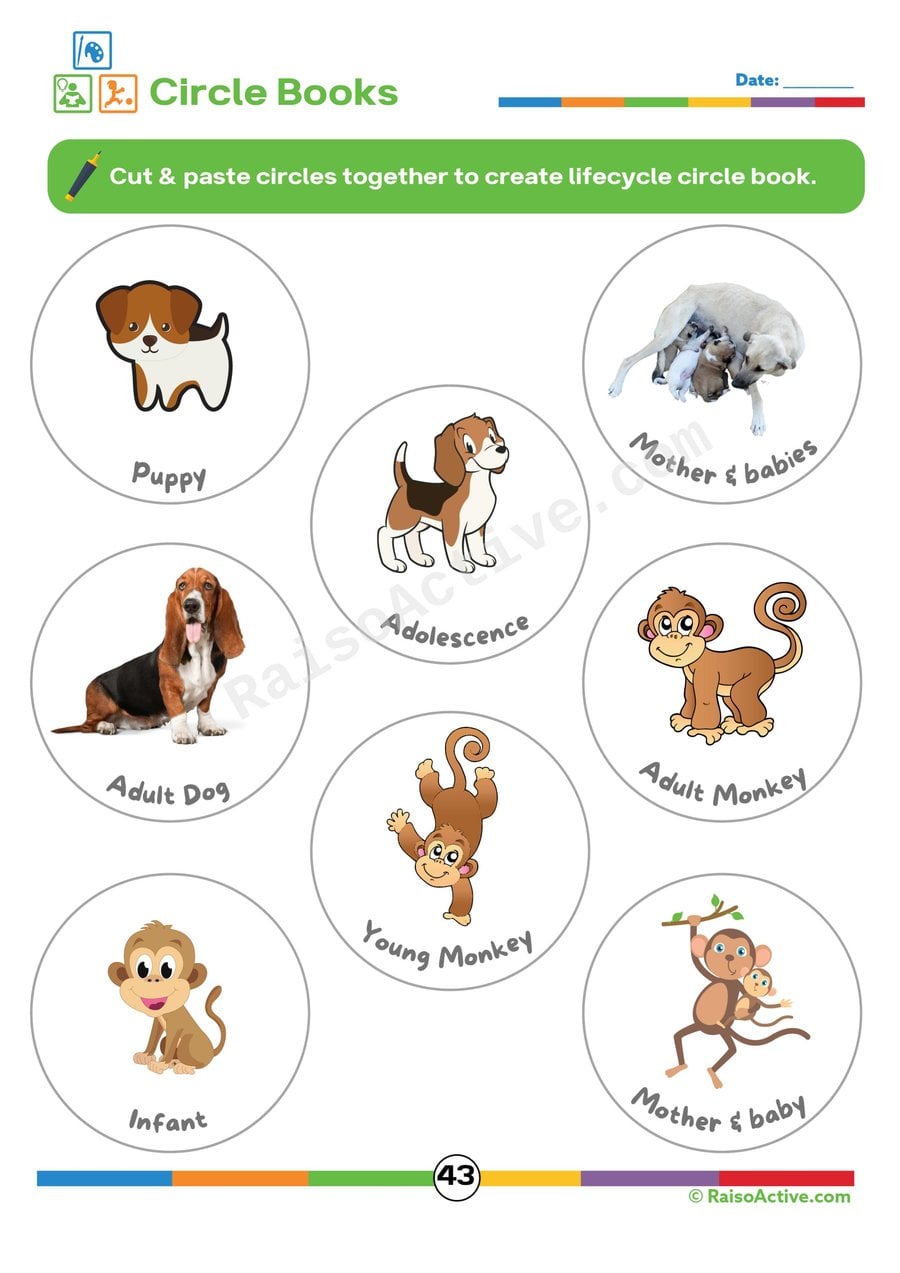
This activity has children ages 3-5 cut out circular pages and assemble them into a small 'circle book' that flips through different animals' life cycles, combining fine motor cutting and gluing with the concept that a book can hold information in sequence. Matching each animal to its correct life stage across several circles also reinforces the idea that different animals go through different growth patterns.
Ages 3-5 · Preschool–Pre-KAges 3-5 · Nursery–ReceptionAges 3-5 · Nursery–LKGAges 3-5
Children ages 3-5 explore the stages of human growth — baby, child, teenager, and adult — by building a hands-on circular lifecycle book. Applying the same 'lifecycle' concept they may know from animals to people themselves helps children make a meaningful, personal connection to the idea of growing and changing over time.
Ages 3-5 · Preschool–Pre-KAges 3-5 · Nursery–ReceptionAges 3-5 · Nursery–LKGAges 3-5
This worksheet gives children ages 3-5 more practice assembling a rotating lifecycle circle book, reinforcing the skills of sequencing, cutting, and gluing built in earlier lifecycle activities. Repeating this hands-on format with new content helps the process itself — cut, sequence, glue, review — become a familiar and confident routine.
Ages 3-5 · Preschool–Pre-KAges 3-5 · Nursery–ReceptionAges 3-5 · Nursery–LKGAges 3-5
This worksheet has children ages 3-5 cut out circular images representing a chicken's life stages, egg, chick, and adult hen or rooster, and glue them in the correct growing order, building sequencing skills alongside scissor and gluing practice. Working with round shapes specifically also gives children extra scissor practice on curves, which are trickier to cut than straight lines.
Ages 3-5 · Preschool–Pre-KAges 3-5 · Nursery–ReceptionAges 3-5 · Nursery–LKGAges 3-5
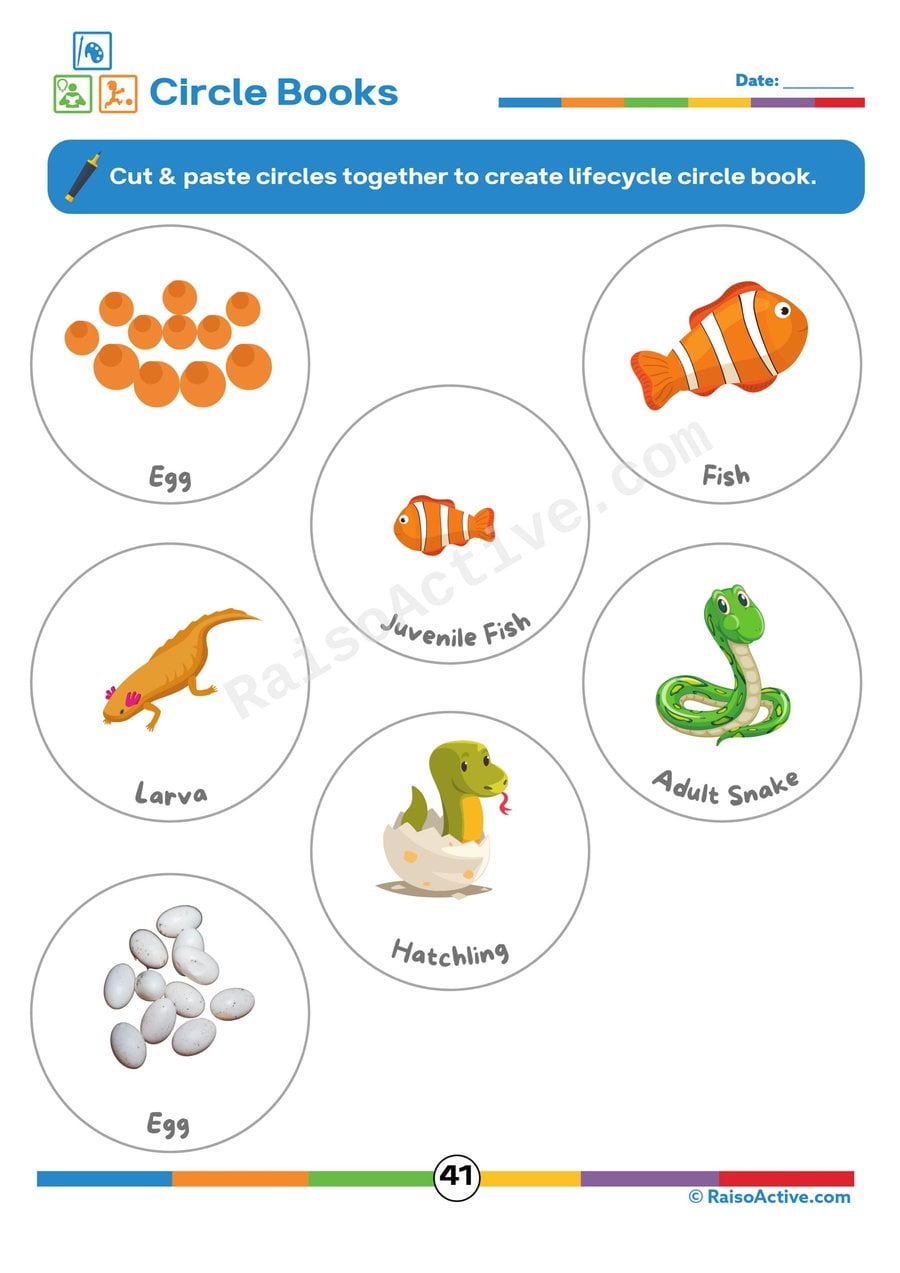
This worksheet gives children ages 3-5 practice matching pictures to the correct stage of an animal's life cycle while assembling a hands-on circular book. Beyond sequencing, the rotating format helps children internalize that growth is a continuous, repeating process rather than a fixed line from start to finish.
Ages 3-5 · Preschool–Pre-KAges 3-5 · Nursery–ReceptionAges 3-5 · Nursery–LKGAges 3-5
Children ages 3-5 compare and sequence the life cycles of two different animals — frogs and turtles — by assembling circular 'lifecycle books' for each. This side-by-side approach helps children notice that not all animals grow the same way, building early skills in comparison and scientific observation.
Ages 3-5 · Preschool–Pre-KAges 3-5 · Nursery–ReceptionAges 3-5 · Nursery–LKGAges 3-5
This hands-on worksheet teaches children ages 3-5 the four stages of a ladybug's life cycle — egg, larva, pupa, and adult ladybug — while building fine motor precision through cutting circular shapes and assembling them into a rotating 'circle book.' Creating a physical, movable model helps young children grasp the idea of a repeating cycle rather than a straight line of events.
Ages 3-5 · Preschool–Pre-KAges 3-5 · Nursery–ReceptionAges 3-5 · Nursery–LKGAges 3-5
Building this circle book helps children ages 3-5 understand that a plant's life cycle is a repeating loop rather than a straight line — a seed grows into a sprout, then a mature plant, which produces seeds of its own to start the cycle again. Cutting out and assembling the circles in order also develops scissor control and hand-eye coordination. Framing the plant's growth as a 'book' gives children a tangible object they can flip through to retell the sequence in their own words.
Ages 4-6 · Pre-K–KindergartenAges 4-6 · Reception–Year 1Ages 4-6 · LKG–UKGAges 4-6
Children ages 4-6 build on earlier metamorphosis learning by assembling a butterfly life cycle circle book, practicing sequencing and fine motor precision as they cut and glue circular pieces. The rotating circle book format reinforces that metamorphosis is a repeating cycle, helping children move beyond a simple straight-line understanding of egg to butterfly.
Ages 4-6 · Pre-K–KindergartenAges 4-6 · Reception–Year 1Ages 4-6 · LKG–UKGAges 4-6
This writing worksheet asks children ages 4-6 to describe their favorite animal's life cycle using sequencing words like 'first,' 'then,' 'next,' and 'last,' essential building blocks for narrative and informational writing. Choosing their own animal makes the task personally engaging while still requiring them to organize factual information in a logical order. This combination of choice and structure helps children practice both content knowledge and the mechanics of sequential writing.
Ages 3-5 · Preschool–Pre-KAges 3-5 · Nursery–ReceptionAges 3-5 · Nursery–LKGAges 3-5
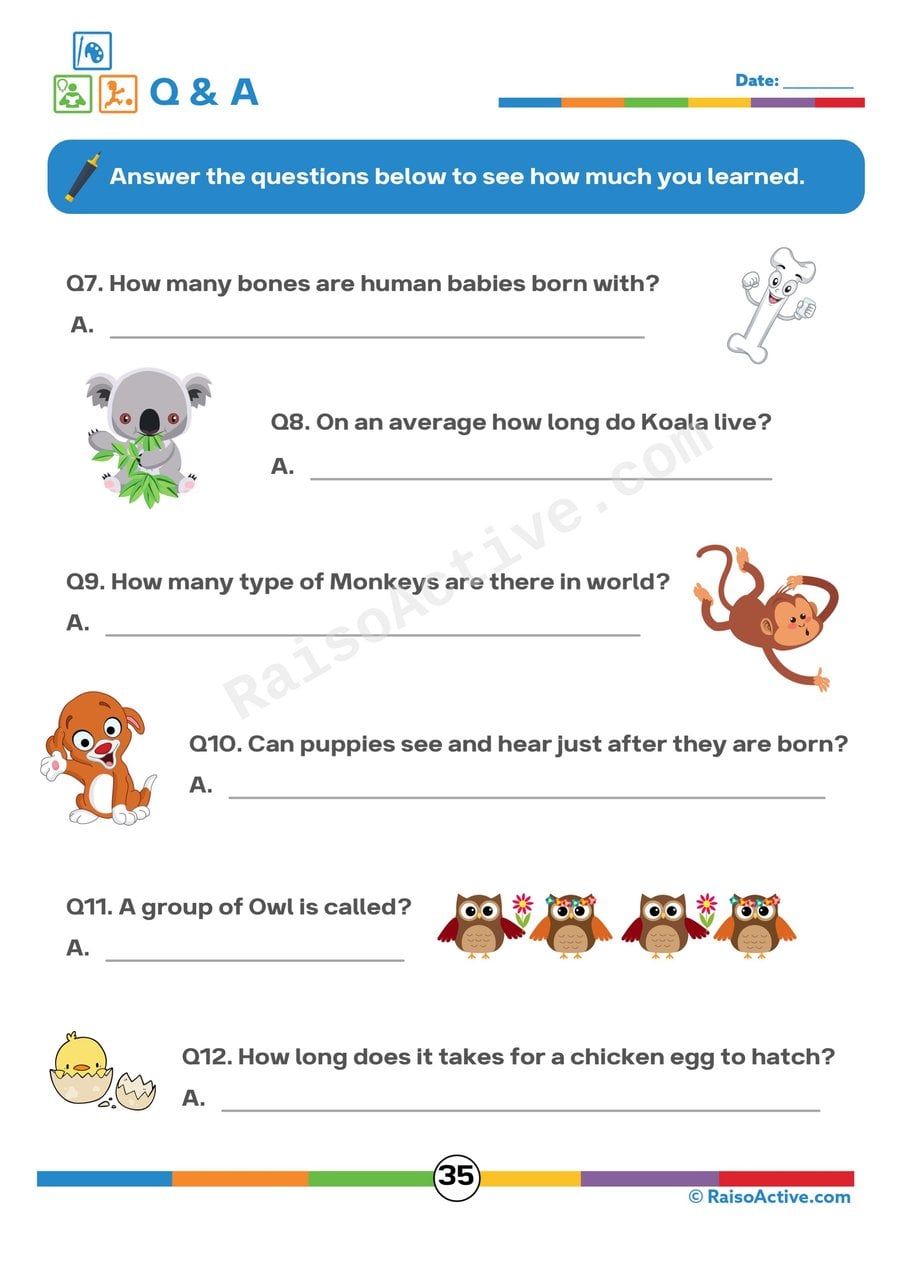
Children ages 3-5 practice early reading comprehension and recall as they answer simple questions about animal characteristics using picture clues. This worksheet builds the foundational skill of connecting a written question to a visual answer, a key step before children can read fact-based text independently.