Light and Shadow Games for Kids: 8 Cosy Evening Ideas

Dark evenings are perfect for light and shadow games. We can count the glows and guess the shadows together!
- 5 to 20 minutes each
- A lamp or torch, LED tea lights, paper
- Mostly indoors, one game outside
- Counting, patterns, observing
Light and shadow games for kids turn a dim evening into a mini science and maths lesson. Children count tiny lights, copy light-on, light-off patterns, guess mystery shadows and chalk round their own shadow, and they learn the one big idea behind all of it: a shadow is simply the place where something blocks the light.
Many families bring out string lights, lanterns and candle-like LED lamps around the darker months of the year, which makes it a lovely time to play with light on purpose. Everything below works with things you already have, and every game uses LED lights rather than real flames.
What do you need for light and shadow games?
- A lamp or torch with a steady light (a table lamp with the shade off works well)
- Battery LED tea lights, six to ten if you can, never real candles
- A plain wall or a pale bedsheet pinned up
- Paper, black card or old cereal boxes, safety scissors and a pencil
- A few small objects with clear shapes: a spoon, a comb, a toy animal, a cup
- Pavement chalk for the outdoor game
What are 8 light and shadow games to play at home?
Eight light and shadow games
Pick one or two for tonight and tick them off. Start with the counting games if your child is little, and save the shadow detective games for later.
0 of 8 done
Set out up to ten LED tea lights on a tray. Count them aloud together, then switch a few off and ask how many are still glowing. Try one more, one less, and how many are dark. It is gentle counting and early take-away with no worksheet in sight.
On an evening walk, or from a window, count the lit windows, lamps and string lights you can see. Make a tally of five at a time on a notebook page, then see which is bigger: windows or lamps? Take the same walk next week and compare.

Make a pattern with your lamp switch or with lit and unlit tea lights: on, on, off, on, on, off. Your child copies it, then predicts what comes next. Swap roles so they can make a pattern for you to guess.
Pin a pale sheet to a wall or use a plain wall, and put the lamp behind a small table. Hold a hidden object between the lamp and the wall without saying what it is. The child guesses from the shadow, then you reveal it. Try a spoon, a comb and a whisk, which are surprisingly tricky.
Draw round five toys on black card, then cut out the shapes (a grown-up can help). Mix up the toys and silhouettes and let your child match each shadow shape to its toy. It builds careful looking and gives cutting a purpose.
On a sunny day, have your child stand still on a patch of pavement while you chalk round their shadow. Come back at a different time, standing in the same spot, and chalk it again. The shadows will be different lengths and pointing different ways. Why? Because the sun is now in a different place in the sky.
Play some quiet music, switch the lamp on and let children dance. When the light goes off, everyone freezes like a statue. It is a lively game that teaches stopping on a signal, and it is easy to keep going for the whole evening.
Cut out three simple characters or objects from card and stick each to a straw. Put the lamp behind them and tell a story in three scenes: a beginning, a middle and an end. Older children can take turns telling it while another child moves the characters.

You earned a sticker!
All eight played! You have lit up the whole evening.
- Use battery LED lights, never real candles or tea lights, around paper, curtains and young children.
- Lamp bulbs can get warm, so keep them away from fabric and don't leave a child alone with a lamp.
- Keep scissors and anything sharp in a grown-up's hands for younger children.
- Never point a torch or bright lamp at anyone's eyes. Aim it at the wall.
Why do shadows change size and shape?
A shadow forms when something solid gets between a light and a surface. The closer an object is to the lamp, the bigger its shadow looks on the wall, and the nearer it is to the wall, the sharper and smaller it looks. Children discover this just by moving a toy back and forth, so let them test it before you explain it.
Outdoors, the sun is the lamp. Early and late in the day it sits low in the sky and makes long shadows. Around midday it is higher, so shadows are shorter. That is why the chalk game works so well as a first sun experiment.
Shadow riddles. Tap to find out
0 of 4 flipped
What do light and shadow games teach children?
Counting, patterns and careful looking, with a first taste of science
Counting glows and switching lights on and off gives number sense a warm, real-life setting. Light patterns prepare children for the pattern work in early maths. Guessing and matching shadows trains careful looking, and the chalk and wall games introduce cause and effect: move the object, the shadow changes. None of it needs a screen, and every game can be as short or as long as your child likes.
Make light and shadow games easier or harder
Change the game to suit your child
Little ones
- Count only up to five lights, and use big, bold objects for the shadow guessing game.
- Let them choose which light goes on or off, and cheer every time they count one correctly.
- Skip the cutting: a grown-up cuts the silhouettes and the child does the matching.
Older kids
- Count to twenty, and add a take-away challenge: ten lights, three go out, how many are left?
- Make a longer pattern (on, on, off, off, on) and ask them to write it down with dots and dashes.
- Measure a chalk shadow with a piece of string at three times of day and record it in a little table.
Where can I find paper activities to go with them?
Once the lamps are off, a few printable pages keep the light theme going. Counting pages from our counting worksheets and number puzzles on connect-the-dots pages are ideal for the counting games, and our pattern writing worksheets carry on from the light patterns. For the silhouettes, cutting practice worksheets help little hands get ready for scissors.

A join-the-dots page from 1 to 20 makes a lovely quiet follow-up to the counting games.
If you would like more ideas with a torch, our torch activities for kids post has ten beam games, from a starry paper cup to a shadow puppet show. For a glowing craft, our festival packs have printable paper lanterns to colour, cut and light with an LED tea light. If visitors are coming, our quiet activities for kids when guests are visiting post has calm table games that keep little ones happy.

A coloured paper star lantern, glowing with an LED tea light inside.
Questions parents ask about light and shadow games
What age are light and shadow games good for?
Do I need a dark room?
Are LED tea lights safe for children?
My child is scared of the dark. Can we still play?
How can I explain shadows to a young child?

Written by
Hemsweta Jain · Teacher Cheena
MBA and Early Childhood Educator, teaching since 2014 · Founder of RaisoActive, Mumbai
Published · Last reviewed
Related posts

What Should a 4-Year-Old Know Before LKG? A Readiness Checklist
A calm, teacher-written LKG readiness checklist for 4-year-olds: language, pattern writing, numbers to 10, self-help and social skills, plus a 6-week plan.
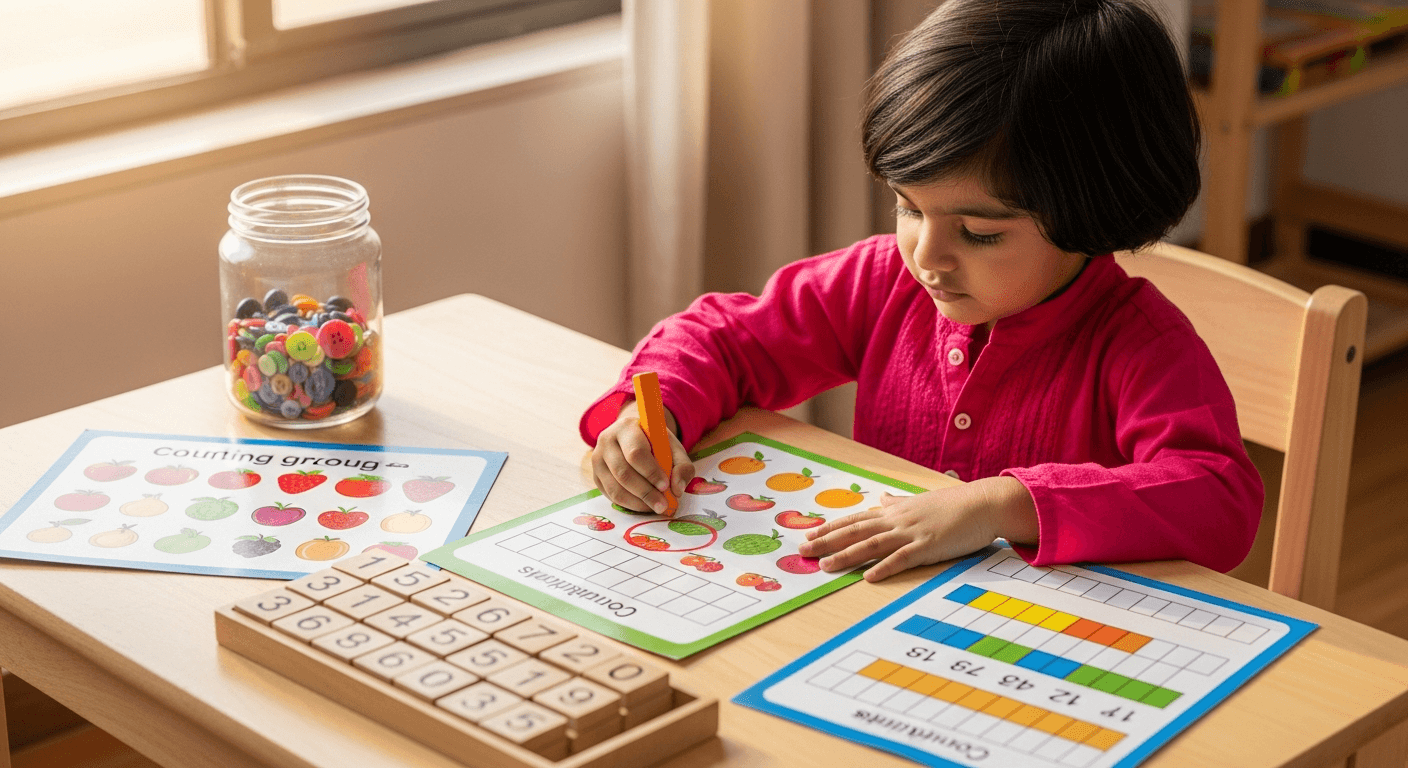
Where to Find Free Counting Worksheets for Preschoolers: A Complete Resource Guide
Find free counting worksheets for preschoolers — count and circle, ten frames, subitising, number matching. Aligned to CBSE and ICSE nursery and LKG expectations.
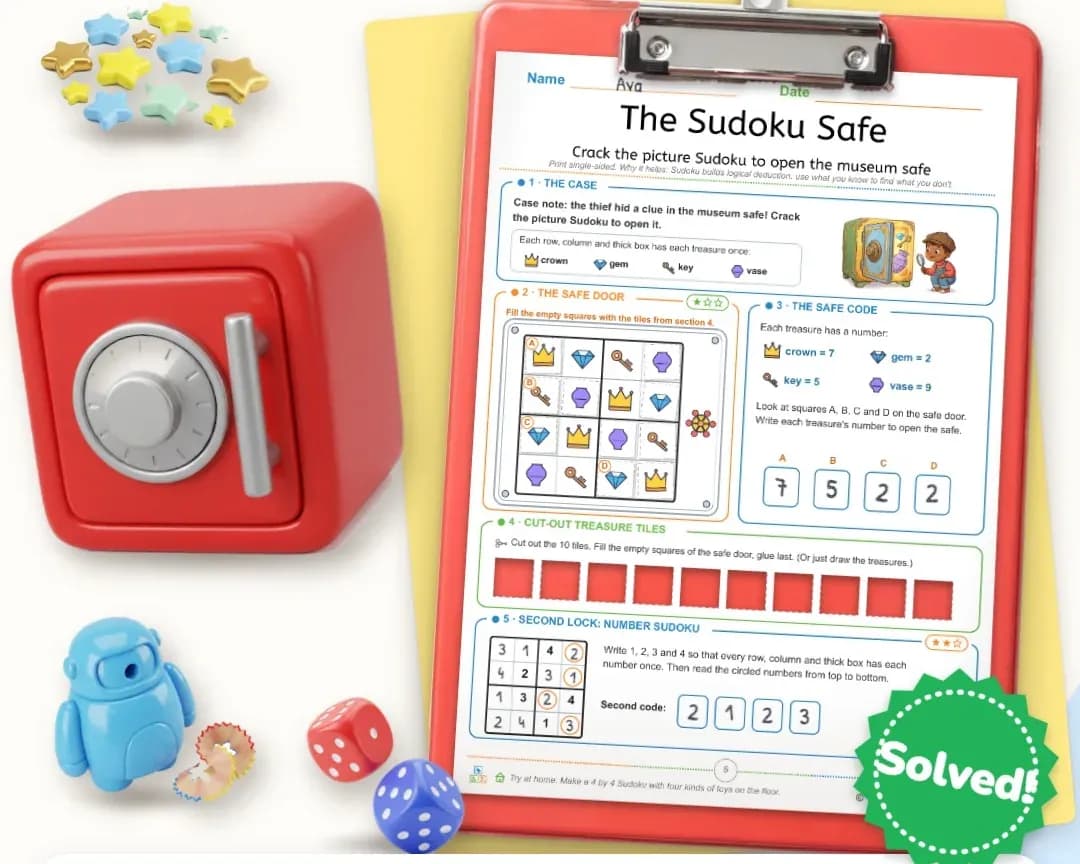
Logic Puzzles for Kids: 7 Printable Types to Try at Home
Logic puzzles for kids that make them think: picture sudoku, code wheels, tangrams, clue puzzles and escape rooms. What each builds and how to start.