Gg Letter Tracing and Recognition Worksheet for Preschoolers
This worksheet helps children ages 3-5 practice writing both uppercase and lowercase Gg while training them to recognize the letter in different fonts and contexts, an important skill since printed letters don't always look identical to handwritten ones. Identifying pictures that start with Gg also builds phonemic awareness, linking the letter's shape to its 'guh' sound.
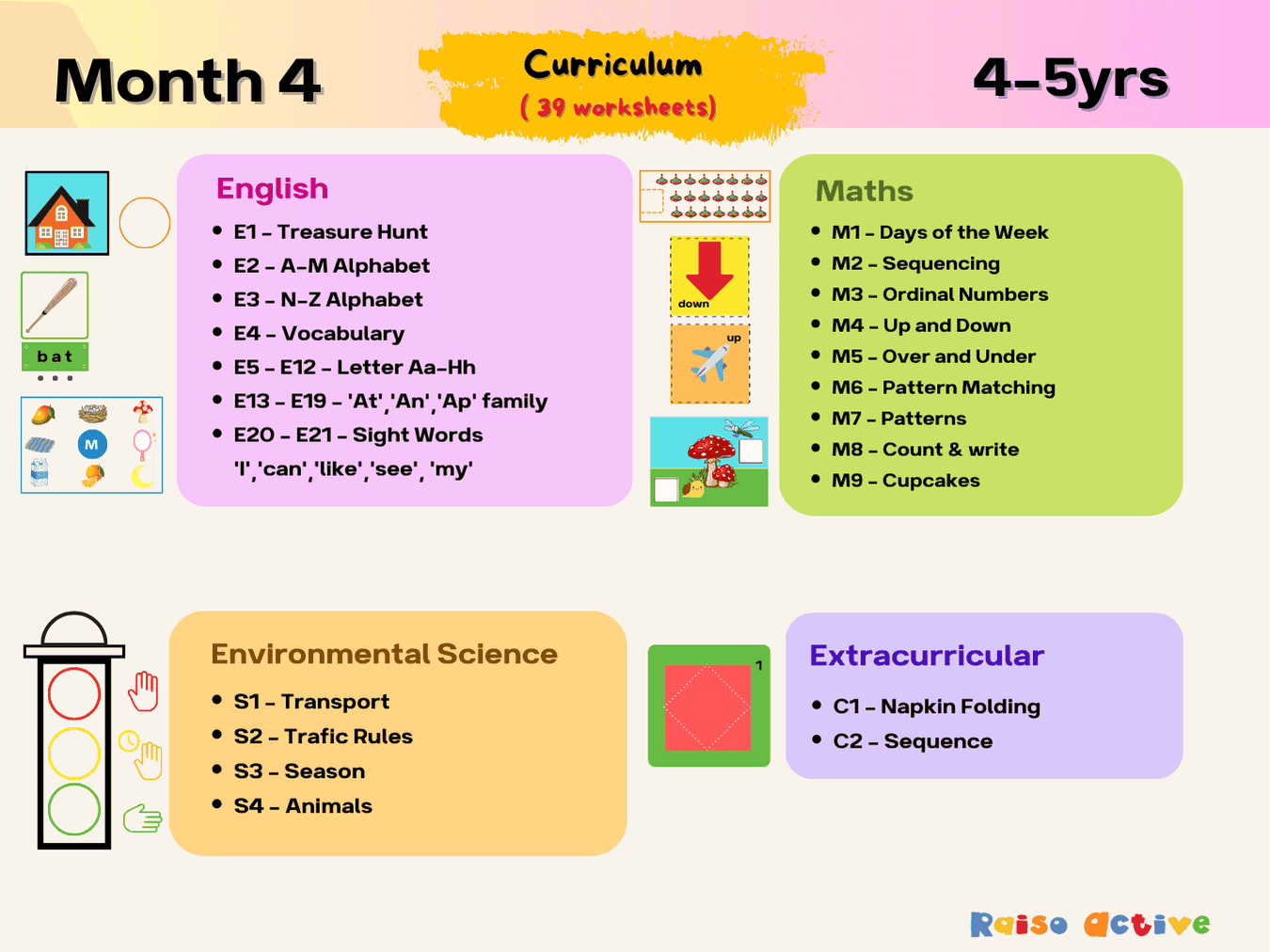
Part of the pack
Month 4: Learning & Development | Ages 4-5
This is page 14 of the pack. Ages 4-5 · Pre-KAges 4-5 · ReceptionAges 4-5 · LKGAges 4-5
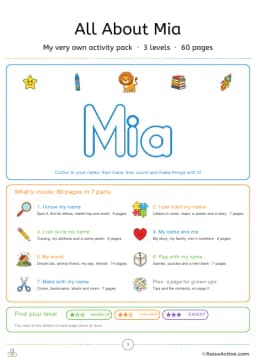
Made for your child
A whole activity pack made with their name
60 pages to spot, build, trace and write their own name, plus pages about their favourites, feelings and family. See a free preview with their name.
Make an All About Me packFree preview · free for members
Or start free: a name tracing sheet with their nameCurriculum
- Writing > Letter Tracing A-Z
How to use this worksheet
Have your child trace the letter Gg with a pencil while saying its sound aloud. Then ask them to circle every Gg they can find among the mixed letters shown. Have your child color the picture on the page, and finish by circling the picture in the row that starts with the letter Gg.
Materials needed
- Pencil
- Crayons
Extension activities
- 1Look for objects around the house that start with G, like a glove, grape, or gate.
- 2Practice writing Gg in shaving cream or finger paint for sensory reinforcement.
- 3Read a short book about the letter Gg or find G words together.
- 4Make Gg out of playdough or pipe cleaners.

Written by
Hemsweta Jain · Teacher Cheena
MBA and Early Childhood Educator, teaching since 2014 · Founder of RaisoActive, Mumbai
Every RaisoActive worksheet is designed and checked by the founder before publishing.
Published · Last reviewed
More from Month 4: Learning & Development | Ages 4-5

Animal Match: Skin, Babies, Sounds, and Food Worksheet
Ages 3-5 · Preschool–Pre-KAges 3-5 · Nursery–ReceptionAges 3-5 · Nursery–LKGAges 3-5
This worksheet deepens children ages 3-5's animal knowledge across four different categories at once — matching animals to their skin or fur type, their babies, the sounds they make, and the food they eat. Covering several related facts about the same set of animals helps children build a richer, more connected understanding than a single-category matching worksheet would.

Learn to Write the Sight Word 'I' Worksheet for Preschoolers
Ages 3-5 · Preschool–Pre-KAges 3-5 · Nursery–ReceptionAges 3-5 · Nursery–LKGAges 3-5
This worksheet gives children ages 3-5 focused, repeated practice recognizing, tracing, and writing the sight word 'I,' one of the very first words most children learn to read and write since it appears constantly in their own speech. Because 'I' is a single letter that stands for a whole word, it's also a gentle introduction to the idea that capitalization carries meaning.

N-Z Alphabet Worksheet: Missing Letters and Picture Matching
Ages 4-6 · Pre-K–KindergartenAges 4-6 · Reception–Year 1Ages 4-6 · LKG–UKGAges 4-6
This worksheet continues alphabet mastery for children ages 4-6 by having them fill in missing letters from N to Z and match each one to a corresponding picture, extending the sequencing and picture-matching skills used in the first half of the alphabet into the second half. Completing both halves of the alphabet across companion worksheets like this builds full, confident recall of all 26 letters in order.

Parent's Guide: Sight Words, Colors, and Traffic Rules Activities!
Ages 3-5 · Preschool–Pre-KAges 3-5 · Nursery–ReceptionAges 3-5 · Nursery–LKGAges 3-5
This parent-led guide combines three important early-learning areas for children ages 3-5 — sight word recognition, color identification, and basic traffic safety — through a set of hands-on activities using simple household materials. Covering multiple skill areas in one session helps busy families fit varied learning into a single sitting while keeping activities playful and physical rather than worksheet-only.

Animal Skin Pattern Matching Worksheet for Preschoolers
Ages 3-5 · Preschool–Pre-KAges 3-5 · Nursery–ReceptionAges 3-5 · Nursery–LKGAges 3-5
Children ages 3-5 build visual discrimination and early biology awareness as they match animals to their distinctive skin patterns, like stripes on a zebra or spots on a leopard. Noticing and matching these patterns helps children practice careful visual comparison, a skill closely related to letter and word recognition, while also introducing the science idea that patterns serve a purpose for animals in the wild.

Cut and Paste 'An' Family Worksheet for Preschoolers
Ages 4-5 · Pre-KAges 4-5 · ReceptionAges 4-5 · LKGAges 4-5
This cut-and-paste worksheet has children ages 4-5 build simple 'an' family words, like 'can,' 'man,' and 'pan,' by gluing the correct beginning letter in front of the shared 'an' ending. Practicing a word family this way teaches children that changing just one letter creates a whole new word — a foundational pattern-recognition skill in early reading known as rhyming or word-family instruction.

Days of the Week Cut and Paste Worksheet for Preschoolers
Ages 3-5 · Preschool–Pre-KAges 3-5 · Nursery–ReceptionAges 3-5 · Nursery–LKGAges 3-5
This worksheet builds sequencing skills by asking children to place the seven days of the week in their correct order, a concept that lays the groundwork for understanding calendars, routines, and time. For preschoolers, memorizing a fixed sequence like Sunday through Saturday also strengthens verbal memory and the idea that some things always happen in the same order.

Traffic Rules Worksheet for Kids: Learn Road Safety!
Ages 3-5 · Preschool–Pre-KAges 3-5 · Nursery–ReceptionAges 3-5 · Nursery–LKGAges 3-5
This worksheet builds children ages 3-5's understanding of basic traffic rules, including who controls traffic, where it's safe to cross, and what each traffic light color means, through a combination of circling correct answers and coloring a traffic signal. Learning these rules early helps children build genuine road safety awareness rather than just memorized instructions.
Related worksheets

Learn the Letter 'x' Worksheet: Tracing, Matching, and Coloring Fun!
Ages 4-5 · Pre-KAges 4-5 · ReceptionAges 4-5 · LKGAges 4-5
This worksheet builds recognition of the less common letter x through tracing both uppercase and lowercase forms, then reinforces that recognition through matching pictures and highlighting the letter within a grid. For ages 4-5, letter x is genuinely rare at the start of everyday words, so this worksheet leans on strong examples like 'x-ray' to build familiarity despite limited real-world exposure.

Letter W Worksheet: Tracing, Coloring, and Word Recognition!
Ages 3-5 · Preschool–Pre-KAges 3-5 · Nursery–ReceptionAges 3-5 · Nursery–LKGAges 3-5
This worksheet builds recognition and formation of the letter W through tracing, writing, and identifying words that begin with it, like 'watermelon' or 'whale.' For three- to five-year-olds, practicing a letter with a more complex zigzag shape than earlier letters like O or L also develops the finer pencil control needed for more advanced handwriting.

Trace and Color the Letter Q Worksheet for Preschoolers
Ages 3-5 · Preschool–Pre-KAges 3-5 · Nursery–ReceptionAges 3-5 · Nursery–LKGAges 3-5
This worksheet builds handwriting readiness for the less common letter Q through repeated tracing, while the coloring activity reinforces vocabulary for Q words, which are often trickier for young children since Q almost always pairs with U. For ages 3-5, practicing an uncommon letter like Q broadens their full alphabet exposure beyond the more frequently seen letters.

Letter Y Tracing and Recognition Worksheet for Preschoolers
Ages 3-5 · Preschool–Pre-KAges 3-5 · Nursery–ReceptionAges 3-5 · Nursery–LKGAges 3-5
This worksheet builds recognition and formation of the letter Y through guided tracing practice and by identifying pictures of words that start with Y, like 'yarn' or 'yo-yo.' For three- to five-year-olds, tracing first with a finger and then with a pencil builds the motor memory needed before a child can form the letter confidently on their own.

Letter X Worksheet: Trace, Write, and Color the Letter X!
Ages 3-5 · Preschool–Pre-KAges 3-5 · Nursery–ReceptionAges 3-5 · Nursery–LKGAges 3-5
This worksheet introduces the letter X, one of the trickier letters for young children since so few common words start with it, by pairing tracing practice with picture identification for words like 'x-ray' or 'xylophone.' For three- to five-year-olds, working through a less familiar letter like X builds persistence and completes their sense of mastering the full alphabet.

Letter B Tracing and Identification Worksheet for Preschoolers
Ages 3-5 · Preschool–Pre-KAges 3-5 · Nursery–ReceptionAges 3-5 · Nursery–LKGAges 3-5
This worksheet helps children ages 3-5 practice tracing and writing the letter B, identifying B among other letters, and recognizing objects that start with the letter B. Circling the correct letter within a small group builds the visual scanning skill children need before they can read words fluently.
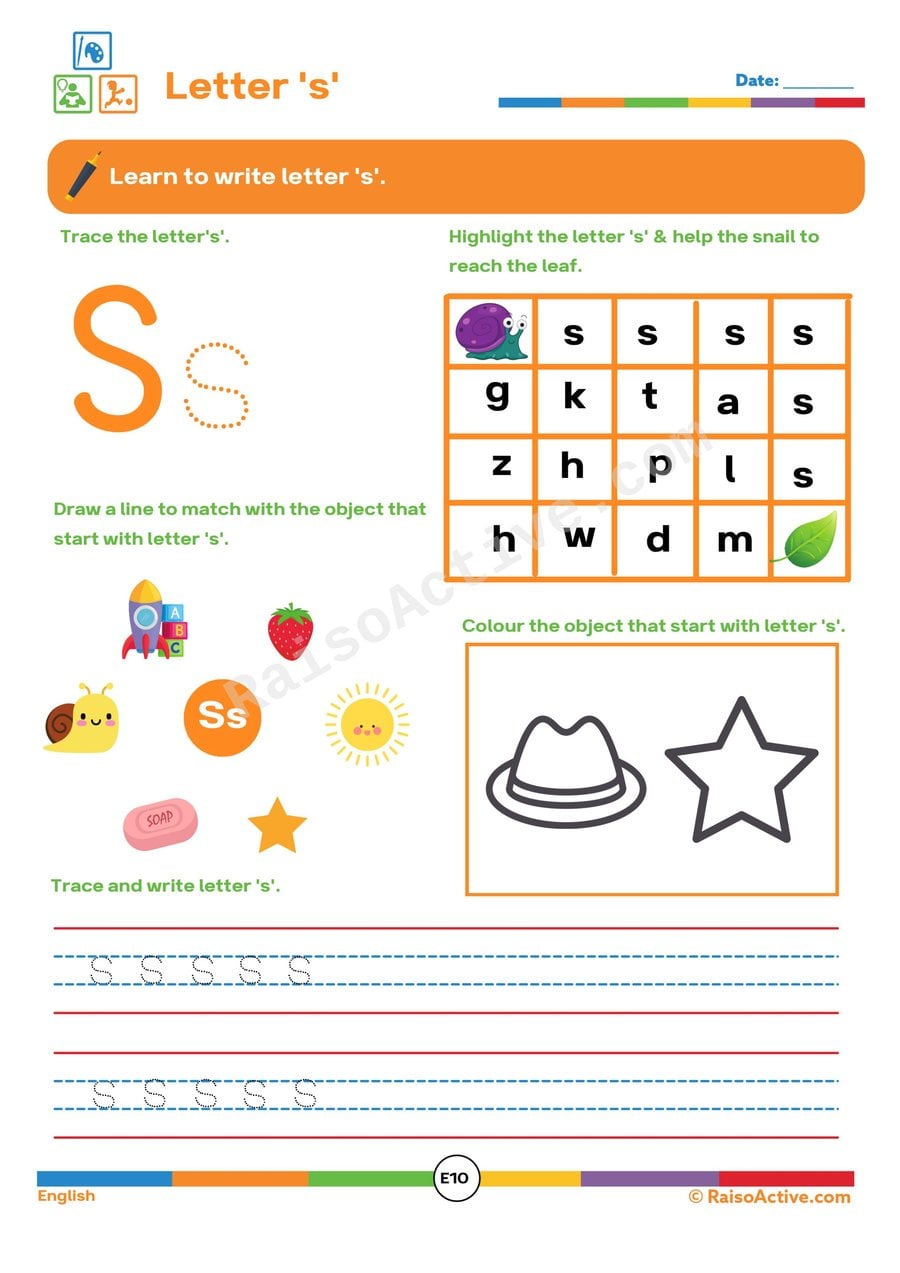
Letter 's' Worksheet: Trace, Match, and Color!
Ages 3-5 · Preschool–Pre-KAges 3-5 · Nursery–ReceptionAges 3-5 · Nursery–LKGAges 3-5
This worksheet gives children ages 3-5 focused practice forming the letter 's,' one of the trickier curved strokes for beginning writers to control with a pencil. Beyond handwriting, matching pictures to the letter and coloring only the 's' objects builds phonemic awareness by linking the letter shape to its /s/ sound at the start of words. Combining tracing, matching, and coloring in one page also keeps a young child's attention across multiple related tasks.

Letter A Tracing and Coloring Worksheet for Preschoolers
Ages 3-5 · Preschool–Pre-KAges 3-5 · Nursery–ReceptionAges 3-5 · Nursery–LKGAges 3-5
Preschoolers ages 3-5 practice the specific pencil strokes needed to form the letter A, both uppercase and lowercase, while also connecting the letter to its sound through picture recognition. Tracing before free writing builds the fine motor muscle memory that makes independent letter formation possible.
Guides for this topic

Documenting Learning Without Drowning in Data: A Practical Guide for Parents and Teachers
Learn practical ways to document your child's learning without overwhelm. Simple portfolios, observation tips, and printable trackers for ages 1-8.

How to Help Your Child with Letter Reversals: A Complete Guide for Parents and Teachers
Letter reversals are normal until age 7-8. Learn the best multisensory strategies, anchor letter tricks, and activities to help children write b, d, p, and q correctly.

Activities That Help with Pencil Grip Development: A Complete Guide for Parents and Teachers
Discover fun, research-backed activities to develop pencil grip in young children. Age-wise exercises, play ideas, and expert tips for parents and teachers.
Reviews
Every worksheet for ages 3–5, no watermark
Members download the full library of 1,000+ worksheets and every activity pack without watermarks or daily limits. One year costs ₹999 in India or $20 elsewhere.
See membership plansOr download any worksheet free with a watermark (5 a day).